Best Overall

Clarifion Air Ionizer Negative Ion Filtration System
Quiet operation perfect for bedrooms and offices.
Portable design fits any room easily.
Effective at reducing odors and smoke.
 Lauren Wilson
Quiet operation perfect for bedrooms and offices.
Portable design fits any room easily.
Effective at reducing odors and smoke.

Covers large areas effectively up to 1200ft².
Integrated fragrance function for pleasant aroma.
Smart air quality sensor for real-time monitoring.
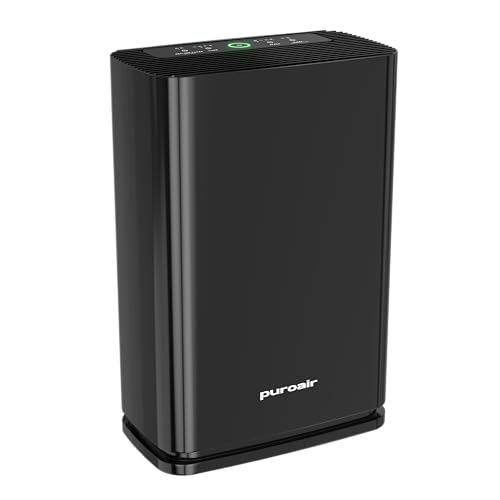
Covers large areas up to 2,145 sq ft.
Filters 99% of smoke, pollen, and dust.
Automatically cleans air 24/7.

Compact and portable for versatile use.
Quiet operation, ideal for bedrooms and offices.
Effective against odors, smoke, and pet dander.
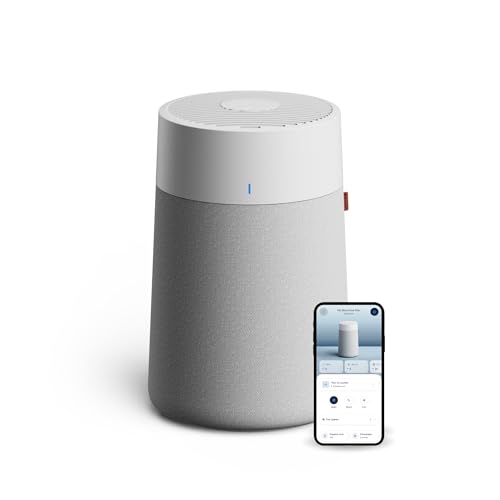
Efficiently cleans large areas quickly.
Effectively removes allergens and smoke.
Ideal for pet owners and small spaces.
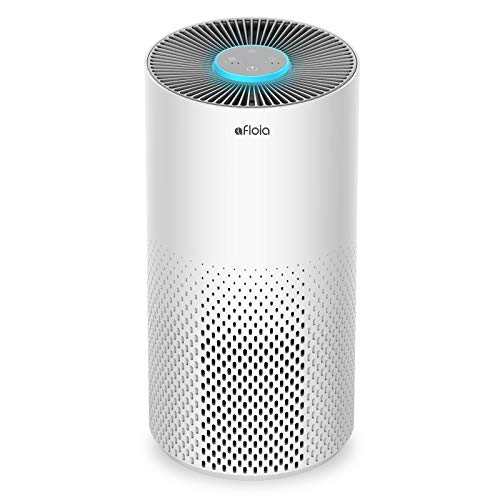
Effective for large rooms up to 1076 sq ft.
True HEPA filter removes allergens and pollutants.
Quiet operation at just 22dB noise level.

Covers large areas quickly and efficiently.
HEPASilent technology ensures quiet operation.
Smart features enhance air quality monitoring.

High ozone output for effective odor removal.
Dual-fan design enhances air circulation.
Suitable for large spaces and commercial use.

Covers large rooms up to 1800 sq ft efficiently.
Features washable filters for easy maintenance.
Smart WiFi control for convenient operation.

Smart WiFi and Alexa compatibility enhance convenience.
HEPA filter effectively targets allergies and pollutants.
Quiet operation ensures a peaceful sleep environment.
The first question is whether the product physically captures particles. A filter or washable collection surface retains material so it can be removed during maintenance. A filterless ionizer may instead move dust out of the air and onto nearby surfaces, where it can be disturbed and resuspended. For smoke, pollen, pet dander, dust, and fine particles, look for an independently measured clean-air delivery rate—usually called CADR—for smoke, dust, and pollen. The room-size figure should be tied to that result and a stated testing basis. A large square-foot claim by itself is weak evidence: supplied reviews repeatedly found that headline coverage represented only one air change per hour, conflicted with a smaller high-turnover rating, or had no test behind it.
Ozone control is central. California Air Resources Board certification identifies listed electronic air cleaners that meet its ozone limit of 0.050 parts per million and include electrical-safety testing, but this is not the same as zero ozone or proof of cleaning effectiveness. A stronger product-specific record may come from UL 2998 Zero Ozone Emissions Validation. ENERGY STAR records can provide model-level ozone results, CADR, room sizing, annual energy use, and clean-air delivery per watt. Do not assume that a certification claim on a marketplace page applies to the exact configuration: the supplied reviews found brand, model, and configuration mismatches, as well as claims that could not be confirmed in current registries.
For odors, gases, VOCs, and formaldehyde, ionization alone is not enough. Look for a meaningful activated-carbon or other sorbent design, disclosed amount of media, and a model-specific test using a recognized chemical-gas method. A fragrance pad can add scent or mask an odor; it is not evidence that pollutants were removed. Similarly, particle-capture claims do not establish allergy relief, asthma treatment, infection prevention, mold remediation, or other medical outcomes.
A practical purchase also needs clear operating controls and upkeep. Timers, child locks, automatic modes, filter reminders, placement instructions, and warnings should reduce reliance on the user to manage exposure. Check the exact power supply and safety listing in UL, ETL, or CSA records, and look for unresolved recall signals. For filter-based products, confirm replacement part availability, cleaning instructions, and realistic replacement intervals. For filterless products, confirm how collection surfaces are cleaned and whether the product shuts down when maintenance is overdue.
Across the supplied products, the most important recurring caveat is that intentional ozone generators are not suitable for occupied bedrooms, living areas, offices, nurseries, pet areas, or other spaces where people or animals could enter. Reviews repeatedly warn that ozone can irritate lungs and worsen asthma; treatment controls still depend on removing people, pets, and plants, preventing re-entry, and ventilating afterward. Several ionizers also lacked model-specific ozone testing and had no independently verified CADR. The supplied data therefore supports caution for asthma, COPD, respiratory sensitivity, children, older adults, and anyone needing dependable smoke, allergy, fine-particle, or gas removal.
The scores below compare the supplied products on the frozen topics. Higher scores indicate stronger evidence or controls for that topic; they do not turn an unverified marketing claim into verified performance. In this category, the clearest differences were between intentional ozone generators, filterless ionizers, and fan-and-filter products with model-specific certification data.
This measures whether a product avoids intentional ozone and has model-specific emissions testing. It matters especially for ionizers because ozone can be a byproduct and is a lung irritant. High-scoring examples included ENERGY STAR records reporting 0 or 2–3 ppb; intentional ozone generators scored 0–10. CARB’s 0.050 ppm limit is useful, but it is not a zero-ozone result.
This covers timers, lockouts, automatic modes, instructions, and warnings that reduce unsafe operation in occupied rooms. High scores were associated with child locks, schedules, filter reminders, and clear electrical or placement instructions. Low scores appeared where a timer was the main safeguard, continuous operation was possible, or safe use depended on the buyer keeping people and animals out of an ozone-treatment space.
This measures independent electrical-safety certification and the absence of unresolved recall or overheating signals for the exact product and power supply. Higher-scoring products had CARB-required electrical testing or stronger documented records; lower scores reflected missing UL, ETL, or CSA verification. A marketplace statement such as FCC, CE, or “certified” does not by itself establish the same protection against shock, overheating, or fire.
This measures whether particles are retained in a filter or collector and whether cleaning, replacement, and consumable availability are clear. High scores came from products with washable pre-filters, filter indicators, available replacements, and specific maintenance instructions. Low scores reflected deposition onto room surfaces, no physical collector, or unclear upkeep. Filterless designs may reduce purchases but can shift the cleaning burden to dusting and surface cleaning.
This measures whether sound information supports continuous use at useful airflow, especially in bedrooms and workspaces. Several products had manufacturer sleep-mode claims around 15–24 dB, while others supplied broader ranges; independent acoustic testing was generally absent. Higher scores reflected quieter, more usable designs and controls, but even a low headline number may describe only a low setting rather than the speed needed for meaningful cleaning.
This measures independently tested smoke, dust, pollen, or PM2.5 CADR and whether the room-size claim follows that result. It is the strongest separator in the supplied set: products with exact-model ENERGY STAR or AHAM data scored about 94–96, while ozone generators and ion-only products without CADR scored about 20–35. A stated filter efficiency or large coverage number cannot substitute for tested airflow and room sizing.
This asks whether the exact model and configuration appear in credible performance, ozone, energy, or safety records. High scores came from products listed in ENERGY STAR, AHAM Verifide, or CARB records, generally around 93–96. Lower scores reflected unmatched model numbers, unconfirmed certification claims, or marketplace-only evidence. The distinction matters because several supplied products used a brand or related-model certification that did not clearly apply to the product being sold.
This measures whether claims about allergies, odors, smoke, germs, viruses, or symptoms match the mechanism and evidence. Higher-scoring products limited claims more closely to documented particle cleaning; low scores were linked to unsupported disease or symptom benefits, broad odor promises from ionization, or treating ozone as routine air cleaning. The supplied scores ranged from 20–22 for problematic ozone or health claims to the low 80s for more restrained, better-supported products.
This measures whether odor, VOC, smoke-gas, or formaldehyde claims have meaningful sorbent media and disclosed test conditions. High-scoring products had activated-carbon layers and some supporting design evidence, but even those generally lacked carbon mass or a recognized chemical-gas test. Low scores were common for ionizers and ozone generators because they had no sorbent filter or model-specific gas result. A fragrance feature is not gas removal.
This measures useful particle delivery per watt and standby or annual electricity use, rather than wattage alone. High-scoring products had ENERGY STAR data such as 8.4–8.8 cfm per watt or documented annual use; low scores reflected no CADR against which to judge a small power draw. A filterless ionizer can use little electricity, but that does not demonstrate efficient clean-air delivery if particles are not captured.
This measures filter life, washable or durable parts, replacement availability, repair or warranty support, and disposal guidance. High scores combined washable pre-filters or collectors with available replacements and longer stated intervals. Filterless products avoid disposable cartridges but may have limited maintenance or end-of-life information. Low recurring-waste concerns remain for filters replaced every three to six months, while longer intervals and washable pre-filters reduce—but do not eliminate—material use.
This is a small, outlet-powered, filter-free negative-ion generator, about 4.13 inches tall and 2.56 ounces. It is used by plugging it into a standard outlet, where it continuously releases negative ions. Clarifion says those ions attach to airborne material and make it settle onto room surfaces rather than pass through a collection filter. One model-specific safety fact is independently confirmed. California Air Resources Board records list this exact product as an electronic air cleaner, certified under Executive Order G-20-016. That means it was tested to CARB's ozone-emission limit of 0.050 ppm. CARB also explicitly says this certification does not establish cleaning effectiveness or general health safety. No independent CADR, room-size rating, sound measurement, gas-removal test, or public zero-ozone certification was found. The brand states power use is 1 watt or less and that the product needs no replacement filters.
This product suits a buyer who specifically wants a very small, plug-in ionizer for a limited personal area, does not want replacement filters, and understands that its mechanism is particle settling rather than particle capture. It may also fit someone seeking a low-power supplemental device in a room where they can regularly clean settled dust from nearby surfaces. The strongest externally checked attribute is CARB ozone-limit certification, not proven air-cleaning capacity. Expectations should remain limited to that evidence.
It is not suited to households needing demonstrated particle reduction for wildfire smoke, cooking smoke, pollen, pet dander, or fine-particle exposure. It is also not suited to people relying on an air cleaner to control asthma, allergies, sinus symptoms, coughing, or wheezing, because this product has no independently reported CADR and the brand's symptom-relief claims are not supported by the evidence located. People seeking odor, VOC, formaldehyde, or smoke-gas removal need a product with meaningful sorbent media and disclosed gas testing.
The important health positive is model-specific CARB certification. The product is listed as an electronic air cleaner, a category that CARB says is tested for ozone emissions at or below 0.050 ppm and for electrical safety. This is meaningful exposure-control evidence, but it is not a zero-ozone certification. CARB also cautions that its listing does not rate pollutant-removal effectiveness or establish overall health safety. The product's filter-free design avoids disposable-filter waste and the brand lists power use of 1 watt or less. However, it substitutes deposition for capture. EPA explains that ionizers charge particles so they settle on surfaces, where they can be disturbed and resuspended. The unit has no disclosed gas sorbent, no public CADR or acoustic test, and no published take-back or recycling program located. Health claims about allergy and sinus relief should not be treated as established performance evidence.
This is a small, corded tabletop air cleaner, measuring about 6.5 by 6.5 by 9.8 inches and weighing about 2.6 pounds. It uses a cylindrical replacement filter, touch controls, five operating modes, a particulate display, automatic fan adjustment, timers, a child lock, and an optional pad for essential oils. The listed coverage is up to 1,200 square feet, but that is a manufacturer claim rather than a published CADR result. The filter is described by the manufacturer as a three-stage assembly with a pre-filter, H13 HEPA layer, and activated-carbon layer. The brand also sells a designated replacement filter and recommends changing it every 3 to 6 months. No independent particle-cleaning report, AHAM certification, ENERGY STAR record, or independent acoustic test was located for this product.
This product fits a buyer who wants a compact, low-power room air cleaner with basic automation and is prepared to treat its stated large-room coverage cautiously. It is most practical for a bedroom, desk area, nursery, or other modest enclosed space where the user can run it consistently, replace the filter every few months, and value a timer, lock, and particulate display. It also suits buyers who want a manufacturer-listed replacement filter rather than an unidentifiable disposable cartridge.
It is not well suited to someone who needs documented particle-cleaning capacity for a large open living area, wildfire smoke, severe allergies, or asthma management. Those uses call for independently reported CADR and sizing information. It is also a poor fit for fragrance-sensitive households, including people whose asthma may be triggered by scents, because the product includes an essential-oil fragrance feature. Buyers needing independently verified low-ozone or electrical-safety certification should not rely on the unconfirmed certification statement.
The principal health concern is verification, not a confirmed harmful-emissions finding. The product is presented as a mechanical HEPA and carbon filter device, and no ionizer function was identified. However, its listing says it is CARB Certified while the current CARB register does not show this product. CARB records are specifically relevant to ozone exposure, so the low-ozone claim remains unverified. The optional essential-oil pad deserves caution because fragrances can trigger symptoms for some sensitive people. The brand lists a dedicated replacement filter with pre-filter, HEPA, and activated-carbon layers, plus a two-year limited warranty. That supports ongoing maintenance, but the recommended 3 to 6 month replacement interval creates recurring filter waste. No manufacturer take-back, recycling instruction, washable primary filter, independently reported energy performance, or standby-power figure was located. The stated 5-watt rating is manufacturer-provided and cannot establish energy efficiency without verified cleaning output.
The PuroAir 400 is a 120 V, floor-standing room air cleaner with a fan, air-quality sensor, auto mode, timer, sleep mode, child lock, and a combined three-layer replacement filter. The manufacturer describes a pre-filter, HEPA layer, and activated-carbon layer. Its manual says the filter is not washable and that the replacement indicator signals when a new filter is needed. Independent ENERGY STAR product data for this exact product reports a 236 CFM smoke CADR, 262 CFM dust CADR, 286 CFM pollen CADR, fan-and-filter technology, and 0 ppb ozone. That record lists a 366 square foot room size. The manufacturer currently advertises up to 2,000 square feet in one hour using its own ISO 17025 laboratory testing and typical residential ventilation assumptions. Those are materially different sizing frameworks, so the larger claim should not be treated as an AHAM-style room recommendation.
This product suits a buyer who wants a conventional, plug-in particle cleaner for a bedroom, office, or medium-size shared room, and who values externally reported CADR and ozone data more than app features. It is also suited to households able to replace a non-washable filter about every three months, sooner during smoke, renovation dust, or heavy allergen periods. The timer, auto mode, child lock, and filter reminder may help a household keep a mechanical filter unit running and maintained.
It is not well suited to someone choosing a cleaner specifically for a 2,000 square foot open area and expecting rapid, high-rate particle cleaning across that full space. The independently reported room-size figure is 366 square feet, so the larger manufacturer claim needs careful interpretation. It is also a poor fit for buyers who need documented high-capacity VOC or formaldehyde removal, washable filters, low recurring waste, or publicly accessible exact-model UL or ETL directory records. People with severe respiratory sensitivity should also avoid treating any purifier as a substitute for source control, ventilation, or clinical care.
The strongest health evidence is for mechanical particle filtration rather than ionization. Independent ENERGY STAR data identifies this product as fan-and-filter technology, reports 0 ppb ozone, and provides exact-model smoke, dust, and pollen CADR values. That is meaningful support for particle reduction in an appropriately sized room. The manual also includes cord, overheating, placement, cleaning, child-lock, and filter-replacement instructions. No model-specific CPSC recall was identified in the recall review. The filter uses a pre-filter, HEPA layer, and activated-carbon layer. Carbon makes odor and gas reduction plausible, but the carbon amount and gas-test conditions are not disclosed, so meaningful VOC capacity cannot be determined. Filters are not washable and are generally stated to last about 90 days, which creates regular filter waste. Replacement filters are available, and the manufacturer offers a two-year registered warranty, with longer coverage tied to an active filter subscription.
This product is a three-pack of compact, plug-in negative-ion generators. Each unit measures about 1.82 by 2.56 by 4.13 inches and is intended to run continuously from a standard household outlet. Clarifion states that it releases negative ions, has no fan or replaceable filter, uses less than 1 watt, and is intended for rooms up to 150 square feet. Its defining limitation is the cleaning mechanism. Rather than drawing air through capture media, the company says ions charge airborne material so it settles onto nearby surfaces. That may shift some particles out of the air, but it does not retain them in the product. No model-specific CADR, particle-removal report, gas-removal report, or independent acoustic report was located. Clarifion and marketplace materials describe this product as CARB certified, but the current CARB certified-device register did not list this model or brand.
This product fits a buyer seeking a very small, outlet-mounted device with no filter purchasing or filter replacement, and who understands that its intended action is particle settling rather than mechanical air filtration. It may suit a small, low-demand space where a person mainly values a fan-free form factor and very low manufacturer-stated power draw. It is better treated as a supplementary housekeeping tool, with routine wiping and vacuuming of settled dust, rather than as a measured source of clean-air delivery.
It is not suited to households needing demonstrated particle reduction for asthma, allergies, wildfire smoke, pollen, pet dander, or fine dust. It also is not suited to people who need dependable odor, VOC, smoke-gas, or formaldehyde control, because the product has no sorbent filter or model-specific gas-removal evidence. People with asthma or other respiratory sensitivity should be particularly cautious because independent model-specific ozone testing and UL 2998 validation were not found, while EPA identifies ozone as a possible byproduct of ion generators.
Clarifion's practical environmental advantage is the absence of disposable filters. The manufacturer also specifies power consumption below 1 watt, so direct electricity use should be small if that specification is accurate. However, the product does not capture particles in a replaceable or washable collector. Its stated method is to charge particles so they settle onto surfaces, which shifts cleaning work to vacuuming and dusting. The safety record has important evidence gaps. No product-specific CPSC recall was located, but no UL, ETL, or CSA electrical listing was found for this model. The manufacturer and product materials claim CARB certification, yet the current CARB certified-device list did not show this product. EPA warns that ion generators can produce ozone, a lung irritant, and says they do not remove gases or odors. No model-specific ozone result or UL 2998 zero-ozone validation was located.
This compact, Wi-Fi connected room air purifier uses a fan, particle filter, activated-carbon layer, washable fabric pre-filter, and electrostatic particle charging. It has manual speeds, auto and night modes, a PM2.5 indicator, app control, and a filter-life alert. It is intended for indoor bedrooms, offices, and other small rooms. Independent ENERGY STAR data for this exact product lists smoke, dust, and pollen clean-air delivery rates of 153, 159, and 174 cfm, respectively, with a 237 square foot room size. ENERGY STAR also identifies an ion generator and reports 3 ppb ozone emissions. California lists the product as a certified electronic air cleaner. Blueair states that its standard particle-and-carbon filter lasts up to nine months and that sound ranges from 19 to 48 dB, but the acoustic range and filter-life estimate are manufacturer-stated.
This product suits someone furnishing a small bedroom, nursery, home office, or enclosed workroom of about 237 square feet who wants independently documented particle cleaning and low measured ozone. It is particularly practical for continuous operation because ENERGY STAR reports low annual electricity use, while the washable pre-filter and filter-life notifications simplify routine upkeep. The automatic particle response and app control may also suit users who want to monitor and adjust operation without manually changing fan speed throughout the day.
It is not suited to buyers who need strong, documented removal of gases, formaldehyde, persistent cooking fumes, or wildfire smoke gases. The standard carbon filter is intended for light household odors, and public exact-product gas test conditions and sorbent quantity were not found. It is also not sized for rapid cleaning throughout a large open-plan area, despite the one-hour coverage claim. Households managing dampness, active mold growth, combustion leaks, or medical symptoms need source control, ventilation, or professional assessment rather than relying on this product.
The key health finding is that this product uses electrostatic particle charging, which ENERGY STAR classifies as ion-generator technology, while the exact product is reported at 3 ppb ozone. That is well below California's 50 ppb certification limit, and California lists it as a certified electronic air cleaner. These records offer stronger occupied-room reassurance than a generic no-ozone claim. The manual also directs users to plug it directly into an appropriate outlet, avoid extension cords and power strips, keep it away from chemicals, and disconnect it before maintenance. On materials and waste, the washable fabric pre-filter can reduce loading on the disposable particle-and-carbon filter. Blueair states the main filter can last up to nine months, with replacement reminders based on use and particle conditions. Replacement filters are sold by the manufacturer. The manual classifies the unit as electronic waste and directs owners to local recycling options. No manufacturer take-back program or detailed filter-disposal guidance for this product was located.
This is a compact, cylindrical plug-in room air cleaner with a replaceable 360-degree filter, three fan speeds, a 2, 4, or 8 hour timer, a filter-change indicator, and a color light. Its manual specifies a pre-filter, a high-efficiency particle filter, and a carbon filter. The stated electrical input is 23 watts, and the manual lists 24 to 55 dB noise rather than the 22 dB figure used in the product listing. The strongest independent record is ENERGY STAR certification for the Kilo model. It reports fan-and-filter operation, 0 ppb ozone, and CADRs of 79 cfm for smoke, 92 cfm for dust, and 88 cfm for pollen. That record lists a 122 square foot room size. This conflicts materially with the product page's 1,076 square foot claim and the brand's separate 269 square foot claim, so large-room coverage is not supported by a consistent disclosed test basis.
This product suits a buyer who wants independently documented particle-cleaning data for a small bedroom, nursery, office, or similarly enclosed room, and who can run it continuously at an appropriate fan speed. It is also relevant for people avoiding ionizers, because ENERGY STAR identifies this configuration as fan-and-filter technology and reports 0 ppb ozone. The user should be prepared to replace the disposable filter about every 3 to 6 months, sooner under smoky or dusty conditions.
It is not suited to someone relying on one portable unit to clean a 1,076 square foot open plan area. The independently listed smoke CADR and 122 square foot room figure do not substantiate that larger claim. It is also not a fit for a household managing strong chemical, renovation, wildfire-smoke gas, or persistent odor exposure, because carbon quantity and gas-removal testing are undisclosed. Buyers needing a formally specified HEPA class, independently tested noise data, or a publicly located UL, ETL, or CSA listing should seek documentation that this product does not provide.
The main health-positive finding is low-ozone operation. ENERGY STAR lists the Kilo as a fan-and-filter air cleaner with measured ozone emissions of 0 ppb. This matters because ozone is a lung irritant, and the unit does not rely on an ionizer or other intentional ozone-generating mechanism. The manual also includes placement, damaged-cord, moisture, cleaning, and filter-change instructions. No CPSC recall specific to this product was identified in the recall search. Its ecological tradeoff is recurring disposable filter waste. The filter combines particle media and carbon media in one cartridge and the manual recommends replacement every 3 to 6 months. Brand replacement filters are listed, which supports continued maintenance, but there is no take-back, recycling, filter-material disclosure, or disposal guidance located. ENERGY STAR lists an integrated energy factor of 5.7 cfm per watt and annual energy use of 86.6 kWh, providing independently reported efficiency data.
This is a compact, Wi-Fi connected room air purifier measuring 19 by 12.5 by 12.5 inches. It uses a washable fabric pre-filter around a replaceable particle-and-carbon main filter, with auto, night, manual-speed, and app controls. The supplied product is intended for particle control in bedrooms, offices, and medium-size shared rooms. Independent ENERGY STAR data for this exact product reports CADRs of 283 cfm for smoke, 314 cfm for dust, and 365 cfm for pollen, with a 439-square-foot room size. That supports the manufacturer’s more meaningful room recommendation, rather than treating the 2,107-square-foot, one-hour statement as equivalent to fast cleaning. California’s registry lists this exact product as an electronic air cleaner, and ENERGY STAR reports 2 ppb ozone emissions. Blueair states 23 to 50 dB operation and a 6 to 9 month main-filter interval.
It fits a buyer who needs documented particle reduction in a bedroom, office, nursery, or other room around 439 square feet, and who will run the unit continuously or in auto mode. It is particularly relevant for ordinary dust, pollen, pet dander, and smoke-particle exposure where low measured ozone matters. The washable outer pre-filter and 6 to 9 month stated main-filter interval suit households willing to vacuum or wash the fabric layer and replace the main filter when indicated.
It is not designed as a substitute for source control, ventilation, medical care, or infection-control measures. People managing strong chemical odors, formaldehyde, heavy cooking fumes, or wildfire gases should not assume that the included light carbon layer provides substantial gas treatment, because meaningful exact-product gas-removal testing was not found. It also does not suit users who need independently documented electrical listing details, independently measured high-speed acoustics, or rapid multi-air-change cleaning across a 2,107-square-foot space.
The key health finding is unusually strong model-specific external verification. California lists this exact product as an electronic air cleaner certified for sale, while ENERGY STAR reports ozone emissions of 2 ppb. That is far below California’s 50 ppb ceiling for certified electronic devices. Its HEPASilent system includes electrostatic charging, so this ozone evidence is important for occupied-room use, including households concerned about asthma triggers. The unit physically filters particles through a replaceable main filter and washable fabric pre-filter. The manual directs users to disconnect power before service, keep the unit away from water and heat, avoid blocked airflow, and replace the main filter when its indicator turns red. The washable pre-filter can reduce disposable material use, while the main filter is still a recurring waste item. Blueair directs owners to recycle the appliance as e-waste. No recall for this exact product was located in the CPSC material reviewed.
This is a compact, plug-in ozone generator with dual fans and a mechanical timer, marketed for odor treatment in cars, homes, basements, and commercial spaces. Third-party retailer copies of the product page describe a 4.18-pound orange unit, a claimed 6,000-square-foot coverage area, and a claimed 198,000 mg/h ozone output. Those are manufacturer-stated specifications, not independently verified performance results. The defining fact is its intentional ozone generation, rather than particle filtration. EPA states that ozone generators should not be used in occupied spaces because ozone is a lung irritant, and that concentrations within public-health limits have little potential to remove most indoor contaminants. A retailer copy states that the timer can run up to 120 minutes and shuts off automatically, but the controls still depend on the operator keeping people and animals out and ventilating before re-entry. The claimed output is also inconsistent across retailer copies, with one page stating 98,000 mg/h.
This product is narrowly suited to a trained or well-informed user performing short, vacant-space odor remediation, such as treating an empty vehicle or an unoccupied room after the odor source has already been removed. That user needs control of access, enough time for post-treatment ventilation, and an understanding that ozone is not continuous air cleaning. The compact format and manufacturer-stated timer may be useful where the treatment area can be isolated. Its claimed 6,000-square-foot coverage should not be used to plan treatment duration or safety boundaries.
It is not suited to everyday home air cleaning, bedrooms, occupied offices, nurseries, classrooms, or any space where people or pets could enter during operation or before adequate ventilation. It is especially unsuitable for people with asthma, chronic lung disease, respiratory infections, or ozone sensitivity. It is also not a fit for buyers seeking smoke, dust, pollen, PM2.5, or allergy reduction because no particle CADR or physical particle-capture system was found. Renters, shared-household users, and anyone unable to control re-entry should use a non-ozone approach.
The main health issue is intentional ozone production. EPA says ozone generators sold as air cleaners should not be used in occupied spaces, because ozone can irritate airways and worsen respiratory conditions. EPA also says that, at concentrations meeting public-health limits, ozone generally has little ability to remove indoor contaminants. This matters because the product is marketed for homes and broad odor and VOC uses. The retailer copy says the product is not for sale in California, which is consistent with the absence of a located CARB certification record. CARB requires most portable indoor air cleaners sold or shipped to California to meet a 0.050 ppm ozone-emission limit and electrical-safety requirements. The only stated certification found was FCC, which concerns electromagnetic compatibility and is not an independent electrical fire-safety listing. No physical filter, replacement consumables, repair program, energy rating, noise rating, or recycling guidance was located, so material life and electricity use remain unverified.
This is a 13.2-pound, corded room air purifier with a washable pre-filter, a combined particle and activated-carbon filter, an infrared dust sensor, automatic fan control, and app scheduling. It is intended for homes with pet hair, dander, dust, pollen, and smoke particles. The unit is 15.6 by 8.5 by 19.8 inches and uses a separate low-voltage power adapter. Its key evidence is unusually concrete. ENERGY STAR lists this exact unit with smoke, dust, and pollen clean-air delivery rates of 242, 263, and 240 CFM, plus 0.0 ppb reported ozone emissions. AHAM Verifide certification supports independently checked particle-cleaning performance. Levoit states 1,862 square feet at one air change per hour, while its own documentation presents about 388 square feet at 4.8 air changes per hour. That distinction matters for allergy or smoke use.
This unit suits someone cleaning a closed bedroom, home office, or medium living area where pet dander, pollen, dust, or wildfire-smoke particles are the main concern. Its independently listed CADR supports real particle reduction, especially when the room is sized near the roughly 388-square-foot, high-air-change use case rather than the one-change-per-hour headline. It also fits households willing to wash a pre-filter every few weeks and replace the main filter about yearly. App control and automatic fan adjustment are useful for people who want routine operation without manually changing speeds throughout the day.
It is not suited to buyers who need rapid purification throughout a 1,800-square-foot home, open floor plan, or several connected rooms. The stated 1,862-square-foot figure represents only one air change per hour, so it should not be treated as high-turnover coverage for smoke or severe allergies. It is also not the right tool for a mold source, gas leak, combustion safety problem, or major formaldehyde and VOC concern, because carbon capacity and chemical-gas test results are not disclosed. People seeking a documented third-party electrical listing should request that evidence before relying on it.
The strongest health finding is that this mechanical fan-and-filter unit does not depend on ionization. ENERGY STAR's exact-unit data reports 0.0 ppb ozone emissions, which is particularly relevant for people trying to avoid ozone exposure. The unit also has independently checkable particle CADR values through ENERGY STAR and AHAM Verifide. Its manual includes fire and electrical precautions, including removing filter packaging before use, keeping the unit dry, and stopping use if the cord or unit is damaged. The filter system includes a washable pre-filter, which can reduce disposable material and help preserve airflow when pet hair is present. The main particle and carbon filter is disposable and expected to be replaced about every 12 months, sooner in polluted conditions. Levoit sells genuine replacements and provides a two-year limited warranty. The company does not provide product-specific recycling or take-back guidance in the reviewed materials. Its product page also carries a California Proposition 65 lead warning, without exposure quantification.
This is a compact, plug-in mechanical room air cleaner for a bedroom, dorm, desk area, or other small enclosed space. It uses a cylindrical three-stage replacement filter with a pre-filter, particle filter, and activated-carbon layer. It also has touch controls, a timer, sleep mode, a filter-life indicator, and optional app and voice control. Its most important evidence is independent. ENERGY STAR lists this exact model with smoke, dust, and pollen clean-air delivery rates of 98, 109, and 104 CFM, respectively, and rates its room size at 152 square feet. California lists it as a certified mechanical air cleaner, and ENERGY STAR reports 0.0 ppb ozone emissions. Levoit states a larger 672-square-foot figure at one air change per hour, which is a much lower cleaning rate than the independently listed room-size basis.
It fits someone seeking independently documented particle reduction in a small bedroom, nursery, dorm room, or home office, especially where pollen, dust, pet dander, or smoke particles are the main concern. The compact 6.6-pound format, sleep mode, timer, and app controls suit a unit that will run regularly nearby. Use the independently reported 152-square-foot room-size figure as the practical planning point, rather than sizing it around the much larger one-air-change manufacturer claim.
It is not suited to large open-plan rooms if the goal is frequent whole-room air cleaning. The 672-square-foot claim represents only one air change per hour, while independently reported sizing is 152 square feet. It is also not a documented solution for substantial VOC, formaldehyde, wildfire-gas, or persistent odor problems because carbon quantity and gas-removal test results are not disclosed. It cannot fix dampness or active mold growth, which require moisture control and remediation.
This product avoids the central risk associated with air ionizers. California classifies the exact model as mechanical, and its ENERGY STAR record reports 0.0 ppb ozone. That matters because EPA identifies ozone as a lung irritant and advises avoiding air cleaners that intentionally produce it. No model-specific CPSC recall or safety warning was identified in the reviewed recall records. Particle performance and energy use are unusually checkable for this format through ENERGY STAR. The product has recurring material costs and waste because its combined filter is replaced every six to eight months. Levoit sells genuine replacements and specifies an activated-carbon layer, but does not disclose the carbon quantity or a gas-removal test. The product and replacement filter pages also carry a California Proposition 65 lead warning, without an exposure amount or route.


