Best Overall
20% off

Wholesome Wellness Multi Collagen Protein Powder
Comprehensive blend of five collagen types.
Sourced from grass-fed, high-quality ingredients.
Unflavoured for versatile use in recipes.
 Lauren Wilson
Comprehensive blend of five collagen types.
Sourced from grass-fed, high-quality ingredients.
Unflavoured for versatile use in recipes.

Contains Hyaluronic Acid and Vitamin C
Supports skin health and wrinkle reduction
Suitable for both women and men

Promotes healthy hair, skin, and nails.
Grass-fed source ensures high-quality protein.
Suitable for keto diets and easy to digest.

Sourced from grass-fed, pasture-raised cattle.
Dissolves easily in hot or cold liquids.
Provides 19 grams of protein per serving.
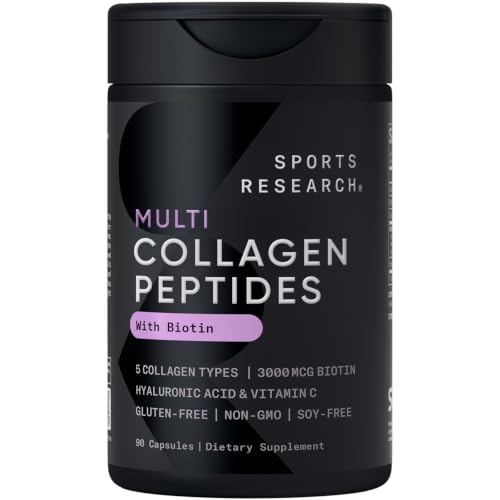
Contains five types of collagen for versatility.
Includes hyaluronic acid for enhanced skin hydration.
Gluten-free and non-GMO for dietary flexibility.

High potency formula supports hair, skin, and nails.
Contains essential vitamins for comprehensive beauty care.
Made in the USA for quality assurance.

Comprehensive joint support with multiple key ingredients.
Made in the USA for quality assurance.
Eligible for FSA and HSA benefits.

Easy mixing into drinks and smoothies.
Supports healthy skin, nails, and joints.
Suitable for both men and women.

Delicious taste with essential vitamins and minerals.
Includes biotin, zinc, and vitamins C and E.
Non-GMO formula supports anti-aging benefits.

Supports hair, skin, and nails health effectively
Contains high doses of biotin and keratin
Includes DHT blocker for reduced hair thinning
Start with the actual daily collagen amount, not the size of the container, the number of collagen types, or the total weight of a proprietary blend. A high-quality label should identify hydrolyzed collagen, state the serving size and daily amount, and explain whether the figure refers to collagen itself, collagen protein, or a combined blend. Multi-collagen products may name bovine, fish, chicken, and eggshell sources while leaving the amount from each source undisclosed. “Five types” or “ten types” therefore does not necessarily mean a higher or better dose.
The formula around the collagen matters too. Single-ingredient powders avoid added vitamins, botanicals, stimulants, and high-dose biotin, making the safety picture easier to assess. In blends, every vitamin, botanical, excipient, and capsule material should be quantified and clearly warned about. Biotin deserves particular attention: several supplied products contain 2,500–10,000 micrograms per serving, and reviews warn that supplemental biotin can interfere with some laboratory tests. A label warning is useful, but people should still tell their clinician and laboratory before testing.
Animal-source and allergen information should be specific. Buyers may need to distinguish bovine, fish, chicken, eggshell, gelatin, or mixed sources. Fish species and egg or fish allergens should be declared, and a product described as vegan should not also contain bovine, fish, chicken, or eggshell collagen. The supplied reviews include direct conflicts between vegan or plant-based catalog descriptions and animal-derived formulas, so the current package label matters more than a headline claim.
Quality claims also vary substantially. “Third-party tested,” “GMP,” “pure,” or “grass-fed” is not the same as independent finished-product certification or a buyer-accessible laboratory report. The strongest supplied examples appear in public NSF dietary-supplement listings for the exact product and format. USP, NSF, Informed Sport, and Informed Choice registries are the relevant places to check for current finished-product certification. A lot-specific report should match the lot on the purchased container and identify the laboratory, methods, collagen or protein result, and relevant contaminant testing. A generic certificate, factory certification, or testing statement cannot answer those questions.
Expect modest, uncertain benefits rather than treatment. The supplied reviews support possible skin hydration or elasticity benefits for some collagen peptide preparations, but not guaranteed wrinkle reversal, hair growth, cartilage rebuilding, fat loss, immunity, or disease treatment. Product-specific clinical trials were generally not found. Environmental claims are similarly incomplete: grass-fed, wild-caught, pasture-raised, or recyclable statements need source traceability, chain-of-custody certification, life-cycle evidence, or usable packaging information.
Safety caveats recur across the category. Many products are unsuitable for vegans, vegetarians, or people avoiding bovine, fish, chicken, eggshell, or gelatin ingredients; fish and egg allergies are especially recurring concerns. High-dose biotin can interfere with laboratory tests. Botanical blends may introduce additional concerns, including ashwagandha’s reported thyroid, medication, and rare liver-injury issues, saw palmetto during pregnancy or breastfeeding, and undisclosed glucosamine risks for people taking warfarin. Pregnancy, nursing, medical conditions, prescription medicines, persistent joint pain, and suspected hair loss warrant clinician advice. No product should replace diagnosis or established treatment.
The supplied products show that collagen quality is not one-dimensional. A meaningful dose can coexist with weak testing transparency, while a certified product may still contain allergens or an undisclosed blend. The topics below explain what to check before buying.
This measures whether the labeled daily amount, hydrolyzed form, and intended skin or joint use resemble human-study ranges. In the supplied products, higher scores generally accompany clearly stated gram-level amounts such as 8.5–15.66 g; low scores accompany 150–1,600 mg beauty or capsule blends. A large container or many collagen types does not make a small daily dose research-relevant.
This covers added vitamins, botanicals, stimulants, excipients, and warnings. Simple, quantified formulas without biotin or stimulant blends score higher, while products with high-dose biotin or undisclosed botanical blends score lower. This matters because several supplied formulas contain 2,500–10,000 micrograms of biotin, which can interfere with some laboratory tests, and some blends add medication or pregnancy concerns.
This measures whether the buyer can identify each collagen source and relevant allergen. Higher-scoring products name sources such as bovine, chicken, fish, eggshell, and sometimes fish species, while lower-scoring products leave species or source materials unclear or conflict with vegan claims. The distinction matters for fish or egg allergy, gelatin avoidance, religious or personal restrictions, and vegetarian or vegan diets.
This measures protection against heavy metals, pathogens, adulterants, and other contaminants through finished-product testing. Higher supplied scores occur where independent testing or stronger external oversight is documented; lower scores reflect only general purity, GMP, or third-party-testing statements. Collagen’s animal and marine inputs make identity, microbiological control, and contaminant results important, but a testing claim alone does not verify the purchased container.
This measures whether buyers can obtain an independent report matched to the lot on their container, covering identity, collagen or protein amount, and relevant contaminants. Most supplied products score around 68–72 because they offer only general testing statements. The notably higher-scoring product publishes a lot-numbered report, although buyers still need to match the container lot and review the laboratory and methods.
This measures whether buyers can obtain an independent report matched to the lot on their container, covering identity, collagen or protein amount, and relevant contaminants. Most supplied products score around 68–72 because they offer only general testing statements. The notably higher-scoring product publishes a lot-numbered report, although buyers still need to match the container lot and review the laboratory and methods.
This measures whether advertising stays within the limited human evidence for the actual formula. Higher scores accompany qualified claims tied to plausible doses; lower scores accompany promises of wrinkle reversal, cartilage repair, fat loss, guaranteed hair growth, or broad disease-related benefits. A study of collagen generally does not prove that a different finished product or low-dose blend produces the same result.
This covers an identifiable responsible company, quality contacts, lot traceability, and relevant recall or enforcement history. Higher supplied scores reflect clear company details, warnings, or traceability information; lower scores reflect weaker accountability or adverse compliance information. A GMP statement is useful context but does not replace a responsible-party address, a lot code, or a current check of recall and warning-letter records.
This measures traceability of bovine, fish, chicken, or eggshell inputs, including byproduct use and independent sustainability evidence. Most supplied products score around 69–75 because they make grass-fed, pasture-raised, wild-caught, or sustainably sourced claims without public origin records, chain-of-custody certification, or a product-specific life-cycle assessment. A high score would require independently verifiable sourcing, not just a source description.
This measures avoidable packaging, material identification, recycled content, and usable recycling guidance. Scores in the supplied set are mostly 68–76, reflecting limited package evidence. A powder tub, pouch, bottle, or individual packet may be convenient, but convenience does not establish a lower footprint. Higher performance requires clear material information and credible, location-relevant recycling or recycled-content claims.
This is an unflavored, 16-ounce animal-derived collagen powder intended to be stirred into drinks or foods. The manufacturer describes hydrolyzed bovine, fish, chicken, and eggshell collagen sources, marketed as collagen types I, II, III, V, and X. An NIH label record for this product lists 58 servings, 7.83 g of multi-collagen complex and 7 g protein per scoop, with no other ingredients. The exact powder appears in NSF International's current dietary-supplement registry, which is meaningful independent finished-product certification. However, the NSF listing names a recommended daily serving of two scoops, about 15.66 g, while the NIH label directs one scoop. This serving discrepancy matters because the label does not disclose how the total collagen is divided among its five animal-source components.
This fits an adult who wants a plain collagen powder rather than a flavored beauty blend, and who can safely consume bovine, fish, chicken, and egg-derived ingredients. A single 7.83 g scoop is in the dose range studied for some skin outcomes, although the product itself was not identified in clinical trials. It may also suit a buyer who values independently certified finished-product quality control and is willing to verify whether their purchased tub directs one or two scoops daily.
It is not appropriate for vegans, vegetarians, or people avoiding beef, poultry, fish, or egg. Those with fish or egg allergy should not rely on broad marketplace allergen filters, since the formula itself includes fish collagen and eggshell membrane. It is also a poor fit for anyone seeking treatment for osteoarthritis, hair loss, digestive disease, hormonal symptoms, depression, or other medical conditions. The manufacturer’s broader marketing claims should not replace clinical diagnosis or prescribed care. Buyers needing lot-specific contaminant results should choose a product that publicly provides them.
The strongest quality finding is current NSF/ANSI 173 certification for the exact powder in NSF International's public dietary-supplement registry. This provides independent oversight beyond a factory-only GMP statement. The archived NIH label identifies 7.83 g of combined collagen per scoop and no other ingredients, reducing concerns about unnecessary stimulant, vitamin, or botanical additions. It does not show the individual contribution from each animal source. Bovine, fish, chicken, and eggshell sources are identified, but the fish species, source regions, byproduct documentation, and marine chain-of-custody certification were not established. No public lot-specific test report was located. FDA's February 18, 2021 warning letter addressed disease claims for another Wholesome Wellness supplement, not this powder or a contaminant issue. The current collagen page still uses unusually expansive health and anti-aging claims, which warrants caution when interpreting its marketing.
This is a gelatin-capsule collagen supplement sold in 120-capsule bottles. The label record held by the NIH Dietary Supplement Label Database lists a two-capsule serving with 1,000 mg total hydrolyzed collagen from bovine peptides and chicken cartilage peptides, plus 100 mg hyaluronic acid and 60 mg vitamin C. It provides 60 labeled servings per bottle. The collagen amount is materially lower than the 2.5 g to 10 g daily hydrolyzed-collagen range reported in the skin trials summarized in a systematic review. Human research suggests oral collagen may modestly improve skin hydration, elasticity, or wrinkles, but studies vary in quality and this exact formula has not been clinically verified. The product is intended for skin, hair, nail, joint, and bone support, though its marketing makes stronger wrinkle-reduction and skin-tightening statements than the formula-specific evidence supports.
This product suits an adult who specifically wants a compact capsule format instead of a collagen powder, accepts a modest 1 g labeled collagen serving, and wants vitamin C and hyaluronic acid included in the same routine. It may fit someone using collagen as a general wellness supplement rather than as treatment for joint disease or a guaranteed wrinkle intervention. The label identifies bovine and chicken collagen sources, which helps buyers who avoid marine collagen, although it is not suitable for vegetarians or vegans.
It is not suitable for vegans, vegetarians, or people who need to avoid bovine, poultry, or gelatin-derived ingredients. People with a history of food allergy should review the full package label and discuss use with a clinician, particularly if they have reacted to bovine or chicken-derived products. Pregnant or nursing people, those taking prescription medicines, and people managing a medical skin or joint condition should seek clinical advice first. It is also a poor fit for buyers who require a public lot-specific contaminant report or independently certified finished-product testing.
The label identifies bovine and chicken cartilage collagen peptides and a gelatin capsule, so this is an animal-derived product. It does not identify source countries, livestock practices, chicken species, byproduct use, or traceable animal-welfare and environmental certifications. No fish ingredient is listed in the label record reviewed. ForestLeaf's general statements about United States manufacturing and third-party batch testing are manufacturer statements, not public product-specific laboratory evidence. No current product entry was found in the major public finished-supplement certification registers checked, including USP, NSF, Informed Sport, and Informed Choice. No publicly accessible, lot-matched certificate of analysis was located for this product. ForestLeaf has accessible U.S. customer-service details, but the product pages reviewed do not provide packaging material, recycled-content, recyclability, or refill information. No relevant FDA recall or warning letter for ForestLeaf's collagen product was located in the searches performed.
This is an unflavored, 32 ounce collagen powder intended to be mixed into drinks, smoothies, foods, or baked goods. An independently listed current label identifies 11 g of hydrolyzed bovine and chicken collagen per scoop, with 10 g protein, and suggests one or two scoops daily. The same 32 ounce format is listed at about 80 single-scoop servings. It is an animal-derived product, not vegan. The formula has no listed added ingredients and the manufacturer identifies types I, II, and III collagen, but does not disclose the amount from bovine versus chicken. The dose is within or above ranges used in many skin and joint studies, although those studies do not establish that this exact finished product delivers the advertised outcomes.
This product suits an adult who specifically wants a plain animal-collagen powder, prefers to avoid added flavorings and vitamins, and will use it in food or drinks. A single 11 g scoop is a practical study-relevant amount for someone exploring collagen for general skin or joint support, provided they treat benefits as uncertain rather than guaranteed. The 32 ounce format is most practical for regular users who can store a large tub tightly sealed and tolerate a potentially noticeable animal-protein taste.
It is not appropriate for vegans, vegetarians avoiding animal collagen, or people with a known sensitivity to bovine or chicken-derived ingredients. Anyone with a history of serious food allergy should contact a clinician or manufacturer before use, because the formula contains animal materials despite an allergen-free statement. Pregnant or nursing people, children, and people taking prescription medicines should follow the label precaution and seek clinician guidance. Competitive athletes or buyers needing documented contaminant control should require a certified product or a lot-matched independent report.
Health-wise, the useful part of this formula is its simple composition. Each scoop supplies 11 g of hydrolyzed bovine and chicken collagen, with no listed added ingredients. That amount is compatible with doses used in many oral-collagen studies, but evidence for visible skin aging remains mixed and quality concerns affect much of the research. The manufacturer’s claims about reversing wrinkles and repairing cartilage overstate what can be concluded for this product. The manufacturer says every lot is checked by independent laboratories for heavy metals and microbiological components, and it identifies a Brooklyn contact address. However, no public lot-specific report, finished-product certification, or independently verified sourcing chain was found. Grass-fed and pasture-raised statements are manufacturer claims, not independently documented environmental certification. Packaging materials, recycled content, and practical recycling instructions are also not clearly disclosed.
This is an unflavored bovine collagen-peptide powder for adults. One included scoop supplies 11 g of grass-fed collagen hydrolysate, 10 g protein, and 40 calories. The 1 pound container provides 41 servings and the label says to mix one scoop daily with 6 to 10 ounces of water or another beverage. The label lists no other ingredients. Its 11 g hydrolyzed collagen dose is clearly disclosed and is within, or just above, ranges used in human skin and joint research. That makes the dose plausible for modest skin hydration, elasticity, or joint-symptom support, but these studies do not establish that this specific product delivers those outcomes. Nutricost states that it uses third-party laboratories and a GMP-compliant facility. However, no public, lot-matched report for this collagen powder was located. The manufacturer also posts a California warning that the unflavored 1 pound version can expose users to lead.
This product suits an adult who specifically wants a plain bovine collagen powder, rather than a flavored beauty blend or a formula with biotin and other additives. Its 11 g scoop is a practical amount for someone using collagen daily in coffee, smoothies, or recipes and seeking an evidence-plausible collagen intake for general skin or joint support. It also fits people who need to avoid gluten based on the product labeling, provided they accept the stated lead warning and can discuss use with a clinician when appropriate.
It is not appropriate for vegetarians, vegans, or anyone who avoids bovine ingredients for religious, ethical, or allergy-related reasons. People who are pregnant, nursing, managing a medical condition, taking medicines, or choosing supplements specifically to limit lead exposure should consult a qualified clinician and consider a product with publicly available, lot-specific heavy-metal results. It is also not a complete protein and should not replace dietary protein. Athletes subject to drug testing may prefer an exact product listed in a recognized sport-certification registry.
The key health issue is the manufacturer's California warning for the unflavored 1 pound powder, which says consumption can expose users to lead associated with reproductive harm. A warning is not a quantified exposure result, but it is a material safety disclosure and weighs more heavily than general claims of purity. The formula otherwise has a straightforward label, with 11 g bovine collagen hydrolysate and no listed additional ingredients. The manufacturer gives adult-use and medical-consultation cautions. Nutricost Manufacturing is listed by NSF as a GMP-certified dietary-supplement facility, but that facility certification is not independent certification of this finished powder. Nutricost also states that its collagen is grass-fed and made with globally sourced ingredients, yet it does not provide a public animal-origin chain, byproduct documentation, lifecycle assessment, or product-specific sustainability certification. Packaging material and recycling details are likewise not clearly documented.
This is a 90-capsule, 30-day collagen supplement. The suggested use is three capsules daily. Its labeled serving provides 1,600 mg of a multi-collagen complex, 90 mg vitamin C, 3,000 mcg biotin, and 60 mg hyaluronic acid. The collagen blend lists hydrolyzed bovine and fish collagen peptides, eggshell membrane, and chicken bone broth concentrate. The manufacturer markets the blend for healthy hair and skin, and claims five collagen types. The active ingredients and amounts are independently reproduced by a retailer, but the 1.6 g total blend does not disclose the amount from each source. Human skin studies of hydrolyzed collagen more commonly used 2.5 g to 10 g daily, so this serving is below the usual studied range for conventional collagen hydrolysates. The label includes a biotin laboratory-test warning.
This product fits an adult who wants a compact, unflavored capsule format rather than a powder and who understands that it supplies a modest 1.6 g total multi-source collagen blend per day. It may also suit someone who values a label that specifies vitamin C, biotin, hyaluronic acid, fish, and egg content. The person should be able to tell clinicians and laboratory staff about the 3,000 mcg biotin serving before bloodwork or other biotin-sensitive testing.
It is not appropriate for people with fish or egg allergy, or for vegetarians and vegans, because the formula contains fish collagen, eggshell membrane, bovine collagen, chicken ingredients, and a gelatin capsule. It is also a poor fit for someone seeking a collagen amount aligned with the common 2.5 g to 10 g human-study range for skin uses, or a clearly dosed single-source collagen. Anyone having laboratory tests, especially urgent cardiac testing, should disclose biotin use to their clinician and laboratory.
The label identifies the animal-derived components more clearly than many multi-source blends, naming hydrolyzed bovine and fish collagen peptides, eggshell membrane, and chicken bone broth concentrate. It also declares fish and egg allergens, while an independently reproduced label names barramundi and/or red snapper. The 3,000 mcg biotin dose is prominently accompanied by a laboratory-test interference warning. FDA notes that biotin can produce incorrect results in some tests, including some troponin assays. Public certification and testing evidence is limited for this exact product. The current NSF dietary-supplement registry shows Sports Research certifications for two creatine powders, not this collagen capsule. No public lot-specific certificate of analysis was located for its collagen amount, heavy metals, or microbial testing. The manufacturer describes domestic and international ingredient origins, but public material located did not provide origin-level animal traceability, marine sustainability certification, or package-material and recycling details.
This is a 60-capsule, 30-serving hair, skin, and nail supplement intended for adults to take as two capsules daily. The manufacturer’s current label lists 5,000 mcg biotin, 310 mg fish collagen, 10 mg hyaluronic acid, vitamins A and D, several B vitamins, and a 400 mg proprietary blend containing MSM, hydrolyzed keratin, bamboo, coconut, nettle, and grape seed extract. The fish collagen amount is far below the 1 to 10 g daily range commonly studied for skin outcomes, so it is not an evidence-relevant collagen dose by itself. A registered, sponsor-provided three-month study reported hair findings for a different 30,000 mcg formula with 10,000 mcg biotin and a 710 mg blend. It therefore does not directly validate the current label formula. The manufacturer clearly identifies fish and coconut allergens.
This product suits an adult who specifically wants a compact, once-daily beauty supplement with biotin, modest fish collagen, hyaluronic acid, and several B vitamins in one bottle. It is more appropriate for someone seeking general nutritional support for hair, skin, and nails than for someone expecting a clinically typical collagen-peptide dose. The buyer should be able to eat fish and coconut, should value explicit multi-fish source disclosure, and should be prepared to tell clinicians and laboratories about the 5,000 mcg biotin dose before testing.
It is not suited to people with fish allergy, coconut allergy, or a need to avoid animal-derived ingredients. People who have imminent blood work, thyroid monitoring, hormone testing, cardiac testing, or other immunoassay-based laboratory tests should discuss biotin timing with their clinician or laboratory first. It is also a poor fit for buyers seeking gram-level collagen peptide intake for skin or joint use, transparent individual doses of keratin and botanicals, or a publicly available lot-specific contaminant report. Pregnancy, breastfeeding, medical conditions, and medication use warrant clinician review.
The most useful safety disclosure is the manufacturer’s explicit fish statement. It identifies six fish sources and also declares coconut, allowing people with those allergies to screen the product before use. The formula supplies 5,000 mcg biotin per daily serving. FDA and NIH materials warn that supplemental biotin can interfere with certain laboratory tests, including some thyroid and troponin assays. Users should disclose use to their clinician and laboratory. The reviewed manufacturer materials identify fish collagen but do not document fishery origin, byproduct sourcing, chain-of-custody certification, or a product-level life-cycle assessment. No packaging resin code, recycled-content documentation, or local recycling instructions were found. No public, lot-matched independent certificate of analysis was located, so heavy-metal, microbiological, identity, and labeled-amount testing cannot be independently assessed from the available materials. No relevant FDA recall or warning-letter result was identified in the review.
This is a 120-capsule joint-support supplement with 30 daily servings. The manufacturer directs adults to take four capsules daily with water, with an option to divide the serving into two capsules twice daily. Its disclosed daily formula contains 1,600 mg glucosamine HCl, 800 mg chondroitin sulfate, 333 mg MSM, and 67 mg hydrolyzed grass-fed bovine collagen types I and III. The formula is principally a glucosamine and chondroitin product, not a meaningfully dosed collagen supplement. Human collagen studies for joint and skin outcomes commonly use gram-level daily amounts, while this product provides 67 mg. The manufacturer states that batches are third-party tested for heavy metals and microbiology, but no lot-matched report was publicly available for independent review. It also discloses shellfish and uses gelatin capsules.
This format is most relevant to an adult who specifically wants a one-month capsule supply centered on glucosamine and chondroitin, rather than a high-dose collagen powder. The fully disclosed formula can make daily ingredient tracking easier, and the four-capsule serving can be divided for people who prefer not to take all capsules at once. It is most appropriate only where shellfish exposure is acceptable and a clinician has reviewed relevant medicines or health conditions.
It is not suited to anyone with a shellfish allergy, or to vegan and vegetarian households that avoid bovine collagen and gelatin. It is also not a good match for someone seeking a clinically comparable collagen-peptide dose for joint discomfort, skin hydration, or elasticity, since the collagen amount is only 67 mg daily. People who require independently certified supplements, lot-specific laboratory results, pregnancy or nursing guidance, or medication interaction review should seek a product with that documentation or clinician support.
The manufacturer identifies the collagen as hydrolyzed grass-fed bovine types I and III, lists shellfish as an allergen, and names gelatin, microcrystalline cellulose, and silicon dioxide as other ingredients. This offers more ingredient detail than a proprietary blend, but the shellfish source species and gelatin source are not further specified. The stated collagen quantity is far below the 2.5 g to 10 g daily range commonly studied for oral collagen hydrolysate. The manufacturer says its facility is GMP-certified and FDA-registered, and that each batch is tested by ISO 17025 laboratories for heavy metals and microbiology. Those are manufacturer statements, not publicly verifiable finished-product certification or lot-specific reports. No public certification registry listing for this exact product was located. The bottle is described as BPA-free black plastic, but no recycled-content, recyclability, animal-source traceability, or independently verified sustainability documentation was found.
This is a vanilla-flavored collagen powder in a 16.93-ounce canister with 40 labeled servings. One 12-gram scoop provides 11 grams of hydrolyzed bovine collagen peptides, 10 grams of protein, 40 milligrams of sodium, natural flavor, and monk fruit extract. The label directs adults to mix one scoop into food or a drink one to two times daily, for 11 to 22 grams of collagen daily. The 11-gram single-scoop dose is within or above dose ranges used in human studies of hydrolyzed collagen for skin outcomes. That supports dose plausibility, not proof that this exact vanilla product improves skin, hair, nails, or joints. Its strongest independently verified quality fact is current Informed Choice certification, including publicly listed vanilla batches. That program focuses on banned-substance contamination and manufacturing controls, rather than publishing a full heavy-metal, microbiology, and collagen-content report for each batch.
This product suits adults who want a flavored, simple collagen powder for routine use in coffee, smoothies, or meals and prefer an 11-gram scoop over small capsule doses. It is particularly relevant for someone seeking a collagen amount that matches human-study ranges for skin-related outcomes, while understanding that the research is not product-specific. It also fits athletes or tested-sport participants who value an independently listed Informed Choice certification and can check the lot code against the program's public batch list.
It is not suitable for vegans, vegetarians avoiding bovine materials, or anyone with a known sensitivity to bovine collagen or uncertainty about natural flavors. People with severe food allergies should not treat a gluten-free and dairy-free positioning statement as a substitute for individualized allergen advice. It is also a poor fit for buyers who require a publicly downloadable, lot-matched certificate showing numeric heavy-metal, microbiology, and protein or collagen results. It should not replace medical assessment or treatment for joint disease, chronic pain, hair loss, or skin conditions.
The health-positive feature is a plainly disclosed 11-gram hydrolyzed bovine collagen dose, with no added biotin, stimulant, or large vitamin stack. Published reviews of oral collagen hydrolysate include doses in this range for skin-related outcomes, but those findings do not establish effectiveness for this exact flavored powder. Informed Choice independently lists this product and recent vanilla batches. Its program uses ISO 17025-accredited testing for a broad banned-substance screen and assesses manufacturing controls. That certification does not equal a publicly available full contaminant certificate. No product-specific FDA recall, FDA warning letter, or California exposure notice was identified in the relevant public sources checked. Ecological disclosure remains limited. The product identifies bovine collagen and displays a recycling prompt, but public materials reviewed do not document animal origin, byproduct sourcing, welfare practices, package resin, recycled content, recycling acceptance, or a product-specific life-cycle assessment.
This is a lemon-flavored, gelatin-free gummy supplement sold in a 60-gummy bottle with 30 two-gummy servings. The displayed Supplement Facts panel lists 200 mg hydrolyzed collagen per daily serving, plus 50 mg vitamin C, 5 mg vitamin E, 2,500 mcg biotin, and 5 mg zinc. It also lists 20 calories, 2 g added sugar, and 5 g carbohydrate per serving. The concrete limitation is the collagen quantity. The 200 mg daily amount is far below gram-level amounts commonly used in human collagen-peptide studies, so it does not closely match the dose behind skin or joint benefit claims. The manufacturer promotes skin, hair, nail, joint, and healthy-aging support, but no finished-product clinical trial, lot-matched independent test report, or public certification listing was located. The collagen species and animal source are not disclosed, despite the gelatin-free claim.
This product is most relevant to an adult who strongly prefers chewable supplements, wants a simple 30-day gummy format, and is mainly seeking small amounts of vitamin C, zinc, vitamin E, and biotin alongside a labeled collagen ingredient. It may also suit someone who avoids gelatin and accepts 2 g added sugar per daily serving. Its use case is convenience, not matching the collagen amounts typically studied for visible skin changes or joint symptoms.
It is not well suited to anyone seeking a study-aligned collagen dose for osteoarthritis symptoms, wrinkles, skin elasticity, or hair changes. People with fish, shellfish, bovine, poultry, egg, or other animal-source allergies should not rely on the gelatin-free claim because the collagen source is undisclosed. Anyone scheduled for thyroid, cardiac troponin, or other potentially biotin-sensitive laboratory testing should tell the clinician or laboratory about the 2,500 mcg biotin dose. Pregnant or nursing people and those using medication should seek clinician guidance first.
The disclosed vitamin and mineral quantities are modest except for biotin. Vitamin C at 50 mg, vitamin E at 5 mg, and zinc at 5 mg are below adult upper intake levels, but 2,500 mcg biotin is considered a very high supplemental amount by NIH. FDA warns that biotin can distort results from some laboratory tests, including certain troponin tests. The collagen itself is hydrolyzed, but its species and source materials are not identified. Lunakai provides a Nashville contact channel and states that products are made in the USA. The packaging and marketing use GMP and lab-tested language, but no public record was found confirming independent certification of this exact finished gummy or providing a lot-matched third-party report for collagen content, heavy metals, or microbiological testing. No relevant FDA recall or warning letter was located in the searched public records. The product is supplied in a plastic bottle, with no clear resin code, recycled-content claim, source traceability, or animal and marine sustainability documentation found.
This is a 90-capsule hair, skin, and nail supplement intended as a 30-day supply at three capsules daily. Marketplace label reproductions identify 1,000 mg of a multi-collagen complex, 10,000 mcg biotin, saw palmetto extract, vitamin C, vitamin E, folate, and blended keratin, hyaluronic acid, MSM, and botanical ingredients. There is an important formula-record discrepancy. The manufacturer’s current product page describes a seven-ingredient, 4,000 mg collagen formula and labels it vegan, while independently reproduced marketplace label information describes animal-derived bovine, chicken, marine, and eggshell collagen in a larger 16-ingredient formula. The 1 g collagen amount on the reproduced label is at the low end of studied oral collagen ranges. The manufacturer states that batches are third-party tested and made in a GMP-certified facility, but it does not publish a lot-linked report or independent finished-product certification.
This product is most relevant to an adult who specifically wants a capsule-based beauty supplement rather than collagen powder, accepts a three-capsule daily routine, and is willing to verify the physical bottle label before use. It may suit someone seeking general hair, nail, and skin support who has no egg, fish, poultry, or bovine allergy and is not relying on it to treat hair loss. The formula record should be checked closely because the current manufacturer page and marketplace label reproductions do not describe the same composition.
It is not suitable for vegans, or for people with fish, egg, poultry, or bovine allergy, unless the purchased bottle clearly proves a different source and allergen status. Avoid self-starting it during pregnancy or breastfeeding because saw palmetto may be unsafe in those settings. People taking prescription medicines, managing hormone-related conditions, or preparing for blood testing should consult a clinician. In particular, disclose the 10,000 mcg biotin dose to the laboratory and healthcare team because it can interfere with some assays.
The key health issue is documentation consistency. Marketplace label reproductions describe hydrolyzed bovine, chicken, marine, and eggshell collagen, while the manufacturer’s current page calls its collagen formula vegan and gives a different collagen dose and shorter ingredient list. That leaves the animal source and allergen position uncertain for a buyer who has not inspected the bottle. The manufacturer states that batches are independently tested and made in a GMP-certified U.S. facility, but no public certificate tied to a product lot, test method, or accredited laboratory was located. No exact-product certification was located in major public supplement certification directories. No relevant FDA recall or warning-letter result was identified in the reviewed searches. Sustainability claims and packaging material or recycling instructions were not independently substantiated.


