Best Overall
$2 Coupon

Luma Nutrition CoQ10 400mg Softgels
High potency CoQ10 for better energy support.
Easily absorbed liquid softgel format.
Twice the dosage per serving compared to others.
 Lauren Wilson
High potency CoQ10 for better energy support.
Easily absorbed liquid softgel format.
Twice the dosage per serving compared to others.

High 400mg dosage for effective antioxidant support.
Vegan-friendly formula suitable for all diets.
Enhanced absorption for better bioavailability.
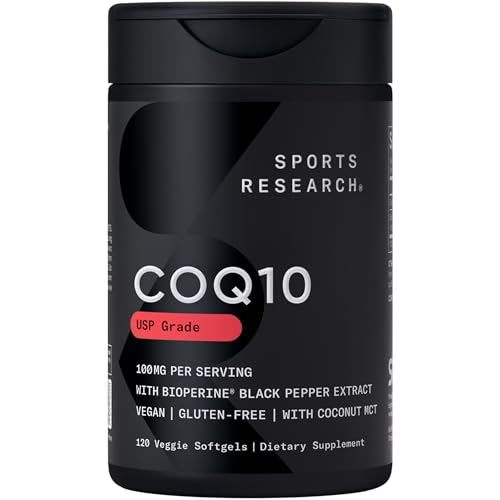
Enhanced absorption with Bioperine (Black Pepper).
Vegan certified and Non-GMO verified.
Contains coconut oil for better bioavailability.

High absorption for better effectiveness.
Vegan-friendly CoQ10 supplement.
Offers a potent 200mg per serving.

Comprehensive blend supports overall heart health.
Includes essential vitamins and minerals.
High potency ingredients for maximum effectiveness.

High absorption formula ensures effective nutrient intake.
Combines CoQ10 with Omega 3 for enhanced benefits.
Supports heart health and boosts energy levels.

Combines red yeast rice with CoQ10.
High potency with 1200 mg per serving.
Vegan and Non-GMO formulation.

High absorption for improved effectiveness.
Supports heart health and energy production.
Enhanced formula with Coenzyme Q10.

Absorbs better than standard CoQ10.
Supports heart health effectively.
Long-lasting 4-month supply.
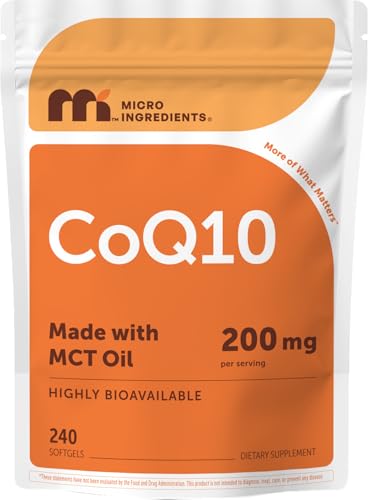
Enhanced absorption with added coconut MCT oil.
High potency with 200mg CoQ10 per serving.
Non-GMO formula for peace of mind.
What determines whether a product is dependable is not the largest number on the front label. Start with the exact form and amount in the Supplement Facts panel: is the stated amount actual CoQ10, or the weight of a larger powder, phytosome, extract, or blend? A product labeled “250 mg phytosome,” for example, may provide only about 45–55 mg CoQ10 when standardized to 18–22%. Other listings use 200 mg of powder while describing a much smaller percentage as ubiquinone. Headline amounts can also conflict with directions: one product presents 400 mg per serving but uses two capsules, while another has one- versus two-softgel directions that do not agree. Confirm the amount per serving, serving size, daily directions, form, and number of servings.
For quality evidence, look for a current listing for the exact finished product and formulation in the USP Verified Dietary Supplements database, NSF Certified Dietary Supplements or Certified for Sport listings, or the Informed Sport or Informed Choice registers when claimed. A factory’s GMP status, an FDA-registered facility, a “third-party tested” badge, or certification of another product is not the same thing. The strongest batch evidence is a recent report matched to the bottle’s lot number and expiration date, identifying the laboratory, method, actual CoQ10 assay, and relevant contaminant results. Ideally, the laboratory’s ISO/IEC 17025 accreditation can be checked through an accreditation directory. A generic testing statement without a reproducible report leaves potency, heavy metals, microbes, and other risks unresolved.
Delivery claims also need context. CoQ10 is fat soluble, so an oil-based softgel or use with a meal containing fat is a reasonable formulation choice. Human studies support some delivery approaches, including piperine and named phytosome technology, but evidence for an ingredient or delivery category does not prove that the exact finished product has been tested. “Ubiquinol,” “liposomal,” “water soluble,” “high absorption,” and “three-times better” are not proof by themselves.
Prefer a complete formula: form, dose, serving size, carrier oil, capsule materials, added actives, and allergens should be clear. Repeated safety concerns in the supplied reviews include possible interaction with warfarin and insulin, the need for advice during cancer treatment, and caution with pregnancy or breastfeeding. Several products also failed to clearly name these precautions. Combination products deserve extra scrutiny: red yeast rice may have statin-like risks and citrinin concerns, vitamin K matters for warfarin users, and some products contain high amounts of vitamin D3 or niacin. Check allergens such as coconut, fish-related ingredients, soy, gelatin, and other animal-derived materials before use.
The following topics reflect the standards used to assess CoQ10 products. Higher scores indicate stronger evidence and clearer disclosure in the supplied reviews; they do not establish that a supplement treats or prevents disease.
This measures whether the named ubiquinone or ubiquinol form and labeled milligrams are likely to remain accurate through expiry, using form-specific potency and stability evidence. It matters because several products confuse active CoQ10 with powder or complex weight. Higher-scoring products clearly state form and dose; lower-scoring products have unresolved dose conflicts or no finished-product stability evidence.
This measures finished-product screening for elemental contaminants, microbes, and formulation-specific risks such as citrinin in red yeast rice. It matters because a “third-party tested” statement does not show what was tested or which lot passed. Higher scores reflect clearer contaminant-control evidence or credible quality systems; lower scores lack a lot-matched report, named laboratory, or relevant panel.
This measures whether the label clearly identifies precautions involving warfarin, insulin, cancer treatment, pregnancy, complex medication use, and related situations. CoQ10 is generally well tolerated, but the supplied reviews repeatedly identify possible warfarin and insulin interactions. Higher scores use specific, useful warnings; lower scores rely on general advice to consult a professional without naming the relevant risks.
This measures whether buyers can identify the CoQ10 form, dose, serving size, carrier, capsule materials, added actives, and allergens. It matters because products range from single-ingredient powder to formulas containing oils, piperine, omega-3s, botanicals, gelatin, or vitamin K. Higher scores provide a complete label; lower scores contain proprietary blends, missing excipients, unclear omega-3 sources, or contradictory capsule claims.
This measures whether the stated use and daily amount align with human evidence while acknowledging uncertainty and limits. A dose used in one study does not establish a broad heart, energy, blood-pressure, or statin benefit. Higher-scoring products frame use narrowly and avoid disease promises; lower-scoring products make expansive claims that exceed the evidence or do not match the studied population and outcome.
This measures certification of the exact finished CoQ10 product and formulation for label accuracy and contaminants, not certification of its factory or an ingredient. A high score requires a matching current USP, NSF, Informed Sport, or Informed Choice registry entry. Among the supplied products, scores cluster around 70 because manufacturer certification claims often were not matched to a searchable finished-product listing.
This measures whether a recent, lot-matched report identifies an independent accredited laboratory and shows actual CoQ10 assay plus relevant contaminant results. It matters because potency and purity belong to the bottle’s batch, not merely the brand. The clearest supplied example reported 420.20 mg per two-capsule serving and microbial and heavy-metal results, but its laboratory identity and accreditation were not established; generic testing claims scored lower.
This measures human evidence for the exact formulation or delivery technology, including oils, piperine, emulsions, and phytosomes. Oil-based softgels and piperine have a plausible or studied rationale, but evidence for a category does not verify every finished product. Higher scores use relevant human research and restrained language; lower scores treat “high absorption” or “liposomal” as proof without product-specific support.
This measures whether marketplace, package, and brand claims stay within qualified structure/function language rather than implying diagnosis, treatment, cure, prevention, or superior efficacy without support. Higher-scoring products make narrower wellness statements and acknowledge uncertainty. Lower-scoring products claim broad heart, blood-pressure, disease, plaque, energy, or statin benefits, or have a relevant regulatory history noted in review.
This measures whether a responsible firm, U.S. contact route, lot code, manufacturing accountability, and relevant regulatory history can be identified. It matters when buyers need test documents or must report an adverse event. Higher scores reflect traceable companies and contact information; lower scores reflect weaker accountability or relevant regulatory concerns, including an unauthorized certification notice noted for one supplied manufacturer.
This measures whether packaging materials, recycled content, recyclability, and environmental claims are specific and supportable. Most supplied products disclosed little beyond a bottle, pouch, glass container, or amber packaging, so environmental impact could not be meaningfully assessed. Higher scores avoid vague “eco-friendly” marketing and provide some substantiation; low practical transparency means the packaging remains unquantified.
This is a 30-day adult CoQ10 product with 60 liquid softgels. The manufacturer directs users to take two softgels daily with a meal containing fat. That daily serving is stated to provide 400 mg of the oxidized CoQ10 form, ubiquinone, or 200 mg per softgel, in a rice bran oil base. The formula is relatively simple, although not vegetarian. A retailer ingredient listing identifies rice bran oil, gelatin, glycerin, purified water, sunflower lecithin, annatto in sunflower oil, and beeswax. Luma states that every batch is independently tested and made in a U.S. FDA-registered, GMP-certified facility. However, it does not publish a lot-specific certificate of analysis, name the laboratory, or provide a current finished-product certification registry listing. The available evidence therefore confirms the stated formula and dose, not the measured contents of an individual bottle.
This product suits an adult who specifically wants a high stated daily amount of ubiquinone in an oil-based softgel, rather than a low-dose or powdered format. It is most concrete for someone able to take two softgels with a meal and comfortable with animal-derived capsule ingredients. The 60-softgel bottle is designed as a 30-day routine. It may also suit users who value a disclosed carrier oil and a short ingredient list, while recognizing that the claimed batch testing is not publicly reproducible.
It is not a good fit for people using warfarin or insulin, receiving cancer treatment, pregnant or nursing, or managing complex medication regimens without clinician or pharmacist input. NCCIH identifies potential CoQ10 interactions with warfarin and insulin and possible incompatibility with some cancer treatments. It is also unsuitable for vegans and vegetarians because the softgel contains gelatin and the formula includes beeswax. People who require independently certified label accuracy, contaminant testing, or a lot-specific report should choose a product that publishes those records.
Health highlights are the named ubiquinone form, the stated 400 mg daily amount, and the oil-based softgel format. Human research supports the general principle that carrier lipids and formulation can affect CoQ10 absorption, but no human bioavailability trial was located for this exact formula. Evidence for broad energy and cardiovascular claims is not equivalent to proof that this product treats disease. The product page also lacks the most useful interaction warnings, particularly for warfarin, insulin, and cancer treatment. Luma states that the product is third-party tested and made in a U.S. FDA-registered, GMP-certified facility. Those are manufacturer statements, not publicly checkable finished-product certification or lot-test evidence. Searches of FDA public recall, health-fraud, and warning-letter resources did not identify a product-specific action. No package resin code, recycled-content percentage, refill option, or package-specific recycling instructions were found, and no specific environmental claim was substantiated.
This is a 200-capsule vegan CoQ10 product sold as a one-capsule-per-day, 200-day supply. The current brand page calls it a 400 mg CoQ10 powder capsule and identifies the intended uses as cardiovascular, energy, nervous-system, immune, and antioxidant support. An independently indexed formula record identifies the CoQ10 form as ubiquinone, with vegetable cellulose capsule material and rice flour. The defining quality issue is potency evidence. The brand currently states that its 400 mg powder yields 6% ubiquinone, which makes the active specification unclear. A separate HPLC survey published in 2020 reported that a purchased aSquared 400 mg capsule lot contained 11 mg CoQ10 per capsule, versus its 400 mg claim. This was an older lot, not a test of every current bottle, but the seller does not publish a current lot-matched report to resolve that concern.
This product is most relevant to an adult who specifically wants a large, manufacturer-stated 200-capsule supply in a vegan capsule format, and who is prepared to verify the current bottle before relying on its stated dose. The available ingredient record is simple, with ubiquinone, a vegetable cellulose capsule, and rice flour. Because published potency evidence is unfavorable for an older lot, the suitable use case is limited to buyers who can obtain a current lot number, expiration date, and an independently issued certificate of analysis directly from the responsible company.
It is not suitable for someone who needs reliable, documented CoQ10 dosing, including people following clinician-directed supplementation plans or using it alongside treatment for heart failure. People taking warfarin or insulin, those receiving cancer treatment, pregnant or breastfeeding people, and people managing several medicines should seek clinical advice before using CoQ10. It is also a poor fit for anyone relying on the advertised 400 mg amount without current lot evidence, because an independently tested older lot was far below that claim and no public current-lot report was found.
The key health finding is a historical potency failure, not simply missing documentation. In a 2020 HPLC survey, a purchased aSquared 400 mg capsule lot tested at 11 mg of CoQ10 per capsule. The brand now says the product is third-party tested in an ISO 17025 facility, but it does not provide a current lot-specific report that identifies the laboratory or confirms potency, heavy metals, microbiology, and other relevant results. No matching USP, NSF, or sport-certification listing was identified. CoQ10 is generally associated with mild effects such as digestive upset or insomnia, but it may interact with warfarin and insulin and may not be compatible with some cancer treatments. The brand markets a vegan formula, but does not provide package resin, recycled-content, recyclability, or other product-specific environmental information. No specific environmental claim was identified, so the packaging impact cannot be meaningfully assessed.
This is a 120-day, once-daily CoQ10 supplement for adults. Each plant-based softgel is labeled to provide 100 mg of ubiquinone CoQ10 and 5 mg black pepper extract standardized to 4.75 mg piperine. The NIH Dietary Supplement Label Database independently records those amounts and the one-softgel serving size. The formula uses coconut MCT oil in a tapioca-based softgel, and the maker directs users to take it with food. Sports Research states that the product is vegan, Non-GMO Verified, gluten-free, and third-party tested. Its ingredient list clearly identifies coconut as a tree-nut allergen. The key limitation is verification depth, no current matching USP Verified, NSF dietary-supplement, or Informed Sport listing was located for this exact CoQ10 product, and no public lot-specific independent assay and contaminant report was found.
This product suits an adult who specifically wants a modest 100 mg daily dose of ubiquinone CoQ10 in a one-softgel format, rather than a powder or gelatin softgel. It is also a reasonable format for a vegan buyer who can consume coconut and wants ingredient amounts shown individually, including the piperine amount. It fits routine, non-disease-specific supplementation where the user has reviewed medicines and does not need a higher clinician-directed CoQ10 dose. The 120-count bottle provides roughly four months at the labeled use of one softgel daily.
It is not a good fit for anyone taking warfarin, insulin, or complex prescription regimens without pharmacist or clinician review. CoQ10 can interact with warfarin and insulin, while piperine can affect drug transport and metabolism. People receiving cancer treatment should obtain guidance from their oncology team before using antioxidant supplements. Avoid it with coconut or tree-nut allergy concerns. It also does not meet the needs of buyers who require publicly available, lot-specific independent potency and contaminant reports, or a finished-product USP or NSF certification.
The label identifies ubiquinone, rather than ubiquinol, at 100 mg per daily softgel. It also discloses 5 mg BioPerine black pepper extract, providing 4.75 mg piperine, plus coconut MCT oil. Human evidence supports that CoQ10 formulation affects absorption, but there is no published human study located for this exact finished formula. Evidence for broad cardiovascular prevention, statin muscle symptoms, and blood-pressure effects remains limited or inconclusive. Sports Research is an identifiable U.S. company, and its product page states vegan, Non-GMO Verified, and gluten-free claims. The Vegan Action registry lists Sports Research Corporation as a company using its logo, but a current exact-product registry entry was not located for this 100 mg product. No material specification, recycled-content figure, resin code, or package-specific recyclability instructions were found for this bottle, so its environmental impact cannot be meaningfully assessed beyond its compact 120-softgel format.
This is a 200-count bottle of vegan capsules, each marketed as providing 200 mg of ubiquinone, the oxidized form of CoQ10. The manufacturer directs adults to take one capsule daily, preferably with a meal, making the bottle a stated 200-day supply. It is sold for antioxidant, energy, and heart-health support. The manufacturer states that the formula is vegan, gluten-free, soy-free, made in a GMP-compliant facility, and third-party tested in an ISO 17025 laboratory. However, no current product-specific certificate, lab name, lot number, assay result, contaminant panel, or stability report was made available for verification. Independent testing previously reported a severe potency shortfall in a different 400 mg CoQ10 product from this brand, so that result cannot establish the contents of this 200 mg product, but it makes current lot-specific evidence especially important.
This product fits an adult who specifically wants a simple, long-supply ubiquinone capsule, prefers to avoid gelatin, gluten, and soy, and understands that the stated 200 mg dose is a manufacturer claim rather than a currently verified lot result. It may be practical for someone using CoQ10 as an adjunct supplement after discussing their individual reason for use with a clinician, especially if they value one-capsule daily use over an oil-based softgel format.
It is not well suited to people taking warfarin or insulin, people receiving cancer treatment, or anyone pregnant, breastfeeding, or managing several prescription medicines without clinician guidance. CoQ10 can interact with warfarin and insulin and may not be compatible with some cancer treatments. It is also a poor fit for buyers who need a current independently certified product, a lot-specific potency and contaminant report, or documented evidence that the finished capsule has superior absorption.
The manufacturer states that this is a vegan, gluten-free, soy-free ubiquinone capsule made in a GMP-compliant facility and tested by an ISO 17025 laboratory. Those are useful manufacturing and dietary claims, but verification did not identify a matching USP or NSF finished-product certification, nor a public lot-specific certificate showing actual CoQ10 content, heavy-metal results, or microbiological testing. A prior independent test of another 400 mg CoQ10 product from this brand found substantially less CoQ10 than labeled, which warrants caution without proving a defect in this 200 mg product. CoQ10 is generally well tolerated, but it may interact with warfarin and insulin and may not be compatible with some cancer treatment. The reviewed product information does not clearly foreground those precautions. No product-specific packaging resin, recycled-content, refill, or recyclability details were disclosed. The bottle may be recyclable where accepted, but that cannot be confirmed from the available packaging information.
This is a 60-capsule, 30-day combination supplement taken as two capsules daily. Its manufacturer-stated label lists 200 mg of ubiquinone CoQ10, 300 mg each of 10:1 red yeast rice and flaxseed extracts, a 500 mg magnesium oxide and glycinate blend, plus vitamin D3, K2, niacin, zinc, and black pepper extract. It is marketed for heart function, cholesterol support, circulation, and energy. The key positive is that the active amounts and CoQ10 form are disclosed rather than hidden in a proprietary blend. However, no current USP, NSF, Informed Sport, or comparable finished-product certification was confirmed, and no lot-matched independent certificate of analysis was publicly supplied. The manufacturer says every batch is third-party tested, but does not publish the assay, contaminant, laboratory, lot, or stability records needed to check that statement.
This suits an adult who specifically wants a manufacturer-stated, multi-ingredient daily supplement instead of separately managing CoQ10, magnesium, vitamin D, vitamin K, zinc, niacin, flaxseed, and red yeast rice products. The disclosed 200 mg ubiquinone serving may be relevant to someone discussing CoQ10 supplementation with a clinician. It is better suited to buyers who can tolerate gelatin capsules, have reviewed their medication list, and understand that the testing and potency claims are not independently checkable from public lot records.
This is not suited to people taking warfarin, insulin, prescription cholesterol medicines, or medications with significant interaction potential unless their clinician specifically reviews it. It is also unsuitable for pregnancy or nursing without professional advice, for people receiving cancer treatment, and for those with liver, kidney, or unexplained muscle symptoms who may be vulnerable to red yeast rice related adverse effects. Vegans and people avoiding bovine gelatin should choose another product, because the label identifies bovine gelatin despite the manufacturer page's vegan claim.
The product provides a disclosed 200 mg ubiquinone serving, but public evidence for broad heart, energy, blood-flow, and cholesterol claims is limited. Human evidence for CoQ10 is most relevant to particular clinical settings, including heart failure, and it does not establish that this whole combination will produce those outcomes. The product contains red yeast rice, but its monacolin K content is not disclosed. That omission matters because red yeast rice potency can vary and some products have raised statin-like safety concerns. No matching independent finished-product certification or publicly available, lot-specific certificate of analysis was found. The manufacturer claims third-party testing and GMP-certified manufacturing, but buyers cannot reproduce those quality checks from published documents. The label identifies gelatin from bovine capsules and rice flour, while the manufacturer page describes the product as vegan and no-filler. No package resin code, recycled-content percentage, or package-specific recycling guidance was provided, and no concrete environmental claim could be verified.
This product is a 240-capsule CoQ10 supplement intended for adults. The official label identifies a two-capsule serving with 400 mg coenzyme Q10 as ubiquinone and 100 mg omega-3 fatty acid, giving 120 servings. It uses a capsule made with gelatin, plus rice flour, magnesium stearate, and silicon dioxide. NatureBell describes the bottle as double sealed, UV protected, and tested by a third-party U.S. lab, but it does not publish a lot-matched certificate of analysis, lab identity, assay results, heavy-metal results, or stability data. The product is not listed in the checked USP, NSF, or Informed Sport certification registers. Its official imagery also calls the capsules vegetarian while the ingredient panel specifies gelatin, an unresolved labeling contradiction.
This product fits an adult who specifically wants a manufacturer-labeled 400 mg daily ubiquinone serving in a long 120-serving bottle, and who can take two capsules daily. It may also suit someone who values a label that names the CoQ10 form and capsule ingredients. This use case is limited to people who have reviewed their medicines and health conditions with a clinician, because the public testing and precaution information is incomplete.
It is not suited to vegetarians or anyone avoiding gelatin, because the ingredient panel lists gelatin despite vegetarian wording in the product imagery. People taking warfarin or insulin, receiving cancer treatment, pregnant or nursing people, and those managing multiple medicines should seek clinician guidance before using CoQ10. It is also a poor fit for buyers who need a public lot-specific assay, heavy-metal report, fish-source disclosure, or independently certified finished product quality.
The most useful health detail is that the official label identifies 400 mg of ubiquinone per two-capsule serving. Human research on CoQ10 remains mixed for broad heart and energy claims. National Institutes of Health information also notes possible interactions with warfarin and insulin, and potential compatibility concerns with some cancer treatments. Those cautions were not visible in the official product materials reviewed. NatureBell claims third-party U.S. laboratory testing, but no public lot-matched report, laboratory name, accreditation evidence, or finished-product contaminant results were located. No matching FDA recall or warning letter was identified in the searched federal sources. The amber bottle is presented as UV protected, which may help protect a light-sensitive product, but the brand does not provide bottle resin, recycled-content, recyclability, or broader packaging specifications. The gelatin and vegetarian claims conflict.
This is a capsule supplement sold in a 120-capsule bottle, listed as 60 servings. The marketplace description identifies a two-capsule serving with 1,200 mg of red yeast rice and 100 mg of CoQ10. Nature's Craft directs adults to take two capsules once or twice daily with meals, meaning the possible daily intake can double from the listed serving. The formula is defined by red yeast rice, not CoQ10 alone. Its claimed cholesterol and heart support depends on an unspecified amount of monacolin K, the lovastatin-like compound that can occur in red yeast rice. No public, lot-matched certificate of analysis was found to confirm CoQ10 potency, monacolin K amount, citrinin, lead, or other contaminants. The manufacturer page also carries a California warning for lead exposure.
This product is most relevant to an adult who specifically wants a combined red yeast rice and CoQ10 capsule, understands that red yeast rice is not equivalent to a standardized prescription treatment, and can review the plan with a clinician. The 120-capsule bottle suits someone using the listed two-capsule serving and wanting roughly 60 days of supply. It is not a straightforward CoQ10-only product because the red yeast rice component is the dominant ingredient and introduces separate safety and quality questions.
It is not appropriate for pregnancy, breastfeeding, or people trying to conceive. People with liver, kidney, or unexplained muscle problems, or those already using a statin, should not treat this as a routine wellness capsule without clinical guidance. Extra caution is warranted for people taking complex prescriptions, especially medicines with statin-like interaction risks or anticoagulant therapy. It also does not suit buyers who need a publicly available lot-specific report confirming citrinin, lead, monacolin K, and CoQ10 results before use.
The central health issue is red yeast rice. Its monacolin K content can vary widely and, when present in meaningful amounts, acts like lovastatin. That can make cholesterol effects plausible, but also creates statin-like risks involving muscle, liver, kidney, and medication interactions. The product does not publicly disclose its monacolin K amount. CoQ10 is listed at 100 mg per serving, but no finished-product, lot-specific potency or stability documentation was located. The manufacturer page displays a California warning that the product can expose users to lead. It also uses broad sustainability language, but no package-specific recycled-content, resin type, recyclability instructions, or reduced-packaging evidence was found. The bottle shown is a plastic supplement bottle with a screw cap, but its material specification is not disclosed.
This is an adult CoQ10 softgel supplement. Its labeled daily serving is two softgels, providing 500 mg of CoQ10 as ubiquinone, plus 150 mg citrus bergamot extract, a 50 mg proprietary botanical blend, and 10 mg manjistha. The 120-softgel bottle therefore supplies 60 labeled servings. Olive oil is the carrier, and the softgel contains gelatin. The composition and serving size were confirmed from a product-label transcription independent of the catalog record. The label calls the product high absorption, but no human bioavailability study, lot-matched assay report, or stability data for this finished formula was located. Searches of current USP and NSF finished-product registers did not identify this product, and no public lot-specific independent certificate of analysis was found.
This product is most relevant to an adult who specifically wants a labeled 500 mg daily serving of ubiquinone in softgels, prefers an olive-oil carrier, and is comfortable with a mixed botanical formula rather than plain CoQ10. The 60-day labeled supply may also suit someone planning a consistent, clinician-reviewed supplement routine. Because the product lacks public lot-specific testing and finished-product certification, its use is better suited to buyers who understand those unresolved quality limits and can verify the lot and expiry on the bottle received.
It is not well suited to people taking warfarin or insulin, or to people receiving cancer treatment, unless their treating clinician approves use. NIH notes potential interactions with warfarin and insulin and possible incompatibility with some cancer treatments. It is also unsuitable for vegetarians and people avoiding animal-derived gelatin. Those with garlic, turmeric, grape, citrus, amla, or other ingredient sensitivities should not rely on the general warning alone. Pregnancy, nursing, under-18 use, and complex medication regimens warrant clinical advice first.
The label identifies 500 mg CoQ10 as ubiquinone per two-softgel serving and discloses olive oil, gelatin, glycerin, water, and beet-root color. It also discloses citrus bergamot, manjistha, and a five-ingredient proprietary blend, but not the individual amounts within that blend. The label's general medication warning is useful, yet it omits specific interaction language for warfarin and insulin that NIH highlights for CoQ10. No matching current USP or NSF finished-product certification listing was found, and no public lot-specific independent certificate of analysis was located. That leaves label accuracy, contaminants, and potency through expiry unconfirmed by public product-specific evidence. The available materials do not provide bottle resin, recycled-content, recyclability, carton, or other package-impact specifications. No substantiated environmental claim could therefore be identified.
This is a 120-softgel CoQ10 supplement intended for adults, with one softgel daily with food. Each softgel is labeled to provide 100 mg CoQ10, 68 mg vitamin E, and a water and fat-soluble delivery system using polysorbate 80 and medium-chain triglycerides. The softgel also contains bovine gelatin, soy lecithin, glycerin, sorbitol, purified water, and annatto color. ([qunol.com](https://www.qunol.com/collections/shop/products/qunol-ultra-coq10?bvstate=pg%3A204%2Fct%3Ar&variant=42662650019992)) The defining quality fact is independent product testing, not a lot-specific certificate. ConsumerLab listed this formulation as Approved and measured 105 mg CoQ10 in a labeled 100 mg softgel. Its assessment also identifies polysorbate 80 as the water-solubility enhancer. This supports label potency for the tested product, but it does not provide a current test report for the bottle a buyer receives. ([silvermedal.net](https://silvermedal.net/documents/health/CoQ10%20and%20Ubiquinol%20Reviews%20%26%20Top%20Picks%20-%20ConsumerLab.com.pdf))
This product suits an adult who wants a straightforward 100 mg ubiquinone CoQ10 softgel for general supplementation, can take a soy-containing gelatin capsule, and values an independently tested label dose. It is most practical for someone following the labeled once-daily routine with food and seeking a 120-day bottle. The absorption system may also be useful for people who sometimes take CoQ10 with water rather than alongside a meal, although the label still directs use with food. ([qunol.com](https://www.qunol.com/collections/shop/products/qunol-ultra-coq10?bvstate=pg%3A204%2Fct%3Ar&variant=42662650019992))
It is not suited to people with soy allergy, vegetarians, vegans, or anyone avoiding bovine gelatin or palm-derived ingredients. People using warfarin or insulin, receiving cancer treatment, pregnant or breastfeeding, or managing multiple medicines should seek clinician guidance before using CoQ10. NIH notes possible interactions with warfarin and insulin and possible incompatibility with some cancer treatment. It is also not the right fit for buyers who require a current bottle-specific independent certificate of analysis or recognized finished-product certification. ([nccih.nih.gov](https://www.nccih.nih.gov/health/coenzyme-q10?utm_source=openai))
The strongest health-quality finding is a finished-product independent test. ConsumerLab measured 105 mg CoQ10 in the labeled 100 mg softgel and listed it as Approved. The formula uses polysorbate 80 to improve CoQ10 water solubility. ConsumerLab indicates this may raise absorption compared with regular CoQ10 when taken with water only. That is support for the delivery approach, not proof that the product treats heart disease, fatigue, or statin symptoms. ([silvermedal.net](https://silvermedal.net/documents/health/CoQ10%20and%20Ubiquinol%20Reviews%20%26%20Top%20Picks%20-%20ConsumerLab.com.pdf)) The product contains soy lecithin, bovine gelatin, palm-derived medium-chain triglycerides, and annatto color. Package material, recycled-content details, and package-specific recyclability information were not disclosed in the reviewed materials. No specific environmental claim was substantiated. FDA issued Quten Research Institute a warning letter in 2020 over website disease claims involving this product. The current product page carries the standard dietary-supplement disclaimer, but buyers should still treat health claims cautiously. ([qunol.com](https://www.qunol.com/collections/shop/products/qunol-ultra-coq10?bvstate=pg%3A204%2Fct%3Ar&variant=42662650019992))
This is an oil-based CoQ10 softgel product. The stated daily serving is two softgels, supplying 200 mg of coenzyme Q10 in the ubiquinone form, with coconut-derived MCT oil. A pouch contains 240 softgels, or 120 stated daily servings. The manufacturer directs adults to take two softgels with food. The form, dose, carrier oil, stated exclusions, and serving count are confirmed by the manufacturer and marketplace listing, not by an independent product assay. The manufacturer also says the product is third-party lab tested and made in a cGMP-compliant facility, but no current lot-specific report, laboratory identity, analytical method, or stability data was publicly available in this review. No matching USP, NSF, or Informed Sport finished-product certification was identified.
This product suits an adult who has already decided with a clinician to use conventional ubiquinone CoQ10, prefers an oil-based softgel, and wants a large stated 120-day supply at the listed two-softgel daily use. Its two 100 mg softgels offer practical dose flexibility around a 100 mg or 200 mg routine. It is also relevant for people avoiding soy, dairy, and gluten, based on the manufacturer’s formulation statement. The buyer should be comfortable requesting batch documentation directly rather than relying on a publicly posted certificate.
It is not well suited to people taking warfarin or insulin, receiving cancer treatment, or managing complicated medication regimens without pharmacist or clinician input. NIH notes potential interactions with warfarin and insulin, and possible incompatibility with some cancer treatment. Pregnant or breastfeeding people should seek clinical advice because the reviewed listing does not provide tailored precautions. It is also a poor fit for shoppers who require publicly accessible lot-specific potency and contaminant results, an independently certified finished product, vegan capsules, or clearly documented packaging recyclability.
CoQ10 is generally associated with mild adverse effects such as digestive upset or insomnia, but medication context matters. NIH specifically notes possible interactions with warfarin and insulin, and possible incompatibility with some cancer treatment. The 200 mg daily amount falls within ranges studied in CoQ10 research, including heart-failure trials, but this product itself has not been clinically tested. MCT oil may be a sensible carrier for this fat-soluble compound, yet there is no human bioavailability study of this exact formula. The manufacturer states that the product is third-party tested and free of soy, dairy, and gluten, but it does not publicly provide a lot-matched report or packaging-material details. A California recall index listed a different Micro Ingredients coconut-oil Vitamin A supplement on July 21, 2026. This CoQ10 product was not identified as recalled. California filings also allege lead or PFOA concerns for several other Micro Ingredients products, not this CoQ10 softgel. Those records make transparent finished-product testing especially important.


