Best Overall
15% Coupon

aSquared Nutrition Saffron Supplements for Wellness
Supports energy and focus naturally.
Pure saffron extract, not mixed forms.
Convenient alternative to saffron threads or tea.
 Lauren Wilson
Supports energy and focus naturally.
Pure saffron extract, not mixed forms.
Convenient alternative to saffron threads or tea.

Contains 100% pure saffron extract.
Supports both eye and heart health.
May boost energy and improve mood.
Combines saffron, magnesium, and omega-3 for focus.
Sugar-free formula with natural mood boosters.
Suitable for kids 4+ with essential nutrients.

Made in the USA with quality ingredients.
Provides a convenient 60-day supply.
Contains high-potency 88.5mg saffron.

Supports mood and stress management effectively.
Made with high-quality Affron® saffron extract.
Vegan, non-GMO, and gluten-free formula.
Combines saffron with calming L-Theanine and GABA.
Delicious gummy form for easy consumption.
Promotes relaxation without causing drowsiness.

Comprehensive blend for enhanced mood support.
Includes essential vitamins for daily vitality.
Natural ingredients promote overall well-being.

Contains clinically studied saffron compounds.
Made from premium Persian Sargol quality.
Supports mood, calmness, and relaxation.

Combines four key ingredients for mood support.
Vegan, non-GMO, and gluten-free formula.
Promotes calmness and focus naturally.

Pleasant strawberry flavor for easy consumption.
Vegan-friendly, suitable for diverse diets.
Contains saffron, known for mood support.
The most useful distinction is between a named, standardized extract and an unspecified saffron extract. Several human studies supplied in these reviews used branded extracts at approximately 28–30 mg daily for several weeks. A product that states 88.5 mg or 177 mg of extract is not automatically stronger or better: extract mass is not equivalent to marker-compound content, and a higher amount may not resemble the studied preparation. Look for the botanical identity, plant part, daily dose, and declared compounds such as crocin, picrocrocin, safranal, or a named standardized constituent. A branded ingredient and matching dose improve comparability, but do not prove that the bottle contains the stated amount.
Quality evidence should be specific to the finished product. A facility described as GMP-certified, a company’s testing policy, or testing of an ingredient is not the same as independent certification of the product in hand. Stronger evidence would be a current listing for that exact product in the USP Verified Dietary Supplement, NSF Certified Dietary Supplements or NSF Certified for Sport, Informed Sport, or Informed Choice databases. A certificate of analysis is more useful when it is lot-matched, identifies an ISO/IEC 17025-accredited laboratory, confirms *Crocus sativus* identity and labeled strength, and reports marker compounds and relevant limits.
Contaminant controls should cover heavy metals, pesticides, microbes, residual solvents where relevant, and undeclared drug-like adulterants. A claim such as “lab tested” is difficult to assess without the laboratory name, lot number, methods, results, and limits. The label should also disclose every active and inactive ingredient, including capsule or gummy materials, sweeteners, allergens, standardized constituents, and the amount of each active. Proprietary blends make total exposure harder to judge.
A careful buyer should also compare claims with evidence. Short, limited human studies of particular saffron preparations do not establish treatment for depression, ADHD, diagnosed eye disease, heart disease, menopause, weight loss, or other conditions. Claims should remain qualified and should not imply diagnosis, treatment, cure, or prevention. Sourcing and environmental claims deserve the same specificity: named origin, supplier, harvest or lot traceability, organic certification where claimed, farming documentation, and package-material or recycling information are more meaningful than “natural,” “organic,” “eco,” or “sustainably sourced” language alone.
Across the supplied products, recurring cautions include avoiding use during pregnancy and breastfeeding, keeping products away from children or following the stated age limits, and seeking clinician or pharmacist advice when taking medicines or managing a medical condition. Several reviews specifically raise concerns about antidepressants and other psychiatric medicines, sedatives, blood-pressure or diabetes medicines, anticoagulants, surgery, thyroid or autoimmune conditions, and complex multi-ingredient formulas. Ashwagandha-containing products require additional caution for pregnancy, breastfeeding, thyroid or autoimmune conditions, surgery, and interacting medicines. One children’s gummy supplied magnesium above the stated supplemental upper limit at its full serving, so age-specific dosing and total intake matter. These supplements should not replace evaluation or prescribed treatment for persistent mood, anxiety, sleep, attention, vision, or other medical symptoms.
The scores below reflect the supplied reviews only. Higher scores indicate stronger disclosed or verified evidence on that topic; they do not establish that a product is effective or safe for every buyer.
This measures finished-batch checks for heavy metals, pesticides, microbes, relevant residual solvents, and undeclared drug-like ingredients. It matters because saffron products are intended for repeated ingestion. Among the supplied products, scores ranged from 70 to 76: higher-scoring products had more disclosed batch evidence, while most products lacked public lot-matched results and therefore remained difficult to verify.
This asks whether the exact saffron preparation, daily dose, duration, and added ingredients resemble human studies. For this category, 28–30 mg daily of named standardized extracts appeared repeatedly in the supplied research summaries. Higher-scoring products disclosed a branded extract and a closely matching dose; lower-scoring products used 88.5–177 mg unspecified extracts or complex blends without product-specific trials.
This measures whether warnings address pregnancy, breastfeeding, age, surgery, medical conditions, and medicines affected by saffron or added ingredients. Higher scores reflected specific exclusions or clinician-consultation guidance. Lower scores occurred where warnings were generic, especially in multi-ingredient products containing ashwagandha, 5-HTP, rhodiola, magnesium, black cohosh, or other actives with additional interaction considerations.
A high score means buyers can see every active, dose, extract detail, capsule or gummy material, sweetener, and allergen rather than a proprietary blend. This matters because total exposure varies widely across saffron products. The strongest supplied examples named the saffron preparation, marker specification, and excipients. Lower scores involved undisclosed co-ingredient amounts or proprietary blends.
This concerns the exact supplement, not merely its manufacturer, ingredient supplier, or facility, appearing in a credible independent certification directory. Relevant programs include USP Verified, NSF Certified Dietary Supplements, NSF Certified for Sport, Informed Sport, and Informed Choice. Every supplied product scored 70 because no exact finished product was identified in those programs, even where a manufacturing facility or other company product was certified.
This measures whether a current, lot-matched independent report confirms *Crocus sativus* identity, labeled extract amount, and marker compounds such as crocin, picrocrocin, and safranal. A high score requires an ISO/IEC 17025-accredited laboratory and stated validated methods. Most products scored 70 because no public lot report was found; the strongest evidence included a posted identity report, but potency or marker verification could still be incomplete.
This measures whether mood, stress, focus, sleep, vision, energy, menopause, appetite, or disease-adjacent claims are specific and qualified rather than implying treatment or cure. Higher scores went to products whose positioning stayed closer to limited mood or stress evidence. Lower scores reflected broad eye, heart, weight, ADHD, menopause, disease, or absorption claims not established for the exact formula.
This considers compliant manufacturing evidence and the accessible record of recalls, warning letters, complaints, or recurring safety signals tied to the product or responsible firm. Facility GMP certification supports manufacturing controls but does not certify a finished product. Scores ranged from 60 to 91: higher scores reflected current facility certification or clearer records, while a company warning letter or limited documentation reduced confidence.
This measures whether the brand identifies saffron origin, supplier, harvest or lot, and provides a chain of custody supporting genuine botanical material. It matters because “saffron extract” alone does not show where the crop came from or whether the material is traceable. Scores were generally 68–78; higher scores reflected named or supplier-reported origin, while farm and lot documentation was usually absent.
This looks for origin-specific evidence about irrigation, fertilizer and manure management, soil stewardship, agricultural inputs, or independent organic certification. It matters because natural or organic wording does not by itself describe farming impact. Most supplied products scored about 68–71; the higher score reflected a displayed carbon-impact designation, but the reviews still noted limited farm-level practice documentation.
This measures whether the package is protective without being unnecessarily wasteful, gives accurate recycling information, and documents materials or recycled content. It matters because capsules, gummies, liquids, and multi-bottle formats create different packaging burdens. Every supplied product received the same 70 score, reflecting the absence of enough product-specific package-material, recyclability, or waste-reduction evidence to separate them.
This is a 120-capsule adult saffron extract product in a vegetable cellulose capsule. The manufacturer-listed formula supplies 88.5 mg of Crocus sativus L. flower extract per capsule, with rice flour as the only listed filler. The listing describes one capsule daily, making the bottle a claimed 120-day supply. The manufacturer states that the product is made in a GMP-certified facility and tested by an ISO 17025-certified laboratory for potency, purity, and safety. Those are useful quality claims, but no laboratory name, lot number, certificate of analysis, marker-compound results, or contaminant limits were publicly available for verification. It is also not listed as a finished product in the major independent supplement certification programs checked. The stated uses are energy, focus, mood, and brain, eye, and heart health.
This product fits an adult who specifically wants a simple, single-botanical capsule rather than a saffron blend, tea, powder, or gummy. It is most practical for someone comfortable with a manufacturer-stated 88.5 mg daily extract amount and a large 120-capsule bottle. The concise ingredient list may also suit a buyer who wants to avoid stimulant-containing energy blends. This use case assumes the person is not pregnant or nursing, is not under 18, and has reviewed the product with a clinician when medicines or medical conditions are involved.
It is not suited to people seeking independently certified finished-product quality, batch-specific identity confirmation, or disclosed contaminant results. It is also a poor fit for someone choosing saffron specifically for depression, ADHD, diagnosed eye disease, heart disease, or another condition that needs medical evaluation, since this product has not been clinically tested as a product and is not a substitute for treatment. Pregnant or nursing people, minors, people preparing for surgery, and people using prescription medicines should seek clinician guidance before considering saffron.
The listing discloses a simple capsule formula and gives a broad medical-condition caution, but it does not provide the more useful formula-specific interaction guidance for surgery, mental-health treatment, or particular medicines. Human research suggests saffron preparations may affect mood-related symptoms in some adults, but trials generally used defined preparations over several weeks. This product does not disclose standardization markers or a product-specific trial, so that evidence cannot be directly transferred to this formula. The manufacturer states that testing occurs in an ISO 17025-certified laboratory and that production uses a GMP-certified facility. Neither a named laboratory nor a public lot report was available to verify the finished product. Searches did not identify a product-specific FDA recall, warning letter, or independent finished-product certification. The product also provides no verifiable saffron origin, farm practices, organic status, packaging material, or recycling instructions, leaving its sourcing and waste profile unsubstantiated.
This product is a 60-capsule saffron extract supplement in a vegan capsule format. The manufacturer directs adults to take one capsule twice daily after meals, making the bottle a 30-day supply at its stated use. The manufacturer states each capsule supplies 88.5 mg of saffron extract, or 177 mg daily, and identifies cellulose and rice flour as the other ingredients. The label and brand page provide a simple formula and a linked safety handout. However, the extract is not identified by standardized marker compounds, plant part, country of origin, or named supplier. The brand states that it is third-party tested, but no current lot-specific certificate of analysis, accredited laboratory report, or finished-product certification listing was located. Its mood, energy, appetite, heart, and eye-health claims are broader than the direct evidence available for this unstandardized formula and dose.
This product fits an adult who wants a simple, single-botanical capsule and values having the stated amount and non-active ingredients disclosed. It is most relevant to someone exploring saffron for general mood or appetite support while keeping expectations cautious and discussing use with a clinician when needed. The 60-capsule format suits a person comfortable with twice-daily use and a one-month supply. It is not a product-specific substitute for evidence-based care for depression, anxiety, eye disease, heart disease, or weight management.
It is not suited to pregnancy or breastfeeding, because the manufacturer handout advises avoiding supplemental saffron in these circumstances. People with bipolar disorder should avoid it according to that handout. Those using prescription medicines, especially treatment that affects mood, blood sugar, blood pressure, sedation, or surgery planning, should seek individualized pharmacist or clinician advice first. It is also a poor fit for buyers who require independently certified finished products, lot-level potency verification, standardized crocin, picrocrocin, or safranal content, or traceable saffron origin.
The product label information identifies saffron flower extract at 88.5 mg per capsule, with cellulose and rice flour as the other ingredients. The manufacturer provides a separate contraindications handout with meaningful cautions for several vulnerable groups and health situations. That is more useful than a generic warning, although it does not replace medication-specific clinical advice. The brand also states third-party testing and U.S. manufacture, but it does not publish a current batch report or name the laboratory, so identity, potency, contaminants, and adulterant screening cannot be independently checked from the available materials. For sourcing and environmental impact, the manufacturer says the saffron is hand-harvested from Crocus sativus. It does not identify a growing region, farm, cooperative, supplier, harvest, lot, organic certification, irrigation practices, or agricultural-input controls. The available product information also does not provide package material details or recycling instructions. No product-specific FDA recall or warning letter was located in the searches performed, but the absence of a located action is not proof of comprehensive safety testing.
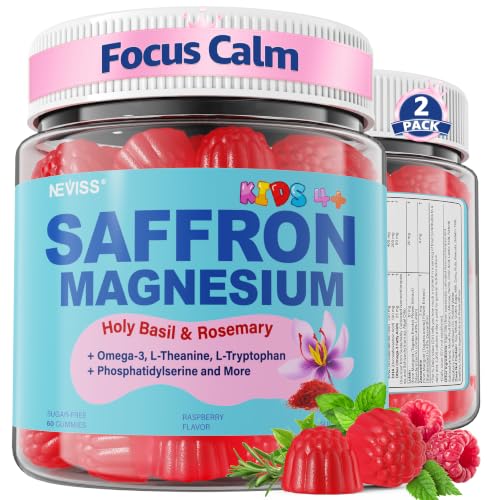
This is a two-bottle raspberry gummy supplement marketed for children from age 4. Each bottle contains 60 gummies. The label directs ages 4 to 8 to take one-half to one gummy daily, and ages 9 and older to take one to two gummies daily. One gummy lists 80 mg Super Negin saffron extract, 200 mg elemental magnesium, 325 mg omega-3 fatty acids from algae, 100 mg L-theanine, 200 mg holy basil extract, 200 mg rosemary extract, 100 mg L-tryptophan, and vitamins and minerals. Those quantities are manufacturer-stated on the product label, not independently confirmed by a public batch report. Human saffron research exists, including a small six-week ADHD pilot in ages 6 to 17 using 20 to 30 mg daily saffron capsules. That does not match this 80 to 160 mg multi-ingredient gummy formula or its age 4 starting point. The label also says the product offers virtually no help with sleep, despite sleep-oriented marketing elsewhere.
This product is most relevant to a household seeking a sugar-free, fish-free gummy format with algae omega-3, magnesium, and multiple botanicals, but only where a pediatric clinician has reviewed the child’s full diet, medicines, health conditions, and intended dose. The half-gummy option provides 100 mg elemental magnesium, which is below the supplemental upper limit for ages 4 to 8. It is a complex formula, so it is better suited to caregivers who can monitor total supplement exposure rather than those seeking a simple single-ingredient product.
It is not appropriate for unsupervised use at the labeled full one-gummy dose in children ages 4 to 8, because it provides 200 mg supplemental magnesium, above the NIH upper limit for that age group. It is also poorly suited to children taking antibiotics or other medicines that may interact with magnesium, or children already using magnesium, vitamin D, zinc, omega-3, sleep, mood, or attention supplements. Families managing ADHD, anxiety, depression, persistent sleep problems, or other behavioral concerns should not treat this broad supplement blend as a substitute for clinical assessment or prescribed care.
The most important health issue is dose. The product label declares elemental magnesium, not merely magnesium glycinate compound weight. Its one-gummy amount of 200 mg exceeds the NIH upper limit of 110 mg per day from supplements and medicines for ages 4 to 8. The two-gummy amount of 400 mg also exceeds the 350 mg upper limit for ages 9 to 18. High supplemental magnesium can cause diarrhea, nausea, and abdominal cramping. The label identifies saffron as Crocus sativus stigma extract standardized to 10% crocins and 0.7% safranal, but no public lot-matched independent report was found to verify those markers, contaminants, or the finished formula. A GMP logo and quality statements on the package were not independently verified through a finished-product certification registry. FDA public recall and warning-letter searches did not identify a matching NEVISS action. The formula uses algae-derived oils and comes in two bottles, but no origin-specific saffron traceability, organic documentation, cultivation-impact evidence, packaging materials, or recycling instructions were located.
This is a 60-capsule, once-daily adult supplement sold as a 60-day supply. It is marketed for mood, focus, clarity, energy, and eye support. The manufacturer states that each vegetarian capsule supplies 88.5 mg of saffron extract standardized to 1% safranal and 1% crocin. This is not a saffron-only product. The manufacturer lists saffron, mucuna pruriens, rhodiola rosea, lutein and zeaxanthin, black pepper extract, coenzyme Q10, vitamin B6, and magnesium, plus capsule and processing ingredients. Only the saffron amount and marker claims were publicly stated in the product materials reviewed. No lot-specific certificate of analysis, independent finished-product certification listing, or publicly checkable batch contaminant report was located.
This product is most relevant to an adult who specifically wants a once-daily, vegetarian capsule containing a manufacturer-stated standardized saffron extract dose, rather than culinary saffron or a powder. It may suit someone seeking general wellness or mood support who is comfortable reviewing a multi-ingredient formula with a clinician or pharmacist. The 60-capsule format fits a person who prefers a two-month routine. It is not designed as a precisely dosed single-ingredient saffron product.
It is not well suited to people who need independently certified supplements, lot-specific purity results, or fully disclosed amounts for every active ingredient. Pregnant or breastfeeding people, children, and people with a medical condition should not treat the general label caution as individualized advice. People using prescription medicines, especially medicines affecting mood, dopamine signaling, blood pressure, or blood clotting, should seek clinician or pharmacist review before use because this formula combines several bioactive ingredients with undisclosed amounts.
The manufacturer states that the capsules are made in a U.S. GMP-certified facility with globally sourced ingredients, are non-GMO and gluten-free, and undergo batch-by-batch quality testing. Those are manufacturer statements, not independently confirmed finished-product certifications. Searches of the major finished-product certification programs did not identify a current listing, and no public lot-specific laboratory report was located for saffron identity, declared markers, contaminants, or drug-like adulterants. The listed safety notice advises people who are pregnant, nursing, taking medication, or managing a medical condition to consult a qualified health professional. That is useful but broad for a formula containing saffron, mucuna pruriens, rhodiola, black pepper extract, and other actives. No source-specific saffron origin, farm practices, organic certification, packaging material details, recycling instructions, or package waste-reduction documentation was located. No product-specific FDA recall or warning letter was found in the reviewed searches.
This product is a 60-serving bottle of one-per-day veggie softgels. Each softgel provides 30 mg of Affron branded saffron extract from Crocus sativus stigma, delivered with coconut MCT oil, rice bran wax, sunflower lecithin, and a tapioca-based Plantgel capsule. An independent retailer's label transcription confirms the active dose and full listed ingredient panel. The main evidence-positive feature is the ingredient and dose match. A randomized, placebo-controlled trial studied Affron at 28 mg daily for four weeks in adults reporting low mood who were not diagnosed with depression. This product is not the trial product, but its 30 mg daily Affron dose is close. No public, lot-matched certificate of analysis or finished-product contaminant report was located. The public NSF listings for Sports Research cover a creatine powder, not this saffron product.
This fits an adult seeking a simple, single-ingredient-adjacent saffron formula for general mood and occasional stress support, rather than a multi-herb blend. It is especially relevant for someone who values the use of Affron, because a human placebo-controlled study used the same branded extract at a nearly identical daily dose for four weeks. The one-softgel routine and 60-day bottle suit a person who wants a consistent short trial period and can review their medicines and health history with a clinician when needed.
This is not suited to people who need lot-level proof of identity, potency, heavy-metal results, pesticide screening, microbial results, or sport-banned-substance testing before use. It is also not a substitute for assessment or treatment of depression, anxiety, suicidal thoughts, or other mental-health conditions. Pregnant or breastfeeding people, children, people preparing for surgery, and people taking antidepressants or other mental-health medicines should not rely on the limited label cautions. They should first discuss supplemental saffron with a qualified clinician.
The product uses 30 mg of Affron saffron extract from Crocus sativus stigma. Affron's supplier states that its extract is standardized by HPLC to at least 3.5% Lepticrosalides. That supports ingredient specificity, while not proving the contents of the bottle in hand. Sports Research has NSF-listed creatine products, but the official NSF records do not list this saffron softgel, so that company-level fact should not be treated as certification of this product. No public lot-specific laboratory report was located for this product. That leaves its batch-level identity, marker-compound levels, and contaminant testing unverified. No product-specific FDA recall, warning letter, or public exposure warning was located in the sources checked. The manufacturer states that it is made in the United States with domestic and international ingredients, but does not disclose saffron origin, farm practices, organic certification, package material, or package recycling instructions. As a result, lower-impact cultivation and packaging claims cannot be assessed from disclosed evidence.
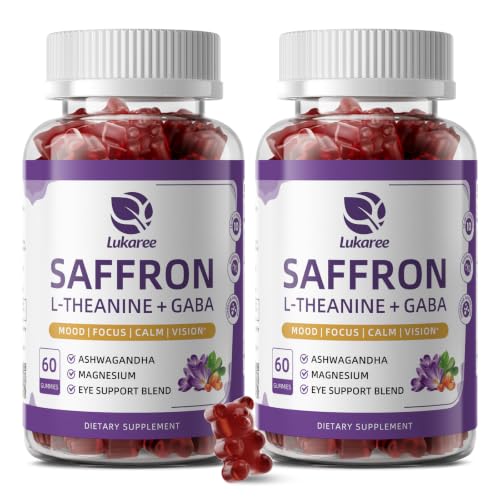
This is a mixed-berry gummy supplement intended for adults who want mood, focus, stress, and screen-time eye support. The listed two-gummy daily serving provides manufacturer-stated 88.5 mg of 10:1 saffron extract, 200 mg L-theanine, 100 mg GABA, plus grouped ashwagandha, turmeric, lutein, zeaxanthin, astaxanthin, and black pepper extract. The 120-gummy format is a stated 60-day supply. The defining limitation is evidence visibility. The brand page uses grouped and proprietary blends, including a 12 mg eye-support blend, without individual carotenoid amounts or saffron marker compounds. No current product listing was found in USP, NSF, Informed Sport, or Informed Choice registers, and no lot-matched independent certificate of analysis was publicly available. Human saffron trials commonly used standardized preparations around 28 to 30 mg daily, not this unstandardized multi-ingredient gummy formula.
This product suits an adult who specifically prefers a chewable, sugar-free and vegan supplement format, wants a fixed two-gummy daily routine, and understands that the listed formula combines saffron with L-theanine, GABA, botanicals, and carotenoids rather than delivering a clinically studied single saffron extract. It may fit someone seeking general wellness support who can review their full supplement and medication use with a clinician, especially because several ingredient doses are not individually disclosed.
It is not well suited to children, including households considering it for attention, behavior, or sleep concerns. It is also a poor fit for pregnancy or breastfeeding, people preparing for surgery, or anyone using prescription medicines or receiving treatment for depression, anxiety, bipolar disorder, or another mental-health condition without clinician review. Buyers who need lot-level testing, verified saffron standardization, precise carotenoid doses, or a clearly documented allergen and excipient panel should use a product with those records publicly available.
The manufacturer states that this is a vegan, sugar-free gummy and says it is free from gluten, soy, dairy, and artificial additives. Its public directions advise people who are pregnant, nursing, or taking prescription medicines to consult a physician. That is a useful baseline caution, but it does not replace formula-specific information on medicine interactions, surgery, children, or mental-health treatment. No public lot-specific laboratory report was found for saffron identity, crocin, picrocrocin, safranal, heavy metals, pesticides, microbes, or drug-like adulterants. The stated GMP claim could not be tied to a named independent finished-product certification or publicly verifiable manufacturing record. No saffron origin, farm or processor, harvest details, organic certification, cultivation practices, packaging material, or recycling instructions were disclosed. No FDA warning letter or recall tied to Lukaree was identified in the searches performed.
This is a 60-count, mixed-berry gummy supplement marketed for adult mood, energy, appetite, and general wellness support. The current Amazon presentation describes saffron extract paired with magnesium glycinate, L-theanine, ashwagandha, turmeric, honey, B vitamins, and other botanicals. It is presented as caffeine-free and intended for daily use, but a complete current Supplement Facts panel with the doses of the added actives was not available for verification. The product’s stated saffron amount is inconsistent across the brand’s own sales materials. Amazon says 100 mg per serving of 0.3% safranal extract, while the brand site says 88.5 mg per serving at the same standardization. Human mood studies do exist for specific standardized saffron extracts, commonly around 28 to 30 mg daily, but they do not verify this multi-ingredient gummy or its undisclosed co-ingredient doses.
This product is most relevant to an adult who strongly prefers gummies to capsules and wants a caffeine-free, saffron-centered wellness product for general mood support rather than treatment of a health condition. The 60-count format may also suit someone trying a short routine before committing to a larger supply. That buyer should be comfortable treating the saffron amount, Spanish origin, organic status, and third-party facility statements as manufacturer claims, not as independently verified batch evidence.
It is not well suited to people who need a fully quantified formula, a lot-matched testing report, independently certified supplement status, or sport certification. It also warrants extra caution for pregnancy, breastfeeding, children, people using sedatives, seizure medicines, thyroid medicines, diabetes or blood-pressure medicines, immunosuppressants, and people with liver concerns. Ashwagandha is included in the marketed formula, and authoritative safety guidance advises avoiding it during pregnancy and breastfeeding and notes possible medication interactions and rare liver injury reports.
No public FDA recall or warning letter specific to this product or NEVISS was located in the searches performed. That is not the same as independent confirmation of product quality. The manufacturer says the gummies are made, tested, and bottled in a third-party tested facility, but it does not publish a lot-specific finished-product report that would verify ingredient identity, dose, contaminants, or adulterant screening. The brand claims Spanish-grown, certified organic saffron and Amazon describes the product as organic. No USDA organic certificate, named saffron supplier, harvest details, or traceable chain-of-custody record was located. The product is sold in a small bottle, but the package material, recycled content, recycling instructions, and waste-reduction measures are not documented. The marketplace also calls the product vegan while listing honey, so buyers relying on a vegan diet should verify the bottle label directly.
This is a 30-capsule saffron supplement intended for once-daily use, with an additional manufacturer suggestion to use one capsule during occasional stress. Independent retailer label information identifies 30 mg per capsule of Safr’Inside organic saffron extract, an encapsulated Crocus sativus L. ingredient. The listed non-active ingredients are organic rice flour, an organic pullulan vegetable capsule, and organic rice hulls. The most important evidence point is dose matching. A randomized trial in healthy adults with subclinical low mood, anxiety, or stress used 30 mg daily of the same named Safr’Inside extract for eight weeks. The ingredient supplier identifies Persian Sargol saffron and describes marker specifications, but no current lot-specific certificate of analysis was publicly available to confirm this product’s actual identity, marker content, or contaminant results.
This product fits an adult looking for a single-ingredient saffron extract rather than a multi-herb mood blend, especially someone who values a dose that matches a published Safr’Inside trial. It is also practical for a person who wants a once-daily capsule and can tolerate rice-derived excipients and a pullulan capsule. The evidence most closely relates to short-term use in adults with subclinical low mood, stress, or anxiety symptoms, not diagnosis or treatment of a mental-health condition.
It is not well suited to pregnancy or breastfeeding, children, people preparing for surgery, or anyone using prescription medication without individualized clinical advice. People receiving treatment for depression, bipolar disorder, anxiety, or other psychiatric conditions should not treat this as a replacement for evaluation or prescribed care. It also does not fit buyers who require public, lot-matched laboratory reports, independently verified organic certification, or a finished-product certification such as USP or NSF. Avoid it if rice-derived ingredients are unsuitable.
The named Safr’Inside ingredient has a meaningful human evidence link because its 30 mg daily dose and the same branded extract were used in a randomized adult study. Broader saffron research suggests possible mood benefits, but studies are generally short and modest in size, so product claims should remain limited to support rather than treatment. The label does disclose the active extract and all listed excipients. It also gives a general medication and medical-condition caution. The brand and ingredient supplier state that the saffron is organic, Persian, and Sargol quality. However, a current organic certificate, farm or processor chain-of-custody documentation, and lot-specific testing records were not publicly available. The brand reports third-party testing and cGMP manufacturing practices, but public reports do not identify the laboratory, test limits, or this product’s batch results. Packaging appears to be a conventional bottle, with no material specification or recycling guidance located.
This is a 30-count, 30-serving dietary-supplement gummy intended for one gummy daily. A retailer listing independent of the catalog identifies 30 mg of saffron extract per daily gummy, alongside L-theanine, rhodiola rosea extract, and L-tyrosine. It is marketed for calm, clarity, composure, and everyday cognitive support without caffeine. The 30 mg saffron quantity resembles the daily amount used for eight weeks in one randomized trial of a standardized saffron extract in healthy adults with low mood, anxiety, or stress. That does not validate this four-ingredient gummy, because its saffron standardization, marker compounds, and the quantities of the other active ingredients were not publicly established. Vegan, zero-sugar, non-GMO, gluten-free, and no-artificial-color or sweetener statements are manufacturer claims.
This product is most relevant to an adult who prefers a once-daily gummy rather than capsules and wants a caffeine-free wellness routine aimed at everyday calm and mental clarity. Its stated 30 mg saffron quantity is within the range used in at least one study of standardized saffron extract in adults with subclinical low mood, stress, or anxiety. It is better suited to someone treating it as a limited-evidence supplement, not as a substitute for evaluation or treatment of a mental-health condition.
It is not well suited to children, or to people who are pregnant or breastfeeding, because public product-specific safety directions and reproductive safety evidence for this combination were not established. People taking prescription medicines, especially warfarin, phenytoin, or other medicines with clinically important interaction risks, should consult a clinician or pharmacist first. Human research indicates rhodiola can alter CYP2C9 activity, and saffron may affect drug-metabolizing enzymes. People under treatment for depression, anxiety, bipolar disorder, or attention problems should not use it to replace prescribed care.
The main health-relevant positive is the stated 30 mg daily saffron quantity, which resembles the amount used in an eight-week trial of a standardized saffron extract. However, the available listing does not identify the saffron standardization or provide a finished-product study. A systematic review found saffron was generally tolerated in human studies, although minor gastrointestinal effects were reported and longer-term or higher-dose use warrants caution. No public finished-product certification, lot-matched laboratory report, or saffron supply-chain documentation was located in the checked sources. That leaves identity, potency, contaminants, botanical origin, and farming practices unverified for a purchased bottle. The seller's vegan, zero-sugar, non-GMO, gluten-free, and no-artificial-color or sweetener statements describe the product, but they are not independent environmental certifications. Packaging material and recycling instructions were also not publicly documented.
This is a strawberry-flavored liquid botanical supplement for adults. The 2 fl oz bottle is listed as 30 servings, and the seller says the drops can be used directly or mixed into a drink. Its disclosed headline amounts are 88.5 mg saffron extract, 125 mg ashwagandha, 100 mg GABA, 100 mg black cohosh, 100 mg chaste berry, 50 mg L-theanine, and a 150 mg cognitive blend containing lion's mane, ginkgo, and bacopa. The ingredient amounts and vegan, sugar-free, and gluten-free positioning are seller-stated. The seller also says it is third-party tested, but no lot-specific certificate of analysis, independent laboratory report, or finished-product certification was located. Human saffron research is promising but usually uses standardized single-ingredient preparations around 28 to 30 mg daily for several weeks. This 24-ingredient liquid blend, its extract markers, and its claimed absorption system have not been independently matched to those trials.
This product suits an adult who specifically wants a strawberry liquid rather than capsules, wants to combine several botanicals in one 30-day bottle, and is comfortable treating the stated ingredient amounts and vegan, gluten-free claims as seller information. It is most relevant to someone seeking general mood or daily-stress support, not treatment for depression, anxiety, menopause symptoms, cognitive decline, or an endocrine condition. A pharmacist or clinician review is sensible before use when the buyer takes medicines or has ongoing health concerns.
It is not suited to pregnancy, breastfeeding, anyone under 18, or people who need a single-ingredient product with independently verified batch testing. People with liver disease, unexplained abdominal pain, dark urine, or jaundice should avoid self-starting a black cohosh-containing blend without medical advice. It is also a poor fit for people taking prescription medicines, blood thinners, antidepressants, or multiple sedating products unless a pharmacist reviews the full regimen. Do not use it as a substitute for evaluation of persistent low mood, severe anxiety, cognitive symptoms, or troublesome menopausal symptoms.
The product page displays a ClimeCo Certified carbon-impact designation. That is meaningful environmental information at the product level, although it does not document saffron farm origin, irrigation, fertilizer practices, organic certification, bottle material, or local recycling instructions. No origin, supplier, harvest, or lot traceability was located for the saffron extract. The formula combines several botanicals and neuroactive ingredients. The seller provides basic adult, pregnancy, nursing, child, dose-limit, seal, and medical-condition cautions. However, black cohosh has reported cases of liver injury associated with commercial products, although causation is uncertain, and federal health sources advise particular caution for people with liver disorders. The product page's third-party-testing statement was not accompanied by a public batch report. No product-specific FDA recall or warning letter was located in the checks performed.


