Best Overall
12% off
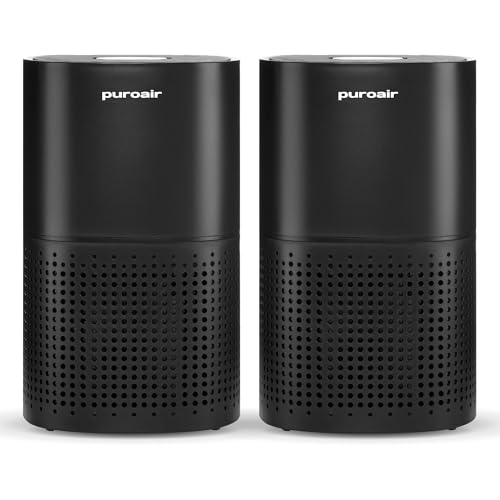
PuroAir Powerful Air Purifiers 2 Pack
Covers large areas up to 1,115 sq ft.
Filters 99% of common household pollutants.
Operates automatically for continuous air cleaning.
 Lauren Wilson
Covers large areas up to 1,115 sq ft.
Filters 99% of common household pollutants.
Operates automatically for continuous air cleaning.

Captures 99.97% of airborne particles.
Whisper-quiet operation for peaceful environments.
Compact design fits small spaces perfectly.

Covers large areas quickly and efficiently.
HEPASilent technology ensures quiet operation.
Smart features enhance air quality monitoring.
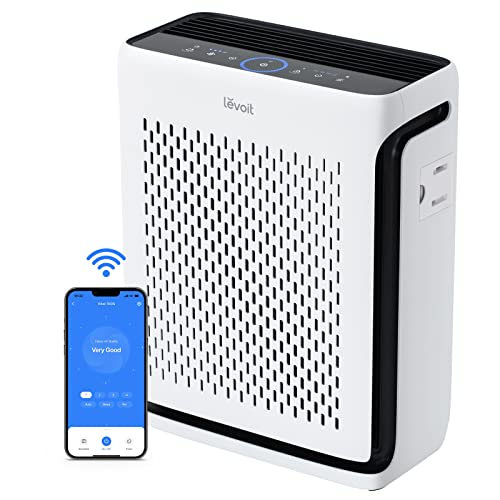
Covers large rooms up to 1110 square feet.
Smart WiFi control with air quality sensors.
Washable filters and HEPA for cleaner air.

Covers large rooms up to 1800 sq ft efficiently.
Features washable filters for easy maintenance.
Smart WiFi control for convenient operation.

Covers large 2000 Ft² area efficiently.
Equipped with a washable filter for convenience.
Includes fragrance sponge for added freshness.

Covers large rooms up to 1076 sq ft.
H13 True HEPA filter for superior air cleaning.
Effective odor elimination and night light feature.
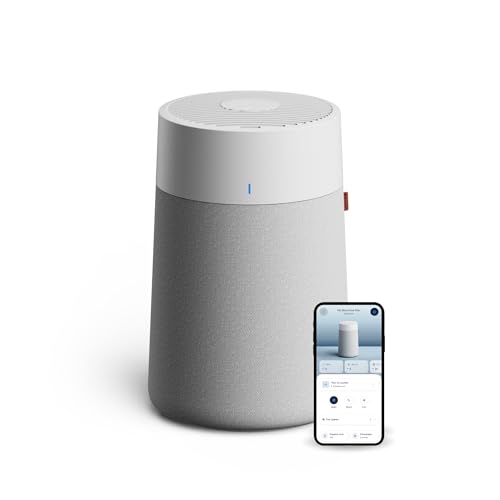
Efficiently cleans large areas quickly.
Effectively removes allergens and smoke.
Ideal for pet owners and small spaces.
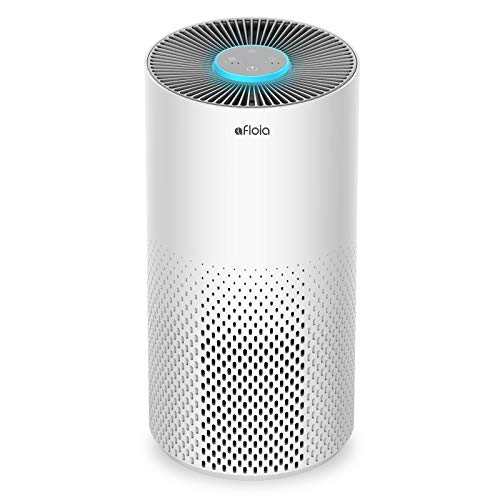
Effective for large rooms up to 1076 sq ft.
True HEPA filter removes allergens and pollutants.
Quiet operation at just 22dB noise level.

Effective for large rooms up to 1881 ft².
True HEPA filter captures pet allergies.
Auto mode adjusts to air quality changes.
Look for a model-specific smoke CADR in the AHAM Verifide directory, ENERGY STAR records, or an independently identified laboratory report. The supplied reviews show why this matters: independently documented smoke CADRs range from 75 to 283 CFM, while advertised coverage claims range from small-room figures to 3,500 square feet. A room-size number is meaningful only when tied to a recognized test method, airflow, and intended air-change rate. Quiet-mode output can also be much lower than maximum-speed output, so a low noise claim alone does not show that the purifier can clean smoke effectively while people sleep.
For occupied rooms, favor fan-and-filter designs that do not intentionally generate ozone. CARB certification can provide model-specific evidence for ozone compliance, and ENERGY STAR records may report ozone emissions directly; several supplied products report 0 ppb, while another reports 2 ppb. A listing’s claim of CARB, UL, or ETL certification should not automatically be treated as verified: the exact product must match the issuing body’s current registry. Electrical safety is a separate question from filtration performance, and ENERGY STAR certification is not a substitute for an independently traceable appliance safety listing.
Activated carbon can help with some odors and gases, but a thin or unspecified carbon layer is not equivalent to meaningful smoke-gas protection. Look for disclosed sorbent media, realistic limits, and pollutant-specific testing. Particle CADR does not establish removal of VOCs, combustion gases, carbon monoxide, radon, or persistent smoke odor. No portable purifier in the supplied set should be treated as a carbon-monoxide alarm or as protection from a continuing chemical or combustion source.
Maintenance determines whether particle removal continues. Prefer a sealed, replaceable filter path, clear instructions, a filter indicator, and model-specific replacement filters that can actually be obtained. Washable prefilters can catch hair and larger dust and may delay loading of the main filter, but the principal particle filter usually remains disposable. Replacement intervals in the supplied products range from roughly three months to a year, and smoke can shorten them. Running the unit with a loaded filter can undermine the benefit and increases material waste.
Across the supplied reviews, the recurring safety caveats are substantial. Do not use headline coverage claims in place of verified smoke CADR, particularly for large open-plan or high-ceiling spaces. Do not expect unspecified carbon layers to handle smoke gases, VOCs, chemical fumes, carbon monoxide, or strong persistent odors. People with asthma, COPD, cardiovascular disease, pregnancy-related smoke concerns, young children, older adults, or severe smoke sensitivity should size equipment to the actual room and verified output rather than rely on broad marketing claims. Fragrance or aromatherapy features may be unsuitable for scent-sensitive occupants. A purifier supplements closed windows, source control, ventilation planning, and carbon-monoxide alarms; it does not replace them.
The scores below compare the reviewed products on the supplied health, ecology, and evidence topics. A high score indicates stronger supporting records and more practical performance; a low score generally reflects missing independent verification, overstated room claims, limited carbon evidence, or weaker maintenance documentation.
This measures independently verified smoke CADR against the real room volume. It is the most important category measure because smoke particles are the purifier’s primary target. High-scoring products include independently recorded outputs such as 283 CFM, 242 CFM, and 158 CFM; lower-scoring products rely on manufacturer claims or have no model-specific smoke CADR, making room sizing uncertain.
This measures whether the product avoids intentional ozone and whether ionization, plasma, UV, or similar stages have credible byproduct evidence. High-scoring products are listed as mechanical cleaners by CARB or report zero ozone through ENERGY STAR. Lower scores occur where certification is only claimed, the exact model cannot be matched, or electronic filtration is present without equally clear byproduct evidence.
This measures whether carbon and other sorbent media support the product’s odor, VOC, and smoke-gas claims. High scores reflect clearer limits and more credible media information, though even leading products generally lack pollutant-specific gas testing. Lower scores reflect an unspecified thin carbon layer, undisclosed carbon quantity, or no gas-phase results. Particle CADR alone does not demonstrate gas removal.
This measures exact-model appliance safety listing and the absence of unresolved recalls, overheating, shock, or fire concerns. Higher-scoring products have stronger regulatory or certification evidence and no identified recall. Lower-scoring products commonly had no exact UL or ETL directory match; that is a documentation gap, not proof of a defect. ENERGY STAR or CARB records do not replace appliance safety certification.
This measures a sealed replaceable filter path, service instructions, filter reminders, and availability of the correct replacement filter. High-scoring products provide model-specific filters, clear replacement procedures, and washable prefilters or longer stated intervals. Lower scores reflect frequent disposable-filter replacement, uncertain availability, inconsistent service guidance, or no clear evidence that the filtration path can be maintained.
This measures whether useful smoke-cleaning output is available at a tolerable sound level, including overnight use. High scores combine meaningful output with independent noise or quiet-use evidence, such as Quiet Mark certification or measured lower-speed operation. Lower scores rely only on manufacturer dB claims, or show that quiet settings deliver substantially less particle-cleaning airflow than maximum speed.
This measures whether coverage, HEPA, smoke, odor, germ, allergy, and health claims match the test method, fan speed, and real limitations. High-scoring products clearly distinguish verified smoke-room ratings from slower one-air-change-per-hour marketing figures. Lower scores commonly pair very large coverage claims with small certified room sizes, or imply odor and health benefits that the available testing does not establish.
This measures how broadly and traceably independent records support the exact product and configuration. High-scoring products can be matched to multiple authoritative records, such as ENERGY STAR, AHAM, CARB, or another recognized certification listing. Lower-scoring products depend mainly on seller or manufacturer badges, with no exact entry in AHAM, ENERGY STAR, CARB, UL, or ETL records.
This measures clean-air delivery per watt and standby or partial-on power. High-scoring products have ENERGY STAR records showing efficient smoke CADR per watt, low annual use, or low standby draw; examples include 9.59 CFM per watt and 0.93 watts in the supplied records. Lower scores lack independent energy data, so electricity use cannot be compared reliably with delivered smoke cleaning.
This measures disposable-material burden, washable prefilters, transparent replacement intervals, and any take-back or recycling support. High scores typically combine washable prefilters with longer, clearly stated main-filter life. Lower scores involve all-in-one filters replaced every three to six months, no recycling program, or intervals that are unclear or inconsistent. Smoke-heavy use can shorten any stated service life.
This product is a two-unit portable air-cleaner bundle. Each compact floor unit uses a disposable three-layer cartridge, consisting of a prefilter, a HEPA layer, and activated carbon. It has automatic air-quality control, a filter-change indicator, and manual settings. The manufacturer states coverage up to 1,000 square feet per unit and a lowest sound level of 24 dB. Independent records are more useful for smoke sizing. ENERGY STAR lists each Puro Air 240 at 183 cfm smoke CADR, 181 cfm dust CADR, and 204 cfm pollen CADR, with a suggested 284-square-foot room size. That smoke output is meaningful for a small to medium closed room, not a 1,000-square-foot smoke space under EPA's standard sizing guidance. CARB lists the exact Puro Air 240 as a mechanical device, and ENERGY STAR reports zero ozone emissions.
This product suits households placing the two units in two separate small to medium rooms, such as bedrooms, offices, or a designated clean room during smoke events. Each unit's independently listed 183 cfm smoke CADR is consistent with roughly a 275 to 284 square foot room with an 8-foot ceiling under standard smoke-sizing guidance. It also fits people who want mechanical filtration without an ionizer, and who can maintain a roughly 90-day replacement schedule when air is smoky or heavily polluted.
It is not appropriate to treat each unit as a primary smoke solution for a 1,000-square-foot open area, high ceilings, or a large shared living space. Its independently listed smoke output is far below what EPA sizing guidance indicates for that area. It is also not a well-documented option for people whose main concern is smoke odor, wildfire gases, or VOCs, because the carbon quantity and pollutant-specific gas testing are not disclosed. Buyers unable to replace disposable filters frequently should account for declining airflow and filtration performance.
The safety evidence is unusually clear for the core cleaning mechanism. CARB lists the exact Puro Air 240 as a mechanical air cleaner, meaning physical filtration rather than an ionizing or ozone-generating technology. ENERGY STAR separately reports zero ozone emissions for the model. CARB certification also requires electrical-safety testing for certified portable air cleaners. No product-specific CPSC recall or regulatory warning was located in the reviewed U.S. sources. The product's HEPA and activated-carbon cartridge can reduce particles and may help with odors, but carbon performance depends heavily on media quantity and pollutant type. The company does not disclose the carbon mass or a verified gas-removal capacity. Ecologically, ENERGY STAR verifies efficient particle delivery and low partial-on power. The tradeoff is disposable filter waste. The manufacturer says filters should generally be replaced every 90 days for best results, sooner during heavy smoke, and the reviewed materials do not identify a filter take-back or recycling program.
This is a compact, corded smart room air purifier, measuring 7.87 by 7.87 by 12.68 inches and weighing 4.39 pounds. It uses a replaceable three-layer filter with a pre-screen, particle filter, and activated-carbon layer. Controls include buttons, Wi-Fi app control, and voice-assistant compatibility. The manufacturer says the filter should be changed about every 90 days. Its most important independently verified performance figure is a 75 CFM smoke clean-air delivery rate, with ENERGY STAR assigning a 116-square-foot room size. That is far smaller than the manufacturer-stated 600-square-foot coverage claim. The same ENERGY STAR record lists zero ozone emissions and 4.4 CFM per watt integrated energy factor. California lists this exact product as a mechanical air cleaner.
This product suits someone seeking a small, compact purifier for a bedroom, nursery, dorm, or enclosed home office of roughly 116 square feet at standard ceiling height. It is particularly relevant for particle control during occasional smoke, dust, or pet-dander episodes when it can run continuously in that smaller space. It also fits a user who values app access, filter reminders, low independently reported ozone emissions, and readily available branded replacement filters, while accepting replacement about every 90 days.
It is not suited to buyers expecting meaningful smoke-particle protection across a 600-square-foot room, open-plan area, or large living space. Its independently certified smoke clean-air delivery rate is 75 CFM, and EPA wildfire guidance calls for smoke CADR of at least two-thirds of room area. It is also not the right product for households needing documented removal of wildfire-smoke gases, heavy odors, or high VOC loads, because the carbon amount and gas-removal capacity are not disclosed. People requiring confirmed UL or ETL appliance listing should obtain that documentation before use.
The strongest health evidence is from independent registries, not the marketing language. ENERGY STAR lists this product with a 75 CFM smoke clean-air delivery rate, a 116-square-foot room size, and zero ozone emissions. California also lists it as a mechanical air cleaner. Those records support use for fine-particle reduction in a genuinely small enclosed room and reduce concern about intentionally ozone-producing technology. The filter combines particle media with activated carbon, but the manufacturer does not disclose carbon weight or publish full gas-capacity data. That limits confidence in odor and VOC claims, especially during wildfire smoke events. Environmentally, ENERGY STAR verifies 4.4 CFM per watt efficiency and 98 kWh annual energy use. The tradeoff is filter waste, because the manufacturer recommends replacement about every 90 days and does not present a product-specific filter recycling or take-back program.
This is a 19-inch-tall, 7.8-pound floor air purifier with 360-degree intake, fabric washable pre-filter, replaceable particle-and-carbon main filter, air-quality sensor, auto and night modes, Wi-Fi app control, and three manual fan speeds. It is intended for a single room, not whole-home ventilation or source control. Its core smoke-particle evidence is strong. AHAM Verifide describes third-party laboratory verification of certified air-cleaner performance, and the exact product is reported with a 250 cfm smoke CADR. That is appropriate for roughly 375 square feet under AHAM and EPA sizing guidance with an 8-foot ceiling. CARB also lists this exact electronic model as certified, providing independent ozone-emissions screening. The manufacturer's much larger one-hour coverage figure describes a slower cleaning interval, not equivalent high-rate protection across that entire area.
This product suits someone who wants independently verified particle cleaning for a bedroom, home office, nursery, or other enclosed medium room, especially during cooking smoke, outdoor smoke episodes, pollen season, or pet-dander exposure. Its 250 cfm smoke CADR is a better fit for about 375 square feet or less with standard-height ceilings when used at the needed fan speed. It also fits users who value auto control, app monitoring, a washable pre-filter, and a filter-life alert, and who can budget for genuine replacement filters every six to nine months.
It is not designed to solve smoke-gas, VOC, carbon-monoxide, mold, or combustion-source problems. People seeking substantial and documented odor or gas removal should not treat the standard thin carbon stage as proof of that capability. It is also not a high-rate choice for a 2,107-square-foot open area, high-ceiling space, or a room with substantial outdoor-air leakage. For severe wildfire smoke, occupants with respiratory vulnerability should use it in a smaller closed room, run it sufficiently fast, and follow public-health guidance on reducing outdoor-air entry and pollution sources.
The strongest health evidence is particle and ozone related. AHAM Verifide identifies independent third-party testing of certified air-cleaner performance, while CARB currently lists this exact electronic product as certified. This matters because the HEPASilent system uses electrostatic as well as mechanical filtration, and electronic air cleaners warrant ozone screening. EPA advises avoiding devices that intentionally generate ozone and notes that portable filtration supplements, rather than replaces, source control and clean-air ventilation. The standard included filter combines particle media with carbon, but Blueair describes it for light odors and does not disclose carbon mass or publish independent gas-phase results for it. The washable pre-filter reduces some disposable material, while the main filter still needs replacement after roughly six to nine months. The manual directs owners to recycle the appliance as electronic waste. No product-specific filter recycling or take-back program, exact-model public UL or ETL listing, or exact-model CPSC recall was identified in the records reviewed.
This product is a compact smart room air cleaner with a washable pre-filter, a combined particle and activated-carbon filter, dust sensing, automatic modes, app control, and a supplied external power adapter. It is intended for a single room, not whole-home filtration. The current manufacturer page specifies 12.6 by 6.3 by 16.0 inches, 8.6 pounds, and a stated 23 to 52 dB operating range. Its defining independently listed performance figure is a 143 CFM smoke clean-air delivery rate. The ENERGY STAR product record also lists 161 CFM for dust and 173 CFM for pollen, with 222 square feet as the rated room size. Levoit states 1,066 square feet only at one air change per hour, while its 222-square-foot figure corresponds to about 4.8 air changes per hour. That distinction matters for smoke events, when faster air cleaning is more protective.
This product suits someone setting up a cleaner-air room during wildfire smoke, cooking smoke, or seasonal particle events, especially in a bedroom, nursery, home office, or other enclosed space around 220 square feet with an 8-foot ceiling. Its independently listed 143 CFM smoke rating supports that room scale. It also fits households that will wash the pre-filter every few weeks, replace the combined filter on schedule, and use the app or simple controls to keep the unit running for long periods.
It is not a whole-home smoke solution or a strong choice for a large open-plan area, rooms with high ceilings, or a 1,066-square-foot room needing fast particle reduction. The large-area figure represents only one air change per hour. It is also not appropriate as the primary control for combustion gases, carbon monoxide, formaldehyde, or persistent wildfire odor. Buyers needing documented gas removal should seek equipment with a substantial disclosed sorbent bed and pollutant-specific testing. Anyone concerned by the posted lead warning should request component and exposure details before use.
For particle safety, the product has useful third-party documentation. CARB lists the exact product as a mechanical air cleaner, meaning it uses physical filtration rather than an ion-generating technology. Its ENERGY STAR product record reports zero ozone emissions and a 143 CFM smoke clean-air delivery rate. These facts support use in occupied rooms for airborne particles, provided the purifier is sized to the room and run consistently. CARB certification also includes electrical-safety testing, although a separate UL or ETL listing for this product was not located. The filter system includes a washable pre-filter, which can reduce disposable waste and help preserve airflow. The main particle and carbon media remain a disposable combined filter, however, and Levoit offers no identified take-back program. Carbon may reduce some odors and gases, but its amount and gas-specific performance are not disclosed. The manufacturer also posts a California Proposition 65 warning for lead, without product-page detail about the source or exposure route.
This is a 13.2-pound, corded room air purifier with Wi-Fi controls, an air-quality sensor, a washable pre-filter, and a combined particle and activated-carbon replacement filter. Its published dimensions are 15.6 by 8.5 by 19.8 inches, and its rated power is 51 watts. It is intended for one room, not whole-home cleaning. Independent program data identify this exact model with a 242 CFM smoke CADR and a 375-square-foot room size. CARB also lists the exact model as a mechanical air cleaner. Independent testing measured 216 CFM of PM1 clean-air delivery at maximum speed, while quieter operation at or below 45 dBA delivered 87 CFM. The large 1,875-square-foot marketplace coverage figure represents only about one air change per hour, not rapid smoke protection.
It suits someone setting up a bedroom, office, or similarly sized enclosed room for particle control during allergy or smoke episodes. Its 242 CFM smoke CADR supports roughly 360 square feet under EPA's minimum wildfire-smoke sizing rule with an 8-foot ceiling. The washable pre-filter is especially practical where pet hair or lint would otherwise load the main filter. It also fits users who need app scheduling, filter reminders, and a lower-noise background setting, while accepting that rapid cleaning requires higher fan speeds.
It is not suited to treating a 1,875-square-foot open area as a meaningful smoke shelter. One air change per hour is too slow for people needing stronger wildfire-smoke protection, especially children, older adults, or people with heart or lung disease. It is also not a well-documented solution for persistent smoke odor, VOCs, or other gases because the supplied carbon quantity and gas removal have not been independently established. Avoid using it around combustible vapors, industrial-oil fumes, or oxygen administration, as the manual directs.
The strongest health evidence is particle control and ozone avoidance. ENERGY STAR data for the exact model report 242 CFM smoke CADR and 0 ppb ozone emissions, while CARB lists it as mechanical filtration. Those records support use for airborne particles, including smoke particles, when it is matched to the actual room and operated at an adequate speed. They do not establish removal of all wildfire-smoke gases or odors. The removable pre-filter is washable and does not need routine replacement, reducing disposable waste. The combined main and carbon filter is manufacturer-stated to last 12 months, though smoke-heavy use can shorten that interval. Levoit currently sells genuine replacement filters, including optional smoke-focused and toxin-focused versions. Levoit also posts a California Proposition 65 warning that its replacement filter product can expose consumers to lead. That warning does not quantify exposure from normal use, but it is relevant information for California households.
This is a compact, corded room air purifier, about 16 inches tall and 6.7 pounds, with touch controls, four fan speeds, auto mode, a particle display, sleep mode, child lock, and a fragrance pad. Its filter assembly is described as a washable prefilter, an H13 HEPA filter, and activated carbon. The manufacturer sells a replacement filter specifically for this product family. The strongest independently confirmed fact is its California certification. California's registry lists both the KJ190H and KJ190L versions as certified mechanical air cleaners, meaning physical filtration is the listed air-cleaning method rather than ionization or another electronic cleaning method. The advertised 2,200 square foot coverage and 20 dB sleep-mode noise figure are manufacturer-stated. No AHAM smoke CADR or Energy Star performance record was located for this product, so its real smoke-cleaning rate and the conditions behind its room-size claim cannot be confirmed.
This product suits someone seeking a small floor-standing purifier for a bedroom, nursery, pet area, or other enclosed room, who can place it close to where occupants spend time and keep up with filter changes. It is especially relevant for buyers who want a non-ionizing mechanical design confirmed in California's registry, a washable prefilter, and an available matched replacement filter. Its auto and sleep settings may be useful for ordinary dust, pollen, and pet-dander management, provided the room-size claim is treated cautiously.
It is not well documented for households relying on a purifier as primary protection during wildfire smoke, heavy secondhand smoke, or a large open-plan area. Those uses need a published smoke CADR matched to the full room volume, especially with ceilings above eight feet, and that result was not located here. It also does not fit people needing demonstrated odor or VOC control, because carbon quantity and gas-removal testing are not disclosed. Fragrance-sensitive people should avoid using the optional scent pad.
The main health positive is independently confirmed by California's registry, which identifies both listed product variants as mechanical air cleaners. This supports the absence of ionizer or plasma technology in the certified configuration. California certification is important for ozone control, but it does not verify particle-removal effectiveness. A search of U.S. Consumer Product Safety Commission recall resources did not identify a recall for this product family. For ongoing use, the washable prefilter can reduce disposable waste by capturing larger debris before it reaches the main filter. MOOKA also sells matched replacement filters directly. The main filter remains a disposable combined H13 HEPA and carbon component, and published service-life evidence is limited. The instructions describe a roughly 2,000-hour filter reminder, but that is a maintenance prompt, not independent evidence that filtration remains effective for that full period. No take-back or filter-recycling program was found.
This compact, corded room air purifier measures about 7.1 by 7.1 by 11.1 inches and uses a cylindrical three-stage filter with a prefilter, H13 HEPA media, and activated carbon. It has four fan settings, timers, a child lock, and a switchable night light. MOOKA says the product uses 13 watts and reaches 20 dB in its low-noise setting. ([mookashops.com](https://mookashops.com/collections/air-purifiers/products/mooka-b-d02l-air-purifier-1-076-sq-ft-no-aromatherapy-function)) Its clearest independently confirmed distinction is safety technology. California’s air-cleaner register lists this exact product as CARB-certified and mechanical, a classification CARB says uses physical filtration without generating ions or ozone. Its particle-cleaning output is not independently quantified in public AHAM or ENERGY STAR records located for this product. MOOKA states six air changes per hour in 215 square feet, but only one air change per hour at the advertised 1,076 square feet. ([ww2.arb.ca.gov](https://ww2.arb.ca.gov/list-carb-certified-air-cleaning-devices))
This product suits someone using it continuously in a small bedroom, nursery, office, or similar enclosed room near 215 square feet, especially when a compact, low-power mechanical purifier is the practical priority. Its manufacturer-stated six air changes per hour at that size is materially more informative than its maximum coverage figure. It also fits households that value a child lock, timed operation, and a source for official replacement filters. The CARB mechanical classification is relevant for occupants seeking to avoid ionizer and ozone-generating features. ([mookashops.com](https://mookashops.com/collections/air-purifiers/products/mooka-b-d02l-air-purifier-1-076-sq-ft-no-aromatherapy-function))
It is not suited to people who need independently verified smoke CADR, confirmed high-speed noise data, or an ENERGY STAR efficiency rating for a smoke event. It is also a poor fit for relying on one unit to protect a large open area of up to 1,076 square feet, because MOOKA’s own stated rate at that area is one air change per hour. Households dealing with wildfire smoke odor, tobacco smoke gases, VOCs, or combustion gases should not treat the unspecified activated-carbon layer as proven gas protection. ([mookashops.com](https://mookashops.com/collections/air-purifiers/products/mooka-b-d02l-air-purifier-1-076-sq-ft-no-aromatherapy-function))
The strongest health evidence is not a particle-performance claim. CARB lists this exact product as mechanical, and CARB explains that this category uses physical filtration only and does not generate ozone or ions. CARB certification also requires applicable electrical-safety review. This supports occupied-room use without intentional ozone production, but CARB specifically does not evaluate cleaning effectiveness. ([ww2.arb.ca.gov](https://ww2.arb.ca.gov/list-carb-certified-air-cleaning-devices)) For smoke, the HEPA and carbon filter arrangement is plausible for particles and some odors, but the product has no located independent smoke CADR or gas-removal result. EPA notes that meaningful gas control requires substantial sorbent media, and particle CADR does not measure gases. Filter replacement every three to six months can sustain filtration when followed, but it also creates recurring composite-filter waste. No product-specific recycling or take-back program was found in the reviewed manufacturer materials. ([mookashops.com](https://mookashops.com/collections/air-purifiers/products/mooka-b-d02l-air-purifier-1-076-sq-ft-no-aromatherapy-function))
This compact, Wi-Fi connected room air purifier uses a replaceable particle-and-carbon filter, a washable fabric pre-filter, four fan speeds, auto mode, night mode, and a PM2.5 sensor. It is intended for a bedroom, office, or other small enclosed room. The manual identifies indoor-only use and calls for direct connection to a wall outlet, not an extension cord or power strip. Independent program listings report AHAM performance verification, CARB ozone-safety certification, Energy Star recognition, Quiet Mark certification, and Intertek zero-ozone verification below 5 ppb. The manufacturer states a 153 cfm smoke CADR, 19 to 48 dB operating range, and a recommended 237 square foot room for rapid cleaning. Its much larger 569 and 1,138 square foot statements describe slower, time-limited cleaning, not the same level of protection. The supplied filter has carbon for light household odors, but the carbon amount and gas-removal performance are not independently quantified.
This product fits someone setting up a cleaner-air bedroom, nursery, home office, or other enclosed room around 150 to 230 square feet with an 8-foot ceiling. Its verified smoke CADR can make a meaningful reduction in airborne fine particles when it is run consistently, and the low reported night setting makes that more practical during sleep. It also suits households willing to replace the main filter when prompted and wash or vacuum the fabric pre-filter. App controls and automatic particle response are useful conveniences, not substitutes for correct room sizing.
It is not designed as the sole smoke-control device for a large open-plan living area, a room with high ceilings, or a heavily smoke-leaking home. The 153 cfm smoke CADR falls short of the capacity EPA recommends for larger wildfire-smoke spaces. People needing reliable removal of smoke odor, combustion gases, or VOCs should not infer that particle filtration or a thin, unspecified carbon layer provides comprehensive gas protection. It is also unsuitable for wet rooms, outdoor use, or use from an extension cord or power strip, which the manual specifically warns against.
The strongest health evidence is the combination of independently reported AHAM performance verification, CARB certification for low ozone emissions, and Intertek verification below 5 ppb. That matters because the product uses HEPASilent filtration, which combines mechanical capture with electrostatic charging. It should reduce airborne particles, including smoke particles, in a correctly sized enclosed room, but it does not eliminate all indoor pollution or replace source control and ventilation practices. The washable fabric pre-filter can reduce disposable waste by catching larger dust before the main filter. The main filter still requires replacement, with manufacturer guidance of 6 to 9 months and potentially faster replacement during smoke events. The manufacturer directs owners to recycle the appliance as e-waste, but no exact-filter take-back or recycling program was verified. No CPSC recall specific to this product was located in the reviewed public recall records.
The Afloia Kilo is a compact plug-in room air cleaner with three fan speeds, a timer, a colored light ring, and a cylindrical replacement filter. Its manual describes a three-stage path consisting of a prefilter, a high-efficiency particle filter, and a carbon filter. The filter-change alert and installation instructions are concrete, including a stated replacement interval of every three to six months. Its particle performance is independently documented, although at a much smaller scale than the marketplace headline suggests. An ENERGY STAR record for this product reports a 56 cfm smoke clean-air delivery rate and identifies the filter as HEPA-type. California lists the Kilo as a mechanical air cleaner. The claimed coverage of up to 1,076 square feet is not supported by its verified smoke output, which is more appropriate to a small enclosed room.
This product fits someone setting up a cleaner-air room in a small bedroom, nursery, office, or other enclosed space of roughly 80 square feet during intermittent smoke events. Its independently documented smoke CADR is sufficient for modest room volumes when run at a meaningful fan speed, and the mechanical design avoids intentional ozone generation. It also suits a user willing to replace a proprietary disposable filter on the manual's three-to-six-month schedule, or sooner when smoke loads the filter heavily.
It is not suited to an open-plan living area, a room around 100 square feet or larger, or a household treating the 1,076-square-foot headline as a smoke-cleaning capability. The verified smoke CADR is too low for those conditions. It is also not the right product for people needing demonstrated removal of wildfire-smoke gases, persistent odor, VOCs, or carbon monoxide. Those needs require meaningful, tested sorbent media and source control. People requiring independently verified quiet high-output performance should note that the 22 dB figure is manufacturer-stated for low speed only.
The strongest safety finding is the product's California certification as a mechanical air cleaner. California describes mechanical units as using physical filtration only, without generating ozone or ions. The ENERGY STAR product record also reports zero ozone emissions for the certified configuration. These records support safer occupied-room use than an ozone-generating cleaner, but California also cautions that its certification does not establish pollutant-removal effectiveness or overall health safety. The filtration system is a disposable prefilter, high-efficiency particle filter, and carbon filter assembly. The manual recommends replacement every three to six months and says not to wash or vacuum the filter. That supports regular maintenance, but creates recurring filter waste. No product-specific recycling or take-back program, quantified carbon-media content, or independent gas-removal test was located. A search of U.S. consumer-product recall resources did not identify a recall for this product.


