Best Overall

Amazfit Active Max Smart Watch
Long-lasting 25-day battery life.
Impressive 170+ sport modes available.
Offline maps with built-in GPS.
 Daniel Kenitz
Long-lasting 25-day battery life.
Impressive 170+ sport modes available.
Offline maps with built-in GPS.

Long-lasting 14-day battery life.
Bright and clear 1.97" AMOLED display.
Extensive 140+ workout modes available.

Durable sapphire glass and stainless steel case.
Impressive 21-day battery life.
Extensive 180+ sports and fitness tracking.

Outstanding 27-day battery life.
Comprehensive 170 fitness/sport modes.
Robust 328 feet water resistance.

Long-lasting 10-day battery for extended use.
Supports 160+ sport modes for diverse activities.
Durable sapphire glass with elegant leather strap.

Long-lasting 20-day battery life.
Comprehensive fitness tracking with 150+ sports modes.
Built-in GPS and offline maps for navigation.

No app subscription required for full functionality.
Long-lasting 4 days battery life.
10 ATM water-resistance for versatile use.

AMOLED screen provides ultra-clear display quality.
Supports over 110 sport modes for versatility.
Compatible with iPhone, Samsung, and Android devices.

Impressive 20-day battery life.
Offline maps for easy navigation.
Over 150 sports modes available.
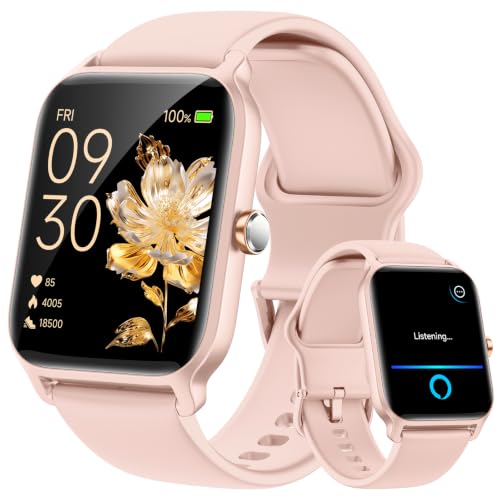
Alexa integration offers convenient voice control.
Comprehensive health monitoring features included.
IP68 waterproof for worry-free use in water.
The useful question is not how many metrics a product lists, but whether the exact product has been tested for the activity you care about. Heart-rate claims are more meaningful when compared with an ECG or chest-strap reference during realistic exercise. Sleep claims should be compared with polysomnography, the clinical reference method. Calorie claims need indirect calorimetry, while GPS claims need validated route testing. Across the supplied products, exact-model peer-reviewed validation was uncommon. Even when one workout comparison showed close heart-rate agreement, that did not establish accuracy for sleep, oxygen, calories, GPS, different sports, or different users.
Headline figures also need context. “Up to” battery life depends on settings, GPS use, display behavior, sensors, and notification volume; independent testing sometimes supported long runtimes, but manufacturer estimates were not universal guarantees. Water ratings are not interchangeable: 5 ATM or 10 ATM claims should be tied to ISO 22810 testing, while IP ratings refer to ingress protection under IEC 60529 and do not automatically mean a product is suitable for swimming, diving, showers, steam, or salt water. A military-style durability label is meaningful only when the exact model, test methods, conditions, and results are identified in a MIL-STD-810 report.
For safety, look for a clear material declaration covering the case, strap, sensor window, coatings, and skin-facing surfaces, plus prolonged-contact biological evaluation such as ISO 10993 evidence. A battery and charger should have model-specific electrical-safety documentation, such as IEC 62133-2, UL 2054, UL 62368-1, or a verifiable UL Solutions or Intertek listing. FCC authorization confirms U.S. radio compliance, but it does not prove medical accuracy, battery safety, or waterproofing. Bluetooth products should also be traceable in the Bluetooth SIG database where applicable.
Privacy is part of product safety because these devices can handle health, sleep, location, microphone, call, and account data. Check the current app-store data disclosures and manufacturer privacy policy for collection, sharing, encryption, deletion, export, retention, permissions, and security support. A product can offer deletion controls while still sharing health, fitness, or precise-location data for app functions.
Across the supplied reviews, recurring caveats are clear: none of the products should be used to diagnose illness, manage medication, assess sleep apnea, interpret low oxygen, or make treatment or exercise-clearance decisions. Exact-model clinical validation was generally absent. Several products also lacked public biocompatibility testing, model-specific battery certification, repairable or replaceable batteries, and defined take-back or recycling routes. Users with implanted medical devices should follow the device maker’s guidance because radio waves may interfere with some equipment. Anyone with sensitive skin, allergies, swelling, numbness, or a recurring rash should stop wearing a product and review its material and fit guidance. Water claims should not override instructions against hot water, saunas, diving, or other excluded uses.
These topics distinguish a wearable that is merely feature-rich from one with clearer evidence, safer materials and charging practices, more honest limits, and a more responsible path through its useful life. Scores reflect the supplied product reviews; higher scores indicate stronger documented performance or transparency, not medical approval.
This asks whether using the exact wearable has credible human evidence of improving a health or activity outcome, rather than simply producing more app data. Among these products, scores were broadly similar because no exact-model clinical evidence established meaningful health outcomes. A high score would require benefits that matter to users; a low score reflects wellness tracking without evidence of improved health.
This measures how clearly the case, sensor window and strap are specified and assessed for prolonged skin contact. It matters because watches and rings may remain against sweaty skin overnight and during exercise. The supplied products scored in a relatively narrow middle range: clearer silicone, titanium, resin or textile declarations helped, but the absence of model-specific prolonged-contact biocompatibility testing kept scores from being high.
This covers protection against overheating, burns, fire and battery failure during normal use and charging. A high score requires model-specific electrical-safety evidence and clear charging instructions. Several products had sensible manuals and, in some cases, independently credible runtime, but public UL, ETL or IEC battery records were usually absent. Long battery life alone therefore did not produce a high safety score.
This measures independent validation of heart rate, oxygen, sleep, steps, GPS, calories and training readings against appropriate reference methods across realistic use and diverse users. This was one of the clearest separators: products with limited chest-strap or field comparisons scored higher, while products with no exact-model validation and known GPS, sleep or workout limitations scored lower. One good workout result does not validate every metric.
This checks whether the exact Bluetooth, Wi-Fi or GPS product is authorized for U.S. sale and whether medical-facing claims match actual regulatory status. FCC records gave many supplied products strong traceability, so scores were often among the higher results. That authorization covers wireless compliance, not accuracy or medical approval. Products were also appropriately limited when manuals described readings as non-medical wellness estimates.
This measures whether advertising separates wellness estimates from diagnosis, states material limitations and matches battery, water, GPS and accuracy claims to tested conditions. Higher-scoring products clearly said they were not medical devices and explained factors such as movement, fit or heat. Lower scores reflected inflated accuracy language, conflicting water instructions or headline claims unsupported by exact-product evidence.
This measures verifiable model-specific evidence from independent laboratories, regulators, accredited certifiers or peer-reviewed research. It rewards records that identify the exact product, method, date and result, rather than seller statements or unspecified badges. The strongest supplied examples included FCC records, chest-strap comparisons and independent field tests. Scores were lower where evidence consisted mainly of manufacturer claims or unavailable reports.
This measures whether a wearable can remain useful through battery service, replacement parts, software support, replaceable straps, packaging choices and responsible recovery. The supplied scores were generally moderate. Replaceable straps, trade-in options, recyclable packaging or a stated recycling route helped, while sealed batteries, missing repair manuals, unclear support periods and absent certified take-back programs lowered scores. A long runtime does not by itself make a product repairable.
This is a 48.5 mm round Bluetooth smartwatch for Android and iPhone users who want activity, sleep, heart-rate, blood-oxygen, stress, skin-temperature, and GPS logging. It has a 1.5-inch AMOLED screen, 4 GB of storage, microphone and speaker, offline map support, and a silicone strap. The watch body weighs 39.5 g without the strap. Amazfit states that it uses a 658 mAh battery and can reach 25 days in a specifically defined typical-use scenario, or 64 hours of continuous GPS use. It also states that the aluminum-alloy frame, polymer case, and 5 ATM rating meet its stated swimming and showering use limits. Independent Consumer Reports testing found very good heart-rate, pulse-oximeter, and GPS measurements, while other hands-on testing found that calorie, step, strength-rep, and challenging GPS results can be less dependable. It is a wellness product, not a medical device or diagnostic tool.
This product suits an adult who wants a large, readable display and long stated battery life for everyday activity, walking, gym work, sleep logging, recreational running, hiking, or swimming. It is especially practical for someone comfortable treating wrist data as trends rather than clinical measurements, and who values on-watch offline maps, Bluetooth calling, and broad sport-mode coverage. Users who already own a suitable USB-C cable can use the included magnetic charging head. Its 48.5 mm case is better suited to people comfortable with a larger round watch.
It is not for anyone who needs medical monitoring, diagnosis, or dependable low-oxygen, abnormal-heart-rate, sleep-breathing, or recovery decisions. The manufacturer explicitly says the readings are for reference only. It is also unsuitable for athletes who need highly precise GPS pacing, calorie expenditure, strength-rep counts, or rapid heart-rate response without using an external chest strap. People with known silicone, polymer, coating, or metal contact sensitivities should seek a product with full skin-contact material and biocompatibility documentation. Repair-focused users should avoid sealed-battery products without published battery service options.
The product has traceable U.S. radio authorization for the exact watch model, including Bluetooth and BLE test reports. Amazfit also gives useful safety boundaries. Its instructions say not to disassemble or modify the built-in battery, and its product information says health readings are reference information, not a basis for diagnosing medical conditions. No relevant U.S. recall or regulator warning for this exact product was located in the searched records. For skin contact, Amazfit identifies a silicone strap, polymer case, aluminum-alloy frame, and strengthened-glass touchscreen, but it does not publish a full allergen or biocompatibility assessment for all prolonged-contact surfaces. The Zepp app declares encryption in transit and deletion-request access, but also declares collection and sharing of health, fitness, and precise-location data for app functionality. Omitting a USB-C cable may reduce duplicate accessories, but the sealed battery and missing published repair, take-back, and long-term update commitments limit end-of-life confidence.
This is a rectangular Bluetooth smartwatch with a 1.97-inch AMOLED screen, onboard satellite positioning, microphone and speaker, a 340 mAh lithium polymer battery, and a liquid-silicone 22 mm strap. It pairs with Android 7.0 or later and iOS 14.0 or later through the Zepp app. It is intended for notifications, calls, workout logging, route tracking, and wellness estimates such as heart rate, blood oxygen, sleep, stress, and activity. The aluminum-alloy frame, fiber-reinforced polymer case, liquid-silicone strap, sensor suite, battery capacity, and stated 14-day typical battery figure come from Amazfit. Its 5 ATM water claim has more concrete support than most of its health claims, because Amazfit identifies ISO 22810:2010 and an SGS test report for this exact product. Independent testing exists for fitness measurements, but not as a peer-reviewed clinical validation of this exact model. The companion app states that it is not a medical device.
It suits an adult who wants a lightweight, square-screen smartwatch for everyday notifications, walking, gym sessions, swimming, and route recording, and who is comfortable treating heart rate, sleep, stress, blood oxygen, calorie, and readiness outputs as trend tools. It also fits users who value less frequent charging, provided their use resembles Amazfit's typical-use test conditions. The supplied strap is listed for wrists from 130 to 195 mm, and the Zepp app supports both current Android and iPhone users.
It is not for anyone who needs a medical device, diagnostic screening, or a dependable trigger for treatment decisions involving oxygen levels, heart rhythm, sleep disorders, blood pressure, or glucose. It is also a poor fit for people with a known silicone, metal, coating, or pressure-related skin sensitivity unless they can replace the strap and stop use at the first sign of irritation. Users who require published battery safety certification, a repairable battery, or minimal sharing of health and location data should seek a product with those records.
The supplied liquid-silicone strap, aluminum-alloy frame, fiber-reinforced polymer case, tempered-glass touchscreen, and 340 mAh lithium polymer battery are manufacturer-specified. The company warns that soap, sanitizer, body wash, lotion, and similar residues can irritate skin and corrode the product. Rinsing and drying after exposure is part of its care guidance. No product-specific public biocompatibility report for prolonged skin contact was located, so material transparency should not be mistaken for allergy testing. Water resistance has the strongest externalized documentation. Amazfit identifies ISO 22810:2010, SGS testing, and a product-specific report number, while warning against sauna and hot-shower steam. The radio test report identifies the exact model and records a pass under FCC Part 15 test requirements. No active US recall or FDA medical authorization was located in the checks performed. Amazfit states that packaging is fully recyclable and omits the USB-C cable, but public evidence of battery repair, long-term software support, or product-specific end-of-life recovery remains limited.
This is a large, round training smartwatch with a 51.4 mm case, 1.5-inch sapphire-covered AMOLED display, silicone strap, 64GB storage, onboard maps, Bluetooth and Wi-Fi. The stainless-steel version is manufacturer-listed at 62 g without its strap and fits wrists from 140 to 210 mm. It is used with the Zepp app on compatible iPhone or Android phones, although route guidance and GPS can operate from the watch. Its defining hardware claims are manufacturer-stated, including a 658 mAh battery rated for up to 21 days of typical use, dual-band six-satellite positioning, and 10 ATM water resistance. The water claim is accompanied by an ISO 22810 test statement and an SGS report number, though the underlying report was not publicly available for review. An independent long-distance cycling field test found very close heart-rate agreement with a chest strap, but peer-reviewed validation across sleep, oxygen, calories, and diverse users was not located.
This product suits an adult who wants one substantial wrist device for structured gym sessions, running, cycling, navigation, and swim training, and who can comfortably wear a 51.4 mm, 62 g stainless-steel watch. It is particularly relevant for people who value long manufacturer-stated battery life, offline route tools, a bright sapphire-covered display, and the ability to pair a heart-rate belt or cycling sensors. It also fits users willing to treat recovery, stress, sleep, oxygen, and training scores as wellness context rather than clinical information.
It is not suited to anyone needing a medical device for oxygen, cardiac, sleep, or illness decisions. The manufacturer expressly says the readings are not for diagnosis, and model-specific clinical validation was not found. People with known metal, silicone, adhesive, or sensor-window sensitivities should seek fuller material and biocompatibility disclosure before prolonged wear. It is also poorly suited to small wrists, children, or users who dislike large, heavy watches. Privacy-sensitive users should consider the companion app's declared sharing of health, fitness, and precise location data before connecting it.
The product has useful safety boundaries in its own documentation. Amazfit says it is not a medical device, says movement and physical or environmental factors can affect measurements, and advises consulting medical professionals when unwell. It also warns users of implanted devices, including pacemakers and hearing aids, to check device-manufacturer restrictions. The silicone strap, stainless-steel components, and fiber-reinforced polymer shell are named, but full skin-contact chemistry and public biocompatibility evidence were not located. For durability, Amazfit cites ISO 22810 water testing and SGS testing, plus listed low pressure, temperature, vibration, and impact testing to MIL-STD-810G methods. Avoid steam exposure and do not assume the watch is waterproof after seal damage. Amazfit says the packaging is recyclable and omits a USB-C cable to reduce duplicate accessories. No public repair manual, battery-service policy, update-support term, or verified product take-back program was found.
This is a large, round outdoor smartwatch with a 48.5 mm case, 1.5-inch AMOLED display, built-in dual-band satellite positioning, heart-rate and blood-oxygen sensors, offline maps, microphone, and magnetic charging base. Amazfit specifies a stainless-steel bezel, polymer middle frame, liquid-silicone strap, Gorilla Glass display, and a 700 mAh nonremovable battery. The most concrete independently traceable point is U.S. radio authorization. The product is identified in an FCC filing for Bluetooth and Wi-Fi operation. Amazfit states 10 ATM water resistance under ISO 22810:2010, with an SGS report number, and lists freediving certifications. The manufacturer also gives conditional battery estimates of up to 27 days in typical use. Independent reviewers found generally solid GPS and heart-rate performance in some activities, but there is no peer-reviewed validation of this exact model against ECG, polysomnography, indirect calorimetry, or laboratory-grade GPS references.
This product suits an adult hiker, camper, swimmer, or recreational endurance athlete who wants a large-screen watch for routes, workout logging, notifications, and long claimed intervals between charging. Its 48.5 mm case, 68.3 g watch body, four physical buttons, 10 ATM water-resistance claim, and low-temperature operating mode fit people expecting outdoor use rather than discreet everyday wear. It also suits users who understand that pulse, oxygen, sleep, recovery, and training values are wellness estimates to review as trends, not clinical measurements.
It is not for anyone who needs medical-grade heart rhythm, oxygen, sleep, calorie, or training data, including people making medication, diagnosis, or urgent care decisions. People with a pacemaker, hearing aid, or another implanted medical device should follow their clinician's and device manufacturer's guidance because the manual warns that radio waves can affect such devices. It is also a poor fit for users with known silicone or plastic contact allergies, very small wrists, or people who require a user-replaceable battery and a documented repair path.
The strap is specified as liquid silicone, while the watch body uses a stainless-steel bezel and polymer frame. The manual acknowledges that prolonged contact with plastics, leather, fibers, and other materials can trigger redness, swelling, or inflammation in some people. It advises a comfortably snug fit, cleaning and drying after sweat or swimming, and stopping use if irritation develops. It also warns against incompatible chargers, excessive temperatures, hot showers, saunas, MRI environments, and use near certain implanted medical devices. Amazfit clearly labels the product as nonmedical, which is important because it reports heart rate, blood oxygen, stress, sleep, and training data. The water claim is more specific than a generic rugged label, with ISO 22810:2010 and a named SGS report cited by the manufacturer. The tradeoff is repairability. The 700 mAh battery is built in and not user-replaceable. The manual directs owners to recycle according to local rules, but public evidence of product-specific battery service, parts availability, or take-back support was not located.
This is a 44 mm round Bluetooth fitness smartwatch with a 1.32-inch AMOLED display, onboard GPS, optical heart-rate and blood-oxygen sensing, sleep tracking, workout modes, a microphone and speaker. The Premium version is listed with a sapphire display cover, stainless-steel bezel, polymer middle frame, leather strap, and an additional silicone strap. Amazfit states a 270 mAh battery provides up to 10 days of typical use, with substantial variation based on settings and GPS use. The radio documentation identifies the non-NFC product as the A2437 model and shows Bluetooth 5.2. FCC documentation is traceable for this model. Amazfit also states the round watch meets 5 ATM water resistance under ISO 22810:2010 and cites an SGS report, although the underlying SGS report was not publicly available for independent review. Its manual correctly says it is not a medical device and warns that movement, tattoos, arm hair, and fit can affect readings.
This product suits an adult who wants a conventional round watch for general activity logging, phone notifications, routes, gym sessions, and occasional pool swimming. It is particularly appropriate for someone who values a scratch-resistant sapphire cover and wants a choice between a leather strap for dry everyday wear and a silicone strap for exercise or swimming. The user should be comfortable treating heart rate, sleep, blood oxygen, readiness, and calorie figures as directional wellness information, not as clinical measurements.
It is not suitable for anyone needing medical monitoring, diagnosis, medication decisions, or reliable detection of low blood oxygen, abnormal heart rhythm, sleep disorders, or other health conditions. People with a pacemaker, hearing aid, or another implanted or personal medical device should first follow the medical-device maker's restrictions, as the manual advises. Those with known reactions to leather, plastics, fibers, or wearable straps should seek more complete material and biocompatibility documentation. It is also unsuitable for diving, snorkeling, sauna use, hot showers, or swimming with the leather strap.
The product manual is appropriately explicit that its measurements are not intended for medical diagnosis or monitoring. It also warns about possible skin reactions to plastics, leather, fibers, and other materials, advises stopping use if redness or swelling occurs, and notes that radio operation can affect implanted medical devices. The material description confirms a stainless-steel bezel, polymer middle frame, sapphire display cover, leather strap, and included silicone strap, but it does not provide a complete skin-contact chemistry or biocompatibility test record. Amazfit provides a one-year limited warranty and specifies a charging base, dry contacts, and compatible charging practices. The battery is sealed and cannot be replaced by the user, which limits repairability. The company says omitting a USB-C cable reduces waste, but no product-specific repair parts, battery service pathway, certified recycler partnership, or take-back program was found. The manual instructs owners to recycle electronics and accessories according to local rules.
The Amazfit Bip Max is a square Bluetooth smartwatch with a 2.07-inch AMOLED touchscreen, built-in satellite positioning, a 550 mAh battery, speaker and microphone, and a 22 mm liquid-silicone strap. It records activity, heart rate, blood-oxygen estimates, stress, sleep, and workout data through the Zepp app. The case is plastic with an aluminum-alloy frame, and the complete watch with strap weighs 52.6 g, according to the manufacturer. Its U.S. Bluetooth radio authorization is traceable to an FCC equipment grant for this product. Amazfit also states that the watch passed SGS testing to ISO 22810:2010 for a 5 ATM water-resistance rating. Battery endurance, display brightness, GPS performance, and health readings remain manufacturer-stated performance figures. The product page appropriately says that it and the app are not medical devices and should not be used for diagnosis.
This product fits an adult who wants a large square display for everyday activity and workout logging, especially someone who values onboard maps, phone-free route viewing, and a claimed long battery interval more than clinical-grade readings. It is also suited to people who swim recreationally and can follow the stated water-use limits, including avoiding sauna and hot-shower exposure. The 22 mm interchangeable strap is useful for people who expect to replace the supplied band for fit, comfort, or skin tolerance.
This product is not appropriate for anyone who needs an ECG, medical pulse-oximeter, sleep-study, arrhythmia, or diagnostic device. Do not use its alerts or wellness estimates to make treatment decisions, particularly if you have symptoms, cardiopulmonary disease, or a condition needing clinical monitoring. People with a pacemaker, hearing aid, or other implanted or personal medical equipment should first follow that equipment maker's guidance. It is also a poor fit for users unwilling to share health, fitness, and potentially location data through a connected app.
The product has a traceable FCC authorization for its Bluetooth radio, which supports lawful U.S. wireless sale. Amazfit's materials listing identifies a liquid-silicone strap, plastic case, aluminum-alloy frame, tempered-glass display cover, and anti-fingerprint coating. That is useful basic transparency, but it is not the same as a published prolonged-skin-contact biocompatibility report. The manufacturer warns that radio emissions can affect implanted or personal medical equipment and says not to wear the watch near MRI or medical-imaging equipment. Amazfit states that the 5 ATM water rating follows ISO 22810:2010 and was tested by SGS, although the underlying test report was not publicly located. It also says the retail box is recyclable and omits a USB-C cable to reduce duplicate cables. Those measures reduce some packaging waste, but the built-in battery limits repairability. A published battery-service pathway, repair documentation, and defined software-support period were not found.
This is a finger-worn wellness tracker in size 12, with a manufacturer-rated 20.5 mAh battery, wireless charging, Bluetooth Low Energy connection, and a stated weight of 3.82 g. It records heart rate, blood-oxygen estimates, stress-related signals, sleep, movement, and app-generated readiness and recovery information through the Zepp app. Amazfit specifies a titanium-alloy outer ring and resin inner ring. It also states that the ring is rated 10 ATM under ISO 22810:2010, citing an SGS test report, while advising users to remove it for hot showers and saunas. The manufacturer clearly labels the product and app as nonmedical, and notes that movement, environment, and physical characteristics can affect readings. No peer-reviewed, exact-product validation study against ECG, polysomnography, or a clinical oxygen reference was identified in this review.
This product suits an adult who wants a very light, screen-free ring for overnight wellness logging, especially sleep timing, resting trends, and training-recovery journaling. It is most appropriate for someone who can obtain a genuinely snug fit on the index, middle, or ring finger and who treats app scores as directional information rather than medical measurements. It also fits users comfortable with the Zepp account and app ecosystem, including its health-data processing disclosures, and who value swimming-capable wear based on the manufacturer-cited water test.
It is not suited to anyone who needs diagnosis, medical-grade pulse or oxygen readings, sleep-apnea assessment, arrhythmia detection, or clinical training clearance. The manufacturer explicitly says it is not a medical device. People with a pacemaker, hearing aid, or other implanted or personal medical equipment should first consult that equipment's manufacturer because Amazfit warns that radio waves may affect such devices. It also is not ideal for people with resin or metal-contact sensitivities, swollen fingers, or a need for a formally documented electrical-safety certification.
For skin contact, Amazfit identifies a titanium-alloy outer ring and resin inner surface. That is more material disclosure than a generic metal claim, but it is not a published biocompatibility assessment. Keep the ring and finger clean and dry, especially after exposure to soaps, sunscreen, sweat, or other residues. The manual provides cleaning guidance, but users who develop redness, itching, pressure marks, or skin breakdown should stop wearing it until the cause is clear. The most concrete durability evidence is manufacturer-stated 10 ATM performance under ISO 22810:2010, with an SGS report number cited. The company also says to remove the ring for hot showers and saunas. The ring has a built-in rechargeable battery and wireless cradle, yet no product-specific public battery-service, parts, take-back, or certified recycling pathway was identified in the reviewed materials. The omitted USB-C cable is presented by the manufacturer as a packaging-waste reduction measure, but it does not solve end-of-life recovery for the battery and electronics.
This is a round, phone-connected smartwatch with a 1.32-inch AMOLED touch display, Bluetooth calling, activity tracking, and a magnetic charging cable. The available product manual identifies it as the AR-01 and states a 350 mAh lithium-polymer battery, an approximately two-hour charge, and up to 10 days of heavy use. Those battery-life figures are manufacturer-stated, not independently verified. It pairs through the VeryFit app and presents heart rate, blood oxygen, sleep stages, stress, steps, exercise, and cycle information. The app’s current store listing explicitly classifies its measurements as general fitness and wellness reference, not diagnosis or treatment. Public searches did not identify exact-model clinical validation, accredited durability testing, electrical-safety certification, or a traceable U.S. radio authorization for this product.
This product suits an adult who wants a conventional, phone-dependent smartwatch for call alerts, simple activity summaries, alarms, notifications, and casual workout logging. It is most appropriate for someone who understands that the displayed heart, sleep, stress, and blood oxygen results are wellness estimates, not clinical measurements. The manufacturer-stated 10-day heavy-use battery claim may also appeal to users who prefer less frequent charging, provided they treat that runtime as an estimate rather than a tested guarantee.
It is not suited to anyone who needs dependable medical monitoring for oxygen level, heart rhythm, sleep disorders, blood pressure, pregnancy, or exercise safety decisions. It is also a poor fit for swimmers, divers, or users who need clearly documented water-use limits, because the product materials cite both 3ATM and IP68 without supporting test records. People with nickel, silicone, adhesive, or other contact sensitivities should seek a watch with a complete skin-contact material declaration. Privacy-sensitive users should avoid enabling unnecessary permissions.
The most important health limitation is measurement evidence. The companion app says its readings are for fitness and wellness reference only and are not intended to diagnose, treat, cure, or prevent disease. That framing is appropriate, but no independent exact-product studies were located for its heart rate, blood oxygen, sleep, calorie, or activity outputs. The manual also uses confident language around heart, oxygen, stress, cycle, and running-zone information that users should not interpret as clinical guidance. Skin-contact transparency is limited. Available descriptions conflict over whether the band is metal or silicone, and no biocompatibility report was located. The product also alternates between 3ATM and IP68 water labels without an identified test report. No exact-product U.S. recall was located in the reviewed sources, but no public electrical-safety certification or repair, battery-replacement, take-back, or certified recycling program was identified. Its rechargeable electronics should be sent to an appropriate electronics recycler rather than household trash.
The Amazfit Bip Max is a square, 52.6 g smartwatch with a 2.07-inch AMOLED display, built-in GPS, Bluetooth calling, a 550 mAh lithium polymer battery, and a 22 mm liquid-silicone strap. It pairs with the Zepp app on iOS and Android and is intended for general activity, workout, sleep, heart-rate, stress, and blood-oxygen tracking. Manufacturer specifications state up to 20 days of typical battery life, 40 hours of continuous GPS use, 4GB of map storage, and 5 ATM water resistance. Its strongest independently traceable evidence is an exact-model U.S. FCC authorization with Bluetooth, BLE, and RF-exposure test documentation. The maker also clearly says the product and app are not medical devices, and acknowledges that movement, environment, and individual physical characteristics can affect readings. No peer-reviewed validation study of this exact product's heart, sleep, oxygen, calorie, or GPS accuracy was located.
This product suits an adult who wants a large, readable wrist display for everyday activity logging, outdoor route recording, notifications, Bluetooth calls, and occasional pool swimming. It is especially practical for someone who can use the Zepp app, is comfortable treating measurements as trends rather than clinical readings, and wants offline map viewing without taking a phone on every walk or run. The 22 mm silicone strap and stated 5 ATM rating also fit routine sweat and water exposure, provided the stated heat and seal-care limits are followed.
It is not suited to anyone who needs medically dependable heart rhythm, oxygen, sleep, or training measurements, including people making treatment decisions or monitoring a serious cardiopulmonary condition. It is also a poor fit for users with a known silicone or plastic contact sensitivity because no product-specific biocompatibility report was publicly located. Choose another type of device for diving, sauna use, hot-water exposure, impact-heavy work, or situations where a public electrical-safety certification and replaceable battery are required. Privacy-sensitive users should also avoid enabling unnecessary location, contacts, microphone, or notification permissions.
The product has exact-model U.S. wireless authorization, with publicly traceable Bluetooth, BLE, and RF-exposure testing. This supports lawful radio operation in the United States, but it does not validate health-measurement accuracy or certify the battery system. The maker identifies a liquid-silicone strap, aluminum-alloy frame, and plastic case. It warns that readings can be affected by movement, environment, and physical characteristics, and says the product is not for diagnosis or medical monitoring. The Zepp app encrypts data in transit and offers deletion requests, but its published disclosures also cover health, fitness, precise location, identifiers, usage, and other data, with some health and location data potentially shared for app functionality. Amazfit says the packaging is recyclable and omits a USB-C cable to reduce waste. Those are manufacturer statements. Public information located for this product did not establish battery repair, long-term software support, replacement parts, or a product-specific recycling route.
This is a square, Bluetooth-connected wellness smartwatch with a 1.8-inch LCD display, microphone and speaker for phone calls, Alexa access, activity reminders, and app-based heart rate, blood oxygen, sleep, stress, and exercise summaries. The supplied specification sheet describes a 37.7 g watch for 16 to 23 cm wrists, with a silicone band, Panda Glass screen cover, aluminum-alloy button, 300 mAh battery, and magnetic charging. The underlying IDW13 watch design has a traceable U.S. FCC authorization for 2.4 GHz Bluetooth. Its health functions remain wellness features, not medical measurements. No independent human validation study was located for this product's heart rate, blood oxygen, sleep, calorie, or step algorithms. There is also a material listing discrepancy, because the catalog reports 350 mAh and a higher screen resolution while the available IDW13 specification sheet states 300 mAh and 240 by 284 pixels.
This product suits an adult or teen who wants a light, large-screen wrist device for time, alarms, notifications, basic activity logging, and phone-call controls, and whose wrist measures roughly 16 to 23 cm. It is most appropriate when the readings are treated as rough wellness trends rather than health decisions. It also fits a user who values being able to replace a worn strap or lost magnetic charger through the manufacturer store and is comfortable reviewing the companion app's privacy permissions before pairing.
It is not appropriate for anyone who needs dependable monitoring of oxygen level, heart rhythm, sleep disorder symptoms, training load, calorie expenditure, or emergency health changes. Do not use its readings to delay medical care or to adjust medication. It is also a poor fit for people with silicone sensitivity, persistent skin irritation, or a history of pressure injuries from wearables, because no model-specific prolonged skin-contact biocompatibility report was found. Privacy-sensitive users should be cautious because the companion app disclosures include health, fitness, location, identifiers, and sharing practices.
The watch uses a silicone wristband, a Panda Glass screen cover, and an aluminum-alloy button according to the available IDW13 specification sheet. Those disclosures are useful, but they do not establish ISO 10993 skin-contact testing for the full case, sensor window, coatings, or band. No product-specific CPSC recall or safety warning was located in the checks performed. The Bluetooth radio design is documented in an FCC authorization, but no medical clearance was found for the wellness sensors. The product has a removable 22 mm band format, and the manufacturer lists replacement bands, charging cables, and screen protectors. That provides some practical recovery from ordinary accessory wear. However, no battery-replacement instructions, repair manual, software-support commitment, take-back program, or certified recycling pathway was located. Recycle the lithium-polymer watch through an electronics recycler rather than placing it in household trash.



