Best Overall

Solar Wireless Backup Camera System
Quick and easy 1-minute installation.
Reliable dual antenna for stable signal.
Clear HD night vision for enhanced safety.
 Daniel Kenitz
Quick and easy 1-minute installation.
Reliable dual antenna for stable signal.
Clear HD night vision for enhanced safety.

Quick and easy 3-minute installation process.
High-definition 1080P display for clear viewing.
Solar-powered, reducing the need for charging.

4K resolution offers crystal-clear video quality.
Dual cameras provide comprehensive front and rear coverage.
Night vision ensures clear footage in low light.
High-resolution 4K front and 1080P rear cameras.
Easy-to-use 10" touch screen interface.
Includes 64GB card, supports up to 256GB.

4K front camera provides ultra-clear footage.
Voice control simplifies hands-free operation.
Includes 32GB SD card for ample storage.

Easy installation with wireless design.
Clear night vision for safe reversing.
Stable signal transmission with minimal interference.

Quick installation with plug-and-play setup.
Crystal-clear HD 1080P video quality.
Reliable performance in all weather conditions.

Easy installation with magnetic wireless design.
Clear viewing with 1080P HD resolution.
Supports multiple cameras with 4-channel monitor.

High-definition 1080P display for clear visibility.
DIY grid lines for personalized parking assistance.
Durable IP69K waterproof design for all weather conditions.
Crystal clear 1080P display enhances visibility.
Durable IP69 waterproof design withstands harsh conditions.
Reliable wired connection ensures stable performance.
Start with fit. Confirm the vehicle voltage, camera location, mounting surface, cable length, reverse-light trigger, monitor position, and routing path before buying. A display should not block forward visibility, airbags, factory sensors, or vehicle controls. Wireless systems still need a dependable power and charging arrangement, and their range can change substantially when signals pass through a metal-bodied RV, trailer, or truck. Magnetic cameras require a clean, suitable ferromagnetic surface and should be checked after rough driving. Wired systems avoid a video radio link but require careful cable routing and, often, a reverse-light connection.
Headline specifications are incomplete evidence. “1080p,” a wide viewing angle, infrared night vision, WDR, or a “zero-lag” or “real-time” claim does not show whether people and obstacles are readable in glare, darkness, rain, dirt, or an unusually long vehicle. A field-of-view number may describe the lens rather than the usable displayed image; in the supplied products, some viewing-angle figures conflict. A claimed range may be measured in open air rather than through the intended vehicle. Battery capacity, solar charging, runtime, magnetic pull, and waterproofing also depend on conditions and assembly details. Look for exact-product testing that identifies field of view, image size, activation time, delay, visibility conditions, durability, and configuration. Relevant evidence includes FMVSS No. 111 procedures, the NHTSA Rear Visibility Test Procedure, ISO 16505, and an ISO/IEC 17025-accredited laboratory report.
For wireless models, match the exact radio-bearing product to an FCC Equipment Authorization record and 47 CFR Part 15 requirements. For rechargeable systems, check UL Product iQ, Intertek ETL, CSA, and applicable UL 2054 or IEC 62133-2 records; a logo or seller declaration is not equivalent. For waterproofing, look for an exact-assembly report using ISO 20653 or IEC 60529, rather than relying on an IP69 or IP69K label. Manuals should explain voltage limits, fusing, reverse triggering, mounting, charging, cable protection, and vehicle compatibility.
Across the supplied products, no exact-model accredited rear-visibility report was found, and several products had unverified weather, latency, night, glare, or durability claims. Multiple products lacked traceable electrical or rechargeable-battery certification. Wireless products without a matched FCC record deserve particular caution. Long or metal-heavy vehicles, unstable or nonmagnetic mounting surfaces, unsafe monitor placement, unclear reverse-light wiring, and reliance on the display as the sole rear check are recurring reasons to avoid a product or use professional installation. Rechargeable products should also be kept out of household trash and sent to an appropriate battery or electronics collection route.
These topics assess whether a backup-camera system reduces risk without creating false reassurance, whether it can be installed and maintained safely, and whether its claims and end-of-life arrangements are supported by traceable evidence. Scores are product-specific signals from the supplied reviews, not proof that any product meets a regulatory requirement.
This measures whether the instructions frame the camera as an aid alongside mirrors, direct checks, and careful reversing, rather than as collision prevention. That distinction matters because a screen cannot show every side or cross-traffic hazard. Among the supplied products, scores range from 53 to 78: higher-scoring systems had explicit manual warnings and safer placement guidance; lower-scoring ones used absolute blind-spot claims or lacked a clear supplement warning.
This measures evidence for usable field of view, image size, readability, activation time, delay, glare, darkness, rain, and dirt—not merely resolution or lens angle. It is central to whether a displayed image helps in the actual vehicle. Scores range from 64 to 72, reflecting a broad gap between manufacturer specifications and independent testing: no supplied product had a public exact-model accredited rear-view report.
This measures whether the buyer can verify voltage, wiring, fusing, reverse triggering, cable routing, mounting, and display placement for the intended vehicle. Poor fit can damage wiring, interfere with airbags or controls, or leave the view unreliable. The supplied scores range from 70 to 78; higher-scoring products had clearer manuals and placement or wiring cautions, while lower ones left vehicle-specific compatibility unresolved.
This measures whether the complete camera, mount, cable, and display remain attached and functional through vibration, road spray, temperature changes, and washing, with testing for the actual assembly. It matters especially for magnetic, adhesive, exterior, and trailer-mounted cameras. Scores range from 53 to 71. Several products claimed IP69 or IP69K, but exact ingress, vibration, and car-wash evidence was not located.
This measures protection against overheating, short circuits, overcharging, damaged cables, and unsafe charging, especially in solar or rechargeable cameras. High-scoring products would have traceable UL, ETL, CSA, UL 2054, or IEC 62133-2 records and clear charging limits. Scores range from 68 to 71, and the reviews repeatedly found no publicly traceable certification for supplied batteries, chargers, or vehicle power equipment.
This measures whether a wireless camera or monitor can be matched to a valid U.S. FCC record and whether its stated range and operating limits are credible in the vehicle. Wireless reliability can change around metal structures and interference. Scores range from 54 to 88: the stronger products had model-specific FCC authorization or test evidence, while several had no matched FCC record despite wireless claims.
This measures whether recording is optional, local storage and sharing are clear, audio and app functions can be controlled, and deletion or security practices are explained. It matters for dash-camera and DVR products that may capture people, locations, or conversations. Scores range from 65 to 82. Wired non-recording designs and products with local removable storage and audio controls scored better than products with unclear app, password, retention, or automatic-recording behavior.
This measures whether the exact product has an identifiable maker or importer, stable model information, a U.S. contact route, accessible instructions, warranty support, and a credible way to notify owners about safety fixes. Scores range from 70 to 82. Higher-scoring products had named contacts, manuals, warranties, and clearer model records; lower-scoring products had thinner support or less complete recall-notification evidence.
This measures whether claims about resolution, range, night vision, weather resistance, battery life, magnetic strength, recording, or safety include testable limits instead of absolutes. It matters because “eliminates blind spots,” “zero lag,” and broad waterproofing language can encourage unsafe reliance. Scores range from 52 to 71. Better-scoring products qualified conditions more clearly; lower-scoring products paired conflicting figures or unsupported absolute claims with limited documentation.
This measures whether public records from competent independent bodies can be matched to the exact product, rather than relying on generic certificates, logos, or seller statements. Relevant records include FCC authorization, UL, ETL, CSA, accredited laboratory reports, and recall databases. Scores range from 68 to 80. The highest-scoring supplied products had exact FCC or test records; none had complete independent proof across rear-view performance, durability, and electrical safety.
This measures durability, replaceable parts, repair support, packaging and material claims, and practical recycling routes for electronics and rechargeable batteries. A backup camera can become e-waste when a battery, camera, cable, or monitor fails. Scores range from 68 to 72. The stronger examples offered a replacement camera or avoided a rechargeable battery; no supplied product had a well-documented take-back program.
This is a solar-assisted, wireless rear camera kit for a truck, trailer, RV, camper, or van. It pairs a 7.2-inch dashboard monitor with one rechargeable camera, a magnetic attachment system, a separate metal bracket, and a 12-volt vehicle power adapter. The monitor supports recording and can pair with two camera channels, although this package contains one camera. The available manual identifies a 5,000 mAh camera battery, 1080p image specification, infrared night mode, a 2.4 GHz link, and a screw intended to secure the magnetic camera. These are manufacturer specifications, not independent test results. Its own documentation reports a 70 m laboratory communication distance, while the product listing claims up to 524 feet. The manual also specifies 50 degree horizontal and 90 degree vertical camera angles, so the listing's 170 degree field-of-view claim needs clearer measurement context.
This product suits an RV, trailer, truck, or camper owner who needs an auxiliary rear view without running a video cable through the vehicle, and who can install the camera on a clean ferrous surface or use the supplied bracket and screw. It is most appropriate for a driver willing to perform a pre-trip attachment, charge, and image check, then use the live view as an added aid alongside mirrors and direct observation. The recording and two-channel monitor functions can also suit users planning a second compatible camera later.
It is not suited to drivers who need documented, safety-critical performance at a long trailer length, in dense radio interference, or during low-light maneuvering. No accredited testing was found for latency, effective coverage, image quality, or retention. It also does not suit users who require a traceable FCC authorization, independently verified IP69K protection, or a listed electrical-safety certification for the battery and vehicle adapter. Drivers who could rely on the image instead of checking mirrors and the rear area should not treat this camera as collision prevention equipment.
A rear camera can help expose part of the area directly behind a vehicle, but it is a driver aid. NHTSA says backup cameras do not replace mirrors or turning around to look. This product's manual supports that limited role through adjustable mirror and upside-down image settings, infrared night mode, and guidance-line controls. However, no model-specific independent rear-visibility, delay, low-light, or radio-reliability testing was found. The camera contains a rechargeable 5,000 mAh battery and solar panel, which may reduce routine charging, but the available documentation gives no battery chemistry, removal procedure, take-back program, or U.S. recycling instructions. No product-specific CPSC recall was located in the searched records as of September 2, 2026. The available manual also does not show an FCC ID, UL listing, ETL listing, or accredited report supporting the IP69K claim, so those safety and durability representations remain unverified.
This product is a solar-assisted, battery-powered wireless rear camera system for cars, trucks, vans, trailers, and similar vehicles. It uses a dashboard monitor powered from a 12 V vehicle outlet, plus a rear camera with a stated 5,000 mAh rechargeable battery, infrared lighting, a USB-C charging port, and magnetic or bracket mounting. Its intended job is to provide a rear image while parking, reversing, hitching, or monitoring a trailer. The available manufacturer manual for the Solar 5 family documents 2.4 GHz transmission, 30 fps, a 90 degree horizontal camera view, and stated laboratory battery runtimes. It also gives useful placement instructions for the display and magnetic camera. However, it identifies a 7.2-inch monitor, while this product record says 5 inches. No exact-product independent rear-visibility, weather-sealing, battery-safety, or radio authorization record was located.
This product suits an owner of a light truck, van, trailer, camper, or older vehicle who wants a temporary or low-wiring rear view and is prepared to verify the actual monitor size and included parts before installation. It is most appropriate for slow parking, trailer alignment, and hitching support, where the driver will still use mirrors, turn to look, and inspect the area behind the vehicle. It also suits someone comfortable periodically charging a removable camera and checking its mount before travel.
It is not suited to anyone who needs documented safety performance for a commercial fleet, frequent highway trailer use, harsh-weather duty, or a vehicle where a detached camera could create a road hazard. It is also a poor fit for buyers who require a confirmed U.S. radio authorization, third-party battery certification, tested ingress protection, or vehicle-specific fitment instructions. Drivers who might treat a rear display as a substitute for checking mirrors, turning around, and walking around the vehicle should choose a system with stronger safety instructions and verified performance evidence.
A rear camera can help a driver see behind a vehicle, and NHTSA identifies rear-view video as a tool that can help prevent backover crashes. NHTSA also stresses that a camera does not replace mirrors, turning around, or direct checks. The available Solar 5 instructions include display-placement guidance intended to avoid obstructing the driver's view, but they do not clearly deliver that broader anti-reliance warning. The camera's stated 5,000 mAh rechargeable battery and solar assistance can reduce routine disposable-battery use. The manufacturer manual does not provide a battery chemistry, repair path, replacement-battery program, take-back service, or disposal guidance. EPA advises keeping lithium-ion batteries and electronics containing them out of household trash and curbside recycling, and using dedicated battery or electronics collection instead. No product-specific CPSC or NHTSA recall was located in the searched public sources, but no exact-product independent battery, weather, or wireless certification record was found.
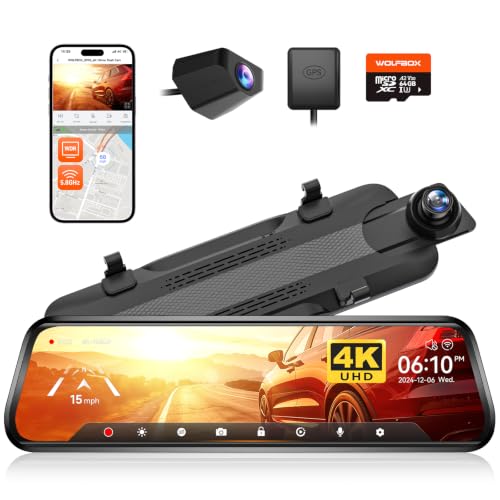
This product is a strap-on 12-inch mirror dash camera system for 12V and 24V vehicles. It places a front camera and touchscreen over the factory rearview mirror, with a wired 1080P rear camera, GPS module, car-power cable, and recording to a microSD card. The manufacturer manual specifies 4K front recording, 1080P rear recording, 25 fps, and support for cards up to 256GB. The rear camera can be wired to the reverse-light positive lead to switch the display into reverse mode and show adjustable guidelines. It is a driver-view and recording aid, not a collision-warning or braking system. No public exact-model test report was located for rear visibility coverage, response time, glare, rain, dirt, image delay, mounting durability, or FMVSS 111 performance.
This product suits a driver of a car, pickup, van, or similar 12V or 24V vehicle who wants a large mirror-position screen plus front and rear incident recording, and is prepared to install a wired rear camera carefully. It is most appropriate where the owner can confirm that the added mirror does not obstruct the factory mirror or vehicle controls, can route wiring safely, and will continue direct checks and mirror use when reversing. It also suits users who prefer local microSD recording and want the option to disable audio and GPS-related stamps.
It is not suited to anyone expecting a certified replacement for an original backup-camera system, a rear collision warning system, or automatic braking. It is also a poor fit where installation requires uncertainty around curtain-airbag areas, factory wiring, reverse-light polarity, or a vehicle with a mirror shape that cannot securely accept the straps. Privacy-sensitive users who cannot promptly change or isolate the Wi-Fi connection should avoid using the wireless feature. Drivers needing validated all-weather performance, a tested ingress rating, or documented low-light response should choose a product with exact-model test evidence.
A rear camera can help a driver view the area directly behind a vehicle, but it does not replace attentive reversing, direct checks, or the vehicle’s mirrors. This product has no documented rear obstacle alert or automatic braking function. The manual appropriately says it is intended as reference material after an accident and warns users to stop using it if damaged or malfunctioning because continued use may create fire, electric-shock, or vehicle-failure risk. The product is powered from the vehicle rather than a rechargeable consumer battery, but no public UL, ETL, CSA, or exact-model power-equipment certification record was located during review. The maker provides manuals, a U.S. support phone number, and warranty terms, which improve repair contactability. No exact-product recycling, take-back, spare-parts, recycled-material, or packaging-reduction program was located. Treat the camera, cable, display, power equipment, and microSD card as electronic waste and use an appropriate electronics recycler at end of life.
This is a 10-inch strap-on rearview-mirror dash camera system with a front camera, wired 1080p rear camera, external GPS module, touch display, car charger, and removable memory storage. The manufacturer manual documents front recording at 4K and rear recording at 1080p, 25 fps, support for cards up to 256 GB, and an operating-temperature claim of minus 4 to 158 degrees Fahrenheit. The rear camera is wired to the mirror, rather than wirelessly linked, and its reverse-view function can be triggered from the vehicle reverse-light circuit. The manual also documents loop recording, adjustable G-sensor sensitivity, optional audio recording, GPS display and stamp controls, and parking recording with a separately purchased hardwire kit. No public exact-product laboratory report was located for rear-view field of view, latency, glare performance, rain performance, or night readability.
This product suits a driver who wants a large, always-visible rear camera display combined with front and rear incident recording, and who can accommodate a wired rear-camera installation. It is most appropriate for a 12V or 24V vehicle with a conventional interior rearview mirror, a workable path from the mirror to the rear of the vehicle, and a reverse-light circuit that can be identified safely. It also suits users who prefer local memory-card recording and want the option to turn off audio and GPS overlays.
It is not well suited to drivers who need independently tested backup-camera performance for darkness, glare, rain, road spray, or delay, or to anyone who might treat a camera image as a replacement for direct observation and mirrors. It is also unsuitable for installations where routing near curtain airbags, accessing reverse-light wiring, or placing a strap-on screen could conflict with vehicle instructions. Buyers needing verified car-wash sealing, a confirmed radio authorization, or a clearly documented app security model should select a product with those records available.
The product can add a rearward camera view and record front and rear video, but it should remain a supplement to mirrors, direct checks, and slow, careful reversing. The manual identifies it as a recording reference, not guaranteed complete evidence. Its installation requires care because the rear trigger wire connects to the reverse-light circuit and the cable is routed through vehicle trim. Vehicle-specific instructions are important around airbags, trim fasteners, and electrical circuits. The supplied manual warns to stop use if the product is damaged or malfunctioning because continued use may cause fire, electric shock, or vehicle failure. No exact-product UL, ETL, CSA, ISO 17025, or FCC authorization record was located in the verification work. No product-specific U.S. recall was located. The manufacturer provides contact routes and warranty support, but no verified take-back, repair-parts, recycled-material, or electronics-recycling program for this product was found. Recycle the electronics and any internal battery through an appropriate e-waste route rather than household trash.
This is a 10-inch rearview-mirror-mounted dash camera with a front 4K camera, a wired 1080p rear camera, touchscreen controls, loop recording, impact-triggered file locking, and a supplied 32GB memory card. The rear camera cable is listed as 22.5 feet, and the system is powered through a vehicle 12V outlet. A publicly available product manual describes a reverse-light connection that automatically switches the display to the rear view with parking guidelines. The published specifications and manual describe front-and-rear recording, voice commands, and a maximum 256GB memory card capacity, but these are manufacturer-stated features rather than independently tested performance results. No exact-model lab report was found for rear image size, delay, glare resistance, rain performance, or low-light readability. The product is a driving aid, not a replacement for mirrors, shoulder checks, or a walk-around before reversing.
This product suits a car owner seeking a wired, mirror-mounted recorder and a larger rear display for ordinary parking and incident recording. It is most appropriate for someone comfortable checking their vehicle manual, routing a long cable without disturbing trim or airbags, and having a professional connect the reverse-light trigger if needed. The supplied memory card and 12V power cable make it practical for a basic installation where a factory rear camera is absent or where an additional recording view is wanted.
It is not well suited to drivers who need documented performance in severe rain, snow, glare, darkness, or frequent car-wash exposure. It also does not fit buyers who require vehicle-specific installation instructions, independently certified charging equipment, or proof that the mirror overlay will preserve factory-camera operation and sight lines. Vehicles with complex mirror electronics, airbags near intended cable routes, advanced driver-assistance equipment, or a factory display should be assessed by a qualified installer before fitting this product.
A rear camera can help show the area directly behind a vehicle, but it cannot establish that the path is clear. NHTSA advises drivers using backup cameras to look over their shoulders because children, pets, and objects can remain outside the camera view. The available product instructions describe parking guidelines and reverse activation, but they do not supply a prominent limitation statement or exact-model performance testing in adverse conditions. The documentation identifies a wired camera system and a 12V vehicle power connection. No rechargeable battery pack is identified in the available materials, although one product database describes a built-in supercapacitor. No independently traceable safety certification for the supplied charger, weather-sealing test report, repair support, replacement-parts route, recycling program, CPSC recall, or NHTSA recall specific to this product was located. Electronics and memory cards should be routed to appropriate e-waste recycling rather than household trash.
This is a single rear camera and dashboard monitor system intended for RVs, fifth wheels, and travel trailers with a compatible pre-wired rear-camera mounting point. It uses a 7.2-inch monitor, a wireless camera feed, infrared night mode, and local DVR recording. The supplied product record states that a 32GB memory card is included and that the system can later support additional cameras. An independent roundup describes the same CampSync A format as a single-camera, pre-wired RV system with a 7.2-inch 1080p monitor, dual antennas, DVR, and claimed operation on trailers up to 60 feet. That roundup also says it did not conduct towing tests, so its observations do not substitute for laboratory evidence. I found no exact-model manual, accredited performance report, radio authorization match, or third-party electrical-safety listing that could verify the key safety and performance claims.
This suits an RV or trailer owner who has already confirmed that the existing rear-camera bracket, connector, and 12-volt supply match this system. It is most relevant for a buyer who wants a single rear view for slow reversing, campsite positioning, hitch checks, and general rearward awareness, and who is willing to treat the monitor as an aid rather than a substitute for mirrors and direct checks. The local DVR function may also suit someone who prefers removable card storage rather than an app or cloud account.
It is not for a buyer who needs independently proven image delay, low-light performance, weather sealing, long-distance radio reliability, or certified charging equipment. It is also a poor fit for trailers without a verified compatible pre-wired mount, for installations that require routing new power wiring, or for drivers expecting complete blind-spot coverage from one rear camera. Households with children or frequent pedestrian activity should be especially careful to use walk-around checks and mirrors, because a rear camera can be blocked or miss hazards outside its view.
The safety value is real but limited. NHTSA describes a backup camera as a tool that gives a view directly behind a vehicle, while emphasizing that drivers remain responsible for driving. NHTSA also warns that rear-view devices cannot replace actively checking mirrors and walking around the vehicle. This product has no located exact-model proof of the camera view, delay, glare resistance, wet-weather performance, or night performance needed to establish how well it performs in demanding conditions. AUTO-VOX provides a named company, email support, warranty links, installation resources, and manuals for other product lines. However, its public manual library did not show an exact CampSync A manual during this review. No exact-model FCC record, recognized U.S. electrical-safety listing, durability test report, repair-parts plan, take-back program, or recycling instructions were located. The included memory card supports local recording, but the available material does not explain retention, deletion, or security controls in detail.
This is a wired rear-view camera kit for cars, trucks, SUVs, vans, campers, and similar 12-volt vehicles. It pairs one rear camera with a 4.3-inch LCD monitor, a four-pin camera cable, a dashboard or windshield mounting arrangement, and a cigarette-lighter power adapter with an on-off switch. The exact-model instructions also describe an option to connect it to reverse-light power. LeeKooLuu’s current catalog identifies the comparable 4.3-inch kit as wired, with 1080p video and an IP69 camera claim. Exact-model instructions describe adjustable parking lines and mirror or forward image modes. Those are manufacturer-stated specifications, not independent performance findings. No public exact-model laboratory report was located for field of view, startup time, image delay, glare, night visibility, water ingress, vibration, or wash durability. A camera can assist with backing, but it does not replace mirrors, direct checks around the vehicle, or slow attentive reversing.
It suits a driver seeking a compact, wired rear-view display for a basic 12-volt vehicle, especially where a visible dash-mounted 4.3-inch screen is acceptable and a cable can be routed safely from the rear camera to the cabin. It is most appropriate for someone comfortable checking vehicle-specific wiring information, testing the camera view after mounting, and treating the image as an added reversing aid. The cigarette-lighter option may also suit a less permanent installation where the cable route can still be secured away from pedals, trim edges, and airbags.
It is not suited to anyone who needs documented compliance with rear-visibility performance requirements, independently verified night and weather performance, or a professionally specified fleet installation. It is also a poor fit where a small 4.3-inch display would be hard to read, where there is no safe concealed route for the cable, or where the driver cannot verify power and reverse-trigger wiring. Do not use it as a substitute for direct observation, mirrors, a walk-around check, or caution around children, pedestrians, pets, and low obstacles.
The main safety-positive design point is the wired connection, which removes radio authorization and wireless interference issues. The available exact-model instructions also describe configurable parking lines and reverse-light power wiring. These are useful setup features, but the product has not been publicly matched to independent tests of the image size, rearward coverage, response time, night performance, rain performance, or durability procedures used for regulated vehicle rear-visibility systems. No rechargeable battery, app, cloud service, or recording feature was identified for this wired camera kit, which limits charging and connected-data concerns. No public exact-model UL, ETL, or CSA listing was located for the supplied power adapter. No product-specific recycling, take-back, spare-parts, or repair program was located, so end-of-life support remains unclear. No LeeKooLuu recall or regulator warning for this product was identified in the searched U.S. recall sources.
This is a portable two-camera rear-view system for trucks, RVs, trailers, campers, and boats. It includes a 7-inch monitor powered from a vehicle accessory outlet and two rechargeable, magnet-mounted cameras. The monitor is described by the seller as supporting up to four camera feeds and onboard loop recording. Independent retail listings consistently repeat the maker's stated 15,000mAh camera battery, 1080p imaging, infrared night vision, 170-degree lens, solar panel, and IP69 or IP69K water-resistance claims. Those are manufacturer claims, not independently validated results. No exact-model laboratory report was located for usable field of view, display delay, glare, wet-weather image quality, magnet retention, battery safety, or radio-link range. A backup camera can help reveal the area behind a vehicle, but it must supplement mirrors, direct checks, and careful reversing.
This suits an owner of a metal-bodied trailer, truck, RV, or work vehicle who needs a temporary rear or hitch view and can independently confirm where the cameras and monitor can be mounted without blocking vision or controls. It is most relevant for low-speed positioning, hitching, and checking a trailer area, where two movable camera positions and a plug-in monitor may be convenient. The user should still perform direct visual checks before reversing and keep the cameras charged.
It is not suited to anyone who needs documented safety-grade rear-visibility performance for commercial, fleet, regulated, or high-consequence use. Choose another system if the mounting surface is fiberglass, aluminum, plastic, dirty, curved, or otherwise unsuitable for magnets, unless a properly secured compatible mounting plate is used. It also is not appropriate for drivers who expect blind spots to be eliminated, need verified rain and glare performance, or cannot safely position a 7-inch display without obstructing their forward view.
The safety value is inherent to the camera format, not proven performance of this particular system. NHTSA says backup cameras can help drivers see behind a vehicle and help prevent backover crashes, while emphasizing that they are not substitutes for mirrors or turning to look. The product's own broad blind-spot language does not provide that needed qualification. The cameras contain rechargeable battery packs and electronics, yet no public battery, charger, radio, or environmental test certification was located for this exact product. No relevant CPSC or NHTSA recall was located in the searches conducted, but accessible manufacturer or importer contact details, a recall-notification route, repair parts, and take-back program were also not found. At end of life, do not place the battery-containing cameras or monitor in household trash or curbside recycling. EPA directs consumers to battery and electronics recycling routes for these items.
This is a wired-power, wireless-video rear camera kit for trucks and other vehicles with a standard license-plate camera location. The catalog describes a 7-inch dashboard display, a 1080p camera, a suction-cup display mount, and a camera that can be powered from the reverse light for automatic activation. It is intended to add a rear view while parking or reversing, not to replace the vehicle's required mirrors and direct checks. A published LK10 manual independently mirrors many of the stated functions, including wireless transmission, reverse-light or running-light wiring, adjustable parking guidelines, and local loop recording to an optional SD card. Those remain manufacturer-stated specifications, not independent performance findings. No public exact-product laboratory report was located for image delay, usable field of view, glare, rain, dirt, vibration, or night visibility. The title's promise to eliminate rear blind spots is too absolute, since NHTSA says drivers should not rely solely on rear-view devices.
This suits a truck, pickup, camper, or older vehicle owner who wants a separate rear camera display and can safely connect the camera to an appropriate reverse-light or running-light circuit. It is most relevant for low-speed parking and hitching tasks where a larger dashboard screen and adjustable guide lines may help the driver judge position. The buyer should be comfortable verifying mount placement, voltage compatibility, cable routing, and camera fit before installation, and should continue using mirrors, direct checks, and slow reversing.
It is not suited to drivers who need independently proven rear-visibility performance in rain, darkness, glare, or high-vibration commercial use. It is also a poor fit where the display cannot be mounted without obstructing the windshield, controls, airbags, or forward view. Anyone expecting a camera to remove every blind zone, detect every child or obstacle, or serve as a substitute for looking around the vehicle should choose a setup with stronger safety guidance and documented testing. It is not designed as a replacement for an original vehicle camera system.
The safety value is in giving the driver another rearward view during slow reversing. NHTSA describes backup cameras as driver-assistance technology and specifically warns that rear-view devices cannot completely replace walking around and actively checking behind a vehicle. That matters here because the product title uses an absolute blind-spot claim. Use the camera as a supplement, keep the lens clean, and stop if the image is missing, delayed, obstructed, or unclear. No product-specific recall, warning, or regulatory action was located in the searched U.S. recall resources. The product information identifies a manufacturer and states a two-year warranty, which offers some traceability, but no public exact-product FCC match, electrical-safety listing, accredited performance test, repair-parts program, or take-back policy was found. At end of life, the display, camera, cables, and power adapter should go through an electronics recycler rather than curbside trash.
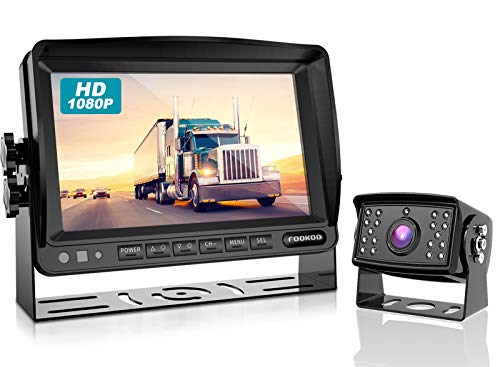
The Fookoo FHD1 is a one-camera, hard-wired rear-view system for trucks, trailers, RVs, buses, and similar 9-36 V vehicles. It combines a 7-inch monitor, a surface-mounted rear camera, connection cable, brackets, power wiring, and installation hardware. The available instruction guide describes red power wiring to ACC or a 9-36 V source, black to ground, plus an optional reverse trigger wire. Fookoo states that the camera uses a 2-megapixel CCD sensor, has a 170-degree viewing angle, 18 infrared lights, and an IP69 water-resistance rating. The documentation also describes adjustable parking lines and auto dimming. Those are manufacturer claims, not independently validated performance results. No public exact-product laboratory report was found for usable rear coverage, glare, delay, low-light image quality, water-jet resistance, vibration endurance, or compliance with rear-visibility test procedures.
This system suits an owner or fleet installer fitting a single wired rear camera to a truck, trailer, box truck, bus, or RV with a compatible 9-36 V electrical system. It is most relevant where a long, reliable cable route is practical and the driver wants reverse-triggered image display and parking lines without relying on a wireless signal. The installer should be able to verify mounting position, cable length, power source, grounding, fuse protection, and whether the vehicle allows an added dash-mounted display without obstructing forward vision.
It is not for someone seeking a documented replacement for an original vehicle rear-visibility system, or anyone who needs independently proven low-light, glare, weather, vibration, image-delay, or rear-coverage performance. It is also unsuitable for buyers unable to safely route and protect hard wiring through a vehicle or trailer. Drivers who expect the camera to detect every child, person, low object, or cross-traffic hazard should choose a setup with suitable additional safety measures and continue using mirrors, direct checks, and careful reversing.
A rear camera can help a driver see directly behind a vehicle, but it does not replace mirrors or turning to check the surroundings. NHTSA specifically gives that caution for backup cameras. The available FHD1 instructions describe parking lines and a reverse trigger, yet they do not clearly repeat this limitation. The maker also uses absolute language about image delay and bright-light performance without public exact-product test data. This is a vehicle-powered wired product, not a battery or solar camera, so it does not add a rechargeable battery pack or charger to manage at end of life. Fookoo provides an email and phone contact route and says replacement support is available, but no public take-back program, recycling policy, spare-parts catalog, accredited durability report, or third-party electrical certification record was located for this product. No relevant Fookoo recall or regulator warning was found in the checked U.S. databases.



