Best Overall
20% Coupon

Viking Revolution Beard Conditioner Sandalwood Scent
Contains nourishing Argan and Jojoba oils.
Pleasant and subtle sandalwood scent.
Softens and strengthens beard effectively.
 Lauren Wilson
Contains nourishing Argan and Jojoba oils.
Pleasant and subtle sandalwood scent.
Softens and strengthens beard effectively.

Provides long-lasting moisture for dry beards.
Helps strengthen and reduce beard frizz.
Promotes healthy hair growth effectively.

Lightweight formula, perfect for daily use.
Nourishes and hydrates both beard and hair.
Convenient two-pack offers great value.

Natural ingredients soothe and prevent beard itch.
Vegan and cruelty-free for ethical grooming.
Pleasant woodland scent adds freshness.

Nourishes and softens beard effectively.
Spiced vanilla scent is pleasantly unique.
Large 17 oz size for long-lasting use.

Natural oils for softening and strengthening.
Refreshing peppermint and eucalyptus scent.
Generous 17oz size offers great value.
Contains natural extracts for gentle cleansing.
Hydrates and softens beard hair effectively.
Detangles and maintains beard smoothness.

Rich sandalwood scent adds a masculine touch.
Dual function: nourishes and softens beard effectively.
Made with naturally derived ingredients for safety.

Paraben and sulfate free formula.
Infused with tea tree and biotin.
Suitable for all beard types.

Gentle, unscented formula for sensitive skin.
Nourishes and softens beard effectively.
Free from harsh chemicals and fragrances.
Whether one works depends less on a featured oil or botanical than on the finished formula and how it is used. Conditioning materials such as fatty alcohols, cationic conditioners, humectants and emollient oils can provide a plausible basis for softness and easier combing. But ingredient storytelling is not the same as finished-product evidence. The strongest evidence would include instrumental combing-force, friction or breakage testing, sensory-use results, and clear directions specifying whether the product is rinse-out or leave-in and how long it should stay in contact with hair.
Buyers should first check the complete, current ingredient declaration, directions, warnings, net contents and a reachable responsible company. A water-containing conditioner also needs protection against contamination during storage and repeated use. A meaningful safety record would include finished-product microbiological testing against ISO 17516 and preservation-efficacy testing such as ISO 11930, with the formula or batch clearly identified. None of those standards can be inferred from the presence of preservatives alone.
Claims deserve the same scrutiny. “Softens,” “conditions,” “detangles” and “reduces the look of frizz” are cosmetic claims that can be assessed through use or performance testing. Claims about beard growth, thickness, fuller growth, dandruff, flakes, itch, inflammation or repair imply biological or treatment effects and need stronger product-specific evidence; the supplied reviews repeatedly found those claims unsupported. “Natural,” “non-toxic,” “vegan,” “cruelty-free,” “organic” and “recyclable” are not interchangeable safety guarantees. For a certification to carry weight, it should cover the actual product or relevant supply chain and be checkable in an issuer register such as EPA Safer Choice, USDA Organic Integrity, NSF/ANSI 305, Leaping Bunny, PETA’s listed company record, B Lab or an FSC certificate and trademark record. PETA and B Lab records are meaningful for the company-level commitments they cover, but do not prove finished-product testing.
Headline figures can mislead. A high customer rating, large review count, low price, large bottle or category rank does not establish safety, preservation, conditioning performance or sustainability. “Paraben-free” or “sulfate-free” describes exclusions, not overall risk; some products also had inconsistent online ingredient information. A fragrance-free label is not fully dependable when the available ingredient declaration also mentions fragrance, and an ingredient list cannot prove that a water-based product will remain microbiologically safe throughout shelf life. Recycled-plastic, refill, recyclable and low-impact claims likewise need component-specific material evidence.
Across the supplied products, the recurring caveat is fragrance: sandalwood, peppermint, eucalyptus, tea tree, rosemary, citrus, musk and other scent materials, along with named allergens such as limonene, linalool, citronellol, geraniol, farnesol, coumarin and benzyl salicylate, may matter to people with allergy, dermatitis, asthma or other scent sensitivity. Several products also lacked public preservation, patch-test or finished-product performance reports. People with persistent flaking, inflammation, pain, infection, hair loss or suspected dermatitis should not treat a cosmetic conditioner as a medical treatment. Check the bottle received for formula changes, avoid the eyes and broken skin, and stop use if irritation develops.
These topics separate ordinary cosmetic usefulness from evidence about facial-skin safety, accountability and environmental impact. Scores are relative to the supplied products and reflect the quality of the disclosed evidence, not a guarantee that any product will suit every buyer.
This measures whether the disclosed formula has a credible safety basis for normal facial-skin use. For beard conditioners, water-based formulas, leave-on contact and facial application make formulation quality important. Higher scores in the set were associated with conventional disclosed formulas and usable directions; lower scores reflected incomplete or conflicting ingredient information, as seen especially in products with less transparent formulas.
This measures how clearly a product communicates and limits likely skin, eye-area and fragrance risks. It matters because many supplied conditioners contain fragrance, essential oils or named allergens, and leave-in products remain on facial hair and skin. Higher scores came from clearer allergen disclosure or lower exposure; low scores reflected strong scent profiles, missing allergen detail or conflicts such as a fragrance-free claim alongside fragrance information.
This measures whether a water-containing conditioner is protected from contamination through shelf life and consumer use. Preservative ingredients can support a plausible formula, but they do not prove finished-product safety. The supplied scores were generally moderate to good because products listed preservation systems or used conventional bases, while none had publicly accessible ISO 11930 challenge-test or ISO 17516 microbiological results.
This measures whether buyers receive a complete ingredient list, safe-use directions, warnings, net contents and a reachable responsible company. Facial products need clear eye and sensitivity cautions, while rinse-out and leave-in directions affect exposure. Higher-scoring products supplied fuller labels and company contacts; lower scores reflected missing warnings, incomplete formulas, inconsistent listings or limited responsible-company information.
This measures evidence that the exact finished product improves slip, softness, detangling, friction or breakage rather than merely containing conditioning ingredients. Most supplied products scored in a narrow moderate range because their formulas and directions made ordinary conditioning plausible, but no accessible instrumental or finished-product performance report was found. Clear contact times and credible conditioning agents helped distinguish the stronger entries.
This measures whether marketing stays within supported cosmetic outcomes and avoids unsupported growth, thickness, dandruff, itch, repair or treatment promises. Higher scores went to products whose claims focused on softening, conditioning, styling or moisturization. Lower scores reflected growth or dandruff language, unsupported “sensitive” reassurance, or contradictions between marketing claims and disclosed ingredients.
This measures whether an independent qualified laboratory tested the exact current formula for safety, preservation or performance using identifiable methods and formula or batch information. The supplied scores were clustered because no review located an accessible independent report for the current finished product, even where brands used phrases such as “dermatologist tested.” A marketing statement is not equivalent to ISO or accredited-laboratory evidence.
This measures whether safety, organic, cruelty-free, sourcing or packaging claims are backed by a current third-party record covering the claimed product or supply chain. Most products had no verified product-specific certification. The Every Man Jack lotion and gift set scored notably higher because PETA lists the company as cruelty-free and B Lab lists it as a Certified B Corporation, although those records do not establish formula safety or environmental fate.
This measures evidence about biodegradability, aquatic toxicity, persistence and hazardous-release burden after a conditioner is rinsed away or discarded. An oil, botanical or “natural” description is not enough. Scores were mostly similar because the supplied products lacked finished-formula environmental assessments or OECD data. The notably lower score for the leave-in styling pudding reflected the disclosed cyclopentasiloxane and related environmental concerns.
This measures the actual bottle, tube, pump, jar, carton or refill system, including recycled content and practical component-level recycling. A large bottle or a company-wide sustainability statement does not establish lower waste for the product in hand. The supplied scores were mostly moderate because packaging materials, recycled-content percentages, refill details and component-specific recycling instructions were generally unavailable.
This is a 17 ounce, pump-dispensed sandalwood beard conditioner for use after washing. The current manufacturer directions say to massage it through a wet beard, leave it on for 2 to 3 minutes, then rinse thoroughly with warm water. The manufacturer’s current pack image discloses a water-based formula with cetearyl alcohol, argan and jojoba oils, glycerin, ginger extract, hydrolyzed yeast protein, panthenol, steartrimonium chloride, aloe extract, sodium hyaluronate, sodium lactate, EDTA, and sandalwood oil. Its explicit warning acknowledges possible skin sensitivity and directs users to avoid the eyes, inner ears, and sensitive areas. No accessible independent finished-product safety, preservation, or performance test report was located. The brand’s claims about beard growth, dandruff, and eliminating irritation go beyond the available product-specific evidence.
This product suits an adult with a normal, non-reactive beard and facial skin who wants a large rinse-out conditioner after beard wash. It is most relevant for someone looking for temporary softness, slip, and easier beard handling from a conventional emollient and conditioning base, rather than a leave-in oil. The defined short contact time may also suit users who prefer rinsing a scented product away rather than leaving fragrance on the beard throughout the day. It is not supported as a beard-growth treatment.
It is not well suited to people with fragrance allergy, sandalwood sensitivity, reactive facial dermatitis, asthma triggered by scents, or a history of eye-area irritation from grooming products. The pack itself warns of possible skin sensitivity and instructs users to avoid sensitive areas. People seeking fragrance-free care, verified hypoallergenic testing, or independently documented microbial and patch-test results need more evidence than is publicly available here. It is also not an evidence-based choice for treating persistent beard flaking, inflammation, or hair loss, which can need clinical evaluation.
The current on-pack disclosure is stronger than a vague botanical-only presentation. It identifies sandalwood oil rather than concealing scent under a generic fragrance term, and it includes a warning for possible skin sensitivity. That matters because fragrance ingredients can provoke allergic or respiratory symptoms in susceptible people. The product is rinse-out, but scent exposure still occurs during application. No FDA recall, warning letter, or other product-specific enforcement action was identified in the reviewed FDA sources. The water-containing formula has no publicly accessible preservation challenge-test report or microbiological-quality report. Its ingredient list includes conditioning and humectant materials, plus EDTA and sodium lactate, but that cannot establish finished-product shelf stability. No current third-party certification for this product was located in the searched EPA Safer Choice, USDA Organic, or Leaping Bunny sources. The pump bottle is plastic, and no recycled-content, component-material, refill, or component-specific recycling evidence was found.
This is a two-tube rinse-out beard conditioner, with 7.1 ounces in each tube, intended for dry or coarse facial hair. The manufacturer directs users to work a dollop through the beard after washing, wait 2 to 5 minutes, then rinse. Its current published formula is water-based and includes shea butter, castor, safflower, coconut and jojoba oils, cetearyl alcohol, and behentrimonium methosulfate, a conventional conditioning agent. The manufacturer says it moisturizes, detangles, reduces frizz, and helps reduce breakage. Those are plausible cosmetic outcomes for this type of rinse-out conditioner, but no publicly available instrumental testing of this finished formula was located. It is fragranced with a warm spice and powdery musk scent profile, so it is not a fragrance-free option.
This product suits a person with a dry, dense, coarse, or difficult-to-comb beard who wants a rinse-out conditioner rather than a leave-in treatment. The 2 to 5 minute use direction fits a wash-day or shower routine, and the combined 14.2 ounces can suit regular use on a larger beard. It is most appropriate for someone who tolerates fragranced grooming products and values an openly published ingredient list, while accepting that the performance claims are manufacturer-stated rather than independently tested.
This is not well suited to people with a known fragrance allergy, fragrance-triggered respiratory symptoms, recurrent facial contact dermatitis, or a history of reactions to scent allergens. The product is fragranced, and older public ingredient listings identify multiple common fragrance allergens. It also does not fit a buyer seeking fragrance-free beard care, independently documented preservative and patch testing, or substantiated topical hair-growth results. People who need packaging with verified recycled content or clear component-level recycling instructions will not find that evidence here.
The current manufacturer formula is a water-containing rinse-out conditioner with shea butter, plant oils, cetearyl alcohol, behentrimonium methosulfate, humectants, and a multi-part preservation system that includes pentylene glycol, 1,2-hexanediol, caprylyl glycol, and tropolone. That supports a plausible conventional conditioner design, but the company does not publicly provide finished-product microbial, preservation, irritation, or sensitization test reports. Added fragrance is the main user-facing caution, particularly for people with known scent sensitivity. The manufacturer and retailers state that the product is vegan and not tested on animals, but no current product-specific certification was verified through a recognized third-party issuer register. No Scotch Porter recall or FDA cosmetics warning letter was located in the public FDA sources reviewed as of August 9, 2026. The brand lists several excluded ingredient categories, but it provides no product-specific biodegradability, aquatic-toxicity, recycled-content, refill, or component-recycling documentation.
This is an 8 fl oz, leave-in conditioning spray for beard and hair, sold here as a two-pack. Directions independently listed by Sally Beauty are to spray it on wet or dry beard or hair whenever a refresh is wanted, with no rinsing. Scotch Porter positions it for daily hydration and non-wash days. An independently listed ingredient declaration is water-based and includes shea butter ethyl esters, jojoba oil, squalane, argan, coconut, avocado, kukui and marula oils, hydrolyzed quinoa, aloe, sodium benzoate and potassium sorbate. That retailer list has no fragrance or parfum entry. Older retailer information shows a fragranced version with declared scent allergens, so buyers should check the physical bottle because the formula appears to have changed. No public finished-product challenge test, patch test, or instrumental conditioning report was located.
This suits someone with a dry, coarse, curly, coily, wavy, or otherwise hard-to-manage beard or hair who wants a quick leave-in refresh between washes. Its spray application and no-rinse directions are practical for morning grooming and for adding slip before combing. The currently listed formula may also be more suitable than a fragranced beard product for users who simply prefer to avoid added fragrance. It is not a treatment for hair loss, skin disease, or persistent scalp or beard-area irritation.
Choose something else if you have a known allergy to soy, coconut, jojoba, aloe, quinoa, or botanical extracts, or if your facial skin reacts easily to leave-on oils and preservative systems. People with active dermatitis, broken skin, recurring folliculitis, eye-area sensitivity, or unexplained beard-area itching should favor a product with accessible finished-formula patch-test evidence and clear cautions, or seek clinical advice. It is also a poor fit for buyers requiring independently verified vegan, cruelty-free, organic, low-impact, or packaging-recyclability credentials.
The current independent retailer ingredient list identifies a water-based leave-in formula with emollients, oils, aloe, hydrolyzed quinoa, sodium benzoate, potassium sorbate and glycols. These are plausible components of a preserved conditioner, and several common preservative ingredients have Cosmetic Ingredient Review safety assessments. However, ingredient-level safety information cannot replace a test of the finished spray. No publicly accessible challenge test, microbiological release test, human repeat-insult patch test, or ocular-tolerance report was located. The current retailer declaration does not list fragrance, although older retail information describes a fragranced, allergen-declared version. Check the bottle before use. No relevant FDA recall, safety alert, or cosmetics warning letter was located in the searches performed. No current product certification or independently verifiable environmental formula or packaging data was found, so claims about low environmental impact, recycling, animal testing, or sourcing cannot be confirmed for this product.
This is a 250 ml, 8.45 fl oz rinse-out beard conditioner in the Woodland Harmony scent. The manufacturer directs users to work it through a washed beard, leave it on for at least 30 seconds, then rinse. It is intended to add slip and softness for combing while moisturizing beard hair and the skin beneath. The current manufacturer ingredient list identifies a water-based formula with brassica-derived conditioning agents, glycerin, jojoba, avocado, apricot, coconut oils, and preservative ingredients including benzyl alcohol, salicylic acid, and sorbic acid. The disclosed formula also contains natural fragrance, limonene, and farnesol. The brand states that the product is vegan and cruelty-free, but no current certification for those claims was verified in a recognized public registry. No product-specific independent safety, preservation, or performance reports were publicly available.
This product suits an adult with a medium to long beard who wants a scented rinse-out conditioning step after beard washing, particularly when roughness or tangling makes combing uncomfortable. Its 250 ml bottle is oriented toward regular home use rather than occasional travel. The ingredient list is useful for buyers who want to identify the product's oils, conditioning agents, preservatives, and named fragrance allergens before use. It is most appropriate for cosmetic softening and manageability expectations, not treatment of a scalp or skin condition.
People with a known fragrance allergy, limonene or farnesol sensitivity, recurrent facial dermatitis, highly reactive skin, or eye-area irritation should choose a fragrance-free alternative or seek clinician guidance. It is also not an appropriate substitute for a proven dandruff treatment when there is persistent flaking, redness, pain, or suspected seborrheic dermatitis. Buyers who require independently available preservative testing, human patch testing, verified cruelty-free certification, or package-specific recycled-content documentation will not find those records publicly supplied for this product.
For normal rinse-out facial-hair use, the disclosed formula has a conventional water-based conditioner structure with conditioning agents, emollient oils, and a preservative system. However, it is fragranced. Limonene and farnesol are named on the ingredient list, and FDA includes both among fragrance allergens that may matter to sensitive users. No recall, FDA warning letter, or public regulatory action specifically identifying Seven Potions or this conditioner was found in the checked FDA resources. The brand states that it prioritizes vegan ingredients, does not use virgin plastic, and uses recycled-plastic or sugarcane-based containers. Those are manufacturer statements, not product-specific material certifications. No verified Leaping Bunny, PETA, USDA Organic, EPA Safer Choice, FSC, or comparable third-party certification for this product was located. The ingredient list alone also does not establish biodegradability or aquatic-toxicity performance after rinsing.
This is a 17-ounce, fragranced rinse-out beard conditioner in a bottle. Viking Revolution directs users to apply a small amount after cleansing, massage it through the beard, then rinse. The brand describes the product as hydrating, softening, and moisturizing, and identifies argan oil and jojoba oil in the product name and marketing. The manufacturer page confirms the size, scent positioning, and rinse-out directions, but it does not publish a complete ingredient declaration, finished-product test report, or specific preservation evidence. That leaves the exact fragrance system, allergen profile, preservative approach, and formula concentrations unconfirmed. The product's strongest support is as a conventional cosmetic conditioner used briefly and rinsed away, not as a clinically demonstrated beard-growth or anti-dandruff treatment.
This product suits someone with a beard who wants a large, rinse-out conditioner for use after washing and who enjoys a warm spiced-vanilla fragrance. It is most relevant for routine cosmetic goals such as making beard hair feel softer and more moisturized after cleansing. The bottle size may also suit a household or frequent user who prefers not to replace a conditioner often. Users should be comfortable relying on manufacturer-stated benefits because no independent finished-product performance report was located.
It is not well suited to people with fragrance allergy, reactive facial skin, eczema around the beard area, or a history of eye-area reactions to scented grooming products. A full current ingredient declaration was not located on the manufacturer page, so people avoiding particular fragrance materials, botanicals, preservatives, or other ingredients cannot screen the formula adequately before purchase. It is also not a substantiated treatment for dandruff, persistent itch, beard-area rash, infection, or hair loss. Those concerns warrant a fragrance-free product or clinical guidance.
The product is a scented, water-based rinse-out conditioner, so fragrance and incomplete formula disclosure are the main practical health limitations. Viking Revolution identifies argan oil and jojoba oil and gives rinse-out directions, but the public product page reviewed did not provide the full ingredient list, warnings, preservation method, or a batch-specific safety or microbial report. No independently accessible human patch testing, preservation challenge testing, or finished-product performance testing was located. No verified EPA Safer Choice, USDA Organic, NSF organic personal-care, or Leaping Bunny certification for this product was located in the relevant issuer searches. The brand page also did not provide recycled-content figures, component-level recycling directions, refill information, or biodegradability and aquatic-toxicity data for the formula. No product-specific FDA recall or warning letter was located in the review, but absence of a public enforcement record is not equivalent to independent safety testing.
This is a 17-ounce, water-containing beard conditioner in a rinse-off lotion format. The brand directs users to apply a small amount after cleansing, massage it through the beard, then rinse. It is sold in a peppermint and eucalyptus scent and is intended to soften and moisturize facial hair. The manufacturer identifies argan and jojoba oils as featured ingredients and claims the conditioner hydrates, softens, and supports healthy beard growth. Those are manufacturer statements, not finished-product performance results. The public product page provides use directions and a Florida contact address, phone number, and customer-service email, but it does not publish a complete ingredient declaration, a warning set, or product-specific safety and test documentation for this peppermint and eucalyptus version.
This product suits an adult with an established beard who wants a large rinse-off conditioner for a regular shower routine and is comfortable with a clearly scented peppermint and eucalyptus product. It is most relevant for someone seeking ordinary cosmetic effects such as easier spreading, a softer feel, and temporary manageability, rather than a treatment for skin disease or hair growth. The large bottle also makes sense for frequent household use where a pump-style shower product is preferred over small leave-on oils.
It is not well suited to people with fragrance allergy, reactive facial skin, eczema around the beard area, asthma triggered by scented products, or a history of reactions to essential oils. The named peppermint and eucalyptus scent components deserve extra caution near the mouth, nose, and eye area. It is also not appropriate as a dandruff treatment or a beard-growth intervention. Buyers who need a fully disclosed formula, verified microbiological testing, fragrance-free use, or independently documented irritation testing should select a product that makes those records available.
Peppermint and eucalyptus are central to this version's scent profile. Fragrance ingredients and essential oils can trigger contact sensitivity in some users, and the brand's public claim of no itching or irritation is not accompanied by a public finished-product patch-test report. A related sandalwood version has a third-party uploaded ingredient list showing a conventional water-based conditioner base with cetearyl alcohol, argan oil, glycerin, jojoba oil, panthenol, aloe, and steartrimonium chloride, but that list cannot confirm the current peppermint and eucalyptus formula. No relevant FDA recall or warning letter for this product was located in the checked public FDA resources. No current product-specific third-party certification, independent laboratory report, recycled-content figure, packaging material specification, refill system, or component-level recycling instruction was verified. The conditioner is rinse-off and water-containing, but the brand does not publish an ISO 11930 preservation challenge-test result or environmental fate data for the finished formula.
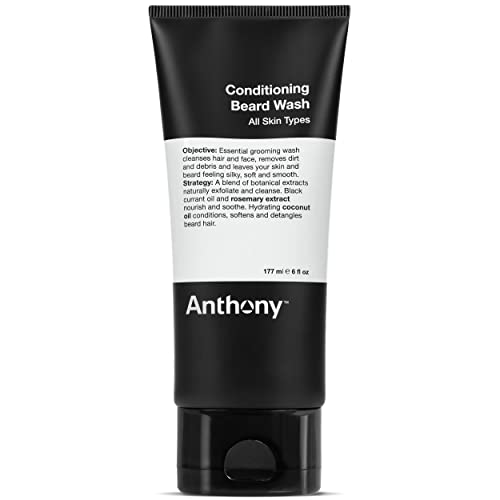
Anthony Conditioning Beard Wash is a 6 fl oz, 177 mL cream cleanser intended for wet beard, face, and neck use. The manufacturer directs users to lather a small amount and rinse it out, including for morning and evening use. It is a rinse-out conditioner-cleanser rather than a leave-in beard oil. Its disclosed formula, independently matched through a major retailer, combines fatty alcohols, behentrimonium chloride, stearamidopropyl dimethylamine, glycerin, plant oils and extracts, and several preservatives. Those conditioning ingredients provide a credible formulation basis for slip and softness, but no public test report was located for this exact product. The brand states that it is dermatologist tested and cruelty-free, but it does not publish a method, report, or third-party certification record supporting those statements.
This product suits a person with normal, non-reactive facial skin who wants one rinse-out product to cleanse a beard and add conditioner-like slip during a regular shower routine. It is especially relevant for a coarse or tangle-prone beard when the user prefers a cream cleanser over a separate shampoo and leave-in oil. The 6 fl oz size fits a personal grooming routine, and the public ingredient list lets users check known ingredient sensitivities before using it on facial skin.
It is not well suited to people with fragrance allergy, fragrance-triggered asthma, rosacea-prone skin, active facial eczema, or prior reactions to limonene, linalool, benzyl alcohol, rosemary, or citrus extracts. The directions include facial and neck skin, so avoidance matters more than with a hair-only product. It is also a poor fit for buyers who require documented hypoallergenic testing, a published preservation challenge test, independently verified cruelty-free certification, or substantiated low-impact packaging claims.
The formula is disclosed in detail and uses a rinse-out format, which limits contact time compared with a leave-in conditioner. Its conditioning base includes fatty alcohols and cationic conditioning ingredients commonly used for hair slip. However, the product contains fragrance plus limonene and linalool, which the FDA identifies among fragrance allergens of concern. It also includes rosemary and citrus extracts. Sensitive users should treat the detailed ingredient list as a screening tool, not as proof of low sensitization risk. Anthony states that the product is cruelty-free, dermatologist tested, made in the United States, and free of several ingredient categories. No current third-party certification in an issuer register, independent finished-product test report, or product-specific environmental assessment was located to verify those claims. No product-specific FDA recall or warning letter was identified in the reviewed sources. Packaging material, recycled content, refill options, and component-specific recyclability were not publicly substantiated.
This is a Sandalwood Teak beard-care bundle containing a 1 fl oz leave-in beard oil and a 4 oz leave-in beard butter. The oil is intended to condition beard hair and the skin beneath, while the butter is a thicker styling conditioner used to soften facial hair and manage flyaways. The manufacturer provides complete ingredient lists and basic use directions online. The oil is based on safflower and olive oils, with flax, borage, argan, shea butter, vitamin E, fragrance, limonene, and linalool. The water-based butter uses fatty alcohols, shea and cocoa butters, coconut oil, glycerin, panthenol, hydrolyzed wheat protein, conditioning cetrimonium chloride, and a preservative system. No public batch-specific preservation, irritation, or performance test report was located.
This bundle fits an adult with a short to full beard who wants both a lightweight oil for daily beard conditioning and a richer cream-butter for softness and light styling. It is most relevant for users who enjoy a woodsy Sandalwood Teak scent and want to see a published ingredient list before use. The 1 fl oz oil and 4 oz butter offer different textures for dry facial hair, coarse beard hair, or flyaways. It is a cosmetic grooming system, not a treatment for a skin disorder or hair-growth concern.
It is not well suited to people with fragrance allergy, fragrance-triggered asthma, prior reactions to limonene, linalool, sandalwood oil, or unspecified parfum. It also warrants caution for people with active facial eczema, broken skin, folliculitis, or a known allergy to wheat-derived cosmetic ingredients, shea, cocoa, coconut, or botanical oils. Those who need fragrance-free beard care, independently published patch testing, or documented preservation testing should choose a product with that evidence. Keep it away from the eye area and stop use if irritation develops.
The ingredient disclosure is stronger than an opaque fragrance-only listing. Both products identify their main cosmetic ingredients, and the fragrance-containing formulas specifically list limonene and linalool. That transparency helps people with known sensitivities screen the products, although it does not make a fragranced leave-in facial product low-sensitizer. FDA notes that fragrance ingredients can cause reactions in some users, and individual fragrance components may still be protected as trade-secret information. The brand states that all of its products are PETA cruelty-free certified. B Lab independently lists Every Man Jack as a Certified B Corporation, but that is a company-level social and environmental certification, not a safety or formula certification for this product. The brand reports broader packaging initiatives, including reduced virgin plastic and certified paper, but no bundle-specific packaging composition, recycled-content percentage, or practical recycling instructions were available. No FDA recall, warning letter, or product-specific regulatory action was located in the sources reviewed.
This is a two-bottle beard wash and rinse-out conditioner set, with 10 ounces in each bottle. The manufacturer directs users to massage the wash into beard hair and skin, rinse it away, then leave the conditioner on for 1 to 2 minutes before rinsing. It is positioned for routine cleansing, softness, moisture, and easier beard management. The independently listed ingredient declaration supports that it is a conventional water-based cleansing and conditioning system, with cocamidopropyl betaine in the wash and cetearyl alcohol, stearyl trimethyl ammonium chloride, polyquaterniums, oils, and panthenol in the conditioner. However, that same declaration lists fragrance, peppermint oil, and eucalyptus oil, but not tea tree oil or biotin. This conflicts with the manufacturer’s repeated tea tree and biotin marketing. No finished-product performance, preservation, irritation, or independent laboratory reports were located.
This set suits an adult with a short to long beard who wants a straightforward shower routine, prefers a rinse-out conditioner, and is mainly seeking temporary softness, detangling, and easier grooming rather than treatment of a skin or hair-growth condition. At about $28 for two 10-ounce bottles on the manufacturer site, it is aimed at someone who expects regular-use quantities. It is more appropriate for users who tolerate fragranced mint and eucalyptus products and can stop use if irritation develops.
It is not a good fit for people with known fragrance, peppermint, eucalyptus, benzyl alcohol, nut-oil, or botanical sensitivity, or for those with eczema, active facial irritation, asthma triggered by scented products, or prior cosmetic contact dermatitis. Avoid relying on it for beard growth, patch filling, flaking, or itch as a medical problem. Buyers who need a fully reconciled ingredient list, fragrance-free care, independently confirmed preservation testing, or verified certifications should choose a product with those records available.
The independent ingredient listing indicates a rinse-off formula with common cosmetic preservatives, phenoxyethanol, benzyl alcohol, and benzoic acid, plus conditioning polymers and plant oils. That provides a plausible formulation basis for ordinary use, but it is not a substitute for finished-product challenge testing or microbiological results. Fragrance, peppermint oil, and eucalyptus oil matter because facial skin and airways can be sensitive to scented materials. The product materials reviewed do not provide a patch-test report or a specific sensitivity warning. The manufacturer’s tea tree and biotin narrative is not reconciled with the independent ingredient declaration, which is the main transparency concern. Searches of FDA cosmetics recall and warning-letter resources did not identify a product-specific action. No verified third-party certifications, biodegradability or aquatic-toxicity data, recycled-content information, packaging-material specification, or component-specific recycling directions were found. Environmental claims therefore cannot be substantiated beyond the disclosed formula.
This is an 8 fl oz, water-based rinse-out beard conditioner for use after washing. The brand presents it as a daily beard-softening product, and its listed formula combines fatty alcohols, glycerin, cationic conditioning agents, plant oils, aloe, hydrolyzed keratin, panthenol, biotin, caffeine, and a multi-part preservative system. The Straight Up version is presented by the manufacturer and retail distributors as fragrance-free, with no essential oils. However, the brand's shared online ingredient list still ends in “Natural Fragrance,” so the current bottle label is the most important source to check for fragrance-sensitive users. No accessible independent finished-product safety, preservation, patch-test, or conditioning-performance report was found. The advertised growth-support and breakage claims therefore go beyond the publicly available product-specific evidence.
This product suits an adult with a coarse or dry beard who wants a conventional rinse-out conditioner after beard wash and prefers an 8 fl oz bottle over a leave-in treatment. It is most relevant for someone seeking easier combing, softer feel, and less roughness from a formula built around common conditioning agents and emollients. The Straight Up option is especially relevant for buyers who avoid added scent around cologne or who generally tolerate fragrance-free personal care products, provided the bottle label confirms that status.
It is not well suited to someone with a documented fragrance allergy, severe facial eczema, prior reactions to hair conditioners, or a history of sensitivity to preservatives, botanical oils, or hydrolyzed proteins unless they first check the current package ingredient list and patch test appropriately. The online fragrance disclosure is inconsistent. It also does not fit buyers who need independently verified microbial testing, finished-product patch testing, clinical performance data, certified cruelty-free status, or substantiated hair-growth treatment claims.
The formula is water-based and openly lists its main conditioning materials and preservative ingredients online. Straight Up is marketed as fragrance-free and without essential oils, which is a useful exposure-reduction feature for many scent-sensitive users. That benefit is limited by the brand's general online conditioner list, which still includes “Natural Fragrance.” Check the label on the individual bottle before use near sensitive facial skin or the eye area. No product-specific FDA recall or safety alert was located in the reviewed FDA recall resources. No public independent challenge-test, microbiological test, human repeat-insult patch test, or formula-specific environmental assessment was located either. The brand makes “all-natural” and growth-oriented marketing claims, but the disclosed formula includes conventional cosmetic preservatives and conditioning agents. No verified certification or packaging claim established recycled content, practical component-level recyclability, refillability, biodegradability, or lower aquatic impact.


