Best Overall
20% off

AURAGLOW Teeth Whitening Kit with LED Light
LED light accelerates whitening process efficiently.
20+ treatments offer great value and longevity.
Easy-to-use syringes ensure precise application.
 Lauren Wilson
LED light accelerates whitening process efficiently.
20+ treatments offer great value and longevity.
Easy-to-use syringes ensure precise application.
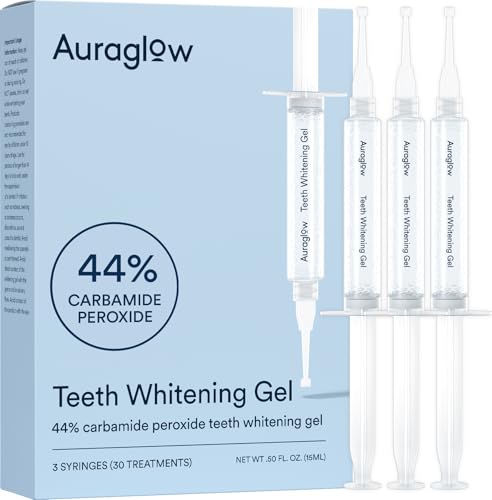
High concentration for effective whitening results.
Includes 30 treatments for extended use.
Convenient syringe design for easy application.
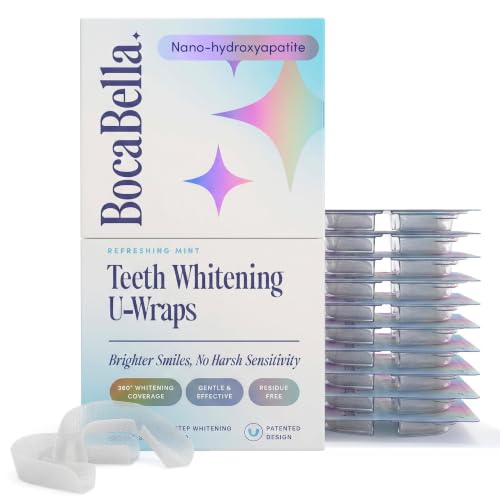
Easy application with convenient wrap design.
Gentle on teeth and gums, minimizing discomfort.
Effective results with noticeable whitening improvements.
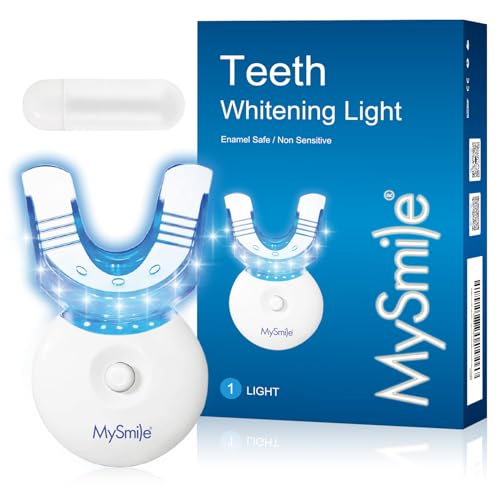
Enhances whitening process with LED light.
Convenient mouth tray design for easy use.
Compact and portable for on-the-go whitening.

Removes plaque effectively and improves gum health.
SLS-free formula for gentle oral care.
Whitens teeth while freshening breath.

Long-lasting whitening results up to 90 days.
Designed to be gentle on enamel.
Non-slip strips for easy application.

Enamel-safe for gentle whitening.
Dentist formulated and non-toxic.
No sensitivity after use.

Professional-level whitening results at home.
Easy to apply and stays in place.
Noticeable difference in just a few uses.

Gentle on sensitive teeth, peroxide-free formula.
Effectively removes deep stains, enamel safe.
Instant whitening results in just one use.

Quick 10-minute whitening sessions.
Non-sensitive formula for comfortable use.
Effective on stains from various sources.
The most important distinction is between **bleaching** and **surface-stain removal**. Hydrogen peroxide and carbamide peroxide can change the color of natural tooth structure. A toothpaste, powder, purple pigment, oil, salt, or other peroxide-free formula may make teeth look cleaner or less yellow without producing the same type of shade change. A headline such as “10 shades whiter,” “instant whitening,” or “results in seven days” is meaningful only when it is tied to the exact formula, concentration, directions, treatment count, and a standardized human color measurement. Related research on another product or another peroxide strength is not proof for the product in your cart.
Ingredient and dose disclosure are therefore central. Look for the actual active—such as hydrogen peroxide, carbamide peroxide, or another named whitening ingredient—and its concentration or exposure dose. A full ingredient list matters for screening potential irritants and allergies. Several supplied products named an active but did not disclose its percentage; others had conflicting strength information. “Dentist strength,” “enamel safe,” “clinically tested,” and “no sensitivity” are marketing descriptions unless the supporting evidence identifies the exact formula and use method.
A defined routine is another useful control. Stronger products should not be treated as automatically better: peroxide concentration, contact time, frequency, and whether gel reaches the gums all affect predictable sensitivity and irritation risk. Prefer directions that state treatment time, maximum frequency, what to do if discomfort develops, and who should not use the product. An LED does not establish superior whitening; the supplied reviews repeatedly note that independent evidence has not shown that a light is necessary to improve peroxide results.
For substantiation, look for a current, product-specific ADA Seal of Acceptance, not merely a brand-level reference or a seal created by the seller. If no Seal is available, credible evidence would identify the exact product or formula in an accredited laboratory report using a recognized method such as ISO 28399:2021 or ANSI/ADA Standard No. 136-2022. Human whitening claims should be supported by a peer-reviewed study of the same formulation, concentration, format, directions, and treatment schedule, with standardized color measurement such as CIELAB/ΔE or a validated dental shade guide. “Clinically proven” without those details is not enough.
Also check accountability. The package should identify a responsible maker or distributor, lot or batch information, expiration information where relevant, and a usable contact route for adverse events. Powered products deserve additional scrutiny for electrical, optical, moisture, heat, and battery safety; a UL or ETL claim should be verifiable in the relevant directory. Non-powered products avoid those hazards, but may create more disposable strips, trays, syringes, or wrappers.
Across the supplied products, recurring cautions are substantial. Peroxide whitening can cause temporary tooth sensitivity and gum or oral-tissue irritation, with higher concentrations and longer exposure generally raising concern. Do not treat “sensitivity-free” as a guarantee. The products are generally unsuitable for children, and several reviews also caution against use during pregnancy or nursing. People with untreated cavities, active gum disease, mouth sores, cracked or painful teeth, exposed dentin, significant existing sensitivity, or unexplained discoloration should obtain dental guidance first. Crowns, veneers, fillings, implants, bonding, dentures, and braces may not whiten like natural teeth, causing uneven color. Stop if irritation or significant sensitivity develops, and avoid swallowing the product. Powered kits add battery or device-disposal concerns and should not be treated as safer merely because they include an LED.
These topics separate a whitening product’s intended function from the evidence, exposure controls, materials, and accountability behind it. Scores are most useful when read alongside the product-specific review: a high score reflects stronger supplied evidence or clearer controls, not a guarantee that whitening is risk-free.
This measures whether peroxide strength, exposure time, formula, and directions limit predictable sensitivity, gum irritation, burns, and other mouth-tissue harm. In this set, stronger products with clearer warnings and defined wear times scored better than products making broad no-sensitivity claims without matching precautions. A high score means lower supported risk when used exactly as directed—not zero risk.
This covers whether abrasives, powders, charcoal, or bleaching use are unlikely to cause avoidable enamel or dentin wear. Nonabrasive or low-to-medium-abrasivity claims helped some daily toothpastes, while powder and high-strength bleaching claims lacked product-specific RDA or enamel testing. A high score requires low abrasivity or validated enamel-safety evidence, not simply the words “enamel safe.”
This measures whether the buyer can identify the relevant ingredients and the actual active concentration or exposure dose. Products with a full formula and a stated peroxide percentage scored strongly; products naming an active but withholding its concentration scored lower. Contradictory strength statements, such as different carbamide-peroxide percentages on the same product information, weaken transparency even when the headline dose is prominent.
This measures treatment duration, frequency, stop-use advice, and warnings about sensitivity, gum disease, restorations, children, ingestion, pregnancy, and other unsuitable situations. High-scoring products gave specific wear or brushing times and practical precautions. Lower-scoring products had incomplete screening guidance or conflicting treatment counts. A timed routine is helpful, but it does not replace dental assessment when pain or disease is present.
Powered whitening kits add optical, electrical, heat, moisture, charging, and battery hazards that strips, trays, gels, toothpaste, and powders do not have. Non-powered products received full scores in this topic because they introduce no powered component. Among LED kits, scores were lower where no UL or ETL evidence, battery plan, waterproofing information, or clear device-safety details were supplied.
This asks whether the exact product—not merely its brand or ingredient—has a current ADA Seal, accredited laboratory assessment, or comparably auditable third-party review. Most supplied products scored around the middle because related brand evidence or manufacturer testing did not identify the exact product. A high score requires product-specific verification; self-issued seals and vague “dentist approved” language do not count.
This measures human evidence for the same formula, concentration, format, directions, treatment count, and claimed shade change. Related peroxide-strip or tray studies can support plausibility but cannot validate a different strength or regimen. Higher scores in the set went to products with relevant controlled human evidence; lower scores reflected ingredient-only claims, manufacturer studies, or no standardized color-change result for the exact product.
This measures whether marketing distinguishes bleaching, surface-stain removal, and temporary optical color correction. Stronger claims matched the available evidence and avoided promising instant results, shade numbers, LED acceleration, enamel repair, or guaranteed sensitivity-free use. Products scored lower when headline claims exceeded the disclosed study, when a peroxide-free formula implied bleaching-level results, or when “clinically proven” lacked an identifiable exact-product trial.
This measures whether a responsible business, manufacturer or distributor, lot or batch, expiration information where relevant, and an adverse-event contact path can be identified, with no unresolved official safety action. Higher scores went to products with named manufacturers, contact routes, safety data sheets, or package traceability. Missing lot details, incomplete labeling, and unclear seller or maker information reduce accountability even without a known recall.
This measures the material discarded during a completed course. Reusable trays, rechargeable lights, pump bottles, and gel-only refills can reduce some repeat hardware or treatment-carrier waste, while individual strips, prefilled trays, syringes, and wrappers add discard. High scores in this set went to formats avoiding disposable strips or trays; no supplied product had verified recycled content, refill packaging, or material-recovery evidence.
This applies to lights, chargers, and batteries. Reusable hardware can avoid buying a new device for every course, but it still needs safe battery and e-waste handling. Non-powered products scored fully because there is no device to discard. Powered products scored lower when battery type, replaceability, certification, or disposal guidance was unclear or internally inconsistent.
This is an at-home whitening kit with a rechargeable LED mouth tray, charging case, USB cable, and two gel syringes. Auraglow states that the gel contains 35% carbamide peroxide and that the kit supplies 20 treatments. Its directions call for brushing and drying teeth, applying a thin line of gel, then wearing the tray for 30 minutes daily for 7 to 14 days. The maker reports a 27-adult, seven-day study using instrumental shade readings, with an average 7.11-shade improvement. That study is presented by Auraglow, not as an independently published product trial. The formula disclosure also needs care. One Auraglow page lists glycerin, urea peroxide, propylene glycol, xylitol, carbomer, peppermint oil, triethanolamine, and water, while a separate brand page describes a formula with potassium nitrate. The LED accelerator claim is not well supported by broader independent evidence for light-activated bleaching.
This format suits an adult with natural teeth and ordinary coffee, tea, wine, tobacco, or age-related staining who wants a structured home routine rather than an unmeasured whitening powder or charcoal abrasive. It is most suitable for someone able to follow 30-minute daily sessions, use only a thin gel layer, and stop to seek dental advice if sensitivity or gum irritation develops. The reusable rechargeable tray may also suit a household seeking multiple courses from one device, provided each user maintains appropriate hygiene and does not share gel applicators.
It is not a suitable self-treatment for children under 14, pregnant or nursing people, or people with braces, according to Auraglow. It is also a poor fit for people with active gum problems, untreated cavities, cracked teeth, substantial baseline sensitivity, or unexplained tooth discoloration without first consulting a dentist. Crowns, veneers, fillings, and other restorations will not whiten, so this can create uneven color. People who require independently verified whitening claims, an ADA-accepted product, or documented electrical certification should choose a product with that evidence.
Carbamide peroxide is a recognized tooth-bleaching active, but peroxide bleaching can cause temporary tooth sensitivity and gum irritation. Auraglow instructs 30-minute sessions and identifies several groups who should not use its whitening products. Its product-specific study is useful as a disclosed manufacturer data point, but it is not the same as independent verification. No ADA Seal acceptance for this product was located. The maker's absolute no-sensitivity language is difficult to reconcile with its own warning that whitening can produce sensitivity or irritation. The kit has a positive material feature in its rechargeable, reusable light, tray, storage case, and USB cable. That design can reduce repeat purchase of disposable light devices. However, each course still uses gel syringes, and no product-specific battery recycling or electronic disposal guidance was located. Auraglow says the gel should carry an expiration date and be stored cool and dry, and it provides a customer support contact path. Current formula transparency remains incomplete because the brand's own ingredient descriptions do not match.
This is a gel refill pack containing three 5 mL syringes of 44% carbamide peroxide. Auraglow says it provides 30 applications and is used in separately obtained whitening trays, retainers, aligners, or an LED mouthpiece. Its published directions call for daily use for 30 minutes over 7 to 14 days, while a product image gives a 15 to 30 minute wear range. The manufacturer publishes a full ingredient list, including carbamide peroxide, hydrogen peroxide, potassium nitrate, peppermint oil, solvents, thickener, and brucine sulfate. It also claims up to 10 shades in seven days. The available company clinical page, however, describes a small 27-person study of its 35% gel, not this 44% formula. Independent evidence supports peroxide tray bleaching in general, but does not verify this product's specific shade or sensitivity claims.
This product is most suited to an adult who already has a well-fitting whitening tray, retainer, or aligner and has prior experience with peroxide whitening without significant sensitivity. It is a gel-only refill format, so it fits someone replacing gel rather than building a first whitening system. The manufacturer directs daily treatment for 7 to 14 days and specifically positions the 44% formula as its stronger option. Natural teeth with common food, drink, or tobacco staining are the intended whitening surface.
It is not suited to people with a history of whitening sensitivity or to first-time users, because Auraglow itself advises those groups to start with a lower-strength option. Children and adolescents should not use cosmetic full-arch bleaching without dental guidance. People with tooth pain, untreated decay, gum inflammation, exposed roots, poorly fitting trays, or uncertain causes of discoloration should seek a dental assessment first. It is also unsuitable for whitening crowns, veneers, bonding, implants, or other tooth-colored restorations, which will not change color.
The central health issue is exposure strength. Auraglow identifies 44% carbamide peroxide and instructs up to 30 minutes of daily tray contact. Carbamide peroxide releases hydrogen peroxide, and the ADA and Cochrane review identify temporary tooth sensitivity and gum irritation as common peroxide-bleaching effects, with higher active concentrations associated with more events. A close-fitting tray matters because peroxide gel that contacts gums can irritate them. Auraglow's own 35% study reported mild reversible gingival blanching in about 5% of participants. No ADA Seal, publicly auditable independent laboratory report, or independent human study for the 44% formula was identified. The company lists a Connecticut address and support route, but public materials reviewed did not establish batch, expiration, or recycling details. No product-specific US recall or regulator warning was identified in the reviewed FDA and CPSC searches. The pack avoids electronics, but its three multi-dose plastic syringes are still disposable treatment packaging.
This is a non-powered home whitening system with 10 upper and 10 lower peroxide-coated U-Wraps. The maker directs adults to apply one upper and one lower wrap once daily, leave them on for 30 minutes, then remove them, for a 10-day course. No LED device, charger, or battery is involved. BocaBella lists 15% hydrogen peroxide as the whitening active and publishes a full ingredient list that includes hydroxyapatite, strontium acetate, aloe, calendula, peppermint oil, and alcohol. The company claims up to 23 shades whiter and cites Intertek testing, but no publicly accessible Intertek report, protocol, or product-specific peer-reviewed clinical study was located. Its published 100-person result figures are identified in the site footer as self-reported customer feedback, not independently audited clinical color measurements.
This format is suited to an adult who wants a short, clearly timed home bleaching course and can follow a 30-minute daily routine for 10 days. It is most relevant for someone with natural teeth and surface or ordinary age-related discoloration who understands that the stated 15% peroxide strength can still trigger temporary sensitivity. It may also suit a household that specifically wants to avoid a powered whitening light, charging cable, or battery. The stated dose and full formula disclosure make it easier to identify potential ingredient concerns before use.
It is not well suited to people with active gum inflammation, untreated cavities, cracked teeth, severe sensitivity, mouth ulcers, or a prior adverse reaction to peroxide whitening. People with crowns, veneers, fillings, or other visible restorations should consult a dental professional because bleaching does not reliably change restoration color. It is also a poor fit for children, anyone unable to avoid swallowing the material, or users seeking clinically documented shade-change results for this exact formula. People trying to minimize disposable plastic should consider the 20 single-use wraps per course.
The central health fact is the disclosed 15% hydrogen peroxide dose. Home bleaching can whiten teeth, but evidence reviews identify tooth sensitivity and oral irritation as the most common side effects, with higher active concentrations associated with more events. Hydroxyapatite and strontium acetate are included, but the maker does not publish the concentration of either ingredient, enamel-surface testing, pH data, or an accessible report showing that they offset the risks of this exact peroxide regimen. BocaBella markets the wraps as Intertek tested and describes strong whitening and comfort outcomes. The accessible site identifies its percentage outcomes as self-reported customer feedback, and no auditable product-specific clinical report was located. No FDA recall, warning letter, or safety-alert result was located in searches under the brand name. Ecologically, the non-powered design avoids battery waste, but every 10-day course uses 20 disposable upper and lower wraps and no verified refill or recycling program was found.
This is a compact home whitening kit with a mouth tray, blue LED accelerator light, a stated 4 mL gel supply, and two included replaceable CR2 batteries. The matching product description identifies the whitening active as PAP, short for phthalimidoperoxycaproic acid, and describes a 10-minute timed session. That product-specific formula description is independently reproduced by a retailer, but it does not disclose PAP concentration or a complete ingredient panel. The brand's current general whitening-kit materials describe carbamide-peroxide formulas for other kits, so they cannot confirm this older PAP version's full composition. The product's claims of no sensitivity, rapid results, and up to 10 shades whiter were not supported by a product-specific human clinical study located in the verification search. The LED is a treatment accessory, not evidence that the gel will whiten faster.
This format suits an adult who wants a small, self-directed whitening accessory for short home sessions and understands that results are uncertain. It is most practical for someone with natural teeth, ordinary external staining from drinks or smoking, and enough routine to follow a limited course rather than continually whitening. The reusable tray and replaceable batteries also suit a user who wants to retain the hardware after the initial gel supply is gone. It is not a substitute for a dental examination or stain diagnosis.
This product is not well suited to people with untreated cavities, gum disease, cracked teeth, exposed dentin, persistent sensitivity, mouth sores, or unexplained tooth discoloration. People who are pregnant, have extensive crowns, veneers, fillings, braces, or yellow exposed roots should ask a dental professional before whitening, since whitening does not change restoration color and uneven results are possible. It is also unsuitable for anyone needing a fully disclosed formula, independently verified shade-change evidence, or a product-specific third-party safety certification.
The available matching description identifies a peroxide-free PAP whitening approach, but does not provide the active concentration or a complete formula. That limitation matters because home bleaching studies report temporary tooth sensitivity and oral irritation as common adverse effects, particularly as active-agent exposure increases. The brand's general guidance says to avoid the gums, use a limited course, and stop use if symptoms persist, but it does not establish that this PAP product is non-sensitive for every user. No product-specific ADA Seal, public accredited test report, registered human trial, or official U.S. recall or warning action was identified during verification. The reusable mouth tray and LED light reduce the amount of hardware discarded per treatment course. Replaceable CR2 batteries are preferable to a permanently sealed battery for device life, though no product-specific battery recycling or electronic-waste disposal instructions were verified. Gel packaging remains a consumable waste stream.
This is a 1.7-ounce, foaming wintergreen dental gel in a plastic tube. The maker directs users to place a pea-sized amount on a wet or dry toothbrush, brush for two minutes twice daily, then rinse. Its listed ingredients include water, sulfonylbismethane, edathamil, propylene glycol, stevia, flavoring, sodium cocoyl isethionate, menthol, blue colorant, and named gums or stabilizers. The formula does not list fluoride or a peroxide bleaching active. Published randomized studies evaluated LivFresh or a 2.6% edathamil gel for plaque and gum measures, rather than tooth shade. One small crossover study found lower overnight plaque accumulation and less residual plaque after brushing than its control. The manufacturer’s whitening, tartar-prevention, all-ages safety, and no-sensitivity statements are broader than the independently located evidence for this exact wintergreen formula.
This gel suits an adult who specifically wants a fluoride-free, foaming toothpaste alternative and is focused on plaque control rather than peroxide bleaching. Its pea-sized, twice-daily routine and 1.7-ounce tube may suit a single regular user for roughly four to six weeks, according to the manufacturer. It is also relevant for someone trying to avoid abrasive particles or SLS, provided they understand those are manufacturer-stated formula properties and that published evidence is stronger for plaque and gum measures than for whitening.
It is not a straightforward fit for people who need a fluoride toothpaste for routine cavity prevention, because this wintergreen formula does not list fluoride. It is also unsuitable as a substitute for professional care for painful, swollen, bleeding, or receding gums, loose teeth, or suspected periodontitis. People with a history of oral reactions to mint, wintergreen, menthol, surfactants, or colorants should review the formula with a dentist or clinician. Those seeking predictable shade change, peroxide bleaching, or a product with an ADA Seal should look for evidence specific to those needs.
The notable formula feature is the manufacturer-stated absence of abrasive particles, alongside edathamil as the named cleaning ingredient. Small published randomized studies of LivFresh or a 2.6% edathamil gel reported plaque and gingival improvements, but they do not establish a tooth-whitening dose or documented shade change for this wintergreen version. The product is non-powered, avoiding battery and electronic-waste concerns. The tube is a recurring single-use package, with no refill system or recycled-content evidence located. The manufacturer provides a company contact path and says the gel is made in the United States. No recall of this retail product was located in the reviewed official sources. Separately, an FDA warning letter issued September 19, 2025 addressed an investigator’s conduct of a pediatric Livionex study and raised concerns about the study’s regulatory status and data integrity. It was not a product recall or a retail safety alert.
This is a non-powered, 28-strip teeth-whitening course, with 14 upper and 14 lower strips. The maker directs 30-minute applications and describes a daily 14-day routine. Its own product page identifies 6% hydrogen peroxide, papain, and purple color-correcting pigments. Purple pigment can temporarily counter the appearance of yellow tones, while peroxide is the chemical bleaching active. The 6% peroxide concentration and 30-minute strip format resemble protocols studied in other products, where measurable whitening occurred but temporary tooth sensitivity and oral irritation were common adverse effects. That is category-level evidence, not a clinical study of this product. The maker provides sensitivity advice, including taking a break, keeping strips off gums, stopping if symptoms persist, and consulting a dentist. No product-specific ADA Seal, accredited laboratory report, or published human trial was located.
This product is most suited to an adult with natural teeth who wants a non-powered, two-week whitening-strip routine and is comfortable using a peroxide formula for 30 minutes daily. It may fit someone seeking both short-lived color correction from purple pigment and longer-lasting chemical bleaching from hydrogen peroxide. It is especially relevant for people who can follow placement instructions carefully, keep strips away from gums, and pause treatment if sensitivity appears. The included course is sized for 14 upper and lower applications, not for open-ended maintenance use.
It is not well suited to people with active tooth sensitivity, gum irritation, untreated decay, periodontal disease, mouth sores, or a history of painful whitening reactions without first consulting a dentist. It is also a poor fit where crowns, veneers, fillings, bridges, dentures, or medication-related discoloration are the main concern, because the maker says the strips do not whiten dental work. People who require fully disclosed ingredients, independently verified clinical results, or substantiated long-duration whitening claims should select a product with that documentation. Keep it away from children who could swallow strip material or gel.
Hydrogen peroxide is a recognized bleaching mechanism, and studies of other 6% peroxide strips with similar use schedules show whitening can occur. The same evidence base and ADA guidance also identify tooth sensitivity and gum irritation as predictable effects of peroxide whitening. The maker's directions acknowledge these risks, but its enamel-safety and low-sensitivity statements are manufacturer claims rather than independently verified findings for this product. No product-specific ADA Seal, third-party clinical report, recall, or regulatory warning was located in the sources reviewed. Public product information did provide a customer-service contact, but did not show a complete ingredient declaration, batch details, expiration information, or a public technical test report. Environmentally, the kit avoids electronics and batteries, but a complete treatment course still discards 28 single-use strips. No refill program or packaging-material certification was identified.
This is a non-powered, peroxide-free whitening-strip treatment sold as nine upper-and-lower applications, or 18 strips. The intended routine is to place strips on the teeth for 30 minutes, remove them, then rinse or brush. Lumineux publishes an eight-ingredient strip formula that includes vegetable glycerol, water, carbomer, carboxymethyl, coconut oil, Dead Sea salt, sage oil, and lemon peel oil. It does not publish concentrations for those ingredients or a quantified whitening active. The most important independently checked point is narrow. In 2023, the National Advertising Division found that clinical studies reasonably supported Lumineux's claim that its strips whiten without sensitivity. That is not the same as independent proof of broad whitening efficacy or enamel safety. A published randomized trial, funded and authored by a competitor, found no significant whitening from a Lumineux strip, toothpaste, and rinse regimen, while the peroxide-strip control whitened significantly.
This product is most suited to an adult who wants a simple, non-powered strip routine and specifically wishes to avoid peroxide exposure. It may fit someone who has previously found peroxide whitening uncomfortable, provided they have healthy teeth and gums and understand that the independently reviewed support is strongest for low sensitivity, not for a quantified shade change. The nine-treatment format also suits a short trial period rather than a large ongoing supply. A dental check is sensible if the discoloration is new or uneven.
It is not well suited to anyone seeking well-published, product-specific evidence of a predictable shade change, a disclosed whitening concentration, or third-party acceptance such as an ADA Seal. People with untreated cavities, gum inflammation, cracked teeth, exposed dentin, persistent sensitivity, or unexplained tooth discoloration should consult a dentist before whitening. It is also a poor fit for users with crowns, veneers, fillings, or bonding in visible areas, because whitening products do not reliably change restoration color and can create a mismatch.
The formula is peroxide-free and the manufacturer lists eight ingredients, including coconut oil, Dead Sea salt, sage oil, and lemon peel oil. A 2023 National Advertising Division review found reasonable support for the narrower claim that these strips whiten without sensitivity. That finding does not establish that every user will avoid sensitivity or that the product has no effect on enamel. The manufacturer does not disclose ingredient concentrations, and its broader enamel-safety positioning lacks an auditable product-specific enamel-wear report. Whitening evidence is mixed. A published randomized trial reported no significant whitening from a Lumineux strip, toothpaste, and rinse regimen, although its authors and funder were affiliated with a competitor. The product contains no electronics, which avoids charger, battery, and e-waste concerns. Its environmental drawback is the nine-course supply of individually discarded adhesive strips, with no verified refill system or recycled-content packaging information located.
This is a peroxide whitening-strip kit with 44 strips, arranged as 22 upper-and-lower treatments. The product record describes a 45-minute Professional Effects treatment routine and a claimed 19-level shade improvement. It is designed to bleach natural teeth rather than remove stains by abrasion, and it has no light, charger, or battery. Crest's current closely named Professional White page lists hydrogen peroxide, PVP, water, PEG-8, acrylates copolymer, sodium hydroxide, and sodium saccharin. It does not disclose the hydrogen peroxide concentration. The American Dental Association directory independently lists Crest 3D Whitestrips as accepted for safety and whitening natural teeth when used as directed, although that directory entry does not explicitly name this 22-treatment package. Published trials support peroxide-strip whitening, but the public evidence does not directly validate this package's 19-level claim.
This product suits an adult with healthy natural teeth who wants a structured, at-home peroxide whitening course and can commit to repeated 45-minute applications. It is particularly relevant for someone comfortable following detailed instructions, including pausing treatment if sensitivity develops. It also fits a buyer who prefers strips that adhere directly to teeth instead of trays or a powered light device. Existing crowns, veneers, fillings, or dentures should be outside the visible area, because those materials will not whiten with the strips.
It is not suited to children under 12, people with active tooth sensitivity, gum discomfort, loose teeth, braces, untreated dental concerns, or anyone likely to swallow or mishandle strips. People with visible crowns, veneers, fillings, caps, or dentures may get an uneven result because peroxide will only change natural tooth color. It is also a poor fit for buyers who need the peroxide percentage disclosed, want a clinician to assess medication-related staining or existing dental work, or want to avoid a course of disposable plastic treatment materials.
Crest identifies hydrogen peroxide as the whitening active and provides a complete named ingredient list for its current closely named Professional White strips. The ADA directory lists Crest 3D Whitestrips as accepted for safety and efficacy in whitening natural teeth when used as directed. That is meaningful independent review, but it does not eliminate the expected possibility of temporary tooth sensitivity or gum irritation from peroxide bleaching. Crest's directions tell users to pause for two to three days if significant discomfort develops and to stop if it persists. The package is non-powered, avoiding batteries, chargers, and electronic waste. Its main environmental burden is instead material intensity. A full course uses 44 disposable plastic strips, normally supplied in individual sachets, and no verified refill system, recycled-content claim, or strip-recycling route was identified. The product should be used only before its printed best-by date, and Crest provides a consumer contact number and distributor address for questions or adverse experiences.
This is a non-powered, adhesive whitening-strip kit with 28 strips, arranged as 14 upper-and-lower treatments. The manufacturer directs adults to dry teeth, apply the longer strip above and shorter strip below, wear them for 30 minutes, then remove and rinse. It is intended for at-home treatment of everyday visible staining from drinks and foods. The manufacturer lists glycerin, water, cellulose gum, sodium chlorite, disodium EDTA, chlorophyllin-copper complex, coconut oil, arbutin, menthol, and citric acid. It states that the formula is peroxide-free, but does not disclose the concentration of sodium chlorite or other relevant ingredients. Its own product page also presents a different ingredient deck for an Advanced strip in the same listing, which weakens formula clarity. In December 2025, the maker permanently discontinued challenged instant-whitening, enamel-safety, and no-sensitivity claims after a National Advertising Division inquiry.
This format is most suited to an adult with mild, everyday surface staining from coffee, tea, wine, or foods who specifically wants a peroxide-free strip routine and is comfortable with a manufacturer-stated 30-minute treatment. The defined 14-treatment course may suit someone who wants no device, charger, or tray to store. That buyer should still accept that the active concentration, enamel testing, and product-specific clinical whitening results were not publicly substantiated in the materials reviewed.
It is not well suited to anyone with current tooth sensitivity, gum inflammation, mouth sores, untreated decay, cracked teeth, or a history of reactions to oral-care ingredients, because the formula strength and complete precaution set are not publicly clear. Pregnant or breastfeeding people should follow the manufacturer's advice to consult a clinician first. Children and adolescents should use dentist guidance. It is also a poor fit for people with crowns, veneers, bonding, or implants, because whitening does not change tooth-colored restorations, or for people seeking documented shade-change results.
The most important health point is that peroxide-free does not equal fully characterized. The manufacturer names sodium chlorite, arbutin, citric acid, menthol, coconut oil, and other ingredients, but provides no active concentrations or public enamel-surface test report. A human trial of a different sodium-chlorite whitening gel found only small color improvement, which cannot establish results or safety for this strip formula. The maker's page also contains conflicting formula information. An independent advertising review matters here. On December 4, 2025, the maker said it had permanently discontinued challenged claims involving instant whitening, enamel safety, and no sensitivity. The product uses 28 disposable strips per course, so each treatment creates flexible packaging and used-strip waste. It has no electronics or battery, which avoids device disposal concerns. The site claims third-party testing and traceability, but it does not post an auditable test report or a visible lot-traceability system.
This is a home whitening kit with an LED mouthpiece, a reusable tray, two lithium-metal batteries, and three gel syringes. A product manual describes three 3 mL syringes for up to nine uses. Brand directions describe a seven-day course, with a 10-minute session and a stated maximum of 30 minutes. The whitening active is carbamide peroxide, but the exact strength is not reliably clear for this unit. Older brand material identifies 35% carbamide peroxide, while the current brand product page offers 18% and 35% options. The brand also publishes differing ingredient lists across its product and FAQ pages. No product-specific ADA Seal, independently auditable laboratory report, or published human clinical trial was located. Generic clinical evidence supports carbamide-peroxide whitening, but does not validate this product's shade-change or LED claims.
This format fits an adult who wants a short, tray-based course for external stains from coffee, tea, wine, soda, or smoking, and who has healthy teeth and gums with no history of marked whitening sensitivity. It also suits someone willing to follow a patch-style sensitivity check, keep gel off the gums, and stop if discomfort develops. The small kit is appropriate for a limited course rather than routine long-term whitening. Because the listed gel strength is inconsistent across brand materials, the user should confirm the concentration on the package before starting.
It is not suited to children under 16, people with very sensitive teeth, untreated cavities, gum disease, ulcers, exposed roots, or active mouth irritation. People who are pregnant, breastfeeding, or managing ongoing dental symptoms should seek clinician guidance first, consistent with the product manual. It is also a poor fit for anyone needing verified peroxide strength, independently confirmed shade-change results, or a safety-certified LED device. Whitening will not change the color of crowns, veneers, fillings, or other restorations, and may make mismatched dental work more noticeable.
Carbamide peroxide can whiten teeth, but peroxide home bleaching commonly causes temporary tooth sensitivity and oral irritation. The manual appropriately warns users to test for sensitivity, avoid use with tooth or gum disease, keep the gel away from gums, and discontinue use if irritation occurs. However, the exact active concentration and complete formula are not consistently presented by the brand. Evidence reviews find that lower carbamide-peroxide concentrations can provide comparable whitening with less sensitivity than stronger home-use gels. No product-specific ADA Seal, published clinical study, recall, FDA warning letter, or confirmed official safety action was located in the checked sources. The kit uses a reusable tray and LED light, but includes three disposable gel syringes and two replaceable lithium-metal batteries. No verified recycling, refill-packaging, electronic-waste, or battery-disposal program was located for this product.