Best Overall

Black Seed Oil Thymoquinone TQ-Advanced 500mg
High thymoquinone content for potent benefits.
Vegan-friendly and packaged in glass bottle.
Concentrated 15:1 oil for maximum strength.
 Lauren Wilson
High thymoquinone content for potent benefits.
Vegan-friendly and packaged in glass bottle.
Concentrated 15:1 oil for maximum strength.

High potency with 1000mg black seed oil.
Softgels for easy and convenient intake.
Supports immune and digestive health naturally.
Cold pressed for maximum nutrient retention.
Rich in thymoquinone and essential omegas.
Supports immune, joint, hair, and skin health.

High thymoquinone concentration boosts effectiveness.
Vegan-friendly and sustainably packaged in glass.
Derived from pure Nigella Sativa for authenticity.

High thymoquinone content for potent benefits.
USDA certified organic for quality assurance.
Vegan omega-rich for versatile health support.

Combines oregano and black seed oils effectively.
Offers organic, non-GMO, gluten-free ingredients.
Supports immune and digestive health naturally.

USDA Organic certification ensures high-quality standards.
Cold-pressed method preserves essential nutrients.
Vegan and gluten-free for diverse dietary needs.
Non-GMO and vegan-friendly formulation.
Cold-pressed for maximum purity and potency.
Includes Vitamin E for added health benefits.

High potency with 6000mg oregano oil per serving.
Enhanced formula includes black seed oil benefits.
Non-GMO and plant-based ingredients.
High potency blend with oregano oil included.
Plant-based and non-GMO formula.
Supports immune health effectively.
Whether a product is useful starts with knowing exactly what it contains. Look for the botanical name, plant part, preparation method, serving size, daily amount, and every active and inactive ingredient. A label should distinguish ordinary oil from a concentrated extract and should identify the capsule material. “1,000 mg,” “2,000 mg,” or a large equivalent figure can mislead when it describes an extract ratio rather than the actual oil amount. Likewise, “high thymoquinone” is incomplete unless the product states the daily thymoquinone amount or percentage. Some products in this category disclose 25 mg per capsule or a percentage such as 5%; others mention thymoquinone without quantifying it.
Dose comparisons also require care. Human studies have used varied Nigella preparations and amounts. The supplied reviews note liquid-oil research around 1.25–5 mL daily and human-trial amounts ranging from 200–4,600 mg daily, but a dose that falls within a studied range does not prove that a particular product has the same composition or effect. A concentrated extract should not be presented as clinically equivalent to ordinary oil without evidence.
The strongest quality evidence is product-specific, not merely a company claim. Look for a current, publicly searchable listing for the exact product in the USP Verified Dietary Supplements, NSF Certified Dietary Supplements, NSF Certified for Sport, or applicable ConsumerLab programs. For batch testing, the most useful document is a lot-specific certificate of analysis that matches the bottle and comes from an ISO/IEC 17025-accredited laboratory. It should show the stated oil or extract amount, thymoquinone when claimed, and contaminant results for lead, arsenic, cadmium, mercury, microbes, and—when relevant—pesticides. A validated HPLC or UPLC assay and chromatogram are more meaningful than an unsupported “third-party tested” statement.
Oil freshness deserves separate attention. Light-protective glass or another documented barrier, a lot number, manufacture and expiration dates, storage instructions, and testing for peroxide value, p-anisidine value, or TOTOX help address oxidation. Organic, sustainable, single-origin, or lower-impact packaging claims should be supported by a USDA Organic Integrity Database record, a USDA-accredited certificate, farm or chain-of-custody documentation, or a clear packaging specification.
Across the supplied products, recurring cautions include pregnancy and breastfeeding, childhood use, allergies or skin sensitivity, upcoming surgery, and use of blood-pressure, blood-sugar, anticoagulant, or antiplatelet medicines. Several reviews note that Nigella may affect blood pressure or glucose. Concentrated extracts and multi-ingredient formulas require particular care. One product carries a California lead-exposure and reproductive-harm warning; another has a walnut allergen disclosure; and topical black seed oil has been associated in the supplied evidence with serious contact dermatitis. These products should not replace medical evaluation or treatment, and disease-treatment claims should not be inferred from general wellness language.
These topics separate a clearly documented black seed oil product from one supported mainly by label or marketing statements. Scores reflect the supplied reviews; a higher score means the reviewed product provided stronger evidence for that specific buyer concern, not that it was independently certified overall.
This measures whether a current lot-specific independent report confirms the oil or extract amount, thymoquinone when claimed, and key contaminant limits. It matters because black seed oil varies by preparation and headline potency may not describe the bottle. Among the supplied products, higher scores generally reflected clearer batch evidence; lower scores reflected only a general testing claim without a buyer-matchable report.
This asks whether the labeled daily amount and preparation resemble amounts used in human Nigella studies, without implying that the product has the same clinical effect. Liquid products around 5 mL and gram-level softgel servings often scored well when their amount was clear. Products lost strength when they failed to disclose thymoquinone or used a concentrated extract whose clinical equivalence was uncertain.
This measures practical warnings for pregnancy, breastfeeding, children, allergies, surgery, and medicines affecting blood pressure, blood sugar, or clotting. It matters because Nigella preparations may influence blood-pressure and glucose measures, and blends can add further interaction concerns. Higher-scoring products gave broader baseline cautions; lower-scoring products relied on generic advice or omitted medicine-specific warnings.
This evaluates protection from light, oxygen, heat, and age, plus evidence that the oil remains fresh. Amber or dark glass, storage directions, dates, and oxidation testing such as peroxide or p-anisidine values are relevant. The supplied products commonly had moderate-to-good scores for packaging or storage claims, but few provided public lot-specific oxidation results.
This measures whether the exact product—not just its manufacturer—is listed in a searchable USP, NSF, NSF Certified for Sport, or applicable ConsumerLab program. It matters because a company-level badge does not establish the identity or purity of every formula. Most supplied products scored similarly because no current exact-product listing was found, even when brands claimed independent testing.
This measures whether the label identifies *Nigella sativa*, plant part, preparation, serving size, active and inactive ingredients, and capsule material. It is especially important when comparing liquid oil with extracts and multi-ingredient blends. Higher-scoring products named the botanical and amounts plainly; lower scores reflected undisclosed thymoquinone, unclear extract-versus-oil descriptions, or conflicting formula information.
This measures whether claims stay within qualified structure/function language rather than promising treatment or prevention of disease. Black seed research is mixed and varies by preparation, so claims about immunity, metabolism, hair, skin, infection, or chronic disease require restraint. Higher scores came from narrower wellness wording; lower scores reflected broad or disease-oriented marketing unsupported for the specific product.
This evaluates whether the responsible firm and manufacturing controls are identifiable and whether relevant recalls, warning letters, or unsupported GMP claims raise concerns. A GMP statement alone is not enough without a verifiable certificate or certifier directory entry. Scores were reduced where public accountability was weak or an external notice contradicted GMP-related marketing.
This measures whether the seller documents seed origin, batch traceability, extraction location, and the responsible U.S. party. Country claims such as Turkish, Ethiopian, Indian, or Egyptian origin are useful starting points but remain marketing statements without chain-of-custody records. Higher scores reflected more specific origin information; few products supplied complete batch-level sourcing documentation.
This measures documented organic or lower-pesticide production, traceable farming, and packaging that protects the oil without unnecessary material. A USDA organic claim is stronger when it can be matched to a current certifier or operation record. Among the supplied products, higher scores reflected clearer organic or packaging details; most still lacked independently confirmed farm records or recycling specifications.
This is a 60-serving vegan softgel supplement for adults. The manufacturer directs users to take one softgel daily with food, with up to two daily only after consulting a medical professional. Its Supplement Facts panel identifies 500 mg of Nigella sativa black seed extract per softgel, described as a 15:1 extract standardized to 5% thymoquinone, or 25 mg thymoquinone. The formula is unusually explicit about its intended active marker and lists the capsule ingredients, including pea starch, glycerin, carrageenan, MCT oil, purified water, disodium phosphate. The 5% thymoquinone amount is manufacturer-stated, not confirmed here by a public lot-matched laboratory report. Triquetra says it is third-party tested and uses a glass bottle, but no current batch certificate, accredited laboratory identity, contaminant results, oxidation report, or public certification listing was located for this exact softgel product.
This product fits an adult who specifically wants a measured Nigella sativa extract softgel instead of liquid black seed oil, and who values disclosure of the stated thymoquinone amount. The 60-day supply works for someone trialing one daily serving while monitoring tolerance and discussing medication use with a clinician. It is also relevant for people avoiding gelatin, because the listed softgel ingredients are plant-based. It is not a substitute for treatment of a diagnosed metabolic, digestive, inflammatory, or cardiovascular condition.
It is not well suited to people who need independently verified potency and contaminant results tied to the exact bottle lot. People who are pregnant or breastfeeding, preparing for surgery, managing diabetes or low blood pressure, taking anticoagulant or antiplatelet medicines, or using several prescription medicines should obtain clinician or pharmacist guidance first. Nigella sativa may affect blood glucose and blood pressure, and human safety evidence does not establish long-term safety for this concentrated, stated 25 mg thymoquinone daily dose. Keep it away from children unless a pediatric clinician advises otherwise.
The stated formula is vegan and uses a glass bottle, which can offer better light protection than clear plastic and avoids gelatin in the softgel. The manufacturer also states that the extract is cold-pressed, non-GMO, standardized to 5% thymoquinone, and third-party tested. Those are manufacturer claims, because a public batch-specific report was not found to verify the current product's potency, heavy metals, microbiology, or oil oxidation values. ConsumerLab's 2025 black seed oil report included a different Triquetra TQ-Advanced 4x product among products selected for testing, but that does not independently verify this 5% softgel formula. No relevant FDA warning letter, recall, or exposure alert for Triquetra Health was located in the searches performed. Country of seed origin, extraction location, farming practices, and a certified organic supply chain were not publicly documented for this product.
This product is a 60-softgel oral black seed oil supplement marketed for adult digestive and immune support. Marketplace descriptions identify a 1,000 mg serving of Ethiopian Nigella sativa seed oil. The available public material does not provide a complete, readable Supplement Facts panel, directions, capsule material, inactive ingredients, or a stated thymoquinone amount. The manufacturer-linked sales material says batches are third-party tested, but no lot-specific certificate of analysis, laboratory identity, chromatogram, or bottle-matched purity report was publicly available. Searches of the USP and NSF public certification resources did not establish independent certification for this exact product. Human Nigella sativa research includes oral doses within a broad 0.5 to 6 g daily range, so the stated amount is plausible, but it does not establish that this product will reproduce clinical outcomes.
This product suits an adult who specifically wants a measured black seed oil softgel rather than a pourable oil and who values a stated 1,000 mg serving. It is most relevant for someone using Nigella sativa as a general wellness supplement, not as treatment for a diagnosed condition. The buyer should be comfortable with material gaps, including the absence of a publicly available lot-matched test report, disclosed thymoquinone level, and complete public label documentation.
It is not well suited to pregnant or breastfeeding people, children, or anyone managing a medical condition without clinician input. People using diabetes, blood-pressure, anticoagulant, or antiplatelet medicines should be particularly cautious because Nigella sativa may affect cardiometabolic measures in human studies. It also does not suit buyers who need verified contaminant limits, a disclosed thymoquinone dose, confirmed oil freshness testing, vegan capsule confirmation, or independently certified manufacturing controls.
The product has a specific botanical identity claim, Nigella sativa seed oil, and a stated Ethiopian origin. However, the available public material did not document farm, harvest, extraction location, chain of custody, or a certificate that could verify the origin claim. No organic certification or other independently verifiable lower-pesticide sourcing claim was established. Softgels can protect an oil from repeated air exposure after opening, but no bottle or packaging specification, manufacture date, storage instruction, peroxide value, p-anisidine value, or TOTOX result was publicly available. The manufacturer-linked listing says batches are third-party tested, yet it does not publish the laboratory or product-matched reports needed to check that statement. No product-specific FDA recall or warning letter was located in the public searches performed, but absence of a located action is not quality verification.
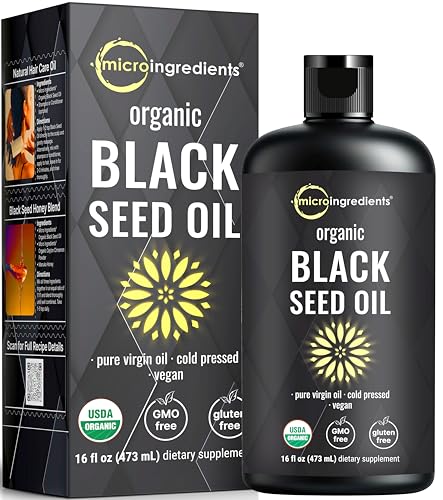
This is a 16 fluid ounce liquid dietary supplement and culinary or topical oil made from black cumin seed oil, identified on the label as Nigella sativa. The labeled adult direction is one teaspoon, or 5 mL, daily with meals. That provides 5 g of organic black cumin seed oil per serving, with 94 servings per bottle. The label lists no other ingredients. The bottle is presented as cold-pressed, virgin, vegan, and USDA Organic, with certification stated as Organic Certifiers. Those are label and manufacturer claims, not a publicly matched product certification record. The company says ingredients undergo third-party testing, but no current lot-specific certificate of analysis, thymoquinone assay, heavy-metal report, or oxidation report was publicly available for this product. Its thymoquinone content is not quantified.
This product fits an adult who specifically wants an unflavored liquid Nigella sativa oil for measured oral use, cooking, or occasional topical blending, rather than capsules or a concentrated extract. Its simple one-ingredient label and 94-serving size suit a person planning daily use for several months. It is also relevant for shoppers who value an organic label claim and want to avoid listed wheat, gluten, soy, dairy, eggs, fish, and shellfish. The buyer should be comfortable with an oil whose thymoquinone level is not disclosed.
It is not well suited to anyone who needs independently confirmed potency, contaminant limits, or current lot-level freshness data. People managing diabetes or blood pressure, using anticoagulant or other prescription medicines, preparing for surgery, pregnant or breastfeeding, or considering use for a child should discuss it with a clinician before use. It is also a poor fit for buyers seeking a quantified thymoquinone dose, a product with a publicly searchable USP or NSF verification, or a clearly documented country of seed origin and extraction site.
The product has a transparent core formula on its label, organic black cumin seed oil from Nigella sativa with no listed added ingredients. The label also displays the USDA Organic seal and states certification by Organic Certifiers. Organic certification can support lower-pesticide agricultural practices, but a current public Organic Integrity Database record matching this exact product or responsible operation was not located during this review. The black opaque bottle and stated instruction to protect the oil from heat, humidity, and light are useful safeguards for a readily oxidized oil. However, the company does not publicly provide batch-specific peroxide, p-anisidine, TOTOX, thymoquinone, or heavy-metal results. A July 21, 2026 California recall listing for a separate Micro Ingredients Vitamin A product is relevant brand-level context, though it does not identify this black seed oil as recalled or unsafe.
This is a 60-capsule vegan black seed extract product intended for adults. The maker directs users to take one capsule daily with food, with a second capsule only after consulting a medical professional. It is a dried, CO2-extracted Nigella sativa preparation rather than conventional bottled black seed oil. The manufacturer states that each capsule provides 25 mg thymoquinone at a 20% concentration, in an amber glass bottle. Formula documentation is not fully consistent. On the same manufacturer page, one product-detail line says 50 mg thymoquinone per capsule while the title, directions, and other text say 25 mg. The catalog description also uses a 60:1 concentrate claim. No public lot-specific certificate of analysis, HPLC chromatogram, heavy-metal report, or independent certification record was located for this exact product.
This product fits an adult who specifically wants a compact, vegan Nigella sativa extract rather than spoonable oil, and who values a stated daily thymoquinone amount. Its 60-capsule format is designed as roughly a two-month supply at the labeled one-capsule daily use. It is most suitable for a buyer who understands that the 20% standardization, CO2 extraction, Indian origin, and amber glass bottle are manufacturer statements, and who is comfortable requesting a current batch report before relying on potency or purity claims.
It is not well suited to pregnant or breastfeeding people, children, or anyone managing a medical condition without clinician input. People using warfarin or other anticoagulants, medicines affected by CYP2D6 or CYP3A4, blood-pressure drugs, or glucose-lowering treatment should seek individualized advice because Nigella sativa and thymoquinone may create interaction concerns. It also does not suit buyers who need a product with publicly searchable USP or NSF certification, a lot-specific contaminant report, or a fully reconciled Supplement Facts specification.
The positive handling details are manufacturer-stated rather than independently verified. The product is presented as a vegan, gluten-free, soy-free Nigella sativa extract in amber glass, and the manufacturer says the seeds are grown in India and extracted with supercritical CO2. Amber glass can reduce light exposure, but no public peroxide value, p-anisidine value, TOTOX result, manufacture date, or lot-specific stability report was found. Triquetra Health LLC is an active Florida business with an identifiable US address. A Clean Label Project certificate located for the company covers several methylfolate products, not this black seed extract. No matching USP or NSF finished-product listing, ConsumerLab approval, public lot certificate, FDA warning letter, recall, or health-fraud entry was located for this exact product. The unresolved 25 mg versus 50 mg potency statement remains the most important quality-documentation issue.
This product is an 8 fluid ounce liquid black seed oil for adults. Prime Natural directs users to take 1 teaspoon, or 5 mL, daily, mix it into food or drinks, or use it topically. The manufacturer identifies the sole ingredient as organic black cumin oil, Nigella sativa L., and describes it as cold pressed, virgin, unrefined, Turkish-origin oil bottled in the United States in dark amber glass. ConsumerLab's current black seed oil review lists Prime Natural Black Seed Organic among products it purchased and tested for fatty acids, thymoquinone, heavy metals, and, for bottled oils, peroxide value. Its public page does not disclose this product's approval status or measured results. Prime Natural also does not publish a lot-matched certificate of analysis. Its own pages conflict on thymoquinone, with the product page stating over 1.3% and a brand landing page stating 1.7%. A 5 mL daily direction is within the liquid-oil quantities used in some human studies, but the conflicting thymoquinone claims prevent a reliable calculation of the actual daily thymoquinone intake.
This product suits an adult who specifically wants a liquid Nigella sativa oil rather than capsules and is comfortable measuring a 5 mL serving or mixing a peppery oil into food or drinks. It also fits someone who wants one bottle for occasional skin or hair application and accepts a manufacturer-stated Turkish origin, organic status, and cold-pressed processing. It is better suited to a buyer who does not need a precise, independently documented thymoquinone dose for a clinical or medically supervised purpose.
It is not a good fit for people who need a bottle-matched contaminant, freshness, or potency report, because no public lot certificate was found and the brand's thymoquinone figures conflict. People who are pregnant, breastfeeding, preparing for surgery, giving supplements to children, or managing allergy-prone skin should seek clinician guidance before use. Extra caution is warranted for users of anticoagulants, blood-pressure medicines, or glucose-lowering medicines, since human evidence suggests Nigella sativa can affect blood pressure and glycemic measures.
The clearest health positive is the defined liquid format. Prime Natural states one ingredient, organic Nigella sativa L. seed oil, and a 5 mL adult direction. That serving is comparable with quantities used in some human liquid-oil research. Evidence for black seed remains mixed and context-specific. Reviews of trials report modest average improvements in blood pressure and glycemic measures, but this product's unresolved thymoquinone specification means its active-compound exposure cannot be calculated confidently. Prime Natural markets the oil as USDA organic through OneCert, Turkish-origin, cold pressed, unrefined, and bottled in dark amber glass in the United States. Amber glass is a sensible light barrier for oil, but no lot-level peroxide, p-anisidine, or TOTOX result was made public. The organic claim and GC/MS testing claim were not independently corroborated with a publicly searchable certificate or batch report. The packaging description supports light protection, but it does not document recycled content, recyclability markings, or farm-level environmental practices.
This product is sold as oregano and black seed oil softgels. The catalog unit contains 120 softgels, presented as two 60-softgel pouches. A current Resilia page states that one softgel supplies oregano leaf extract described as a 20:1 preparation equivalent to 6,000 mg fresh oregano, 200 mg black seed oil, and 165 mg carvacrol. Those are manufacturer statements, not independently verified results. The product information is internally inconsistent. One retailer describes two softgels daily, while the Resilia page calls the formula one daily softgel. Another current Resilia page for the softgels instructs users to take five drops, which does not fit a softgel product. No public lot-matched certificate of analysis, independent certification record, or complete Supplement Facts image was located in this review.
This format may suit an adult who specifically wants a pre-portioned oregano and black seed combination rather than a liquid oil, and who can check the physical package before use for directions, Supplement Facts, lot number, expiration date, and warnings. The manufacturer-stated 200 mg black seed oil amount is within the lower end of doses used across human Nigella sativa research. It is not well suited to someone seeking a documented thymoquinone dose or product-specific laboratory confirmation.
It is not appropriate for pregnancy or breastfeeding without clinician guidance. Oregano above food amounts lacks adequate breastfeeding safety data. People using glucose-lowering or blood-pressure medicines should be cautious because Nigella sativa may affect glycemic control and blood pressure. Those using prescription medicines, particularly medicines with narrow dosing margins, should consult a pharmacist because interaction evidence and the product's active-constituent testing are incomplete. It is also unsuitable for anyone needing a clearly settled daily direction, independently verified purity, or a supplement for treating infection, flu, sinus symptoms, or other illness.
The manufacturer markets a blend of oregano extract and black seed oil, with 200 mg black seed oil and 165 mg carvacrol stated on one product page. Human research on Nigella sativa exists, but study preparations and doses vary substantially. This product does not publish a thymoquinone amount, so the clinical relevance of its black seed oil cannot be determined from the label claims. The manufacturer also promotes antibiotic, antiviral, and rapid-relief effects that are not appropriate substitutes for diagnosis or medical treatment. No public lot-specific certificate of analysis was found for potency, heavy metals, or oil oxidation. No current product-specific USP, NSF, or ConsumerLab verification record was located. The available seller information says to protect the softgels from sunlight, but does not document peroxide or p-anisidine testing, packaging barrier specifications, seed origin, extraction location, organic certification, or lower-impact sourcing. Public FDA searches did not identify a product-specific warning letter or recall during this review, but that does not establish manufacturing quality.
This is an 8-fluid-ounce oral black seed oil, not a capsule or concentrated extract. The manufacturer directs adults to take 1 teaspoon, or 5 mL, daily with meals. That supplies 4.6 g of organic black cumin, Nigella sativa, seed oil and provides 48 servings. An independent retailer reproduces the same Supplement Facts panel and confirms that no other ingredients are listed. The product page identifies the seed and plant part clearly and markets the oil as cold pressed, vegan, gluten free, non-GMO, USDA Organic, made in the USA, and third-party lab tested. Those latter quality claims were not backed by a publicly searchable certificate, product-specific independent verification, or lot-linked test report in the review. The 5 mL oil serving does fall within amounts used in some human black seed oil research, but its thymoquinone content is not stated on the Supplement Facts panel or independently confirmed for a purchasable lot.
This product suits an adult who specifically wants a plain liquid Nigella sativa seed oil, prefers measuring a teaspoon rather than swallowing capsules, and values a formula with no listed added ingredients. The 8-fluid-ounce bottle provides about 48 daily servings at the label dose, so it is also suited to someone who expects to use oil consistently rather than occasionally. It is best viewed as a food-like botanical supplement with limited human evidence, not as a substitute for treatment of a medical condition.
It is not appropriate for children, or for people who are pregnant or breastfeeding, unless their clinician specifically approves it. People using medicines for blood pressure or blood sugar, anticoagulants or antiplatelet drugs, or multiple prescription medicines should seek pharmacist or clinician guidance before use because black seed may affect these pathways. Avoid it with a known black seed allergy or after a prior skin or digestive reaction. It is also a poor fit for buyers who require lot-matched contaminant, thymoquinone, and freshness testing before consuming an oil.
The strongest health-positive detail is formula transparency. The label identifies a 5 mL serving as 4.6 g of Nigella sativa seed oil and lists no other ingredients. Human research suggests possible modest cardiometabolic effects from Nigella sativa, but study preparations, doses, participant groups, and outcomes vary. This product does not disclose a verified thymoquinone dose, so it cannot be equated with a studied extract or a specific clinical result. Healths Harmony markets the oil as USDA Organic, cold pressed, and third-party lab tested. The organic and testing claims could not be independently tied to a public certificate or a current bottle lot. The bottle shown is light-protective dark glass, which is appropriate for an oil, but no public peroxide value, p-anisidine value, or lot-specific freshness report was found. The seller says seeds are sourced from India, though supply-chain and extraction documentation was not publicly available.
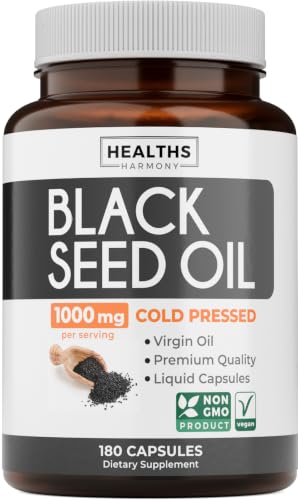
This product is an adult black seed oil capsule supplement. The stated use is two capsules daily with a meal, supplying 1,000 mg of black cumin seed oil, Nigella sativa, per serving. With 180 capsules, that works out to a nominal 90-day supply when used as directed. The manufacturer states that the oil is cold-pressed, non-GMO, vegan, and made in the United States with domestic and international ingredients. Its published formula identifies black cumin seed oil plus vitamin E, cellulose capsule material, and silicon dioxide. The dose is in the range used in some human Nigella sativa research, but this product does not disclose a thymoquinone amount. No public lot-specific certificate was located to confirm its oil amount, thymoquinone content, heavy metals, or oxidation status for a bottle a buyer can match by lot.
This product suits an adult who specifically wants a capsule format rather than liquid black seed oil, prefers a plainly stated 1,000 mg daily Nigella sativa oil serving, and values a larger bottle intended for about three months of routine use. It is most appropriate for general wellness use by someone who can review supplements with a clinician or pharmacist if they have health conditions or use medicines. The disclosed dose has some relevance to short-term human research on Nigella sativa, but it should not be treated as a substitute for medical care.
It is not well suited to pregnant or breastfeeding people, children, or anyone with a known medical condition or regular medication use unless a clinician approves it. People taking glucose-lowering, blood-pressure, antiplatelet, or anticoagulant medicines should be especially cautious because Nigella sativa may affect metabolic and cardiovascular measures. It also does not suit buyers who need a lot-specific independent report for thymoquinone, heavy metals, or oil freshness, or those who require a confirmed organic, allergen-free, or single-origin supply chain.
The published label identifies the botanical as Nigella sativa and lists the oil, vitamin E, cellulose, and silicon dioxide. It also states cold-pressed, vegan, and non-GMO status, and says the product is made in the United States with domestic and international ingredients. A retailer-hosted brand response identifies India as the seed source, but there is no public chain-of-custody or lot documentation tying a particular bottle to that origin. The product label includes a cool, dry storage instruction and a best-by date format, which are practical basics for an oil supplement. However, no public peroxide value, p-anisidine value, TOTOX result, or lot-specific third-party report was located. Independent category testing has shown that black seed products can vary in thymoquinone content, so the undisclosed thymoquinone amount here remains important uncertainty. No relevant FDA warning letter or recall was located in the sources checked, but the stated GMP registration was not supported by a publicly verifiable third-party GMP certificate.
This product is a 300-softgel botanical blend intended for adults. The labeled use is two softgels daily with food, providing 150 servings. An independently listed Supplement Facts panel identifies 300 mg of 20:1 Origanum minutiflorum leaf extract in extra-virgin olive oil, described as equivalent to 6,000 mg oregano leaf and standardized to 165 mg carvacrol, plus 200 mg Nigella sativa seed oil. The formula is transparent about its gelatin, glycerin, and purified-water softgel shell and states that it is free of soy, dairy, gluten, and tree nuts. The manufacturer says the product is third-party lab tested, but no current lot-matched certificate, laboratory identity, thymoquinone assay, heavy-metal report, or oxidation report was publicly available for review. The black seed oil amount is stated, while its actual thymoquinone amount is not.
This product fits an adult who specifically wants a long-duration softgel format rather than liquid oregano or black seed oil, and who values a formula that names both plant species, plant parts, extract ratio, carvacrol amount, and capsule ingredients. It may suit someone using a general wellness botanical blend with food who accepts that the black seed oil is only 200 mg per day and that its thymoquinone content is not quantified. It is not a substitute for treatment of an infection or chronic condition.
It is not well suited to pregnancy or breastfeeding, children, or anyone who cannot use gelatin capsules. People taking prescription medicines, especially medicines affecting blood pressure, blood sugar, or clotting, should not treat the general medication warning as individualized interaction guidance. Those with sensitivity to oregano, related aromatic herbs, or oil-based supplements may also need a different format. People seeking a supplement with a verified low-lead result, measurable thymoquinone dose, lot-specific contaminant testing, or clinical evidence for cold treatment should choose a product with those records available.
The accessible label is unusually specific about the botanical materials. It distinguishes a 300 mg oregano leaf extract from its 6,000 mg leaf-equivalent figure, states a 165 mg carvacrol standardization, and identifies the 200 mg black seed oil as Nigella sativa seed oil. Human studies of Nigella sativa suggest possible metabolic and other effects, but results are limited, preparations differ, and this product does not disclose its thymoquinone dose. The manufacturer states that ingredients are third-party tested and sourced from single-origin suppliers, but no public lot certificate, accredited laboratory report, country of seed origin, extraction location, or organic certification was located. Storage guidance is limited to cool, dry conditions, with no public peroxide or rancidity results. Most importantly, the product label carries a California Proposition 65 warning for lead exposure. That warning does not by itself quantify exposure, but it makes public lot-specific heavy-metal results especially important.
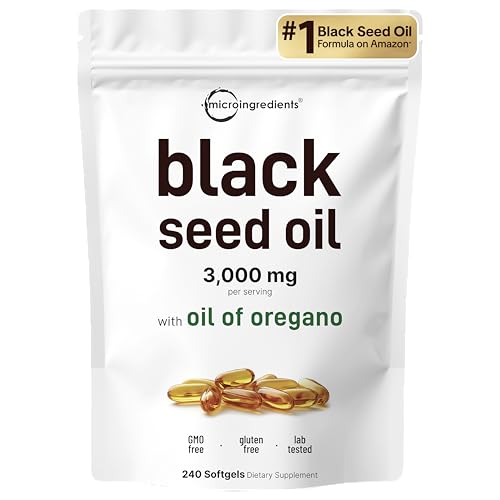
This is a 240-softgel herbal oil product intended for adults. The manufacturer’s published Supplement Facts specify a daily serving of three softgels, providing 3,000 mg of black cumin seed oil from Nigella sativa seed and 100 mg of oregano extract from Origanum minutiflorum leaf. The pouch therefore supplies 80 daily servings. Gelatin, glycerin, and purified water make up the softgel shell. The most important product-specific limitation is that no public lot-matched certificate of analysis was located to verify the oil amount, thymoquinone, carvacrol, heavy metals, or oxidation. The published label also carries a California warning for cancer and reproductive harm from lead exposure. The product uses seasonal immune and antioxidant support language, rather than disease-treatment claims, but it does not state a thymoquinone dose or oregano standardization level.
This product suits an adult who specifically wants a convenient, high-volume softgel format combining labeled Nigella sativa seed oil with oregano extract, rather than buying two separate products. It may also fit someone who values a clearly stated 80-day supply and can tolerate gelatin capsules. It is most appropriate for general wellness use within the manufacturer’s stated directions, not as a substitute for evaluation or treatment of an infection, metabolic condition, chronic pain, or other medical concern.
It is not well suited to pregnant or breastfeeding people, children, or anyone with an allergy or sensitivity to oregano, black seed, gelatin, or capsule ingredients. People using anticoagulants, antiplatelet drugs, blood-pressure medicines, blood-sugar medicines, or preparing for surgery should seek clinician or pharmacist guidance before using it. It is also a poor fit for buyers who require a publicly available, lot-matched laboratory report confirming heavy-metal limits, active-compound levels, and oil freshness before use.
The label identifies Nigella sativa seed oil and Origanum minutiflorum leaf extract, with 3,000 mg and 100 mg respectively per three-softgel serving. It also identifies gelatin, glycerin, and purified water in the capsule and states that the product is free of soy, dairy, gluten, and tree nuts. These are manufacturer-published specifications, not independent confirmation of contents. A California lead exposure warning appears on the product label. No product-specific public certificate of analysis was located to clarify lead exposure or verify other heavy metals, potency, thymoquinone, carvacrol, or oxidation measures. The maker promotes a recyclable, light-protective pouch, but no packaging-material specification, recycling code, certified organic seed record, country-of-origin record, or independently documented farming standard was located. A California recall listing dated July 21, 2026 names a different Micro Ingredients vitamin A product, not this black seed and oregano product.


