Best Overall
10% Coupon

VitaUp Cardio Beet Root Gummies 2600mg
Contains multiple heart-healthy ingredients.
Tasty and easy to consume.
Supports normal blood pressure.
 Lauren Wilson
Contains multiple heart-healthy ingredients.
Tasty and easy to consume.
Supports normal blood pressure.
Supports healthy blood pressure with natural ingredients.
Includes hawthorn berry, hibiscus, and garlic.
Boosts energy through nitric oxide production.

Contains natural ingredients like Hawthorn Berry, Hibiscus.
Supports normal blood pressure with Vitamin B12.
Includes garlic for enhanced nitric oxide production.

Enhances blood flow for improved circulation.
Contains Nitrosigine for better nitric oxide levels.
Supports overall cardiovascular health effectively.

Combines nattokinase, reishi, and hawthorn effectively.
Supports vascular health with natural ingredients.
Designed by a doctor for optimal circulation.

Combines multiple ingredients for comprehensive health support.
Liquid form for easy consumption and absorption.
Includes organic and natural extracts for purity.

Supports heart health with studied antioxidants.
Quick release formula for faster effects.
Non-GMO and made with beet root powder.

Supports blood pressure with grape seed extract.
Delicious pomegranate berry flavor.
Made with non-GMO ingredients.

Made in USA, ensuring high quality standards.
Non-GMO ingredients for healthier consumption.
Delicious taste, easy to incorporate daily.

Supports heart health with natural ingredients.
Includes ashwagandha for stress relief.
Promotes healthy blood circulation effectively.
The most important distinction is a **dose you can compare with human research**. Beetroot products often advertise a beet powder or extract amount, but the relevant research generally measures nitrate itself. In the supplied reviews, human beetroot studies commonly used roughly **200–800 mg nitrate daily**; products that disclose only 300 mg, 500 mg, 1,000 mg, 1,200 mg, or a concentrated beet extract do not establish that they provide a comparable nitrate exposure. A validated nitrate assay or a stated nitrate amount is therefore more informative than “30:1,” “20:1,” or “1,000 mg beetroot” alone. Similar problems occur when grape-seed extracts omit procyanidin or other standardization markers, or when several botanicals are hidden in one proprietary blend.
Look for every active ingredient to have a named form, plant part or extract ratio, standardization marker where relevant, and amount per serving. A complete label should also state serving size, directions, other ingredients, and the responsible U.S. business. A product can have a fully disclosed label without having a clinically meaningful dose: disclosed hawthorn berry powder, garlic powder, or a total blend amount may still differ substantially from the preparations studied in people.
Quality claims also need checking at the finished-product level. “GMP,” “made in the USA,” “third-party tested,” and “lab tested” are manufacturer statements unless supported by an independent program or accessible records. The stronger signal is a current listing for the exact product in an independent register such as **NSF Certified Dietary Supplements, NSF Certified for Sport, USP Verified, Informed Sport, or Informed Choice**. A lot-specific report should link the bottle’s lot number and expiration date to identity, labeled potency, heavy metals, microbes, and relevant adulterants, ideally with testing from an accredited laboratory. A general certificate, an unlinked report, or a facility certification does not provide the same assurance.
Also assess the formula’s avoidable burden. Capsule products commonly avoid added sugar and stimulants, while chews may provide 4–5 g added sugar daily or use sugar alcohols that can cause gastrointestinal symptoms. Green tea or green coffee may be present inside a blend without a stated caffeine amount. Delivery form, gelatin, allergens, excipients, packaging materials, and sourcing claims matter, but “vegan,” “organic,” “sustainable,” or “recyclable” should be supported by checkable labeling or certification.
Across the supplied products, recurring cautions include possible interactions with blood-pressure medicines, nitrates, erectile-dysfunction medicines, anticoagulants, antiplatelet drugs, diabetes medicines, and medicines affected by piperine or herbal ingredients. Grape seed, garlic, nattokinase, reishi, ginkgo, turmeric, and resveratrol may raise bleeding-related concerns; CoQ10 can affect warfarin; vitamin K2 is important for people using warfarin; and iron requires particular care because one product supplies 50 mg daily and had a prior child-resistant-packaging recall. People with low blood pressure, kidney disease or calcium-oxalate stone history, cardiovascular conditions, pregnancy or breastfeeding, upcoming surgery, or diagnosed hypertension should obtain individualized professional advice rather than relying on a supplement label.
These topics separate a plausible, checkable product from one whose marketing is easier to evaluate than its actual blood-pressure relevance. Scores reflect the supplied product reviews, not a guarantee of benefit or safety.
This asks whether the labeled product has a meaningful, clinically plausible blood-pressure or cardiovascular benefit that outweighs foreseeable risks. Higher-scoring products paired a plausible ingredient rationale with fewer major concerns; lower-scoring products often lacked a dose match, used complex blends, or carried important warnings. No product should be treated as a replacement for hypertension care.
This measures whether warnings address the risks most relevant to circulation products, including blood-pressure, nitrate, erectile-dysfunction, anticoagulant, diabetes, and kidney-stone medicines or conditions. Higher scores reflected clearer precautions, while lower scores often relied on a generic “ask your doctor” message despite botanicals that may affect blood pressure, bleeding, glucose, or drug metabolism.
This considers unnecessary stimulants, hidden caffeine, added sugar, sugar alcohols, allergens, and poorly justified excipients. Higher-scoring examples used simple capsules or sugar-free formats; lower-scoring examples included sweetened chews, proprietary stimulant-containing blends, or ingredients that made exposure difficult to assess. Sugar-free does not automatically mean risk-free, since sugar alcohols and botanicals can still matter.
This measures relevant recalls, warning letters, hidden-drug alerts, safety notices, and repeat compliance concerns involving the product, brand, seller, or ingredients. Higher scores were associated with no relevant signal in the reviewed records. Lower scores reflected issues such as an unauthorized certification notice, a lead warning, a prior packaging recall, or other compliance history requiring extra caution.
This asks whether each headline active is identified, standardized where needed, and supplied at a form and amount studied in humans. Higher-scoring products included a 150 mg studied grape-seed extract dose, a 1,500 mg Nitrosigine dose used in human research, or a nattokinase activity level near a trial dose. Beet products generally lost ground when nitrate was not disclosed.
A high score means a buyer can see serving size, exact amounts, forms, plant parts, extract ratios or markers, other ingredients, and a responsible U.S. business. Products with individually listed actives scored better than proprietary blends. A named ingredient or extract ratio alone is not enough if the amount, nitrate content, or standardization marker remains unknown.
This measures current third-party certification of the exact finished supplement, rather than a self-issued GMP or laboratory-tested claim. The supplied scores were highest where products appeared in NSF dietary-supplement or Certified for Sport registers. Products with only manufacturer facility claims or no register listing scored much lower, even when their labels were detailed.
This asks whether a buyer can match a current lot and expiration date to independent testing for identity, labeled potency, heavy metals, microbes, and relevant adulterants. A manufacturer-posted batch report is useful but weaker when laboratory accreditation, expiration matching, or independent status is unclear. Most products lacked a publicly accessible, lot-linked report.
Higher scores reflect careful structure-function language that describes support without promising treatment, rapid guaranteed changes, cure, or medication replacement. Lower scores reflected claims that outran the evidence for the exact formula, such as rapid circulation effects, large nitric-oxide increases, or direct anti-hypertension wording. A disclaimer does not correct an otherwise overstated claim.
This looks at packaging efficiency, single-use wrappers, oversized containers, recycling information, recycled content, and substantiated agricultural sourcing. Scores were generally similar because most supplied listings did not document these details. A higher score indicates comparatively better available information or a less burdensome format, but the reviews did not establish strong environmental credentials for most products.
This is a 60-count, mixed-berry and pomegranate flavored gummy supplement. The stated use is two gummies daily, providing 30 servings. It is marketed for normal circulation, blood flow, energy, and immune support rather than as a blood-pressure medicine. The manufacturer lists 100 mg coenzyme Q10, 100 mg vitamin C, 20 mg nicotinamide, 100 mcg vitamin B12, beet-root material described as 1,500 mg from 50 mg of 30:1 extract, and grape-seed material described as 1,000 mg from 50 mg of 20:1 extract. An independent product database reports the same core serving amounts. The 100 mg coenzyme Q10 dose falls within the range examined in human blood-pressure research, although the overall evidence remains mixed. The listing does not disclose nitrate content for the beet extract or a grape-seed proanthocyanidin standardization, so the key botanical doses cannot be matched confidently to nitrate-based beet or standardized grape-seed trials.
This product suits an adult who specifically wants a chewable, plant-based circulation supplement and values a clearly stated 30-day, two-gummy routine. It may fit someone seeking a modest adjunct to general cardiovascular habits, especially if they prefer 100 mg daily coenzyme Q10 rather than a separate softgel. It is more appropriate for a person with normal circulation goals than for someone trying to self-manage diagnosed hypertension. The stated vegan and gluten-free format may also matter to buyers avoiding gelatin or gluten.
It is not a substitute for prescribed blood-pressure treatment or clinical evaluation of high readings. People using warfarin or other anticoagulant therapy should consult their clinician because coenzyme Q10 may reduce warfarin effectiveness and grape seed has potential bleeding-related interaction concerns. People taking antihypertensives, nitrates, erectile-dysfunction medicines, or diabetes medicines should seek individualized advice before adding a circulation product. Those prone to calcium-oxalate kidney stones may prefer to avoid concentrated beet products. It is also unsuitable for households seeking a no-added-sugar supplement.
The main evidence-supported formulation point is 100 mg coenzyme Q10 per daily serving. Human meta-analyses suggest that coenzyme Q10 can produce a modest reduction in systolic blood pressure in some cardiometabolic populations, but results across reviews are not fully consistent. Beetroot juice studies generally depend on a measured nitrate intake, often hundreds of milligrams daily. This product does not disclose nitrate content, so its beet-related effect cannot be estimated from those trials. The manufacturer states that the product is vegan, gluten-free, non-GMO, and made without preservatives, while the ingredient list includes glucose syrup, sugar, dextrose, pectin, fruit flavors, vegetable oil, and carnauba wax. No relevant FDA recall, warning letter, or health-fraud listing was identified for this product or VitaUp in the checked databases. No independent finished-product certification or accessible lot-specific laboratory report was found. Packaging material and recycling instructions are not disclosed, leaving the product's packaging footprint unverified.
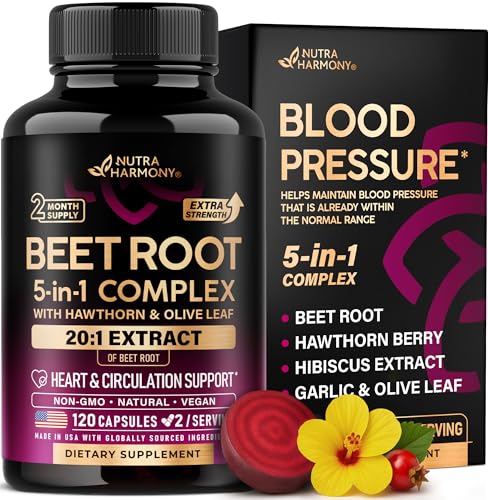
This is a 120-capsule, two-capsule-per-day herbal supplement intended for adult heart, circulation, energy, and healthy blood-pressure support. The manufacturer lists 60 servings per bottle. Each serving is stated to contain 500 mg beetroot 20:1 root extract, 100 mg hawthorn berry extract, 100 mg hibiscus flower extract, 25 mg garlic extract, and 25 mg olive leaf powder, in a hypromellose capsule with rice flour and magnesium stearate. The central limitation is checkable and important. The manufacturer says its beet extract is not standardized for nitrate content, so the actual nitrate amount can vary by batch. Human beetroot blood-pressure trials generally use nitrate-defined beet juice or preparations, not an extract with an undisclosed nitrate content. The maker states that batches are third-party tested for microbiology and heavy metals, but no public, lot-matched certificate of analysis was located. No finished-product certification listing was located in the major independent certification registers searched.
This product most directly suits an adult who wants a 60-day, non-stimulant capsule routine for general circulation or wellness support, and who values seeing the individual botanical amounts instead of a proprietary blend. It is better framed as an adjunct to healthy habits, not as a treatment plan for hypertension. The practical fit is someone without relevant medication interactions who can discuss the multi-herb formula with a clinician, especially if they already monitor blood pressure and want to avoid beet juice or powders.
It is not a suitable substitute for prescribed blood-pressure treatment, or for someone expecting a nitrate-defined beet product with a clinically comparable dose. People using anticoagulants, aspirin, blood-pressure medicines, nitrate medicines, erectile-dysfunction medicines, or diabetes medicines should seek clinician advice first because garlic, olive leaf, and other botanicals may add to bleeding, blood-pressure, or glucose effects. Those who are pregnant, nursing, under 18, preparing for surgery, or managing recurrent calcium-oxalate kidney stones should choose a clinician-guided option instead.
The formula avoids caffeine, stimulants, added sweeteners, and animal gelatin according to the manufacturer. Its listed inactive ingredients are limited to a cellulose capsule, rice flour, and magnesium stearate. The maker also states that batches are tested by ISO 17025 laboratories for microbiology and heavy metals, but it does not publish a certificate tied to the bottle lot and expiration date. Searches of major finished-product certification registers did not identify an exact-product USP, NSF, Informed Choice, or Informed Sport certification listing. No matching FDA recall, health-fraud notice, or warning letter for this product or brand was located in the databases searched. That is not equivalent to proof of product quality. Packaging is a 120-capsule bottle with a safety neckband and inner seal, but the bottle resin, recycled content, recycling instructions, and agricultural sourcing are not documented. There is therefore little basis to assess recyclability or sourcing impacts beyond the relatively compact capsule format.
This is a 90-capsule botanical and vitamin supplement intended for adults seeking support for blood pressure already in the normal range. The label directs one capsule with meals, up to three times daily. A label record in the NIH Dietary Supplement Label Database identifies 13 active ingredients per capsule, including 175 mg hawthorn extract, 150 mg garlic powder, 125 mg olive-leaf extract, 100 mg hibiscus flower powder, and B vitamins. The most defining limitation is dose matching. Human evidence for hibiscus and garlic is mixed and formulation dependent, while this product does not identify key botanical species, plant parts, or potency markers for most extracts. Its 150 mg garlic powder per capsule is not the aged garlic extract used in studies showing effects at doses above 1,200 mg daily. The manufacturer states that products are rigorously tested and made in a GMP-certified facility, but independent finished-product certification and lot-specific test reports were not located.
This product is most suited to an adult who is not pregnant or breastfeeding, does not use prescription medicines, and wants a capsule with disclosed per-ingredient amounts for personal supplement tracking. It may also suit someone who specifically prefers a broad herbal formula over a single-ingredient product and understands that the intended use is support for already normal blood pressure, not treatment of hypertension. The 90-capsule format is practical for a one-capsule daily routine, though the label permits more frequent use.
It is not suited to people managing diagnosed hypertension, heart disease, hypotension, kidney problems, diabetes, seizure disorders, or a bleeding condition without clinician and pharmacist review. Avoid it during pregnancy and breastfeeding, as the label directs. People using blood-pressure medicines, beta-blockers, anticoagulants or antiplatelets, digoxin, nitrates, erectile-dysfunction medicines, lithium, or nadolol should choose a product only after a medication-specific interaction check. It is also unsuitable for anyone seeking a substitute for prescribed blood-pressure treatment or independently verified batch testing.
The available label record is unusually specific about ingredient quantities and identifies the inactive ingredients. It is a gelatin capsule, so it is not vegetarian. No added sugar is listed. Garlic can increase bleeding risk with anticoagulants or aspirin, and concentrated green-tea supplements can alter levels of some medicines. Hawthorn can also cause dizziness and has uncertain long-term safety. These considerations matter because the formula combines numerous botanicals rather than relying on one standardized ingredient. The manufacturer states that its supplements are rigorously tested and made in a GMP-certified facility. Those are manufacturer statements, not confirmation of independent finished-product certification or lot-specific potency and contaminant testing. No publicly accessible, lot-linked certificate of analysis was located. Packaging-material, recycled-content, recycling instructions, agricultural sourcing, and organic certification information were also not located, so the environmental profile cannot be verified beyond the compact 90-capsule bottle format.
BloodFlow-7 is a 60-capsule supplement intended for adults seeking circulation, energy, and healthy blood-pressure support. The labeled use is two capsules once daily, making each bottle a 30-day supply. A third-party label reproduction lists 500 mg Nitrosigine, 50 mg S7 botanical blend, 30 mg trans-resveratrol, and 5 mg BioPerine per serving, plus gelatin, cellulose, magnesium stearate, and silica. The manufacturer states that the formula is caffeine-free and uses clinically tested doses. That dose claim is not well supported for the blood-pressure use case. Published Nitrosigine studies commonly used 1,500 mg daily, while resveratrol blood-pressure effects in reviews were generally associated with substantially higher doses than this product's 30 mg. The manufacturer also makes fast, quantitative nitric-oxide and artery-expansion claims, but the cited evidence is not a finished-product trial in people with hypertension.
This product is most suited to a healthy adult who wants a simple, stimulant-free capsule formula for general circulation or exercise-related nitric-oxide support, understands that the expected cardiovascular effect is uncertain, and is not using interacting medicines. The disclosed serving size and 30-day bottle make it practical for someone who values a fixed daily routine. It is not a substitute for blood-pressure monitoring, prescribed treatment, exercise, diet changes, or medical assessment of leg swelling, chest symptoms, or persistent circulation concerns.
It is not suited to someone trying to self-treat diagnosed hypertension, angina, peripheral artery disease, erectile dysfunction, diabetes-related circulation problems, or unexplained leg pain or swelling. People taking antihypertensives, nitrates, erectile-dysfunction medicines, anticoagulants, diabetes medicines, or medicines with narrow dosing margins should consult a pharmacist or clinician first. Black pepper extract can alter drug handling. Pregnant or breastfeeding people, children, and people with kidney disease or a complex medical history should use clinician-directed products instead.
The formula avoids added sugar and, according to the manufacturer, caffeine and other stimulants. Its listed inactive ingredients are limited to a gelatin capsule, microcrystalline cellulose, vegetable magnesium stearate, and silica. Gelatin means it is not vegetarian. The active formula still deserves caution because the black pepper extract is included specifically to change absorption, which can also create medicine-interaction concerns. Public searches did not identify a current finished-product listing in the USP, NSF, Informed Sport, or Informed Choice certification registers. No accessible, lot-linked certificate of analysis was found for potency, heavy metals, or microbiology. Searches also did not identify a directly relevant FDA recall, warning letter, or safety alert for this product or brand. The available product information does not document bottle resin, recycled content, recycling instructions, or agricultural sourcing, so its environmental footprint cannot be meaningfully verified.
This is a 60-capsule, once-daily cardiovascular wellness supplement. The manufacturer lists 120 mg nattokinase supplying 2,400 fibrinolytic units, 125 mg of 4:1 hawthorn extract described as 500 mg strength, 300 mg of 15:1 reishi extract described as 4,500 mg strength, and 50 mg AstraGin per capsule. Rice flour and a hypromellose capsule are listed as other ingredients. The most evidence-relevant active is nattokinase. Its stated 2,400 FU amount is close to the 2,000 FU daily dose used in one eight-week randomized blood-pressure trial, though evidence across studies remains limited and it is not a substitute for prescribed treatment. A publicly posted certificate for one 2024 production batch reports identity, microbial, heavy-metal, and ingredient checks. It is not a current, buyer-lot-linked independent laboratory report.
This format may suit an adult who wants a once-daily vegan capsule with disclosed amounts of nattokinase, hawthorn extract, reishi extract, and AstraGin, and who has discussed supplement use with a clinician. It is most relevant to someone seeking adjunctive wellness support rather than treatment of diagnosed hypertension or clotting disease. The 60-capsule bottle supplies about two months at the manufacturer’s standard one-capsule daily routine. It is not designed to replace home blood-pressure monitoring, lifestyle treatment, or prescribed cardiovascular care.
It is not appropriate for people using warfarin, other anticoagulants, antiplatelet medicines, fibrinolytic drugs, or daily aspirin without clinician oversight. Nattokinase may increase bleeding risk, and Memorial Sloan Kettering advises avoiding it with coagulation disorders and during anticoagulant or antithrombotic treatment. People with a history of deep-vein thrombosis, upcoming surgery, fermented-soy allergy, unexplained bleeding, or poorly controlled blood pressure need individualized medical advice. Those with liver disease or heavy alcohol use should also be cautious because rare reishi-associated liver injury has been reported.
The product’s stated 2,400 FU nattokinase amount is close to a dose studied in a small human blood-pressure trial, and published reviews suggest a modest average blood-pressure effect from nattokinase. That does not establish that this four-ingredient product treats hypertension. Hawthorn evidence is mixed and dose-dependent, while a Cochrane review found insufficient reliable evidence that reishi improves cardiovascular risk factors. The manufacturer posts a certificate for one production batch showing microbial and heavy-metal testing, but it is issued by the contract manufacturer and is not tied to a current retail bottle. The contract manufacturer is listed by NSF as meeting NSF/ANSI 455-2 dietary-supplement GMP requirements, which is a facility certification, not certification of this finished product. No product-specific recycling instructions, package-material details, organic certification, or substantiated sourcing information were located. No relevant FDA recall, warning letter, or safety alert for the product or Melody Wellness was located in the searches performed.
This is a 2-fluid-ounce liquid supplement with 30 daily servings. The labeled direction is 2 mL once daily with a meal and an 8-ounce glass of water. Each serving lists vitamin D3 at 50 mcg and vitamin K2 as menaquinone-7 at 100 mcg, plus 100 mg each of cayenne fruit extract, hawthorn berry extract, and beet root extract. The remaining turmeric, Panax ginseng, berberine, and Ceylon cinnamon appear together in a 100 mg proprietary blend, so their individual amounts cannot be checked. The beet ingredient also does not state nitrate content, the measurement used in blood-pressure trials. Amazon text elsewhere names 500 mg and 1,500 mg berberine, which conflicts with a label that allocates only 100 mg total to the four-ingredient blend. Independent finished-product certification and a lot-matched certificate of analysis were not located in the major public registries or on the product pages reviewed.
This product fits an adult who specifically wants a small, flavored liquid wellness supplement rather than capsules, and who values clearly labeled vitamin D3 and K2 amounts. It is most appropriate for someone using it as a general dietary supplement, not as a way to manage diagnosed high blood pressure, circulation symptoms, diabetes, or cholesterol. The buyer should be comfortable with uncertain doses for four botanicals and should be able to review the full ingredient list with a clinician if they use medicines.
It is not suited to people trying to replace prescribed blood-pressure treatment or expecting a reliably measured nitric-oxide or beet-nitrate dose. People using warfarin or other anticoagulants, blood-pressure drugs, nitrate medicines, erectile-dysfunction medicines, or diabetes medicines need clinician review first. Vitamin K2, hawthorn, and berberine make interaction screening especially important. It is also unsuitable for pregnancy, breastfeeding, infants, or people who need a product with independently certified contents, contaminant controls, and batch-specific testing before use.
The main health concern is not a confirmed recall. Current searches of FDA safety and recall resources did not identify a product-specific recall or warning letter. The more immediate issue is fit and transparency. Berberine can cause gastrointestinal effects and may interact with medicines. Hawthorn has limited cardiovascular evidence and can cause dizziness or digestive effects. Vitamin K can interfere with anticoagulant management. The product directions do not plainly address these circumstances. Its listed excipients are relatively short and do not include added sugar. The bottle holds 2 fluid ounces, but the reviewed product materials did not document bottle material, recycled content, recycling instructions, agricultural sourcing standards, or a packaging certification. No public finished-product certification or lot-linked independent purity and potency report was located, so claims of testing cannot be independently checked for the bottle a customer receives.
This product is a 90-capsule beetroot and grape seed supplement for adults. The suggested use is three capsules daily, providing 30 daily servings. A retailer-published Supplement Facts panel identifies 1 g of beet root powder, Beta vulgaris, and 150 mg of Enovita grape seed extract, Vitis vinifera, per daily serving. The capsule uses hypromellose with tricalcium phosphate, plant-based magnesium stearate, and silica. The label gives no nitrate amount or assay result. That matters because human beetroot blood-pressure trials generally quantify nitrate, with reviews reporting daily nitrate intakes of roughly 200 to 800 mg in hypertensive participants. The product's blood-pressure support language is therefore clinically plausible, but the expected effect from this specific daily serving cannot be calculated from the available label data.
This product fits an adult who wants a simple, unsweetened capsule format rather than beet juice or flavored powders, and who is looking for a measured daily serving of beetroot plus grape seed extract. It is most appropriate for someone with normal blood pressure or a clinician-guided wellness routine who understands that the label does not quantify nitrate and that any blood-pressure effect is uncertain. The 90-capsule bottle supplies 30 days when used as directed.
It is not a self-treatment option for people with diagnosed or uncontrolled hypertension, especially readings at or above 140/90 mm Hg or severe readings above 180/120 mm Hg. These situations need clinician-led care and may require medication. People taking antihypertensive medicines, nitrate medicines, erectile-dysfunction medicines, anticoagulants, or antiplatelet drugs should ask a clinician or pharmacist first. Pregnant or nursing people, children, and people with kidney disease or recurrent calcium oxalate stones should also seek individualized advice.
The verified label is relatively simple for a cardiovascular supplement. Each daily serving supplies beetroot powder and grape seed extract in a vegetable capsule, with a short list of processing aids. No stimulant or sweetener ingredient is listed. Human evidence supports beetroot nitrate as a possible contributor to modest systolic blood-pressure reductions, but this product does not disclose its nitrate amount, so its clinical equivalence to nitrate-standardized trial products is unproven. The available warning advises adults who are pregnant, nursing, taking medicines, or managing a medical condition to consult a clinician. This is important because Memorial Sloan Kettering notes a possible bleeding-risk interaction between grape seed extract and blood thinners. No product-specific independent certification or lot-linked testing record was located. No relevant FDA recall, warning-letter, or safety alert was found in the reviewed sources. Packaging is a small plastic bottle, but no verified bottle-resin, recycling instruction, or agricultural sourcing documentation was located.
SuperBeets Heart Chews is a pomegranate berry flavored adult dietary supplement in a 60-chew pouch, intended as a 30-day supply at two chews daily. Each serving provides 150 mg of Enovita grape seed extract and 500 mg of beet root powder. It also provides 40 calories, 9 g carbohydrate, and 4 g added sugar. The chew format uses tapioca syrup, raw cane sugar, rice bran, oils, flavors, acids, glycerin, and stevia for texture and taste. The most consequential verified quality finding is a current NSF Certified for Sport listing for this exact finished chew. The labeled Enovita amount matches a 150 mg daily dose evaluated in a controlled registry study of healthy people with pre or mild hypertension, although that study is not the same as a large medication-quality hypertension trial. The beet component has no stated nitrate amount, so its match to nitrate-based beetroot research cannot be checked.
This format fits an adult who wants a portable, no-mixing daily chew and understands that it is a supplement for general healthy blood-pressure support, not treatment. It is most relevant for someone whose clinician has cleared grape seed extract, who is not using blood thinners or a complex medication regimen, and who is comfortable with 4 g added sugar daily. The 60-chew pouch provides a defined 30-day routine, and the independently listed NSF Certified for Sport status is relevant for buyers who value finished-product oversight.
It is not a substitute for evaluation or prescribed treatment for hypertension, chest symptoms, cardiovascular disease, or sudden blood-pressure changes. People using anticoagulants or antiplatelet drugs should seek clinician or pharmacist guidance because grape seed extract may raise bleeding risk. People taking blood-pressure medicines, pregnant or nursing people, and households with children should not rely on the generic label warning alone. It also does not suit buyers who need a nitrate-quantified beet product, need to avoid added sugar, or require a publicly available lot-specific laboratory report.
The strongest health-quality highlight is independent finished-product certification. NSF currently lists the chew in its Certified for Sport register, which is more meaningful than a self-issued manufacturing or testing statement. The formula names 150 mg Enovita grape seed extract and 500 mg beet root powder per serving, and the grape extract is described by Humann as 95 percent standardized polyphenols. Human evidence supports a possible modest blood-pressure benefit from grape seed extract, but the product's beet nitrate content is not disclosed. The ingredient list has no caffeine, but it includes 4 g added sugar per serving. Humann says the product is made in the USA with globally sourced ingredients and describes its beet and grape sourcing as sustainable. Those agricultural claims were not independently certified in the sources reviewed. The 60-chew flexible pouch offers no clear material specification or recycling instruction, and no public lot-specific certificate of analysis was found. No relevant active recall or FDA warning action was identified in the reviewed searches.
This is a 60-count, cherry-pomegranate flavored gummy supplement for adults. The labeled serving is two gummies, providing 30 servings. Manufacturer label information specifies 300 mg of 4:1 beet root extract, described as equivalent to 1,200 mg of beet root, plus 40 mg pomegranate juice powder and a 14 mg proprietary antioxidant blend. The intended use is circulation, stamina, and healthy blood-pressure support. Human research on nitrate-rich beetroot juice suggests a modest average reduction in systolic blood pressure, but the studies dose and measure nitrate. This product does not disclose nitrate content or a validated nitrate assay, so its beet extract cannot be matched to that evidence. Lunakai states that it conducts third-party testing and publishes results, but accessible lot-linked certificates with potency and contaminant results could not be verified.
This product suits an adult who wants a sweet, portable beet supplement rather than beet juice or powder, and who values a clearly stated two-gummy serving with modest added sugar. It is most appropriate for someone using it as a general food-style wellness supplement, not as a method to manage diagnosed high blood pressure. The 60-count bottle provides a 30-day supply at the labeled use. Buyers should be comfortable with the fact that the formula does not disclose its nitrate dose.
It is not well suited to people trying to lower diagnosed hypertension, replace prescribed treatment, or choose a beet product with a human-study-matched nitrate dose. People using blood-pressure medicines, nitrates, erectile-dysfunction medicines, anticoagulants, antiplatelet drugs, diabetes medicines, or multiple prescription medicines should first ask a clinician or pharmacist. Those with a history of oxalate kidney stones should also seek individualized advice, because beets can be high in oxalate. It is also not a strong fit for competitive athletes who need recognized banned-substance certification.
The formula is a pectin-based gummy with 1 g added sugar per serving. Its other ingredients are listed as organic tapioca syrup, organic cane sugar, purified water, seaweed extract, pectin, trisodium citrate, citric acid, and natural flavor. The manufacturer states that it is vegan, gelatin-free, corn-syrup-free, non-GMO, kosher certified, and made in the United States with global ingredients. The specific kosher certifier was not identified on the product materials reviewed. Lunakai states that every product undergoes third-party testing and that results are available through its Trust Center. However, current batch-specific certificates showing product identity, beet or nitrate potency, heavy metals, microbiology, and adulterant testing were not accessible for independent review. No relevant FDA recall, warning letter, or safety alert for this product or brand was identified in the databases searched. Packaging material, recycled content, recycling instructions, and agricultural sourcing documentation were not provided, so environmental claims cannot be assessed beyond the small bottle format.
This is a 120-count vegetarian-capsule botanical supplement intended for adults seeking blood-pressure and circulation support. The labeled use is four capsules daily, providing 30 days of use. Its published Supplement Facts lists 1,100 mg hawthorn berry plus smaller amounts of arjuna, gotu kola, Sensoril ashwagandha, guduchi, shankhpushpi, gazoban, jyotishmati, pushkaramula, and 14 mg calcium. The ingredient list is unusually checkable for a multi-herb product, including plant parts, extract ratios or markers for several ingredients, and amounts per daily serving. However, hawthorn is unstandardized berry rather than a specified leaf-and-flower extract, and the many smaller botanicals do not establish that the finished formula matches doses tested for blood-pressure outcomes. The manufacturer markets normal blood-pressure, circulation, plaque, stress-response, and expected-results claims, but these claims are broader than the direct human evidence for this exact combination.
This product is most suited to an adult who wants a fully disclosed, nonstimulant botanical formula for general circulation or stress-related wellness, not a substitute for hypertension care. The practical fit is someone able to take four capsules daily, monitor blood pressure with a validated upper-arm cuff, and review the complete ingredient list with a clinician or pharmacist. It is especially important that the user is not changing prescribed treatment based on the product’s marketing claims.
It is not suited to people with uncontrolled, stage 2, or severe high blood pressure, or anyone considering reducing or replacing prescribed treatment. It also needs clinician review for people using blood-pressure drugs, diabetes drugs, anticoagulants or antiplatelets, digoxin, sedatives, thyroid medicines, or immunosuppressants. Avoid use during pregnancy or breastfeeding. People with autoimmune or thyroid disorders, liver disease, upcoming surgery, heart failure, arrhythmia, or a history of supplement-related liver injury should choose a clinician-directed approach instead.
The main health positive is formula disclosure. The published label gives a four-capsule serving and names 10 active ingredients, while specifying several plant parts, extract ratios, and marker compounds. It also uses vegetarian hypromellose capsules with rice bran and silica as the listed other ingredients. No stimulant, added sugar, or sugar alcohol is listed. Safety needs more attention than the generic label warning provides. Ashwagandha can interact with blood-pressure and diabetes medicines and has rare liver-injury reports. Hawthorn can contribute to low blood pressure and has interaction concerns involving heart medicines and anticoagulants. The formula also includes several less-studied Ayurvedic botanicals. Searches of major finished-product certification registers did not identify current independent certification, and no public lot-specific laboratory report was located. No product-specific FDA recall or warning letter was identified in the reviewed searches. The bottle is compact, but no verified recycled-content, recyclability instruction, lower-impact packaging, or ingredient-sourcing documentation was found.


