Best Overall
11% off

Seven Minerals Organic Castor Oil 16 fl oz
USDA certified organic and hexane-free.
Comes in eco-friendly glass bottle packaging.
Cold pressed for maximum nutrient retention.
 Lauren Wilson
USDA certified organic and hexane-free.
Comes in eco-friendly glass bottle packaging.
Cold pressed for maximum nutrient retention.
Large bottle for extended use.
Hexane-free for natural purity.
Versatile for hair and skin care.

Cold-pressed for maximum nutrient retention.
Versatile use for hair, lashes, and brows.
Packaged in eco-friendly glass bottle.

USDA certified pure organic quality.
Supports hair growth and skin health.
Eco-friendly glass bottle packaging.

Easy application with less-mess roll-on design.
Made with 100% pure, cold-pressed castor oil.
Includes rose quartz for added skin benefits.

USDA certified for guaranteed organic quality.
Hexane-free formula ensures purity and safety.
Versatile use for hair, skin, and nails.

Hexane-free for a natural, pure formula.
Eco-friendly glass bottle packaging.
Versatile use for hair, skin, and lashes.
Certified organic for purity and safety.
Cold pressed to retain natural nutrients.
Hexane-free for a healthier choice.

Large 32 oz bottle for long-lasting use.
Unrefined and hexane-free for purity.
Promotes hair growth and nourishes skin.

USDA certified organic and 100% pure.
Cold-pressed and free from hexane.
Promotes natural growth for hair and lashes.
A useful first check is the intended route. A topical castor oil is not interchangeable with an oral laxative. Oral products should carry the required Drug Facts panel, dose, contraindications, and warnings under the FDA’s OTC laxative framework. A cosmetic-style bottle without that labeling should not be swallowed, even if its listing uses terms such as “pure,” “food grade,” or “natural.” Pregnancy, nursing, children, unexplained abdominal symptoms, and medically supervised use require particular caution because several supplied listings blur cosmetic and wellness uses.
Ingredient simplicity can make screening easier, but it does not prove purity. Look for the botanical identity—Ricinus communis seed oil—and clear processing information. “Cold-pressed,” “unrefined,” and “hexane-free” describe processing only; they do not establish that a particular bottle is free of heavy metals, pesticides, residual solvents, microbes, adulteration, or castor-bean proteins. This matters because the supplied reviews note that cold-pressed oils can retain trace protein material and that minimally processed oil may carry more residual-protein or allergen uncertainty.
The strongest purity evidence is a recent certificate of analysis tied to the sellable lot. It should identify the product as castor oil and, where relevant, report heavy metals, pesticides, residual solvents, microbiological quality, and other specifications. A laboratory claim is more meaningful when the laboratory’s ISO/IEC 17025 accreditation scope can be checked through A2LA or ANAB. A single phthalate or heavy-metal report is useful but does not substitute for a complete, lot-matched panel. “Tested,” “USP grade,” or “third-party tested” without the lot, laboratory, methods, and results remains a marketing statement.
Organic claims should be checked in the USDA Organic Integrity Database or against a current certificate from a USDA-accredited certifier covering the responsible handling operation. A USDA seal or marketplace attribute alone does not show that the exact product and supply chain were matched. EWG Verified can independently confirm a listed formulation, but it is not the same as lot-specific contaminant testing. Cruelty-free, vegan, sustainable, and similar badges likewise need a named program, current certificate, or public registry entry.
Eye-area use deserves separate scrutiny. A lash-line claim does not make an oil ophthalmic or sterile. Prefer clear external-use and eye-contact warnings, hygienic applicator instructions, and a design that limits contamination. A wand or roller can reduce spills or overapplication, but neither supports putting oil into the eye. Packaging claims should also be specific: glass, recycled plastic, recyclability, refillability, and disposal instructions should identify the relevant components. Pumps, wands, caps, laminated barriers, and mixed-material packs may not share the bottle’s end-of-life route.
Across the supplied products, recurring safety concerns are the mismatch between growth or wellness promises and the available human evidence; missing lot-matched purity reports; unclear lash-line precautions; and confusion between topical oils and oral laxatives. Avoid direct eye use, damaged or inflamed skin, and unlabelled ingestion. Patch testing and stopping when irritation occurs are recurring appropriate precautions. People with eye disease, castor sensitivity, significant hair loss, pregnancy-related questions, or unexplained abdominal symptoms should not use these products as substitutes for clinical care.
The scores below reflect how well the supplied products document boundaries, testing, sourcing, packaging, and evidence. A high score means the relevant information or verification was stronger; it does not turn a cosmetic oil into a medical treatment or establish that every retail lot has been tested.
This measures whether the product clearly says it is for external use, warns against eye contact or damaged skin, gives patch-test advice, and addresses pregnancy or nursing. Higher-scoring products provided explicit external-use and irritation guidance; lower-scoring listings blurred lash, wellness, or internal-use claims. For castor oil, clear boundaries prevent a cosmetic bottle from being mistaken for a laxative or eye product.
This measures whether oral or constipation claims are supported by an appropriately labeled OTC castor-oil drug. A high score reflects clear topical-only positioning or proper Drug Facts information; a low score reflects digestive, stomach, laxative, or “food grade” language without dose, contraindications, and required warnings. The supplied products with the strongest scores avoided presenting cosmetic oil as something to drink.
This measures eye-contact warnings, contamination precautions, and applicator hygiene. Higher scores were associated with clearer limits or more targeted dispensing, while lower scores accompanied lash-growth marketing without eye-safety instructions. A pump, wand, or roller may control mess, but none makes oil sterile or suitable for use inside the eye. Direct eye use remains a recurring concern.
This measures whether a recent certificate tied to the sellable lot confirms identity and checks relevant contaminants such as metals, pesticides, solvents, and microbes. It carries extra weight because castor oil may be cold-pressed or unrefined. The supplied products generally scored lower when reports were absent or covered only one panel; the strongest example had public heavy-metal and solvent reports, but they were not matched to each retail lot.
This measures whether cold-pressed, refined, unrefined, and hexane-free claims are documented without implying that unrefined oil is inherently safer. Higher scores reflected clearer single-ingredient and processing descriptions; lower scores reflected contradictory or unsupported process information. The topic matters because the supplied reviews note residual-protein and allergen uncertainty in minimally processed castor oil.
This measures whether the responsible company, contact details, lot information, expiry or opening guidance, and regulatory history are clear. Higher-scoring products supplied better contact or date information and had no relevant unresolved action located in the reviewed searches. A clean search is not proof of safety, and traceability cannot replace lot testing, but it gives buyers a route to ask questions or report problems.
This measures whether the listing stays with proportionate cosmetic claims such as moisturizing, smoothing, or fuller-looking strands. Higher scores came from restrained conditioning language, while lower scores accompanied hair regrowth, lash growth, detox, healing, pain, inflammation, or disease claims. Several supplied products marketed castor oil beyond ordinary cosmetics, creating drug-claim and consumer-expectation concerns.
This measures whether human evidence matches the same castor-oil product, route, dose, and use pattern. The supplied scores were higher where claims were limited to conditioning or appearance, but no product established strong evidence for hair or eyelash growth. A small study of another preparation or a traditional-use claim cannot prove that a cosmetic oil regrows hair or treats disease.
This measures whether badges and testing claims can be confirmed through a named independent program, public registry, or current certificate. Higher scores included independently listed EWG Verified formulations or accessible reports; lower scores relied mainly on seller assertions. EWG verification can confirm a formulation, and a laboratory report can confirm a tested sample, but neither automatically proves every retail lot, organic supply chain, or ophthalmic safety.
This measures whether organic claims are independently certified for the relevant handling operation and match the label. Higher scores came from marketplace or program evidence such as USDA Organic attributes, while lower scores reflected conflicting claims or no matching certificate. A USDA seal, “organic” title, or certifier name alone is not enough without a current product-linked record in the USDA Organic Integrity Database.
This measures unnecessary packaging, single-use applicators, material efficiency, and specific recycling or refill information. Higher-scoring products used glass, recycled plastic, or reusable components; lower scores lacked material or end-of-life detail. The trade-off is important: glass may be recyclable, recycled plastic can reduce virgin material, and pumps, wands, PUL barriers, and mixed-material kits can still complicate disposal.
This is a 16-fluid-ounce, single-ingredient castor oil in a glass bottle with a pump, intended for external use on hair, scalp, eyebrows, lashes, and dry skin. The manufacturer identifies the ingredient as 100% Ricinus communis seed oil and states that it is cold-pressed, unrefined, hexane-free, and USDA organic. The organic claim has supporting evidence. A current USDA National Organic Program certificate for Viva Doria, the handling operation associated with this product line, lists castor oil among certified products. The manufacturer also provides sensible external-use boundaries, including patch testing, avoiding the eyes and mucous membranes, avoiding broken skin, and consulting a clinician during pregnancy or nursing. No public, lot-specific certificate of analysis was found for this product's identity, heavy metals, pesticides, residual solvents, or protein contaminants.
This product suits an adult who specifically wants a large bottle of plain castor oil for external cosmetic use, such as softening dry areas, using as a massage carrier oil, or adding shine and slip to hair lengths. It is most practical for a household that will use a thick oil regularly, since 16 ounces is a substantial volume. It also fits buyers who value a USDA organic claim that can be checked in the federal organic certification system and prefer a glass primary bottle over a small plastic bottle.
It is not appropriate for anyone seeking a proven hair-regrowth, eyelash-growth, pain-relief, thyroid, cyst, wound-healing, or anti-inflammatory treatment. It should not be swallowed as a constipation remedy, because this external-use product does not provide the Drug Facts label, dosage, contraindications, and warnings used by compliant oral castor-oil laxatives. Avoid use in or as eye drops, and use particular caution with a history of castor-bean allergy, highly reactive skin, damaged skin, or an active eye condition. Children should not have access to it.
The clearest independently supported positive is the organic claim. The USDA Organic Integrity Database shows a current Ecocert-issued National Organic Program certificate for the associated handling operation, and castor oil appears on its certified-product list. The manufacturer states that this product contains only castor oil and uses a 16-ounce glass bottle. Glass may be reusable and widely recyclable where accepted, but the pump materials, secondary packaging, recycled content, and refill system are not disclosed. The key safety limitation is processing and proof of purity. USDA research found trace toxin material in a cold-pressed castor-oil sample and noted that people sensitive to castor allergens should use caution. That does not establish contamination in this product, but it makes public lot-specific testing important. No such test report was located. The brand's external-use warnings are useful, but its disease-like wellness and growth claims go beyond the available human evidence.
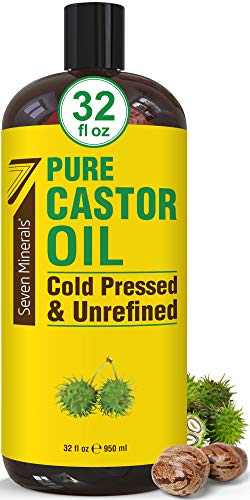
This is a 32-fluid-ounce bottle of topical castor oil for hair, skin, massage, brows, and lashes. Seven Minerals identifies the formula as one ingredient, Ricinus communis castor oil, and describes it as cold-pressed, unrefined, undiluted, non-GMO, and hexane-free. Those are manufacturer statements, not lot-specific independent verification. The brand’s FAQ says the product is intended for external use only. That boundary is important because the product page also discusses constipation relief, despite this product lacking Drug Facts, an oral dose, and the warning framework expected for an OTC castor-oil laxative. The same page makes hair growth, lash growth, healing, joint, muscle, inflammation, and skin-regeneration claims that go beyond ordinary cosmetic conditioning.
This product fits an adult who wants a large, simple topical oil for occasional scalp massage, dry body skin, or use as a carrier oil, and who can tolerate a thick oil texture. The large bottle is most practical for a household that expects repeated external use rather than occasional brow application. It is better suited to buyers who regard it as an emollient and massage oil, not as a proven treatment for hair loss, eyelash growth, pain, inflammation, wounds, or digestive symptoms.
It is not appropriate for anyone seeking an oral constipation product, including people who are pregnant, managing gastrointestinal symptoms, or buying for a child. Choose an OTC product with a Drug Facts label and clinician guidance where needed. It is also a poor fit for people with active eye infection, eyelid inflammation, contact-lens concerns, or a history of cosmetic allergy. Those treating hair loss, eyelash loss, joint pain, inflammatory disease, or wounds should not rely on this product’s marketing claims as treatment evidence.
The most useful health boundary is the manufacturer’s external-use-only statement. Keep it out of the eyes, use clean hands and a clean applicator near lashes, and stop use if irritation occurs. FDA eye-cosmetic guidance emphasizes hygiene and avoiding products near the eyes unless intended for that area. The brand’s lash-line instructions provide only a basic precaution, and no ophthalmic safety testing or hygienic applicator system was verified. No product-specific, lot-matched independent testing record was located, so purity, hexane-free status, contaminant limits, and identity were not independently confirmed. No relevant FDA recall or warning letter for Seven Minerals was identified in the searches reviewed. The brand claims an eco-sized bottle uses less plastic and uses sustainably sourced ingredients, but it does not disclose bottle resin, recycled content, recycling instructions, refill availability, or a verified organic supply-chain certificate. Its public USDA-organic claim was not independently confirmed.
This product is a 16-fluid-ounce castor-oil carrier oil in an amber glass bottle with a separate pump. The manufacturer’s safety data sheet identifies it as 100% castor oil, while the product page describes it as cold-pressed, hexane-free, sourced from India, and intended for hair, scalp, skin, brows, massage, and aromatherapy. Its clearest verified differentiators are Amazon’s display of USDA Organic certification and a published December 2025 GC/MS report that found the listed phthalates below a 5 ppm reporting limit in a tested sample. The report is not a lot-specific certificate and does not establish identity, heavy-metal, pesticide, or residual-solvent results. Directions appropriately limit use to external application, but they also suggest lash-line use while warning users to avoid eye contact.
This suits adults seeking a large bottle of thick topical oil for dry-feeling hair lengths, scalp massage, brows, dry skin patches, body massage, or blending with lighter carrier oils. It is especially practical for people who use a small amount repeatedly and prefer glass storage over a disposable squeeze bottle. The stated directions are most aligned with external cosmetic conditioning and moisture use, not treatment of hair loss or a medical skin condition. Users should patch test first and keep the bottle closed between uses.
It is not for anyone seeking an oral laxative, digestive product, detox remedy, or pregnancy-related self-treatment. This product has external-use directions and lacks the Drug Facts panel, dose directions, contraindications, and warnings expected for an oral castor-oil drug. It is also a poor fit for people with eye irritation, eyelid inflammation, active eye infection, contact-lens concerns, or difficulty keeping oil out of the eye. Those seeking treatment for hair loss, lash loss, scalp disease, or a persistent rash need evidence-based medical guidance instead.
The formula documentation identifies 100% castor oil, and the manufacturer states that it is cold-pressed and hexane-free. Amazon displays USDA Organic certification, which supports the organic claim at the marketplace level, although a public product-specific certificate and handling scope were not located. A published December 2025 GC/MS report from ATS found the listed phthalates below 5 ppm in the sample tested. It should not be read as full contaminant clearance because it is not tied to a consumer lot and does not report heavy metals, pesticides, residual solvents, or oil identity testing. The glass bottle can be reused and is generally more readily recyclable than a full-plastic bottle, though the pump components and local recycling acceptance are unspecified. The manufacturer says its shipping boxes are recyclable, but does not provide product-specific packaging material or refill details. No relevant FDA recall or warning letter for this product or seller was located in the checked sources. External use, patch testing, and avoiding eye contact remain important.
This is a 16-fluid-ounce bottle of castor oil with a pump, marketed for topical use on hair, scalp, brows, lashes, and skin. Ella & Eden describes it as a single-ingredient, cold-pressed, unrefined, hexane-free oil, and says it is bottled in the United States from castor harvested in India. Those composition and processing details are manufacturer statements, not lot-specific independent findings. The listing prominently presents USDA Organic and OneCert messaging, but a current product-specific certificate or matching public operation record was not available during verification. It also makes hair-growth, fuller-lash, scalp-soothing, stomach, joint-care, and wellness-oriented claims. The available human research does not establish that ordinary cosmetic castor-oil application grows scalp hair, lashes, or brows. The product page also did not provide Drug Facts, oral dosing, or the contraindications required for an oral castor-oil laxative product.
This format suits an adult who wants a large bottle of thick oil for external, routine conditioning of dry hair lengths, scalp, cuticles, or rough body areas, and who prefers applying oil with a pump rather than a dropper. It is most appropriate for buyers treating it as a basic cosmetic emollient, not a treatment for hair loss or an internal wellness product. The 16-fluid-ounce size also fits households that expect to use it repeatedly and can store a glass bottle securely.
It is not appropriate for anyone seeking a regulated laxative, constipation treatment, digestive aid, or pregnancy-related remedy. Those uses require an oral product with Drug Facts, dose instructions, contraindications, and medical guidance. It is also a poor fit for people with active eye irritation, blepharitis, recent eye infection, contact-lens concerns, or a need for a sterile lash product. People with sudden or progressive hair loss should seek evaluation instead of relying on cosmetic growth claims.
The strongest concrete material point is the glass bottle with pump, which can reduce reliance on disposable flexible packaging and may be reused. The pump itself is likely a mixed-material component, so it may not be accepted in ordinary glass recycling streams. Ella & Eden also states that the oil is cold-pressed, unrefined, hexane-free, sourced from India, and bottled in the United States. Those are manufacturer statements, not lot-by-lot analytical verification. The organic claim is plausible because the product displays USDA Organic and OneCert messaging, but verification did not locate a current product-specific certificate or a public operation record that clearly covered this item. No public lot-specific contaminant report was found. The more important health limitation is claim scope. Castor oil sold for oral laxative use carries specific regulated warnings, while this listing also refers to stomach and wellness uses without that labeling. Keep it external, avoid getting it into the eyes, stop if irritation occurs, and do not treat its growth claims as clinically established.
This is a 1.7-ounce, 50 mL topical roll-on containing one listed ingredient, organic castor oil from Ricinus communis. The product uses a rose quartz roller for controlled application to dry skin, cuticles, hairline, scalp, hair ends, and reusable castor-oil packs. Its manufacturer also markets it for brows and lashes, although the available directions do not provide detailed eye-contact or applicator-cleaning instructions. The ingredient and organic claim are more than listing-level assertions. Ecocert publicly lists Queen of the Thrones as certified to the USDA National Organic Program for cosmetic care products. The manufacturer states that the oil is cold-pressed, extra virgin, hexane-free, bottled in amber glass, and third-party tested. No current, lot-specific certificate of analysis was publicly available to confirm the particular bottle's identity, pesticide, metal, solvent, or protein-related testing.
This format suits an adult who wants a small, single-ingredient topical oil for dry cuticles, hands, elbows, hair ends, or scalp touch-ups and prefers a controlled roller over pouring oil from a bottle. It is also relevant for someone already using a reusable topical castor-oil pack who wants a less-spill application method. The 50 mL size is portable, but its price mainly makes sense for targeted use rather than frequent whole-body oiling. Patch testing remains sensible for first-time users.
It is not a suitable choice for anyone seeking a laxative, digestive treatment, liver treatment, detox product, hair-regrowth treatment, or clinically established lash-growth treatment. It should not be applied into the eye or used as a substitute for ophthalmic treatment. People who are pregnant should follow the precaution shown for the same oil line and consult an appropriate clinician before use. Those with a castor-oil sensitivity, active dermatitis, open wounds, or an eye condition should avoid self-directed use or seek medical advice first. Keep it away from children.
The most substantiated quality point is the organic claim. Ecocert's public record identifies Queen of the Thrones as certified under the USDA National Organic Program for cosmetic care. The formulation is simple, with 100% castor oil listed and no added fragrance. The manufacturer also states that the oil is cold-pressed, hexane-free, and third-party tested, but it does not publish a bottle-specific certificate showing which contaminants and quality specifications were tested. This is a topical cosmetic oil, not an oral laxative product. The manufacturer says not to drink it, which is important because oral castor oil requires drug-compliant labeling and dosing. The amber glass bottle reduces reliance on a full plastic bottle, though the roller assembly is mixed-material packaging and no refill or end-of-life program was found. No relevant FDA recall or warning letter for this product or company was identified in the checked FDA safety and enforcement resources.
This is an 8.45-ounce, single-ingredient golden castor oil for external hair, scalp, body, brow, lash, makeup-removal, massage, and castor-oil-pack routines. The manufacturer directs users to apply small amounts to skin or hair, and specifically says it is topical only, not intended to be drunk. It also says not to use castor oil during pregnancy. The ingredient listing is castor seed oil only. EWG independently lists the Queen of the Thrones Organic Golden Castor Oil as EWG Verified. The company also publishes third-party reports for phthalates, heavy metals, residual solvents, fatty-acid profile, and microbial measures. Those reports support testing of submitted samples, but the publicly posted heavy-metal and solvent reports do not identify the lot on a buyer’s bottle, and pesticide results were not provided.
This suits an adult who specifically wants a simple external oil for dry body skin, massage, makeup removal, or occasional scalp and hair-length conditioning, and who prefers a roughly 250 mL glass bottle rather than a fragranced blend. It is also relevant for ingredient-minimizing shoppers because the formula is one oil and the named golden castor-oil formula appears in EWG’s Verified directory. Use is most straightforward away from the eyes, on intact skin, with a patch test first if you have reactive skin.
It is not appropriate for anyone seeking a drinkable constipation remedy, digestive treatment, or a product with an OTC Drug Facts label. The manufacturer itself says this oil is topical only. Pregnant people should not use it under the brand’s stated guidance, and breastfeeding users should seek clinician advice. People with an eye infection, inflamed eyelids, contact-lens concerns, or a need for a sterile lash treatment should choose an eye-area product designed and labeled for that purpose. It also is not a substantiated treatment for hair loss, acne, wrinkles, or medical conditions.
The formula is listed as castor seed oil only, without fragrance, preservatives, or fillers. EWG’s directory identifies the named golden castor-oil formula as EWG Verified. The brand publishes reports showing no detected phthalates in several identified batches, plus separate reports for heavy metals and residual solvents. The heavy-metal and solvent reports describe the samples tested, not a lot code a buyer can directly match to this bottle. The company also reports cold pressing and no hexane use. The product is supplied in amber glass, which is preferable to a disposable plastic bottle for light protection and potentially reusable at-home storage. Glass still needs local recycling access, and the brand does not provide a refill system or specific end-of-life instructions. A search of FDA recall and warning-letter resources did not identify a relevant current action for this brand or oil, but cosmetic products are not preapproved by FDA before sale.
This is a 500 ml, 16.9 fl oz bottle of castor oil sold for external hair, skin, brow, lash, and castor-oil-pack routines. Retail listings describe a glass bottle and a single castor-oil ingredient, while the seller describes the oil as cold-pressed, unrefined, hexane-free, and sourced from India before U.S. bottling. Those processing and origin details are manufacturer statements, not independently verified product testing. The most important limitation is the mismatch between broad wellness marketing and the evidence available for this unit. The product is promoted around lash and brow growth, digestive wellness, stomach discomfort, and detox practices, but no product-specific clinical evidence, Drug Facts panel, or publicly available lot-specific certificate of analysis was located. A direct brand response on Target also says this 16.9 fl oz bottle is not certified organic, despite organic wording used in other listings.
This product suits an adult who specifically wants a large bottle of plain castor oil for external body, scalp, or hair-conditioning use and is comfortable treating the seller's cold-pressed and hexane-free statements as unverified manufacturer information. The 500 ml glass format is practical for someone who expects to use oil repeatedly for dry-feeling skin, hair oiling, or a reusable external castor-oil-pack routine. Patch testing first is sensible, especially for people with sensitive skin or a history of reactions to plant-derived oils.
It is not suited to anyone seeking a regulated oral laxative or treatment for stomach symptoms, constipation, inflammation, liver concerns, or detoxification. Those uses need an appropriate medical assessment and, when relevant, an OTC drug product with Drug Facts directions and warnings. It is also not suited to people who need certified-organic sourcing, documented contaminant testing, or a product specifically designed and safety-tested for use at the lash line. Avoid putting a non-ophthalmic oil into the eye, and use extra caution during pregnancy or while breastfeeding.
The bottle is a relatively durable glass format, which can reduce dependence on single-use plastic oil containers when it is reused or recycled through an accepted local glass program. The product is sold in a large 500 ml size and is described as single-ingredient castor oil. The seller also states that it is cold-pressed, unrefined, and hexane-free, but no public lot-linked laboratory report was found to confirm identity, contaminants, residual solvents, or protein-related risk for this bottle. Cold-pressed castor oil is not automatically a safer processing choice. USDA research found trace toxin and protein material in a cold-pressed sample, while well-processed refined samples did not contain detectable toxin. That does not establish a problem with this product, but it makes batch-level testing important. No relevant FDA recall or warning letter for the named seller was located in the searched databases. The clearest substantiation issue is organic status, since the brand stated that this 16.9 fl oz bottle is not certified organic.
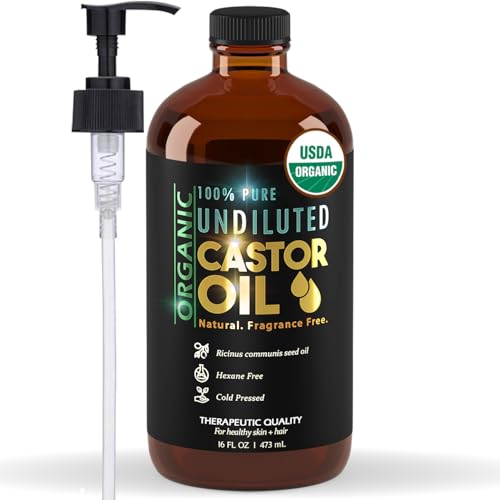
This is a 16 fl oz, 473 mL leave-on castor oil for skin, scalp, and hair. The bottle label identifies one ingredient, certified-organic Ricinus communis seed oil, and directs external use only. It is packaged in amber glass and supplied with a pump, which is useful for dispensing this very viscous oil for body, scalp, or hair conditioning. The label and independent retailer listing describe the oil as cold pressed, unrefined, fragrance free, hexane free, and USDA Organic. The product also carries hair and eyelash growth marketing in its marketplace title. That growth claim is the major limitation. Human evidence does not strongly support plain topical castor oil for hair regrowth or eyelash growth, although it can function as an emollient and may improve the look and feel of dry hair or skin.
This product fits an adult who wants a large bottle of single-ingredient oil primarily for external conditioning of dry body skin, scalp, or hair. The pump and 16 fl oz format are especially practical for repeat use, including small amounts worked through hair lengths or applied to dry areas after bathing. It also suits users who specifically prefer an amber glass bottle and an organic claim displayed on the product. Expectations should stay cosmetic, focused on slip, softness, shine, and moisture retention rather than regrowing hair or eyelashes.
It is not appropriate for anyone seeking an oral castor-oil laxative, since this product is labeled for external use and does not carry the required OTC Drug Facts directions and warnings. It is also not a good fit for people treating hair loss, sparse lashes, eye disease, blepharitis, or other medical conditions. The lash-growth marketing is not matched by a lash-safe applicator, eye-contact directions, or strong human evidence. People with irritated skin, known sensitivity to castor oil, active eye infection, or children in the household should use added caution and keep the bottle out of reach.
The visible bottle label identifies certified-organic castor seed oil as its only ingredient, states external use only, and includes a stop-use instruction for irritation. No product-specific FDA recall or warning letter was located in the searched FDA sources. The external-use boundary matters because regulated oral castor-oil laxatives require Drug Facts labeling, dosing, pregnancy guidance, and other warnings that are not present here. The product displays a USDA Organic seal, which is a meaningful certification claim, but this review did not locate a current public certificate naming the responsible certified handling operation. No public, lot-matched testing report was found for contaminants or identity. The amber glass bottle is durable and potentially recyclable where glass is accepted, but the supplied plastic pump adds mixed-material waste and no refill or end-of-life instructions were identified.
This is a 32-fluid-ounce bottle of Jamaican black castor oil for topical hair, scalp, brow, lash, skin, massage, and carrier-oil use. Seven Minerals identifies one ingredient, Ricinus Communis, or castor, oil, and describes it as unrefined and hexane-free. Those composition and processing statements are manufacturer-stated, not supported by a public lot-specific certificate of analysis. The manufacturer supplies meaningful topical precautions, including external use only, avoid eye contact, patch test first, avoid broken skin, and seek medical advice during pregnancy or nursing. However, its marketing also promises thicker hair, lashes, and brows, joint comfort, healing, and constipation relief. The topical product is not presented with an OTC Drug Facts label or oral dosing directions, while strong human evidence does not support castor oil as a hair or eyelash growth treatment.
This product suits an adult who specifically wants a large, simple topical oil for scalp massage, conditioning dry body areas, or blending with essential oils. It is most practical for households that use castor oil regularly and can keep a 32-ounce bottle tightly closed in a cool, dark place. Buyers should treat it as a cosmetic emollient and massage oil, not as a proven treatment for shedding, sparse lashes, pain, digestive symptoms, or a skin disease.
It is not suited to anyone seeking an oral laxative, constipation treatment, or pregnancy-related remedy. A product intended for ingestion needs an appropriate OTC drug label with Drug Facts, dosing, contraindications, and warnings. It is also a poor fit for people with active eye irritation, eye infection, contact-lens concerns, broken skin, known sensitivity to castor oil, or a need for verified batch contaminant testing. People seeking evidence-based hair regrowth or eyelash growth treatment should not rely on this oil for that purpose.
The clearest health positive is the manufacturer’s topical-use boundary. It says to keep the oil out of the eyes and mucous membranes, patch test before use, avoid damaged skin, stop after irritation, and consult a clinician during pregnancy or nursing. These are useful safeguards for a thick oil marketed for lashes and brows. The site also identifies a single ingredient and says the oil is hexane-free, but public lot-specific testing was not located to independently confirm purity, contaminants, or processing claims. The brand says the larger bottle reduces plastic use, but does not clearly disclose bottle resin, recycled content, recyclability instructions, refill options, or independently certified lower-input sourcing for this product. Searches of FDA recall and warning-letter resources did not identify a relevant action naming this product or brand as of August 16, 2026. That is not a substitute for batch testing or traceable quality documentation.
This is a 32-ounce plastic bottle of single-ingredient castor oil intended for external hair, scalp, skin, brow, and lash-area care. Ella & Eden identifies the ingredient as castor seed oil and describes the oil as cold-pressed, unrefined, hexane-free, and bottled in the United States. Those are manufacturer statements, not independently verified lot specifications. ([ellaandeden.com](https://www.ellaandeden.com/products/castor-oil-32oz?utm_source=openai)) The company markets it for moisturizing dry skin, conditioning hair and scalp, and making lashes and brows look fuller. The large bottle is practical for repeated topical use, but the reviewed product page does not show a lot-specific certificate of analysis, detailed eye-use directions, or prominent external-use and eye-contact warnings. Its hair and lash growth language goes beyond simple cosmetic conditioning, while relevant human evidence for hair regrowth from this use was not located. ([ellaandeden.com](https://www.ellaandeden.com/products/castor-oil-32oz?utm_source=openai))
This product fits an adult who specifically wants a large bottle of plain castor oil for occasional external conditioning of dry body skin, hair lengths, or scalp, and who is comfortable patch testing first. It is most practical for households that use oil often enough to justify 32 ounces and can keep the bottle clean, tightly closed, and away from heat. The manufacturer's fragrance-free, no-filler description may also suit buyers seeking a minimal-ingredient topical oil. ([ellaandeden.com](https://www.ellaandeden.com/products/castor-oil-32oz?utm_source=openai))
It is not suited to anyone seeking a proven treatment for hair loss, lash growth, scalp disease, blepharitis, or another medical condition. It is also a poor match for consumers intending to drink it for constipation, since this product is marketed as a beauty oil and does not present the Drug Facts, oral dose, interaction information, or contraindications required on OTC castor-oil laxatives. People with eye irritation, active eye infection, sensitive skin, or a history of reactions to topical oils should avoid lash-line use and seek clinician guidance where appropriate. ([dailymed.nlm.nih.gov](https://dailymed.nlm.nih.gov/dailymed/lookup.cfm?setid=a1ca668a-3bf9-46a9-8a4f-5cb61547bb81&utm_source=openai))
Ella & Eden presents this product as USDA organic, cold-pressed, unrefined, hexane-free, vegan, and cruelty-free. The brand says its castor oil is expeller-pressed, sourced as Ricinus communis seed oil, and bottled and quality-checked in the United States. However, it says certification documents are available on request, and this review did not locate a matching public certificate, public registry confirmation, or current lot-specific contaminant report for this bottle. ([ellaandeden.com](https://www.ellaandeden.com/products/castor-oil-32oz?utm_source=openai)) The 32-ounce version is sold in plastic, not the brand's separate glass-and-pump option. No material-resin, recycled-content, refill, or end-of-life recycling instructions were found for this bottle. No relevant FDA recall, warning letter, or enforcement action for Ella & Eden was located in the searched federal resources, but absence of a listed action is not evidence of lot testing. For eye-area use, cleanliness and avoiding use on irritated or infected eyes remain important. ([ellaandeden.com](https://www.ellaandeden.com/products/castor-oil-32oz?utm_source=openai))


