Best Overall
40% Coupon

VitaUp D-Mannose Cranberry Vitamin C
Combines D-Mannose, cranberry, and vitamin C.
Supports urinary tract health naturally.
Easy-to-swallow, convenient daily supplement.
 Lauren Wilson
Combines D-Mannose, cranberry, and vitamin C.
Supports urinary tract health naturally.
Easy-to-swallow, convenient daily supplement.

Fast-acting relief for urinary tract issues.
Contains clinical-strength D-Mannose and hibiscus.
Supports natural urinary tract health for women.

Combines D-Mannose, cranberry, and hibiscus.
Offers vitamin C for enhanced support.
Targets urinary tract and bladder health.

High potency formula for effective kidney support.
Includes cranberry for enhanced urinary tract health.
Large 240-count bottle for extended use.

Quick dissolution for easy mixing in drinks.
Supports urinary tract and bladder health.
Vegan-friendly formula for diverse dietary needs.

Combines D-Mannose with probiotics and cranberry.
High potency with 2000 mg per serving.
Gluten-free, non-GMO, and all-natural ingredients.
Clinically tested for effective urinary support.
Suitable for both women and men.
High-quality, trusted brand for bladder health.

High potency with 1000 mg per serving.
Certified kosher and non-GMO ingredients.
Long-lasting 3-month supply.

Combines D-Mannose with cranberry extract.
Supports urinary tract health effectively.
High dosage at 1000mg per serving.

Clinically tested for effective urinary tract support.
Includes cranberry and hibiscus for added benefits.
Vegan-friendly and made in the USA.
That makes label accuracy and responsible claims especially important. Start with the actual D-mannose amount per serving, then check whether the serving size, scoop weight, capsule count, number of servings, and daily directions agree. A headline such as “2,000 mg” may refer to a full serving of several capsules, a scoop, or an entire blend—not necessarily to each capsule or to D-mannose alone. In combination products, cranberry, hibiscus, vitamin C, and other actives should each have their own amounts. “Probiotic” claims should identify strains and state the CFU amount through expiration; a total CFU number without strain quantities or an expiration guarantee is incomplete. Proprietary blends and undeclared botanical quantities make meaningful comparison difficult.
A credible quality claim is more than “laboratory tested,” “GMP,” or “FDA-registered facility.” The strongest evidence is a current, lot-matched certificate of analysis from an ISO/IEC 17025-accredited laboratory, showing identity, potency, methods, specifications, and pass/fail results for relevant contaminants such as heavy metals and microorganisms. For products with powders, botanicals, or processing steps, residual-solvent and other impurity results may also matter. A facility certification supports manufacturing controls but does not prove that the finished bottle contains its labeled dose.
Independent certification should be checked against the exact finished product in a public register. Relevant programs in the supplied reviews include USP Verified, NSF Certified Dietary Supplements, NSF Certified for Sport, Informed Sport, and Informed Choice. Organic and non-GMO claims should likewise be traceable through the USDA Organic Integrity Database or the Non-GMO Project verification search. A badge shown on a package, a manufacturer statement, or certification of a different product is not equivalent to a searchable certification for the product being purchased.
Environmental information is limited across this category. Look for identified packaging materials, accurate recycling instructions, recycled content, and substantiated organic or non-GMO sourcing claims. “Vegan,” “natural,” “made in the USA,” or “eco-friendly” does not by itself describe packaging waste or recyclability. A pouch may use less material than a bottle, but the supplied reviews do not provide enough product-specific information to assume that it is the lower-waste choice.
Finally, none of these products should be used to self-treat a possible active UTI. Fever, chills, flank or back pain, vomiting, blood in the urine, severe pain, or persistent or worsening symptoms warrant timely medical assessment. Pregnancy and urinary symptoms in men also require clinician guidance; the supplied reviews additionally flag children, kidney or complicated urinary conditions, immune compromise, medication use, and nursing as situations for professional advice. Products carrying California warnings for mercury or lead deserve particular caution when no current lot report is available. No product-specific lot report was publicly available for any supplied product, so buyers should not treat third-party-testing language as proof of the contents of the bottle in hand.
The topics below focus on what can be checked from a label, product record, certification register, or current lot report—not on customer ratings or promotional language. Scores distinguish clearer, better-supported products from products with missing warnings, incomplete formulas, or unverifiable testing.
This measures whether the label says the product is not treatment for an active UTI and directs people with fever, flank or back pain, vomiting, blood in urine, pregnancy, male urinary symptoms, or persistent or worsening symptoms to care. Higher-scoring products included more safety framing; lower-scoring products used treatment or fast-relief language without adequate triage.
This measures whether the labeled D-mannose form and amount are clear and whether added urinary-health ingredients are quantitatively declared. Higher-scoring products stated serving amounts without proprietary blends; lower-scoring products left botanical amounts unclear or did not clearly connect a headline dose to a serving size.
This measures credible finished-product testing for heavy metals, microorganisms, residual solvents, and other impurities. Higher-scoring products had stronger stated testing controls, while lower-scoring products lacked usable evidence. Manufacturer claims alone were not enough: no supplied product had a publicly available, current lot report confirming the bottle’s results.
This measures disclosure of active and inactive ingredients, allergens, sweeteners, colors, and capsule or gummy materials. Higher-scoring products named their excipients and avoided proprietary blends; lower-scoring products, especially gummies or blend products, left some additives or quantities unclear. A short formula is useful only when the entire formula is actually disclosed.
This measures whether serving size, scoop mass, unit count, daily directions, and probiotic strains and CFU are internally consistent. Higher-scoring products made daily intake easy to calculate. Lower-scoring examples had conflicting directions, unclear scoop weights, very high capsule counts, or probiotic totals without strain-level quantities or viability through expiration.
This measures whether intended urinary-health use and dose reflect the uncertainty of human evidence. Higher-scoring products avoided presenting D-mannose as dependable prevention or treatment; lower-scoring products used prevention, recovery, cleansing, or symptom-relief framing. The key supplied evidence found no recurrent-UTI prevention benefit at 2 g daily in a large placebo-controlled trial.
This measures whether marketing avoids unsupported claims to prevent, treat, cure, flush, cleanse, or defend against UTIs and kidney or bladder disease. Higher-scoring products used a supplement disclaimer and more limited language. Lower-scoring products promised fast relief, treatment, infection prevention, detoxification, or antibiotic-like effects despite limited or negative evidence.
This measures certification of the exact finished product through a public, credible register for identity, potency, and contaminant controls. Higher scores reflect stronger certification evidence or recognizable product-level credentials; lower scores reflect badges, facility claims, or certifications that could not be matched to the finished product. No supplied product had clearly documented USP or NSF finished-product certification.
This measures whether a readable certificate matches the bottle’s lot and shows the laboratory, methods, specifications, results, and pass/fail status. Scores varied modestly, but no supplied product provided the complete public evidence needed for a high-confidence lot check. “Third-party tested” without a named laboratory and results remains an unverified claim.
This measures traceable company and product information alongside FDA recall, warning-letter, adulteration, and misbranding history. Higher-scoring products had no product-specific action identified in the reviewed records and clearer accountability; lower scores reflected brand enforcement history, recalls involving other products, or disease-claim concerns. A clean search is not proof of batch quality.
This measures whether packaging materials, recycled content, recyclability, and organic or non-GMO claims are identified and substantiated. Scores were generally moderate because most products did not disclose bottle resin, pouch material, or package-specific recycling instructions. The clearest supplied packaging claim was a bottle made with 100% post-consumer recycled resin; broad “natural,” vegan, or non-GMO wording was not enough.
This is a 90-capsule vegan supplement marketed for routine urinary tract and bladder support. The manufacturer states a two-capsule daily serving provides 1,000 mg D-mannose, 400 mg cranberry fruit extract, and 30 mg vitamin C, making the bottle a 45-day supply. The ingredient amounts and directions are corroborated by an independent retailer, although that retailer also describes 1,000 mg D-mannose as being in each capsule, which conflicts with the 45-serving, two-capsule directions. The Amazon page says the product is not intended to diagnose or treat disease. It does not provide the urgent-care guidance needed for possible active urinary infections, and no lot-specific certificate of analysis or finished-product certification was located.
This product suits an adult who wants a capsule-based, manufacturer-stated vegan and gluten-free supplement for a routine wellness regimen, and who can use the listed two-capsule daily serving. It is most relevant to someone seeking a quantified combination of D-mannose, cranberry extract, and vitamin C rather than cranberry juice. Its 90-capsule format is intended to last 45 days. Buyers should view it as a supplement, not as a substitute for diagnosis, testing, or prescribed care for urinary symptoms.
It is not appropriate for anyone trying to self-manage possible active UTI symptoms, especially fever, chills, flank or back pain, vomiting, blood in urine, severe pain, or worsening symptoms. Pregnant people, men with urinary symptoms, children, and people with recurrent or complicated urinary problems should seek clinical advice rather than rely on this product. People taking warfarin should discuss cranberry use with a clinician. It also does not suit buyers who require a publicly verifiable product certification or a current lot-specific test report before use.
The product lists D-mannose, cranberry fruit extract, and vitamin C in stated amounts, and it is marketed as vegan and gluten-free. The manufacturer also states that it is made in the United States in a GMP-certified facility and tested by a third-party laboratory. Those are manufacturer claims, not publicly checkable confirmation of this finished product. No current lot-specific report was made available that shows laboratory identity, methods, contaminant limits, or results. Human evidence does not support using D-mannose as reliable prevention for recurrent UTIs. A 2024 placebo-controlled trial used 2 g daily and found no meaningful prevention benefit. Cranberry may help reduce recurrent UTIs in some women, but effectiveness depends on the formulation and cranberry proanthocyanidin content, which this product does not declare. No package material, recyclability instruction, organic certification, or independently verified non-GMO claim was found. No product-specific FDA recall, warning letter, or health-fraud listing was identified in the reviewed public sources.
This is a 60-count vegetarian capsule supplement intended for urinary-health support. The stated serving is two capsules, providing 800 mg D-mannose and 200 mg hibiscus flower extract, or 30 daily servings. The manufacturer says it can be taken twice daily for immediate support. ([store.eunatural.com](https://store.eunatural.com/pages/urinary-harmony-1006)) Its dose, active ingredients, and listed capsule ingredients are concrete and consistently reported by the manufacturer and a retailer. However, no public product-specific certification, lot-matched certificate of analysis, or independent finished-product contaminant report was identified in the checked sources. The manufacturer markets rapid relief, bacterial flushing, cleansing, and protection, but a large 2024 placebo-controlled trial found daily D-mannose did not reduce recurrent UTI outcomes in women, and the studied daily dose was 2 g rather than this product's 800 mg. ([jamanetwork.com](https://jamanetwork.com/journals/jamainternalmedicine/fullarticle/2817488))
This product is most suited to an adult who specifically wants a capsule-format D-mannose and hibiscus supplement with a plainly stated, lower-dose daily serving. It may also suit someone avoiding dairy, wheat, and gluten who prefers a 30-day bottle rather than loose powder. That use should be framed as optional urinary-health supplementation, not as a substitute for medical evaluation or evidence-based treatment of urinary symptoms. The formula's active quantities are declared, but they are not independently verified through a public product certification or lot report.
It is not appropriate as self-treatment for a possible active urinary infection, especially with fever, chills, flank or back pain, vomiting, visible blood in urine, severe pain, pregnancy, male urinary symptoms, or symptoms that persist or worsen. Those situations need timely clinical assessment. It also does not fit buyers seeking a product with publicly verifiable third-party certification, current lot-specific contaminant testing, or human evidence that its stated 800 mg daily dose reliably prevents recurrent urinary infections.
The usable health information is the declared formula, two vegetarian capsules provide 800 mg D-mannose and 200 mg hibiscus flower extract. The listed non-active ingredients are cellulose capsule material, organic rice protein, and organic rice flour. A retailer listing also notes that the manufacturing facility processes several major allergens, including milk, wheat, soy, sesame, tree nuts, peanuts, shellfish, fish, and eggs. ([iherb.com](https://www.iherb.com/pr/eu-natural-urinary-harmony-60-vegetarian-capsules/102755?utm_source=openai)) The manufacturer says its facilities are FDA registered and inspected to dietary-supplement manufacturing standards, and says potency is laboratory verified. Those are manufacturer statements, not public product-specific certification or lot data. No recyclable-material identification, package-specific recycling instruction, organic certification for the finished product, or substantiated lower-waste packaging claim was identified. The bottle is a conventional 60-capsule single-use container, so local recycling acceptance depends on the material and local program.
This is a 120-capsule dietary supplement for adults. A two-capsule serving lists 1,000 mg of D-mannose, plus 100 mg cranberry fruit 4:1 extract, stated to provide 400 mg cranberry fruit, 200 mg hibiscus flower, and 20 mg vitamin C. The brand directs adults to take two capsules once or twice daily with food and water, making the bottle a 30 to 60 day supply depending on use. The ingredient amounts and inactive ingredients are clearly presented on the manufacturer label and are independently recorded in the NIH dietary supplement label database. ForestLeaf states that every lot is tested by independent laboratories for heavy metals and microbiological components, but it does not publish a readable, lot-matched test report for this product. Its marketing also makes explicit UTI prevention, treatment, symptom-relief, and quick-fix claims, which are not supported by current clinical evidence and are not appropriate instructions for a possible active infection.
This product is most suited to an adult who specifically wants a capsule format with a plainly disclosed D-mannose, cranberry, hibiscus, and vitamin C formula, and who understands that the label amounts are declarations rather than independently verified potency results. The 120-capsule bottle suits someone comfortable with taking two capsules daily, or potentially twice daily, and who has reviewed the cranberry and vitamin C content with a pharmacist if they use prescription medicines. It is for general supplement use only, not self-treatment of urinary symptoms.
It is not appropriate for anyone trying to manage a suspected current UTI instead of seeking clinical assessment. Fever, chills, flank or back pain, nausea, vomiting, or blood in urine can signal a more serious infection and need prompt medical care. Pregnant people, people with male urinary symptoms, children, people with kidney disease, and those with persistent or recurrent symptoms should seek individualized medical guidance. It is also a poor fit for buyers who require publicly available lot-specific contaminant results or independently certified finished-product potency.
The useful transparency point is the label itself. It identifies D-mannose, cranberry extract, hibiscus, vitamin C, and the capsule additives in individual amounts, rather than using a proprietary blend. ForestLeaf states that its capsules are vegetarian and that the product is free of gluten, dairy, soy, nuts, sugar, and artificial additives. Those are manufacturer statements, not independent finished-product certification. ForestLeaf says it tests every lot for heavy metals and microbiological components through independent laboratories, and also describes pesticide and herbicide testing. However, no lot-matched report for this product was publicly available to confirm the laboratory, methods, specifications, or measured results. No product-specific independent certification was located in the major public supplement registers. The brand provides a customer-service contact, but the product page does not identify bottle material, recycled content, or recycling instructions. Its UTI prevention and treatment marketing is especially important because clinical evidence does not support relying on D-mannose for that purpose.
This is a 240-capsule D-mannose and cranberry supplement intended for adults. The stated use is two capsules daily with water, making the bottle a 120-serving supply. An independently listed label for this product line identifies 1,000 mg of D-mannose and 200 mg of cranberry fruit 4:1 extract per two-capsule serving, plus 1 g of added sugar. The active amounts and common capsule additives are disclosed, but no lot-matched certificate of analysis was publicly available. The manufacturer and retailers describe third-party testing, yet the exact product was not found in the public NSF or USP finished-product registers. Its marketing also goes beyond routine wellness language with kidney defense, cleanse, and flushing claims, despite limited evidence for D-mannose in recurrent UTI prevention.
This product is most suited to an adult who wants a capsule-format D-mannose product for a self-directed urinary wellness routine, understands that it is not a UTI treatment, and values a label with stated D-mannose and cranberry amounts rather than a proprietary blend. The 240-capsule size is practical for a household seeking a roughly four-month supply at the stated two-capsule daily use. It is also relevant for adults avoiding gelatin, based on the listed hypromellose capsule and vegan positioning.
It is not appropriate as a response to suspected active urinary infection, especially with fever, chills, side or back pain, nausea or vomiting, blood in urine, pregnancy, male urinary symptoms, or persistent and worsening symptoms. Those situations warrant timely clinical assessment rather than reliance on a supplement. It is also a poor fit for people who need a product-specific independent certification, current lot test results, or transparent lead testing. Children, pregnant or nursing people, and people taking medicines should follow the label's direction to consult a clinician first.
The clearest quality information is the independently listed supplement panel. It identifies 1,000 mg D-mannose and 200 mg cranberry fruit 4:1 extract per serving, along with disclosed capsule excipients. Nature's Craft and retailers state that the product is third-party tested, but no readable, lot-specific report was made public for verification. The brand has an NSF dietary-supplement listing for a separate Liver Support product, not this formula. A notable safety concern is the manufacturer's California Proposition 65 warning that this product can expose users to lead. That warning does not state the measured lead amount or the specific lot involved. No public packaging-material identification, recycling instructions, organic certification, or product-specific non-GMO verification was located. The bottle format is inherently single-use, while the brand's sustainable-sourcing language lacks package-level substantiation.
This is an unflavored, bagged D-mannose powder. An independently listed Supplement Facts panel identifies one approximately 2 g scoop as providing 2 g of D-mannose, 2 g carbohydrate, and 2 g sugars, with no other ingredients. The 12 oz bag is listed as 170 scoops. It is intended to be stirred into a beverage rather than swallowed as capsules. The manufacturer describes a water-soluble, vegan-friendly, non-GMO formula and says it is third-party lab tested, but it does not publish a lot-matched certificate of analysis or a publicly searchable finished-product certification. Directions are not fully consistent across sources. The manufacturer currently says to take one scoop twice daily, while an independent retailer label says one scoop daily. Its urinary-support positioning should be read cautiously, since stronger recent clinical evidence did not find D-mannose effective for preventing recurrent UTIs.
This product fits an adult who specifically wants plain D-mannose powder, prefers to mix a measured scoop into drinks, and wants to avoid capsule ingredients or multi-ingredient urinary products. The 12 oz bag and listed 170 scoops suit someone planning regular use who can keep track of their own intake. It is most appropriate for wellness use with realistic expectations, not as a proven approach to preventing recurrent infection. Because the daily directions conflict, cautious users should clarify use with a clinician or the seller.
It is not appropriate as self-treatment for a suspected active UTI or for anyone delaying medical evaluation of fever, chills, flank or back pain, vomiting, blood in urine, severe pain, or persistent or worsening urinary symptoms. Pregnant or nursing people, people taking medicines, people with diabetes or carbohydrate-monitoring needs, and people with kidney disease should seek clinician advice before use. Men with new urinary symptoms and people with recurrent, complicated, or culture-negative symptoms need diagnosis rather than reliance on a urinary-health supplement.
The key health positive is formulation simplicity. Independent retailer label information lists 2 g of D-mannose per scoop and no other ingredients, while the manufacturer describes the powder as free of common added flavors, fillers, and several major food allergens. The manufacturer also states that its products undergo third-party testing for heavy metals and microorganisms. That testing claim cannot be independently checked for this bag because no current lot-matched report, laboratory identity, methods, or numerical results were made public. No product-specific FDA recall or warning letter was located in the searches performed, but that is not a substitute for release-test documentation. Evidence does not support treating this as reliable UTI prevention. The flexible pouch uses less rigid packaging than a bottle, but its material, recycled content, and local recycling instructions are not clearly disclosed, so its environmental impact and recyclability cannot be verified.
This is a flavored powder supplement for adults, sold in a 67-serving container. The labeled serving is a 2.75 g level scoop that provides 2,000 mg of D-mannose. The directions on the label say to mix one scoop with 4 to 6 ounces of water or unsweetened juice, one to two times daily. It also contains 500 mg cranberry fruit juice extract and a proprietary 12-strain probiotic blend. Those composition figures are manufacturer label declarations preserved in the NIH label database, not independent assay results. The manufacturer states that the blend supplies 5 billion CFU of probiotics, but the individual strain quantities and CFU through expiration are not disclosed. Most importantly, the company’s own product page promotes the powder as a treatment and fast relief for urinary tract infections. That framing is not supported by the current human evidence for 2 g daily D-mannose and can encourage unsafe self-treatment of an active infection.
This format may suit an adult who specifically wants a scoopable D-mannose product rather than capsules, can tolerate a mildly sweet powder, and understands that the listed 2,000 mg dose, cranberry extract, and probiotic content are manufacturer declarations rather than independently verified lot results. It is most appropriate as a supplement discussed with a clinician for general urinary-health routines, not as a substitute for testing or prescribed care when urinary symptoms occur.
It is not appropriate for anyone trying to treat a current suspected UTI, especially people with fever, chills, flank or back pain, nausea or vomiting, blood in urine, or symptoms that persist or worsen. Pregnant people should contact their obstetric clinician promptly for UTI symptoms. Men and people with pelvic or perineal pain need medical assessment because urinary symptoms can reflect more complicated infection or prostate involvement. It also does not suit buyers requiring independently certified potency or lot-level contaminant testing.
The ingredient panel provides more detail than a simple D-mannose powder. It declares 2,000 mg D-mannose and 500 mg cranberry fruit juice extract per scoop, and names 12 probiotic strains. However, the probiotic blend has no individual strain amounts, and no public lot-matched certificate of analysis was located to confirm identity, heavy metals, microbiological quality, residual solvents, or probiotic count at expiration. The manufacturer states that the product is non-GMO, kosher, vegetarian, and made in the United States. No product-specific public verification was found for the non-GMO claim, and the packaging material and recycling instructions are not clearly identified. FDA issued Zazzee Naturals a warning letter in October 2023 over unapproved drug claims for a different product. Its relevance here is heightened by this product page's UTI-treatment language and its inaccurate FDA-certified statement. FDA does not approve dietary supplements for safety or effectiveness.
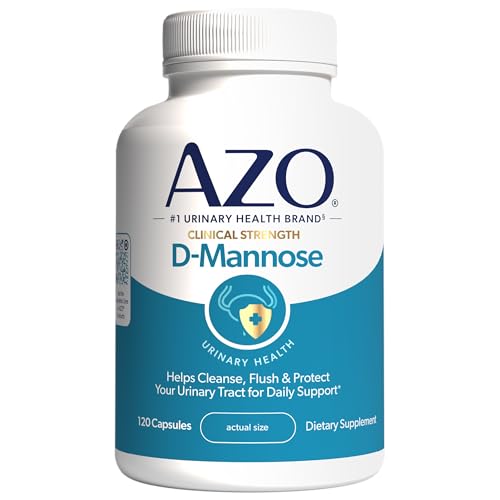
AZO D-Mannose is a 120-capsule dietary supplement intended for daily urinary-tract health support. The labeled serving is four capsules once daily, providing 2,000 mg of D-mannose, 2 g of added sugar, and 30 servings per bottle. The manufacturer lists hydroxypropyl methylcellulose and magnesium stearate as the only other ingredients. The labeled ingredient amount and serving instructions are corroborated by the manufacturer page and the NIH dietary-supplement label record. An independent ConsumerLab review included this AZO product in its 2023 D-mannose testing roundup, whose published aggregate findings reported no mislabeled selected products or significant heavy-metal contamination. That is useful quality evidence, but it is not a current, bottle-specific certificate of analysis. The product is marketed to cleanse, flush, and protect the urinary tract, claims that are not well aligned with current clinical evidence.
This product fits an adult who has discussed D-mannose with a clinician and specifically wants a plainly labeled, once-daily 2,000 mg capsule routine for general urinary-health support. It may also suit someone who prefers a short formula without a proprietary blend and can comfortably take four capsules at once. Its 30-day supply is concrete for people tracking a monthly supplement routine. This use should remain separate from diagnosing, treating, or self-managing suspected infection.
It is not suited to anyone relying on it to treat an active urinary infection or reliably prevent recurrent infections. Seek timely medical care for fever, chills, flank or back pain, vomiting, blood in urine, severe illness, or symptoms that persist or worsen. Pregnant people, men with urinary symptoms, children, people with kidney disease, diabetes, immune suppression, recurrent complicated infections, or people taking medicines should obtain individualized medical guidance instead of using this as a stand-alone response.
The label identifies 2,000 mg D-mannose per daily serving and names the two added ingredients, hydroxypropyl methylcellulose and magnesium stearate. It also supplies 2 g of added sugar per serving. The manufacturer states that the product is drug-free, gluten-free, dairy-free, and non-GMO, but a current publicly searchable finished-product certification or lot-specific laboratory report was not located. Independent ConsumerLab testing included this product in a D-mannose roundup. Its published aggregate report found no selected products mislabeled for D-mannose or significantly contaminated with heavy metals, though it does not replace current lot testing for microbes, residual solvents, and metals. No product-specific FDA recall or warning letter was identified in the reviewed sources. The bottle is single-use packaging, and the manufacturer does not clearly identify the resin, recycled content, or local recycling route.
This is a capsule-form D-mannose supplement marketed for urinary-tract support. The manufacturer states that each two-capsule serving supplies 1,000 mg of D-mannose, with 180 vegan capsules and 90 servings per bottle. A National Institutes of Health dietary-supplement label record independently matches the 1,000 mg serving, two-capsule serving size, 180-capsule container, and label-listed 1 g of sugar. The product is a single-ingredient-style formula rather than a cranberry or probiotic blend. However, its marketing goes substantially beyond support language, including claims that it can fight, prevent, treat, and provide quick relief from UTIs. Those claims conflict with current human evidence, including a 2024 placebo-controlled trial in which daily D-mannose did not prevent recurrent UTIs in the studied population. The product page also does not provide adequate active-UTI triage warnings.
This format is most suited to an adult who specifically wants a plainly dosed D-mannose capsule, prefers a vegan capsule, and can use a two-capsule 1,000 mg serving. It may also suit someone avoiding multi-ingredient urinary products, subject to the manufacturer's stated allergen exclusions. It should be viewed as a dietary supplement with an uncertain role in urinary health, not as an alternative to testing, diagnosis, antibiotics, or clinician-guided prevention for recurrent infections.
It is not appropriate for someone trying to self-treat an active or suspected UTI, particularly with fever, chills, flank or back pain, vomiting, visible blood in urine, worsening symptoms, or symptoms that do not resolve promptly. Pregnant people, men with urinary symptoms, children, people with diabetes or medically complex urinary conditions, and anyone with recurrent infections should seek individualized clinical advice rather than rely on the product's treatment-oriented marketing. People requiring independently certified potency or contaminant testing should also choose a product with public finished-product evidence.
The usable product facts are fairly clear. The National Institutes of Health label record supports the declared 1,000 mg D-mannose serving and 180-capsule, 90-serving bottle. The manufacturer states that the product is vegan, non-GMO, gluten-free, and free of several common allergens, but no product-specific certification register was found to independently confirm those claims. The packaging materials and local recycling instructions are not identified. Quality transparency is limited. The manufacturer says ingredients are third-party tested, yet no current lot-specific report showing laboratory identity, methods, specifications, and contaminant results was publicly available. Its statement that the product is made in an FDA certified facility is misleading because FDA does not approve dietary supplements or certify facilities in that sense. Separately, FDA sent Dexterity Health, doing business as Zazzee Naturals, a warning letter on October 30, 2023 over unapproved-drug claims for another product.
This is a 240-capsule adult D-mannose supplement sold for urinary and bladder support. The listed use is two capsules daily, making the stated 1,000 mg daily D-mannose amount a 120-day supply. PlantVital lists cranberry juice powder, hibiscus flower extract and dandelion root extract alongside D-mannose in a vegetable cellulose capsule. An independent product-label transcription reports 500 mg D-mannose per capsule, plus cranberry juice powder, hibiscus and dandelion, which is consistent with the stated 1,000 mg daily total. It also identifies microcrystalline cellulose, magnesium stearate and silicon dioxide that are not listed on PlantVital's ingredient line. PlantVital says the product is third-party lab tested and non-GMO certified, but no public product-specific certification record, lot-matched test report, or laboratory results were located.
This product is most suited to an adult who specifically wants a long-duration capsule format containing a manufacturer-stated 1,000 mg daily D-mannose dose with cranberry, hibiscus and dandelion, and who understands it is a supplement rather than UTI treatment. The 240-capsule count can be practical for someone already choosing to use these ingredients as part of a clinician-informed routine. They should be comfortable with the absence of publicly available lot-specific testing and independently verifiable finished-product certification.
It is not appropriate for someone trying to self-treat an active or suspected UTI, especially with fever, chills, flank or back pain, vomiting, visible blood in urine, severe pain, persistent symptoms, or worsening symptoms. Those signs need timely medical assessment. Pregnant people, men with urinary symptoms, children, and people with kidney disease or complex medical histories should seek clinical advice rather than rely on this product. It is also a poor fit for buyers who require public contaminant testing, exact current excipient disclosure, or independently verified certification.
The important health issue is marketing, not a confirmed contaminant finding. PlantVital describes this product as supporting UTI reduction and treatment, flushing urinary impurities, kidney cleansing, and serving as an alternative to antibiotics. Those claims could encourage delay of appropriate care for a bacterial urinary infection. Current higher-quality evidence does not support relying on daily D-mannose to prevent recurrent UTIs, and the product supplies less than the 2 g daily dose studied in the large 2024 placebo-controlled trial. PlantVital states that the formula is vegan, non-GMO certified, free of several major allergens, and third-party lab tested. The certification issuer, searchable certification record, laboratory identity, and current lot results were not publicly available. No specific FDA warning letter or recall for this product or brand was located in the searched U.S. sources. Packaging material, recycled content, recyclability instructions, and substantiated environmental practices were not disclosed.
This is a 120-capsule vegan dietary supplement intended for adult urinary-health routines. The manufacturer states that one daily serving is four capsules, supplying 2,000 mg D-mannose, 200 mg hibiscus flower extract, and 50 mg of 10:1 cranberry fruit extract. That makes each bottle a 30-day supply at the stated use. The stated ingredient and dose disclosure is unusually concrete for a multi-ingredient urinary supplement, including rice flour, magnesium stearate, silicon dioxide, and a vegetable capsule. The manufacturer also states that batches are tested by ISO 17025 laboratories for heavy metals and microbiology, but no current lot-matched certificate of analysis was publicly supplied. Most importantly, the 2 g daily D-mannose amount matches a large 2024 placebo-controlled trial that did not reduce medically attended recurrent UTIs in women, so it should not be read as a proven UTI prevention or treatment product.
This product is most relevant to an adult who wants a capsule-based, fully itemized D-mannose, cranberry, and hibiscus supplement for a general urinary-wellness routine, rather than loose powder. It may also suit someone who wants a stated 2,000 mg daily D-mannose dose and can comfortably take four capsules a day. The disclosed inactive ingredients can help a buyer screen the formula before use. Its use should remain supplemental and not replace evaluation of urinary symptoms.
It is not appropriate as self-treatment for a suspected active UTI, especially with fever or chills, back, side, or groin pain, nausea or vomiting, or bloody urine. Those can be signs of kidney infection and need prompt clinical care. It is also a poor fit for people seeking a supplement with proven recurrent-UTI prevention, a publicly verifiable finished-product certification, or a lot-specific certificate of analysis. Pregnant or nursing people, people taking medicines, and people with persistent urinary symptoms should consult a clinician before use.
The manufacturer provides a usable ingredient list and states that the product is vegan, gluten-free, non-GMO, and free of dyes. It also states that batches undergo third-party microbiology and heavy-metal testing through ISO 17025 laboratories. These are useful quality-control claims, but the review did not find a current lot-matched report showing the laboratory, methods, specifications, and measured results. No product-specific USP or NSF certification was identified in the reviewed public registers. The bottle is described by the manufacturer as black BPA-free plastic with a safety neckband and undercap seal. A Batch ID and Best By date are said to appear on the bottle bottom. Black plastic can protect light-sensitive contents, but the product materials do not provide package-specific recycling instructions, recycled-content information, or a substantiated lower-waste packaging claim. No product-specific FDA recall or health-fraud listing was located in the reviewed U.S. FDA sources.


