Best Overall
$4 Coupon

EnaSkin Dark Spot Remover Serum
Targets various skin discolorations effectively.
Contains advanced formula with niacinamide.
Suitable for both face and body use.
 Lauren Wilson
Targets various skin discolorations effectively.
Contains advanced formula with niacinamide.
Suitable for both face and body use.

Effective on face, body, and hands.
Suitable for all skin types.
Free from parabens and fragrances.

Contains nourishing vitamins and antioxidants.
Reduces fine lines and wrinkles effectively.
Suitable for both face and body use.

Effective ingredients for dark spots and wrinkles.
Gentle formula for sensitive, acne-prone skin.
Convenient pad format for easy application.

Combines powerful ingredients for effective dark spot reduction.
Formulated by a dermatologist for trusted results.
Suitable for all skin types and tones.

Effectively reduces blackheads and unclogs pores.
Gentle on skin, suitable for daily use.
Improves skin texture and reduces fine lines.
Effective on both face and body spots.
Contains retinol for rapid tone repair.
Targets sun and age spots efficiently.

Targets multiple types of dark spots effectively.
Contains natural ingredients for gentle skin care.
Suitable for both women and men.
Contains collagen for skin elasticity.
Infused with nourishing coconut oil.
Suitable for face and body exfoliation.

Effective on both face and body areas.
Contains niacinamide for brightening benefits.
Lightweight formula absorbs quickly and easily.
The most useful headline number is an active concentration that is actually disclosed and can be compared with human research. In the supplied evidence, controlled studies used examples such as 4% or 5% niacinamide, 5% topical tranexamic acid, and 0.3% 4-butylresorcinol. A product that names an ingredient without its percentage cannot be assumed to match those studies. A product that advertises several brightening ingredients may still provide too little of each to have comparable evidence. Conversely, a high number is not automatically better: a 20% leave-on glycolic-acid product can carry substantially more irritation and sun-sensitivity concern than a lower-strength routine.
Look for a complete current INCI ingredient list, disclosed active levels or defensible ranges, clear directions, patch-test advice, stop-use instructions, sunscreen guidance, and explicit limits for eyes, mucosal tissue, genital skin, broken skin, and recently shaved or irritated areas. A finished-product clinical study is stronger than ingredient research alone. The study should use realistic directions and validated pigmentation outcomes such as standardized photography, color measurement, or recognized pigmentation scores.
Safety claims about illegal lighteners and contamination need more than a label statement. The strongest evidence would be current, lot-specific independent testing for hydroquinone, mercury, other potent drugs, and heavy metals, with methods and limits identified. The testing laboratory should be verifiable through an ISO/IEC 17025 register such as A2LA or ANAB. Similarly, claims about stability, preservation, or hygienic use should be supported by product- or lot-specific stability work and preservative testing rather than packaging descriptions alone.
Traceability also matters. Buyers should be able to identify the responsible company, contact it about an adverse event, and read a batch or lot code and expiry or period-after-opening information. MoCRA-related accountability, an accessible U.S. responsible person where applicable, and a checkable postmarket record are more meaningful than a vague “dermatologist tested” statement. Certifications such as Leaping Bunny, NSF, or USDA Organic should be verifiable in the issuing organization's public directory when claimed.
Environmental claims deserve the same discipline. A jar, pump, or glass bottle does not by itself prove lower impact. Better support includes a component-material breakdown, recycled-content documentation, specific recyclability information, and disclosure of disposable applicators. Claims such as natural, vegan, cruelty-free, or eco-friendly do not establish packaging performance or a smaller footprint.
Across the supplied products, recurring cautions are clear: do not use these products on mucosal or genital tissue, broken skin, active irritation, sunburn, or freshly shaved or waxed skin. Fragrance, essential oils, botanical extracts, physical scrubbing, acids, and retinoids can trigger irritation or sensitization. Several products lacked gradual-use, patch-test, or sunscreen instructions; exposed treated skin should be protected from sunlight. Retinoid-containing products warrant pregnancy or breastfeeding advice. Changing, painful, bleeding, irregular, or newly dark lesions should be assessed clinically rather than self-treated. No supplied product had lot-matched independent testing proving freedom from mercury or hydroquinone.
These topics separate a plausible cosmetic routine from a product whose formula, use boundaries, performance, and environmental claims are better supported. Scores reflect the supplied assessments; a high score indicates stronger documentation or safer, clearer practice, not a guarantee of results.
This measures whether the complete formula and directions are reasonably safe for the stated body areas and users, including exclusions and warnings. It matters because body products may be used over larger areas or near sensitive skin. Among the supplied products, higher scores around the mid-70s came with clearer directions, warnings, or testing claims; lower scores reflected missing formula information or higher-risk active combinations.
This measures evidence against undeclared hydroquinone, mercury, potent prescription drugs, and hazardous metal contamination. It matters especially in a dark-spot category where illegal lighteners can be hidden from the label. The supplied products generally scored around 68–73 because none had accessible current lot-matched independent reports; a high score here requires laboratory testing, not merely a hydroquinone-free statement.
This measures whether acids, retinoids, fragrance, essential oils, and other sensitizers are paired with conservative use instructions, patch testing, gradual introduction, stop-use advice, and sunscreen guidance. It matters because irritation can worsen visible discoloration. Scores ranged from 45 for a strong daily-use acid pad to 79 for a product with clearer precautions; disclosed ingredients alone do not make a routine low risk.
This measures whether face, body, bikini-line, underarm, genital-adjacent, and other sensitive-area claims match the formula and directions, with mucosal and broken-skin exclusions. It matters because “intimate area” marketing can be broader than safe external use. Higher scores reached the high 70s when use boundaries were clearer; lower scores reflected face-only products marketed more broadly or intimate claims without area-specific evidence.
This measures whether buyers can see the complete INCI list and meaningful active concentrations, along with batch information and no vague proprietary blend. It matters because a body product cannot be compared with human studies or screened for allergens without its actual formula. The supplied scores ranged from the mid-40s when formula information conflicted or was missing to the low 80s when named ingredients and amounts were publicly available.
This measures credible human evidence for the finished product or for disclosed actives at comparable leave-on doses. It matters because ingredient reputation is not proof that a particular body product works. Higher scores, up to 79, reflected disclosed concentrations that aligned with human research; lower scores reflected rinse-off formats, undisclosed doses, or marketing charts without accessible methods or controlled finished-product studies.
This measures whether the product can remain potent and microbiologically safe until expiry, supported by suitable packaging, expiry or PAO information, stability work, and preservative testing. It matters for water-based serums, creams, and pre-soaked pads, as well as oxidation-prone actives. The supplied scores clustered around 70–76, but the reviews repeatedly noted that independent stability and preservation reports were not publicly accessible.
This measures whether claims stay focused on substantiated cosmetic appearance benefits rather than implying treatment of melasma, acne, scars, or other medical conditions. It matters because “remover” and “treatment” language can overstate what an ordinary cosmetic has demonstrated. Higher scores accompanied more appearance-focused wording; lower scores reflected disease-treatment language, before-and-after claims, or broad promises unsupported by a finished-product study.
This measures whether safety, identity, potency, and performance claims are confirmed by qualified independent parties, ideally through accessible lot-matched reports from an ISO/IEC 17025-accredited laboratory. It matters because brand summaries cannot independently establish purity or dose. Scores were mostly 68–71 because the supplied products lacked publicly accessible laboratory reports, methods, dates, accreditation details, and lot matches even when brands reported testing.
This measures whether buyers can identify the responsible company, batch, expiry or PAO, consumer-contact route, adverse-event process, and relevant enforcement history. It matters when a product causes harm or its formula changes. Higher scores, up to 76, reflected more visible maker or label information and contact routes; lower scores reflected incomplete responsibility details or inconsistencies between catalog descriptions and public labels.
This measures support for reduced material use, credible recycled-content or recyclability claims, and avoidance of unnecessary disposable components. It matters because pads, jars, pumps, tubes, and multi-bottle sets create different material demands. Scores ranged from 60 for a product using disposable pre-soaked pads to about 71 for products with somewhat more favorable documented packaging details, though no supplied product had a fully quantified footprint.
This is a 1 fluid ounce leave-on serum positioned for individual dark spots and uneven tone on the face and body. Independent retailer listings corroborate the manufacturer-stated headline formula of 5% tranexamic acid, 3% niacinamide, and 3.5% Hexyl Dipeptide-3 Norleucine Acetate, described as an acid-free renewal peptide. Human research supports topical tranexamic acid and niacinamide combinations for facial hyperpigmentation, including trials using topical 5% tranexamic acid. That evidence supports the ingredient approach, not this exact finished serum. A complete current ingredient list, finished-product clinical study, lot-specific active assay, heavy-metal screen, and preservative or stability report were not publicly located.
This format suits an adult who wants a small, leave-on serum for localized facial or body discoloration and is comfortable treating the stated active percentages as manufacturer information rather than independently assayed values. It is most relevant for established post-acne marks, sun-related uneven tone, or spots where gradual appearance-focused care is the goal. A cautious user should patch test first, introduce it slowly, and pair daytime use on exposed skin with broad-spectrum sunscreen to reduce further darkening.
It is not well suited to people who need a fully published ingredient list before use because of fragrance, preservative, botanical, or allergy concerns. Avoid use on mucosal tissue, genital skin, broken, freshly shaved, inflamed, or actively irritated skin because area-specific tolerability evidence and clear boundary instructions were not located. People with rapidly changing, irregular, bleeding, painful, or newly dark lesions should seek clinical assessment rather than self-treating. Those managing diagnosed melasma may need clinician-guided care.
The stated active profile is plausible for pigment care. Controlled human studies of topical tranexamic acid, including 5% preparations and combinations with niacinamide, report improvement in melasma or dyschromia over weeks to months. That does not verify the potency, tolerability, or results of this specific serum. The accessible product information does not provide a full current ingredient declaration, a finished-product patch-test report, or an independent lot report for hidden hydroquinone, mercury, heavy metals, or active assay. No product-specific FDA recall or warning was identified in the reviewed FDA cosmetic enforcement material. EnaSkin publishes a Washington, DC contact address and customer-service email, which gives users a route to report a problem. No issuer-verifiable cruelty-free, vegan, or other certification, packaging-material specification, recycled-content documentation, or recycling instruction was located for this exact product. Its environmental footprint therefore cannot be meaningfully quantified from public evidence.
This is a 30 mL leave-on dark-spot cream for localized use on the face, forehead, hands, arms, neck and chest. MiamiMD instructs users to apply a grain-of-rice amount to each spot twice daily, massage it in, and use SPF 30 or higher daily. The manufacturer positions it for age spots, sun spots and uneven-looking pigmentation. MiamiMD publishes an ingredient list containing kojic acid, emblica extract, tetrahexyldecyl ascorbate, resveratrol, squalane, glycerin and several oils and emollients. However, its marketing also highlights alpha-arbutin and refers to glycolic acid, while neither appears in that published ingredient list. No concentration, finished-product clinical report, lot-specific analysis, stability study, preservative challenge test, or independent heavy-metal screen was publicly located.
This product is most suited to an adult who wants a small, targeted leave-on cream for scattered visible dark spots on dry-feeling areas such as the hands, chest, arms or face. It makes the most practical sense for someone prepared to apply it consistently twice daily for months and pair it with daily broad-spectrum sunscreen. The listed emollient base may be more comfortable than a very watery treatment for users who prefer a cream texture. It is not a well-documented option for someone who needs independently verified active levels or product-specific clinical results.
It is not well suited to people with a history of kojic-acid allergy, cosmetic contact dermatitis, very reactive skin, active eczema, broken skin or irritation from pigment treatments. Pregnant people, children, and anyone treating a rapidly changing, irregular or symptomatic dark mark should seek clinician guidance rather than rely on a cosmetic spot corrector. Avoid use on mucosal tissue and genital skin because the available directions support external skin areas only. Buyers seeking confirmed hydroquinone and mercury screening, batch-level potency data, or a verified clinical trial should choose a product with those records available.
The manufacturer states that the product is fragrance-free, paraben-free and cruelty-free, and it publishes a conventional water-and-emollient cream formula with kojic acid, emblica extract, vitamin C derivative and resveratrol. A real U.S. customer-service route is available, and the MiamiMD business entity is listed as active in Florida. No product-specific FDA recall, warning letter, or listing on FDA's tested mercury and hydroquinone skin-lightening product page was located during this review. Important limits remain. Kojic acid has published cosmetic safety assessments, but it can trigger contact dermatitis in susceptible users and the concentration in this product is not disclosed. The manufacturer advises sunscreen, which is relevant for pigmentation management, but public patch testing and finished-product safety data were not found. No package-material breakdown, recycled-content documentation, recycling instructions, or substantiated environmental claim was located.
This is a jar of 50 pre-soaked, textured leave-on pads for face or body use. QRxLabs states that the liquid contains 20% glycolic acid, an alpha hydroxy acid, plus witch hazel water, glycerin, panthenol, calendula, green tea, allantoin, vitamin E, ascorbyl palmitate, phenoxyethanol, eucalyptus oil, and spearmint oil. The manufacturer directs users to wipe a pad over cleansed skin, let it dry, patch test first, and stop if irritation occurs. The defining issue is strength and exposure. These are 20% glycolic acid pads intended for leave-on use, and the product page says daily use is optimal. Human studies support glycolic-acid peels for some pigmentation concerns, but those findings do not verify this finished leave-on formula or daily regimen. No publicly accessible lot-specific assay, heavy-metal report, preservative challenge test, or finished-product clinical study was identified.
This product is most suited to an experienced adult user seeking a strong, pre-measured chemical exfoliant for limited areas of resilient, non-sensitive body skin, such as rough texture or the appearance of lingering uneven tone. The 50-pad format is practical for spot application and occasional body use. It is better aligned with someone who already uses sunscreen consistently, can introduce acids slowly, and can stop promptly if stinging, redness, peeling, or persistent dryness develops. The disclosed formula also lets ingredient-conscious users identify the added essential oils before use.
It is not a good fit for sensitive, eczema-prone, rosacea-prone, freshly shaved, broken, sunburned, or currently irritated skin. Avoid use around the eyes, lips, genital or mucosal tissue, and other highly sensitive areas because the published directions do not provide area-specific tolerability evidence. It is also a poor match for people unable to use daily sun protection, users already applying retinoids, other exfoliating acids, benzoyl peroxide, or strong acne treatments without clinician guidance, and anyone with a known fragrance or essential-oil sensitivity.
The formula is relatively transparent for a cosmetic product. QRxLabs publishes the full ingredient list and states the glycolic acid concentration as 20%. It also provides basic patch-test, eye-avoidance, external-use, and stop-use directions. Those are useful safeguards, but they do not offset the higher irritation potential of a 20% leave-on acid combined with eucalyptus and spearmint oils. FDA guidance notes that topical alpha hydroxy acids can increase sun sensitivity during use and for a week after stopping. No public lot-specific independent testing or finished-product clinical testing was located. That leaves the stated concentration, contaminant control, preservation performance, and dark-spot outcomes dependent on manufacturer information. The product is sold in a reusable-looking jar, but each treatment uses a disposable non-woven pad. No package-material breakdown, recycled-content documentation, or verified recyclability claim was identified, so the single-use applicator remains the main environmental limitation.
This is a jar of 100 pre-soaked, leave-on toner pads containing 150 mL of liquid. The manufacturer directs users to swipe one pad over cleansed skin twice daily, avoid the eye area, and optionally leave a pad on for 15 minutes as a treatment mask. It is marketed for the face, neck, chest, shoulders, hands, and underarms. The manufacturer publishes a complete ingredient list. Niacinamide is listed second, followed by humectants and ingredients including alpha-arbutin, centella compounds, peptides, 3-O-ethyl ascorbic acid, snail secretion filtrate, licorice extract, menthyl lactate, eucalyptus oil, and preservatives. Exact active concentrations are not disclosed. The brand calls the formula hypoallergenic, dermatologist tested, cruelty-free, and hydroquinone-free, but no public test reports, certification records, lot-specific contaminant reports, or finished-product clinical study were located in this review.
This product is most suited to an adult who wants a convenient leave-on facial toner format and can tolerate fragranced botanical ingredients. It may fit someone addressing the visible appearance of uneven tone or post-breakout marks who values a published ingredient list and is prepared to introduce the product cautiously. The 100-pad jar suits a regular routine because the manufacturer directs use morning and night. It is better treated as cosmetic tone and hydration care than as a proven treatment for melasma or medically significant pigmentation.
It is not well suited to people with known sensitivity to eucalyptus oil, menthyl lactate, fragrance-like botanicals, snail-derived ingredients, or leave-on preservatives. People with active eczema, broken skin, recent shaving irritation, or a compromised skin barrier should be especially cautious, particularly with the optional 15-minute mask use. It is also a poor fit for anyone seeking a product with publicly available lot testing for mercury and hydroquinone, verified hypoallergenic testing, disclosed active percentages, or a finished-product dark-spot clinical study. Do not use it on mucosal or genital tissue.
The formula is more transparent than products that list only headline ingredients. The manufacturer publishes a long INCI list and identifies niacinamide, alpha-arbutin, 3-O-ethyl ascorbic acid, centella compounds, peptides, snail secretion filtrate, and licorice extract. However, ingredient order is not a substitute for concentrations, and no lot-specific certificate of analysis, heavy-metal screen, preservative challenge test, stability report, or independent clinical report was made public. The manufacturer says the product is hydroquinone-free, cruelty-free, hypoallergenic, and dermatologist tested. Those statements were not matched to public third-party certification or test documentation. FDA notes that some illegal skin-lightening products may omit mercury or hydroquinone from labels, so a published independent report would be more meaningful than a claim alone. Environmentally, the 100-pad format is inherently disposable. No verified information was found on pad fiber, jar resin, recycled content, or local recyclability.
This is a 1 fl oz leave-on facial serum intended for nightly use after cleansing, followed by moisturizer. The directions call for a pea-size amount over the face, with every-other-night use first for people new to retinol. It is designed to improve the appearance of dark spots and uneven tone, not as a body treatment. The manufacturer discloses 0.1% encapsulated retinol, 3% tranexamic acid, 1% kojic acid, and 5% niacinamide. However, the full ingredient declaration lists kojic dipalmitate rather than kojic acid, which matters when matching the formula to research. The formula is fragrance-free and includes mandelic acid, so irritation and sun sensitivity remain relevant. Remedy Science reports a 70-person five-week patch test, preservation and stability testing, and screening for hydroquinone, corticosteroids, and heavy metals. The underlying laboratory reports, methods, limits, accreditation, and lot match were not publicly accessible for independent review.
This product suits an adult seeking a compact nightly facial serum for post-acne marks, uneven facial tone, or sun-related discoloration, who can use a retinol and acid-containing routine carefully. It is most relevant for someone willing to start every other night, moisturize afterward, and use SPF 30 or higher daily. The disclosed 3% tranexamic acid and 5% niacinamide provide a more evidence-aligned basis than an undisclosed brightening blend. It is not established as a large-area body product.
It is not suited to people seeking treatment for extensive body discoloration, intimate-area discoloration, genital or mucosal skin, broken or actively inflamed skin, or a medical diagnosis such as melasma requiring clinician-guided care. Those with retinoid or acid intolerance, rosacea flares, eczema, or a damaged skin barrier may find the combination of retinol and mandelic acid too reactive. Pregnancy or breastfeeding warrants individualized clinician advice before using a retinol-containing leave-on product. It also does not replace sunscreen or prescribed treatment.
The formula is fragrance-free and has a public ingredient list. Its main pigment-focused ingredients include disclosed 3% tranexamic acid, 5% niacinamide, 0.1% encapsulated retinol, mandelic acid, and an ingredient listed as kojic dipalmitate. Retinol and mandelic acid can cause dryness, burning, or peeling, particularly during early use or when layered with other strong actives. The directions sensibly advise gradual retinol introduction and daily SPF 30 or higher. The manufacturer reports a sensitive-skin panel, a 70-person patch test, preservative testing, 16-week stability testing, and screening that found no hydroquinone or harmful steroids, with heavy metals below stated limits. Those are useful claims, but the public materials do not provide the complete reports, testing laboratory, accreditation, or lot-specific results. No relevant FDA recall or warning-letter signal was located in the checks performed. The brand states vegan and cruelty-free, but no issuing-body certification record was found. No package-material or recycling evidence was provided.
This is a 4 fl oz leave-on liquid exfoliant for the face, neck, decollete, and breakout-prone areas. The manufacturer directs users to apply it to clean skin with hands or a cotton round, avoid the eye area, leave it on, and begin slowly before increasing to as often as twice daily if tolerated. Daytime use is paired with sunscreen. Its disclosed exfoliating active is 2% salicylic acid. The manufacturer publishes a short full ingredient list, including water, methylpropanediol, butylene glycol, salicylic acid, polysorbate 20, green tea, sodium hydroxide, and tetrasodium EDTA. It also states that the formula is fragrance free and alcohol free. The dark bottle is preferable to a clear jar for a leave-on liquid, but no public product-specific stability, preservative-challenge, human patch-test, or lot-specific laboratory reports were located. Evidence for fading body dark spots is indirect, since available controlled studies examined much stronger 20% to 30% salicylic-acid peels, not this 2% daily liquid.
This product fits an adult seeking a straightforward leave-on salicylic-acid exfoliant for facial clogged pores, blackheads, uneven texture, or acne-related congestion. It is most appropriate for someone who can introduce it every other day, moisturize as needed, and use sunscreen consistently. The 4 fl oz bottle suits regular face and neck use, rather than broad, repeated treatment of large body areas. Buyers should use the current package ingredient declaration because the manufacturer notes that formulas can change.
It is not a good fit for people with a salicylate allergy, actively irritated eczema, rosacea flare, sunburn, open skin, or a damaged skin barrier. It is also poorly matched to anyone seeking a proven body dark-spot remover for melasma or established pigmentation, because comparable evidence for this low-dose daily formula was not found. Do not treat genital or mucosal areas with it. Children should not use BHA cosmetics, consistent with FDA precautionary advice. Pregnancy or breastfeeding questions warrant individual clinician guidance.
The formula has a disclosed 2% salicylic acid concentration and no listed hydroquinone or mercury. That is reassuring at the label level, but it is not the same as proof of absence. FDA warns that illegal skin-lightening products may contain undeclared mercury or hydroquinone, and no public lot-specific independent testing for these contaminants was located for this product. FDA and the Cosmetic Ingredient Review framework advise sun protection and irritation control with BHA products. The manufacturer provides sunscreen and reduced-frequency guidance, but public tolerability testing was not found. Paula's Choice identifies itself as cruelty free and a Leaping Bunny participant. The product is sold in a dark plastic bottle, which limits light exposure better than clear packaging. However, no product-specific recycled-content figure, resin identification, refill option, recyclability instruction, packaging breakdown, or independently accessible stability documentation was found. No relevant FDA recall or warning letter for Paula's Choice LLC was located in the searched FDA sources.
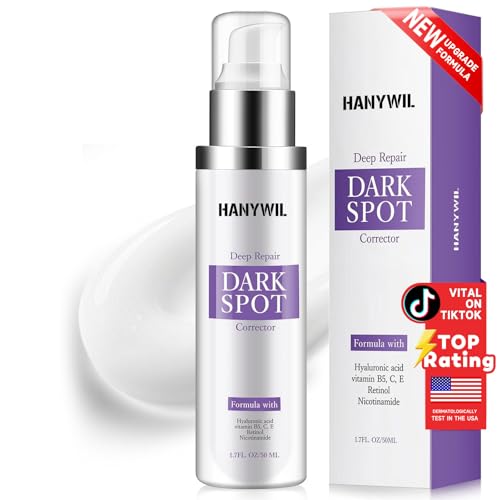
This is a 1.7 fl oz, leave-on face and body dark-spot product sold as a serum or cream. The listing claims 2% retinol, 5% niacinamide and vitamin C for melasma, hyperpigmentation, age spots and sun spots. It is intended for repeated application to areas such as the face, hands, legs and neck. A public U.S. label for a closely matching 50 mL HANYWIL cream identifies a different formula, including 3% niacinamide, alpha-arbutin, inositol and 3-O-ethyl ascorbic acid, with fragrance and botanical extracts. That public label does not establish the listed 2% retinol and 5% niacinamide formula. It does provide external-use, patch-test, eye-avoidance, damaged-skin and daytime-sunscreen directions. No lot-specific independent contaminant, potency, stability, preservative, dermatologist-test or finished-product clinical report was located.
This product may suit an adult who wants a low-cost, 50 mL leave-on product for ordinary, localized uneven tone on intact body skin and is prepared to patch test first. The most reasonable use is gradual cosmetic improvement of the appearance of post-acne marks or sun-related discoloration, paired with daily broad-spectrum sunscreen. This buyer should accept that the advertised active percentages are not independently verified and that evidence for the exact finished product has not been located.
It is not well suited to people who are pregnant, breastfeeding, highly retinoid-sensitive, fragrance-sensitive, managing eczema or rosacea, or using prescription acne or pigment treatments without clinician guidance. Avoid use on broken, freshly shaved, inflamed or mucosal skin, including genital tissue. It is also a poor fit for anyone seeking a documented melasma treatment, verified heavy-metal screening, confirmed 2% retinol potency, or strong evidence from a clinical study of this exact formula.
A public U.S. label connected to a closely matching HANYWIL 50 mL dark-spot cream identifies a traceable labeler and gives basic safety directions, including patch testing, avoiding damaged skin and using sunscreen in daytime. It also lists fragrance, geranium oil, mint extract and witch hazel. These ingredients may matter to people with a history of stinging, fragrance allergy or reactive skin. The verification work did not locate an active recall, FDA exposure warning or warning letter specifically naming HANYWIL. That is not the same as proof of contaminant-free product. No lot-matched independent mercury, hydroquinone, heavy-metal, microbiology, stability or active-assay report was found. The product uses a plastic bottle, but no component-material breakdown, recycled-content evidence or independently supported recyclability claim was located.
This is a 1.7-ounce leave-on cream marketed for dark spots on the face and body. The brand directs users to apply a small amount after cleansing, concentrate it on blotchy areas and spots, avoid normal skin where possible, and patch test before broader use. It is positioned as a targeted cosmetic corrector rather than a daily all-over moisturizer. The brand publishes a long ingredient list that includes niacinamide, alpha-arbutin, tranexamic acid, 3-O-ethyl ascorbic acid, and 4-butylresorcinol, plus licorice extract, shea butter, fragrance, phenoxyethanol, methylparaben, and propylparaben. Those pigment-focused ingredients are plausible, but their amounts are not disclosed and no controlled trial of this finished cream was located. The formula disclosure also conflicts with the brand-wide statement that its products are paraben-free.
This product is most suited to an adult who wants a small, targeted cream for isolated facial or body discoloration, such as post-acne marks, underarm discoloration, knees, or elbows, and who is willing to patch test first. It may also suit someone who values a published full ingredient list and prefers a cream with moisturizing ingredients over a thin serum. Expectations should be modest because the brand does not disclose active concentrations or provide finished-product clinical results.
It is not a strong fit for people with fragrance allergy, reactive eczema-prone skin, current irritation, open or recently shaved skin, or a history of reactions to exfoliating enzymes and botanical extracts. It is also not appropriate for application to mucosal tissue or genital surfaces, because the located directions do not establish those boundaries or provide area-specific tolerability evidence. People treating melasma, rapidly changing dark marks, or suspected skin lesions need clinician-guided assessment rather than cosmetic spot correction alone.
The disclosed formula does not list hydroquinone or mercury, which are important exclusions for an over-the-counter dark-spot product in the United States. However, no current lot-specific independent laboratory report was found to verify the absence of undeclared lighteners, mercury, or other heavy-metal contamination. The ingredient list includes fragrance, papain, botanical extracts, phenoxyethanol, methylparaben, and propylparaben, so a patch test is particularly relevant for sensitive users. Some listed ingredients have controlled human evidence in other formulations. For example, 5% niacinamide and 0.3% 4-butylresorcinol have clinical support for facial pigmentation, but the cream's concentrations are undisclosed. No finished-product clinical trial, stability report, preservative challenge test, GMP certificate, or accredited third-party testing was located. No substantiated recycled-content, recyclability, packaging-material, or other product-specific environmental claim was located. The brand's paraben-free statement is not consistent with this product page's ingredient list.
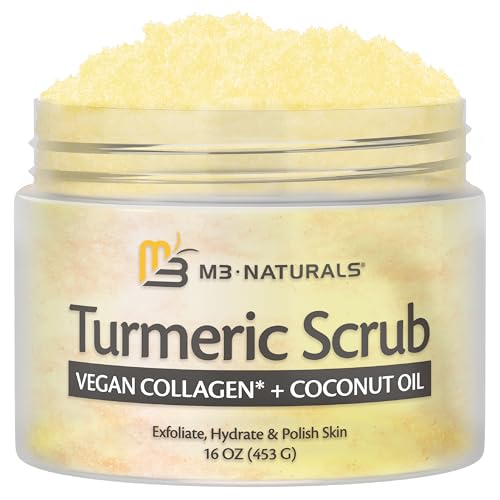
This is a 16-ounce, jarred physical body scrub sold for damp-skin massage followed by rinsing. The listed formula is salt-forward and combines sunflower, coconut, shea, grape, jojoba, evening primrose, pumpkin, and meadowfoam oils with turmeric extract, collagen, sodium hyaluronate, tetrahexyldecyl ascorbate, and retinyl palmitate. The product disclosure provides a full ingredient list and a short safety statement to stop use if irritation occurs. It also lists limonene, linalool, citral, and orange oil, which are relevant fragrance sensitizers. The seller makes broad appearance claims spanning dark spots, acne, cellulite, scars, and more, but it does not disclose active concentrations or provide a finished-product clinical study, lot-specific heavy-metal testing, or independent performance testing.
This product fits an adult seeking a large, rinse-off body exfoliator for occasional use on intact, non-reactive skin, especially rough areas such as hands, feet, elbows, knees, or legs. It is more suited to someone whose goal is the immediate feel of smoother skin after physical exfoliation than someone seeking a documented treatment for pigmentation. The 16-ounce jar format may suit households that use body scrubs regularly, provided users can tolerate fragranced skincare and follow the stop-use warning if irritation develops.
It is not a strong fit for people with eczema, rosacea, fragrance allergy, active dermatitis, open cuts, sunburn, folliculitis, or recently shaved or waxed skin. Avoid using it on the eye area, genitals, mucosal tissue, or other intimate skin because the published directions do not establish safety for those areas. People who are pregnant, managing melasma, using prescription retinoids, or trying to fade persistent dark spots should not treat this scrub as a clinically supported pigment treatment. Children should not have unsupervised access.
The disclosed formula contains physical salt exfoliants plus several emollient oils, but also limonene, linalool, citral, orange oil, and retinyl palmitate. The published warning says external use only and to discontinue if irritation occurs. It does not provide the more specific safeguards that would be useful for a fragranced facial or sensitive-skin scrub, including patch-testing, frequency, sunscreen, and area exclusions. The listing does not declare hydroquinone or mercury. However, no accessible lot-specific third-party laboratory report was found to verify identity, heavy-metal limits, prohibited lighteners, microbiological quality, stability, or preservative performance. FDA warnings about mercury and hydroquinone concern other skin-lightening products, not this product. No relevant FDA recall or warning letter for M3 Naturals was located in the reviewed FDA sources. The jar package has no verified recycled-content, recyclability, or reduced-waste documentation, so its environmental attributes remain unsubstantiated.
This is a 1.7 fl oz leave-on pump product sold for dark spots and uneven tone on the face and body. Independent retailer imagery identifies it as a cream-like Deep Repair dark spot corrector and visibly names retinol, nicotinamide, vitamins C, B5 and E, hyaluronic acid, and Glycyrrhiza glabra extract. A separate retailer describes an overlapping but not identical formula that includes alpha arbutin, so the complete composition cannot be confirmed confidently. Published directions say to spread a thin layer on clean, dry skin, then moisturize and use sunscreen. There is no accessible finished-product clinical report, complete ingredient declaration, active concentrations, lot-specific impurity test, or stability and preservation report. The opaque pump is a practical format, but airless performance and packaging materials are unverified.
This product is most relevant to adults seeking a small leave-on product for targeted spots on the face, hands, neck, or limited body areas. It better suits people who already tolerate retinoid-containing skincare, can introduce products gradually, and will use daytime sunscreen. The pump format may be convenient for controlled application. Expectations should remain limited to appearance-focused brightening claims because the active concentrations and a finished-product clinical study were not available for review.
It is not well suited to anyone who needs a fully disclosed formula, independently tested contaminant limits, or documented results for melasma or persistent hyperpigmentation. People with very reactive skin, active dermatitis, broken skin, or a history of reactions to retinoids should avoid relying on the broad all-skin-types positioning without a patch-test plan. Anyone following a pregnancy or breastfeeding care plan that avoids retinoids should choose a clearly retinol-free product and consult their clinician. It should not be used on mucosal, genital, or other intimate tissue.
Product imagery names retinol, nicotinamide, vitamin C, hyaluronic acid, vitamins B5 and E, and licorice extract. Another retailer instead names alpha arbutin, creating a material transparency issue until the maker provides a complete current ingredient declaration. The product did not appear among the named products on FDA's public mercury and hydroquinone warning page reviewed here. That is not equivalent to a clean result, because no lot-specific independent testing for mercury, hydroquinone, heavy metals, or identity was located. The retail directions mention sunscreen, but accessible materials do not provide clear patch-test, reduced-frequency, stop-use, or intimate-area boundaries despite pictured retinol. A retailer calls the product sustainably crafted, but no packaging material breakdown, recycled-content documentation, recyclability instructions, or environmental certification was located. The opaque pump may help protect light-sensitive ingredients, although mixed-material pumps are often difficult to recycle and this product provides no verified disposal guidance.


