Best Overall
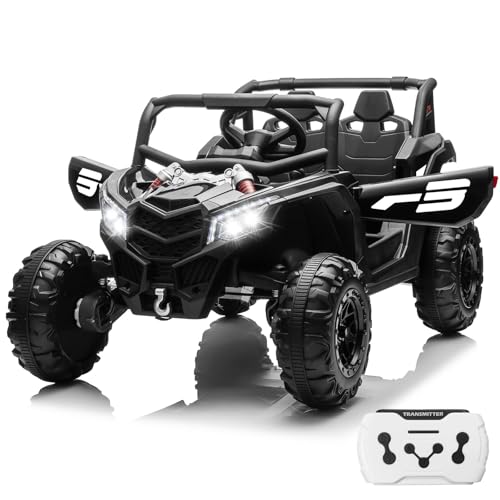
JoyRacer 24V Kids Off-Road UTV Car
Durable design for adventurous off-road play.
Dual motors provide powerful and smooth riding.
Parental remote control ensures added safety.
 Daniel Kenitz
Durable design for adventurous off-road play.
Dual motors provide powerful and smooth riding.
Parental remote control ensures added safety.

Realistic design with functional front loader.
Sturdy construction ensures long-lasting use.
Adjustable seat grows with your child.
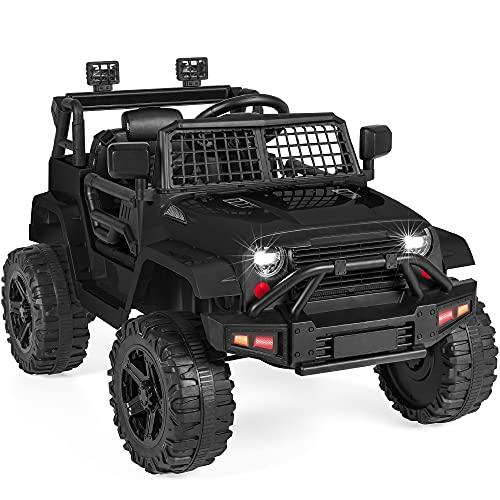
Parent remote ensures safe supervision.
Spring suspension offers a smoother ride.
Built-in AUX port for music enjoyment.

Spacious two-seater design for extra comfort.
Remote control ensures safe parental supervision.
Enhanced 4WD capability for varied terrains.

Parental control ensures safe and guided play.
Bluetooth and LED lights for added fun.
Spring suspension offers a smooth ride experience.

Remote control ensures extra safety for toddlers.
Spring suspension provides a smooth ride experience.
Bluetooth music capability enhances entertainment value.

Dual-function design for versatile playtime.
Flashing lights and music enhance fun.
Anti-rollover feature ensures safe riding.

Easy Bluetooth connectivity for fun music play.
Remote control ensures added safety for toddlers.
Bright LED lights enhance the off-road experience.

Spacious two-seater design for shared fun.
Remote control ensures safe adult supervision.
Bluetooth connectivity for personalized music play.

Powerful 800W motors for superior performance.
Remote control ensures parental supervision.
Equipped with Bluetooth, MP3, and USB connectivity.
Start with the child’s actual fit. Check the stated minimum age, seat dimensions, belt or harness arrangement, number of riders, and maximum combined load. A two-seat label does not by itself establish that two children fit safely, and several supplied products give conflicting age or weight information. Keep use to the surfaces identified in the manual. Across the reviewed products, those limits commonly exclude roads, traffic-adjacent driveways, slopes, stairs, pools, water, wet ground, loose gravel, mud, and rough terrain.
Remote control is useful only when it works within its stated limits and the adult remains close enough to intervene. Look for model-specific instructions describing remote override, speed selection, pedal release, power-off behavior, and an emergency-stop or stop control. “Soft start,” a low-speed mode, or a claimed maximum speed is not independent proof that the product stops predictably. A particularly important distinction is whether the manual says the vehicle has no brakes or braking capability; pedal release or a remote stop should not be treated as a substitute for safe, level terrain.
Battery and charger details deserve separate scrutiny. A credible product record should identify the exact battery pack and charger and, where applicable, show certification in UL Product iQ, the Intertek ETL directory, or the CSA listing database. UL 2271 may apply to certain battery systems and UL 1310 to certain chargers. The product’s manual should also specify the supplied charger, charging time, ventilation, inspection for damaged wiring, storage conditions, and what to do with a failed battery. Voltage, motor wattage, and runtime figures are not fire-safety certification.
For chemical and toy safety, look for a current Children’s Product Certificate for the exact model, importer, production date or batch, and applicable requirements. The certificate should be backed by testing at a CPSC-accepted laboratory with the relevant accreditation scope. Claims such as “ASTM certified” or “CPSIA compliant” are not enough when the certificate and supporting report cannot be produced. Materials, coatings, plastics, and accessible metal parts should have evidence addressing applicable lead and regulated-phthalate limits under the federal toy requirements.
Headline performance figures are easy to overread. Runtime can change with rider weight, surface, speed setting, temperature, and battery condition; none of the supplied products consistently provided all of those test conditions. Maximum load can conflict between the marketplace listing and manual. “Off-road,” suspension, four-wheel drive, and several motors do not establish stability or terrain safety. Bluetooth and a 2.4 GHz remote are not verified U.S. radio compliance unless the installed hardware is tied to an FCC identifier in the FCC authorization database.
The recurring safety caveats are substantial: every product requires close adult supervision, and multiple reviews warn against streets, slopes, water, steps, wet or uneven terrain, and exceeding the stated load. Several products lack independently available toy-compliance certificates and exact electrical listings. More than one product has no confirmed battery chemistry, replacement path, or recycling instructions. One product specifically reports no brakes, another has conflicting load and age limits, and one posted customer report describes a steering control arm detaching. Confirm the delivered product’s permanent labels and manual before use, and do not rely on a remote or marketing claim to compensate for unsafe terrain or absent documentation.
The supplied products were reviewed against health, ecological, and evidence topics rather than judged only by features or customer ratings. Higher scores indicate stronger evidence or controls within this set; they do not turn an unverified manufacturer statement into independent certification.
This measures evidence that accessible paint, plastic, metal, and other materials meet U.S. lead and regulated-phthalate limits. It matters because children touch and may mouth ride-on surfaces. Scores ranged from 52 to 74: higher-scoring products had more specific material or compliance information, while lower-scoring products included unresolved chemical warnings or lacked product-specific testing evidence.
This measures protection against overheating, short circuits, overcharging, damaged wiring, and mismatched chargers. For ride-ons, the exact battery, charger, controller, charging instructions, and independent listing matter. Scores ranged from 68 to 78. The stronger products documented inspection, charging, overload or thermal controls; lower scores reflected missing component identities and no verified UL, ETL, or CSA record.
This measures whether the vehicle remains stable and intact at its stated rider and cargo load, including during turns and on expected surfaces. A broad footprint, belts, suspension, and stated load are only design clues without exact-model testing. Scores ranged from 52 to 72; lower scores reflected conflicting limits or reported structural concerns, while higher scores had clearer load and use boundaries.
This measures predictable stopping, pedal release, reversing, speed selection, remote override, and power-off behavior. It is especially important because children’s ride-ons can approach obstacles quickly and some manuals state that the vehicle has no brakes. Scores ranged from 54 to 76. Higher-scoring products documented remote priority, stop or emergency-stop controls, and soft start; lower scores had weaker or less complete stopping evidence.
This measures whether age, height, seat capacity, belts, doors, moving parts, and weight limits match the child and the vehicle. It matters for falls, entrapment, pinching, and misuse of two-seat designs. Scores ranged from 60 to 75. Higher scores had clearer rider limits, belts, and seating guidance; lower scores included missing combined-load information or conflicting age instructions.
This measures whether voltage, motor power, speed, runtime, age, terrain, and rider capacity are specific, consistent, and tied to stated test conditions. Scores ranged from 48 to 76. Higher-scoring products gave concrete, internally consistent limits; lower scores involved claims such as mileage or runtime without conditions, or conflicting voltage, speed, age, weight, and endurance figures.
This measures whether voltage, motor power, speed, runtime, age, terrain, and rider capacity are specific, consistent, and tied to stated test conditions. Scores ranged from 48 to 76. Higher-scoring products gave concrete, internally consistent limits; lower scores involved claims such as mileage or runtime without conditions, or conflicting voltage, speed, age, weight, and endurance figures.
This measures permanent model and date marking, a reachable U.S. responsible party, replacement support, warranty information, and a clear recall route. It matters if a defect appears after purchase. Scores ranged from 55 to 76. Higher-scoring products had named makers, support routes, warranties, or compatible parts; lower scores included unclear support and concerns about responsiveness.
This measures whether Bluetooth, Wi-Fi, or remote-radio hardware is identified and tied to a valid FCC authorization. It matters because a wireless feature claim does not establish U.S. compliance. Scores ranged from 68 to 71, a narrow range reflecting that nearly every product described wireless features but none had a product-linked FCC identifier located in the supplied review.
This measures whether the battery is identified, replaceable, supported with parts, and accompanied by a practical recycling or take-back route. Ride-ons otherwise risk premature disposal or improper battery handling. Scores ranged from 58 to 73. Higher-scoring products identified removable batteries, replacement support, or established recycling routes; lower scores lacked chemistry, removal instructions, replacement parts, or take-back information.
This measures documented durability, service access, spare parts, and long-lived frame and drive components. Keeping a heavy ride-on in service can reduce replacement waste. Scores ranged from 52 to 74. Higher scores were associated with warranty or replacement-component support; lower scores reflected unresolved structural reports, inconsistent specifications, short support periods, or no clear parts pathway.
This is a 24 V, battery-powered, off-road-style ride-on UTV with four claimed 150 W drive motors, a stated 4.5 mph maximum speed, lights, Bluetooth and USB or MP3 audio. A matching NL901 manual identifies a 24 V 5 Ah battery, an 18-inch seat, a 110-pound maximum load, and a 36-month to 7-year age range. Those are manufacturer-stated specifications, not independently tested results. The manual describes child pedal driving plus a 2.4 GHz parent remote that can steer, select direction and adjust speed. It also directs adult supervision, helmet use, dry ventilated charging, and avoidance of roads, slopes and water. No model-specific Children’s Product Certificate, accredited-laboratory report, electrical listing, charger certification, or FCC identifier was located. The specifications are also inconsistent across available product materials, including overall height and suitability for younger children using the remote.
This product fits a household seeking a supervised, low-speed backyard or driveway ride-on for one child roughly 3 to 7 years old, provided the child remains within the stated 110-pound limit. It is most suitable where an adult can complete assembly, check fasteners and wiring, use a helmet, keep the vehicle away from roads, pools and slopes, and supervise every ride. The parent remote may be useful while an adult is actively controlling a younger or less confident child, rather than as a substitute for close supervision.
It is not suited to families needing independently documented electrical, chemical and toy-safety compliance before use. Avoid using it for road travel, shared paths with traffic, steep ground, water-adjacent areas, or unattended riding. It is also a poor fit where two children might exceed the stated load, where riders need a clearly documented restraint system, or where a buyer needs confirmed replacement batteries, chargers and service parts. Families uncomfortable inspecting charging equipment and stopping use after heat, smoke, damaged wiring or erratic movement should select a product with stronger documented support.
The available NL901 manual provides useful use precautions, including adult supervision, helmet use, dry ventilated charging, indoor storage and routine checks for loose or damaged parts. It identifies the battery only as 24 V, with one matching manual image stating 5 Ah. It does not identify chemistry, provide battery-removal instructions, name a certified charger, or provide a recycling or take-back route. That limits safe end-of-life planning and makes replacement compatibility difficult to verify. No model-specific CPC, accredited-laboratory report, UL, ETL, CSA or FCC record was located in this review. Separately, the CPSC issued a June 12, 2025 safety warning about a different Joyracer youth electric ATV, citing serious regulatory deficiencies and an unresponsive seller. That warning does not establish a defect in this ride-on UTV, but it increases the importance of retaining labels, purchase records and the manual, and of promptly reporting overheating, smoke, damaged wiring or control faults.
This is a single-seat, battery-powered ride-on tractor for children 3 and older. The manual describes a 24 V rechargeable battery, two 200 W motors, a 54.7 by 22.8 by 21.7 inch body, an 88 pound rider limit, an adjustable seat, detachable tilting trailer, Bluetooth music, and a 2.4 GHz parental remote. It is intended for supervised use on level, stable ground, away from roads, water, and slopes. The independently hosted manual is detailed but largely repeats manufacturer information. It states up to 4.5 mph, 1 to 2 hours of runtime, an 8 to 12 hour initial charge, two child speed settings, three remote speed settings, manual override, and a remote P stop button. It also claims ASTM F963 and CPSIA compliance, but no product-specific CPC, CPSC-accepted laboratory report, UL or ETL listing, FCC identifier, battery chemistry, or charger model was located.
This product fits a family with a child at least 3 years old who is within the stated 88 pound limit and has a clear, level outdoor area away from traffic, water, drop-offs, and slopes. It is most suitable where an adult will remain present, inspect the wheels and electrical parts, manage charging, and use the remote control when the child is still learning pedal and steering control. The trailer is useful for supervised pretend farm play with light toys.
It is not suited to households that need independently documented battery, charger, chemical, radio, and toy-compliance evidence before a child uses the product. It is also unsuitable for unsupervised play, indoor driving in tight rooms, use near streets or pools, steep or uneven terrain, or children exceeding the stated rider limit. Families wanting a confirmed battery recycling route or readily identified replacement battery and charger should seek a product with those details published.
The manual claims ASTM F963 and CPSIA compliance and gives basic safety directions, including use on flat stable surfaces, safety-belt use, adult supervision, and stopping use after damage. However, no product-specific CPC or supporting third-party test report was found to document lead, phthalate, mechanical, or battery-operated toy testing. The manual also does not identify the battery chemistry, charger, electrical listing, or radio authorization. There is no recall or CPSC warning located for this specific tractor. Separately, the CPSC warned about a different Joyracer youth ATV in June 2025 and said the seller had been unresponsive, while a consumer report describes a fire involving another Joyracer 24 V ride-on. Those reports do not establish a defect in this product, but they support careful charging and inspection. The manual advises charging during long storage, but no take-back program, battery recycling instructions, parts catalog, or replacement-battery specification was located.
This is a single-seat, battery-powered ride-on truck for children ages 3 to 8, according to the product manual. The manufacturer states a 61-pound rider limit, 39.25 by 26 by 26 inch overall size, a 12V 4.5Ah lead-acid battery, an approximately 2.8 mph maximum speed, and a stated one to two hour runtime. It is intended for adult-supervised use on level, hard ground only. Its defining control feature is a parent remote that the manual says overrides the child pedal. The manual also says releasing the pedal slows and stops the vehicle, but explicitly warns that the product has no brakes or braking capability. The battery and charger are accompanied by detailed adult-only charging and damage-inspection instructions. No model-specific public CPC, third-party laboratory report, UL or ETL electrical listing, or FCC identifier was located in this review.
This product suits a household with one child within the manufacturer-stated 3 to 8 age range and under 61 pounds, plus an adult willing to assemble it, supervise every ride, and manage a long charging routine. It is most appropriate for short rides on a flat, dry, hard private surface such as a patio or level driveway with clear boundaries. The parent remote can be useful while an adult is closely present, particularly for a child still learning steering and pedal control.
It is not suited to homes where the available riding area includes slopes, traffic access, steps, pools, gravel, mud, sand, or wet surfaces. The manual directly warns against these conditions and says the vehicle lacks brakes. It is also a poor fit for families expecting long-term manufacturer parts access, repair support beyond 60 days, or independently accessible compliance documentation. Children under 3, children above the stated 61-pound limit, and households unable to supervise charging and riding should use another format.
The main health consideration is the sealed lead-acid battery. Its manual warns that battery posts, terminals, and related accessories contain lead and lead compounds, and that a damaged or opened battery can expose users to corrosive lead-acid contents. Adult-only charging, ventilation, dry handling, damage checks, and use of the supplied charger are all specified. The manual also gives useful movement and pinch warnings, including keeping hair, limbs, and loose clothing away from moving parts. The battery is a standard 12V 4.5Ah lead-acid format, and compatible 12V 5Ah AGM replacement batteries are listed by an independent battery retailer. That may make battery replacement more practical than a proprietary pack. However, the manufacturer states it does not sell spare parts and offers only limited replacement-part availability during its 60-day warranty period. No manufacturer battery take-back program, model-specific public toy test report, or public compliance certificate was located.
This is a large, battery-powered, four-wheel ride-on UTV for children ages 3 to 8. It has a stated 24V 10Ah battery, four 45W motors, a two-person seat, three stated speed settings from 3.1 to 4.5 mph, and a claimed 140-pound rider limit. Available S608 manuals describe metal and polypropylene construction, seatbelts, a foot pedal, forward, stop, and reverse selection, and parent remote operation. The available manual says the remote can steer, select speed, and brake, and that the vehicle has soft start and automatic power-off features. These are manufacturer-stated operating features, not independently validated performance results. No model-specific Children’s Product Certificate, CPSC-accepted laboratory report, UL or ETL listing for the battery or charger, or FCC identifier for its Bluetooth or remote radio was located in the checked public records.
This product suits a household with a flat, enclosed outdoor area, an adult who can supervise every ride, and children within the stated 3 to 8 age range who fit securely under the 140-pound combined rider limit. It is most practical for families willing to assemble it carefully, fasten both seatbelts, inspect wheel, axle, and wiring connections, and use the parent remote as an active supervision tool. It also fits buyers prepared to follow the stated charging and storage routine.
It is not suited to homes where children may use it near streets, pools, stairs, steep grades, or rough and unstable terrain. It is also a poor fit for buyers who require independently documented battery and charger certification, a publicly available product-specific toy compliance certificate, or a verifiable FCC authorization for every wireless component. Do not treat the decorative roll bars as protective equipment. Families unable to supervise, maintain, and safely charge a 24V ride-on should choose a less complex option.
The available documentation provides routine safety directions, including adult supervision, belt use, staying away from roads and slopes, use of the supplied charger only, and periodic inspection of hardware and electrical connections. It also states that the vehicle should not be overloaded. However, public verification did not locate an exact-product Children’s Product Certificate or a CPSC-accepted laboratory report. That leaves compliance with mandatory toy testing, lead and phthalate limits, and ride-on performance requirements unconfirmed. Battery chemistry is not identified in the available product documentation, and no manufacturer take-back program was found. The manual does depict replaceable battery, charger, motors, wiring, and controls, which may extend service life if parts remain available. At end of life, rechargeable batteries should not go in household trash or curbside recycling. They need a suitable battery recycler or household hazardous-waste route, with terminals protected if the battery is removed.
This is a 12 V electric children's ride-on vehicle styled as a Mercedes-Benz AMG G63. It is intended for children ages 3 to 6, has a manufacturer-stated 66-pound maximum rider load, and measures about 40.7 by 24.4 by 20.5 inches. The published product manual states a maximum speed of 3 mph and lists a rechargeable 12 V battery. The product can be driven with a foot pedal and steering wheel or with a parental remote. Its manual instructs caregivers to use it only on flat, dry ground away from traffic, water, and steep slopes, to fasten the seat belt, and to use only the supplied battery and charger. These are manufacturer-stated operating controls, not independently verified performance or safety-test results.
This product suits a household seeking a low-speed, supervised electric ride-on for a child within the stated 3-to-6 age range and 66-pound limit. It is most appropriate where an adult can assemble it, inspect fasteners and wiring, operate the remote when needed, and provide a flat, dry, traffic-free play surface. It also fits families that can store the roughly 41-inch-long vehicle indoors and keep charging separate from the child's play area.
It is not suited to children under 3, riders above 66 pounds, or situations where a child will use it near streets, driveways, pools, slopes, wet ground, or stairs. It is also a poor fit for buyers who require published third-party toy testing, a publicly verifiable charger or battery certification, or documented Bluetooth authorization before use. Families unable to supervise riding and charging, or unable to maintain a dry storage location, should avoid this format.
The available manual includes useful basic safeguards, including adult supervision, a seat belt, limits on age and rider weight, flat dry surface use, and use of the supplied charger and battery only. It also states that the vehicle cannot be started while charging. Those instructions reduce foreseeable misuse, but they are manufacturer materials rather than independently published test evidence. No model-specific Children's Product Certificate, CPSC-accepted laboratory report, public electrical safety listing, or radio authorization link was located in the reviewed materials. The battery chemistry and replacement specification are not published, and no battery take-back program or parts catalog was found. The manual advises dry storage and avoiding harsh cleaners. At end of life, a rechargeable battery should be taken to an appropriate battery collection or household hazardous-waste route rather than household trash.
This is a single-seat, battery-powered children’s ride-on truck for ages 3 to 4. The listed product measures 38.2 by 24.2 by 22.9 inches and weighs 30 pounds. It is sold with a charger, remote control, and user manual, and is intended for child pedal driving or adult remote operation. The manufacturer states that it has a 24 V rechargeable system, four-wheel drive, three speed settings, Bluetooth audio, spring suspension, a seat belt, soft start and stop functions, and a 2.4 GHz parent remote with emergency braking. It also states a top speed of 4.9 mph and up to two hours of operation. Those performance figures do not identify rider load, surface, temperature, battery condition, or test method. The product claims ASTM and CPSIA compliance and PP plastic construction, but an exact-product Children’s Product Certificate, laboratory report, charger certification, battery certification, and radio authorization were not publicly substantiated.
This product fits a household seeking a compact ride-on for closely supervised use by a child within the stated 3 to 4 year age range. It is most relevant where an adult will remain nearby, use the remote as an added control, charge the vehicle in a monitored area, and keep use to smooth, private play surfaces. The listed 38.2-inch length and 30-pound weight also make it more practical for families with space to store and move it indoors between uses. Its stated operating features should be treated as manufacturer claims rather than independently confirmed performance.
It is not suited to households that require documented battery, charger, or wireless certification before bringing an electrical toy into the home. It also does not fit buyers who need a verified rider weight limit, independently documented stability testing, a named U.S. responsible party, or clear replacement battery and parts support. Avoid treating the stated all-terrain ability, two-hour runtime, or 4.9 mph speed as assured results on grass, slopes, rough ground, or with heavier children. It also requires adult supervision and should not be used near roads, pools, stairs, traffic, or drop-offs.
The accessible product information states that the body is PP plastic and claims ASTM and CPSIA compliance. U.S. toy rules require testing and certification for applicable toy requirements, including chemical limits and the mandatory toy safety standard. However, no exact-product Children’s Product Certificate, supporting laboratory report, or named CPSC-accepted laboratory was publicly substantiated. The compliance claim therefore remains a manufacturer statement, not independently documented proof of lead, phthalate, electrical, structural, or pinch-hazard testing. The product is described as rechargeable, but its battery chemistry, capacity, replacement procedure, and end-of-life support were not established. This matters because rechargeable packs need chemistry-specific handling. EPA guidance says rechargeable batteries should not enter household trash or curbside recycling, and lead-acid and lithium-ion batteries have different handling and recycling routes. Keep the original charger and battery labels, use only the supplied or manufacturer-approved charger, and obtain written battery identification and replacement guidance before a future repair or disposal.
This is a 20-pound, 12V ride-on wiggle car with a foot pedal for powered movement and steering-wheel propulsion for manual use. An independent retailer describes lights, a spray effect and Bluetooth, while the available product manual lists a maximum 4 mph speed, adjustable to 1.9 mph, and approximately 1 to 2 hours of battery life. Those are manufacturer-stated specifications, not independently tested performance results. The same manual calls for adult supervision and use only on flat, dry surfaces. It also states a 150-pound maximum user weight and an age range of 3 to 8 years. However, the product record separately labels the manufacturer-recommended age as 0 to 3 years, creating a material age-grading conflict. No model-specific CPC, laboratory report, battery or charger certification record, FCC identifier, or replacement-parts documentation was located in the verification work.
This product fits a household seeking a compact indoor or smooth-pavement ride-on for a child who is clearly at least 3 years old and can be continuously supervised. It is most suitable where an adult can enforce the manual's flat, dry surface rule, keep the vehicle away from traffic, steps and water, and inspect the wheels before use. The adjustable low-speed claim may be useful for cautious early practice, but it remains manufacturer-stated rather than independently validated.
It is not suitable for children under 3 because the product materials conflict on age grading, and the available manual itself starts at 36 months. It also does not suit unsupervised use, slopes, driveways near traffic, wet areas, rough terrain, or households expecting documented electrical certifications before charging a child's ride-on. Families needing confirmed seat restraint details, verified radio compliance, readily available replacement batteries, or a clear repair path should seek a product with that documentation.
No active CPSC recall or public CPSC safety warning specific to this product or brand was located in the verification search. That is not the same as independently verified compliance. U.S. rules require children's toys to be supported by third-party testing and a Children’s Product Certificate covering applicable requirements, including toy safety, lead and phthalates. No exact-product certificate or test report was provided or found. The available materials identify ABS plastic through an independent retailer, but they do not disclose paint chemistry, recycled content, battery chemistry, battery removal steps, or a take-back program. The manual advises periodic charging during storage, but does not identify a replacement battery or parts source. If the installed rechargeable pack is lithium-ion, EPA guidance is to keep it out of household trash and curbside recycling, and use a dedicated battery or hazardous-waste collection route.
This is a single-seat, four-wheel battery ride-on truck for children ages 3 to 6. The product record and an independently hosted copy of its instruction manual describe a 12V vehicle with a 66-pound rider limit, stated maximum speed of 3.5 mph, lights, Bluetooth audio, and child pedal driving or adult remote control. The manual also lists an 8 to 10 hour charge time and an estimated 30 to 45 minutes of use, both manufacturer-stated figures that will vary with rider weight, surface, speed setting, and battery condition. The manual describes three remote speed settings, forward and reverse control, and a remote brake function. It also tells adults to secure the belt, supervise use, avoid roads, pools, and steep inclines, inspect wiring and loose hardware, and stop using damaged parts. These instructions are useful, but public searches did not produce an exact-product Children’s Product Certificate, laboratory report, battery certification, charger listing, or radio authorization link.
This product fits a household seeking a compact, single-rider outdoor ride-on for a supervised child roughly within the stated 3 to 6 age range and below 66 pounds. It is most suitable for short sessions on a flat, private paved area or similarly controlled surface, where an adult can stay close enough to use the remote if needed. The defined 3.5 mph maximum and remote brake are practical for caregivers who want a lower-speed first ride-on format, provided they accept that the safety documentation is incomplete.
It is not suited to families needing independently documented battery, charger, chemical, or radio compliance before bringing an electrical toy into the home. It is also a poor match for children above the stated 66-pound limit, children who need a larger seat or two-rider arrangement, or use on public streets, slopes, near water, loose terrain, or without close adult supervision. Do not treat the remote as a substitute for supervision, especially where a vehicle could reach a driveway, curb, stairs, traffic, or water.
The product is marketed for young children and uses painted plastic, metal, electronics, a rechargeable battery, charger, and wireless features. U.S. toy rules require a Children’s Product Certificate and applicable third-party testing for children’s toys, including lead and phthalate requirements where applicable. No public exact-product certificate or supporting accredited-laboratory report was located, so material safety compliance cannot be independently confirmed from the available evidence. The manual advises routine inspection of wires and hardware, avoiding overcharge, and replacing damaged parts. It shows a battery and electronic components as serviceable parts, which may help extend use, but it does not identify battery chemistry or provide a branded take-back program. EPA identifies small sealed lead-acid batteries as common in children’s toy cars and says battery chemistry should be verified from labeling. Public CPSC recall searches did not identify a matching recall, but absence of a recall is not proof of electrical or mechanical safety.
This is a large, battery-powered, two-seat ride-on car styled as a Mercedes-Benz G500. The product listing identifies a 24V, four-motor, four-wheel-drive layout, a 50.4 by 31.5 by 25.4 inch body, and a stated 130 lb rider load. It is intended for children ages 3 to 8, with child pedal driving or parent remote operation. The listing states that it has two seat belts, soft start, two child speed settings of 3 and 4.5 mph, and a parent remote with priority override. Those are manufacturer-stated features, not independently tested results. The listing also names PP plastic and iron, but no product-specific Children’s Product Certificate, laboratory report, battery or charger certification, instruction manual, or FCC identifier was publicly available to verify the safety-critical details.
This product suits a household seeking a large, supervised backyard ride-on for one child or two children who fit comfortably within the stated 130 lb total limit. It is most appropriate where an adult can remain nearby, use the stated remote override when needed, inspect the vehicle before rides, and keep use to level private surfaces. The substantial 50.4 inch length and 61.1 lb listed weight also make it more practical for families with garage or shed storage and enough room to maneuver it safely.
It is not a good fit for households that need independently documented toy, battery, charger, radio, or chemical compliance before a child uses the product. Avoid relying on it for unsupervised riding, slopes, streets, traffic-adjacent driveways, standing riders, or rough terrain, even though the listing promotes grass and gravel use. It also does not suit buyers who need a confirmed replacement-battery path, repair parts, long warranty coverage, or clear recycling instructions before committing to a large powered toy.
The listing identifies PP plastic and iron, and describes the plastic as non-toxic. That is a manufacturer statement only. A product-specific Children’s Product Certificate and supporting third-party laboratory report were not publicly available, so compliance with U.S. lead, phthalate, material-quality, edge, stability, and electrically operated toy requirements could not be confirmed. No product-specific CPSC recall was located in official recall searches, but that does not substitute for evidence of testing. The battery is described only as 24V. Its chemistry, removable status, charger model, certification status, replacement availability, and disposal instructions were not publicly established. That matters because rechargeable toy batteries should not go in household trash or curbside recycling. Families should identify the battery chemistry and follow its label and local collection guidance before eventual disposal. The lack of a public parts catalog or battery take-back route also weakens the product’s repair and reuse outlook.
This is a 47.4-pound, four-wheel battery ride-on quad with a stated 24V 9Ah rechargeable battery, four 200W motors, a 40.5 by 25.6 by 28.7 inch body, and a claimed 110-pound maximum load. The manual describes child pedal driving, high and low speed selection, and parent operation through a 2.4G remote. It is intended for supervised recreational use on flat, stable surfaces, not roads or sidewalks. The available product manual states 1.8 to 5 mph operation, an emergency brake on the remote, 8 to 12 hour charging, and roughly 1 to 2 hours of playtime. Those are manufacturer-stated operating figures, not independently verified test results. Public checks did not identify a product-specific Children’s Product Certificate, accredited laboratory report, electrical safety listing, or FCC identifier for the installed Bluetooth and remote-radio hardware.
This product fits a household seeking a large, supervised backyard ride-on for one child aged 3 to 8, or two very small children under 4, where the combined rider load stays below 110 pounds. It is most appropriate where an adult can stay nearby, use the remote control, inspect the vehicle before use, and keep riding to dry, level private surfaces. The stated low-speed setting may be useful for gradual familiarization, provided the claimed controls work as described.
It is not suited to families that need independently documented battery, charger, chemical, radio, or toy-compliance evidence before a child uses the product. Avoid it for street, sidewalk, slope, wet-ground, or unsupervised use. It is also a poor fit where children may exceed the stated load, where two riders are older than the manual’s under-4 guidance, or where a caregiver cannot reliably inspect wiring, wheels, fasteners, and the battery compartment before riding.
The product is described as metal and polypropylene, but no public product-specific compliance certificate or accredited laboratory report was found to verify lead, phthalate, or broader toy-safety testing. The manual’s use of an ASTM-related claim is therefore not equivalent to independently documented compliance. It provides practical safety directions, including adult supervision, protective gear, flat-surface use, load limits, and routine inspection, but these are manufacturer instructions rather than test evidence. The 24V 9Ah battery chemistry is not identified in the reviewed material, and no manufacturer take-back program, replacement battery catalog, or electrical listing was found. That makes correct end-of-life handling harder. Rechargeable batteries should not enter household trash or curbside recycling. Identify the chemistry from the battery label, then use an appropriate battery or household hazardous-waste collection route. CPSC’s 2025 warning about a different Joyracer youth ATV did not identify this product, but it is relevant context for support and recall readiness.


