Best Overall

DUO PRO Electric Toothbrush Set
UV sanitizing for extra hygiene.
Wireless charging base included.
Four modes with smart timers.
 Lauren Wilson
UV sanitizing for extra hygiene.
Wireless charging base included.
Four modes with smart timers.

UV base sanitizes brush heads effectively.
Five modes for personalized brushing experience.
ADA approval ensures dental safety and efficacy.
Advanced app integration enhances brushing experience.
IP68 waterproof rating ensures durability and safety.
Dual brush heads offer versatile cleaning options.

Five modes for personalized cleaning experience.
Long-lasting 30-day battery life.
Convenient wireless charging feature.

Combines toothbrush and water flosser efficiently.
Offers superior plaque removal capability.
Features a sleek, portable design.

40,000 VPM motor for effective cleaning.
Comes with 8 replacement brush heads.
Travel case included for easy portability.
Combines brushing and flossing in one device.
Cordless design ideal for travel convenience.
Offers multiple cleaning modes for versatility.

Advanced app integration for personalized brushing feedback.
Pressure sensor helps protect gums from damage.
Multiple modes and intensities for customized cleaning.

Dentist-designed for effective plaque removal.
Includes multiple brush heads for convenience.
Fun design encourages kids to brush.

Dentist-designed for optimal oral health.
High-frequency sonic vibrations for deep cleaning.
Long-lasting battery with quick charging feature.
The strongest health distinction in this category is product-specific human evidence. Look for an active American Dental Association Seal of Acceptance entry that names the product or a materially identical platform and supports plaque removal and helping prevent or reduce gingivitis. A published randomized human study is more informative when it identifies the exact handle and head combination, includes an appropriate comparison, and reports enough participants and follow-up to support its outcome. A one-use plaque result is narrower than evidence of lasting gingivitis improvement; manufacturer-posted studies should not be treated as independent validation of every marketing claim.
Bristle safety is also specific. Soft, well-finished bristles, secure tufts, durable head construction, and oral-contact materials should be supported by testing aligned with ISO 20127 or ANSI-ADA Standard No. 120, including bristle end-rounding, tuft retention, mechanical strength, and material-safety information. A label such as “soft,” “food-grade,” or “gentle” is not the same as a public test report. A pressure sensor or force-reduction response can help people who scrub hard, but a Soft or Sensitive mode is only a lower-intensity setting unless its safeguards are validated.
For electrical safety, an exact-product listing in UL Product iQ, Intertek’s ETL directory, or the CSA listing database is more meaningful than a general statement that a product is waterproof, FCC approved, RoHS compliant, or tested for reliability. FCC authorization addresses radio emissions, not charging or wet-use electrical safety. Water-resistance ratings such as IPX7 or IPX8 are manufacturer claims unless the finished product, charger, test method, and certificate can be traced. Contradictory ratings or instructions—especially marketing that permits shower use while the manual prohibits it—deserve caution.
A credible ownership picture includes clear rinsing, drying, reservoir-cleaning, and head-replacement instructions; compatible heads that remain available; and a warranty with a practical support route. Claims such as 30, 60, 150, or 180 days of battery life are use-condition estimates, not proof of battery longevity. UV sanitation figures, “times more plaque,” whitening percentages, vibration counts, and broad eco-friendly or recyclable claims can sound precise while lacking an exact-product report, comparison details, material breakdown, or disposal route.
Across the supplied products, recurring cautions include the absence of pressure sensing on several adult brushes, incomplete evidence for children, sensitive gums, braces, implants, restorations, recent oral surgery, or limited dexterity, and the need for individualized dental advice when pain or persistent bleeding occurs. Children often require supervision, and age labeling is inconsistent for some products. Buyers should also treat charging near water, sealed or non-replaceable batteries, proprietary heads, damp travel cases, and conflicting waterproof instructions as meaningful safety or ownership concerns—not as minor feature differences.
These topics distinguish a powered brush that is merely feature-rich from one with clearer evidence, safer use guidance, and a more credible ownership path. Scores below are reflected comparatively: the supplied products span strong ADA-supported clinical scores in the low 90s to unsupported clinical claims around 68–72, while ecology and evidence scores vary substantially by repair, recycling, certification, and traceability documentation.
This measures credible human evidence for the exact brush or a materially identical platform reducing plaque and gingivitis in normal use. For this category, an active ADA acceptance or a well-designed randomized study naming the handle and head matters more than vibration counts or whitening language. Supplied products with ADA-supported evidence scored 91–94; products without product-specific clinical evidence scored about 68–78.
This covers bristle softness and finish, tuft retention, head strength, and oral-contact material safety. It matters because powered movement can magnify the consequences of abrasive, shedding, fractured, or sharp bristles. Higher-scoring supplied products reached 86–91 where ADA review or stronger safety evidence was available; lower scores reflected missing end-rounding, tuft-retention, durability, or material reports, and in one case a medium-bristle specification.
This measures whether force control, modes, head size, warnings, and instructions fit the advertised user—especially children, sensitive gums, braces users, and people with limited dexterity. A pressure response is more protective than a mode label alone. Higher-scoring products generally had clearer age guidance, timers, gentle settings, or pressure reduction; lower-scoring products marketed broadly to children or sensitive users without validated force safeguards.
This measures whether the handle, head, charger, case, and any reservoir can be rinsed, dried, and maintained without trapping residue, and whether compatible heads remain available on a sensible schedule. A high-scoring product combines practical cleaning directions with a dependable refill route. The supplied range scored roughly 70–88: reservoir devices gained from explicit drying instructions, while some products lacked replacement intervals or dependable catalog evidence.
This measures protection from charging, battery, overheating, electrical, and water-ingress hazards in bathroom use. The useful evidence is an exact finished-product and charger listing or certificate from a recognized safety directory, plus substantiated ingress testing. Most supplied products scored around 68–77 because no exact UL, ETL, or CSA listing was located; the strongest score, 83, still reflected meaningful limits around public certification.
This measures whether plaque, whitening, gum-care, UV, waterproofing, battery, AI, and sustainability claims are specific and supported for the exact product. High-scoring products, up to 86, kept claims closer to documented facts; lower-scoring products often had conflicting mode counts, battery or water-resistance specifications, unsupported percentages, or broad clinical language without a report. Precise numbers are not meaningful without the comparison, test method, and product identity.
This measures independent, product-specific review or testing, including ADA listings, recognized safety directories, FCC records where radios are present, and accredited reports naming the exact product. Supplied products with exact ADA links or stronger independent review scored about 91–94; products with only manufacturer claims or component-level documentation clustered near 68–80. FCC radio authorization alone does not certify charging or wet-use safety.
This measures whether the responsible manufacturer or importer, model identity, labeling, support route, and safety history can be independently followed through FDA, CPSC, MAUDE, recall, seller, and contact records. Higher-scoring supplied products reached 82–84 with clearer identity and support; lower scores reflected thinner or inconsistent maker information. A lack of located recalls is reassuring context, not proof that no incident has occurred.
This measures durability, warranty, available spares, battery and charger support, repair access, and a credible path that avoids premature disposal. A longer warranty alone is not repairability. Higher-scoring supplied products, around 78, had clearer warranties or service information; lower-scoring products lacked repair manuals, battery replacement routes, parts catalogs, or durability testing. Sealed rechargeable handles remain a recurring limitation.
This measures waste from replacement heads, batteries, cases, packaging, and end-of-life handling. Specific mail-back or collection terms are stronger than a generic “recyclable” label. Most supplied products scored about 64–74 because plastic heads and sealed batteries had no verified route. The strongest ecology evidence came from a product with prepaid U.S. head returns and a stated process for separating and remolding head material.
This is an adult two-person sonic toothbrush set. It contains two rechargeable handles, a shared inductive charging base with a closed UV compartment, 10 ProFlex replacement heads, and two travel cases. The manufacturer states that the handles run at up to 50,000 vibrations per minute, have five modes, use a two-minute timer with 30-second pacing, and are IPX7 rated. Its most consequential verified feature is the ADA Seal listing for AquaSonic toothbrushes, specifically including the Duo Pro series. The ADA states that the accepted product is safe and effective at removing plaque and helping prevent and reduce gingivitis when used as directed. The included head supply and the claimed 30-day battery life are convenience features, but the battery figure and UV performance claim are manufacturer-stated, not independently confirmed here.
This set suits two adults sharing a bathroom who want separate color-coded handles on one countertop base and value an independently verified plaque and gingivitis benefit. It is also suited to users who can follow ordinary powered-brushing technique, including gentle pressure and the built-in two-minute routine. The included heads cover the stated three-month replacement schedule for more than a year across two users, and compatible replacements are sold directly by AquaSonic. Sensitive-gum users may prefer beginning with the manufacturer-stated soft mode.
It is not the safest fit for a child, or for an adult who needs a clearly child-sized head, pediatric instructions, or caregiver-focused safeguards. It also may not suit people with severe gum tenderness, recession, aggressive brushing habits, or limited hand control who specifically need a validated pressure sensor. People relying on a sanitizer to reduce infection risk should not treat the UV chamber as a substitute for rinsing, drying, head replacement, or clinical infection-control advice. Repair-minded households may prefer a product with published battery and service-part support.
The key health finding is independently verified. The ADA directory includes AquaSonic toothbrushes, including the Duo Pro series, and states that the accepted product is safe and has shown efficacy for plaque removal and prevention and reduction of gingivitis when used as directed. The manufacturer identifies the heads as DuPont-engineered, provides a soft mode, and instructs users to rinse the head after brushing and replace it every three months. No product-specific bristle retention or end-rounding report was located. The supplied 10 heads can defer initial consumable purchases, and replacements remain available. However, each replacement head is still a disposable mixed-material item. No credible take-back program, recycled-content documentation, packaging specification, battery replacement policy, or repair pathway was found in the reviewed materials. The maker has a traceable U.S. contact in the ADA directory. No recall or regulator action specific to this toothbrush family was located in the reviewed U.S. recall resources.
This adult rechargeable sonic toothbrush is sold with a wireless charging dock that also contains a UV chamber, a travel case, and six ProFlex replacement heads. AquaSonic states that the handle runs at 50,000 vibrations per minute, has a two-minute timer with 30-second prompts, and offers Clean, Soft, Whiten, Massage, and Deep Clean modes. The supplied head design is manufacturer-described as firmer at the center and softer around the outside. The most consequential independently confirmed point is its ADA Seal acceptance. The ADA directory says the AquaSonic Toothbrush is safe and has shown efficacy for plaque removal and for helping prevent and reduce gingivitis when used as directed. Replacement heads compatible with this handle are currently sold directly by AquaSonic. The advertised UV germ-killing performance, waterproof rating, and electrical safety certifications were not independently documented for this exact product during verification.
This product suits an adult who wants a rechargeable brush with an independently verified ADA acceptance claim, a timed brushing routine, and a substantial included supply of heads. It is particularly practical for someone who values direct availability of compatible replacement heads and wants a travel case in the original set. The Soft mode may be useful for people who prefer a gentler setting, although the manufacturer has not provided independent force or gum-abrasion testing for the supplied head.
It is not well suited to a buyer who needs a pressure sensor, independently documented low-force protection, or specific guidance for braces, children, limited dexterity, implants, or active gum soreness. Those users should seek a product whose instructions and safeguards directly address their needs. It also does not fit households that require independently listed charging equipment or verified UV disinfection performance. People seeking repairable electronics, replaceable batteries, or a formal recycling route will find those support details missing.
The health highlight is the ADA Seal acceptance for the AquaSonic Toothbrush. The ADA says its acceptance rests on evidence that the product is safe and helps remove plaque and prevent and reduce gingivitis when used as directed. The brand also sells compatible replacement heads and recommends replacing heads about every three months. The supplied ProFlex head uses a mixed-firmness layout according to the manufacturer, but independent bristle end-rounding, tuft-retention, and oral-contact material reports were not located. AquaSonic states that this product is IPX7 waterproof and that its UV dock kills germs, but no exact-product independent ingress, electrical safety, or UV efficacy report was found. No matching CPSC or FDA recall for this toothbrush family was identified in the checks performed. Ecologically, the six included heads may delay the first refill purchase, but each replacement head is still a disposable plastic-and-nylon item. No battery replacement pathway, take-back program, or specific recycling and packaging information was found.
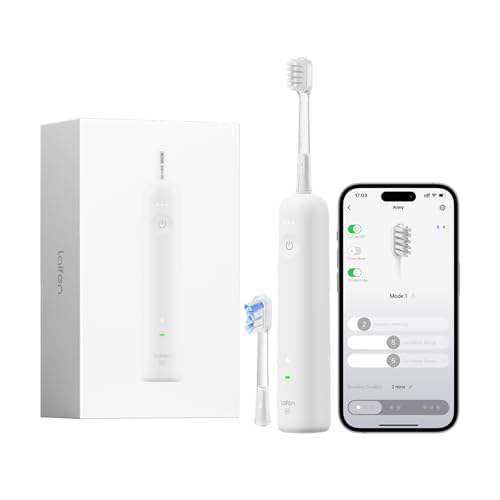
Laifen Wave Special is a rechargeable adult electric toothbrush with an oscillating and vibrating head, USB-C charging, app controls, a two-minute timer, and two cushioned Gum Care heads. The manufacturer states 60° oscillation, 26,000 vibrations per minute, a 2,000 mAh battery, roughly three-hour charging, and up to 50 days of use in its default mode. Its defining evidence point is that the ADA currently lists the Laifen Wave Electric Toothbrush from the same Shenzhen manufacturer as accepted for plaque removal and helping prevent and reduce gingivitis when used as directed. The supplied Wave SE guide also documents age 12+ guidance, three modes, battery and charging safety instructions, and a two-year limited warranty. However, the guide states IP68 while Laifen's current US product page states IPX7, so its water-ingress claim is not consistently presented.
This product fits adults and teens aged 12 or older who want an app-connected brush with a guided two-minute routine, adjustable modes, and a gentler starting setting. It is particularly relevant for a user who prefers an oscillating and vibrating action but wants a lower stated vibration rate than the standard Wave. It also suits someone willing to follow the manufacturer’s three-month head replacement schedule and use official heads. The stated 50-day default-mode battery life may help travelers, provided charging is kept dry and away from bathrooms.
It is not intended for children under 12, or for people with reduced physical, sensory, or cognitive capacity unless supervised or instructed by someone responsible for their safety. People with persistent gum bleeding, pain, significant sensitivity, active dental treatment, braces, dentures, restorations, or implanted medical devices should seek dental or medical guidance before use, as the instructions advise. It is also a weaker fit for anyone who requires clearly documented third-party electrical certification, a user-replaceable battery, or unambiguous wet-use specifications.
The strongest health evidence is the ADA’s active acceptance listing for Laifen Wave Electric Toothbrush from Shenzhen Shuye Technology. The ADA says its review found the listed product safe and effective for plaque removal and helping prevent and reduce gingivitis when used as directed. Wave Special is sold as part of the Wave series, but the public directory does not name this version separately, so that evidence should not be treated as a published clinical report for every configuration. The guide identifies a rechargeable lithium-ion battery and provides short-circuit, overheating, liquid, and charging precautions. It also instructs users not to share brush heads and to replace damaged heads. The battery is built in, not user-replaceable, and requires professional disassembly or appropriate recycling at end of life. Laifen sells replacement heads and claims soft TPE-coated heads with PBT bristles, but public, product-specific test reports for bristle durability, oral-contact materials, or the claimed TÜV certification were not located.
This is a rechargeable adult sonic toothbrush with a vibrating handle, two supplied brush heads with caps, a travel case, and a charger. Auraglow states that it runs at 40,000 vibrations per minute, has a two-minute timer and five modes, and carries a two-year defect warranty. The product is intended for twice-daily brushing rather than treatment of gum disease. Auraglow also claims up to 10 times more plaque removal, healthier gums in two weeks, and reduced gingivitis versus a manual toothbrush. Those are manufacturer claims. No product-specific human study, ADA Seal listing, or independently verifiable certification record was located for this brush. A separate retail listing describes soft nylon bristles, a lithium-ion battery, IPX7 water resistance, wireless charging, and up to 30 days of battery life, but public test reports for these specifications were not located.
This product suits an adult who wants a basic rechargeable sonic brush with a timer, several intensity or cleaning settings, a travel case, and an included spare head. It is also suited to someone willing to rely on manufacturer-stated performance information and who values the stated two-year defect warranty. The separately sold, product-specific heads provide a defined replenishment route, although the current availability and cost of those heads should be checked before relying on the handle long term.
It is not well suited to people seeking independently documented plaque and gingivitis outcomes, a current ADA Seal, or publicly traceable electrical-safety certification for a bathroom charging system. People with active gum bleeding, painful sensitivity, exposed root surfaces, recent oral surgery, extensive restorative work, or a history of brushing-related abrasion should seek individualized guidance from a dental professional. It is also a weaker fit for households needing child-specific sizing, supervision safeguards, or a replaceable battery and documented repair path.
The available product information identifies a soft-bristled, rechargeable adult brush and a two-minute timer. Soft bristles and two-minute brushing align with general ADA toothbrush guidance. Auraglow sells dedicated replacement heads, which can keep the handle in use when bristles wear. The official product page also names a U.S. business address and customer contact route, and states a two-year defect warranty. Important gaps remain. No ADA Seal entry, product-specific clinical report, public bristle safety test, or public UL, ETL, or CSA listing was located for this rechargeable model. The waterproof, battery-life, plaque-removal, gingivitis, and gum-health statements therefore remain manufacturer claims. Auraglow does not present a take-back program, battery replacement option, repair instructions, or recycling route for the handle, lithium-ion battery, charger, case, or replacement heads. No product-specific CPSC recall was located in the reviewed public sources.
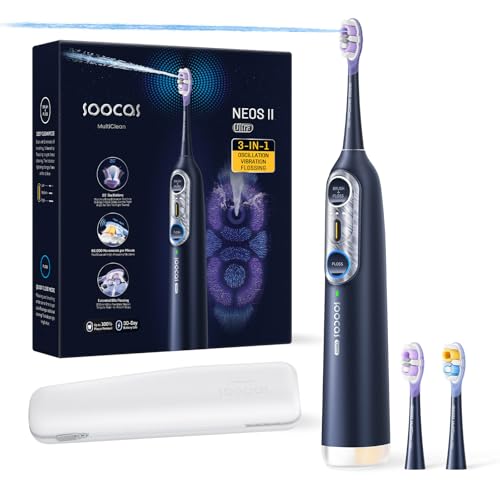
This is an adult-oriented rechargeable electric toothbrush that combines sonic brushing with a small internal water reservoir and an interdental water stream. The maker lists a 50 mL reservoir, three brush-intensity levels, 34,400 vibrations per minute, 90 intermittent sprays per minute, and a programmed two-minute brushing plus one-minute flossing routine. The supplied manual identifies magnetic charging at 5 V and an IPX8 water-resistance rating. The most useful product-specific documentation is practical rather than clinical. Its manual provides detailed reservoir cleaning and drying steps, directs replacement of the proprietary head every three months, and gives battery-removal instructions for disposal. Soocas also documents a 24-month warranty through authorized US sales channels. No product-specific randomized human plaque or gingivitis study, ADA Seal listing, or active US third-party electrical-safety listing was located in this review.
This product fits an adult who values having brushing and water flossing in one portable device and is willing to follow a more involved cleaning routine. It is most relevant for someone who has difficulty maintaining a separate interdental-cleaning step, including an adult with braces, provided their dental clinician has not given different instructions. The internal reservoir, timed sequence, and claimed month-long charge are practical for travel, but the reservoir needs to be emptied, scrubbed, and dried after use.
It is not a good fit for households seeking independently verified clinical gum-health results, an ADA-accepted product, or documented US third-party electrical certification. Children should not use it unsupervised, and the manual frames the device for home use with child supervision requirements. People with active gum pain, unexplained bleeding, recent oral surgery, periodontal treatment, or significant sensitivity should seek individualized dental guidance before using a pressurized water stream. Do not rely on the shower-use marketing because the manual gives a conflicting wet-use warning.
The manual provides useful hygiene direction for a device that stores water internally. It says to discard remaining liquid, clean the reservoir and its air vent with the supplied brush, and let the interior dry before replacing the bottom cover. That matters because enclosed moisture can support residue and microbial growth. It also advises avoiding excessive brushing force and offers three brush-intensity levels, but no independent brush-head durability or gum-abrasion testing was located. Soocas documents a 24-month warranty through authorized US channels and gives a procedure to remove the internal rechargeable battery before disposal. It also encourages local e-waste drop-off through its trade-in promotion. However, that promotion does not collect the old device itself, replacement heads remain consumables, and no product-specific recycled-content, packaging, take-back, or third-party environmental certification was located. No relevant US recall or regulatory warning was located in the sources reviewed.
This is a rechargeable adult sonic toothbrush with a slim plastic handle, wireless charging base, hard travel case, eight replaceable nylon-bristle heads, and four brushing modes. The maker states that it delivers 40,000 vibrations per minute, has Clean, Soft, Whiten, and Massage modes, and uses a two-minute smart timer. It is intended for twice-daily brushing, not for replacing professional periodontal care. Its defining evidence is the active American Dental Association Seal listing for AquaSonic Toothbrushes. The ADA states that the product is safe and has demonstrated plaque-removal and gingivitis-prevention and reduction benefits when used as directed. The Black Series product page also states IPX7 water resistance, a lithium-ion battery, and roughly four weeks of use per charge, but those electrical and runtime specifications were manufacturer-stated rather than independently confirmed for this unit.
This product fits an adult who wants an ADA-accepted powered toothbrush for standard twice-daily home brushing and values a large included supply of compatible heads. It is particularly practical for one-person travel or for someone who prefers a charging base and hard case rather than disposable batteries. The Soft mode may suit adults who find a standard mode too intense, provided they still use gentle pressure. Replacement heads are sold through the brand, which supports routine three-month head changes.
It is not the best fit for children unless a caregiver and dental professional confirm that the adult-sized handle and head are appropriate. People with severe gum pain, recent oral surgery, loose teeth, active periodontal disease, or significant recession should seek individualized dental guidance rather than rely on a mode setting. It also does not suit buyers who require a verified pressure sensor, publicly documented electrical certification for the complete charging system, replaceable battery service, or a documented recycling and take-back program.
The strongest health finding is independent. The American Dental Association's active AquaSonic listing says the toothbrush is safe and has shown efficacy in removing plaque and helping prevent and reduce gingivitis when used as directed. The ADA describes its Seal process as a review of submitted safety and efficacy evidence against category requirements. The product is sold for adults and includes a Soft mode, but no pressure sensor was verified, so gentle technique remains important. The maker specifies DuPont-engineered replacement bristles, a lithium-ion battery, an IPX7-rated handle, and a one-year product warranty. Replacement heads are available and the brand advises changing them every three months. No relevant CPSC or FDA recall, FDA warning letter, or public regulator action was identified in the searches performed. The environmental tradeoff is the eight disposable heads and sealed rechargeable handle. No verified recycling, take-back, recycled-content, battery-replacement, or repair program was found.
This product is a rechargeable adult electric toothbrush that combines a powered brush with an onboard water-flossing reservoir. The manufacturer identifies a 3.6 V, 3,000 mAh lithium-ion battery, magnetic charging, an IPX8 water-resistance claim, three brushing intensities, and an 80-second flossing cycle. It includes an Ultra Soft head, an Ultra Clean head, a travel case, a magnetic charger, and a reservoir-cleaning brush. The most consequential feature is the combined brush-and-floss format, not a clinically verified outcome. The manufacturer gives detailed instructions to empty and dry the reservoir after use, which matters because retained water can support residue and microbial growth. Its 30-day battery figure and IPX8 rating are manufacturer-stated. I did not locate product-specific human plaque or gingivitis trials, an ADA Seal listing, or a public third-party electrical certification listing for this exact product.
This product suits an adult who wants brushing and water flossing in one travel-oriented device and is willing to maintain a small reservoir after each use. It is particularly relevant for someone who values a supplied soft head, adjustable intensity, a travel case, and less frequent charging. It also fits a buyer comfortable following detailed cleaning, drying, and charging instructions. The 24-month manufacturer defect warranty adds some support for a buyer purchasing through an authorized US channel.
It is not a strong fit for someone who needs independently verified clinical plaque or gingivitis results from the exact product, or who specifically requires an ADA-accepted toothbrush. People with persistent gum bleeding, recent oral or gum surgery, braces, crowns, implants, pacemakers, or other implanted devices should follow the manual's instruction to consult a dentist, physician, or device manufacturer first. It is also unsuitable for unsupervised children or people unable to manage reservoir cleaning and charging precautions safely.
The soft brush head is identified by the manufacturer as PBT bristles with a PP handle and flexible TPE side material. The manual recommends replacing heads every three months or sooner if worn, and it warns against using frayed or bent bristles. It also recommends starting in Gentle mode for new users and stopping for dental advice if bleeding persists beyond two weeks. For hygiene, the water tank can be opened, emptied, dried, and cleaned with the included brush. For end of life, the manual provides battery-removal instructions and says the lithium-ion battery should go to a designated recycling facility. Soocas also promotes a trade-in discount program that encourages local e-waste drop-off, but it is not a mail-back collection service. No product-specific ADA acceptance, public NRTL electrical listing, or independent clinical report was located.
This is a rechargeable sonic toothbrush for personal home use. The supplied configuration includes a charging glass and stand, USB charging travel case, Premium All-in-One head, Premium Plaque Control head, and TongueCare+ attachment. It has up to five modes, three intensity settings, a two-minute timer, section pacing, app connectivity, pressure feedback, and brush-head wear tracking. Philips states a full charge is designed for at least 28 two-minute sessions, or 14 days at twice-daily use. Its central health claim has meaningful product-platform evidence. A published 42-day randomized, examiner-blinded study of DiamondClean Smart with the Premium Plaque Control head found reductions in plaque, gingivitis, and gum bleeding in adults with existing gingivitis. The study was conducted with Philips employees among its authors, so it is published clinical evidence but not fully independent. The manual also gives specific cleaning, drying, charging, and replacement instructions.
This product suits an adult who wants a connected rechargeable toothbrush with explicit pressure feedback, pacing, several cleaning modes, and replacement reminders. It is especially relevant for a person transitioning from manual brushing who tends to use too much force, because the manual directs gentle use and provides visual and vibration feedback. It can also suit users with braces or sound dental restorations, provided their dental professional has not advised otherwise. It is most appropriate for someone willing to clean and air-dry the head, handle connection, and travel case regularly.
It is not a strong fit for someone seeking independently listed electrical certification for the exact bathroom appliance, or for a household unwilling to follow drying and charging instructions. People who need a user-replaceable battery or an established repair path should note that the battery is sealed and replacement is discouraged. It is not intended for shared clinical or institutional use. Children younger than eight need adult supervision. Anyone with persistent bleeding, oral pain, a pacemaker, or another implanted device should follow the manual's direction to stop use when appropriate and consult a clinician before use.
The strongest health point is the published DiamondClean Smart clinical evidence. In a six-week randomized study, the platform with a Premium Plaque Control head reduced plaque, gingival inflammation, and bleeding in adults with gingivitis. The product manual also gives force-control feedback, a two-minute timer, section pacing, guidance for braces and restorations, and instructions to replace heads every three months or sooner when bristles are bent or crushed. For hygiene, the manual instructs users to rinse the shaft area, head connection, bristles, case, and holder, then air-dry them. The built-in lithium-ion cell must be separately recycled or disposed of properly, but it is not user-replaceable. Philips supplies a two-year warranty and compatible replacement heads. A closely related 9500 model has one FDA-recorded, unconfirmed fire report with minor property damage and no reported injuries, which makes careful charging and discontinuing use of an abnormally hot or smelly unit important.
This is a rechargeable sonic toothbrush marketed for children and tweens age 7 and older. The Good Vibes Only version has an easy-grip handle, two modes called Gentle and Clean, a two-minute timer with 30-second prompts, a charging cable, and six soft replacement heads. The manufacturer directs users to replace the head every three months. Independent verification is a defining point. The American Dental Association Council on Scientific Affairs recorded a five-year Seal of Acceptance award for Made by Dentists' Kids Rechargeable Electric Toothbrush in 2025. The company also states that Sonic X removes up to eight times more plaque than a manual brush and reduces gingivitis by 90 percent in two weeks. Those numerical results were not accompanied by a publicly available full study report, protocol, or statistical analysis for this specific Sonic X version.
This product fits a child or tween age 7 and older who is moving beyond a small children's brush and benefits from structured brushing cues. It is especially practical for a household that wants a rechargeable handle with a gentler mode, a two-minute timer, and enough included heads to follow the manufacturer's three-month replacement schedule for roughly one year. The smaller tween-oriented format may also suit a person with a small mouth, provided they are comfortable with sonic vibration and can use the brush without excessive force.
It is not the right fit for children under the stated age range, or for any child who cannot safely manage a rechargeable brush and cable without close adult help. People with severe gum pain, unexplained bleeding, active oral injuries, recent oral surgery, or significant sensory intolerance to vibration should ask a dental professional before changing brushing tools. Buyers who need documented waterproof performance, a pressure sensor, independently published electrical certification, readily available repair parts, or a replaceable battery should choose a product with those records clearly available.
The important health finding is the ADA Council on Scientific Affairs record of a five-year Seal award for Made by Dentists' Kids Rechargeable Electric Toothbrush. The Sonic X manufacturer also specifies soft bristles, a Gentle mode, timed brushing prompts, and replacement every three months. These are sensible features for the stated tween audience, but the brand has not publicly provided the full clinical documentation behind its exact eight-times plaque and 90 percent gingivitis claims. No recall, FDA warning letter, or CPSC recall specifically identifying this Sonic X product was located in the reviewed sources. However, public materials did not show a product-specific independent electrical listing, ingress rating, repair program, battery replacement path, or recycling route for the electronic handle and heads. The brush reduces disposable handle waste versus fully disposable powered brushes, but its replaceable plastic heads and sealed rechargeable electronics still create ongoing waste.
This is an adult rechargeable sonic toothbrush with three speed settings, a charging stand, a travel case, and three soft-bristle replacement heads. The manufacturer states that it reaches up to 48,000 vibrations per minute, has a two-minute timer, and uses 30-second pacing prompts. It is intended for twice-daily brushing with toothpaste, with heads changed every three months. The most useful documented ownership feature is the availability of dedicated replacement-head packs from the manufacturer. The manufacturer also states a two-year guarantee and up to 70 days of battery life. Those performance figures have not been independently confirmed. No product-specific ADA Seal listing, published human plaque or gingivitis study, accredited laboratory report, or traceable electrical safety certification was located during this review.
This product fits an adult who wants a conventional sonic brush with a timer, pacing prompts, soft heads, a travel case, and dedicated replacement heads available directly from the manufacturer. It is most practical for someone willing to replace heads every three months and to follow routine cleaning steps, including rinsing the head, drying the handle, and keeping charging contacts dry. The stated two-year guarantee may also matter to a buyer who wants written manufacturer coverage for early product failure.
It is not the strongest fit for people who need independently verified plaque or gingivitis outcomes, a confirmed ADA Seal, or a traceable electrical safety and water-ingress certification. People with severe gum pain, active oral injury, unusual sensitivity, extensive dental work, or treatment-specific instructions should follow their dental clinician's guidance rather than rely on the product's Sensitive mode or marketing claims. It is also a poor fit for buyers who require replaceable batteries, repair parts, or a documented recycling and take-back path.
The product is an adult brush and the manufacturer supplies soft replacement heads, a two-minute timer, and a three-month head-change recommendation. That schedule aligns with ADA general toothbrush guidance. Replacement heads are separately sold in compatible three-packs, which is useful for maintaining the brush rather than discarding the handle after heads wear out. Important evidence gaps remain. The manufacturer claims up to 48,000 vibrations per minute, up to 70 days of battery life, and strong plaque and gum-health results, but no full product-specific clinical protocol, results report, or independent certification was located. No product-specific ADA Seal or traceable NRTL electrical listing was found. The brand states a two-year guarantee, but it does not publish a battery replacement, repair-parts, take-back, or recycling program for this brush. No relevant U.S. recall or regulator warning was identified in the checked sources.


