Best Overall
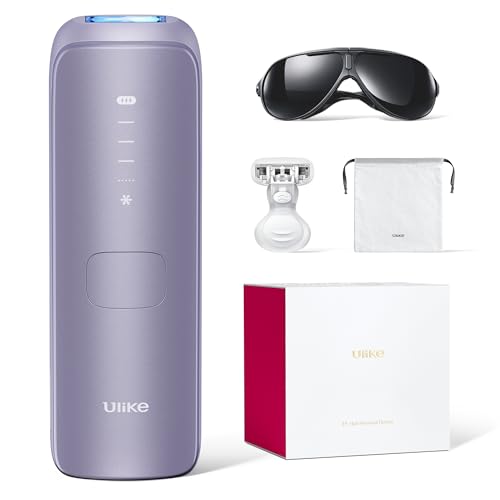
Ulike Air 4 IPL Hair Removal Device
Fast hair removal in just 10 minutes.
Nearly painless with ice cooling feature.
Suitable for both women and men.
 Lauren Wilson
Fast hair removal in just 10 minutes.
Nearly painless with ice cooling feature.
Suitable for both women and men.

Integrated ice-cooling for a comfortable experience
Dual lights for more effective hair removal
Skin sensor ensures safe usage

Convenient at-home hair removal solution.
Suitable for both body and face.
Effective for both women and men.

Pain-free hair removal with sapphire cooling.
Effective on all body areas.
Visible results after first use.

Effective ice-cooling for a painless experience.
Convenient home use with lasting results.
Safe for both women and men.

Fast and effective hair reduction results.
Gentle on sensitive skin types.
Easy to use with ergonomic design.

Provides a painless hair removal experience.
Features an effective ice cooling function.
Offers long-lasting smooth skin results.

Offers painless hair removal experience.
Features adjustable light intensity settings.
Provides long-lasting results with regular use.

Ice cooling feature enhances comfort during use.
High flash count for long-lasting performance.
Effective for multiple body areas, including bikini line.

Provides painless hair removal with ice-cooling feature.
Offers versatile use with 6+1 modes and 6 levels.
Includes face rejuvenation for improved skin appearance.
A credible product should first be identifiable by its exact model and U.S. manufacturer. A general FDA logo, a similar-looking product, or clearance of another model is not enough. The strongest regulatory evidence is a model-specific FDA 510(k) clearance for over-the-counter light-based hair removal, with the manufacturer and marketed unit matching the FDA summary and clearance letter. Buyers should also be able to trace the responsible maker, labeling, lot or serial information, U.S. support route, warranty, and any recall or adverse-event history.
Dose information should be concrete and internally consistent. Useful disclosures include the wavelength or spectrum, fluence at the skin in J/cm², pulse duration and pattern, treatment-window or spot size, output levels, treatment schedule, and use limits. A large total-energy number, flash count, or percentage reduction does not establish how much light reaches the skin. The supplied reviews show why: several products advertise rapid reductions, “permanent” or painless results, or high total joules without an exact-product human study, complete protocol, objective hair counts, or long-term follow-up. A product-specific study should report measurable hair counts, follow-up after treatment, adverse events, funding, and the exact device or identical platform tested.
Independent safety evidence is separate from FDA authorization. A strong record includes a certificate or report number traceable to an accredited laboratory and covering the sold configuration. Relevant checks include UL, ETL, or TÜV certification and testing for home-use electrical, thermal, electromagnetic, and optical-radiation safety. IEC 60601-1, IEC 60601-1-2, IEC 60601-2-83, and IEC 62471 are the standards most often referenced in the supplied reviews. Contact sensing, thermal limits, cooling, fault shutoff, and eye-safe operating limits can reduce risk, but manufacturer claims alone do not prove that those controls work as stated.
The manual matters as much as the headline specification. Look for a patch-test procedure, shaving and preparation steps, treatment intervals, cleaning and storage instructions, eye protection, stopping rules, and clear limits for skin tones, hair colors, tattoos, moles, sun exposure, pregnancy, photosensitivity, and medicines. IPL generally works best when there is enough contrast between hair pigment and skin pigment; many supplied products exclude very dark skin and blond, red, gray, white, or very light hair.
Across the supplied products, recurring cautions include avoiding recently tanned or sunburned skin, tattoos, moles, damaged or diseased skin, and the eye area. Pregnancy, lactation, photosensitivity, photosensitizing medicines, and light-triggered conditions repeatedly require avoidance or clinician guidance. Burns, pigment changes, blistering, persistent redness, eye symptoms, and unusual pain are possible reasons to stop. Voluntary FDA adverse-event reports involving several exact products or related models are not proof of causation, but they are meaningful safety signals. IPL products should not be described as lasers, painless, suitable for every skin tone and hair color, or permanently effective unless those claims are specifically supported.
These topics separate a documented home IPL device from one supported mainly by marketplace language. Scores reflect the supplied product reviews; a high score indicates stronger evidence or clearer controls, not a guarantee that treatment is risk-free.
This measures contact sensing, cooling or thermal limits, unintended-flash prevention, fault shutoff, and clear eye-use limits. These controls matter because IPL light and heat can cause burns, pigment changes, or eye exposure when the window is misapplied. Among the supplied products, the strongest scores were in the high 80s and low 90s where FDA-documented contact interlocks and warnings were present; lower scores reflected weaker or only manufacturer-stated controls.
This measures whether the product clearly identifies suitable skin tones and hair colors and explains when not to use IPL, including with tattoos, moles, pregnancy, photosensitivity, medicines, tanning, or damaged skin. Clear screening helps prevent treating skin that absorbs too much light. Supplied scores ranged from the low 60s to the high 80s; higher-scoring products offered more specific compatibility and contraindication guidance.
This measures whether spectrum, fluence, pulse characteristics, treatment area, levels, schedules, and limits are stated consistently and plausibly. For IPL, total joules or a flash count alone cannot tell a buyer the dose at the skin. Higher-scoring products disclosed wavelength, J/cm², pulse timing, and spot size in FDA files; lower-scoring products relied on inconsistent or incomplete energy claims.
This measures whether a buyer can identify the responsible manufacturer, model, serial or lot information, U.S. support route, warranty, recalls, and adverse-event history. Traceability matters when a device overheats, malfunctions, or causes a reaction. The supplied scores were generally higher for products with FDA establishment or model records and identifiable support; lower scores reflected unclear retail identity or limited corrective-action information.
This measures whether the manual helps a first-time user shave, patch test, prepare skin, choose intervals, clean and store the device, and stop after a reaction. Good instructions reduce predictable mistakes such as overlapping flashes or treating unsuitable skin. The supplied scores were highest where manuals included patch testing, schedules, eye precautions, and reaction guidance; lower scores reflected missing contraindications or incomplete public instructions.
This measures whether the exact marketed device and U.S. manufacturer match an FDA 510(k) clearance for over-the-counter light-based hair removal. Model identity is decisive because clearance of a related family or similar-looking unit does not establish authorization for the product being sold. The highest scores, generally in the mid-90s, belonged to exact model matches; lower scores reflected missing model numbers or clearance records for different products.
This measures whether an accredited independent laboratory tested the exact sold configuration for electrical, thermal, electromagnetic, and optical-radiation safety, with a traceable certificate or report. It is distinct from a manufacturer saying standards were met. Supplied scores were highest where FDA files documented relevant standards testing or a clearer testing trail, while many products lost points because no public UL, ETL, TÜV, or laboratory report number covered the retail unit.
This measures human evidence for the exact product or demonstrably identical platform, including objective hair counts and follow-up after treatment. Category-level evidence supports the plausibility of home IPL, but it does not validate a particular percentage claim. Higher-scoring products had clearer evidence or model documentation, while most supplied products lacked a published exact-product trial and relied on bench testing, short-term testing, or inaccessible manufacturer reports.
This measures whether listings distinguish IPL from laser and avoid unsupported promises such as painless treatment, permanent removal, all-skin-tone suitability, or rapid percentage reductions. The recurring use of “laser” for IPL lowered scores across the set. Higher scores went to products whose technical records and wording were closer to the evidence; lower scores reflected contradictory specifications, exaggerated timelines, or claims not supported by an exact-model study.
This measures warranty strength, repair or replacement-part support, serviceability, unnecessary consumables and packaging, and responsible U.S. electronics-recycling information. A longer-supported corded device may avoid premature disposal, although a warranty is not the same as repairability. Scores in the supplied set were mostly moderate: some products stated one-, two-, or three-year coverage or flash replacement, but no verified U.S. take-back or recycling program was found.
This corded home hair-reduction product uses intense pulsed light, or IPL, rather than a laser. The listed purple model is the UI06S PR configuration. FDA records identify that exact model as an over-the-counter ice-cooling IPL hair-removal device, with a xenon flashlamp, 3.3 cm² treatment window, four output levels, and skin-contact activation. Its output is independently documented in the FDA clearance summary at 550 to 1200 nm and 2.42 to 7.27 J/cm², with 8 to 24 J output energy and multi-pulse durations of 1.82 to 8.07 ms. Ulike states a 12-minute full-body session and 95.8% four-week hair-density reduction, the latter tied to an SGS report. That short-term result is not a published, long-term clinical study of this exact product.
This product suits an adult who wants a corded at-home IPL routine for body areas such as legs, arms, underarms, bikini line, chest, or upper lip, and whose skin and hair fit the supplied skin-tone chart. It is most practical for dark brown or black hair on lighter to medium compatible skin tones, and for someone willing to shave, patch test, start at a low setting, and follow a repeated schedule. The FDA-documented dose range and clear treatment procedure are useful for a careful first-time IPL user.
It is not appropriate for very dark skin tones, or for light blonde, red, gray, or white hair, because IPL depends on melanin and may be ineffective or raise skin-injury risk. Do not use it during pregnancy or breastfeeding, with photosensitizing medicines, active skin disease or infection, open wounds, recent laser or injectable treatment, clotting disorders, or a tendency to keloid scars. It is also unsuitable for use near eyes or on genital mucosa, nipples, areolae, or pets. People unable to follow the patch-test and protective-eyewear instructions need a different arrangement.
The strongest safety finding is model-specific regulatory traceability. FDA records match the listed model and manufacturer, document skin-contact activation, and list evaluation against IEC electrical, home-use, electromagnetic compatibility, optical-radiation, and biocompatibility standards. The supplied exact-model instructions call for protective eyewear, a two-hour patch test, shaved and clean skin, no more than one flash per spot, and avoiding direct sun for at least 48 hours after treatment. The manual also lists meaningful contraindications, including photosensitivity, certain medicines, active skin conditions, pregnancy, breastfeeding, open wounds, and recent laser treatment. Cooling may improve comfort, but it does not make IPL suitable for incompatible skin or hair types. This reusable device avoids disposable cartridges, and Ulike states a two-year warranty. However, no verified US repair pathway, replacement-parts program, or electronics-recycling take-back information was found, so end-of-life support remains limited.
This is a corded, at-home intense pulsed light, or IPL, hair-reduction product. It uses a sapphire treatment window, dual lamps, multipulse flashes, cooling, and a contact sensor. The FDA's exact-model documentation identifies it as an over-the-counter home-use IPL product, not a laser, with 1 to 10 intensity levels. FDA documentation for this model lists a 550 to 1200 nm spectrum, 1.67 to 6.67 J/cm² energy density, and 6.5 to 26 J output. It is cleared for unwanted-hair removal and permanent reduction in regrowth, meaning stable reduction measured 6, 9, and 12 months after a treatment regimen. The maker's 10-minute full-body and nearly painless claims are not independently substantiated in the public exact-model record.
It suits an adult who wants a corded home IPL product for regular treatment of dark, visible body hair on compatible lighter to medium skin tones. It is particularly practical for someone willing to shave first, patch test, work through repeated sessions, and follow exposure limits. The documented contact sensor, cooling feature, and clearly stated output range matter most for a user who values a traceable home-use device rather than relying only on marketplace claims.
It is not for very dark skin, or for light blonde, gray, white, or red hair, because IPL depends on hair pigment and can be ineffective or unsafe outside its fit range. It is also unsuitable during pregnancy or nursing, on tattoos, moles, scars, tanned skin, nipples, or genitals. People with photosensitivity, photosensitizing medicines, unusual pigment reactions, or difficulty following eye and sun precautions should seek clinician-specific guidance instead.
The strongest health finding is model-specific regulatory traceability. FDA records identify the product and maker, confirm commercial distribution, and document its home-use IPL indication. The clearance summary reports passed electrical, electromagnetic-compatibility, home-use, eye-safety, biocompatibility, software, and usability testing. It also documents cooling and a contact sensor that should prevent flashes when the treatment window is not fully on skin. IPL still carries avoidable burn, pigment-change, and eye-exposure risks when misused. The public instructions appropriately require patch testing, limited passes, protective eyewear, and avoidance of sun, tattoos, moles, tanned skin, pregnancy, and nursing. A manufacturer-linked adverse-event report involving a different Ulike model described off-skin flashes and side light leakage, so contact-sensor behavior deserves attention even though that report does not establish a defect in this product. Public evidence of repairability, replacement parts, take-back service, or recycling guidance was not located.
This is a cord-powered, hand-held intense pulsed light product for reducing unwanted hair on areas including the upper lip, chin, underarms, arms, legs, bikini area, chest, back, and abdomen. It uses a xenon flash lamp, a 3 cm² treatment window, nine intensity settings, and a listed light range of 590 to 1200 nm. The selling page also includes goggles and a shaver. The exact product family and manufacturer are matched to an FDA-cleared over-the-counter device. Its FDA submission documents a skin-contact sensor that prevents a flash unless the treatment window is fully against skin, plus cooling on this configuration. The 5°C cooling and 97.6% reduction after two sessions are manufacturer-stated listing claims. The latter is not supported by a located human study of this exact product.
This product suits an adult home user with skin in the FDA-cleared I to V range who has hair and skin coloring that pass the supplied suitability chart, can shave before treatment, and is prepared to use a gradual treatment schedule. It is most practical for people treating reachable body areas such as underarms, lower legs, arms, or the bikini line. The 3 cm² window and automatic mode can make broad, flat areas more manageable, while the manual mode is intended for smaller areas. A user should patch test first and begin at a low setting.
It is not for people with very dark skin outside the stated I to V range, very light, gray, red, or white hair if the supplied chart excludes it, or anyone unable to verify their fit. Avoid use near the eyes, on eyebrows, lips, genitals, mucous membranes, tattoos, dark moles, broken skin, or active rashes. People who are pregnant or nursing, use photosensitizing medicines, have photosensitivity disorders, recent tanning or sunburn, impaired healing, implanted cardiac devices, or a history of skin cancer should seek clinician guidance or use another method.
The most important health positive is traceability. The manufacturer and this product family are identified in an FDA clearance for over-the-counter IPL hair removal. The FDA file describes a 590 to 1200 nm xenon-lamp system with 2 to 4.3 J/cm² fluence, nine settings, skin-contact sensing, cooling, and testing to electrical, home-use, photobiological, biocompatibility, and usability standards. Its body-contact materials are listed as PC, ABS, and POM for intact-skin contact. Cooling may improve comfort, but it does not remove burn or eye risks. FDA adverse-event data include a record under the CT05 product name, and home IPL literature reports redness, pain, and thermal burns as known possible outcomes. Use the supplied skin chart, patch test, shave, keep the window flush to clean dry skin, and never defeat contact controls. The light outlet is not replaceable, and no verified repair, take-back, or recycling program was found, which limits end-of-life support.
This is a corded, hand-held intense pulsed light product for home hair reduction. It uses a xenon flashlamp, a removable treatment window, cooling, and five intensity levels. The brand sells it with a Hairless Lens for hair treatment and an Ageless Lens for cosmetic skin-rejuvenation use. The model number matches a U.S. FDA-cleared Mlay IPL platform intended for unwanted-hair removal and permanent reduction in regrowth. That clearance documents a skin-contact sensor, cooling, five levels, and testing against electrical, home-use, usability, and photobiological-safety standards. The public FDA file lists 1.84 to 5.23 J/cm² and a 3.9 cm² spot for this model. Nood instead advertises 7 J/cm² and a 3 cm² window, leaving an important unresolved specification conflict. Nood's 95% reduction and clinical-grade claims were not accompanied by an independently published study of this marketed product.
This product fits an adult who has dark blonde, brown, or black hair with fair through olive or light-brown skin, can follow a recurring treatment schedule, and is comfortable doing a 24-hour patch test before wider use. It is designed for home treatment of areas such as legs, underarms, bikini line, and facial hair below the chin line. The clearest fit is someone who values a contact-sensor IPL format and cooling, while treating the advertised high-output and high-percentage result claims cautiously until Nood reconciles them with the FDA-cleared specifications.
It is not appropriate for brown to dark-brown or black skin tones under Nood's own compatibility chart, or for very light blonde, red, or gray hair. Avoid use near the eyes and eyebrows. People who are pregnant, taking photosensitizing medicines, have a photosensitivity disorder, recent tanning or sunburn, tattoos or dark moles in the treatment area, active skin disease, or a history of abnormal pigment response should not rely on the short public guidance alone. They need the complete instructions and, where relevant, clinician advice before light treatment.
The strongest safety evidence is tied to the FDA-cleared T16A platform from Shenzhen Mlay. Its FDA summary describes a contact sensor, cooling, five output levels, and conformance testing covering electrical safety, electromagnetic compatibility, home-use requirements, usability, optical safety, and skin-contact biocompatibility. Nood also tells users to patch test, shave, use clean dry skin, wear supplied eye protection, and avoid areas around the eyes. These controls matter because home IPL can cause transient pain, burns, redness, pigment changes, and eye injury when used incorrectly. The main health concern is transparency. Nood's public output and treatment-window figures differ from the FDA-cleared T16A documentation, and broad claims of painless clinical-grade results and up to 95% reduction lack a public independent study of this specific product. No recycling or take-back program, repair service, or replacement-part path was located. Nood states a lifetime flash guarantee, but a warranty is not the same as a documented repair or electronics-recycling plan.
This is a corded, handheld at-home intense pulsed light product for reducing unwanted body and facial hair. The supplied 07Pro manual describes nine energy levels, with a stated maximum of 21 J per pulse, and instructs users to shave, select a low starting level, and use eye protection. The brand also states that its cooling surface reaches 41°F. The named manufacturer, Shenzhen IONKA Medical Technology, has an active FDA establishment registration and an FDA-cleared IPL family. However, that clearance identifies only FZ-608, FZ-608G, FZ-100, and FZ-200 models, not 07Pro. Those cleared models also have different stated output ranges. No public certificate or report was found that ties independent electrical, optical-radiation, or thermal testing to this exact product. The advertised 96% reduction in 2 to 4 weeks is manufacturer-stated, not supported by an identified study of this product.
It suits an informed adult who understands that it is an IPL product, rather than a verified laser, and who has hair and skin coloring within the supplied suitability chart. The best fit is someone treating accessible, shaved areas such as legs, underarms, arms, or the bikini line, who is willing to start at a low setting, patch test, follow repeated sessions, and stop if irritation occurs. They should treat the stated cooling and rapid reduction figures as manufacturer claims, not independently confirmed performance.
It is not suited to anyone who needs a product with exact-model FDA clearance, publicly traceable independent safety certification, or clinical evidence for its advertised result. It is also unsuitable for use near the eyes, on sunburned, injured, inflamed, infected, tattooed, or mole-covered skin, and for people who are pregnant, breastfeeding, have epilepsy, or have serious skin disorders, according to the manual. People with very dark skin or white, red, or very light blonde hair should not rely on it, because IPL may be ineffective or unsafe for their coloring.
The strongest health positive is the supplied manual's practical exclusion list. It covers eye exposure, unsuitable hair and skin coloring, sunburn, tattoos, moles, pregnancy, breastfeeding, epilepsy, and irritated or infected skin. It also instructs users to begin at a lower energy setting. These are manufacturer-provided instructions, not independently audited labeling. The product's stated manufacturer is traceable in FDA registration records and has a U.S. agent. Its FDA-cleared IPL family reports skin-contact sensing and compliance with electrical and electromagnetic compatibility standards, but those records do not identify the 07Pro model, so they cannot verify this unit. A May 30, 2025 FDA adverse-event filing concerning a different Ubroo product was a consumer regulatory complaint and did not document a clinical injury. No repair parts, take-back program, or U.S. electronics-recycling guidance was found. A 12-month warranty and lifetime technical support are manufacturer-stated.
This corded, handheld home IPL device uses a xenon flashlamp, sapphire treatment window, dual lamps, cooling, and a skin-contact sensor. It is intended for unwanted hair on areas such as the legs, underarms, arms, chest, face, and bikini line. Use requires shaved, clean, dry skin, with treatment intervals that the manufacturer describes as an initial multiweek course followed by maintenance. The exact purple UI20 DB model is listed in an FDA 510(k) clearance for over-the-counter IPL hair removal and long-term, stable reduction in regrowth measured after treatment. FDA-filed technical information states a 550 to 1200 nm output range and 1.67 to 6.67 J/cm² fluence. The manufacturer also advertises a 26 J four-pulse SHR mode and visible results in two weeks, but those outcome claims are not supported by a published model-specific human trial found in this review.
This product fits an adult who has dark brown or black body hair and a light to medium skin tone that falls within the supplied suitability chart, and who can follow a careful multiweek home treatment routine. It is most appropriate for someone seeking gradual reduction in regrowth on larger shaved areas such as legs, arms, underarms, chest, or selected bikini-line skin. The corded format suits at-home use near an outlet. A buyer should be prepared to patch test, begin cautiously, use eye protection, and continue maintenance sessions rather than expect complete hair removal after a few uses.
It is not appropriate for very dark skin, or for white, gray, red, or light-blonde hair, because IPL depends on contrast between hair pigment and skin. Avoid use on recently tanned or sunburned skin, tattoos, moles, scars, broken skin, or directly on genitals, nipples, anus, or testicles. People who are pregnant, photosensitive, using photosensitizing medicines, taking retinoids, or managing a skin condition should follow the full instructions and seek clinician advice when suitability is uncertain. It also does not suit users who require a published, model-specific clinical results study.
The product’s safety record is unusually traceable for a home IPL unit. The exact model appears in FDA clearance and device-identifier records under Shenzhen Ulike Smart Electronics. Its FDA submission reports passed testing to home-use electrical safety, electromagnetic compatibility, IEC 62471 photobiological safety, skin-contact biocompatibility, and usability standards. The clearance describes a sapphire window, cooling, and a sensor that blocks flashes when the window is not fully against skin. These controls reduce risk but do not eliminate it, so patch testing, skin-tone screening, eye protection, and avoidance of contraindicated areas remain important. Ulike provides a two-year limited warranty with repair or replacement at its discretion, which can extend usable life. The product is reusable and does not require treatment cartridges. However, no U.S. electronics take-back service, recycler referral, replacement adapter catalog, or repair-parts information was located. The manufacturer’s safety history includes adverse-event and malfunction reports for other product models, but this review found no recall specific to UI20 DB.
This corded, handheld at-home hair-reduction product uses intense pulsed light, not a laser beam. The brand describes a 590 to 1200 nm IPL spectrum, nine intensity settings, manual and automatic flash modes, and contact cooling claimed to reach 5°C. It is marketed for body areas including legs, underarms, arms, bikini line, and selected facial areas. The named manufacturer has FDA-cleared OTC IPL product families whose public specifications include the same 590 to 1200 nm range, nine settings, 2 to 4.3 J/cm2 fluence, skin-contact sensing, and IEC safety testing. However, the product's public materials do not name a model that ties this blue Ubroo unit to those cleared configurations. The 5°C cooling and 96% reduction claim are manufacturer statements, not independently verified results for this product.
This product is most suited to an adult who understands that it is IPL, not laser treatment, and wants a corded home device for repeated treatment of reachable areas such as lower legs, underarms, arms, or the outer bikini line. The user should be willing to shave first, start conservatively, use the supplied skin-tone guidance, and stop after an adverse reaction. It is better suited to someone treating a limited routine over weeks than someone expecting a one-session or immediately permanent result.
It is not suited to anyone who cannot confirm safe skin-tone and hair-color compatibility from the supplied chart, or who needs clinician-specific advice before light treatment. Avoid self-treatment during pregnancy or nursing, on recently tanned or sunburned skin, tattoos, moles, broken skin, or areas close to the eyes. People with photosensitivity, light-sensitizing medicines, active skin disease, a history of skin cancer, implanted cardiac devices, impaired healing, or uncertainty about a medical condition should consult a qualified clinician rather than rely on the product page.
The named manufacturer, Shenzhen Chuangtong Yigou Technology, has FDA-cleared OTC IPL families. Their public clearance summary reports IPL output, skin-contact sensing, IEC 60601 electrical and home-use testing, IEC 62471 photobiological safety testing, and applicable Fitzpatrick types I through V. That is useful manufacturer-level evidence, but the public Ubroo materials do not identify this product's model, so those findings cannot be treated as verification of this exact unit. The brand provides a skin-tone-chart prompt, cooling claim, shaving direction, automatic mode, and goggles. It does not publicly substantiate its 96% two-month result claim. Published reviews support IPL as a category, while also reporting that redness, burns, blistering, and pigment changes can occur. No product-specific recycling, repair, replacement-part, packaging-material, or take-back documentation was found, which leaves its end-of-life plan unclear.
This is a corded, hand-held IPL hair-reduction product intended for face, body, underarms, bikini line, arms, and legs. The manufacturer describes five energy levels, a 3 cm² treatment window, face, body, and bikini modes, dual-pulse operation, cooling, and a supplied razor, glasses, bag, manual, and quick guide. It is used on shaved, clean, dry skin with the flash window held flat against the treatment area. A Wavytalk-labelled device from the listed manufacturer is recorded in the FDA device identifier database, but the public product materials do not identify the sold roller configuration with the same model number. The manufacturer states 24 J total energy and 8 J/cm², while the earlier FDA-cleared model family that includes a Wavytalk device lists 2 to 5 J/cm² and a 600 to 1100 nm range. That unresolved specification mismatch is important when interpreting the product's output and rapid-results claims.
This product is suited to an adult home user with light to olive light-brown skin and light-brown to black hair who is comfortable following a repeated treatment schedule. It fits someone treating several accessible body areas who prefers a corded device and wants guided face, body, and bikini settings. The user should be prepared to shave first, patch test, begin at a low setting, wear the supplied glasses, and stop treatment if irritation occurs. Its strongest documented safety feature is the cleared platform's full-skin-contact flash interlock.
It is not suited to people with deeper skin tones or red, blonde, grey, or white hair, because the manufacturer says IPL is ineffective or unsuitable in those cases. It is also not appropriate for anyone unwilling to verify the full supplied manual before use, particularly people with photosensitivity, recent tanning or sunburn, tattoos, suspicious moles, active skin irritation, a history of unusual light reactions, or medicines that increase light sensitivity. Children and people seeking treatment of a medical skin condition need a clinician-directed option instead.
The listed manufacturer has an FDA-cleared IPL home-use platform, and a Wavytalk-labelled device is recorded as an OTC device for unwanted-hair removal and permanent reduction in hair regrowth. The earlier clearance summary describes a contact sensor, cooling on relevant models, IEC electrical and electromagnetic compatibility testing, IEC 62471 eye-safety testing, and skin-contact material testing. These are meaningful controls, but the public listing does not conclusively connect its roller configuration to the cleared model. IPL can cause redness, swelling, blistering, pigment changes, and burns when skin selection, dose, or use technique is unsuitable. The manufacturer tells users to patch test and limits suitability by skin tone and hair color, but the publicly visible guidance is incomplete for several health contraindications. The product has a manufacturer-stated 3-year warranty, yet no verified repair service, replacement-parts route, take-back program, or U.S. recycling instructions were identified. Its nonreplaceable flash window may also limit service life.
This is a corded, handheld intense pulsed light product for at-home treatment of unwanted hair on areas including the underarms, legs, arms, bikini line, and lips. It has a 3.3 cm² treatment window, nine output levels, and a separate head for smaller areas. The supplied instructions describe shaving first, choosing manual or automatic flashing, and following an initially frequent treatment schedule. The exact JD-TM016 model is named in an FDA 510(k) clearance for OTC hair removal and lasting reduction in hair regrowth. FDA documentation lists a xenon IPL source, 600-1100 nm output, 2-5 J/cm² fluence, and 8-12 ms pulses. It also documents a full-contact sensor and cooling function. The claimed 999,999 flashes and cooling temperature are manufacturer-stated, not independently confirmed in the reviewed public records.
This product fits an adult who wants a corded home IPL unit for repeated treatment of darker body hair on skin tones that fall within its supplied compatibility chart. It is most practical for someone prepared to shave before use, begin at a low setting, keep the treatment window flush to skin, and maintain a schedule over weeks rather than expect immediate removal. It also suits a user who values disclosed light-output specifications and an FDA-cleared product, while understanding that lasting reduction does not mean every follicle is permanently eliminated.
It is not for very dark skin tones or white, gray, red, or light-blonde hair, which the supplied compatibility guidance marks as unsuitable. It should not be used over tattoos or scars, or on recently sun-exposed skin. People who are pregnant, take photosensitizing medicines, have a light-sensitive condition, have active skin problems, have changing moles, or have a history of adverse reactions to light treatments should obtain clinician advice before use. It is also unsuitable for anyone unable to follow eye-protection, skin-contact, cleaning, and stop-use precautions.
The safety evidence is stronger than the product's marketing alone suggests. FDA records specifically match this model to Foshan Jindi Electric Appliance Co., Ltd. and report testing to electrical-safety, electromagnetic compatibility, home-use, photobiological eye-safety, biocompatibility, software, and usability standards. The cleared configuration uses ABS and polycarbonate at the skin-contacting enclosure and flash-window surfaces. The public manual also says the unit will not flash without full skin contact. Risk is not absent. A voluntary FDA adverse-event report received in October 2025 identifies this model and alleges a serious thermal burn, though it does not establish device causation. Cooling and a contact sensor are safeguards, not guarantees against burns or eye injury. The window is nonreplaceable, and a verified repair, take-back, or recycling program was not found. At end of life, it should go through an appropriate U.S. electronics recycler rather than household trash.
This corded home device uses intense pulsed light, not a single-wavelength laser, for body and facial-hair reduction. It includes a handset, interchangeable treatment heads, goggles, a shaver and a power adapter. The supplied instructions describe manual flashes for small or curved areas and auto flashes for larger areas. They also specify six energy levels, six plus one modes, and a schedule that starts at two to three treatments weekly. BoSidin states that its cooling system brings skin temperature to about 5 C, that the unit delivers up to 20 J, and that flashes can repeat every 0.7 seconds. Those are manufacturer claims, not independently verified output measurements. FDA records verify an earlier Shenzhen Bosidin IPL family, but the listed models do not establish clearance for this exact product configuration.
This product suits an adult home user with naturally dark blonde, brown, or black hair who can follow a repeated treatment routine and carefully compare their skin to the supplied skin-tone guidance. It is most practical for someone treating a mix of smaller areas, such as underarms or bikini line, and broader areas such as legs or arms, because the instructions provide manual and auto operation. It also suits a user prepared to patch test 24 hours before regular treatment and shave rather than wax or pluck.
It is not appropriate for people with very dark or recently tanned skin, white, gray, light-blonde, or red hair, tattoos or permanent makeup in the treatment area, dark moles or birthmarks, irritated or broken skin, or photosensitivity. People who are pregnant, breastfeeding, taking photosensitizing medicines, or managing a skin condition should seek clinician guidance first. It also does not suit anyone expecting a medically verified painless, permanent result, or an eye-safe device for facial use without strict adherence to the supplied goggles and contact requirements.
The manufacturer instructions provide meaningful home-use cautions. They call for a 24-hour patch test, shaving before use, avoiding sunburned or tanned skin, and not treating tattoos, dark moles, damaged skin, or very dark skin. They advise against use during pregnancy or breastfeeding and with medicines that increase light sensitivity. Full skin contact is stated as necessary before a flash, and goggles are included. These are useful safeguards, but no publicly traceable independent test certificate for this exact configuration was located. BoSidin claims FCC, CE, RoHS, WEEE, PSE and SGS credentials, but the product-specific certificate numbers and accredited laboratory reports were not publicly verifiable. The stated two-year warranty may extend usable life, although the instructions prohibit self-repair and no replacement-part, repair-service, take-back, or US electronics-recycling program was found. The reviewed FDA record includes an older, voluntary burn report involving another Bosidin hair-removal product, not this confirmed configuration.


