Best Overall
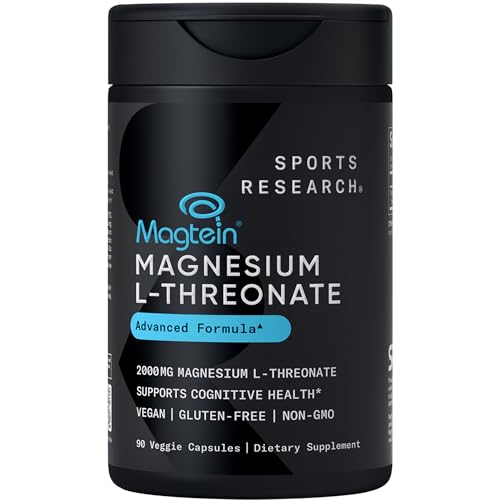
Sports Research Magtein Magnesium L-Threonate 2000mg 90 Count
Supports memory, focus, and cognitive health.
Promotes better sleep and mood regulation.
Contains high-quality magnesium L-threonate.
 Lauren Wilson
Supports memory, focus, and cognitive health.
Promotes better sleep and mood regulation.
Contains high-quality magnesium L-threonate.
High absorption for better effectiveness.
Supports sleep and cognitive function.
Contains bioavailable magnesium form.

High-quality Magtein supports cognitive health.
Non-GMO and gluten-free formulation.
Suitable for vegetarians looking for supplements.

Supports brain health and cognitive function.
Contains non-GMO and gluten-free ingredients.
Provides 147 mg magnesium as L-threonate.

High absorption rate for better magnesium benefits.
Gluten-free and vegetarian-friendly formulation.
Convenient 30-day supply per bottle.

Supports brain health with patented Magtein formula.
Enhanced relaxation from added L-theanine and Apigenin.
Convenient 90-count supply for extended use.

Clinically studied for brain health benefits.
Patented formula enhances memory and focus.
Supports improved sleep quality naturally.

Supports short-term memory with unique Magtein formula.
Includes essential vitamins C and D3.
Free from dairy and gluten for easy digestion.

High absorption formula with Magtein and Bisglycinate.
Supports brain health, sleep, and calmness.
Includes three forms of magnesium for comprehensive benefits.

Promotes brain health and cognitive function.
Contains highly bioavailable Magnesium L-Threonate.
Vegan-friendly with no artificial additives.
A research-relevant product should also be compared with the human evidence without treating ingredient research as proof for every finished product. Supplied studies used either 1,000 mg or 2,000 mg of Magtein magnesium L-threonate daily, including a 21-day sleep study and a six-week randomized trial in adults aged 18 to 45 who reported dissatisfied sleep. The six-week study found improvements in some cognitive and self-reported sleep-related measures, but objective sleep outcomes were not consistently better than placebo. A product containing 1,000 mg of L-threonate, or a blend that does not disclose its L-threonate amount, should not be presented as equivalent to a product providing the studied 2,000 mg amount.
Formula simplicity matters because added ingredients change the safety and evidence picture. Melatonin, valerian, chamomile, apigenin, L-theanine, vitamins, and other botanicals should be individually identified and dosed. “Brain” or “sleep” blends with undisclosed amounts make it harder to assess sedative stacking, medicine interactions, or whether the finished formula resembles a human study. Claims about uniquely crossing the blood-brain barrier, raising brain magnesium, treating memory problems, or being “clinically proven” go beyond what the supplied short-term human evidence establishes.
Quality claims also vary in strength. A current exact-product listing in a recognized independent registry is more meaningful than a brand-wide or facility-level claim. The supplied reviews used ConsumerLab, NSF dietary-supplement listings, and other certification registries to distinguish finished-product certification from a manufacturer’s GMP facility certification. A current lot-matched certificate of analysis is stronger than an uncheckable “third-party tested” statement: it should identify the lot, laboratory, methods or scope, and results for identity or potency, heavy metals, and microbiological quality. A posted testing table can still be useful, but it may not match the bottle received or disclose enough detail to verify the limits.
Packaging evidence is limited across this category. Conventional plastic bottles were common, while product-specific information about resin type, recycled content, recyclability, refills, or lower-waste design was generally absent. Buyers should therefore treat vague “eco” language cautiously and look for specific, substantiated material and disposal information rather than assuming that vegan, non-GMO, or BPA-free claims describe environmental performance.
Safety deserves attention before choosing any product. Repeated warnings across the supplied reviews include possible diarrhea, nausea, cramping, and the need to count magnesium from supplements, antacids, and laxatives. People with impaired kidney function or kidney failure should seek medical guidance because magnesium can accumulate. Several products lacked practical timing instructions for tetracycline or quinolone antibiotics and oral bisphosphonates; a pharmacist or clinician should advise on spacing and total intake. Pregnancy, breastfeeding, childhood use, multiple medicines, sedatives, or a diagnosed sleep, cognitive, neurological, or gastrointestinal condition also warrant individualized professional advice. One powder supplied 400 mg per full serving—above the stated adult supplemental upper limit of 350 mg—and some products had directions that could raise intake further.
The topics below focus on what can be checked from a magnesium L-threonate label, quality record, evidence match, and packaging disclosure. A high score means the supplied review found stronger supporting information; it does not mean the product is risk-free or proven to treat a condition.
This measures whether the label separates elemental magnesium from the heavier L-threonate compound, states serving size and directions, and lists every active. That distinction is central here because 2,000 mg of compound commonly supplies about 144–147 mg elemental magnesium. Higher-scoring products clearly stated both numbers; lower-scoring blends left elemental magnesium or component amounts unclear.
This measures whether directions address dose limits, gastrointestinal effects, kidney impairment, pregnancy or medical supervision, and timing with interacting medicines. It matters because magnesium can cause diarrhea, nausea, or cramping and can affect absorption of some antibiotics and oral bisphosphonates. Higher scores reflected more usable cautions; lower scores relied on broad consultation language.
This measures whether ingredients such as apigenin, L-theanine, valerian, chamomile, melatonin, vitamins, or botanicals are fully dosed and appropriately cautioned. A simple L-threonate-only formula avoids hidden sedative stacking. Products with no added sleep or cognitive actives scored in the high 80s and 90s, while multi-ingredient formulas scored lower when amounts or interaction context were less clear.
This measures evidence about lead, arsenic, cadmium, mercury, microbes, and relevant adulterants in the finished product. For this category, a current product-specific report is more useful than a general purity promise. The supplied scores ranged from about 70 where no public report was found to the low and mid-80s where contaminant or microbiological results were published, though matching the buyer’s lot remained a limitation.
This measures whether the product actually supplies the labeled magnesium L-threonate form and elemental-magnesium amount through expiry, supported by testing or traceable specifications. Higher-scoring products combined clear compound and elemental amounts with stronger identity or potency support. Lower scores reflected undisclosed component amounts, blends, or a lack of finished-product testing.
This measures whether the responsible manufacturer, U.S. contact, lot, expiration information, and quality system are identifiable, without unresolved product-specific regulatory or recall concerns. Facility GMP certification supports a manufacturing system but does not certify the bottle’s contents. Higher-scoring examples reached the 80s through stronger manufacturer and facility traceability; lower scores lacked comparable accountability.
This measures whether the exact finished product appears in a credible independent certification registry, rather than whether a brand or facility has a broader certification. The strongest supplied example was an exact ConsumerLab-approved listing, while another product had an NSF finished-product listing. Facility GMP certification or a certification for a different product scored less strongly for this topic.
This measures whether a buyer can obtain a current lot-matched report from an identified qualified laboratory covering identity or potency and contaminants. Higher scores reflected published lot tables, current-batch lookup routes, or certificates available on request. Even those records had limits when the lot, numeric results, laboratory scope, or contaminant limits could not be independently inspected.
This measures whether the exact form, daily amount, duration, and target population resemble human magnesium L-threonate research. The clearest match is a disclosed 1,000 mg or 2,000 mg Magtein amount tied to the corresponding short-term study. Lower scores applied to undisclosed blends, lower-dose formulas, or products making claims beyond the studied populations and outcomes.
This measures whether marketing stays within limited human evidence and lawful structure-function boundaries. Higher scores avoid promises to treat memory loss, neurological disease, insomnia, or guaranteed brain effects. Lower scores were associated with claims about uniquely crossing the blood-brain barrier, neuroprotection, or broad cognitive and sleep outcomes that the supplied trials do not establish.
This measures unnecessary packaging, material and recycling information, refill options, and whether environmental claims are specific and supported. It matters because nearly all supplied products used conventional bottles or jars, while most did not disclose resin, recycled content, recycling routes, or refills. Scores clustered around 70, reflecting limited evidence rather than demonstrated low waste.
This is a 90-count vegan capsule supplement providing a daily serving of three capsules with food. The matching Supplement Facts panel lists 2,000 mg magnesium L-threonate, branded Magtein, delivering 144 mg elemental magnesium, or 34% Daily Value. The other listed ingredients are hypromellose capsule, rice flour, and rice hulls. Its intended use is brain and sleep support, rather than treatment of a medical condition. The dose is concrete and matches the 2 g daily amount used in a small randomized cognition study of a different Magtein-based formula that also included phosphatidylserine and vitamins C and D. The manufacturer states that this product is third-party tested and made to cGMP standards, but a current product-specific laboratory report was not publicly available for review.
This product suits an adult who specifically wants a plain magnesium L-threonate capsule, prefers vegan and gluten-free labeled ingredients, and can manage three capsules daily with food. It is most relevant for someone seeking a 2 g Magtein serving that resembles doses used in small human studies of cognition or sleep-related outcomes. It also suits buyers who value a clearly stated elemental magnesium amount, 144 mg daily, rather than assuming that the 2,000 mg compound weight is all magnesium.
It is not designed for children or for people looking to correct a substantial magnesium shortfall, because the serving supplies 144 mg elemental magnesium rather than a high-dose mineral regimen. People with impaired kidney function, pregnancy or nursing, a medical condition, or regular prescription use should seek clinician guidance first. This is especially important with tetracycline or quinolone antibiotics, oral bisphosphonates, diuretics, and long-term acid-suppressing medicines. Athletes needing a banned-substance certification should use a product with an exact current registry match.
The product has a transparent basic formula. Its matching label identifies the elemental magnesium amount, compound amount, serving size, and inactive ingredients. It contains no added sleep botanicals, melatonin, or stimulant ingredients. Sports Research states that the product is third-party tested and cGMP compliant, and its own product page gives a company contact and use direction. Those manufacturer statements are not the same as public lot-specific proof. The certification check did not find this magnesium product in Sports Research's current NSF Certified for Sport listing, which shows only creatine. No publicly accessible lot-specific report was found for identity, elemental potency, heavy metals, or microbiological testing. FDA recall and warning-letter resources searched did not identify a product-specific action. Packaging is a conventional capsule bottle, and no bottle-material, recycling, refill, or other substantiated environmental information was found.
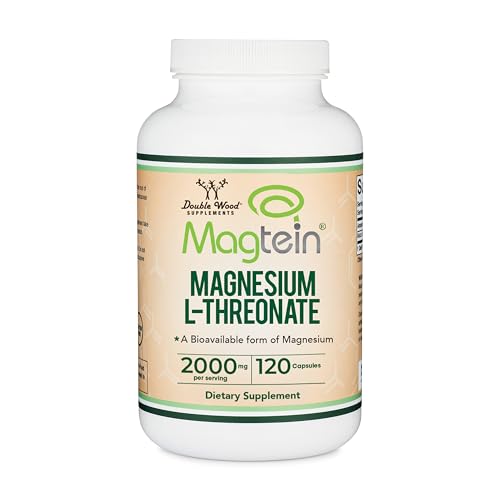
This is a 120-capsule magnesium L-threonate product in gelatin capsules. The current manufacturer label sets one serving at four capsules, up to four capsules daily, so the bottle supplies 30 daily servings. Each daily serving is labeled as 2,000 mg of Magtein magnesium L-threonate, providing 144 mg elemental magnesium. Other ingredients are gelatin, rice flour, and vegetable stearate. The product has unusually concrete quality documentation for this category. The NSF registry lists Double Wood Magnesium L-Threonate as a certified finished product, although its registry entry shows an eight-capsule recommended serving. A manufacturer-posted January 2025 lot report covers potency, metals, microbes, capsule weight, and disintegration. It reported 2,542.4 mg L-threonate and 162.3 mg elemental magnesium per four capsules, above both the label declaration and the report's stated upper compound specification. Human trials have used Magtein at 2 g daily, but cognitive and sleep evidence remains limited in size and scope.
This product suits an adult specifically seeking the patented Magtein form at the 2 g daily amount used in a recent six-week randomized trial, rather than a general high-elemental-magnesium supplement. It also fits someone willing to take four capsules daily and who values a publicly listed NSF certification plus a posted batch report. It is most appropriate for a person using it as a limited-evidence sleep or cognitive support supplement, not as treatment for insomnia, memory loss, or a neurological condition.
It is not suited to people with kidney impairment or kidney failure unless their clinician directs its use, because impaired kidneys increase magnesium-toxicity risk. People taking oral antibiotics or bisphosphonates need individualized timing advice, since magnesium can reduce absorption. It is also unsuitable for vegetarians, vegans, or households avoiding gelatin. Anyone seeking substantial magnesium replacement may prefer a product selected for elemental magnesium, since this labeled daily serving supplies 144 mg. Pregnant, nursing, medically complex, or medication-using consumers should seek clinician guidance first.
The strongest product-specific quality signal is the live NSF registry listing for Double Wood Magnesium L-Threonate. The manufacturer also posts a lot-numbered report for lot 2532202, manufactured in January 2025, with quantified heavy metals and passed microbial and disintegration tests. The lead result was 0.235 micrograms per serving, below the report's 0.5 microgram limit. The report is useful, but it is hosted by the manufacturer and its potency result exceeds the stated compound specification range. The capsule contains gelatin, plus rice flour and vegetable stearate, so it is not vegetarian. No refill system, bottle-resin identification, recycled-content claim, or recycling instructions were found. Double Wood received an FDA warning letter in 2020 over disease-like claims for a different hangover product. California lead notices and a settlement involved several other Double Wood botanical products, not this magnesium product. Those actions do not establish a contaminant finding for this product, but they are relevant to the brand's wider compliance record.
Nutricost Magnesium L-Threonate is an adult capsule supplement with 120 capsules, or 40 three-capsule servings. The label directs one capsule in the morning and two capsules two hours before sleep. A retailer-hosted label panel confirms that the daily serving provides 2,000 mg Magtein magnesium L-threonate, including 144 mg elemental magnesium. It is a single-active formula. The listed nonactive ingredients are a hypromellose capsule, microcrystalline cellulose, vegetable magnesium stearate, and silica, with no melatonin, botanicals, or other sleep and cognitive actives. Nutricost states that it uses independent ISO-accredited laboratory testing, but no current lot-matched report was publicly available for review. The manufacturing facility, not this finished product, appears in NSF's current dietary-supplement GMP listing.
This product suits adults age 18 and over who specifically want the Magtein form of magnesium L-threonate, prefer capsules, and can manage a three-capsule daily routine. Its 2,000 mg Magtein serving matches the amount used in a recent six-week placebo-controlled study of healthy younger adults with self-reported dissatisfied sleep. It is also a straightforward option for people who prefer not to combine magnesium with melatonin, herbs, or multiple brain-focused ingredients. People using regular medicines should first confirm timing and suitability with a pharmacist or clinician.
It is not designed for children, pregnancy, or breastfeeding, as the label advises against those uses. People with kidney impairment or kidney failure should not self-start magnesium supplementation because reduced magnesium clearance raises toxicity risk. It is also unsuitable for anyone seeking a product with publicly available lot-specific contaminant and potency results, or exact-product independent certification. People taking tetracycline or quinolone antibiotics, oral bisphosphonates, diuretics, or long-term acid-suppressing medicines need individualized advice, including whether doses should be separated.
The label provides a useful distinction between the 2,000 mg magnesium L-threonate compound amount and 144 mg elemental magnesium. It also limits the formula to Magtein plus ordinary capsule excipients, rather than adding melatonin or sedating botanicals. The manufacturer-stated directions include adult-only use, pregnancy and breastfeeding exclusions, and consultation for medicines or medical conditions. Magnesium supplements can cause gastrointestinal effects, and impaired kidney function increases the risk of excess magnesium. Nutricost Manufacturing is currently listed by NSF to the dietary-supplement GMP standard, which supports traceability of the manufacturing site and quality-system oversight. That listing does not certify the contents of this individual product. The manufacturer states it uses independent ISO-accredited testing, but a current lot-linked report was not public. The bottle format is conventional plastic packaging. No refill system, packaging-material specification, recycling instructions, or substantiated environmental claim was identified.
This is a 120-capsule magnesium L-threonate product for adults. The labeled routine is three capsules daily, one in the morning and two about two hours before bedtime, so a bottle supplies 40 days at the recommended use. The manufacturer lists 2 g of Magtein magnesium L-threonate and 147 mg elemental magnesium per daily dose, with no added vitamins, herbs, melatonin, or other sleep ingredients. Its formula and dose are unusually easy to interpret. The 2 g daily Magtein amount matches the dose used in recent randomized trials of Magtein, although those studies do not establish that this finished product itself improves memory, learning, or sleep. Metagenics states that batches receive third-party testing, but a current lot-matched independent report for this product was not publicly available for review.
This product fits an adult who specifically wants the branded Magtein form of magnesium L-threonate, prefers a simple formula without melatonin or botanical sedatives, and can manage three capsules per day. It is most relevant for someone discussing cognitive or sleep-support supplementation with a clinician, particularly because its 2 g daily compound dose matches recent human Magtein research. The 120-capsule bottle lasts about 40 days at the labeled routine, so it also suits buyers comfortable with that dosing schedule and product cost.
It is not well suited to children, people who are pregnant or nursing without clinician guidance, or anyone with kidney disease or impaired kidney function unless their prescriber approves it. People taking tetracycline or quinolone antibiotics, oral bisphosphonates, diuretics, or other regular medicines need pharmacist or clinician advice on suitability and timing. It is also a poor fit for buyers seeking a publicly accessible, lot-specific independent certificate covering potency, heavy metals, and microbiological quality, because that proof was not available to inspect.
The health positives are a transparent active formula and a daily amount that separates compound weight from elemental magnesium. At 147 mg supplemental magnesium daily, it remains below the adult 350 mg upper limit for magnesium from supplements and medicines. That does not remove interaction or kidney-risk concerns. Magnesium can reduce absorption of certain antibiotics and oral bisphosphonates, and impaired renal function raises toxicity risk. Metagenics has an independently listed NSF/ANSI 455-2 GMP-certified manufacturing operation, which supports facility-level quality controls but is not an independent certification of this exact product. The company also states that it tests finished products for contaminants and potency, yet publicly reviewable lot-level results were unavailable. Metagenics' parent is a certified B Corporation, and the company reports recyclable paper shipping materials and recycled cardboard. Those are company-level practices, not proof that this capsule bottle is recycled or recyclable locally.
This is a 90-capsule magnesium L-threonate supplement for adults. A full serving is three vegetarian capsules, taken as one in the morning and two about two hours before sleep. The bottle provides 30 servings. The independently listed Supplement Facts panel states 2,000 mg Magtein magnesium L-threonate and 144 mg elemental magnesium per daily serving. It is a single-active formula, apart from capsule and processing ingredients including hypromellose, microcrystalline cellulose, vegetable-source magnesium stearate, and silica. The label warns about possible drowsiness or headache and directs people using prescriptions or managing a medical condition to consult a clinician. The manufacturer states that it is third-party tested by ISO-accredited laboratories, but a current lot-matched finished-product report was not publicly available for review.
This fits an adult who specifically wants Magtein-branded magnesium L-threonate rather than a broad sleep blend, and who values a label that makes the compound weight and elemental magnesium intake easy to distinguish. The 30-day bottle and three-capsule routine suit a person prepared to take a divided daily dose. It is also relevant to vegetarian and gluten-avoiding users based on the product's stated formulation. The human evidence is most applicable to generally healthy adults, not to treatment of a diagnosed cognitive or sleep disorder.
This is not appropriate for children, pregnancy, or breastfeeding under the product's own warning. People with kidney disease or reduced kidney function should not self-start magnesium without clinician input. Anyone taking tetracycline or quinolone antibiotics, oral bisphosphonates, diuretics, or other regular medicines needs pharmacist or prescriber advice, including dose timing. It also does not suit buyers who require publicly accessible, lot-matched heavy-metal and microbiology results, or an exact finished-product certification from USP, NSF, Informed Sport, or BSCG.
The product's strongest health attribute is formula simplicity. The listed active is Magtein magnesium L-threonate, providing 144 mg elemental magnesium per serving, with no added melatonin, botanical sedatives, phosphatidylserine, or added vitamins. The label's 2 g daily compound amount aligns with the dose used in at least one controlled human cognition study, but that study tested a formula that also included phosphatidylserine and vitamins, so it does not establish the same outcome for this exact product. Nutricost Manufacturing appears in NSF's current GMP facility registry for dietary supplements. This supports manufacturing-system traceability, but it is not certification of this finished product. The brand states that ISO-accredited laboratories perform third-party testing, yet no public lot-specific report was located. The bottle uses a conventional capsule supplement format, and no specific recycled-content, recyclability, refill, or other substantiated environmental packaging claim was found. No relevant public FDA recall or warning-letter signal was located in the checked databases.
This is a 90-capsule, 30-day adult capsule product. The daily direction is three capsules, supplying 1,000 mg magnesium L-threonate branded Magtein, including 72 mg elemental magnesium, plus 250 mg L-theanine and 50 mg apigenin. These amounts and the vegetable capsule are independently documented in the NIH Dietary Supplement Label Database and on the manufacturer label. It is positioned for relaxation, sleep, mood, and cognitive support. The 1,000 mg Magtein amount matches a short 21-day human sleep trial, though that does not establish that this three-ingredient product improves sleep or cognition for every user. The manufacturer says finished batches are tested for potency, heavy metals, and other contaminants and that a batch-specific report can be requested. A current report, laboratory identity, and results for this product were not publicly available during verification.
This product suits an adult who specifically wants a capsule formula with disclosed amounts of Magtein, L-theanine, and apigenin, rather than a proprietary sleep blend. It may fit someone testing short-term relaxation or sleep support who can tolerate taking three capsules daily and who wants only 72 mg of supplemental elemental magnesium. It is most appropriate for a person who can request and review the current bottle's batch report before regular use, especially if contaminant verification is important to them.
It is not a casual choice for people with kidney disease, reduced kidney function, pregnancy or breastfeeding, or complex medication schedules without clinician review. Magnesium can interfere with absorption of certain antibiotics and oral bisphosphonates, and the label does not provide spacing instructions. It is also a poor fit for someone already using several sedating or calming products, or for anyone seeking proven treatment for insomnia, anxiety, memory loss, dementia, or another medical condition. Children should use an age-appropriate product under pediatric guidance.
The product's strongest transparency point is its Supplement Facts panel. It specifies the Magtein compound amount, elemental magnesium contribution, L-theanine, apigenin, serving size, and vegetable capsule. The manufacturer states that its products are made in the United States and that bottle-specific reports covering potency, heavy metals, and other contaminants are available on request. That is useful access, but it is not the same as a publicly posted, lot-matched report from an identified accredited laboratory. No exact-product certification was found in major independent certification registries, and no specific recycling instructions or lower-waste packaging information were found. The brand's January 2026 recall involved a separate moringa capsule, not this magnesium product, after Salmonella contamination linked to moringa powder. It does not establish contamination of this formula, but it is relevant context for buyers who prioritize demonstrated finished-product microbiological controls.
This is a 90-capsule magnesium L-threonate product intended for adults. The manufacturer directs three capsules once daily with food, providing 2,000 mg of Magtein magnesium L-threonate and 144 mg elemental magnesium, or 34% of the Daily Value. The bottle therefore supplies 30 daily servings. The formula is unusually clear about compound weight versus elemental magnesium, and contains no added melatonin, herbs, vitamins, or other sleep and cognitive actives. Its 2 g daily Magtein amount matches a six-week randomized trial in 100 adults aged 18 to 45 with dissatisfied sleep. That study reported some cognitive and subjective sleep-related improvements, but was funded by the ingredient company and did not show objective sleep improvements. ForestLeaf states it tests lots through independent labs, but no lot-matched report or exact-product certification registry entry was available for verification.
This product fits an adult who specifically wants the Magtein magnesium L-threonate form, prefers a formula without melatonin or botanical sleep ingredients, and is comfortable taking three capsules daily. It is most relevant to someone seeking a magnesium product whose compound and elemental doses are both disclosed, rather than interpreting a large compound-weight number as elemental magnesium. The 30-day supply may also suit a person planning a time-limited, clinician-informed trial for general cognitive or sleep-related support, not treatment of a diagnosed condition.
It is not suited to children, or to people who are pregnant or nursing without clinician approval. People with kidney disease, reduced kidney function, recurrent diarrhea, or a history of high magnesium levels should seek medical guidance before use. Anyone using tetracycline or quinolone antibiotics, oral osteoporosis medicines such as alendronate, diuretics, or long-term proton-pump inhibitors needs medicine-specific timing or monitoring advice. It is also a poor fit for buyers who require a publicly available lot-specific contaminant report or current independent finished-product certification.
The useful health detail is the transparent dose declaration. Each daily serving supplies 144 mg elemental magnesium from 2,000 mg Magtein magnesium L-threonate. That supplemental magnesium amount is below the adult 350 mg upper limit, but magnesium can still cause gastrointestinal effects and presents greater toxicity risk when kidney function is impaired. The label's broad prescription-medication caution is appropriate but incomplete because it does not give spacing instructions for several known interacting medicines. ForestLeaf states that the product is made in a U.S. GMP-compliant facility and that every lot is independently tested for heavy metals and microbiological components. Those are manufacturer statements, not independently verifiable finished-product results. No active recall, regulator warning, or California Proposition 65 exposure warning for this product was located in the checked public sources. The packaging is a 90-capsule bottle, but ForestLeaf provides no material, recyclability, refill, or substantiated environmental claim for this product.
This is a 90-capsule, 30-day magnesium L-threonate product for adults. The daily serving is three capsules, taken as one in the morning and two about one hour before bed. The manufacturer lists 2,000 mg of Magtein magnesium L-threonate, supplying 144 mg elemental magnesium, plus 60 mg vitamin C and 10 mcg vitamin D3 per serving. The 2 g daily Magtein amount matches the dose used in a 30-day placebo-controlled study of a related formulation in healthy Chinese adults, although that study also included phosphatidylserine and therefore does not directly test this exact product. The manufacturer states that it tests raw-material lots and finished goods, but no current buyer-accessible, lot-matched independent certificate of analysis was located.
This product fits an adult who specifically wants magnesium L-threonate rather than a higher-elemental-magnesium product, and who can follow a three-capsule daily routine with an evening dose. It is most relevant for someone seeking modest cognitive or sleep-related support while understanding that the human research is still limited and does not prove benefit from this exact formula. The 30-serving bottle and $42 listed price suit a one-month trial period, ideally with clinician input if the person has a complex medication regimen.
It is not appropriate for children, or for people who are pregnant or nursing, because the product label advises against use in pregnancy and nursing and says it is not formulated for children. People with kidney disease should not self-start it without clinician advice because impaired kidneys raise the risk of magnesium accumulation. It is also a poor fit for anyone needing a high magnesium dose for a clinician-directed indication, requiring a lot-specific contaminant report, or taking antibiotics or oral osteoporosis medicines without a plan to separate doses.
The formula has a transparent active-ingredient panel. Each daily serving lists 144 mg elemental magnesium from 2,000 mg Magtein magnesium L-threonate, along with vitamin C and vitamin D3. It contains no declared melatonin, valerian, apigenin, or other sedating brain ingredients. Its pregnancy, nursing, kidney-disease, and medication consultation warning is useful, though consumers taking tetracycline or quinolone antibiotics or oral bisphosphonates need more specific timing guidance from a clinician or pharmacist. The manufacturer reports an ISO/IEC 17025-accredited internal laboratory and testing of raw materials and finished products. That supports process traceability, but it is not the same as public, lot-matched independent finished-product testing. No exact-product independent certification or public lot certificate was found in the reviewed registries and sources. No specific environmental packaging claim, recycling instruction, refill option, or packaging-material disclosure was found, so waste and end-of-life handling remain unclear.
This is a 90-count vegan capsule magnesium blend intended for adults. The manufacturer directs users to take three capsules daily, two during the day and one about an hour before bed. That makes each bottle a 30-day supply. Its stated use is support for calm, sleep, brain health, energy, muscle function, and recovery. The manufacturer lists 270 mg elemental magnesium per three-capsule serving from 1,000 mg Magtein magnesium L-threonate, 671 mg magnesium bisglycinate chelate, and 669 mg dimagnesium malate. The 1,000 mg L-threonate amount matches the daily amount used in a 21-day placebo-controlled sleep study, though that research tested the ingredient rather than this finished blend. No current exact-product certification or current lot-matched independent laboratory report was located.
This product fits an adult who wants a one-month capsule routine combining magnesium L-threonate with glycinate and malate, rather than adding several separate magnesium products. It is most relevant for someone seeking general magnesium intake and sleep-routine support who is comfortable taking three capsules daily. The stated 1,000 mg L-threonate portion aligns with a short human sleep study dose, but the product should be viewed as a supplement to a sleep routine, not a treatment for insomnia or cognitive decline.
It is not suited to children, or to pregnant or nursing people, unless a clinician specifically advises use. People with kidney impairment or kidney failure should seek medical guidance because reduced magnesium clearance raises toxicity risk. It also needs pharmacist or prescriber review for people taking prescription medicines, especially tetracycline or quinolone antibiotics and oral bisphosphonates, because magnesium can impair absorption. Anyone needing documented contaminant limits, sport certification, or a current lot-specific certificate should choose a product with those records available before use.
The main health strength is a disclosed three-form magnesium formula. The manufacturer states 270 mg elemental magnesium per daily serving, which is below the NIH adult upper limit of 350 mg from supplemental magnesium. Still, magnesium supplements can cause diarrhea, nausea, and abdominal cramping, and risk is higher with impaired kidney function. The directions include a general medical-consultation warning, but they do not give the medication-spacing and kidney-specific guidance that would make safer use more practical. The manufacturer claims third-party testing and cGMP production, but no current lot-matched finished-product report or exact-product independent certification was publicly verified. The listed capsule is plant-based HPMC and the formula has no added sleep botanicals or melatonin. Environmental information is limited. The product page identifies a veggie capsule but does not provide bottle resin, recycling instructions, refill options, or substantiated lower-waste packaging claims.
NeuroMag is a 90-capsule vegan magnesium L-threonate product intended for adult brain and cognitive support. The stated daily use is three capsules, providing 145 mg elemental magnesium from 2 g of Magtein magnesium L-threonate, so one bottle supplies 30 daily servings. Its listed inactive ingredients are a cellulose capsule, dicalcium phosphate, vegetable stearate, and microcrystalline cellulose. The formula is unusually simple, with no melatonin, herbs, amino acids, or added vitamins that could create sedative stacking. The 2 g Magtein daily amount is important because it matches the dose used in recent randomized studies of Magtein, although the evidence base remains limited and some research involved industry affiliations or formulations that included other nutrients. The label's stronger brain-delivery language goes beyond what buyers can treat as established clinical proof for this exact finished product.
This product suits an adult specifically seeking a standalone magnesium L-threonate formula, rather than a general high-dose magnesium supplement or a multi-ingredient sleep blend. It is most relevant for someone comfortable taking three capsules daily for a 30-day supply and who wants the same 2 g Magtein amount used in several short randomized studies of cognition and sleep-related outcomes. It may also fit people avoiding animal-derived capsule materials and common allergens listed as excluded by the manufacturer.
It is not a good self-directed choice for people with significant kidney disease, unexplained weakness, or a history of magnesium-related adverse effects, because impaired kidney clearance can raise magnesium risk. People taking oral bisphosphonates, tetracycline or quinolone antibiotics should seek pharmacist or clinician guidance on separating doses. Pregnant or breastfeeding people, children, and people managing insomnia, memory loss, dementia, or another medical condition should not treat this supplement as a substitute for medical assessment or treatment.
The formula avoids a common safety issue in brain and sleep supplements, namely hidden combinations of melatonin, sedative herbs, or multiple psychoactive ingredients. Its label makes both the magnesium L-threonate compound amount and elemental magnesium amount available, which helps prevent confusion between the two. NIH notes that magnesium can interact with oral bisphosphonates, tetracycline antibiotics, and quinolone antibiotics, and that people using regular medicines should discuss magnesium intake with a clinician. Public certification registries did not show the exact NeuroMag product as independently certified. NSF does list a separate NeuroMag Sport product, which should not be treated as certification of this product. A retailer describes independent potency and purity testing, but no buyer-accessible, lot-specific report was located. No specific FDA recall, warning letter, or California Proposition 65 warning for NeuroMag was located in the reviewed sources. Packaging material, recycling instructions, refill options, and substantiated environmental claims were not disclosed, so its environmental footprint cannot be meaningfully verified.


