Best Overall

Garrett ACE 400 Metal Detector with Headphones
Accurate and deep metal detection capabilities.
Includes Pro Pointer for precise locating.
ClearSound headphones enhance audio clarity.
 Daniel Kenitz
Accurate and deep metal detection capabilities.
Includes Pro Pointer for precise locating.
ClearSound headphones enhance audio clarity.

Lightweight design makes it easy to carry.
Rechargeable battery offers long-lasting use.
Foldable feature enhances portability and storage.

Larger backlit color LCD for easy reading.
Advanced DSP chip enhances detection accuracy.
Waterproof coil ideal for beach and gold hunts.

Waterproof design allows for underwater exploration.
Fast recovery speed enhances target detection.
Includes quality MS-2 headphones for clear audio.
Higher accuracy with advanced DSP chip technology.
Waterproof coil enhances outdoor usability.
Intuitive NORM mode simplifies beginner experience.

Easy-to-use controls for beginners and hobbyists.
Waterproof coil for versatile treasure hunting.
Includes headphones for clearer signal detection.

Long-lasting battery for extended metal detecting.
Dual D-coil enables deeper ground detection.
Waterproof design for versatile outdoor use.

Enhanced accuracy with advanced DSP chip.
Large, easy-to-read LCD display.
Waterproof 12" coil for versatile detecting.

Rechargeable design eliminates battery hassle.
Waterproof coil for underwater treasure hunts.
Advanced DSP chip boosts detection accuracy.
Fully waterproof for all-weather treasure hunting.
LCD screen for easy reading and navigation.
High accuracy, minimizing false positives.
The most useful performance evidence is not the largest depth number on a listing. Look for an independent test that identifies the target material, size and orientation; measures depth; states the soil or saltwater conditions; reports detector settings; and records repeat trials, failures, and target-identification accuracy. Air tests are not the same as in-ground results. A claim such as “10 inches” or “12 inches” is meaningful only when its target and conditions are disclosed. A field report can still be useful, but a short-use review without standardized targets, soil measurements, or repeat trials does not substantiate a general maximum depth. Target-ID displays are probabilities, not proof, especially in mineralized or wet ground.
Water claims need the same care. On many supplied products, the search coil is described as waterproof while the control box, connectors, headphones, or battery compartment must remain dry. An IP rating should identify the exact protected component and its immersion limit; an independently supported IP claim should be traceable to the IEC 60529 method and, where offered, an ISO/IEC 17025-accredited laboratory report. A manufacturer statement without depth, duration, test report, or warranty terms is narrower evidence than a verified whole-product rating.
Power also deserves close attention. Removable AA or 9V batteries avoid a supplied mains charger and make replacement simpler, but the buyer still needs the correct chemistry and voltage. Rechargeable products should disclose battery chemistry, voltage, charger input and output, safe-use instructions, and the exact model of any included power component. A UL Solutions Product iQ or other NRTL record should match the product or charger model exactly. A recall search through the CPSC and SaferProducts.gov can identify known problems, but no recall is not proof of certification. Wireless accessories should have an exact FCC authorization record where applicable.
For physical use, compare disclosed weight, shaft range, armrest adjustment, balance, cable routing, locking hardware, coil size, operating limits, warranty, and available replacement parts. A lighter detector may reduce fatigue, but a conflicting weight or unsupported durability claim makes comparison less reliable. Pinpoint and discrimination modes can narrow a recovery area or reduce unwanted digging, but they do not make target identification certain.
Before searching, confirm landowner permission and the rules of the specific land manager. National Park System areas generally prohibit possessing or using metal detectors. Where digging may reach buried services, use the local 811 process rather than treating a detector as a utility-locating tool. Avoid military areas and stop, retreat, and contact authorities if a suspicious explosive or ordnance-like object is found. Refill recovery holes, remove dug litter, protect vegetation, and leave possible cultural resources undisturbed. Across the supplied products, recurring limitations include incomplete utility, ordnance, protected-site, and low-impact digging guidance; unverified whole-product waterproofing; limited independent performance testing; and absent or unclear electrical certification, battery-charging details, recycling routes, and spare-parts support. Young users require close adult supervision around digging, water, utilities, and unknown objects.
The scores below reflect the supplied reviews, with the evidence topics weighted as specified. They are comparative signals, not certifications or guarantees: a higher score indicates stronger documentation and fewer identified weaknesses within this set.
This measures the supplied battery, cable, and adapter information, including chemistry, ratings, instructions, and credible safety certification. It matters because rechargeable detectors and pinpointers can add charging, heat, fire, burn, and shock risks, while incorrect replacement cells can damage equipment. Among these products, higher scores generally belong to clear removable-battery systems; lower scores reflect undocumented lithium packs, charger ratings, or certification.
This measures practical warnings about sharp tools, unstable ground, buried utilities, suspicious ordnance, and recovery conditions. Metal detectors encourage investigation of uncertain underground objects, so warnings and utility-location guidance directly affect injury risk. The supplied scores range from products with little field safety direction to stronger manuals that address utilities, military areas, permission, cautious digging, and hole repair; the latter separate higher scores from lower ones.
This measures whether weight, balance, shaft adjustment, armrest fit, cable routing, locks, controls, operating limits, and durability information support extended use without excessive strain or avoidable breakage. It matters because swinging a detector repeatedly can fatigue the user and loose coils or shafts can cause false signals. Higher-scoring products disclose practical dimensions and fit details; lower-scoring ones leave durability or conflicting weight information unresolved.
This measures whether independent testing reproduces depth, sensitivity, and ground-performance claims using stated targets, soils, settings, repeat trials, and failures. It is especially important because advertised maximum depth is often an air test or favorable-condition result. The supplied scores distinguish products with field-tested coin results and disclosed conditions from products whose depth, saltwater, or mineralized-ground claims remain manufacturer statements.
This measures how reliably a detector separates ferrous items, trash, and intended targets under stated conditions, and whether gold, jewelry, and discrimination claims are properly limited. Target IDs can shift with alloy, orientation, size, depth, mineralization, and nearby objects. Higher-scoring products explain those limits or have independent comparisons; lower-scoring products imply accuracy without showing false-positive or false-negative results.
This measures whether the listing and manual clearly identify which components may be submerged and to what limit. It matters because a waterproof coil does not make the control box or connectors waterproof. Higher scores in this set reflect specific coil-only or whole-unit boundaries and stated limits; lower scores reflect conflicting ratings, no immersion depth or duration, no independent test, or unclear warranty treatment for water ingress.
This measures whether terms such as professional, gold detector, deep seeking, DSP, high accuracy, and fast recovery are defined and consistent with the manual and tested evidence. Buyers need to know whether a number is an air test, a favorable-soil result, or a general promise. Higher scores accompany clearer qualifications and model-specific information; lower scores reflect undefined marketing language, conflicting specifications, or unsupported accuracy and depth claims.
This measures whether safety and radio or electrical compliance claims match the exact product, battery, charger, or transmitter in an authoritative third-party record. A credible result would be traceable through UL Solutions Product iQ or another NRTL directory, FCC equipment records where applicable, and recall databases. The supplied products generally scored around the lower-to-middle range because no exact model-specific certification or authorization record was located.
This measures whether the product guidance tells users to obtain permission, follow land-manager rules, and avoid protected or archaeological locations. Detecting and digging can remove or damage cultural resources even when a find looks ordinary. Higher scores in this set are associated with manuals that explicitly require permission, warn against parks or military zones, and direct users to leave protected materials alone; lower scores include broad or incomplete public-land guidance.
This measures whether the detector and its instructions support small, controlled recovery holes, accurate pinpointing, refilling, litter removal, and reduced soil or habitat disturbance. Pinpointing can narrow where a user digs, but it does not replace careful recovery practices. The highest supplied scores belong to products whose manuals explicitly support small holes, filling them, and removing trash; lower scores lack practical plug-repair or leave-no-trace instructions.
This measures whether batteries can be removed or serviced and whether the maker provides disposal, recycling, take-back, and spare-parts information. It matters because lithium-ion batteries and battery-containing electronics can create fire risks in household waste, while sealed packs can shorten service life. Higher scores here generally reflect removable cells or clearer service information; lower scores reflect built-in batteries, no take-back route, and no replacement-parts guidance.
This is a battery-powered, single-frequency metal detector for land detecting, with an 8.5 by 11 inch DD searchcoil, LCD target display, five search modes, electronic pinpointing, and headphones in the listed bundle. It runs on four removable AA cells rather than an internal rechargeable pack. Garrett states a 10 kHz operating frequency, a 0 to 99 digital target scale, adjustable frequency shifts, Iron Audio, and 20 to 40 hours of operation depending on battery type and quality. The most important limitation is water exposure. The official instructions distinguish the waterproof searchcoil from the control housing, which must be kept dry. Independent field reports support useful coin and relic finding in ordinary ground, but do not provide a standardized, repeatable depth test across soil types. Target numbers are clues, not material identification, and Garrett documents that target size, orientation, adjacent trash, and iron can make them unstable.
This product suits an adult beginner or occasional hobbyist who plans to search permitted private land with the landowner's permission, parks only where local rules explicitly allow detecting, dry sand, or shallow freshwater edges. It fits users who want a conventional detector with removable AA batteries, straightforward target clues, a lightweight adjustable shaft, and a coil that can be rinsed or submerged while the electronics remain dry. It is also better suited to people willing to dig uncertain signals rather than treat the display as a definitive identification tool.
It is not suited to anyone expecting a fully waterproof detector for swimming, surf work, heavy rain, or wet-sand saltwater conditions, because the control housing must remain dry. It is also a poor fit for users detecting around buried utilities without first using the local 811 process, or for anyone intending to search national parks, archaeological sites, military areas, cemeteries, or land without explicit permission. Buyers who need independently measured depth, rigorous discrimination accuracy, or verified third-party electrical compliance records need more documentation than is available here.
The practical safety advantage is its simple removable-AA power system. Garrett specifies four AA batteries, allows NiMH rechargeables, directs users to remove cells before storage longer than 30 days, and warns that 3.7 V lithium cells can damage the product. Since it does not include a mains charger or sealed lithium pack, it avoids some charging and disposal hazards. Used batteries should still be handled according to their chemistry and taken to appropriate recycling or household hazardous-waste collection where required. Garrett documents replaceable coils and stem components, which can extend service life. A CPSC recall search did not identify an exact ACE 400 recall during this review, but no model-specific NRTL listing or FCC equipment authorization was located for this non-wireless detector. Ecological and legal risk comes mainly from use, not the device itself. Obtain permission, follow the local land manager's rules, keep recovery holes small and restored, and do not use a detector in National Park System areas, where possession or use is generally prohibited.
The HawkSeek HS-X7 is a battery-powered, shaft-style metal detector for hobby searching in parks, beaches, and other permitted ground. The maker states that it has a 10-inch Double-D search coil, a backlit color screen, five modes, five sensitivity settings, three volume levels, and a shaft that adjusts from 21.2 to 51.9 inches. It also states that two 9V batteries, headphones, a folding shovel, and a carry bag are included. The coil is manufacturer-stated as IP68 waterproof, not the whole detector. The maker claims targets up to 10 inches deep, faster response, improved grip, and anti-interference performance, but does not publish the test protocol, soil conditions, target sizes, or independent laboratory results needed to validate those figures. A limited third-party field account describes use in mildly mineralized soil, but does not provide a repeatable depth or discrimination test protocol.
This product fits an adult hobbyist who wants a lightweight, adjustable detector for casual searches on permitted private land, ordinary parks where detecting is expressly allowed, or wet ground where only the coil needs to enter water. It is most suitable for someone willing to practice with known targets, carry spare 9V batteries, use a hand digger carefully, and treat screen identification as a prompt to investigate rather than a reliable statement of metal type. The included basic accessories can simplify first outings.
It is not well suited to users who need independently demonstrated depth, dependable target classification in difficult soil, or documented electrical and water-ingress compliance. Avoid treating it as a fully submersible beach detector because the public claim applies specifically to the coil. It is also a poor fit for detecting near utilities, former military areas, archaeological sites, protected land, or any location without explicit permission. Users who cannot safely kneel, dig controlled plugs, or handle sharp recovery tools should use a different setup or have assistance.
This product uses two manufacturer-stated 9V batteries rather than a built-in lithium battery pack. That reduces the need for charging equipment, but used 9V batteries should have their terminals covered and be taken to an appropriate battery collection point rather than placed loosely in household trash. HawkSeek does not publish a take-back program, parts catalog, or clear replacement information for the coil, control housing, or headphones. The public materials found identify an IP68 coil, but do not provide a third-party test report or a model-specific electrical safety certification record. They also do not provide robust safe-digging, cultural-resource, land-permission, or low-impact recovery instructions. Use only where detecting is authorized, recover targets with small controlled holes, replace plugs, remove litter, and stop immediately around suspicious military items or unmarked utilities.
This is a handheld, single-frequency hobby metal detector with an 8.5 by 11 inch Double-D search coil, wired MS-2 headphones, an LCD target display, and four replaceable AA batteries. It is used by sweeping the coil over ground or shallow water, then pinpointing and recovering detected objects. The stem, arm cuff, and shaft locks are adjustable. Garrett states that the control housing can be immersed to a maximum depth of 3 meters, while the supplied land headphones must not be submerged. Independent field testing found that Pro mode improved separation of nearby targets and that coin identification was dependable at roughly 8 to 9 inches in the tester's dry-sand conditions. That testing also found reduced depth and less dependable visual ID in wet salt sand. The manual provides unusually direct cautions on permissions, utilities, military ordnance, and careful digging.
This product suits an adult hobby detectorist who wants one relatively light, AA-powered unit for parks where detecting is permitted, private land with written or clear owner permission, freshwater shorelines, and shallow-water searching. It fits users willing to learn ground balance, Pro audio, and the limits of numerical target ID rather than relying on screen readings alone. It also suits people who value replaceable batteries and a manual that directly addresses utilities, property access, and ordnance hazards.
It is not for anyone who expects target ID to identify valuables with certainty, especially in wet salt sand, mineralized soil, or at the edge of detection depth. It is not appropriate for children or inexperienced users who may dig before understanding utility, sharp-tool, and suspicious-ordnance hazards. Do not use it in national or state parks, historic sites, military areas, or private land without permission. It is also unsuitable for fully submerged use if only the included land headphones are available.
The strongest safety finding is the manual's practical field guidance. It tells users not to trespass, to avoid buried pipelines and electric lines, to avoid military zones where explosives may be buried, and to use caution when digging. These instructions align with U.S. safe-digging and unexploded-ordnance guidance. The manual also directs users to seek permission and treat parks and monuments as off-limits. For lower-impact use, Garrett's code of ethics says to respect archaeological sites, fill recovery holes, carry out rubbish, and remove dug targets. The detector uses four removable AA batteries rather than a sealed lithium pack, reducing service barriers. However, no manufacturer take-back program or model-specific third-party electrical safety certification was located. Dispose of used batteries according to their chemistry and local rules, and recycle rechargeable cells through an appropriate battery collection program.
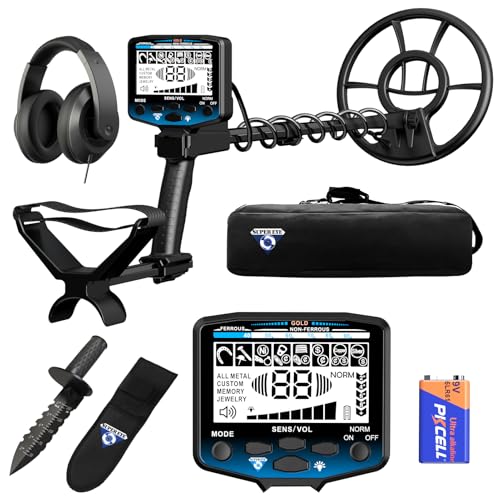
The SuperEye Horizon X6 is a battery-powered, handheld search-coil metal detector for hobby detecting. Available product documentation describes a 4.5 pound unit with a 10-inch coil, LCD target display, six modes, eight sensitivity levels, a 35.4 to 49.2 inch adjustable shaft, headphones, a digging shovel, carry bag, and one replaceable 9V alkaline battery. The most useful documented distinction is the separation between the coil and electronics. The manual states that only the search coil is IP68 rated, while the control box must remain dry. It also gives basic permission, utility, and digging cautions. The manufacturer describes NORM, discrimination, jewelry, memory, pinpoint, and all-metal modes, but independent testing located for this model was limited and did not provide a repeatable published protocol for depth, mineralized soil, target identification, or recovery speed.
This product fits an adult hobby user who wants a conventional, non-rechargeable detector for parks, private land with permission, and other dry ground where shallow-water coil use may be useful. It is particularly suited to someone who values a stated adjustable shaft range, basic LCD target categories, and a user-replaceable 9V alkaline battery. The user should be prepared to treat target labels as estimates, keep the control box dry, and verify land rules before each outing.
It is not suited to users needing proven depth, reliable gold prospecting performance, or independently documented discrimination accuracy in mineralized ground or saltwater. It is also unsuitable for full underwater detecting because the control box is expressly not waterproof. Avoid using it for any excavation near buried services unless utilities have been marked through 811, and do not use it in National Park System areas, protected archaeological locations, or anywhere land-manager rules prohibit detecting or recovery.
The supplied power arrangement is comparatively simple, according to the available manual. It uses one removable 9V alkaline battery rather than a sealed lithium battery pack, and the manual tells users to remove the battery before extended storage to reduce leakage risk. It does not identify a battery brand, safety certification, recycling program, or disposal instructions. EPA guidance recommends checking local disposal options and recycling used household batteries where possible. Field guidance is present but incomplete. The manual tells users to obtain permission, avoid known underground utilities, and dig carefully. It does not mention calling 811, unexploded ordnance, cultural-resource laws, or leave-no-trace plug recovery. This matters because National Park System rules prohibit possessing or using metal detectors, while some Bureau of Land Management uses are only allowed when disturbance remains minor and local rules are followed. No product-specific recall or regulator warning was identified in the reviewed U.S. searches.
This is a handheld, single-frequency hobby metal detector with an adjustable stem, LCD target display, five search modes, electronic pinpointing, and a 7 by 10 inch search coil. It runs on four replaceable AA cells, rather than a supplied rechargeable pack or mains charger. The manual permits alkaline, NiMH rechargeable, and 1.5 V lithium cells, but specifically warns that 3.7 V lithium cells can damage the product. The manufacturer states that the coil is submersible, while the control housing and connectors are not waterproof and should be protected from heavy rain, mist, and surf. An independent field report on the closely related international version documented repeatable air-test response to a large penny just over 11 inches, useful dry-sand operation, and increasing false signals in saturated salt sand. Its 0 to 99 target display is an indication of likely conductivity, not proof of an object's identity.
This product suits an adult beginner or casual detectorist working on private land with permission, lawns, parks where detecting is expressly allowed, dry sand, and other ordinary inland sites. It is especially practical for someone who values replaceable batteries, a straightforward screen, adjustable fit, and simple controls over complex setup. The documented field use suggests its target display and discrimination are most useful when targets are reasonably isolated and the ground is not highly mineralized or saturated with saltwater.
It is not suited to anyone intending to submerge the whole detector, hunt in persistent rain without protecting the control housing, or work regularly in saturated salt sand. It is also a poor fit for former military land, areas with suspected munitions, historic sites, National Park System areas, or any property without clear permission. Do not use a signal as a reason to disturb a suspicious object. Leave it untouched, retreat, and report it to local authorities. Call 811 before deeper digging where utilities may be present.
The safety design is comparatively simple because it uses four removable AA batteries and no supplied charging system. The manual directs users to remove batteries for storage longer than 30 days, use matched quality cells, and avoid 3.7 V lithium cells, which it says can damage the product. EPA guidance supports recycling rechargeable cells through appropriate battery programs and checking local rules for alkaline-cell disposal. No product-specific CPSC recall result was identified in the reviewed public search results. The strongest ecology feature is the manufacturer's code of ethics. It instructs users to obtain permission, respect historical and archaeological sites, avoid buried pipelines and electric lines, and notify authorities rather than disturb suspicious finds. This matters because metal detector use is prohibited in National Park System areas under 36 CFR 2.1(a)(7). Pinpointing may reduce excavation size, but responsible recovery still requires local land-manager rules, careful turf repair, and removal of any litter recovered.
This is a rechargeable, handheld ground metal detector with an LCD control unit, telescoping shaft, armrest, and 11-inch Double-D search coil. It is designed for scanning yards, beaches, fields, and similar ground before using a separate digging tool to recover a signal. The documented manual lists four modes, All Metal, discrimination, notch, and pinpoint, plus 10 sensitivity levels. Manufacturer documentation states that the 3.4-pound detector adjusts from 19 to 51 inches and uses a built-in 2,500 mAh lithium-polymer battery rated for up to 35 hours. It also states that the coil, not the control unit, is IP68 waterproof. A published field review reported repeatable detection of a modern quarter at 8 inches, but it did not provide a full repeatable protocol across soil types, targets, settings, or saltwater conditions.
This product suits an adult beginner or casual household user searching a private yard or other location where permission has been confirmed. Its stated 19 to 51 inch adjustment range, 3.4-pound weight, LCD controls, and pinpoint function are practical for occasional sessions and for learning how signals change with sensitivity settings. It is also suited to wet sand or shallow freshwater edge work only when the control box is kept dry. Users should plan to bring a safe hand tool and learn local digging rules before use.
It is not suited to users who need verified electrical certification for the supplied charging system, field-serviceable batteries, or a documented repair-parts path. It is also unsuitable for full submersion, rain exposure of the control unit, diving, or use where all components must be waterproof. Avoid using it to seek relics in national parks, protected archaeological areas, military sites, or land without permission. Anyone digging in a yard or unfamiliar ground should first arrange utility marking through 811 and stop if suspicious ordnance or artifacts are encountered.
The important safety boundary is water exposure. Manufacturer documentation identifies the 11-inch coil as IP68 waterproof but says the control unit is not waterproof and must be kept dry. It also advises use of the specified charging cable and adapter, but does not provide the charger input and output ratings or publicly verifiable model-specific UL or other NRTL listing evidence. No product-specific CPSC recall or warning was located in the reviewed sources. The built-in lithium-polymer battery reduces disposable-battery use, but the available documentation does not describe user replacement, a take-back program, or recycling instructions. EPA advises keeping lithium-ion batteries and battery-containing devices out of household trash and curbside recycling. For field impact, use pinpointing to reduce unnecessary excavation, refill recovery holes, obtain permission, and leave cultural items in place. National Park Service guidance prohibits metal detecting in national parks, and BLM limits casual prospecting to minor surface disturbance.
This is a battery-powered, 9 kHz hobby metal detector with a 12-inch search coil, backlit LCD, five modes, an adjustable shaft, and a coil intended for wet-ground work. The accessible product manual describes the coil as IP68 rated, but only the coil, not the control unit, may be exposed to water. It also lists adjustment from 27 to 56 inches and a 3.8-pound item weight. The product is marketed for coins, jewelry, artifacts, and gold. Its stated 12-inch maximum depth and 40 percent accuracy improvement from DSP are manufacturer claims, not results from a transparent independent test. Specifications are not fully consistent across the available product record and manual, including the listed weight. No model-specific third-party electrical or ingress certification record was located in the checked public sources.
This format suits an adult beginner who wants a conventional, replaceable-battery detector for permitted dry-ground searches, open fields, or beach sand, and who is willing to learn through slow sweeps and conservative digging. The stated 12-inch coil may help cover broad, relatively uncluttered ground, while the adjustable shaft and backlit display support varied user heights and lower-light sessions. It is most appropriate where the user can keep the control unit dry and verify land-manager rules before searching.
It is not suited to anyone who needs independently demonstrated depth, reliable target-ID accuracy, or documented performance in mineralized soil and saltwater. It is also unsuitable for full submersion, wading that could wet the control unit, or use during rain without additional protection. People detecting near buried infrastructure, military sites, historic resources, protected public land, or sensitive habitat need location-specific authorization and safety procedures that go beyond this product's brief warnings. Users needing documented charger safety or repair support should also look for fuller technical records.
The product uses replaceable batteries rather than a sealed rechargeable pack, which can avoid a built-in battery becoming stranded at end of life. However, the accessible manual does not identify the exact battery chemistry or provide a product-specific recycling, take-back, spare-parts, or repair program. EPA guidance recommends checking local rules and recycling options for used household batteries where available. Its manual includes useful baseline directions to seek permission, follow local laws, and avoid utilities and historical artifacts. Those instructions do not replace location-specific rules. Metal detector use is prohibited in National Park System areas under federal rules, and the manual does not specifically explain protected cultural-resource restrictions, low-impact plug recovery, or suspicious-ordnance procedures. No matching public recall or regulatory warning was located in the checked federal sources, but no model-specific third-party electrical or waterproofing certification record was found either.
This is a telescoping, battery-powered metal detector with a 10-inch search coil, backlit LCD, arm support, foldable shovel, headphones, and carrying bag. It is intended for coin, jewelry, relic, and general metal searching on land and near shallow water. The manufacturer states that it has five detection modes, five sensitivity levels, a built-in rechargeable battery, and a maximum shaft length of 132 cm that compresses to 62 cm. The clearest water-use limitation is also manufacturer-stated. The coil is described as IP68 and suitable for shallow water, while the control box is explicitly not waterproof. The listing claims detection up to 7 inches, automatic balancing, discrimination, jewelry mode, and improved accuracy for gold and silver, but no independent, protocol-based test or model-specific technical manual was located to verify these performance claims.
It suits a casual adult or family user who wants a compact detector for parks or permitted private land, and who will treat the manufacturer-stated modes and 7-inch depth figure as starting points rather than verified performance. The adjustable shaft and compact 62 cm storage length are useful for shared use and transport. It is also suited to shallow-water edge searching only when the control box remains dry and the user has permission to recover targets.
It is not suited to users who need independently demonstrated depth, reliable target identification in mineralized or saltwater ground, or documented recovery-speed performance before selecting a detector. It is also unsuitable for full submersion because the control box is specifically stated not to be waterproof. Avoid it where a removable battery, certified charging equipment, a repair path, or a detailed safety manual is required. Do not use it to search protected sites, public land without authorization, or areas with possible buried utilities or unexploded ordnance.
The product uses a built-in rechargeable battery, which can reduce disposable-battery waste during normal use. However, the listing does not identify the battery chemistry, capacity, charger ratings, charger certification, or whether the battery can be removed for repair or recycling. EPA guidance treats lithium-ion batteries as a fire risk in household trash and recycling bins, so the battery type and local recycling instructions should be confirmed before disposal. No model-specific third-party electrical-safety certification, independent waterproof test, public repair documentation, or take-back program was located. No product-specific recall or public safety report was found in the CPSC recall and SaferProducts search systems during this review. The listing does make one useful boundary clear, the coil is presented as water-safe while the control box is not. Users still need separate permission and low-impact recovery practices, because no stewardship or leave-no-trace guidance was located for this product.
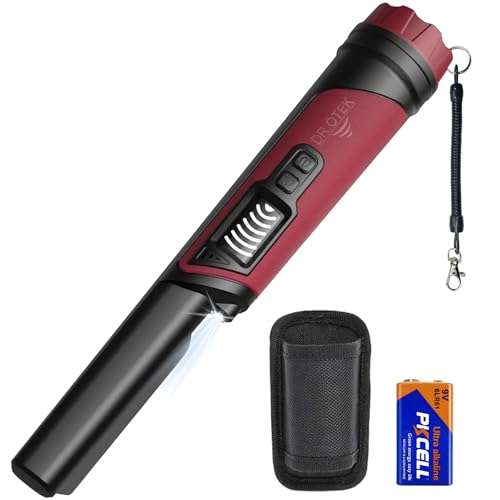
The DR.ÖTEK MT6 Pro is a handheld pinpointer, meant to narrow the location of a metal object after a larger detector has found a general area. It is a 170 g, roughly 25 cm wand that uses one replaceable 9V alkaline battery. The manual lists a holster and spring lanyard, 360-degree sensing, an LCD signal-strength display, LED light, and vibration, audio, or combined alerts. The maker states that the whole unit is IP68 and can be submerged to 3 m, provided the battery cover is tightly fastened. Its manual identifies it as a non-motion all-metal detector, so it responds to metal generally rather than identifying coins, jewelry, or trash by type. A limited independent field account reported roughly 3 to 4 inches on small items and successful shallow creek use, but it was not a controlled, repeatable test.
This product fits an adult or supervised older child who already uses a larger metal detector and needs a lightweight tool for locating a nearby, shallow signal in a plug, loose soil, sand, creek edge, or similar recovery area. It is especially practical for users who prefer a replaceable standard 9V battery, a holster, vibration alerts, and a visual signal indicator. It is more appropriate where the user already understands local permissions, digging safety, and rules for recovering finds.
It is not suited to anyone expecting a primary search detector, dependable target identification, or evidence of deep in-ground performance across mineralized or saltwater conditions. It is also not appropriate for unsupervised children who may dig around unknown signals, or for use near buried utilities, military sites, protected cultural areas, and National Park System land. Users needing independently documented electrical certification, water-ingress testing, repair parts, or a manufacturer recycling program need more traceable documentation than is available here.
The supplied battery is a removable 9V alkaline cell, not a built-in rechargeable pack. The manual tells users to remove it when the product is not in use, which can limit corrosion and leakage in storage. However, it does not provide battery-recycling instructions, electronics take-back terms, or a spare-parts catalog. Used 9V batteries should be handled according to local waste rules, and their terminals should be protected where a collection program requests it. The product's manual provides basic operating and interference information, but omits key field-safety guidance. Before digging, users should arrange utility marking through 811 where applicable. If a signal could be a munition, do not touch, move, or disturb it, leave the area and report it. The maker also gives no permission or protected-area warning, despite metal detectors being prohibited in National Park System areas.