Best Overall
17% off

BOB AND BRAD Q2 Pro Mini Massage Gun
Compact size for easy portability.
Heat and cold head for versatile relief.
Ultra quiet operation for discreet use.
 Lauren Wilson
Compact size for easy portability.
Heat and cold head for versatile relief.
Ultra quiet operation for discreet use.

Offers both heat and cold therapy options.
Compact and easy to handle design.
Eligible for FSA and HSA benefits.

Ultra-compact design for easy portability.
Quiet operation ideal for discreet use.
Long battery life supports extended sessions.

Full-metal build ensures durability and longevity.
Compact design makes it highly portable.
Effective deep tissue massage for muscle relief.

Compact size for easy portability.
Long-lasting battery for extended use.
Quiet operation for a peaceful experience.

Includes heat function for enhanced muscle relaxation.
Compact design makes it easy to travel with.
Multiple intensity settings for personalized massage.

Compact size makes it perfect for travel.
Quiet operation ensures a peaceful experience.
Heat feature enhances muscle relaxation.
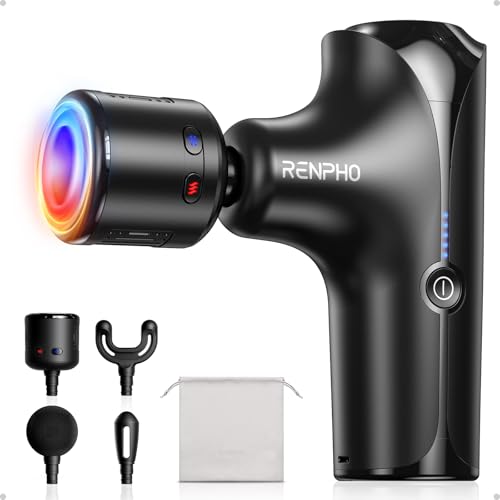
Offers both heat and cold therapy options.
Compact design makes it travel-friendly.
Quiet operation ideal for discreet use.

Compact design for easy portability.
Quiet operation suitable for office use.
Effective deep tissue relief for athletes.

Compact design perfect for travel.
Quiet operation ideal for discreet use.
FSA and HSA eligible for added convenience.
A useful product is not necessarily the one with the largest advertised number. Stroke amplitude, speed, force before stalling, and sound should be measured for the exact model by an independent laboratory. A claimed 7, 9, 10, or 12 mm stroke, a high RPM figure, or a stated “deep tissue” effect is only a manufacturer claim unless supported by model-specific testing. Published specifications can conflict within the same product, and high force or a more intense minimum setting may make a device harder—not safer—to control. Look for adjustable speeds, pressure guidance, secure heads, a usable grip, and an automatic shutoff. A timer around 10 to 15 minutes can help prevent unintentionally prolonged treatment, but it does not make unsafe body areas safe.
Heat, cold, and light attachments require separate scrutiny. A credible listing should state temperature or optical output, include timing controls, and provide skin or eye warnings appropriate to the feature. Temperature claims such as 102–113°F or 46–57°F are still manufacturer-stated unless independently tested for accuracy and uniformity. Red-light claims should include wavelength, irradiance or dose, a timer, and photobiological-safety information; a wavelength alone does not show that the delivered exposure is safe or useful.
Because these are rechargeable electrical products, battery and charging evidence is a major separator. For the exact device, battery pack, and supplied charger, look for a traceable UL, ETL, or CSA listing through the relevant public directories, with certification under standards such as UL 60335-1, UL 60335-2-32, UL 2054, IEC 62133-2, UL 1310, or UL 62368-1 where applicable. USB-C is a connector type, not proof of charging safety. Buyers should also look for compatible-charger instructions, overheating and damaged-battery warnings, and a recall path.
An FDA device record, FDA registration, or classification as a therapeutic massager does not mean a product is FDA-cleared, medically effective, or independently tested. FSA or HSA eligibility can depend on the buyer’s plan and does not validate health claims. Stronger evidence includes a model-specific manual, a responsible U.S. business contact, independent performance and safety reports, warranty terms, replacement parts, and a clear distinction between temporary comfort and medical treatment.
Across the supplied products, recurring safety concerns are consistent: avoid the head, face, front and sides of the neck, cervical spine, spine, bones, joints, open or inflamed skin, bruises, wounds, varicose veins, superficial nerves, and visible blood vessels. People who are pregnant, have reduced sensation or neuropathy, diabetes-related loss of sensation, osteoporosis, fractures, recent surgery or joint replacement, bleeding or clotting risks, suspected deep-vein thrombosis, vascular disease, cancer, implanted devices, pacemakers, or unexplained pain should obtain clinical advice first. Reported severe harms in the supplied reviews—including eye injury, vascular injury, bleeding, and rhabdomyolysis—support conservative pressure and short sessions. Stop if treatment causes pain, numbness, bruising, weakness, or worsening symptoms.
These topics distinguish a compact comfort tool with documented safeguards from one whose headline specifications and health claims are largely unverified. Scores reflect the supplied product reviews, not a new laboratory assessment.
This measures whether benefits such as short-term soreness relief, warm-up, flexibility, mobility, or recovery are matched to human research at a comparable percussive dose. Among the supplied products, higher scores around 74–76 reflect realistic category-level claims; lower scores reflect broader claims or less clearly matched evidence. No study supplied here tested the exact product output.
This measures whether instructions explain suitable body areas, pressure, session limits, and who should seek advice or avoid use. It matters because misuse near the neck, spine, bones, vessels, nerves, or injured tissue can cause harm. Higher-scoring products, such as those scoring 78–82, provide more specific warnings and limits; scores near 48–58 indicate substantial guidance gaps or conflicting instructions.
For products with thermal or light features, this measures controlled temperature or optical output, timers, skin and eye warnings, and claims that match the delivered dose. High scores near 90–100 in the set often belong to products without an advertised heat, cold, or light feature, avoiding those added exposures. Heated and cooled models generally scored in the 66–76 range because independent accuracy testing was not located.
This measures protection against overheating, charging faults, shock, and burns, including traceable certification for the exact device, battery, and charger. It is especially important because every rechargeable product presents a charging and battery-risk question. The supplied products cluster around 68–73, reflecting compatible-charger warnings in some manuals but no publicly located exact-model UL, ETL, or comparable certification.
This measures whether stroke, frequency, pressure before stalling, speed control, and sound match advertised specifications without becoming harsh or uncontrollable. Higher scores around 73–74 reflect clearer adjustable ranges or some handling evidence, but not necessarily independent measurement. Lower scores, including 54–55, reflect conflicting specifications or little evidence that the claimed force and amplitude are real and usable.
This measures attachment retention, safe contact surfaces, grip, weight, controls, and automatic shutoff. A mini device must be controllable on large muscles without slipping, detaching, or encouraging excessive pressure. Higher scores around 78–79 combine useful timers, pressure indicators, or manageable handling; lower scores reflect heavier or more forceful designs, unclear head guidance, or missing session and body-area instructions.
This measures whether advertising separates temporary comfort from medical treatment and accurately uses terms such as FDA, medical grade, deep tissue, and HSA/FSA eligible. Higher scores, including 79–83, reflect clearer manuals, more restrained health framing, or traceable regulatory information. Lower scores near 48–58 reflect inflated claims, unsupported adjunct claims, or eligibility language that could be mistaken for proof of effectiveness.
This measures whether the exact model—not merely a brand, factory, or radio component—has publicly traceable certification, testing, a model number, a responsible U.S. contact, and a recall path. Scores around 79–80 reflect useful FDA device identification or FCC traceability, but those records do not prove massage performance or battery safety. Most products scored about 68–70 because exact-model NRTL listings and laboratory reports were not located.
This measures resistance to motor, switch, charging-port, attachment, and battery failure, plus warranty, replacement parts, and repair support. Longer support can reduce premature electronic waste. Higher scores such as 75–77 reflect a meaningful warranty or public support route; scores around 67–70 generally reflect limited warranty or service information and no independent endurance testing.
This measures whether the battery can be removed or serviced and whether U.S. buyers have a practical take-back or lithium-battery recycling route. Most supplied products use built-in, non-user-replaceable batteries and lack brand-specific take-back instructions, so scores typically fall around 68–70. The higher 73 score reflects clearer disposal direction, though no product-specific recycling route was established.
This is a compact, battery-powered percussion massage gun for short self-massage of larger soft-tissue areas. The product measures about 5.7 by 3.3 by 1.8 inches, weighs about 0.95 pounds, uses five speeds from 1,800 to 3,000 percussions per minute, and has a stated 7 mm stroke. It includes threaded massage heads plus a separately powered heat and cold head. The motor specifications are manufacturer-stated, but independent testing of the closely matched Q2 platform measured a 7.57 mm stroke, roughly 32 pounds of stall force, and a speed range close to the stated range. The manual documents a 10-minute automatic shutoff, a 2,500 mAh built-in battery, USB-C charging at 5V/2A, and warnings not to use excessive force. Evidence for massage guns supports modest, short-term flexibility and warm-up effects, not disease treatment or accelerated tissue regeneration.
This product fits a healthy adult who wants a small, easily stored tool for brief warm-up, temporary muscle comfort, or mobility work on accessible areas such as calves, quads, glutes, forearms, and upper back. Its short stroke, compact grip, 10-minute timer, and independently supported moderate stall resistance suit light to moderate self-massage rather than aggressive treatment. The heat and cold head is most relevant for a user who values localized temperature changes during short recovery routines and will follow skin checks and the manual's pressure warnings.
It is not suitable for people seeking treatment for an injury, a chronic pain disorder, inflammation, or post-surgical recovery without clinician guidance. The manual says to seek medical advice for pregnancy, diabetes, epilepsy, migraines, metal implants, recent joint replacement, herniated disks, and spondylolisthesis. Avoid use over the head, neck, spine, areas with little muscle coverage, fracture-risk areas, varicose veins, swollen or inflamed skin, unexplained calf or abdominal pain, or impaired sensation. It is also a poor fit for households needing a user-serviceable battery or verified U.S. electrical certification.
Human research on massage guns supports realistic short-term outcomes, especially flexibility and warm-up effects, at frequencies relevant to this product's stated 30 to 50 Hz range. It does not establish that a compact massage gun heals injuries, treats medical conditions, or causes cellular regeneration. The manual appropriately says that the product is not a medical product, which conflicts with some broader recovery language on the brand page. The available manual contains a CE declaration referencing appliance, electromagnetic compatibility, and RoHS standards, but this is a manufacturer declaration for the UK and EU context, not a publicly traceable U.S. NRTL certification. No product-specific U.S. recall was located in the public CPSC search. The battery is non-removable, and the manual offers only EU collection guidance. Its RoHS material declaration may reduce certain hazardous substances, but it does not solve U.S. lithium-battery end-of-life access.
This is a cordless, handheld percussion massager for large muscle groups such as calves, thighs, glutes, shoulders, and back. It weighs 1.5 pounds and uses push-fit massage heads, including a powered heat and cold head. The instructions call for light to moderate pressure and movement across muscle rather than prolonged treatment in one spot. The manufacturer states that it provides five speeds from 2,000 to 3,200 RPM, 10 mm amplitude, 44 lb stall force, USB-C charging, and a 10-minute automatic shutoff. It also states that the thermal head offers 50°F or 59°F cooling and 104°F or 113°F heat. Human research supports modest, short-term flexibility and range-of-motion benefits from massage guns as a category, but no independent test report was located for this product's output, temperatures, noise, or stall force.
This product suits an adult who wants a compact, one-handed tool for brief self-treatment of intact, larger muscles after training or prolonged sitting. It is most appropriate for someone using it as a comfort and warm-up or mobility aid, not as a substitute for clinical care. The pressure display, five stated speed settings, carrying case, and 10-minute shutoff are useful for a first-time user who will follow the manual's light-pressure approach. The heat and cooling head may appeal to users who value a temperature option without separate packs.
It is not appropriate for use over the head, front or side of the neck, spine, joints, visible veins, numb skin, open wounds, suspected fracture, acute muscle tear, or an area of unexplained severe pain. People with bleeding disorders, reduced sensation, osteoporosis, recent surgery, pregnancy-related concerns, implanted devices, cancer, vascular disease, or anticoagulant use should seek clinician advice first. It is also a poor fit for households needing independently certified charging evidence, user-replaceable batteries, or a documented brand recycling program.
The useful health claim is narrow. Systematic reviews find that percussive massage can offer short-term gains in flexibility and range of motion, but the studies are small and often at moderate or high risk of bias. A controlled trial using a five-minute treatment after strenuous calf exercise found little recovery benefit and a small increase in soreness shortly afterward. This product should therefore be treated as a temporary comfort and mobility tool, not injury treatment. The manufacturer documents warnings, a 10-minute shutoff, USB-C charging guidance, and a 2-year defect warranty through qualifying sellers. Its manual gives stated thermal settings, but no public independent laboratory report was located for temperature control, mechanical output, electrical safety certification, or battery testing on this product. No matching U.S. recall or regulator warning was located. The manual also lacks battery removal and take-back instructions. At end of life, the whole product should go to an appropriate electronics or battery collection route, not household trash.
This is a small, battery-powered percussion massage gun intended for brief self-massage of large muscle areas during travel, office use, exercise warm-up, or post-exercise relaxation. Retail listings corroborate a compact cordless format, a stated 0.6-pound weight, four speed settings, and six attachment heads. The product is listed as using a rechargeable lithium-polymer battery with a stated two-hour charge time and up to six hours of use, but those battery figures are manufacturer-stated rather than independently tested. Human research on massage guns supports modest, short-term improvements in flexibility, range of motion, stiffness, and perceived soreness. That evidence does not validate this product's exact force, stroke length, speed range, or deep-tissue wording, because no independent output test for this unit was located. It is a percussion-only product, with no stated heat, cooling, or red-light function.
This product suits an adult who wants a very small cordless percussion tool for occasional, low-pressure use on accessible large muscles, such as calves, thighs, glutes, forearms, or upper back after ordinary activity. It is most appropriate for someone who values portability over documented power and who can use a massage device conservatively. The evidence base supports treating it as a comfort and short-term mobility tool, not as a substitute for assessment or treatment of an injury.
It is not well suited to someone who needs verified output, documented charging certification, repair support, or a detailed safety manual before using a rechargeable appliance. People with a suspected blood clot, bleeding disorder, recent fracture or surgery, osteoporosis, numbness or neuropathy, open skin, unexplained severe pain, implanted medical equipment, pregnancy-related concerns, or cancer-related treatment questions should seek clinical advice first. It should not be used aggressively over the head, neck, spine, chest, joints, superficial nerves, or blood vessels.
The useful health claim is limited: research on massage guns supports possible short-term improvements in flexibility, range of motion, stiffness, and soreness, while study quality and treatment settings vary. Aggressive or prolonged percussion can cause harm. Published safety literature identifies concerns around open skin, bruising, fractures, clotting conditions, reduced sensation, sensitive body areas, and excessive repeated treatment. A reported case of rhabdomyolysis after percussion massage reinforces the need for conservative use. This product has no stated heat or light function, avoiding those added exposure issues. However, no publicly traceable exact-product electrical certification, laboratory performance test, recall notice, repair pathway, battery-removal instructions, or brand take-back program was located. Its rechargeable lithium battery should not go in household trash or curbside recycling. U.S. EPA guidance directs consumers to separate battery or electronics recycling and household hazardous-waste routes.
This is a compact cordless percussion massager for self-treatment of larger soft-tissue areas such as the legs, shoulders, arms, back, and feet. A copy of the product manual lists a 380 g full-metal body, four silicone heads, five speed settings from 1,000 to 3,200 rpm, and a claimed maximum 35 lb stall force. It is intended for brief muscle-comfort, warm-up, and recovery sessions rather than diagnosis or treatment of injury. The available manual states that it shuts off after 10 minutes and should be used only with its supplied charging cable. The same model family appears in the FDA device-identification system as an exempt therapeutic electric massager, but the public record uses a different model designation than the available manual. I found no public independent laboratory report confirming this unit's actual amplitude, force, sound level, battery protection, or charger certification.
This product suits an adult who wants a small cordless tool for brief self-massage of intact, non-injured large muscles after ordinary activity, such as calves, thighs, glutes, shoulders, or upper back. Its low stated weight and automatic shutoff are useful for travel, desk storage, and short warm-up or mobility routines. Expectations should stay modest, with comfort and short-term mobility work as the realistic use case rather than treatment of persistent pain or a sports injury.
It is not suited to people seeking treatment for diagnosed pain, nerve symptoms, acute injury, swelling, suspected clotting, fracture, or unexplained bruising. Avoid use over the head, front or side of the neck, spine, joints, bony areas, open skin, or inflamed tissue. People who are pregnant, have a pacemaker or another implanted medical device, use anticoagulants, or have significant vascular, neurological, or bone conditions should seek clinician guidance first. It is also unsuitable where independently verified charger safety is required.
The health evidence supports a narrow claim. Systematic reviews find that percussion-massage devices can produce short-term improvements in flexibility and range of motion, but study methods vary and evidence for soreness relief, strength recovery, and athletic performance is uncertain. A recent controlled study found little recovery benefit from a five-minute post-exercise application and reported slightly greater short-term soreness. This makes gentle, brief use on healthy muscle the most defensible framing. Available instructions advise against use on broken or irritated skin and recommend professional advice for pregnancy, pacemakers, and medical conditions. The product has no heat, cold, or light attachment, avoiding those added exposure risks. Its rechargeable lithium battery is an ecological weak point because no public battery-service or take-back route was found. The available manual describes a three-year warranty, which may reduce premature replacement, but public evidence of spare parts, repair access, battery certification, and independent endurance testing was not located.
This is a battery-powered, palm-size percussion massager for brief treatment of accessible muscles such as the calves, thighs, shoulders, and upper back. Published instructions describe a 4.8-inch plastic-bodied unit with four silicone attachments, five speed settings, USB-C charging, and a 10-minute automatic shutoff. Those specifications are manufacturer-stated, not independently measured. The stated maximum is 3,000 RPM, with 7 mm travel and 17.6 lb stall force. No independent laboratory report was found that verifies those output figures, sound level, runtime, or charger protection for this product. One useful external check does exist, the exact QL/CUTE X1-A model appeared as having no nonconformity found in a 2023 Guangzhou massage-appliance quality spot inspection. That is meaningful product traceability, but it is not a U.S. UL or ETL certification and does not validate every advertised performance claim.
It suits an adult who wants a very small, cordless tool for brief, light-to-moderate percussion on large, intact muscles after activity or after prolonged sitting. Its stated 4.8-inch body, four heads, five settings, USB-C charging, and 10-minute shutoff make it most practical for a gym bag, desk drawer, or travel kit. It is better matched to temporary tightness and short recovery routines than to intensive treatment of a large muscle group or a medical condition.
It is not suited to someone seeking clinically directed pain treatment, reliable deep-force performance, or a device with publicly verifiable U.S. electrical certification. People with a blood clot or bleeding disorder, recent fracture or surgery, osteoporosis, impaired sensation, active skin injury, unexplained pain, pregnancy concerns, cancer treatment, or an implanted medical device should seek clinician advice first. Avoid use over the head, front or side of the neck, spine, joints, bones, nerves, or blood vessels. Children should not use it unsupervised.
Human research on massage guns supports modest, short-term improvements in flexibility, range of motion, stiffness, and some recovery outcomes. It does not establish that this particular compact product treats injuries or chronic pain. The published instructions appropriately advise gentle movement, avoiding excessive pressure, bones, joints, wounds, inflamed skin, and water. However, they provide limited detail for higher-risk users. Serious harm is uncommon, but case literature includes rhabdomyolysis after aggressive percussion use. The exact product has a positive Guangzhou quality-inspection record, but no public U.S. safety listing or exact-product battery certification was located. No product-specific U.S. recall was located in the CPSC sources searched. Its built-in lithium-polymer battery reduces replaceability, and no brand recycling route was found. At end of life, do not put the product in trash or curbside recycling. Use an electronics or lithium-battery recycler that accepts embedded batteries, following local instructions.
This is a compact cordless percussion massager for self-treatment of larger muscles and localized sore areas. The manufacturer specifies four speeds from 1,800 to 3,000 percussions per minute, 6 mm amplitude, a 2,500 mAh, 18.5 Wh battery, four silicone head casings, and a 10-minute automatic shutoff. It weighs 356 g and charges by USB-C with a 5 V, 2 A charger that is not included. Its defining extra is a non-removable heated steel head. RENPHO states it reaches 46 C, or 115 F, in about a minute. The manual includes unusually detailed body-area, medical-condition, heat-sensitivity, battery, and session guidance, including starting at low intensity and limiting a stiff-muscle treatment to two minutes. Human research on massage guns supports modest short-term range-of-motion, flexibility, stiffness, and recovery benefits, but does not establish disease treatment or prove the stated output of this exact product.
It suits an adult who wants a small, cordless tool for brief, conservative treatment of intact muscle groups such as the quads, glutes, calves, shoulders, or upper back after activity or prolonged sitting. It is most appropriate for someone who can follow the manual, begin at the lowest setting, avoid excessive pressure, and use the automatic shutoff as a treatment break. The compact size, carry case, USB-C cable, and manufacturer-stated three-hour runtime fit commuting and travel use better than long, high-load sessions.
It is not appropriate for children, people unable to reliably sense heat or discomfort, or anyone likely to use it while asleep. People who are pregnant, have fractures, blood-flow or clotting concerns, heart disease, implanted cardiac devices, metal implants, cancer or tumor sites, recent joint surgery, unexplained pain, skin eruptions, varicose veins, or poor circulation should follow the manual and seek clinical advice first. It should not be used on the head, face, throat, cervical spine, bones, possible fracture sites, open or inflamed skin, or near water.
The relevant health evidence is narrow but real. Systematic reviews of massage guns report possible short-term improvements in range of motion, flexibility, stiffness, and some recovery outcomes. Study quality is limited, and evidence does not support treating injuries or medical conditions. The product's manual is a relative strength because it identifies many meaningful contraindications and gives use limits. The heated head is specified at 46 C, and the manual warns people with reduced heat sensation to take particular care. No model-specific public UL, ETL, or CSA certification listing, independent performance test report, or battery certification record was located. The manual documents a non-replaceable 18.5 Wh battery and advises correct disposal, but offers no product-specific take-back path. U.S. EPA guidance says lithium-ion devices should not go in household trash or curbside recycling because damage can create a fire hazard. They should go to an appropriate battery or electronics collection program.
This is a compact, battery-powered percussion massager for large muscle areas such as the legs, glutes, arms, shoulders, and back. It weighs about 14 ounces and uses five interchangeable heads, including a separately rechargeable heated and blue-light head. The manufacturer states that it has a 9 mm stroke, five speeds from 2,000 to 3,000 RPM, two heat settings of 100°F and 107°F, USB-A to USB-C charging, and a 10-minute automatic shutoff. Independent hands-on testing broadly confirmed the compact dimensions, 14-ounce weight, 9 mm amplitude, 2,000 to 3,000 RPM range, and five included attachments. That testing also found the lowest setting forceful for sensitive muscles. Human research on massage guns supports modest, short-term flexibility or range-of-motion benefits at comparable frequencies, but evidence for recovery and pain claims remains limited and does not establish treatment for injury or disease.
This product suits an adult who wants a small, relatively forceful tool for brief self-massage of larger, healthy muscle groups after exercise or prolonged sitting. Its compact 14-ounce body can be useful for someone who finds full-size massage guns cumbersome, and the separate 100°F or 107°F heat head may appeal to users who prefer mild pre-massage warmth. It is most appropriate for users comfortable following a short, light-pressure protocol rather than treating a diagnosed injury or persistent pain condition.
It is not well suited to people with sensitive, frail, acutely injured, bruised, numb, or poorly sensate tissue, because even its minimum 2,000 RPM setting was found intense in independent testing. People with recent fracture, joint replacement, metal implants, diabetes with impaired sensation, pregnancy, epilepsy, migraines, herniated discs, or spondylolisthesis should seek clinician advice first, consistent with the manual. Avoid using it on the neck, head, spine, open or irritated skin, superficial nerves, or blood vessels despite conflicting attachment guidance.
Evidence supports realistic expectations only. Massage-gun research suggests short-term flexibility and range-of-motion gains, including protocols near this product's operating frequency, but it does not validate broad injury-recovery, deep-tissue, or skincare outcomes. The manual gives several useful precautions, including avoiding excessive force and stopping for pain or bruising. Its mixed neck directions are a safety concern, so users should follow the more conservative warning and keep percussion away from the neck and spine. The product has a rechargeable built-in battery and the brand offers a two-year limited warranty for qualifying new purchases, which can help avoid premature replacement. However, no battery-removal instructions, battery take-back program, or product-specific recycling route was located. Lithium-ion products should not go in household trash or curbside recycling. They should go to a suitable electronics recycler or household hazardous-waste collection point. No recall or regulator warning specific to this product was located in the reviewed U.S. sources.
This is a compact cordless percussion massager for home use, with four screw-in heads and a separately powered heat-and-cool head. The manufacturer’s manual specifies a 0.95-pound body, 7 mm stroke, five speeds from 1,800 to 3,000 RPM, and about three hours of runtime. It supplies a USB-C cable, but not the required 5 V, 2 A wall charger. Its evidence base is category-level rather than product-specific. Systematic reviews of massage guns find limited, generally low-quality evidence for short-term flexibility, range-of-motion, stiffness, and perceived recovery effects. This unit’s 30 to 50 Hz speed range overlaps frequencies used in some studies, but its output, force, noise, and thermal temperatures have not been independently verified. The official manual provides unusually detailed contraindications, a 10-minute shutoff, overload protection, and an explicit non-medical-use statement.
This product fits an adult who wants a small, travel-friendly tool for brief, cautious self-massage of large, intact muscle areas such as calves, quadriceps, glutes, or upper back. It is most appropriate for temporary post-exercise stiffness or a short mobility warm-up, not injury treatment. The strongest fit is a user who will read the manual, begin at the lowest setting, keep pressure light, respect the 10-minute shutoff, and already owns a suitable 5 V, 2 A USB power adapter.
It is not suitable for children or for unsupervised use by people with limited sensation or ability to follow the controls. People who are pregnant, have fractures, blood-clot or circulation concerns, implanted cardiac devices, metal near the treatment area, recent joint surgery, inflamed or damaged skin, or unexplained pain should follow the manual’s instruction to avoid use or seek clinical advice. It also does not suit anyone seeking treatment for a disease, injury, severe pain, or a need for independently verified heat, cooling, force, and charging safety performance.
The manual appropriately frames the product as a household wellness device rather than a medical treatment. Its strongest safety feature is the detailed exclusion list, alongside direction to avoid the head, face, throat, cervical vertebrae, bones, varicose veins, inflamed skin, and prolonged pressure. Research supports only modest, short-term benefits from massage-gun use, mainly flexibility, range of motion, stiffness, and perceived recovery. It does not establish this product as a treatment for injury or disease. The heat-and-cool head has stated temperature bounds and a 10-minute shutoff, but no independent temperature or skin-safety test report was found. The rechargeable batteries are non-replaceable, and the product is not designed for user repair. At end of life, the full device should go to an electronics or household hazardous-waste recycler that accepts lithium-ion battery products, not household trash or curbside recycling. No product-specific U.S. battery take-back route was located.
This is a very small rechargeable percussion massager intended for temporary treatment of muscle tightness after activity or during everyday use. The manufacturer identifies the matching CUTE-X1 design as about 230 g, with five intensity settings, a 7 mm stated stroke, four heads, USB-C charging, and a 650 mAh lithium battery. Instructions available for the HEYCHY version state a 10-minute automatic shutoff and advise light to moderate pressure. The most useful evidence for massage guns supports short-term flexibility, range-of-motion, and perceived recovery benefits, rather than treatment of injury or disease. Its stated speed range reaches roughly 30 to 50 cycles per second, which overlaps some research protocols, but the product itself has not been independently tested for actual stroke, frequency, stall force, noise, or therapeutic outcomes. An exact matching model did pass a Guangzhou government quality inspection in 2023, although that is not a U.S. electrical-safety listing.
It suits an adult who wants a lightweight, packable tool for brief self-treatment of healthy, intact large-muscle areas, such as calves, thighs, glutes, upper back muscles, or forearms after routine activity. The small size, USB-C charging, and stated 10-minute shutoff fit a gym bag, desk, or travel use case. Evidence supports keeping expectations narrow, such as temporary stiffness relief or short-term mobility work, rather than using it to diagnose, treat, or rehabilitate an injury.
It is not appropriate for people with a suspected clot, bleeding disorder, recent fracture or surgery, osteoporosis, impaired sensation, active cancer concerns, implanted medical devices, or unexplained severe pain unless a qualified clinician has cleared use. Avoid use on wounds, inflamed skin, bruises, bony prominences, joints, the spine, head, neck, chest, or areas with superficial nerves or blood vessels. It is also a poor fit for households needing independently verified U.S. charger and battery certification, service parts, or a documented recycling program.
Percussive massage has limited but relevant human evidence for short-term range of motion, flexibility, and recovery-related comfort. It does not establish that this product treats disease, repairs tissue damage, or reliably improves athletic performance. The available instructions include a 10-minute shutoff, advice to avoid open wounds and inflamed skin, and a recommendation for light to moderate pressure. More complete contraindication guidance would be safer for unsupervised home use. The original manufacturer publicly identifies the matching model as a rechargeable lithium-battery product with USB-C charging. A Guangzhou government quality inspection listed the exact model as having no nonconformities in 2023. That result is useful traceability, but it is not a U.S. NRTL electrical listing. No public U.S. battery take-back route, battery replacement procedure, or repair-parts program was found, so end-of-life handling should follow local lithium-ion battery collection rules rather than household trash.
This is a compact cordless percussion massager for applying repeated impacts to soft tissue, rather than a medical treatment device. The manufacturer documentation identifies a 0.86-pound body, five speed settings from 1,700 to 3,200 rpm, four interchangeable heads, USB charging, and a built-in rechargeable lithium battery. It also specifies a 15-minute automatic shutoff. The manufacturer states that this version uses an 8 mm stroke and can operate for up to eight hours, although no public independent laboratory report was located to confirm stroke, force before stalling, sound level, or battery runtime for this product. Human research on massage guns supports possible short-term flexibility and soreness benefits, but studies are limited and do not validate this product’s particular output or broad back-pain claims.
This product suits an adult who wants a small cordless tool for short, conservative sessions on accessible soft tissue, such as calves, thighs, glutes, forearms, or shoulders after ordinary exercise. Its light manufacturer-stated weight, five speeds, interchangeable heads, and automatic shutoff are useful for someone who values portability and can follow safety limits. It is most appropriate for temporary comfort, warm-up, or recovery use, not for diagnosing an injury or replacing clinical assessment.
Choose a different approach if you need treatment for persistent, unexplained, severe, or radiating back or neck pain, or if you expect a device to treat a medical condition. Do not use it without clinician advice if you are pregnant, have diabetes with reduced sensation, neuropathy, retinal problems, an implanted medical device, a recent injury, surgery, or fracture. It is also unsuitable for use on the head, chest, spine, genitals, open wounds, bruises, prominent blood vessels, or bony areas.
The safety documentation is more useful than a typical minimal listing. It says the product is not intended to diagnose, treat, cure, or prevent disease, and it gives specific reasons to seek medical advice before use. It also prohibits use on the head, chest, genitals, wounds, and healing surgical areas. Those limits matter because excessive or poorly placed percussion can cause tissue injury, and serious adverse events have been reported rarely with massage-gun use. The product has a built-in rechargeable lithium battery. Its manual says not to place it in ordinary trash and to follow local recycling guidance, which aligns with U.S. environmental guidance. However, no user battery-removal procedure, brand take-back route, or publicly traceable exact-product electrical safety certification was located. No product-specific U.S. recall or regulator warning was found in the reviewed public sources.


