Best Overall
18% off

WOLFBOX G840S 12" 4K Mirror Dash Cam
4K resolution offers crystal-clear video quality.
Dual cameras provide comprehensive front and rear coverage.
Night vision ensures clear footage in low light.
 Daniel Kenitz
4K resolution offers crystal-clear video quality.
Dual cameras provide comprehensive front and rear coverage.
Night vision ensures clear footage in low light.

High-resolution cameras for crystal-clear recordings.
Convenient voice control for hands-free operation.
Comes with a 128GB card for ample storage.

Ultrathin design enhances car interior aesthetics.
Super night vision for clear low-light footage.
Glare-free touch screen ensures safe driving.

Clear, glare-free view with laminated screen.
Enhanced night vision for safer driving.
Easy installation with detachable front lens.
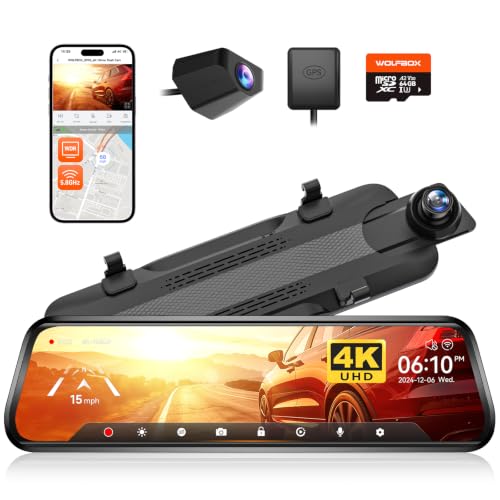
High-resolution 4K front and 1080P rear cameras.
Easy-to-use 10" touch screen interface.
Includes 64GB card, supports up to 256GB.

4K front camera ensures superb video quality.
Built-in Wi-Fi and GPS for easy tracking.
24-hour parking mode for constant surveillance.

4K front camera provides ultra-clear footage.
Voice control simplifies hands-free operation.
Includes 32GB SD card for ample storage.

High-quality 4K and 1080P video recording.
Built-in WiFi and GPS for easy tracking.
Includes 64GB card for ample storage.

Stunning 4K resolution for crystal-clear recordings.
Excellent night vision for low-light conditions.
Built-in GPS for accurate location tracking.

Impressive 4K+2.5K video resolution quality.
Advanced color night vision capability.
Convenient included 128GB memory card.
A headline such as “4K” or “night vision” does not establish readable evidence. The supplied reviews repeatedly distinguish advertised resolution from independently observed detail. Look for exact-product road or laboratory testing that covers daylight, darkness, glare, rain, motion, and license-plate readability. A test with original sample clips is more useful than a resolution label alone. Front and rear cameras also need to be judged separately: a 4K front stream may be paired with a 1080p rear camera, lower frame rates, weaker night performance, or a field of view that makes distance harder to judge.
For a mirror-format product, fit is a safety issue. Confirm the vehicle types, mirror dimensions, mounting method, cable route, and whether the original mirror, auto-dimming function, sensors, cameras, sun visors, or required rearward visibility remain usable. A strap-on display can vibrate, glare, obstruct equipment, or become loose; a replacement-style system may require removing the original mirror and connecting reverse-light or fuse-box wiring. Installation instructions should keep cables away from airbags and other safety equipment. Reverse lines, backup views, blind-spot warnings, lane alerts, and collision alerts are aids, not substitutes for mirrors, direct observation, or attentive driving.
For connected products, verify the exact radio authorization in the FCC Equipment Authorization System. A matching FCC filing or grant is meaningful; an unsupported compliance logo is not. It confirms radio authorization, not electrical safety, image quality, or mounting safety. For electrical and thermal claims, look for an exact-model UL Product iQ or Intertek ETL listing, or a test report from an OSHA-recognized testing laboratory. None of those marks should be assumed from a marketplace listing alone.
Recording reliability depends on more than loop recording. Check whether the manual and independent testing address power interruption, heat, full storage, event locking, parking mode, card speed, and corrupted files. Removable cards are practical wear items, but buyers should follow the approved-card and formatting instructions. GPS, audio, cabin video, Wi-Fi, cloud access, and app permissions should be individually controllable, with a model-specific privacy policy explaining deletion, retention, sharing, and security.
Across the supplied products, the recurring serious cautions are clear: no exact-model UL or ETL evidence was found for the reviewed products; several products had weak or undocumented Wi-Fi security, including default passwords; advertised resolution, sensor, frame-rate, storage, or Wi-Fi figures sometimes conflicted with manuals, FCC filings, or independent testing; and nighttime, glare, rain, rear-camera, and parking-mode performance was often unproven. Buyers should also treat permanent hardwiring, reverse-light connections, airbag-adjacent cable routing, and replacement-mirror installation as tasks requiring appropriate vehicle knowledge or professional help.
These products were assessed as driving aids and recording devices, not as crash-prevention systems. Higher scores reflect stronger model-specific documentation or testing in the supplied reviews; lower scores indicate unresolved fit, safety, privacy, durability, or evidence gaps.
This measures whether the mirror display, controls, alerts, and instructions support attentive driving. Screen-off settings, voice controls, brightness controls, and instructions to operate while parked help, but a large active touchscreen can still add distraction. Among the supplied products, scores ranged from 54 to 78: higher-scoring products documented more usable controls, while lower scores reflected unresolved human-factors or overreliance concerns.
This measures whether a digital or clip-on mirror preserves useful rearward visibility without glare, distortion, loose mounting, or obstruction of original equipment. It matters because a camera view does not automatically satisfy the practical role of a mirror. Scores ranged from 66 to 78. Higher scores had some installed-vehicle or measured-view evidence; lower scores lacked vehicle-specific fit or raised distance-judgment and glare concerns.
This covers overheating, short circuits, battery drain, loose mounts, falling hardware, and unsafe hardwiring. Mirror cameras commonly use long cables, accessory power, reverse-light connections, or optional fuse-box kits, so installation quality matters. Scores ranged from 53 to 74. Higher scores had clearer operating or wiring instructions; lower scores still lacked exact-model UL or ETL certification, thermal testing, or mounting endurance evidence.
This measures control over GPS, audio, cabin video, Wi-Fi, cloud, and app data. Mirror cameras can record passengers, routes, and nearby conversations, while phone access can expose clips beyond the vehicle. Scores ranged from 53 to 78. Higher scores included local storage or switchable GPS and audio; lower scores involved default passwords, inconsistent app disclosures, or unclear retention and video-handling controls.
This measures independently tested front and rear footage in daylight, darkness, glare, motion, and rain—not advertised resolution alone. Scores ranged from 45 to 86. Higher scores had exact-model road or laboratory testing, such as strong daytime footage; lower scores had only manufacturer claims or unresolved disputes about native resolution, sensor identity, rear detail, or nighttime plate readability.
This covers loop recording, impact locking, parking recording, timestamps, card handling, power interruption, heat, storage-full behavior, and file corruption. Scores ranged from 59 to 77. Higher scores had documented controls and some independent continuity testing; lower scores lacked endurance evidence or raised concerns about protected files filling storage, parking-mode reliability, card failures, or inconsistent specifications.
This measures whether the exact wireless model has a valid U.S. FCC authorization rather than an unsupported Wi-Fi or Bluetooth logo. It does not prove electrical safety or performance. Scores ranged from 68 to 92. Higher-scoring products had model-matched FCC filings covering the documented radio; lower scores involved family-level evidence, missing grants, or marketplace claims for 5 GHz operation that did not match the located filing.
This measures whether ADAS, blind-spot, lane, collision, night-vision, and backup claims state their limits and keep responsibility with the driver. Scores ranged from 50 to 77. Higher scores used clearer reference-material warnings and narrower claims; lower scores made collision-risk or assistance claims without tested false-alert rates, operating conditions, or independent confirmation.
This compares advertised resolution, sensor, frame rate, field of view, storage, GPS, display, and accessories with the exact manual, filings, packaging, and observed operation. Scores ranged from 45 to 79. Higher scores had better agreement between claims and documentation; lower scores showed conflicts such as 4K versus 1440p capture, 2.4 versus 5 GHz Wi-Fi, or contradictory card capacities.
This measures whether safety, radio compliance, performance, and durability evidence can be matched to the exact product. Scores ranged from 68 to 83. Higher scores combined independent testing with identifiable FCC records or other traceable documentation; lower scores relied more heavily on manufacturer claims, marketplace badges, related-model filings, or incomplete evidence rather than independently matchable certificates and tests.
This measures whether firmware support, replaceable storage or power parts, repair options, warranties, and take-back programs can reduce avoidable electronics waste. Scores ranged from 70 to 74, so the separation was modest. Products generally used removable microSD cards and some had firmware support, but the supplied reviews found no clearly documented U.S. manufacturer take-back program and rarely found repair-parts commitments.
This product is a 12-inch touchscreen mirror dash camera that straps over an existing rearview mirror. It combines a forward-facing camera, a wired rear camera, a removable memory card, optional GPS hardware, and Wi-Fi app access. The current manufacturer manual documents simultaneous front and rear recording modes of 4K plus 1080P, 2.5K plus 1080P, or 1080P plus 1080P, rather than a single universal capture setting. The manual also documents loop-recording segments, adjustable impact sensitivity, optional audio recording, GPS and speed stamps, and card-format reminders. Parking recording requires a separately purchased hardwire kit. U.S. radio authorization is independently matched to the Wi-Fi-equipped G840S model for 2.4 GHz and 5.8 GHz operation. Independent hands-on reviews support usable image quality, but no exact-model laboratory test with retained clips, measured detail, glare, rain, heat, and power-loss testing was located.
This product suits a driver of a car, pickup, van, or older vehicle who wants a large rear camera display and dual-channel incident recording without replacing the factory mirror assembly. It is most appropriate for someone comfortable routing a rear-camera cable, checking that the mirror stalk and sun visors have sufficient clearance, formatting the card on schedule, and verifying recording before relying on it. It also suits users who value optional GPS, audio, and on-screen stamp controls and will manage those settings deliberately.
It is not suited to drivers who need vehicle-specific fit evidence, professionally validated rearward visibility, or a safety-certified hardwired installation. It also needs caution in vehicles with a weak mirror mount, restricted visor clearance, heavy vibration, or a windshield and mirror layout that creates display glare. Privacy-sensitive users who do not want location, audio, video, or Wi-Fi exposure should choose a camera with stronger documented security controls, or keep Wi-Fi, audio, GPS display, and location stamps disabled where possible.
The main safety consideration is driver attention. A rear camera and parking lines can add visual information, but they do not replace direct observation, mirror checks, or the driver remaining engaged. The product uses a large touchscreen mounted over the original mirror, so installation stability, glare, and screen placement matter. The manual supports settings for front, rear, and split-screen views, but it does not provide vehicle-specific fit testing or an independent human-factors evaluation. For connected-device privacy, the manual documents optional audio recording and GPS or speed stamping. It also lists a default Wi-Fi password, which is a meaningful security concern if wireless access is left enabled. The app listing says location and personal information may be collected, while stating that data is encrypted in transit and deletion can be requested. The manufacturer offers a 12-month dash-camera warranty and removable storage, which can extend practical use. No U.S. take-back or recycling program for this product was identified in the manufacturer material reviewed.
This is a 12-inch strap-on mirror dash camera that records through a front camera and wired rear camera, while showing a live camera view on its touchscreen mirror. The supplied setup includes a GPS module, rear-camera cable, car power cable, mounting straps and a microSD card in this marketplace package. Manufacturer documentation specifies 4K front recording, 2.5K rear recording, 30 fps, Wi-Fi, support for cards up to 512 GB, and a stated operating range of minus 4 to 158 degrees Fahrenheit. The 5 GHz Wi-Fi radio is independently traceable to a U.S. FCC authorization matching the G900 Pro. An independent two-vehicle road test found sharp, detailed front footage and good rear footage, but also found fit, vibration, and forward-camera obstruction issues in a small car. The manual usefully states that recordings are reference material and are not guaranteed to be complete evidence.
This product suits a driver who specifically wants a large digital rear-view display and continuous front and rear recording, and who can carefully measure the existing mirror area before installation. It is most practical in a larger car, truck, van, or camper where a 12-inch overlay mirror, separate GPS antenna, and routed rear-camera cable can be installed without obstructing the factory mirror mount. It also suits users willing to review card maintenance settings and use the screen-off command while driving.
It is not well suited to drivers of small cars, vehicles with bulky mirror-mounted sensors or cameras, or anyone unable to confirm a stable, unobstructed fit before routing cables. The independent road test showed that vibration and blocked forward framing can occur in some installations. It is also unsuitable for buyers who need documented security controls for location and video data, tested parking-event reliability, or a simple plug-in parking monitor. Professional installation is prudent when connecting the reverse-light lead or hardwire kit.
The clearest safety positive is that the exact G900 Pro Wi-Fi model is traceable to an FCC authorization and test report. Its manual also gives important electrical limits, including use only in 12 V or 24 V vehicles, use of original accessories, and stopping use after damage or malfunction. However, no exact-product U.S. NRTL electrical-safety certification was located. No U.S. CPSC recall or NHTSA recall record was located in the searches performed. The product uses replaceable microSD storage and carries a one-year stated warranty, with an extra six months offered after registration. Those are modest longevity supports. The manufacturer documentation provides no identified U.S. electronics take-back route, repair-parts catalog, or defined firmware-support period. Video and GPS data can be disabled on the device, but the default Wi-Fi password documented in the manual is weak, and the companion app's published data-safety disclosure says it may collect location and other data.
This is a replacement-style digital rearview mirror and dual-camera recorder. It replaces the vehicle’s original interior mirror through one of four supplied adapters, then hardwires to the fuse box for ignition-powered recording and optional impact-triggered parking recording. The package documentation identifies a 9.35-inch touch display, a rear camera, GPS antenna, fuse taps, and front and rear 1080p recording. Independent installed-product reports confirm separate front and rear video files, 1920 by 1080 MOV recordings, and measured frame rates of about 27.5 fps front and 25 fps rear. The same testing found broadly useful night visibility, but mixed results for image sharpness and exposure. This is a wired GPS product, not a documented Wi-Fi or cloud camera, but clear model-specific U.S. privacy, certification, and recycling documentation was not located.
It suits a vehicle owner who wants a factory-style interior mirror replacement rather than a strap-on screen, accepts fuse-box hardwiring, and can verify adapter compatibility before installation. It is most appropriate where the priority is recording both directions and improving the rear camera view at night, rather than obtaining laboratory-validated evidence capture. The buyer should be comfortable maintaining the storage card, checking recordings periodically, and using the camera as supplemental awareness rather than as a substitute for mirrors and direct observation.
It is not suited to drivers who need a confirmed vehicle-specific replacement for an original mirror or backup camera system, especially where the original equipment performs other functions. It is also a poor fit for anyone unwilling to hardwire safely around airbags, use a professional installer, or manage a high-endurance microSD card. Buyers needing continuous pre-impact parking coverage, immediate recording at startup, formally validated low-light plate capture, or independently verified electrical safety certification should use a product with that evidence.
The main safety concern is installation. The product replaces an original mirror and routes wiring through the headliner, A-pillar area, and fuse box. Its instructions say cables should not obstruct airbags or other safety equipment, but an exact product electrical-safety listing from a U.S. Nationally Recognized Testing Laboratory was not located. Independent use reporting also noted substantial heat after direct sun exposure and a storage-card error with the included card. Those are observed concerns, not recall findings. The GPS accessory can create location-linked video records. No model-specific U.S. privacy policy explaining retention, deletion, or sharing controls was located. The product has removable microSD storage, which can extend use through card replacement, but no U.S. take-back program, repair-parts policy, or firmware-support commitment was confirmed. At end of life, the mirror, cameras, wiring, and storage card should go to an R2 or e-Stewards certified electronics recycler rather than household trash.
This product is a replacement-style digital rearview mirror with a 9.35-inch touch display, a separate front camera, a rear camera, external GPS antenna, fuse-box wiring, and removable microSD storage. It is intended to show a live rear view while also recording front and rear driving footage. The manufacturer documents 1080p front recording at 27.5 fps and rear recording at 25 fps, loop recording, G-sensor file locking, and optional parking-collision recording. The installation manual provides specific cable-routing cautions, including avoiding interference with airbags and the driver's view. It also makes clear that fit is not universal, despite broad vehicle compatibility marketing. A published road-use article showed favorable daylight and tunnel viewing, but it was labeled promotional content, so it is not independent validation. Storage claims also need care, because the manual specifies separately purchased 8 GB to 64 GB Class 10 cards, conflicting with the catalog's included 128 GB claim.
This product fits a driver whose vehicle has a confirmed compatible mirror mount and who wants a replacement-style rear display plus dual-camera recording. It is especially relevant where passengers, cargo, or a dark rear cabin make a conventional interior mirror less useful. The buyer should be comfortable arranging professional installation, or already understand fuse taps, grounded wiring, reverse-light triggers, trim removal, and airbag-safe cable routing. They should also expect to supply and maintain a compatible microSD card and periodically back up protected clips.
It is not well suited to drivers who need a simple plug-in installation, a vehicle-specific fit guarantee, or proof that a replacement mirror preserves every required rearward-view condition. Avoid self-installation if working near A-pillar airbags, fuse boxes, headliners, or reverse-light wiring is unfamiliar. It is also a poor fit for users needing independently tested low-light evidence capture, verified electrical certification, cloud access, or a clearly documented privacy-control system. Owners of vehicles with protected mirror brackets or unusual mounts should confirm fit before removing original equipment.
The main health and safety issue is installation. The manual tells installers to keep the front camera out of the driver's view and route cables so they do not interfere with airbags or other safety equipment. That is useful product-specific guidance. However, this unit replaces the original interior mirror, and no model-specific test was found showing that the installed system preserves required mirror performance. NHTSA guidance emphasizes that driver-assistance equipment is an aid and the driver remains responsible for monitoring the road. The manual documents a 12-month warranty, with a stated extension to 18 months after contacting support. Recording uses removable microSD storage, which can be replaced separately, but no U.S. take-back program, repair-parts policy, firmware-support commitment, UL listing, or ETL listing was verified for this product. At end of life, use an R2 or e-Stewards certified electronics recycler, as recommended by the EPA. No matching CPSC or NHTSA recall or safety-warning result was identified in the checked public sources.
This is a strap-on mirror dash camera for 12V or 24V vehicles. It fits over an existing rearview mirror with rubber straps, records a front view and a wired rear view, and uses a touchscreen for live rear, front, or split-screen viewing. The current manufacturer manual specifies 4K front recording, 1080P rear recording, 25 fps, expandable microSD storage up to 256 GB, external GPS, and Wi-Fi. The recording system has documented loop-recording lengths, G-sensor sensitivity settings, locked-video playback, and a card-format reminder. Parking recording requires a separately purchased ACC hardwire kit. Independent road reviews report useful daytime front detail and responsive controls, while also reporting display glare in bright cabins and softer rear footage. The manual is candid that recordings are reference material and are not guaranteed to be accepted as complete evidence.
This product fits a driver who wants a single add-on unit that records both directions and provides a large live rear camera view, particularly where cargo, rear-window tint, or vehicle geometry limits a conventional mirror view. It is better suited to someone comfortable routing a rear-camera cable, checking the fit against their existing mirror, adjusting the screen for glare, and routinely checking recordings. It also suits users who want local removable storage and who will deliberately configure audio, GPS, and video-stamp settings before use.
It is not well suited to drivers who need vehicle-specific fit confirmation, professionally documented mirror-retention safety, or independently verified electrical certification for the supplied power equipment. Avoid relying on it as a safety substitute when glare, dark driving, or a small or unstable original mirror could impair the display. It is also a poor fit for users unable to install rear wiring safely, those who need proven parking-mode endurance, or people uncomfortable with a Wi-Fi device that uses a documented default password and an app that declares precise-location and media handling.
The product has practical safety controls, including a screen saver, brightness adjustment, separate front, rear, and split-screen modes, configurable fatigue reminders, and the ability to switch off audio recording. Its manual also says it is reference material after an accident, rather than guaranteed complete evidence. That boundary is important, because the live display can create glare in bright cabins and the reverse-camera installation requires connection to vehicle wiring. For longevity, the manufacturer documents replaceable microSD storage, support up to 256 GB, a one-year warranty, and downloadable manuals and firmware resources. It claims a heat-resistant supercapacitor design, but no exact-model UL or ETL safety listing was verified in the public registers reviewed. No product-specific United States recall or CPSC warning was identified in the searches performed. No United States take-back, recycler partnership, repair-parts program, or end-of-life recycling program for this camera was verified.
This product is a compact windshield-mounted dual dash camera, not a replacement mirror. It records a front view and a wired rear view to removable microSD storage, with a 3.2-inch class screen, GPS, Wi-Fi app access, a suction mount, and optional parked recording through a separately powered hardwire setup. Independent Consumer Reports testing of the F7NP Basic documented 3840 x 2160 front recording, 1920 x 1080 rear recording, front and rear coverage, GPS, excellent daytime video, and satisfactory nighttime video. The manufacturer documentation describes impact locking, time-lapse or G-sensor parking modes, and app controls for audio, GPS display, downloads, and deletion. The exact Wi-Fi-equipped F7NP has a matching FCC authorization test record. Some newer listing claims, including the named sensor and included card capacity, were not independently confirmed in the sources reviewed.
This product suits a driver who wants continuous front and rear incident documentation in a conventional windshield dash camera format, rather than a mirror display. It is most appropriate for someone willing to route the rear-camera cable carefully, use a quality microSD card, and periodically check recordings. It also fits a user who values independently tested daytime footage, local screen playback, GPS evidence, and a wired parking option, but understands that parked monitoring requires correct vehicle-specific hardwiring.
It is not suited to buyers specifically seeking a mirror dash cam, a backup-camera replacement, or a vehicle-specific mirror-fit product. It is also a poor fit for anyone unwilling to manage cable routing, inspect the suction mount, or use professional installation for parking mode. Drivers who need consistently strong night plate readability, protected pre-impact parking footage, verified electrical safety certification, or minimal app data collection should not assume those outcomes from this product's available evidence.
The principal safety strengths are evidence related. Independent testing found excellent daytime footage, and the radio hardware has a matching FCC test record. The camera does not replace the original rearview mirror or a compliant backup system. Its display and controls should therefore be treated as recording aids, with setup and playback handled while parked. Hardwire installation deserves caution. The product manual says incorrect wiring can disable voltage protection, damage the vehicle, or cause battery drain. It also notes that heat from sun exposure can damage the camera. No exact-model UL or ETL electrical-safety certification, manufacturer recycling program, or repair-parts commitment was located. At end of life, erase footage and use an R2 or e-Stewards certified electronics recycler, consistent with EPA guidance.
This product is a strap-on, 10-inch rearview-mirror dash camera for cars. It records from a manufacturer-stated 4K front camera and 1080P rear camera, stores clips on the included 32GB microSD card, and accepts cards up to 256GB. It is powered from a 12V vehicle outlet for normal use. A separate three-wire hardwire kit is needed for the stated 24-hour parking-monitor function. Veement's product page and the exact-model manual describe touch controls, voice commands, loop recording, impact locking, reverse-triggered rear display, and an audio on-off command. These are manufacturer-stated functions, not independently validated performance results. The documentation also says the rear-camera trigger wire should connect only to the reverse-light circuit and recommends professional installation if the installer is unsure. No vehicle-specific fitment list, matching U.S. safety-certification record, or robust independent road test was located.
This product suits a driver of a conventional car who wants a wired front-and-rear recorder that mounts over an existing mirror, prefers local removable-card storage, and is comfortable routing a rear-camera cable. It is most appropriate where the owner wants basic recording, reverse-triggered rear viewing, and the option to mute audio recording. The buyer should be prepared to verify mirror size, test glare and camera angles before relying on the display, and use a qualified installer for reverse-light or permanent-power wiring.
It is not well suited to drivers who need vehicle-specific fit confirmation, independently tested night evidence quality, or independently verified electrical safety certification. It is also a poor fit for anyone who expects a backup display to replace direct mirror checks, shoulder checks, and attentive reversing. Avoid do-it-yourself hardwiring if you cannot identify ACC, battery, ground, and reverse-light circuits safely. Buyers who need around-the-clock parking recording without additional hardware should also note that the required hardwire kit is not included.
The relevant safety issue is distraction and rearward visibility, rather than health exposure. The product overlays the original mirror with a 10-inch screen, and the available manual says direct sunlight can still affect visibility. Veement documents brightness adjustment, screen-saver settings, and hands-free commands, but it does not provide a model-specific human-factors test or a clear statement that the display is only a driving aid. Federal rear-visibility rules still require rearview mirrors on regulated vehicles, so this accessory should not be treated as a replacement for normal observation. The product uses removable microSD storage, which can extend its useful life when a card fails. The available materials advise monthly formatting and replacement of degraded cards. Veement provides support pages and mentions firmware checks, but no specific firmware-support term, spare-parts program, U.S. take-back program, or certified recycling pathway was located. Searches of the checked CPSC and NHTSA recall resources did not identify a product-specific recall or warning.
This is a windshield-mounted, three-camera dash camera, not a replacement mirror display. Its main unit has a 3-inch screen and integrated cabin camera with four infrared lights. A separate rear camera connects by cable, and the package documentation lists a 64 GB microSD card, adhesive mount, GPS mount, car charger, and rear-camera cable. The manual documents front, cabin, and rear recording, loop recording, file locking, GPS-based clock updates, Wi-Fi controls, optional parking modes with a separately supplied hardwire kit, and monthly card-formatting advice. Independent sample analysis found usable daytime front footage in slower traffic, but weak rear and nighttime plate detail. That same analysis identifies the front sensor as a 5 MP Sony IMX335 and maximum native front recording as 1440p, which conflicts with the product's 4K and newer-sensor marketing claims.
This product suits a driver who wants one compact windshield camera system to record the road, vehicle interior, and rear surroundings, particularly for routine daylight commuting, family driving, or rideshare documentation. It is most appropriate for someone comfortable routing a rear-camera cable and maintaining removable storage, including monthly formatting. The included 64 GB card allows immediate setup, while the documented loop recording and manual event lock offer straightforward local evidence handling. It is not a mirror-camera product and should be fitted without blocking the existing mirror or forward view.
It is not suited to drivers who need dependable nighttime license-plate capture from every channel, especially from the rear camera. It also does not fit buyers who require independently matched U.S. electrical-safety certification or a clearly identified product-specific radio authorization before installing connected electronics. Privacy-sensitive households, rideshare drivers, and users carrying passengers should consider the interior video, audio, GPS, and app data implications carefully. Anyone unable to route cables safely around trim, airbags, and sight lines should use qualified installation support.
The most relevant safety points are operational rather than chemical. The manual tells the driver not to change settings while driving and says to route the power lead so it does not block sight lines. It also uses an adhesive windshield mount rather than altering the original rearview mirror. The product is a recording aid, not a backup or collision-avoidance system, and its rear camera should not be treated as a substitute for direct observation. For data protection, the product records potentially sensitive cabin video, audio, location, and driving information. The companion app's published disclosures include precise location, photos or videos, device identifiers, diagnostics, personal information, and app activity. The Google Play listing says data is encrypted in transit and deletion can be requested, while Apple's label says its disclosures are not independently verified. The removable microSD card, supercapacitor, 18-month warranty, and documented firmware updates can help extend use. However, no U.S. manufacturer take-back or recycling program, repair-parts policy, NRTL electrical certificate, or exact-product FCC grant was located. No product-specific CPSC recall or NHTSA action was identified in the sources reviewed.
This is a 12-inch clip-on digital rearview mirror dash camera for cars, SUVs, trucks, vans, campers, and RVs. It overlays an existing mirror, records forward and rear views to a microSD card, and uses a phone app over local Wi-Fi for live view and file access. A GPS module and a rear camera are part of the stated package. Parking recording requires a separately sold hardwire kit, according to the manufacturer. The manufacturer states that the S12 uses an 8MP GC8613 front sensor for 3840 by 2160 recording and a 2560 by 1440 rear camera. Those specifications have not been matched to an exact-model manual, laboratory test, or downloadable original sample set. Documentation is also inconsistent about supplied storage, with the marketplace record stating 64GB and the manufacturer product page listing 128GB.
This product suits a driver who specifically wants a large mirror-format screen, front and rear recording, and local phone access to clips, and who is willing to treat the stated specifications as manufacturer claims rather than independently measured performance. It is most practical for a conventional vehicle with room to route a rear-camera cable and an owner prepared to confirm mirror fit before installation. It also fits users who can periodically remove the card and save important footage independently of the app.
It is not suited to drivers who need independently proven plate readability, reliable event capture, or verified low-light performance for insurance-critical evidence. It is also a poor fit for anyone unwilling to manage a local Wi-Fi connection, app permissions, or removable storage. Vehicles with unusual, very small, very thick, sensor-equipped, or electronically dimming original mirrors need a vehicle-specific fit assessment first. Do not rely on its reverse display, guidelines, or night-view claims as a substitute for direct observation and attentive driving.
This product adds a screen, camera wiring, a lithium-ion battery, Wi-Fi hardware, GPS hardware, and removable electronic storage to the vehicle. Its mirror-mounted format and reverse-view function can create distraction if adjusted while moving. The product should be installed so the screen, straps, cables, and rear camera do not obstruct the driver's required view, airbags, controls, or exterior lighting. Its camera image is an aid, not a replacement for looking around the vehicle while reversing. No U.S. recall or regulator warning specifically identifying this product was located in the checked public recall sources. However, no exact-model FCC authorization or independent electrical-safety listing was found either. The manufacturer offers a 12-month warranty and support-led firmware updates, but publishes no U.S. take-back, repair-parts, or recycling program found in this review. At end of life, the camera, battery-containing electronics, card, and cables should go to a responsible electronics recycler rather than household trash.
This is a 12-inch clip-on digital rearview-mirror dash camera that straps over the vehicle’s existing mirror. It records forward and rearward video, uses a separate rear camera and GPS module, accepts removable microSD storage, and can be powered by the included car charger or OBD power lead for parking recording. The published instruction manual lists a 128GB card, a 33-foot rear-camera cable, voice control, touch controls, and front 4K plus rear 2.5K capture. The Wi-Fi radio has a matching U.S. FCC authorization for 2.4GHz and 5GHz operation, which is independently verifiable. Video quality, night performance, event capture, parking reliability, and ADAS accuracy remain manufacturer claims because no exact-product independent road or laboratory test was located. Documentation also conflicts on included storage, cable length, and warranty length, making the exact retail configuration less traceable than it should be.
This product fits a driver who wants a large mirror-mounted display and front and rear recording without replacing the factory mirror. It is most relevant for someone comfortable routing a rear-camera cable, checking mirror clearance, configuring local Wi-Fi only when parked, and periodically reviewing the memory card. The included OBD power option may suit a vehicle owner seeking parking recording, provided the vehicle’s OBD port location, electrical behavior, and access to required controls are checked before installation. It also suits users who prefer removable local files over remote cloud access.
It is not suited to drivers who need independently proven night evidence quality, dependable plate readability, or tested performance in rain, glare, heat, and collisions. It is also a poor fit where a strapped-on display could obstruct the original mirror, vehicle sensors, sun visors, or the driver’s view. Drivers who rely on CarPlay while connected to a dash camera should note that the manufacturer says the local camera connection can prevent CarPlay operation. Privacy-sensitive users should avoid relying on the published default Wi-Fi password without confirming stronger access controls.
The strongest independently verified safety-related point is radio compliance. The product’s P12 Pro Max radio filing matches a U.S. FCC authorization for 2.4GHz and 5GHz Wi-Fi. This confirms authorization to market that radio configuration, not the quality of video capture, driver alerts, electrical protection, or mounting security. No exact-product UL or ETL electrical certification was located in the reviewed material. The manufacturer says the product records locally to removable microSD storage and does not provide remote internet viewing. Its app privacy label states that no app data are collected, although Apple notes that this developer disclosure is not independently verified. A published default Wi-Fi password raises a nearby-access concern. The removable card can extend practical use, but the reviewed materials do not establish a U.S. take-back program, repair program, firmware-support commitment, or independently verified durability plan. No product-specific CPSC recall or NHTSA action was located in the reviewed searches.



