Best Overall

Apagard Premio
Whitens teeth effectively without harsh abrasives.
Contains nano-hydroxyapatite for enamel repair.
Reduces sensitivity while enhancing oral health.
 Lauren Wilson
Whitens teeth effectively without harsh abrasives.
Contains nano-hydroxyapatite for enamel repair.
Reduces sensitivity while enhancing oral health.

Fluoride-free formula supports sensitive teeth care.
Contains nano hydroxyapatite for effective remineralization.
Made in the USA with natural ingredients.

Strengthens enamel with hydroxyapatite.
Reduces sensitivity effectively.
Free from fluoride additives.

Gentle on sensitive teeth, soothing mint flavor.
Remineralizes teeth with nano hydroxyapatite.
Dentist recommended, fluoride-free formulation.

Natural ingredients promote healthy oral care.
Free from harmful chemicals and additives.
Supports strong enamel and gum health.

Gentle on sensitive teeth with nano hydroxyapatite.
Unique flavor options: mint, ginger, lavender.
Fluoride-free formula for natural oral care.

Strengthens enamel with nano hydroxyapatite.
Ideal for sensitive teeth care.
Vegan and SLS-free formulation.
Strengthens enamel with nanohydroxyapatite technology.
Promotes natural whitening without harsh abrasives.
Helps reduce tooth sensitivity effectively.

Strengthens enamel with nano hydroxyapatite.
Promotes healthier teeth and gums effectively.
Gentle formula suitable for sensitive teeth.

Promotes natural whitening without fluoride.
Contains nano-hydroxyapatite for enamel repair.
Refreshing double mint flavor.
Start with the active formula. A stated nano-hydroxyapatite percentage is useful, but it is not the same as independent verification. The safety-relevant specification includes concentration, particle-size distribution, shape or morphology, aspect ratio, coating status, and material identity. The European SCCS opinion cited in the reviews permits toothpaste use up to 29.5% only under defined particle conditions. A product that reports 10% but gives no particle measurements or finished-product test cannot be assumed to meet those conditions. Supplier information also does not prove that the same material and concentration are present in the retail toothpaste.
Look for evidence on the finished product rather than on hydroxyapatite in general. Human studies can support sensitivity, remineralization, or caries-related claims only when the sold dose, formulation, and brushing pattern are a close and transparent match. A laboratory study using tooth blocks is not a human clinical trial. Likewise, a study of another 10% formula does not establish the result for every product labeled 10%. In the supplied set, only one product had a human sensitivity study that specifically named the product, while other products relied on evidence for similar formulations or on ingredient-level research.
Quality documentation should be tied to the actual toothpaste and, ideally, to a lot or expiration date. A meaningful certificate should identify the laboratory and its ISO/IEC 17025 accreditation scope, and should address the relevant tests: nano-hydroxyapatite identity and level, toxic elements, microbiology, and—where cleaning or whitening is emphasized—abrasivity. Relative Dentin Abrasivity, or RDA, is the standard comparison used to assess potential dentin wear; a brand-stated number without the underlying report is weaker than an independent finished-product result. The supplied products ranged from a manufacturer-stated RDA of 21.38 to an external compilation below 50 and a reported value around 80, but several had no RDA result at all.
Cavity protection is a separate decision. Fluoride-free status may be intentional, but it does not provide the established U.S. OTC anticaries framework used for fluoride dentifrices. A fluoride product should have Drug Facts labeling, an identified fluoride active such as 0.22% sodium fluoride where applicable, and directions covering age, supervision, and swallowing. Buyers with frequent cavities, dry mouth, exposed roots, orthodontic appliances, active decay, or a dentist-directed fluoride plan should not treat broad enamel-repair or cavity claims as a substitute for individualized dental care.
Finally, inspect the full ingredient list and the package. Mint, menthol, wintergreen, anise, cinnamon, citrus, tea tree, thyme, peppermint, and other essential oils may aggravate sensitive mouths; surfactants, preservatives, botanical extracts, and benzyl alcohol can also matter for people with known reactions. Children need age-appropriate amounts, supervision, and swallowing guidance; broad “family,” “all ages,” or “safe to swallow” language is not enough. Xylitol-containing products must be kept away from pets. Across the supplied reviews, no category-wide contraindication was found for every buyer, but the recurring cautions are significant: fluoride-free products may be unsuitable for elevated cavity risk, many products lack child-specific instructions, and independent lot-linked testing for particles, contaminants, microbes, and abrasivity is uncommon.
The scores below reflect the supplied assessments, not popularity or price. Higher scores indicate stronger evidence and safeguards for that topic; they do not turn a product into a universally appropriate toothpaste.
This measures whether the formula and directions offer credible daily protection for the stated user. In this category, the key divide is fluoride-based anticaries labeling versus fluoride-free positioning supported mainly by hydroxyapatite research. The highest supplied score was 84 for a fluoride toothpaste with official Drug Facts directions; several fluoride-free products scored in the high 50s to mid-70s because cavity protection was less established.
This measures disclosure and independent verification of concentration, particle size, shape, coating, and identity. It matters because safety conclusions apply only to defined particle types, not every product using “nano.” Most supplied products disclosed a presence or percentage without full particle testing. The stronger scores came from products with commissioned content testing or a named supplier specification, but none supplied complete finished-product verification of every safety-relevant characteristic.
This measures batch-specific testing for toxic elements, microbes, and adulteration. Toothpaste is a water-containing product, so microbiological control and elemental testing matter alongside the active ingredient. Higher-scoring entries published at least some metal or microbiology results; lower-scoring entries offered only brand statements or no lot-linked report. Even the better-documented products had limitations when reports lacked a lot number, laboratory scope, dates, or a broad contaminant panel.
This measures whether cleaning and whitening are supported by a credible RDA result rather than an unsupported “non-abrasive” claim. Silica, calcium carbonate, clays, and other cleaners can make abrasivity relevant even in a hydroxyapatite formula. Products with a reported low or moderate RDA scored better, while products with no finished-product result clustered around the middle. A manufacturer-stated figure is useful but weaker when the underlying laboratory report is unavailable.
This measures full ingredient disclosure and management of potential irritants and allergens. Mint and essential oils, menthol, anise, cinnamon, citrus, tea tree, preservatives, surfactants, and botanical extracts recur across these products. Higher scores generally went to formulas with complete ingredient lists and fewer undisclosed blends, including SLS-free options. A disclosed ingredient is not automatically suitable; it lets buyers screen for known sensitivities.
This measures whether directions match the intended users, especially children and people likely to swallow toothpaste. The strongest supplied score was 86 for official directions covering age 2 and older, supervision under 6, and accidental swallowing. Products marketed to families but offering only adult or generic pea-sized directions scored lower. Fluoride status, flavor, chewable formats, and clear spit-and-rinse instructions all affect this topic.
This measures whether claims such as sensitivity relief, whitening, remineralization, enamel repair, or cavity prevention are supported by human studies at the sold dose and use pattern. The strongest supplied score belonged to a product with a human study naming the product, followed by products whose stated 10% level resembled studied formulas. Laboratory tooth-block research and general hydroxyapatite evidence are informative but do not replace a finished-product human trial.
This measures whether a qualified independent laboratory tested the actual retail formula and whether complete, lot-linked results are public. It is especially important here because supplier specifications and brand claims do not prove the final toothpaste’s particle identity, active level, purity, or performance. Ollie had comparatively strong published content and metal documentation, while many products scored lower because their reports were absent, incomplete, not lot-linked, or limited to selected tests.
This measures whether listings distinguish cosmetic cleaning and appearance claims from drug-like claims such as cavity prevention, treatment, or enamel repair. Fluoride-free products often received lower scores when they used anticavity or repair language without a clear U.S. regulatory basis. Higher-scoring products used more limited or better-supported wording, or had official fluoride Drug Facts labeling. A plausible mechanism does not by itself substantiate a disease-prevention claim.
This measures whether buyers can identify the responsible maker, manufacturer, origin, full ingredients, contents, lot or expiry information, and a complaint route. Higher-scoring products published complete formulas and identifiable manufacturers or contact details. Lower scores reflected incomplete retail ingredient information, inconsistent formula descriptions, or limited maker traceability. Traceability matters if a quality concern arises, particularly when independent batch testing is unavailable.
This measures practical, supportable reductions in packaging waste, including refill systems, recycled content, recyclability, and disposal instructions. Most pastes used conventional tubes with no package-specific documentation, so their environmental scores stayed near the middle. The clearest distinction was a tablet product sold in a glass jar and described as avoiding disposable tubes; even there, local recycling and broader zero-waste claims were not independently established.
This is a fluoride-free, mint-flavored toothpaste sold as two 105 g tubes. Sangi directs users to apply about 1 to 1.5 cm, brush teeth and gums for 3 to 5 minutes, then rinse lightly and spit out. The manufacturer lists nano-hydroxyapatite, xylitol, silica, sodium lauryl sulfate, cetylpyridinium chloride, flavoring, and a conchiolin protein derivative among the ingredients. Its defining feature is Sangi's manufacturer-stated nano-hydroxyapatite system, positioned for anti-caries care, stain resistance, gloss, and sensitivity relief. Human research on hydroxyapatite toothpaste is encouraging but mixed, and the published evidence located was not a finished-product trial of this exact formula or its undisclosed active concentration. Sangi does not disclose the nano-hydroxyapatite percentage, particle-size distribution, shape, coating status, or lot-specific independent testing.
This product fits an adult who specifically wants a fluoride-free paste with nano-hydroxyapatite and prefers a fully disclosed ingredient list over an opaque proprietary blend. The two 105 g tubes suit a regular household routine if users are comfortable with the manufacturer's longer 3 to 5 minute brushing directions and light-rinse approach. It is also more suitable for people who have already tolerated mint flavor, sodium lauryl sulfate, and cetylpyridinium chloride in oral-care products.
It is not well suited to people with active decay, high cavity risk, orthodontic appliances, dry mouth, frequent sugar exposure, or a dentist-directed fluoride regimen, because the exact product lacks finished-product clinical proof and does not provide fluoride-monograph anticaries protection. It is also a poor fit for people with recurrent mouth ulcers, oral burning, fragrance sensitivity, or known sensitivity to sodium lauryl sulfate, flavor oils, cetylpyridinium chloride, or shell-derived proteins. Families seeking a child-specific toothpaste should use one with explicit age, amount, supervision, and swallowing guidance.
Sangi identifies nano-hydroxyapatite as the central active and publishes a full ingredient declaration for PREMIO. A European scientific opinion found nano-hydroxyapatite acceptable in toothpaste up to 29.5 percent only when strict conditions for concentration, particle shape, size, coating status, and absence of needle-shaped particles are met. PREMIO's public information does not supply the data needed to confirm that its particles meet those conditions. The formula is fluoride-free and includes sodium lauryl sulfate, flavor, cetylpyridinium chloride, and hydrolyzed conchiolin protein, which matter for sensitive users. No FDA recall, warning letter, or public product-specific contaminant report was located in this review. Sangi states that it began moving APAGARD cartons to FSC-certified paper in 2021. The toothpaste tube is described by Sangi as aluminum laminate, and no U.S. package-specific recycling instructions or recycled-content evidence was located.
This is a three-tube peppermint toothpaste pack, with 5.25 ounces per tube in the catalog record. It is a fluoride-free, SLS-free paste intended for routine brushing, with nano hydroxyapatite, calcium carbonate, hydrated silica, baking soda, xylitol, coconut oil, and several mint and botanical flavor ingredients. The current manufacturer product page lists a closely matching Sensitive+Whitening Hydroxi formula, although it currently shows 4-ounce tubes rather than this product's 5.25-ounce format. The formula's ingredient disclosure and EWG Verified status are independently checkable. Davids states that its nano hydroxyapatite is rod-shaped and that its formula is around 100 RDA, but it does not publish a concentration, particle-size distribution, batch certificate, or the underlying abrasion report. Human studies support nano hydroxyapatite for sensitivity at the ingredient category level, not this finished product at a disclosed dose.
This product suits adults seeking a fluoride-free daily paste with a fully named ingredient list and nano hydroxyapatite as the sensitivity-focused ingredient. It is most relevant for someone who tolerates peppermint and other botanical flavor oils, wants to avoid SLS and peroxide, and understands that the evidence for sensitivity relief comes from nano hydroxyapatite research generally rather than from a published trial of this exact toothpaste. The three-tube format is practical for regular adult household use when all users prefer a strongly mint-forward paste.
It is not a straightforward fit for people at elevated cavity risk, including those with frequent new cavities, dry mouth, orthodontic appliances, exposed roots, or a dentist's recommendation for a fluoride regimen. ADA guidance supports fluoride toothpaste with the ADA Seal for cavity prevention, and this product is fluoride-free. It also may not suit young children or people who swallow toothpaste because clear age-specific use directions were not found. Avoid or seek dental or medical advice first if peppermint, spearmint, wintergreen, anise, xylitol, or related flavor ingredients have caused reactions.
The product's strongest independently checkable health feature is its EWG Verified listing. EWG says the reviewed Sensitive+Whitening formula met its ingredient transparency and health-safety criteria when verified. That is useful ingredient-screening evidence, but it is not a lot-specific microbiology, heavy-metal, nano-particle, or performance certificate. Davids lists nano hydroxyapatite as rod-shaped, a morphology consistent with the conditions evaluated in the SCCS opinion, but its concentration and particle measurements are not public. Nano hydroxyapatite has human evidence for reducing dentin hypersensitivity, while the exact product dose and formula have not been clinically published. The manufacturer states that its metal tube is recyclable and its packaging is FSC-certified. Metal tubes can reduce plastic use, but local acceptance varies and no package-specific U.S. recycling instructions or recycled-content documentation were located. No Davids-specific FDA recall or warning letter was identified in the searched federal records.
This is a four-tube mint toothpaste pack marketed for adults. Each tube is stated to contain 120 g, for 480 g total. The product is promoted as fluoride-free and as containing 10% nano-hydroxyapatite, with daily brushing claims for enamel rebuilding, remineralization, sensitivity relief, cleaning, and fresher breath. These composition and use claims were reproduced by an independent retailer, but remain manufacturer-stated rather than confirmed by a finished-product laboratory report. The defining limitation is verification. No published lot-specific certificate of analysis, accredited laboratory particle-size report, abrasivity result, complete ingredient declaration, or finished-product clinical study was located. Hydroxyapatite toothpastes have human clinical evidence as a category, but that does not establish the identity, particle form, concentration, or performance of this particular toothpaste.
This product is most relevant to an adult who specifically wants a fluoride-free, mint-flavored toothpaste and prefers a bulk supply for routine brushing. Its stated 10% nano-hydroxyapatite concentration gives the formula a plausible enamel-focused rationale, and hydroxyapatite has supportive human evidence at the category level. It is better suited to a buyer who understands that the concentration and product performance are manufacturer-stated, not independently confirmed for these tubes, and who does not need published abrasivity, lot testing, or complete formula documentation before use.
It is not well suited to people with active decay, frequent cavities, exposed roots, severe sensitivity, orthodontic appliances, dry mouth, or other elevated caries risk who need established, clinician-guided anticaries protection. It is also a poor fit for households buying toothpaste for children, because clear child directions, supervision guidance, and swallowing instructions were not located. People with recurrent mouth ulcers, contact allergies, or sensitivity to mint and flavor oils should avoid relying on the incomplete ingredient disclosure. Those needing verified low abrasivity or batch contaminant testing need documentation this product does not publish.
Nano-hydroxyapatite itself has a defined safety pathway, but the details matter. The SCCS concluded that nano-hydroxyapatite can be safe in toothpaste up to 29.5% only for uncoated, non-needle-shaped particles within specified shape and size conditions. Genvyne states a 10% concentration, but no evidence was located showing that its particles meet those conditions. No product-specific contaminant, microbiological, particle-characterization, or abrasivity report was found. Hydroxyapatite toothpaste has encouraging human evidence as a category, including clinical studies on caries-related outcomes. That evidence cannot confirm this product's claimed enamel repair or sensitivity performance without a matching formula study. The product is marketed as fluoride-free, so it does not provide the fluoride-based anticaries protection required for ADA Seal cavity-protection claims. No recall, warning letter, or safety alert specifically naming Genvyne was located. Packaging is conventional multi-tube packaging, with no substantiated recycling or recycled-content information found.
This product is a three-tube pack of fluoride-free Ela Mint toothpaste, with 12 ounces total. It is a silica-based paste containing nano-hydroxyapatite, xylitol, sodium lauroyl sarcosinate, plant extracts, and several mint and spice oils. The manufacturer's directions are a pea-sized amount, brushing gently for two minutes twice daily, and it presents the formula as suitable for adults and children. The defining evidence is mixed. Boka fully discloses the ingredient list and states that its nano-hydroxyapatite consists of 20 to 80 nm nanorods, but does not disclose concentration, coating status, particle distribution, or a public finished-product certificate. An advertising review found a reasonable basis that Boka toothpaste contains nano-hydroxyapatite, while finding no adequate product-specific support for prior remineralization or whitening claims. A separate published dentifrice assessment lists RDA below 50.
This product fits an adult or older child, with dental guidance where appropriate, who specifically wants a fluoride-free daily toothpaste and prefers a low-foaming formula without sodium lauryl sulfate. It may also suit someone who values a full online ingredient declaration and can tolerate mint, wintergreen, menthol, and other botanical flavor oils. The three-tube pack is practical for a household that already knows it tolerates the flavor and does not need fluoride-based cavity protection as its primary toothpaste strategy.
It is not a strong fit for people with active decay, high cavity risk, dry mouth, orthodontic appliances, frequent sugar exposure, or a dentist's recommendation for fluoride treatment. Those users should not assume that this product's undisclosed nano-hydroxyapatite dose provides equivalent anticaries protection. It is also unsuitable for people with known reactions to mint, menthol, limonene, wintergreen, or flavor oils. Keep it away from dogs, because the formula contains xylitol, and seek prompt veterinary help after ingestion.
Boka publishes a notably complete ingredient list and use directions. It states that the toothpaste is made in the United States, with nano-hydroxyapatite sourced from a European laboratory. Its stated particle dimensions are within the broad size range relevant to nano material safety, but the brand does not publish concentration, coating status, transmission-electron-microscopy distribution data, or a retail-lot certificate. Those omissions matter because published safety conditions for nano-hydroxyapatite depend on the particle specification. There were no product-specific FDA recalls or warning letters located in this review. However, a 2025 independently commissioned test of Ela Mint reported trace lead, mercury, and arsenic. Boka states that it tests materials and requires conformance with FDA guidance and California Proposition 65 limits, but it does not publish lot-specific reports. The product uses conventional tubes, and no package-specific recycled-content, curbside-recyclability, refill, or disposal claim was found.
This is a 4 ounce spearmint toothpaste in a tube, sold as a fluoride-free mineral formula for routine brushing. The manufacturer lists colloidal silver, bentonite, kaolinite, lactobacillus ferment, coconut fruit extract, montmorillonite, nano-hydroxyapatite, sodium bicarbonate, cellulose, and spearmint oil. It says the product is made in the USA and free of SLS, artificial flavors, colors, preservatives, carrageenan, triclosan, and foaming agents. Nano-hydroxyapatite is a plausible active category, with human studies of other formulations reporting remineralization or sensitivity benefits. However, this product does not publish its nano-hydroxyapatite concentration, particle measurements, coating status, or a product-specific clinical trial. The manufacturer reports RDA 134 and REA 14.8 for Dirty Mouth Toothpaste, but the underlying laboratory report is not publicly available for review.
This product fits an adult who specifically wants a fluoride-free, non-foaming spearmint toothpaste and accepts a mineral-and-clay formula. It may also suit someone looking for a toothpaste containing nano-hydroxyapatite, provided they understand that the brand does not disclose the active concentration or particle specification. It is most appropriate for routine brushing by a person without known sensitivity to mint oils, who can spit after brushing and whose dentist has agreed that a fluoride-free routine is appropriate for their decay risk.
It is not well suited to people with active or frequent cavities, high decay risk, orthodontic appliances, exposed roots, dry mouth, or a dentist-directed need for fluoride anticaries protection. Those groups should not substitute unquantified nano-hydroxyapatite claims for established individualized care. It is also a poor fit for people with mint or essential-oil reactions, oral burning symptoms, or contact allergy. Children and frequent swallowers need clearer age, supervision, and accidental-swallowing guidance than was located for this product.
The formula is transparent about its named mineral, clay, ferment, baking-soda, and spearmint ingredients. It is fluoride-free and does not list SLS, artificial colors, artificial flavors, carrageenan, triclosan, or conventional foaming agents. The manufacturer says it is made in the USA. Nano-hydroxyapatite itself has human evidence in other dentifrices, but the applicable safety assessment depends on concentration and particle properties that this brand has not published. The main quality concern is not a confirmed recall of this spearmint toothpaste. Rather, no public lot-linked testing was found for this product, while independent reports and a California Proposition 65 notice concern other Dirty Mouth toothpowders with clay-based formulas. Packaging is a conventional toothpaste tube. The brand calls itself eco-conscious, but no package-specific recycled-content, recycling, refill, or disposal evidence was located.
This is a three-tube fluoride-free toothpaste multipack, listed as 12 ounces total, with Ela Mint, Coco Ginger, and Lemon Lavender flavors. Boka directs users to apply a pea-sized amount, brush gently for two minutes, twice daily, and states that the products are for adults and children. The manufacturer lists nano-hydroxyapatite in each flavor's ingredient declaration, along with hydrated silica and silica for cleaning. The exact nano-hydroxyapatite concentration, particle-size distribution, shape, coating status, and finished-product laboratory certificate are not publicly supplied. This matters because published safety conclusions for nano-hydroxyapatite apply only to defined particle specifications. The formulas are not interchangeable for mouth tolerance. Ela Mint contains several mint and other flavor oils. Lemon Lavender declares lemon and lavender oils, linalool, linalyl acetate, and limonene. Coco Ginger uses natural flavor and chamomile extract. A 2025 advertising-review decision found Boka had support that its toothpastes contain nano-hydroxyapatite, but not adequate product-specific support for remineralization or whitening claims.
This multipack fits adults or older children in a household that specifically prefers fluoride-free toothpaste and wants three flavor profiles, including a non-mint Coco Ginger option. It is also practical for people who value reviewing a flavor-specific ingredient list before use, rather than assuming every tube in a variety pack has the same botanical and flavor ingredients. It is better aligned with routine cleaning preferences than with buyers seeking independently verified anticaries, whitening, or sensitivity-treatment performance from this exact formula.
It is not well matched to people with active decay, elevated cavity risk, dry mouth, orthodontic appliances, recurrent restorations, or a dentist-directed need for established fluoride anticaries protection. Those users should not treat the fluoride-free nano-hydroxyapatite claim as equivalent evidence for this exact product. It also needs caution in households with young children who may swallow toothpaste regularly, because the product's nano particle specification is undisclosed. Avoid the relevant flavor if there is a history of oral irritation or contact allergy to mint, citrus, lavender, chamomile, fragrance compounds, or flavorings.
The key health limitation is evidence specificity. Human research and systematic reviews support hydroxyapatite as a promising fluoride-free oral-care ingredient, but that does not establish the concentration or clinical performance of this Boka formula. The European SCCS concluded nano-hydroxyapatite can be safe in toothpaste up to 29.5 percent only for defined uncoated, non-needle-shaped particle specifications. Boka does not publicly provide the information needed to confirm that its material matches those conditions. Boka's public ingredient lists are useful for exposure screening, but they also show flavor-specific essential oils and fragrance allergens in Ela Mint and Lemon Lavender. No Boka-specific FDA recall or warning letter was identified in the searched FDA records. The tubes are conventional toothpaste packaging, and no package-specific recycled-content, refill, curbside-recyclability, or disposal verification was located, so lower-waste claims cannot be substantiated for this product.
This is a four-tube pack of mint toothpaste, with 4 ounces per tube. It is a fluoride-free paste sold for adult use in the catalog record, although an independently listed retail page describes the single-tube product as suitable from age 2 and up. It is intended for routine brushing and is marketed for surface-stain whitening, fresh breath, plaque control, and enamel support. The full ingredient list is publicly disclosed through a retailer listing. It includes nano hydroxyapatite, hydrated silica, xylitol, potassium chloride, zinc citrate, mint-derived menthol, thymol, and botanical extracts plus papaya and pineapple enzymes. Himalaya states that the standard Whitening+ formula uses nano hydroxyapatite, but does not publish its percentage, particle dimensions, shape, coating status, or a finished-product certificate of analysis. The brand separately identifies a different Extra Strength version as 10% hydroxyapatite, so that figure cannot be assigned to this product.
This product suits an adult who specifically wants a fluoride-free mint toothpaste with nano hydroxyapatite and a fully disclosed ingredient list, and who is comfortable treating its enamel-support and surface-stain claims as manufacturer statements rather than product-specific clinical proof. The four 4-ounce tubes make sense for a household that already knows it tolerates mint, menthol, thymol, and the botanical flavor system. It is more appropriate for routine cosmetic cleaning and stain management than for someone seeking documented anticavity drug protection.
It is not a strong fit for people with active decay, frequent cavities, exposed roots, orthodontic appliances, dry mouth, or other elevated caries risk who need established fluoride anticaries protection under dental guidance. It is also unsuitable for buyers who require a disclosed nano hydroxyapatite percentage, particle characterization, lot-specific contaminant testing, or a published abrasivity result. Young children and people who might swallow substantial amounts need product-specific directions and supervision information, which were not verified for this exact multipack.
Nano hydroxyapatite is named on the product label, and the formula is fluoride-free, SLS-free, vegan, and free of peroxide bleaching agents according to manufacturer-stated information. Its label also discloses hydrated silica, xylitol, two mild surfactants, mint-related flavor materials, menthol, thymol, zinc citrate, and several plant extracts. That disclosure is useful for ingredient screening, but it does not state the concentration or physical characteristics of the nano hydroxyapatite. The European SCCS considers nano hydroxyapatite acceptable in toothpaste up to 29.5% only for a defined uncoated, non-needle-shaped particle specification. This product does not publicly document conformity with those conditions. No product-specific recall, FDA warning letter, or independent lot testing was found in the review. No package-specific recycled-content, recyclability, refill, or disposal evidence was located, so lower-waste claims cannot be substantiated for the tubes or outer packaging.
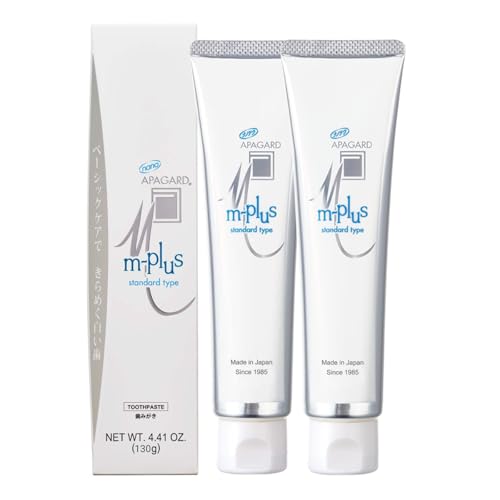
This is a mild-mint, fluoride-free nano-hydroxyapatite toothpaste sold here as two 125 g tubes. Sangi describes M-plus as its standard daily-care formula and directs users to brush teeth and gums gently with 1 to 1.5 cm of paste for three to five minutes, ideally after meals, then rinse lightly and spit out. The manufacturer publishes a full ingredient list that includes nano hydroxyapatite, dicalcium phosphate, silica, sodium lauryl sulfate, cetylpyridinium chloride, and flavoring. It does not disclose the nano-hydroxyapatite percentage, particle-size distribution, shape, coating status, or a finished-product certificate of analysis. A randomized in situ study used Apagard M-plus in a remineralization protocol, but it examined enamel specimens and an added nano-hydroxyapatite lotion, not cavity outcomes from this toothpaste alone in everyday users.
This product suits an adult or older teen who specifically wants a fluoride-free, mild-mint paste with nano-hydroxyapatite and is comfortable relying on a manufacturer-published ingredient list rather than lot-specific testing. The two-tube format may fit a household that uses the same toothpaste regularly. It is most relevant to people seeking routine cleaning and cosmetic smoothness or brightness claims, while maintaining regular dental care. Those with a low cavity risk and a dentist-supported fluoride-free routine are the most fitting users.
It is not the clearest fit for children, especially young children, because the available directions lack age-specific quantities and supervision guidance. It is also less suitable for people with active decay, high cavity risk, dry mouth, orthodontic appliances, or a dentist's recommendation for fluoride toothpaste, since it contains no fluoride and does not carry an ADA Seal for cavity prevention. People with recurrent canker sores, oral burning, or sensitivity to sodium lauryl sulfate, mint flavoring, or antimicrobial mouth-care ingredients should consider a simpler formula or seek dental advice.
Nano-hydroxyapatite is the central ingredient. Sangi identifies it in the formula but withholds its concentration and safety-relevant particle specification. The SCCS concluded that nano-hydroxyapatite can be safe in toothpaste up to 29.5 percent only for defined uncoated, non-needle-like particles with specified size and shape characteristics. This product cannot be matched to those conditions from publicly available product data. The disclosed formula includes sodium lauryl sulfate, flavoring, silica, dicalcium phosphate, cetylpyridinium chloride, and a pearl-protein hydrolysate. Sangi says its adult M-plus formula has an RDA around 80, but no independent finished-product abrasion report was located. No product-specific U.S. recall or FDA warning letter was found in the reviewed searches. No refill system, recycled-content claim, package recycling instructions, or independently supported lower-waste packaging claim was found.
This is a three-tube pack of Fresh Mint toothpaste, with 4 ounces per tube and 12 ounces total. It is fluoride-free and uses nano-hydroxyapatite, xylitol, hydrated silica, calcium carbonate, sodium methyl cocoyl taurate, mint oil, menthol, and a benzyl alcohol, salicylic acid, and sorbic acid preservative system. The published retail label provides a full ingredient list. Mouthology states that the formula contains 10% rod-shaped nano-hydroxyapatite and is made in the USA. That concentration has relevant human research in other dentifrices, but no independent, lot-linked testing or product-specific clinical trial was located for this product. The brand has given conflicting public RDA answers, first 136.3 and later 80, without publishing the underlying laboratory reports.
This product fits an adult who specifically wants a fluoride-free mint toothpaste with manufacturer-stated 10% nano-hydroxyapatite, a disclosed ingredient list, and no sodium lauryl sulfate. The three-pack format is practical for a household that already tolerates mint, menthol, silica, calcium carbonate, and the listed preservative system. It may also appeal to people seeking an alternative enamel-care routine, provided they understand that the 10% claim, particle specification, and current abrasivity figure have not been independently documented for the retail toothpaste.
It is not a strong fit for people who need established fluoride anticaries protection, including those with frequent cavities, active decay, dry mouth, orthodontic caries risk, or a dentist-directed fluoride regimen. It is also unsuitable for anyone with a known sensitivity to peppermint, menthol, fragrance-like flavor mixtures, benzyl alcohol, or salicylic acid. Young children and people likely to swallow toothpaste need clearer age-specific use, supervision, and swallowing instructions than were located. Buyers requiring verified low abrasivity or lot-specific purity documentation should select a product that publishes those reports.
The formulation is fluoride-free and SLS-free, with xylitol and a mild surfactant listed on the retail label. Mouthology says it uses 10% rod-shaped nano-hydroxyapatite. A 2025 European Scientific Committee on Consumer Safety opinion found nano-hydroxyapatite acceptable in toothpaste up to 29.5% only for uncoated rod-shaped particles meeting defined size and aspect-ratio conditions. Mouthology does not publish the independent particle measurements needed to show that its material meets those conditions. No public FDA recall, warning letter, or safety alert specific to Mouthology toothpaste was located in the searched databases. No package-specific recycled-content, recyclability, refill, or disposal documentation was located either. The product is sold in individual toothpaste tubes, so its lower-waste claims cannot be substantiated from the available evidence.
This is a 105 g fluoride-free toothpaste in a light mint flavor. Sangi directs users to apply 1 to 1.5 cm to a toothbrush, brush teeth and gums for 3 to 5 minutes, rinse lightly, and spit out. The formula lists nano-hydroxyapatite, xylitol, dicalcium phosphate, silica, sodium lauryl sulfate, cetylpyridinium chloride, flavoring, and other ingredients. The defining point is that Sangi identifies nano-hydroxyapatite but does not publish its concentration, particle-size distribution, shape, coating status, or a finished-product laboratory report. Human research on Sangi nano-hydroxyapatite toothpastes supports sensitivity relief at tested 10% and 15% formulations, but the paper does not identify this retail formula. The product is fluoride-free, so it does not provide the fluoride cavity-prevention approach required for ADA-accepted anticaries toothpaste claims.
This product suits an adult who deliberately wants a fluoride-free daily toothpaste, prefers a mint paste, and can tolerate sodium lauryl sulfate and flavoring ingredients. It is also relevant for someone interested in nano-hydroxyapatite as a non-fluoride approach to sensitivity management, provided they understand that the available human evidence is for related Sangi test formulations rather than a clearly documented match to this tube. The 105 g size is appropriate for a regular household toothpaste routine.
It is not well suited to people with active or high cavity risk who want a U.S. ADA-accepted fluoride toothpaste with established anticaries labeling. It also needs caution for children because the published manufacturer directions do not give age-specific use or supervision guidance. People with frequent canker sores, burning, peeling, or diagnosed contact allergy may want to avoid it or review it with a dental professional, because the disclosed formula includes sodium lauryl sulfate and unspecified flavoring.
Nano-hydroxyapatite is the central ingredient, and Sangi lists it clearly in the formula. The European SCCS concluded that certain, specifically characterized nano-hydroxyapatite materials can be safe in toothpaste up to 29.5%. That finding is conditional on particle shape, size distribution, aspect ratio, and absence of surface coating. Those material details have not been published for this product, so the general safety conclusion cannot be treated as product-specific confirmation. The formula includes sodium lauryl sulfate, flavoring, cetylpyridinium chloride, and hydrolyzed conchiolin protein, which are relevant for users screening for mouth-tolerance or animal-derived ingredients. Sangi displays an ISO 9001 quality-management registration, but this is not a substitute for lot-specific toothpaste testing. No package-specific recycled-content, refill, recyclability, or disposal documentation was located, so its packaging waste profile remains unverified.


