Best Overall
13% off

Soundcore Nebula P1 Portable Projector with Speakers
Detachable speakers for enhanced audio versatility.
Built-in gimbal ensures stable, clear projections.
Auto adjustment feature simplifies setup and use.
 Daniel Kenitz
Detachable speakers for enhanced audio versatility.
Built-in gimbal ensures stable, clear projections.
Auto adjustment feature simplifies setup and use.

Exceptional picture quality with 3,500 ANSI Lumens.
Immersive 40W stereo sound enhances viewing experience.
Convenient built-in micro gimbal for easy setup.

Officially licensed by Netflix for seamless streaming.
Offers bright, 400 ANSI-lumen projection.
Built-in battery lasts up to 2.5 hours.

Crisp 4K resolution enhances viewing experience.
Built-in Dolby Audio for immersive sound.
Smart OS with AI auto-focus simplifies setup.
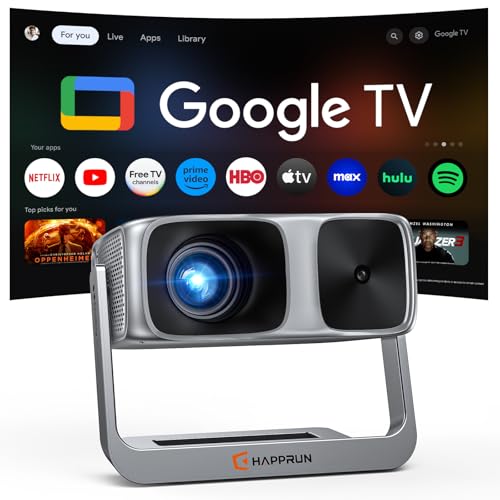
Crisp 4K HD projection for vivid visuals.
Convenient auto-focus feature enhances viewing ease.
Built-in apps and WiFi for seamless streaming.
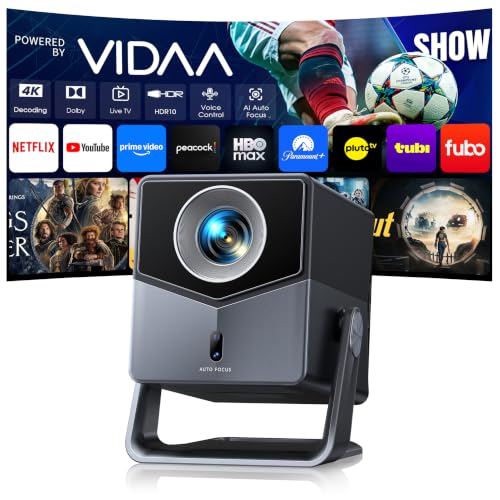
Stunning 4K resolution enhances cinematic experience.
Voice control for hands-free operation.
AI Auto Focus ensures sharp, clear images.
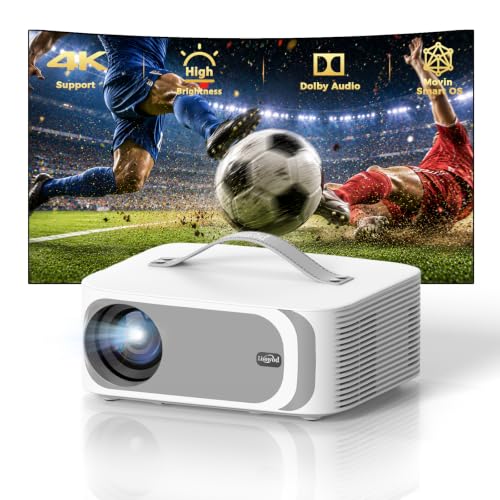
Crisp visuals with 4K support and HDR10+.
Enhanced connectivity via WiFi 6 and Bluetooth.
Immersive audio experience with 30W Dolby sound.
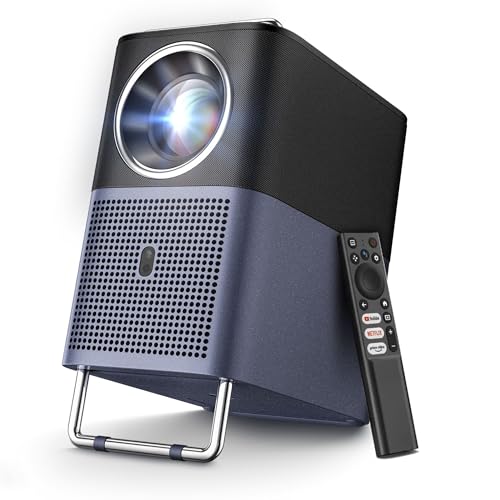
Seamless Google TV and Netflix compatibility.
Crystal-clear native 1080p resolution.
Convenient auto-focus and keystone correction.

Native 1080P for sharp, clear visuals.
Built-in Netflix for easy streaming access.
Auto focus ensures hassle-free viewing.

Seamless streaming with built-in Google TV and Netflix.
High-quality visuals with 4K support and HDR 10+.
Convenient wireless connectivity via WiFi and Bluetooth.
Start with native resolution. A product described as “4K support” may only accept a 4K signal and display it through a native 1080p imager. That is different from native 3840 × 2160 projection. Brightness claims also require care: look for ANSI or ISO/IEC 21118 measurements and a disclosed test method, not only a lumen number in a listing. Modes matter too. A projector may reach its maximum brightness in a presentation mode with a green cast, while movie modes produce substantially less light. Screen size claims can therefore be misleading: a maximum such as 150, 200, or 300 inches does not mean the image will remain bright or convincing at that size.
Room conditions are decisive. The supplied reviews repeatedly describe portable and budget models as dark-room or after-sunset products. Ambient light reduces contrast and image impact, while large screens spread the available light more thinly. Look for independent exact-product measurements of light output, contrast, color, fan noise, power use, and input lag from a disclosed laboratory or established projector tester. For gaming, check the measured lag and refresh limit rather than relying on “gaming” language; several products are limited to 60 Hz, and low-lag modes can disable keystone correction.
Smart features need the same scrutiny. “Google TV,” “Netflix,” “Dolby,” Wi-Fi, voice control, and app access should be officially supported for the exact product, not merely technically possible through sideloading or an external device. A traceable FCC authorization can establish that the Wi-Fi or Bluetooth radio was authorized, but it does not establish electrical-product safety, optical safety, privacy protection, or a long software-support period.
For safety, check the exact model and included power equipment in the CPSC Recalls database and SaferProducts.gov, and look for searchable UL Product iQ, Intertek ETL, or CSA records. For laser or other bright-light products, look for the applicable FDA CDRH records, exact labels, user warnings, and an IEC 62471-5 photobiological-safety report where relevant. Portable products with lithium batteries should have traceable battery information such as a PHMSA UN 38.3 test summary and clear charging, replacement, and disposal instructions.
Across the supplied products, recurring cautions are clear: do not look into an operating lens or beam, keep children away from the light path, preserve airflow, use the specified or supplied power equipment, and keep cord-powered units dry and securely placed. Several products are unsuitable for daylight, uncontrolled windows, or dependable large-screen viewing. Battery models add charging, heat, transport, and eventual replacement concerns. No category-wide contraindication was identified beyond following these repeated operating precautions and matching the projector to a dark, ventilated, stable setup.
The scores below reflect the supplied reviews and the relative strength of the available evidence. A high score means the product had more specific, credible documentation or testing for that topic; a lower score means important claims or records remained unresolved. Non-battery products were not penalized for lacking a built-in battery.
This covers protection from shock, overheating, burns, and fire involving the projector, adapter, vents, and cords. It matters because projectors run warm and are often placed near walls, bedding, children, or temporary outdoor setups. Among the supplied products, higher scores reached 78, while lower scores were 70–72; the stronger records included specific operating limits and power guidance, but many lacked searchable UL, ETL, or CSA listings.
This measures whether the LED or laser light is classified, labeled, and safeguarded against hazardous viewing. It matters because a bright projected beam can be accessible to children during setup or use. The strongest supplied products scored 90 and 84, supported by IEC 60825-1 and IEC 62471-5 classifications in their guides. Many others scored 70–73 and had warnings but no public photobiological-safety report or risk-group record.
This covers charging, labeling, transport, replacement, and disposal of built-in or included lithium batteries. It matters for battery projectors and bundles with power stations or battery-powered speakers. Scores ranged from 70 to 94. The higher-scoring portable products had clearer operating or runtime information, while several reviews found no exact-model UN 38.3 summary, battery chemistry details, replacement path, or certification record. Cord-powered products were not penalized for having no battery.
This measures whether resolution, brightness, contrast, HDR, throw distance, and gaming claims match standardized measurements and native capabilities. It matters because 4K support may mean 1080p output, and maximum brightness may apply only to a poor-looking picture mode. Scores ranged from 50 to 93. Higher-scoring products had close independent lumen results and clear native-versus-supported resolution; lower-scoring products had conflicting brightness or contrast claims.
This measures reproducible third-party results for light output, color, contrast, resolution, noise, input lag, and power use. It matters because seller ratings and feature lists do not establish how a projector performs in a real room. The supplied scores ranged from 68 to 94. Products reviewed by RTINGS, ProjectorCentral, or comparable testers scored highest; products with only hands-on or manufacturer evidence scored lower.
This measures whether safety, wireless, environmental, and audiovisual badges match the exact product and a credible issuing body. It matters because a TÜV, Dolby, or similar logo in retail material may not identify a searchable certificate. Scores ranged from 68 to 82. Higher-scoring products had more traceable records, while many reviews found no exact-product UL, ETL, CSA, TÜV Certipedia, or comparable listing despite certification language.
This covers U.S. radio authorization for Wi-Fi and Bluetooth plus supported security maintenance, privacy information, and firmware practices. It matters because a smart projector is a connected computer as well as a display. Scores ranged from 68 to 85. Higher-scoring products had exact-model FCC authorization and documented update functions; lower-scoring products lacked an FCC record, privacy policy, vulnerability response, or defined security-support period.
This measures whether Google TV, Netflix, Prime Video, Dolby, voice control, and app access are officially supported on the exact product. It matters because unsupported apps may require sideloading, a separate stick, or may stop working after updates. Scores ranged from 68 to 90. The strongest products had independent confirmation of official Netflix or Dolby support; lower-scoring products relied mainly on manufacturer claims or disclosed app limitations.
This measures expected service life, heat management, warranty clarity, repair options, replacement parts, and software support. It matters because a sealed light engine or failed power board can otherwise turn a projector into e-waste. Supplied scores ranged from 62 to 79. Higher-scoring products had longer or clearer warranty and maintenance information; lower-scoring products lacked service manuals, parts catalogs, repair routes, or defined software-support periods.
This considers measured energy use, light-source longevity, materials and packaging disclosures, battery and electronics take-back, and the credibility of climate claims. It matters because projectors can draw meaningful power and eventually contain difficult-to-replace electronics or batteries. Scores ranged from 68 to 79. The stronger records included measured operating power or clearer recycling guidance; most products still lacked product-specific take-back, packaging, materials, and independently verified longevity information.
This is a compact, plug-in 1080p DLP projector with an LED light source, Google TV, a carry handle, automatic focus and keystone adjustment, and two detachable 10W wireless speakers. The projector itself has no built-in battery, so portable use requires wall power or a suitably powerful external USB-C power source. The speaker modules contain their own batteries. Independent testing confirms native 1080p projection, detachable speakers, and very low input lag for 60Hz gaming. The 650 ANSI-lumen claim is manufacturer-stated. Independent measurements ranged from 514 lumens in the brightest Conference mode to 322 lumens in Standard mode with better color, and reviewers agree it is intended for a dark or tightly light-controlled room. Google TV with native Netflix access is supported without sideloading.
It suits someone who wants a portable, mains-powered movie or gaming setup for a bedroom, dorm, apartment wall, backyard after dark, or other room with strong light control. It is particularly practical for a user who values easy placement, automatic image correction, and the ability to move the two speakers nearer to the audience. Casual console or PC players limited to 60Hz are a good fit because the low-latency game mode has been independently measured. Plan on a modest screen size and access to 100W USB-C power or an outlet.
It is not appropriate for daylight viewing, living rooms with uncontrolled windows, presentations where accurate color and brightness matter, or buyers expecting a television replacement. It is also not the right fit for people who need an all-in-one battery projector, 120Hz or variable-refresh-rate gaming, deep black levels, or dependable high-quality images at 180 inches. Households with children should keep the projector and power cable stable, preserve clear airflow around its vents, and avoid direct viewing into the operating lens. Buyers needing fully documented third-party electrical, optical, or battery safety certification should seek a product with publicly traceable records.
The light engine is LED rather than a laser source, and the product page identifies the unit as externally powered rather than battery-powered. Its separate wireless speakers do contain batteries, but no public exact-model UN 38.3 transport summary or battery-certification record was found. The manufacturer instructs users to use the original power equipment or a 100W adapter with a 5A cable, which is important because insufficient power can trigger a fault indication. The exact Wi-Fi and Bluetooth equipment was granted U.S. FCC authorization. That verifies radio compliance, not electrical-product, optical-radiation, or battery certification. A TÜV claim appears in retail material for the gimbal, but a matching public certificate was not found. The manufacturer states an LED-light-engine life of up to 25,000 hours, which could reduce lamp replacement waste, but public exact-model operating-power, packaging, repair-parts, and electronics take-back disclosures remain limited. No exact-product U.S. recall or regulator warning was found in the checks performed.
This is a 13.7-pound, outlet-powered 4K DLP projector with an RGB triple-laser light source, a retractable carry handle, built-in Google TV, four integrated speakers, and a 0.9:1 to 1.5:1 optical throw range. The manufacturer states a 40 to 300-inch image range, 3,500 ANSI lumens, 5,000:1 native contrast, Dolby Vision, automatic focus, automatic keystone, and obstacle avoidance. The headline brightness claim holds up unusually well in independent testing. Tom's Guide measured 3,491 lumens using an ANSI test pattern, while Projector Reviews measured 3,568 lumens in Standard mode and 4,279 lumens in its brightest Conference mode. Projector Reviews also measured 4,700:1 native contrast, close to the stated figure. It is portable only in the carry-between-outlets sense, not battery powered. Independent testing also found 60Hz gaming and materially slower response than a fast gaming display.
This product suits a household that wants a large movie, sports, or presentation image in a room with some controlled ambient light, but can place the projector safely out of the viewing path and near mains power. Its independently verified high light output is useful for a large screen, and the handle, autofocus, zoom, and image-alignment tools make occasional moves between rooms or a covered outdoor setup more practical. It also fits viewers who value integrated Google TV and Netflix rather than attaching a separate streaming device.
It is not suited to competitive console or PC players who need 120Hz or faster refresh and very low input lag. It is also a poor fit for truly off-grid viewing because it has no internal battery and requires its external power supply. Households with young children, pets, or frequent traffic in front of the screen should take extra care with placement. An independent reviewer observed inconsistent beam dimming at the image edge, and no publicly traceable laser classification or optical-safety report was found.
The product uses a high-output RGB laser source, so safe placement matters. The manufacturer lists an Eye Guard feature, but an independent review found that the beam-dimming system did not always react when a person entered the edge of the image. Keep the projector elevated or otherwise positioned so people and animals cannot look into, or walk through, the beam. Publicly traceable evidence for the exact laser classification, FDA laser report, and third-party photobiological-safety testing was not located. Its Wi-Fi and Bluetooth radios have an exact-product FCC authorization, including RF exposure conditions. The product contains no internal lithium battery, which removes one common portable-electronics fire and disposal concern. The manufacturer states a 30,000-hour laser-source life and liquid cooling, both potentially favorable for service life, but no independent power-use result, public repair-parts catalog, take-back program, or verified material and packaging disclosure was located. No U.S. recall specific to this product was found in the checked sources.
This is a 3.7-pound portable LED DLP projector with a carry handle, built-in battery, 1080p native resolution, HDMI, USB-A, Wi-Fi, Bluetooth, and two 8 W speakers. It is intended for temporary indoor use and dark-evening outdoor viewing, projecting a 30 to 150 inch image from roughly 2.6 to 13.1 feet away. Its manual specifies automatic focus and keystone correction, plus a supplied 90 W indoor-only power adapter. Independent testing substantiated the advertised peak light output closely, measuring 399 ANSI lumens against the 400 ANSI lumen claim. That figure came from a green-tinted Conference mode. The more natural Standard mode measured 383 lumens. Independent reviews also found that it needs a dark room or nighttime setting, with image impact falling quickly in ambient light and at larger screen sizes. Google TV and a licensed Netflix app were independently confirmed.
This product suits someone who wants a self-contained, easily moved projector for movies, shows, animation, or casual games in a bedroom, apartment, dorm, hotel room, or backyard after dark. The handle, battery, automatic focus, auto screen fitting, Google TV, and confirmed Netflix support reduce setup friction for short sessions. It is most appropriate when the user can control room lighting, accepts 1080p at 60 Hz, and plans a modest image size rather than trying to fill a bright living room wall.
It is not suited to daytime patio viewing, rooms with uncovered windows or lights on, or anyone expecting a bright 150-inch image. Independent testing found the image becomes less compelling in ambient light, and the Eco setting that extends runtime substantially reduces brightness. Fast-action competitive gamers should avoid relying on it because testing found only passable input lag and a 1080p, 60 Hz ceiling. It also needs adult supervision around children, because the manual warns against staring into the operating beam and against unsupervised handling.
The product has an exact-model FCC authorization for its Wi-Fi and Bluetooth radios, and the manual provides U.S. Part 15, radio-frequency exposure, and indoor-only 5 GHz instructions. It identifies the supplied power adapter and instructs users not to block vents, use it on soft surfaces, use an unauthorized adapter, or continue operating it if its surface becomes hot. The manual also warns that the projected beam may present hazardous optical radiation and should not be stared into. No exact-product U.S. recall was located in the reviewed CPSC sources. Its sealed LED light engine is rated by the manufacturer for 30,000 hours and does not need an air-filter replacement, which can reduce routine consumables. Independent testing measured about 50 W while operating in Standard or Movie mode and 22.4 W in Eco mode. The built-in battery creates an end-of-life limitation, because the manual directs service to qualified personnel rather than providing battery replacement instructions. It directs users to appropriate recycling collection instead of household disposal.
This is a mains-powered LCD home and outdoor movie projector, intended for table, tripod, wall, or ceiling use. It has HDMI, USB, 3.5 mm audio, Wi-Fi 6, and Bluetooth 5.2 connections. Documentation outside the catalog identifies a 1920 x 1080 native display that accepts 4K input, rather than displaying native 4K. It includes a remote, HDMI cable, and power cord, but no built-in battery is identified. Its defining feature set is manufacturer-stated smart streaming, automatic focus and keystone correction, a sealed optical engine, and Dolby-branded audio. The evidence record is uneven. Product documents conflict on brightness, speaker power, and rated light-source life. The official product page uses a nonstandard "3500 brightness level" claim, while different supplied documents state 3000 ANSI lumens, dual 40 W audio, dual 60 W audio, and either 8,000 or 80,000 hours of light-source life. No reproducible exact-product laboratory measurements were found.
It suits a buyer who wants a movable, plug-in 1080p projector for occasional indoor movie nights or dark outdoor use, and who values automatic image adjustment more than traceable performance data. It is also suitable for someone who understands that 4K support means accepting a 4K signal and rendering it at 1080p. The stated built-in app access may reduce the need for an external streaming device, but app availability remains dependent on the manufacturer’s smart platform and future updates.
It is not suited to buyers who need a measured brightness figure for daytime rooms, large outdoor events, classrooms, or installations where screen size and ambient light must be planned precisely. It is also unsuitable for buyers requiring native 4K resolution, independently measured gaming lag, verified wireless authorization, or a documented software-security support period. Households needing traceable electrical or optical safety certifications should confirm the physical product label and supporting certificates before use, especially for ceiling installation or unattended operation.
No product-specific CPSC recall or safety warning was found in the CPSC recall database during this review. The available documentation describes an LED LCD projector with ventilation requirements and manufacturer-stated temperature protection. It does not identify a laser light source or a built-in lithium battery. The remote uses user-supplied AAA batteries, which should be kept away from children and recycled through an appropriate local battery program. The manufacturer markets a sealed optical engine, which could reduce dust-related image degradation, but no service documentation shows how the engine, power components, or light source can be repaired. The claimed light-source life is inconsistent across documents, at 8,000 versus 80,000 hours. The manufacturer also uses sustainability language, but no traceable environmental certification, measured power-use result, packaging disclosure, or electronics take-back route for this product was located.
This is a compact plug-in LCD smart projector with a native 1920 by 1080 image, HDMI, USB, audio output, Wi-Fi, Bluetooth, automatic focus and image alignment, plus an integrated tilting stand. It is intended for wall or screen projection indoors, and for outdoor use after dark rather than in sunlight. A third-party projector database identifies the K7 as an LED-lit Full HD LCD model weighing about 4.4 pounds, with two 10 W speakers and 4K input support. The manufacturer states 2,000 ANSI lumens, 4K decoding rather than native 4K, built-in streaming apps, Dolby Audio, and a 300-inch maximum image. The native-resolution distinction is clear, but no disclosed exact-product laboratory measurement was found for light output, contrast, color, noise, power draw, or input lag. FCC equipment authorization does trace the K7 wireless hardware to 2.4 GHz Wi-Fi and Bluetooth operation.
This suits a viewer who wants a self-contained Full HD projector for movies, casual television, presentations, or occasional backyard viewing after dark. It fits users who value easy placement, since the manufacturer describes auto focus, automatic image adjustment, and a 270-degree stand. It is also appropriate for someone comfortable treating 4K as accepted input rather than native output, and who can use a darkened room or wait until night for outdoor projection. External HDMI and audio connections offer a fallback for consoles and separate speakers.
This is not for daylight viewing, large bright rooms, or a buyer who needs independently proven brightness before planning a screen size. It is also not for competitive gamers or home-theater users who need measured input lag, calibrated color, black-level data, and verified noise figures. Households that need a publicly searchable electrical-safety certification, a documented optical risk classification, or a clear long-term security update commitment should seek a product with those records. Do not position the projected beam where children may stare into it at close range.
The K7 has a traceable FCC authorization covering its 2.4 GHz Wi-Fi and Bluetooth radios. The FCC grant identifies operating frequencies and specifies a 20 cm minimum separation for the antenna during operation. The product is described as LED-lit rather than laser-lit, so laser-specific FDA reporting is not indicated by the available specifications. However, no exact-product IEC photobiological-risk report or public electrical-safety listing was located. Keep vents clear, use the supplied power equipment, and avoid direct viewing into the lens while operating. No built-in battery is identified in the available specifications, avoiding lithium battery transport and disposal concerns for the projector itself. A product database repeats a manufacturer-stated 30,000-hour LED source life, but no independent durability or energy-use test was found. No matching CPSC recall or safety warning was located in the searched records. Repairability remains unclear because no service manual, parts catalog, take-back program, or software-support duration was found.
The TOPTRO A2 is a corded LED LCD home projector, sized for tabletop, tripod, wall, or ceiling placement. Its documentation describes native 1920 by 1080 resolution, a 1.0:1 throw ratio, HDMI and USB inputs, Wi-Fi, Bluetooth, a rotating stand, and integrated speakers. It is intended for films, casual gaming, streaming, and occasional outdoor viewing after dark. TOPTRO clearly states that this is a native 1080p product that accepts and decodes 4K content, rather than a native 4K projector. The manufacturer also states that it can create a 100-inch image from 2.2 m and includes VIDAA-based access to major streaming apps. Those are manufacturer claims, not independently confirmed measurements or service certifications. No qualifying independent exact-product laboratory review was located for brightness, color, contrast, noise, input lag, or electricity use. Brightness figures appearing in marketplace materials and secondary manuals also conflict, so real-world light output remains unresolved.
This product fits a buyer who wants a compact, corded 1080p projector for a dark bedroom, apartment, or casual movie setup where placement distance is limited. The manufacturer-stated 1.0:1 throw ratio and rotating stand suit people who need a large image without placing the projector across a long room. It also suits users comfortable treating built-in streaming and automatic image adjustments as convenience features, while accepting that the most important performance claims have not been independently measured for this exact product.
It is not suited to buyers who need predictable viewing in daylight, a bright living room, or an early-evening outdoor setting, because exact-model brightness testing was not found and the available claimed output is unresolved. It is also a poor fit for competitive gamers, color-critical users, schools, or presentation environments that require measured input lag, calibrated image data, or documented reliability. Households needing traceable third-party electrical and wireless certification should seek a product with exact-model listing records and an identifiable FCC authorization.
The safety documentation gives practical instructions to keep vents clear, avoid rain and moisture, disconnect power before cleaning, and avoid looking directly into the illuminated lens. It identifies an LED light source and AC 100 to 240 V input, while the documentation does not describe a built-in lithium battery. No exact-model recall or CPSC safety warning was located in the searched U.S. recall sources. The safety evidence remains incomplete. No exact-model UL, ETL, CSA, or TÜV listing was located, and no IEC 62471-5 optical-risk report or formal risk-group label was found. TOPTRO's documentation references online upgrades and a three-year warranty activation process, but does not provide a software-support duration, repair manual, replacement-parts catalog, take-back program, packaging disclosure, or independently measured power consumption. The claimed LED lifespan is not supported by an independently disclosed test.
This is a compact, cord-powered LCD home-entertainment projector with HDMI, USB, Wi-Fi, Bluetooth, a 3.5 mm audio connection, remote control, built-in speakers, and smart software. The product documentation identifies its native image resolution as 1920 by 1080 pixels. Its 4K language is support for compatible input or content, not a native 4K imaging claim. Lisowod states that Netflix, Prime Video, and YouTube are pre-installed, and that further apps may be available through its app store or assistant. The manual also documents electronic focus, four-point keystone adjustment, 50 to 100 percent image zoom, Bluetooth speaker mode, and internet or USB firmware updates. These are manufacturer-documented capabilities, not independently measured performance results.
This product suits a buyer who wants a portable, plug-in projector for occasional indoor movie nights, presentations, or a darkened garage or patio setup, and who values built-in access to the listed major streaming apps. It also fits someone comfortable adjusting focus and keystone manually when placement is imperfect. The most appropriate expectations are native 1080p viewing and streamed or HDMI-connected content, rather than independently verified high-brightness cinema performance or native 4K projection.
It is not suited to households needing independently documented electrical certification, verified radio authorization details, or a clearly published optical-safety classification. It is also a poor fit for bright-room viewing, competitive gaming, color-critical work, or installations where measured brightness, contrast, input lag, and noise are required before setup. Buyers needing a long, defined security-update commitment, replacement parts catalog, repair manual, or established electronics take-back route should avoid relying on undocumented support arrangements.
The available documentation identifies an LCD projector, not a laser projector, so the laser-specific FDA reporting pathway does not appear applicable from the disclosed design. However, no exact-product IEC photobiological risk-group report or third-party optical-safety documentation was located. The manual includes an FCC Part 15 compliance statement and a 20 cm radio-separation instruction, but this is a manufacturer statement. A matching public FCC authorization record was not located. Lisowod's support material says airflow obstruction can contribute to screen burn and directs users to check fan operation and clear blocked air inlets. Keep vents clear, disconnect power before cleaning, and use replacement service rather than unsafe internal work. No exact-product recall was located in the searched U.S. consumer-safety records. No verified power-consumption data, material disclosure, packaging information, parts program, or e-waste take-back route was located, which limits assessment of operating impact and end-of-life handling.
This is a plug-in smart LCD projector for table, tripod, or portable room-to-room use. It has native 1920 x 1080 resolution, accepts streaming and HDMI sources, and is designed to project a 45 to 150 inch image. TCL states 600 ISO lumens, automatic focus and keystone correction, Google TV, Netflix certification, and two 8 W speakers. It does not contain a built-in battery. Independent testing is unusually substantial for this product. CHIP measured 513 lumens in normal mode and 564 lumens at maximum, so the 600-lumen claim is broadly close but not fully reached in that test. The same test measured 40.6 W in normal operation and 0.3 W standby. It found native Full HD output, but also reported that 4K input was not supported, which conflicts with TCL's statement that the projector accepts 4K input.
This suits a buyer who wants a compact, mains-powered 1080p projector for movies, casual games, and streaming in a bedroom, apartment, dorm, or other room that can be darkened. The independently measured light output is more appropriate for evening viewing than daytime use. It also fits users who value built-in streaming and basic setup automation, including autofocus and keystone correction, and who do not need a battery-powered device. A nearby wall outlet is essential.
It is not suited to households expecting a daytime television replacement, a projector for bright living rooms, or reliable outdoor viewing before dusk. Its independently tested output needs controlled light for a convincing image. It also is not for users who need true 4K playback, even though the manufacturer describes 4K input acceptance, because independent testing found no 4K support. Travelers, campers, and emergency-use buyers should avoid assuming portability means cordless operation, since this product has no built-in battery and cannot run from a power bank.
The product uses an LED light source and its guide labels it Risk Group 1 under IEC 62471-5:2015. That is a meaningful manufacturer-provided optical-safety classification for normal image-projector use, but a public third-party test report for the exact unit was not located. The guide also gives concrete heat precautions, including keeping objects at least 20 cm from the cooling vents and avoiding confined spaces. There is no built-in lithium battery, which removes battery charging, transport, and disposal hazards from the projector itself. Its independently measured electricity use is modest for a projector, with 40.6 W in normal mode, 27.4 W in Eco mode, and 0.3 W in standby. TCL advertises a 30,000-hour LED life, though that longevity figure was not independently verified. TCL also provides US electronics-recycling resources by state, but product-specific materials, packaging composition, spare-part availability, and repair documentation were not disclosed.
This is a compact, cord-powered LCD smart projector for 40 to 120 inch images. It has native 1920 by 1080 resolution, accepts 4K input, includes a single HDMI input, USB, 3.5 mm audio output, Wi-Fi 5, Bluetooth 5.1, an 8 W speaker, and a tilting gimbal intended for wall or ceiling use. TCL states 230 ISO lumens, automatic focus, keystone, screen fit, obstacle avoidance, Google TV, and Netflix certification. Independent testing confirms the built-in Google TV and native Netflix, the automated setup tools, portability, and the absence of DLP-style rainbow artifacts. The same testing finds the image very dim, with limited color volume, a cool blue-tinted out-of-box image, audible fan noise in quiet scenes, and high input lag. This is consequently a dark-room casual-viewing projector, not a bright-room display or responsive gaming display.
This suits a renter, dorm resident, or bedroom viewer who needs a small corded projector for occasional films and streaming in a genuinely dark room. It is especially practical where a traditional screen installation is not possible, because the gimbal can aim at a wall or ceiling and the tested autofocus, keystone, screen-fit, and obstacle-avoidance functions reduce setup work. It also suits viewers sensitive to DLP rainbow artifacts, since the independently tested LCD image did not produce them.
It is not suited to daytime viewing, living rooms with lights on, patio movie nights with surrounding lighting, or anyone expecting the listed 120 inch maximum image to remain bright. Independent testing found the projector extremely dim and less vibrant than its smart features suggest. Competitive and action-focused gamers should avoid it because measured testing found high input lag and a maximum 1080p at 60 Hz output. It also requires a wall outlet, despite conflicting manufacturer documentation that lists a battery.
No active recall or CPSC safety action specific to this product was located in the U.S. sources checked. TCL publishes AC input and 65 W power figures, but public exact-product electrical-safety listing evidence from UL, ETL, or CSA was not found. The light source is LED rather than a laser, but no exact-product IEC photobiological-safety report or risk-group label was located. The product page's generic eye-protection claim therefore remains unverified. There is no built-in battery according to independent testing, so routine lithium-battery charging and disposal risks do not apply to the projector itself. TCL does offer U.S. electronics-recycling resources, but its self-repair program currently identifies televisions and mobile devices, not projectors. The sealed optical-engine claim may help reduce dust intrusion, yet no repair manual, parts catalog, power-use test, or public evidence resolving the conflicting 10,000 and 30,000 hour light-life claims was located.
This is a compact, mains-powered LCD projector with an LED light source, a native 1920 by 1080 display, one HDMI input, two USB ports, an AV input, a 3.5 mm audio output, Bluetooth 5.1, and Android TV 11 software. The model-specific manual lists manual focus, electric or manual keystone adjustment, a 5 W speaker, and a 1.57 kg unit weight. It has no built-in battery, although its remote requires two user-supplied AAA batteries. Its most concrete connected-feature evidence is the manual, which describes Google TV setup, app-based playback, Google Cast, Bluetooth pairing, and Dolby Audio licensing. An FCC Part 15 report identifies this exact model and documents compliant Wi-Fi testing. Picture claims are less settled. The product is native 1080p and supports 4K decoding, not native 4K output. The supplied catalog also presents conflicting 2,000:1 and 20,000:1 contrast figures, with no independent exact-model measurement located.
This product suits a buyer who wants a compact, plug-in 1080p projector for occasional movies, casual console use, or app-based viewing in a darkened and dry room. It is also relevant for someone who values having Google TV style setup, Bluetooth pairing, HDMI input, and basic image correction in one unit. The user should be comfortable manually focusing the image, placing the projector squarely to the screen where possible, keeping vents clear, and treating brightness and contrast claims as unverified rather than measured performance guarantees.
It does not suit people needing a verified bright-room projector, reliable outdoor weather exposure, or calibrated image quality for demanding cinema, photography, or professional presentation work. It is also a poor fit where low input lag, quiet operation, precise contrast, or documented energy use are essential, because independent exact-model results were not located. Households with children should prevent direct viewing into the active lens. Anyone using it near beds, curtains, or enclosed cabinetry should follow the ventilation, dry-location, and six-hour use guidance closely.
The product uses an LED light source and has no built-in lithium battery, which avoids rechargeable-battery transport and disposal issues for the projector itself. The supplied remote uses two AAA batteries that are not included. The manual gives practical heat and electrical precautions, including dry, ventilated operation, keeping the cooling outlet unblocked, avoiding direct lens viewing, and shutting the unit down after six hours of continuous use. It also specifies a 0 to 35 C operating range. Radio compliance is more traceable than electrical and optical certification here. An FCC Part 15 test report identifies the exact model and records compliant Wi-Fi testing. The manual also presents FCC operating language and a 20 cm radio-exposure separation instruction. No exact-model UL, ETL, CSA, IEC optical-risk report, independent power measurement, take-back program, material disclosure, or verified light-source longevity evidence was located. The removable dust cover may help routine maintenance, but replacement parts and repair-service availability were not established.



