Best Overall
11% off

Seven Minerals Organic Castor Oil 16 fl oz
USDA certified organic and hexane-free.
Comes in eco-friendly glass bottle packaging.
Cold pressed for maximum nutrient retention.
 Lauren Wilson
USDA certified organic and hexane-free.
Comes in eco-friendly glass bottle packaging.
Cold pressed for maximum nutrient retention.
Large bottle for extended use.
Hexane-free for natural purity.
Versatile for hair and skin care.

USDA certified for guaranteed organic quality.
Hexane-free formula ensures purity and safety.
Versatile use for hair, skin, and nails.

Easy application with less-mess roll-on design.
Made with 100% pure, cold-pressed castor oil.
Includes rose quartz for added skin benefits.

Hexane-free, cold-pressed oil retains purity.
Reusable organic cotton wrap is adjustable.
Glass bottle ensures oil's freshness and safety.

USDA certified pure organic quality.
Supports hair growth and skin health.
Eco-friendly glass bottle packaging.

Large 32 oz bottle for long-lasting use.
Unrefined and hexane-free for purity.
Promotes hair growth and nourishes skin.

Comfortable fit with soft, adjustable straps.
Heatless design reduces mess and hassle.
Includes organic cotton for gentle use.
Certified organic for purity and safety.
Cold pressed to retain natural nutrients.
Hexane-free for a healthier choice.

USDA certified organic and 100% pure.
Cold-pressed and free from hexane.
Promotes natural growth for hair and lashes.
Start with the bottle’s identity. A high-quality listing should name *Ricinus communis* seed oil, disclose whether it is the only ingredient, describe processing such as cold pressing or expeller pressing, and provide a lot code, storage guidance, and a date marking or other freshness information. “100% pure,” “food grade,” “USP grade,” “hexane-free,” and “natural” are not interchangeable with a current finished-product test or a lawful oral-drug label. “Food grade” is especially easy to misread when the product is actually sold with topical cosmetic directions.
For organic claims, look beyond a USDA Organic badge or the words “USDA certified.” The useful check is a current certificate in the USDA National Organic Program’s Organic INTEGRITY Database, or a certifier record that names the responsible operation and covers the relevant processing or cosmetic product activity. A company-level record may support the operation’s certification without proving that every retail bottle or size is covered. Several supplied products had organic language but no current, product-matched certificate; one product’s own retailer response said a particular kit was not certified organic despite organic wording elsewhere.
Testing is another meaningful separator. The strongest evidence is a recent certificate of analysis for the finished oil, tied to the sold lot, showing test methods, limits, dates, laboratory authorization, and an ISO/IEC 17025-accredited laboratory scope where applicable. Relevant testing can include identity, heavy metals, pesticide residues, residual solvents, microbial quality, and castor-seed protein or ricin-related control. A general safety data sheet, a manufacturer summary, or testing on a submitted sample is useful context but does not prove that every bottle matches the reported sample. “Third-party tested” without a buyer-accessible report is still an unsupported headline.
Packaging figures also need context. A glass bottle may reduce plastic in the primary container, while a reusable wrap or post-consumer recycled plastic claim may reduce material demand, but the supplied products rarely provided recycled-content certification, refill information, transport impact, farm-level traceability, or end-of-life instructions. A large bottle is not automatically lower impact: its benefit depends on whether the buyer can use it before freshness declines and whether the container can be reused or recycled locally. Ratings, review counts, price, bottle size, and sales rank describe popularity or convenience, not safety, organic integrity, or evidence quality.
Across the supplied products, recurring cautions are important. Use castor oil externally unless it is a separately lawful, properly labeled oral drug product; do not swallow cosmetic oil or use it to induce labor. Pregnant or nursing people should follow the product warning and consult a clinician. Patch test first, avoid broken or inflamed skin, stop for irritation, and keep oil away from children. Products promoted for lashes or brows often lacked sterile status, eye-specific hygiene instructions, or contamination controls: avoid direct eye exposure and do not use near an active eye infection or inflamed eyelids. Detox, liver, digestive, pain, wound, disease, hair-growth, and eyelash-growth claims should not substitute for medical care.
These topics separate a simple cosmetic emollient from a product with clearer boundaries, traceability, organic substantiation, and buyer-reviewable quality evidence. Scores are based only on the supplied reviews; higher scores indicate stronger support against the specific definition, not proof that a product is risk-free.
This measures whether the product stays within realistic cosmetic conditioning, gives useful directions, and explains irritation, pregnancy, ingestion, and care-seeking limits. For castor oil, high-scoring products pair topical-use guidance with patch testing and stop-use advice. Supplied scores ranged from 48 to 78; the higher-scoring oils used narrower cosmetic positioning, while lower-scoring products promoted detox, growth, pain, wound, or disease-related effects.
This measures whether a cosmetic oil is plainly not edible, laxative, or labor-inducing. That matters because castor oil also appears in regulated oral laxative products. High scores in the supplied set, such as 84–88, came with explicit external-use or topical-only boundaries. Lower scores reflected “food grade,” stomach, laxative, digestive, or wellness language without the drug directions and warnings needed for oral use.
This measures ingredient clarity, applicator suitability, directions, and warnings for allergy, irritation, contamination, and eye injury. Lash and brow marketing makes this especially important: a clean applicator and clear eye-avoidance or stop-use guidance matter more than a mascara wand alone. Supplied scores ran from 52 to 76; higher scores generally reflected clearer topical controls, while lower scores left eye-area hygiene or irritation limits unresolved.
This measures documented control of heavy metals, pesticides, microbes, solvent residues, and castor-seed protein or ricin-related risk. Cold-pressed castor oil needs this scrutiny because category testing found measurable ricin-related protein in some samples. Scores ranged from 68 to 87. The strongest supplied evidence included outside reports for heavy metals, phthalates, solvents, microbes, or stability, although reports without a retail-lot match remain incomplete.
This measures whether the ingredient list, purity and processing claims, lot code, storage instructions, and date marking identify a current formula. A single disclosed castor-oil ingredient makes cosmetic use easier to understand, but it does not prove freshness or purity by itself. Scores ranged from 70 to 84; higher-scoring products combined simple formulas with clearer storage, expiry, identity, or safety documentation.
This measures whether claims match human evidence and lawful cosmetic positioning. For castor oil, cosmetic softness, lubrication, and conditioning are more defensible than hair growth, lash growth, detox, liver, pain, digestion, wound, or disease claims. Scores ranged from 32 to 86. The strongest product largely stayed with cosmetic conditioning; the weakest relied heavily on unsupported growth, wellness, or medical-adjacent promises.
This measures whether an independent qualified laboratory tested the finished oil and issued a recent certificate tied to the sold lot, with methods, limits, results, dates, and accreditation details. Most supplied products had no public lot-matched certificate and scored about 69–72. The highest scores, 84, reflected published outside laboratory reports and safety assessments, though the review still noted that the reports did not match every retail bottle.
This measures whether buyers can identify the responsible company, ingredients, origin information where required, lot code, contact route, and recall path. Scores ranged from 52 to 78. Higher-scoring products had clearer company identity, contact information, and packaging or ingredient details. Lower scores lacked visible lot, expiry, origin, or accountability information, leaving buyers with fewer ways to verify a bottle or report a problem.
This measures whether an organic claim is backed by a current USDA organic certificate covering the relevant operation and product activity. A badge, retailer wording, or company claim is not enough when the operation or product match is unclear. This topic carries extra weight, so scores materially separated the set: the strongest was 92 with an independently listed USDA NOP certification record, while several products remained around 68–75 because current product coverage was not confirmed.
This measures specific disclosure and reduction of farm, transport, and packaging impacts. Reusable wraps, amber glass, or post-consumer recycled plastic can be useful features, but they do not by themselves prove lower total impact. Supplied scores ranged from 70 to 80. Higher scores reflected documented or corroborated reuse and recycled-packaging claims; most products still lacked verified farm traceability, recycled-content records, refill systems, or transport information.
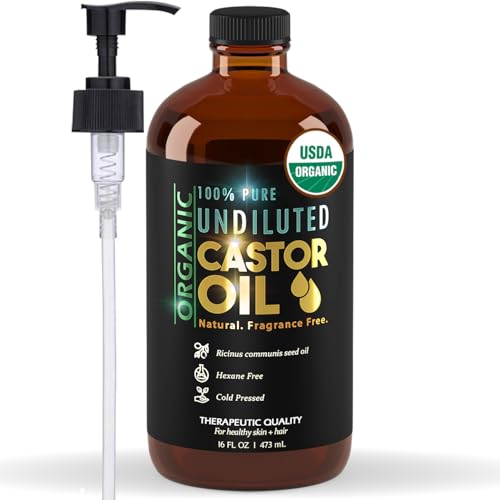
This is a 16-fluid-ounce bottle of castor oil with a pump, intended for external use on hair, scalp, brows, lashes, skin, cuticles, and massage areas. The manufacturer states that the bottle contains one ingredient, Ricinus communis seed oil, and describes it as cold pressed, unrefined, hexane-free, and packaged in glass. An independent retail listing also identifies the product as undiluted, unscented, and certified organic by CCOF. That supports a simple formula and an organic claim, although a current operation-specific certificate and product-linked batch records were not publicly located. The main limitation is claim scope. Castor oil can function as an emollient, but human evidence does not strongly support hair-growth or eyelash-growth promises. The product page also makes broader healing and joint-comfort claims without matching clinical substantiation.
This format fits an adult who wants a large, fragrance-free, single-oil emollient for routine use on dry body skin, cuticles, hair lengths, or as a massage oil. It is especially practical for someone who already knows their skin tolerates castor oil and expects cosmetic conditioning rather than treatment of hair loss, scalp disease, pain, or skin injury. The pump and 16-fluid-ounce size suit frequent household use better than occasional spot application.
It is not a good fit for anyone seeking a clinically supported treatment for shedding, alopecia, eyelash growth, dandruff, persistent joint pain, or wounds. People with a history of contact dermatitis, active scalp inflammation, eye infection, blepharitis, or very reactive skin should avoid unsupervised lash-line use and patch test external skin use first. It should not be treated as an oral laxative or labor-induction product, especially during pregnancy, because this cosmetic product is not labeled for those medically consequential uses.
The product has a simple disclosed composition, and independent retail information identifies its organic claim as CCOF-certified. CCOF is a USDA National Organic Program certifier, although a current public certificate tied specifically to this brand operation and product was not located during verification. The glass bottle is preferable to a fully plastic primary bottle from a material perspective, but there is no verified recycled-content, refill, transport, or farm-origin information. Cold-pressed castor oil warrants more transparency than this listing provides. Published testing of commercial castor oils found measurable ricin-related toxin in one cold-pressed sample, even though the amount reported was below the cited toxic oral range. That does not establish contamination in this product, but it makes finished-product, lot-specific testing relevant. No such public certificate was found. Keep it external, stop use for irritation, keep applications away from the eye itself, and seek medical advice for persistent reactions or pregnancy-related questions.
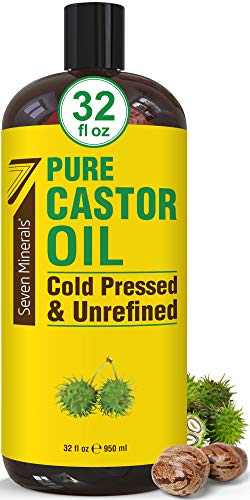
This is a 32-ounce bottle of topical castor oil intended for hair, skin, nails, massage, and brow or lash-area use. Seven Minerals states that it contains one ingredient, Ricinus Communis (castor) oil, and describes it as cold-pressed, unrefined, and hexane-free. The product directions say to massage it into clean hair, skin, or nails. Its clearest safety boundary is manufacturer-stated external-only use. The brand also advises avoiding the eyes, patch testing, stopping use for irritation, keeping it from children, and consulting a clinician during pregnancy, nursing, or medical supervision. However, its prominent promises of thicker lashes, hair growth, healing, and joint or muscle relief go beyond the stronger evidence available for topical castor oil. A systematic review found no strong evidence that castor oil promotes hair growth.
This product fits an adult who wants a large, uncomplicated topical oil for occasional dry patches, hair lengths, scalp massage, nail conditioning, or dilution of essential oils. The one-ingredient format can be useful for someone trying to avoid fragrance and multi-ingredient blends, provided they patch test first. Its large bottle makes most practical sense for regular body or hair conditioning in a household that can use it within its freshness period and store it cool, dark, and away from children.
It is not appropriate for anyone seeking a proven treatment for hair loss, sparse eyelashes, scalp disease, wounds, pain, constipation, or other medical conditions. People who are pregnant, nursing, medically supervised, managing an eye infection, recovering from eye surgery, or prone to contact reactions should consult an appropriate clinician before use. It is also unsuitable for oral use, children, and buyers who require independently accessible lot testing, confirmed organic certification, or verified packaging and sourcing documentation.
The manufacturer identifies a single topical ingredient and gives a more responsible external-use boundary than many wellness-oriented castor-oil listings. It says to avoid the eyes, patch test, stop for irritation, keep the product away from children, and ask a clinician before use during pregnancy or nursing. Those precautions matter because castor oil has a medically consequential oral laxative use, while this product is not labeled for ingestion. The main health concern is claim scope. The marketing presents hair, eyelash, healing, and joint-comfort benefits that are not established by strong human evidence for castor oil. The brand calls the oil USDA organic, sustainably sourced, and lower-plastic because of its 32-ounce size, but current product-specific organic certification, supply-chain documentation, packaging specifications, and lot-specific independent test reports were not publicly available for confirmation. No product-specific FDA recall or warning letter was located during this review.
This is an 8.45 fl oz, 250 mL bottle of golden castor oil for topical skin, hair, scalp, nails, brows, lashes, massage, and makeup-removal use. The manufacturer identifies the formula as one ingredient, 100% organic castor oil, Ricinus communis, in an amber glass bottle. It also states that the oil is cold-pressed and hexane-free. The manufacturer explicitly says this product is for topical use only, not for drinking. That boundary matters because ingested castor oil is a stimulant laxative and has been studied for labor induction. Publicly posted laboratory documents show testing of submitted castor-oil samples for phthalates, metals, residual solvents, and microbes. Those reports are useful evidence, although most cannot be matched by a shopper to the lot on an individual retail bottle.
This product suits an adult seeking a simple topical oil for dry skin, cuticles, scalp massage, hair-end smoothing, or makeup removal, especially someone who prefers a one-ingredient formula and an amber glass bottle. The 250 mL size is practical for repeated body or hair use rather than occasional spot application. It also fits buyers who value publicly posted contaminant and microbiology reports, while understanding that those reports document sampled batches and may not match the bottle in hand.
It is not appropriate for anyone intending to drink castor oil for constipation, digestion, cleansing, or labor induction. This product is labeled by its manufacturer for topical use only. Pregnant people should not treat topical pack marketing as obstetric guidance and should discuss any castor-oil practice with their prenatal clinician. Choose a purpose-designed, hygienically packaged eye product instead if applying near lashes or brows, particularly with eye disease, eyelid inflammation, contact-lens use, or a history of cosmetic reactions. Keep it away from children and prevent accidental ingestion.
The most concrete quality strengths are the disclosed single-ingredient formula, amber glass bottle, topical-only boundary, and public laboratory documents. A May 2025 Qalitex report for a named batch found the tested phthalates not detected. Posted SGS testing found low total microbial, yeast, and mold counts and negative results for several specified pathogens. Separate PhytoChemia reports found tested heavy metals below quantification limits and residual solvents compliant with stated limits. The USDA organic claim has meaningful support from the federal Organic INTEGRITY database. Its current certificate covers a certified handler, Viva Doria Inc., and includes castor oil in the product scope, but the public certificate does not expressly connect that operation to this branded bottle. Glass is recyclable, but the company does not provide recycled-content, refill, transport-emissions, farm-origin, or end-of-life packaging evidence. No FDA recall or warning letter specific to this product was identified in the sources checked.
This is a 50 mL topical castor-oil roll-on in an amber glass bottle, fitted with a rose quartz roller for targeted application. The manufacturer directs it for dry skin, facial oil use, oil cleansing, cuticles, nails, and body areas. A separate retailer lists it as external use only. It is not presented as an oral laxative product, despite castor oil being an OTC laxative active ingredient when lawfully formulated and labeled for oral use. The manufacturer declares one ingredient, 100% organic castor oil, and states that it is cold-pressed, hexane-free, USDA organic, and third-party tested. The simple formula is clear, but no public, lot-matched certificate of analysis, test methods, limits, laboratory identity, expiry date, or organic certificate naming the certifier was located. The brand also promotes use around the eye area, without public hygiene, irritation, or eye-contact instructions for this roller format.
This product fits an adult who wants a compact, single-ingredient topical oil for dry cuticles, hands, elbows, knees, or facial oil cleansing, and who values a roller over a pour bottle. It is most suitable for someone using castor oil for cosmetic conditioning and appearance, not for treating hair loss, disease, digestive problems, or pain. The 50 mL format is practical for targeted, occasional application and travel, provided the user can tolerate castor oil and keeps the applicator clean.
It is not suited to anyone intending to swallow castor oil for constipation, labor induction, detoxification, or any medical purpose. Oral castor oil is regulated as a laxative drug when marketed for that route and requires drug-specific labeling. Pregnant people should not use it to attempt labor induction without obstetric guidance. Avoid eye-area use during an eye infection or inflamed skin. People with a known castor-bean or castor-oil sensitivity, children who may ingest it, and households where pets could lick spilled oil should use a more clearly safeguarded option.
The product has a notably simple stated composition, 100% organic castor oil, in an amber glass bottle. The manufacturer states that the oil is USDA organic, Non-GMO Project Verified, cold-pressed, hexane-free, and third-party tested. However, a current public organic certificate covering the named operation and this product was not located, and the brand does not publish a lot-matched laboratory report that would let buyers verify purity, solvent residues, metals, microbes, or castor-bean protein control. Glass can be recycled where accepted, but the product provides no public sourcing country, agricultural traceability, recycled-content data, refill system, or roller-component recycling guidance. Cold pressing is a processing claim, not a complete safety demonstration. USDA research found trace soluble toxin-related material in some cold-pressed castor oils, while well-processed samples showed none. No product-specific FDA recall or warning letter was identified in the searches performed.
This is a topical castor-oil kit with a 16.9-fluid-ounce glass bottle and an adjustable, reusable wrap. M3 Naturals directs users to put up to 2 tablespoons of oil on the cotton inner layer, then wear it on skin for one hour or overnight. The product is intended for body care and castor-oil-pack routines, not as a labeled oral laxative. An independent label record identifies organic castor oil as the disclosed ingredient. M3 Naturals describes the oil as cold-pressed, hexane-free, unrefined, and packaged in glass, while describing the wrap inner layer as washable organic cotton. Those manufacturing and materials claims were not accompanied by a current product-specific organic certificate, lot-specific certificate of analysis, or accessible batch records. The brand also promotes liver detox and digestive-health themes, although the available human evidence does not establish topical castor-oil packs as a treatment for those outcomes.
This product suits an adult who specifically wants a large-format, single-oil topical product for a personal body-care routine, and who prefers using a washable wrap rather than disposable cloths. It is most appropriate for use on intact body skin, with a small patch test first, by someone who treats the cold-pressed, glass-bottle, and organic-cotton descriptions as manufacturer statements rather than third-party certification. The bottle size is practical for repeated external applications, not for a medically directed treatment plan.
It is not suitable for anyone seeking a proven liver cleanse, digestive treatment, pain treatment, hair-growth treatment, or eyelash-growth treatment. Pregnant people, people trying to induce labor, and households with children should avoid treating this cosmetic kit as an oral castor-oil product. Choose a lawfully labeled medicine and seek clinician guidance for constipation or labor questions. People with sensitive skin, known seed-oil allergies, eye irritation, eye infection, or inflamed eyelid skin should not use it near the eyes.
The clearest product-specific fact is a single disclosed ingredient, organic castor oil, recorded from product packaging by an independent ingredient database. M3 Naturals also states that the oil is cold-pressed, hexane-free, unrefined, and bottled in glass. Its kit directions are external, using oil on the cotton layer of a reusable wrap for one hour or overnight. Patch testing and stopping use after irritation are prudent because botanical oils can irritate skin, and eye-area use needs more careful hygiene and labeling than this product visibly provides. The reusable cotton wrap and glass bottle may reduce reliance on single-use pack materials and direct plastic contact with the oil. However, no current USDA organic certificate linked to M3 Naturals or this product was located, and no chain-of-custody, sourcing, recycled-content, refill, or lot-specific laboratory documentation was available. No product-specific FDA recall or warning letter was identified in the reviewed sources.
This is a 16 fl oz topical castor oil sold for hair, scalp, brows, lashes, and dry-skin care. Ella & Eden describes it as a one-ingredient, cold-pressed, unrefined Ricinus communis seed oil, with no added fragrance or synthetics. The company also states that the oil is sourced from India and bottled and quality-checked in the United States. The current product page presents a glass bottle with pump and displays USDA Organic and OneCert claims. However, the brand FAQ still says its standard 16 fl oz castor oil is supplied in BPA-free HDPE plastic, creating packaging uncertainty. The brand says certification is available on request, but a current certificate tied to this product and operation was not publicly verifiable. No public, lot-specific independent certificate of analysis was found.
This product suits an adult who wants a large bottle of a simple, viscous plant oil for external use on dry hair lengths, scalp massage, cuticles, or rough body skin. It is most relevant for someone comfortable patch testing first and who values a claimed organic, cold-pressed ingredient rather than a fragranced treatment. The 16 fl oz size fits repeat household use better than occasional spot application. Buyers should treat its role as cosmetic conditioning and moisture retention, not as a proven hair-regrowth treatment.
It is not suited to anyone seeking a proven treatment for hair loss, thinning edges, eyelash growth, scalp disease, digestive symptoms, pain, detoxification, or other medical concerns. Pregnant people, people considering labor induction, children, and anyone considering oral use should not rely on this cosmetic listing because it lacks appropriate oral drug directions and warnings. Avoid eye use if there is an eye infection, inflamed eyelid skin, irritation, or inability to apply the oil hygienically without getting it into the eye. People with castor sensitivity should choose another product.
The product is presented as a cold-pressed, unrefined castor oil with no added fragrance or synthetics. The manufacturer claims USDA Organic certification, shows OneCert branding, identifies India as the harvest location, and says the oil is bottled in the United States. USDA organic certification is a meaningful agricultural standard when supported by a current certificate for the responsible operation, but that product-specific documentation was not publicly available during this review. Cold pressing is not automatically a contaminant-control guarantee. USDA research found trace toxin-related protein in cold-pressed castor oil samples, while more fully processed samples did not show toxin in that study. No lot-specific independent testing was publicly available here. The stated glass package could reduce reliance on virgin plastic, but the brand's FAQ conflicts by describing the 16 fl oz bottle as HDPE, and no recycled-content, refill, or end-of-life packaging documentation was found. No relevant FDA recall or warning letter was located in the sources checked.
This is a 32 fl oz bottle of Jamaican black castor oil intended for external hair, skin, lash, brow, massage, and carrier-oil use. Seven Minerals states that it contains one ingredient, Ricinus communis castor oil, and that it is unrefined, hexane-free, non-GMO, and free of added ingredients. Those are manufacturer statements, not publicly available batch test results. The product page gives useful baseline warnings, including external use only, keep away from children, avoid eye contact, and stop use for irritation, redness, or rash. It also markets thicker hair, lashes, and brows. Human evidence does not strongly support castor oil for hair growth, so its realistic role is cosmetic conditioning and softening rather than a proven regrowth treatment. No public lot-specific certificate of analysis, expiry record, or independent finished-product contaminant testing was located.
This product suits an adult who wants a large quantity of a simple, viscous oil for external cosmetic use, such as softening dry body skin, sealing moisture into hair lengths, scalp massage, or diluting essential oils for body massage. The 32 fl oz size is most practical for frequent use in a household or for users who already know they tolerate castor oil. It is better matched to cosmetic conditioning than to someone seeking evidence-based treatment for hair loss, sparse lashes, pain, or a skin condition.
It is not suited to anyone planning to swallow castor oil, use it as a laxative, or attempt labor induction. This product is labeled for external use only, not as an oral drug product with the dosing and warnings required for castor-oil laxatives. Pregnant people should not treat it as a home labor-induction product. It is also a poor fit for active eye infection, inflamed eyelids, contact-lens contamination concerns, known castor sensitivity, or anyone who needs a sterile eye product or a documented hypoallergenic formula.
The stated formula is straightforward, one castor oil ingredient, and the manufacturer gives external-use, eye-contact, child-safety, and irritation-stop warnings. Those instructions matter because cosmetic products can still trigger allergic or irritant reactions. For lash-area use, clean hands and a clean, dedicated applicator are important, and the oil should not enter the eye. The product is not presented on its own page as USDA organic, and no matching current USDA organic certification or public lot-specific independent testing was found for this Jamaican black castor oil. This is relevant because published testing has detected measurable ricin protein in a cold-pressed castor-oil sample, even though the reported amount was far below a toxic oral level. Seven Minerals says its 32 fl oz bottle uses less plastic than smaller bottles and describes sourcing as sustainable, but it does not publicly substantiate the packaging materials, recycled content, or supply chain details.
This product is a reusable abdominal castor-oil pack kit. The cataloged version includes 16.9 ounces of castor oil. The current manufacturer directions call for applying 1 to 2 tablespoons to a removable cotton liner, securing the pack below the right rib cage, then wearing it for at least an hour or overnight. The manufacturer says the pack uses an unbleached organic-cotton skin-contact layer, a polypropylene outer layer, and nylon straps. The oil is presented as 100 percent castor oil, cold-pressed, hexane-free, and topical only. A published third-party certificate for one 2024 production lot reported non-detect results for the listed phthalates in May 2025. The brand also publishes a heavy-metals report, but the available document does not clearly connect its sample to the lot a buyer receives. The product page appropriately says to avoid use during pregnancy, yet its liver, digestion, detox, and bowel-related marketing goes beyond credible evidence for a topical pack.
This product fits an adult who specifically wants a reusable, topical abdominal self-care ritual and understands that its realistic role is comfort, relaxation, and skin conditioning rather than treatment. It is most suitable for someone willing to apply oil to a removable liner, keep the pack clean and dry, replace the liner on the stated schedule, and verify the bottle's own label before use. It also suits buyers who value a disclosed single-oil formula and published, though not purchase-lot-matched, contaminant reports.
It is not appropriate for anyone who is pregnant, because the manufacturer instructs users to avoid the pack during pregnancy. It is also not a substitute for evaluation of persistent constipation, abdominal pain, liver symptoms, inflammatory conditions, or other medical concerns. People with a history of contact allergy, very reactive skin, broken or infected abdominal skin, or uncertainty about medication interactions should consult a clinician before use. Do not choose it for oral laxative use, labor induction, eye-area use, or claims of detoxification and disease management.
The oil has a simple disclosed identity, castor seed oil, and the manufacturer states that it is cold-pressed, hexane-free, and bottled in amber glass. EWG independently lists the Organic Golden Castor Oil as EWG Verified. The manufacturer also represents the oil as USDA organic, but a current certificate covering the relevant operation and product scope was not located, so that agricultural claim remains less transparent than the EWG listing. The brand publishes unusually detailed laboratory documents, including a Qalitex phthalate certificate for a named lot and a separate heavy-metals report. Those records support some quality controls, but not full buyer-level lot matching or direct evidence of ricin-protein testing. The reusable cotton liner may reduce disposal compared with a single-use cloth, though the pack also contains polypropylene and nylon and the company provides no quantified sourcing, recycled-content, or end-of-life information. The central health concern is not the topical formula itself, it is the unsupported detox and bowel-health framing.
This is a 16-fluid-ounce, unscented castor oil in an amber glass bottle, sold for skin, scalp, hair, brows, lashes, and castor-oil-pack routines. A matching retail listing identifies one ingredient, Certified Organic Ricinus Communis Seed Oil, and describes it as unrefined and hexane-free. Those formula and processing details were not accompanied by a current manufacturer certificate of analysis for the lot a buyer receives. The brand’s own store confirms that it sells this castor-oil product, but its product page does not publish ingredients, directions, safety warnings, lot records, expiry information, or an organic certificate. The product’s hydration use is a realistic cosmetic purpose. Its hair and eyelash growth wording is less well supported, because a systematic review found no strong evidence that castor oil promotes hair growth.
This format suits an adult who wants a large bottle of viscous, unscented oil for ordinary external conditioning of dry body skin, hair lengths, or scalp, and who prefers dispensing with a pump rather than pouring. It is most appropriate for someone comfortable treating it as a cosmetic emollient, patch testing first, and keeping it away from the eye itself. The 16-ounce size makes more sense for regular home use than for occasional travel or a first trial of castor oil.
It is not a suitable choice for anyone seeking a proven treatment for hair loss, sparse eyelashes, scalp disease, constipation, detoxification, pain, liver concerns, or other medical goals. Avoid oral use, including self-directed labor induction during pregnancy, because this product is not presented as a lawfully labeled oral drug. People with a prior castor-bean or cosmetic-oil allergy, active eye infection, inflamed eyelid skin, or very reactive skin should choose a product with clinician-guided use or more complete safety directions.
The available matching listings describe a single castor-seed oil ingredient, no added scent, cold pressing, hexane-free processing, and an amber glass bottle with pump. The glass bottle is a durable, widely recyclable material where local glass recycling accepts it, although the pump is typically a mixed-material component and no recycled-content or refill evidence was found. The product uses a USDA organic claim, but a current certificate tied to the responsible operation and this product was not located in the verification work. No product-specific recall or warning letter was found. More importantly, no lot-specific independent test report was available. That matters because published testing found measurable ricin-related toxin in some cold-pressed castor oils, even though the reported amount was below toxic oral levels. Keep this cosmetic oil out of the eye, do not share applicators, and stop use if irritation occurs.
This is a 32 fl oz bottle of single-ingredient castor oil, intended for topical use on hair, scalp, brows, lashes, and skin. Ella & Eden identifies the ingredient as Ricinus communis seed oil and states that it is organic, cold-pressed, unrefined, and hexane-free. The brand also states that its castor oil is harvested in India and bottled and quality-checked in the United States. The large plastic-bottle format is practical for repeated body and scalp conditioning, but it is not a proven treatment for hair loss or eyelash growth. A systematic review found only weak evidence for improved hair luster from castor oil and no strong evidence for hair-growth claims. The reviewed product materials did not provide a public, lot-matched certificate of analysis, expiry record, or testing results for contaminants.
This product suits a buyer who wants a large supply of a simple, thick topical oil for dry hair lengths, scalp massage, dry body areas, or blending into a personal care routine. The single disclosed ingredient may be useful for someone avoiding fragrance and multi-ingredient formulas. It is most appropriate when the goal is cosmetic lubrication, softness, or shine rather than treatment of shedding, alopecia, scalp disease, or lash loss. The large size also makes more sense for regular household use than occasional application.
It is not well suited to anyone seeking evidence-based treatment for thinning hair, bald patches, eyelash loss, dandruff, scalp inflammation, or other medical concerns. Those conditions warrant assessment by a qualified clinician rather than reliance on a botanical oil. Avoid putting it into the eye, using it on infected or inflamed eyelid skin, or sharing applicators. People with prior reactions to castor products should patch test cautiously or avoid it. It should not be treated as an edible laxative or a method to induce labor.
The formula is presented as one botanical oil, which reduces exposure to added fragrance, preservatives, and complex blends. However, cold-pressed castor oil can retain trace seed proteins, and USDA research found measurable toxin-related material in a cold-pressed sample. That finding does not establish contamination in this product, but it makes product-specific testing and allergy caution relevant. The reviewed materials did not provide public lot-specific laboratory results. FDA also advises careful hygiene and prompt discontinuation if irritation occurs with products used near the eye area. Ella & Eden states that the oil is USDA organic, OneCert certified, India sourced, and bottled in the United States. The manufacturer did not provide a public current certificate or chain-of-custody documentation during review, so the organic and sourcing statements remain manufacturer-stated here. The standard 32 fl oz bottle is plastic. No recycled-content, refill, or packaging recovery evidence was found.


