Best Overall
$197 Coupon

ONOAYO ONO5Pro 2.0 Smart Projector
Crisp 4K resolution enhances viewing experience.
Built-in Dolby Audio for immersive sound.
Smart OS with AI auto-focus simplifies setup.
 Daniel Kenitz
Crisp 4K resolution enhances viewing experience.
Built-in Dolby Audio for immersive sound.
Smart OS with AI auto-focus simplifies setup.

Crisp 4K resolution for vivid, clear images.
Seamless WiFi and Bluetooth connectivity.
User-friendly smart interface for easy navigation.

Stunning 4K resolution for immersive viewing experience.
Seamless connectivity with WiFi 6 and Bluetooth 5.2.
Auto focus feature ensures clear, sharp images.
Crisp 4K Full HD picture quality.
Convenient auto focus feature simplifies setup.
Versatile indoor and outdoor use options.

Built-in Netflix and streaming apps support.
High brightness for outdoor movie nights.
WiFi 6 and Bluetooth 5.3 connectivity.

Seamless streaming with built-in Google TV and Netflix.
High-quality visuals with 4K support and HDR 10+.
Convenient wireless connectivity via WiFi and Bluetooth.

Netflix-officially-licensed for seamless streaming experience.
Auto focus ensures sharp, clear images effortlessly.
Compact and portable design for easy transport.
Built-in Roku TV for seamless streaming.
Native 1080P resolution for clear visuals.
Compact design ideal for portability.

Bluetooth connectivity for wireless streaming.
Crisp 1080P Full HD resolution.
Portable design for indoor and outdoor use.

Integrated apps for seamless streaming experience.
180° stand allows flexible viewing angles.
Auto focus ensures sharp, clear images.
Start with the picture specification. Native resolution is the number of pixels the projector actually displays. In this category, many products are native 1,920 × 1,080 but accept or decode 4K input. That is not native 4K projection. A product should clearly distinguish native panel resolution, supported input resolution, HDR support, contrast, throw distance, and realistic image size. Large maximum-screen claims are not useful without brightness and viewing-condition guidance.
Brightness is another common source of confusion. Lumens, “bright,” and very large figures such as 1,500, 3,000, 12,000, or 22,000 may not be comparable. Look for ANSI or ISO lumens measured under a named method, such as ISO/IEC 21118, with the test mode and screen area identified. In the supplied products, brightness claims sometimes differed sharply between listings and manuals, and several had no independent measurement. A credible result should also describe brightness uniformity and the screen size it can realistically support. Even a substantiated figure does not make a projector suitable for daylight.
Smart features need separate scrutiny. A named platform with official device documentation is stronger than a generic “10K apps” claim. Buyers should look for evidence of Google TV, Roku, or another identified provider, exact-model Netflix support where claimed, a security-update policy, an end-of-support commitment, and HDMI input for a streaming stick, console, or laptop. HDMI is especially valuable because phone mirroring may not play protected Netflix, Prime Video, Hulu, or similar content.
For electrical and wireless safety, look for the exact product and power hardware in an OSHA-recognized NRTL record, such as UL Solutions Product iQ or Intertek’s ETL directory, within the applicable UL 62368-1 scope. A manufacturer’s compliance statement or CE-style badge is not equivalent to a U.S. listing. Wi-Fi and Bluetooth should have an exact FCC ID or documented radio-module authorization traceable through the FCC Equipment Authorization System, with matching product labeling.
Outdoor setup is a distinct question. A genuine IP rating should be backed by an IEC 60529 test record for the exact enclosure. If no rating exists, the manual should clearly require dry, protected use and define temperature, humidity, cable, and placement limits. The supplied reviews repeatedly found products marketed outdoors but instructed to stay away from rain and moisture. No product should be left exposed to rain, dew, splash, condensation, wet ground, or poorly routed outdoor power. Keep vents clear, avoid enclosed cabinets and soft surfaces, do not stare into the active lens, and supervise children. One supplied product was linked by an independent reviewer to overheating reports, making blocked ventilation especially serious. None of the products should be treated as native-4K or daylight equipment without evidence that supports those claims.
The topics below separate physical safety, environmental burden, and evidence quality. Scores are relative to the supplied products; a higher score means stronger documentation or performance evidence in that topic, not a guarantee that every risk is absent.
This measures the projector, adapter, cord, and overheating protections, including credible independent electrical certification and unresolved shock, burn, or fire concerns. It matters because outdoor setups add extension cords, moisture, and ventilation challenges. Supplied scores ranged from 54 to 72: higher-scoring products had clearer basic safeguards, while lower scores reflected missing NRTL listings and, in one case, overheating concerns.
This measures whether LED or laser illumination has documented photobiological or laser-safety testing, warnings, and protective controls. Projector lenses can produce intense light even when the image is viewed from a distance. Scores clustered around 70–74. The better-supported products included direct-viewing warnings or a manufacturer-stated risk classification; lower confidence reflected no exact-product IEC 62471 evidence.
This measures whether outdoor marketing matches actual rain, moisture, temperature, cable, and placement limits. It matters because nearly all supplied products were portable but lacked verified weather protection. Scores ranged from 48 to 78: higher scores reflected concrete dry-use instructions and setup limits, while low scores reflected outdoor claims without an IP rating, humidity range, or clear environmental guidance.
This measures whether the exact wireless hardware is legally authorized and traceable to an FCC record with accurate labeling. It matters because built-in radios are part of the product, not an optional accessory. Scores ranged from 70 to 93. The strongest products had exact FCC filings and radio test material; lower-scoring products had only general compliance statements or no identifiable authorization.
This measures independently tested output, uniformity, and realistic screen-size guidance instead of unqualified lumen numbers. It matters most outdoors, where ambient light quickly overwhelms a dim image. Scores ranged from 32 to 78. Higher scores combined clearer screen guidance with stronger measurement evidence; low scores reflected large contradictions such as 95 versus 200 ANSI lumens or 300 versus 1,500 ANSI lumens.
This measures whether native resolution is separated from 4K decoding, and whether inputs, HDR, contrast, throw distance, focus, and image size are clearly documented. It matters because “4K supported” commonly means a 1080p projector accepts 4K content. Scores ranged from 64 to 83. Higher-scoring products clearly documented native 1080p and input limits; lower scores had ambiguous panel or contrast claims.
This measures official app licensing, a named smart-platform provider, update policy, fallback inputs, and the likelihood that advertised services remain usable. It matters because unsupported streaming software can disappear or fail with protected video. Scores ranged from 55 to 84. The strongest evidence involved Roku or documented Google TV relationships; lower scores relied on generic app claims without certification or support commitments.
This measures whether brightness, resolution, lifespan, apps, weather suitability, audio, and certification claims use defined metrics and match exact-product evidence. It matters because this category frequently labels 1080p input as 4K, uses inconsistent lumen figures, and calls products outdoor-ready without weather ratings. Scores ranged from 30 to 70, with conflicting listings driving the lower results.
This measures whether safety, performance, wireless, and sustainability claims can be checked in the issuing body’s records for the exact product. It matters because seller assertions and badges do not establish certification. Scores ranged from 68 to 80. Stronger products had FCC or other traceable records; none supplied complete, independently verified evidence across electrical, optical, weather, performance, and environmental claims.
This considers operating and standby power, light-source efficiency, packaging, and substantiated recycled-material claims. Lower electricity use and longer-lasting components can reduce lifetime impact, but most supplied products lacked ENERGY STAR evidence, standby figures, or recycled-content certification. Scores ranged from 68 to 75; the stronger records disclosed power use or useful LED information, while higher claims remained unverified.
This measures warranty coverage, replacement accessories, repair information, firmware support, and responsible electronics recycling. It matters because replacing a projector creates electronic waste. Scores ranged from 60 to 78. Higher-scoring products had longer stated warranties, support, update routes, or replaceable accessories; low scores reflected conflicting warranty terms and little evidence about parts, repairs, software lifespan, or recycling.
This is an AC-powered LCD home projector intended for table, ceiling, tripod, or wall placement. It has HDMI, USB, 3.5 mm audio, Wi-Fi 6, Bluetooth, integrated speakers, and smart apps. Its product documentation identifies a 1920 by 1080 native display that can accept 4K input, rather than a projector that displays native 4K. The manufacturer states that it has auto focus, auto keystone adjustment, a sealed optical engine, active temperature management, built-in licensed streaming apps, and dual 60 W Dolby Audio. Those performance and software claims were not backed by an accessible independent lab report or certification record. The published product materials also conflict on important specifications, including speaker power, lamp life, brightness, and warranty wording.
It suits a buyer planning indoor movie, casual gaming, or occasional dry-weather backyard viewing after dark, who wants a Full HD image, built-in app access, and wired HDMI fallback in one unit. It is most appropriate where the projector can sit on a stable, ventilated surface near a protected AC outlet. The stated warranty and replacement-accessory coverage may also matter to buyers comfortable documenting their purchase and using manufacturer support if a remote, cord, or software issue arises.
It is not for daylight viewing, rain exposure, poolside use, damp patios, or any setup where power cables cannot remain dry and protected. Do not treat the outdoor label as evidence of weather resistance. It is also unsuitable for buyers who require verified electrical listing, traceable FCC documentation, confirmed app certification, measured brightness, native 4K resolution, or a named long-term smart-software update policy. Avoid direct viewing of the operating lens, and keep children away from the hot exhaust area.
The available safety instructions advise against looking into the lens, blocking vents, exposing the unit to rain or moisture, placing liquids on it, or touching the exhaust area after use. They also describe a 0 to 35 C operating range. These are sensible controls for an LED LCD projector, but I did not locate an exact-model NRTL electrical listing, an IP enclosure rating, a photobiological-safety classification, or a matching FCC authorization in the public records checked. No product-specific recall or public CPSC incident report was located in the searched US databases. The manufacturer states that the projector has a sealed optical engine, intelligent cooling, and a three-year warranty with replacement accessories and system upgrades. Those provisions could extend useful life, but no repair manual, replacement optical parts program, standby-power figure, ENERGY STAR listing, recycled-content claim, or end-of-life recycling program was found. Electronics recycling should therefore be arranged through a certified local recycler when the product reaches end of life.
This is a compact LED home projector intended for table, tripod, wall, or ceiling use. It has HDMI, USB, audio output, Wi-Fi, Bluetooth, built-in streaming software, autofocus, and keystone correction. The product is marketed for indoor rooms and occasional outdoor movie setups, but no verified rain or ingress rating was found. The actual display specification is native 1920 x 1080, with 4K input decoding rather than native 4K projection. The radio design associated with ONO3PRO has a U.S. FCC authorization covering Bluetooth and Wi-Fi bands. ONOAYO states that Netflix is licensed and preinstalled, and it offers a three-year warranty. Brightness remains the major uncertainty, because the product materials use inconsistent 3000-brightness, 3000 ANSI-lumen, and lower third-party listing figures without an ISO or ANSI test report.
It suits a buyer who wants a portable, plug-in 1080p projector for movies in a dark bedroom, living room, or covered dry patio, and values built-in streaming, HDMI fallback, wireless connectivity, and automated image setup. It also fits someone who understands that 4K support means accepting and decoding a 4K source while projecting at 1080p. The stated three-year warranty may matter to buyers who will retain proof of purchase and use the brand's support channel if service is needed.
It is not suited to anyone needing reliable daylight or early-evening outdoor viewing, because usable brightness has not been independently measured and the published brightness terminology is inconsistent. It is also unsuitable for exposed outdoor installations, wet locations, poolside use, or leaving outside overnight, since no verified water-ingress rating or weather-use limits were located. Households that require independently listed electrical hardware, documented eye-safety classification, formal smart-device security support, or readily available replacement parts need more documentation than was found here.
The available FCC filing provides meaningful, checkable evidence that the ONO3PRO wireless design was authorized for U.S. radio operation. That is a radio-compliance record, not a substitute for electrical-safety listing, optical safety testing, or weatherproof certification. No related CPSC recall or safety action was identified in the searches performed. The product uses LED illumination, but no exact-model IEC 62471 photobiological-safety record or risk-group label was located. Avoid direct viewing into the lens while it is operating. ONOAYO describes a sealed optical engine, dual-fan cooling, online upgrades, and a three-year warranty. Those are manufacturer statements, not independently verified durability evidence. The product's stated 60 W power figure is incomplete because no standby measurement, test mode, ENERGY STAR listing, packaging details, recycled-content certification, replacement-parts catalog, or responsible recycling program was found. Use a certified electronics recycler at end of life.
This is a 6.3-pound portable LCD LED projector intended for tabletop, tripod, wall, or ceiling placement. It has HDMI, USB, analog audio, Wi-Fi, Bluetooth, screen mirroring, automatic focus, automatic keystone functions, and a claimed image range of 50 to 300 inches. It is a native 1920 x 1080 projector, not a native 4K display. The manufacturer manual identifies 4K as decoded input, while the displayed panel specification is Full HD. The wireless hardware is traceable to a U.S. FCC authorization for this exact projector model, with Wi-Fi, Bluetooth, RF exposure, and label exhibits on file. The product is marketed for outdoor use, but its own manual says not to expose it to rain, moisture, dripping, or splashing. Brightness evidence is inconsistent, with sources for the same product citing 1,000, 1,500, and 2,000 ANSI lumens, and no reliable independent ISO or ANSI light-output measurement located.
It suits a buyer planning movies, casual games, presentations, or phone mirroring in a dark indoor room or a dry outdoor evening setup that can be brought inside afterward. The strongest documented fit is someone who will use HDMI with a streaming stick, console, laptop, or media device, rather than expecting native licensed streaming apps. It is also appropriate for users who value automatic focus and geometric image adjustment, while accepting a manufacturer-stated Full HD image rather than native 4K output.
It is not suited to daytime backyard viewing, bright living rooms, uncovered patios, poolside use, or any location where rain, dew, splash exposure, or damp extension-cord conditions are possible. The manual expressly warns against moisture exposure. It is also a poor fit for buyers needing independently verified brightness, a confirmed U.S. electrical-safety listing, native 4K detail, built-in Netflix-class app support, or a published long-term firmware and parts-support plan. Children should not have unsupervised access around the active projection beam.
The manufacturer manual contains meaningful baseline safety instructions. It says not to look directly into the projection light, cautions against hazardous radiation exposure from unapproved adjustments, warns against opening the unit because of shock risk, and says to keep it away from rain, moisture, dripping, and splashing. These warnings support dry-location operation, but they are not a substitute for a verified U.S. NRTL electrical listing or a published photobiological light-safety report. No relevant U.S. recall or regulator warning for this exact product was located in the checks performed. Its LED light source is stated to have a 100,000-hour life, which could reduce lamp replacements if achieved. That figure is manufacturer-stated and conflicts with another product document citing 30,000 hours. No operating-power or standby-power specification, ENERGY STAR record, recycled-content claim, repair manual, replacement-parts listing, or recycling program was located. The manual does show a firmware-update menu, but no support duration is published.
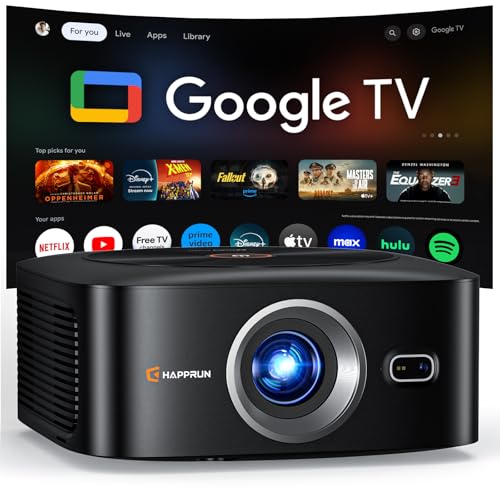
This is a compact LED LCD home projector with a native 1920 x 1080 image, one HDMI input, two USB ports, a 3.5 mm headphone output, automatic or manual focus, and automatic or manual keystone correction. The manufacturer manual specifies a 0 to 35 C operating range and AC 100 to 240 V input. It is intended for desktop, rear, or ceiling placement, with a separate single-hole mount required for ceiling use. The manufacturer states 1500 ANSI lumens, 4K input support, Google TV, and built-in licensed streaming apps. Its own manual confirms the native 1080p LCD specification, not native 4K. Independent comparative testing found its output near a competing unit measured just above 300 ANSI lumens, with a noticeably elevated black floor in dark scenes. That makes dark, controlled rooms a more evidence-supported use than large or brightly lit outdoor viewing.
It suits a person who wants a compact, native 1080p projector for occasional films, casual streaming, or presentations in a dry, ventilated room that can be substantially darkened. It is also suited to users who value automatic focus and keystone after moving the unit, while still having HDMI available for a media player, console, or laptop. Outdoor use can be workable only for a dry evening setup with protected power connections, a stable stand, and realistic expectations for screen size and ambient light.
It is not suited to daytime patios, bright living rooms, or large outdoor gatherings that need an image to remain vivid against ambient light. The available independent comparison does not substantiate the advertised brightness for those conditions. It is also unsuitable for use in rain, damp areas, or near poolside moisture, despite outdoor wording in the marketing. Households needing independently listed electrical hardware, a documented eye-safety classification, confirmed radio authorization, or a published smart-software support policy should require that evidence before relying on this product.
The manual gives useful basic safeguards. It tells users not to look into the operating lens, not to obstruct the air outlet, to keep the product away from children, and to use it only in a dry, ventilated environment. It specifically warns against rain and moisture to reduce electric-shock risk, and recommends shutting it off after six continuous hours. These are meaningful operating limits, but no exact-model NRTL electrical listing, ingress rating, or IEC photobiological safety classification was located. The LED light source avoids routine lamp replacement, and the manual describes a removable dust filter that should be cleaned regularly, which can help maintain airflow. HAPPRUN states a 24-month defect warranty for authorized purchases. However, it does not publish operating or standby wattage, recycled-material claims, repair instructions, replacement parts for this model, or a documented electronics-recycling program. No product-specific United States recall or regulatory safety warning was located in the searched CPSC records.
This is a compact LCD home-entertainment projector marketed for indoor viewing and dry outdoor movie nights. The product record identifies a native 1920 x 1080 display, Wi-Fi 6, Bluetooth 5.3, HDMI, two USB ports, AV, and 3.5 mm audio. It is intended for table, tripod, wall, or ceiling placement, with manual setup features and a claimed 40 to 400 inch image range. YOWHICK's own documentation for the closely matching DP03 model supports native 1080p output, HDMI-based external playback, and a two-year warranty, but it does not provide an exact-model technical sheet for this newer labeled version. An independent hands-on review of the DP03 found the image most useful in darkness and could not verify ANSI brightness. The listing's 350-lumen figure is not identified as ANSI or ISO lumens, so it does not establish realistic large-screen or daylight performance.
It suits a budget-conscious viewer who will mainly watch movies, casual games, or personal media after dark in a bedroom, basement, or covered patio. The buyer should be comfortable manually positioning, focusing, and connecting a separate HDMI streaming device when needed. It is most appropriate where a large image matters more than calibrated brightness, daylight visibility, quiet premium hardware, or long-term smart-platform support. Keep it on a stable surface or suitable mount with unobstructed vents and a dry power connection.
It is not suited to daytime backyard viewing, bright living rooms, classrooms, or presentations where readable image quality must be predictable. It is also a poor fit for locations exposed to rain, dew, splash, high humidity, or unsecured outdoor extension-cord routing, because no ingress rating or exact outdoor electrical listing was found. Households wanting confirmed electrical listing, traceable radio authorization, documented eye-safety testing, or a named smart operating system with a security-update commitment should select equipment with that evidence.
The available DP03 manual gives useful basic safety directions, including use in a dark home-entertainment setting, maintaining clear air vents, and unplugging the unit when not in use. The product is an LED LCD projector rather than a laser projector, but no exact-product IEC 62471 photobiological-safety classification or risk-group documentation was located. No product-specific CPSC recall or regulatory warning was identified in the sources checked. Electrical and outdoor evidence is limited. No exact-product UL, ETL, or other NRTL listing, IP moisture rating, or verified FCC authorization was found. The stated 68 W operating power and claimed 120,000-hour light-source life are manufacturer claims, with no measured standby-power data, ENERGY STAR record, recycled-material evidence, parts catalog, repair instructions, or electronics take-back program located. YOWHICK does state a two-year warranty and lifetime technical support, which may help extend use, but firmware and replacement-part availability remain undocumented.
This is a compact LCD and LED home-entertainment projector with a native 1920 x 1080 display, one HDMI input, two USB ports, AV input, headphone output, manual focus, and electronic or manual keystone correction. The available product manual lists Android 11 for TV, a 5 W speaker, Wi-Fi, Bluetooth 5.1, Google Cast, and a 0 to 35 C operating range. The product is marketed for outdoor viewing, but its own manual says to keep it dry, away from rain and moisture, and in a ventilated location. It also says to power it off after six continuous hours. Native 1080p is manufacturer-stated, while 4K refers to supported content rather than a native 4K panel. The exact radio configuration has an FCC equipment authorization, but independent measurements of brightness, contrast, focus uniformity, power use, or sound were not located.
It suits a buyer setting up occasional movies, casual console use, or streaming in a dark, dry indoor room or under a fully protected outdoor shelter. The practical fit is someone who can place the unit on a stable table or mount, keep the vents clear, use a modest screen size, and accept manual focusing and keystone adjustment. It also fits users who value direct HDMI, USB, AV, and headphone connections as fallback options if an app or casting feature is unavailable.
It is not suited to patios, campsites, pool areas, or any location where rain, dew, high humidity, wet ground, or unprotected outdoor power connections are possible. It is also a poor fit for daylight viewing, bright living rooms, large outdoor crowds, or buyers who need independently measured brightness. Households with children should prevent direct lens viewing and keep the operating product out of reach. Buyers needing independently listed electrical hardware or documented long-term software support should choose another product.
The strongest independently checkable compliance point is the radio system. The exact model is covered by an FCC authorization for integrated Wi-Fi and Bluetooth transmitters, and the manual calls for at least 20 cm separation from the body during operation. The product uses an LED light source rather than a replaceable high-pressure lamp. Its manual also gives meaningful safeguards, including no direct viewing into the lens, no blocked cooling outlet, dry and ventilated operation, and shutdown after six continuous hours. Those instructions matter because the outdoor claim does not establish weather resistance. No ingress rating, rain-use approval, NRTL electrical listing, IEC photobiological-safety record, or exact-model safety certificate was located. No matching CPSC recall was found in the public recall resources searched. The manufacturer does not publish operating or standby power, recycled-material evidence, repair documentation, replacement-parts availability, or a recycling program for this product, so its lifetime energy and e-waste impact cannot be quantified.
This is a compact LCD and LED home projector with native 1920 by 1080 resolution, one HDMI input, two USB ports, AV input, and 3.5 mm audio output. It uses an external 21 V, 2.85 A power supply and has dual 8 W speakers. Aurzen states that Netflix, Prime Video, and YouTube are preinstalled and licensed, while HDMI provides a practical fallback for a laptop or streaming stick. The product is specified by its manufacturer at 200 ANSI lumens. Its own manual recommends dark surroundings and a 50 to 80 inch image for optimal quality, despite a stated 200 inch maximum. Native 1080p and 4K input support are clearly separated, so 4K material is accepted but not displayed at 4K. The exact wireless hardware has an FCC authorization, which is independently traceable.
It suits a budget-conscious user who wants a movable projector for movies, sports, or casual gaming after dark in a bedroom, apartment, basement, or covered dry space. The most appropriate setup is a stable table or properly installed mount, a darkened room, and roughly a 50 to 80 inch picture. It also fits someone who values direct access to the stated Netflix, Prime Video, and YouTube apps but can use HDMI if another service or device is needed.
It is not for daylight viewing, rooms with substantial ambient light, or buyers expecting a crisp and bright 200 inch image. It is also unsuitable for exposure to rain, dew, wet grass, poolside splash zones, or any unprotected outdoor setup, because the manual labels it for indoor use only. Households needing independently listed electrical equipment, a published optical-safety classification, or a named smart platform with a stated security support period should seek documentation that this product does not provide.
The product uses an LED light source rather than a laser, but no public IEC 62471 photobiological risk-group report or exact light-output safety classification was located. Its manual instructs users to keep vents clear, let the unit cool if overheating occurs, and use it in a well-ventilated area. The wireless authorization documentation and manual specify a 20 cm separation from the body during operation. Its outdoor framing needs care. The official manual shows an indoor-use-only symbol, so it should remain dry and protected even when used for a backyard movie night. The manual includes a WEEE disposal symbol and recycling language for European users, but no United States take-back program, recycled-content claim, standby-power figure, or replacement-parts catalog was found. Aurzen does state a two-year warranty plus one additional year with registration and ongoing technical support.
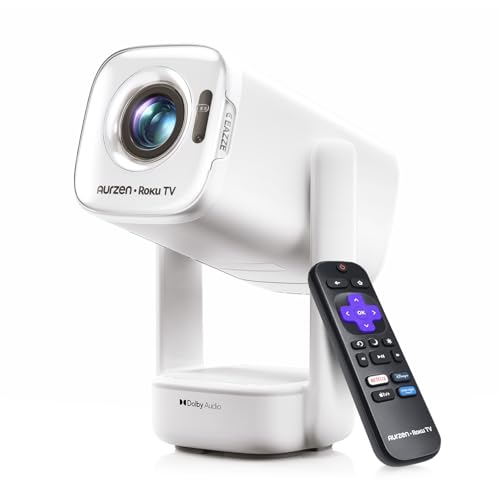
This is a compact LCD smart projector for bedroom, indoor movie, and after-dark backyard viewing. It has a hinged 180-degree stand for wall or ceiling aiming, native 1920 by 1080 display hardware, built-in Roku TV, one HDMI input with ARC, USB media playback, 3.5 mm audio output, dual-band Wi-Fi, Bluetooth, and two 5W speakers. Aurzen states that it can run from a compatible 65W or greater USB-C PD 3.0 source, including a suitable power bank. Independent hands-on testing confirmed a crisp native 1080p image, quick autofocus and auto-keystone response, plus workable app-based Roku use. The maker rates brightness at 300 ANSI lumens and recommends about an 80-inch screen in low light. That makes this a dark-room or after-sunset projector, not a daylight display. Its radio hardware is traceable to an FCC authorization for the matching projector model.
It suits a renter, dorm resident, bedroom viewer, or occasional host who wants a lightweight all-in-one projector for films, casual television, and simple games in a fully darkened room. It is especially practical for an existing Roku user who wants direct access to the Roku interface and apps without adding a streaming stick. The adjustable stand, automatic image setup, HDMI input, and stated USB-C PD power option are useful where wall-outlet placement is awkward. Keep the projected image near the maker's suggested 80-inch size and use it after sunset outdoors.
It is not for daytime patios, bright living rooms, classrooms, sports viewing in ambient light, or anyone expecting a strong image at the largest advertised screen sizes. It should not be exposed to rain, dew, wet grass, or unprotected outdoor power setups because the manual identifies it as indoor-use-only and no ingress rating was found. Competitive gamers should also look elsewhere because no low-latency performance evidence was found. Households that need independently listed electrical equipment, a verified eye-safety risk classification, repair parts, or a defined software-support lifetime need more documentation than is available here.
The radio side is the clearest independently traceable safety item. The matching projector model has FCC authorization for its Bluetooth and Wi-Fi transmitters, and the manual carries the expected FCC Part 15 statement. It also advises keeping the transmitting device at least 20 cm from the body. The manual identifies the unit as Class II equipment, but an exact-model UL or ETL electrical-safety listing was not found in public registers. Outdoor marketing needs careful interpretation. Aurzen promotes nighttime backyard and camping use, yet the manual's symbol guide says indoor use only. Treat outdoor operation as dry, temporary, and protected, with a suitable 65W or greater USB-C PD supply and cable. No IP rating, moisture specification, environmental operating range, recycled-content claim, Energy Star record, light-source-life specification, or formal recycling program was found. The one-year warranty, plus a registration extension, offers limited support but does not establish repairability or long-term parts availability.
This is a compact LCD LED projector intended for wired movie, game-console, and media-stick playback. The current brand store describes HDMI, VGA, USB, TF-card, and AV connectivity, and offers it with an 80-inch fabric screen. It is not a smart projector with named licensed streaming apps, so streaming depends on an external HDMI device. Picture specifications need careful reading. The supplied product record calls it native 1080p, but its structured specifications state 1280 x 720, while the brand's own store says 1080p supported. An independent V08 review likewise found a native 1280 x 720 panel that accepts and scales 1080p input. Brightness is the defining concern. In May 2025, TMY settled a brightness-advertising dispute and agreed to correct the V08 figure from 95,000 lumens to 95 lumens using ISO 21118. That level is for dark, controlled viewing, not daylight outdoor projection.
This suits a buyer who wants occasional, low-demand big-screen viewing in a fully darkened bedroom, basement, or sheltered evening setup, and who already has an HDMI streaming stick, console, or laptop. It is most appropriate when an 80-inch class image is sufficient, manual focus and placement are acceptable, and 720p image detail is understood before setup. The included screen and straightforward wired connections may help with infrequent movie nights or simple console use where text sharpness and bright-room performance are not priorities.
It is not suitable for daylight viewing, rooms with substantial ambient light, or outdoor setups exposed to rain, dew, humidity, or wet ground. Households needing independently verified electrical certification, documented photobiological testing, or a traceable Bluetooth radio authorization should choose a product with exact-model records. It also does not fit viewers expecting native 1080p detail, reliable large-screen brightness, built-in licensed streaming services, or a documented repair-parts and firmware-support program. Keep it away from children who may look directly into the active lens.
This LED LCD projector is not described as a laser product, but no exact-model IEC 62471 photobiological-safety record or risk-group documentation was located. No product-specific CPSC recall was located in the checked recall resources. Electrical evidence remains limited. A legacy manual contains a supplier declaration for a non-wireless receiver, but no exact-model NRTL listing was found. The reported Bluetooth feature could not be matched to a specific FCC authorization, and it conflicts with earlier V08 documentation that says Bluetooth was absent. Outdoor use needs conservative setup. The marketing mentions outdoor movies, yet no IP rating, humidity range, or weather-safe enclosure evidence was found. Operate only dry and protected, use appropriately rated outdoor cords where needed, and keep all electrical equipment away from water. The brand states a one-year warranty but does not publish repair instructions, replacement power-supply information, or a clear end-of-support policy. At end of life, use an R2 or e-Stewards certified recycler.
The Jimveo J62Pro is a compact portable projector with a 180-degree rotating stand, carry handle, HDMI, USB, Ethernet, Wi-Fi 6, Bluetooth, and a magnetic star-pattern lens. Jimveo lists a 2.6 lb weight, 8.6 by 7.7 by 2.5 inch body, native 1080P resolution, and a stated 35 to 240 inch image range. Its intended roles are indoor movie viewing, ceiling projection, and dry after-dark garden setups. The built-in Movin 3.0 system, Netflix, Prime Video, YouTube, Chromecast, autofocus, auto keystone, and thermal monitoring are manufacturer-stated features, not independently tested findings. The product page calls the unit 4K-capable, while the brand's support material says connected video should not exceed 1080p at 60 Hz. Brightness is not stated in ANSI or ISO lumens, so realistic screen size and outdoor image quality cannot be assessed from a measured figure.
This product suits a buyer who wants a compact, portable projector for dark indoor rooms, occasional dry evening patio viewing, or ceiling projection from a bedside or tabletop position. It is most appropriate for users who value flexible placement, wired fallback connections, and a manufacturer-stated three-year support program. The intended user should be comfortable treating the built-in apps and automatic setup features as convenience features that may require updates or troubleshooting, rather than as independently verified performance guarantees.
It is not suited to daylight viewing, bright living rooms, or buyers who need a known brightness level for a large screen, because no ANSI or ISO lumen measurement is published. It is also unsuitable for exposed outdoor installation, damp locations, rain, or poolsides, since no ingress rating or moisture limit is supplied and liquid damage is excluded from warranty coverage. Households needing independently listed electrical hardware, documented eye-safety classification, or confirmed FCC traceability should require those records before use.
Jimveo states that the projector has a sealed optical engine and real-time thermal monitoring, but the available product information does not show exact-model UL or ETL listing, photobiological safety classification, FCC ID, or independent safety test report. The projector should therefore be placed with ventilation clear, operated only in dry conditions, and never aimed toward faces at close range. Its outdoor presentation is for after-dark use, not evidence of weather resistance. The published warranty is a useful durability measure. After registration, Jimveo states that it provides three years of coverage, accessory replacement, technical support, and system upgrades. However, the policy excludes liquid contact, improper environmental conditions, and unauthorized repair. No measured operating or standby power, recycled-material claim, environmental certification, replacement-parts catalog, or electronics-recycling program was identified. Use a certified electronics recycler when the product reaches end of life.



