Best Overall
20% off

Elevate Your Home 1115 Sq Ft Air Purifier
Covers large areas effectively up to 1,115 sq ft.
Removes 99% of common allergens and pollutants.
Operates automatically for hassle-free air cleaning.
 Lauren Wilson
Covers large areas effectively up to 1,115 sq ft.
Removes 99% of common allergens and pollutants.
Operates automatically for hassle-free air cleaning.

Efficiently targets pet hair and allergens.
Smart app for convenient control.
High-carbon filter reduces odors effectively.

Covers large 2000 Ft² area efficiently.
Equipped with a washable filter for convenience.
Includes fragrance sponge for added freshness.

Covers large spaces effectively up to 1900 sq ft.
Advanced H13 HEPA filtration captures pet allergens.
Includes PM2.5 monitor and automatic adjustment.

Covers large areas up to 2500 sq ft.
Features efficient 7-stage filtration system.
Includes smart WiFi and air quality monitor.

Covers large rooms up to 1800 sq ft efficiently.
Features washable filters for easy maintenance.
Smart WiFi control for convenient operation.
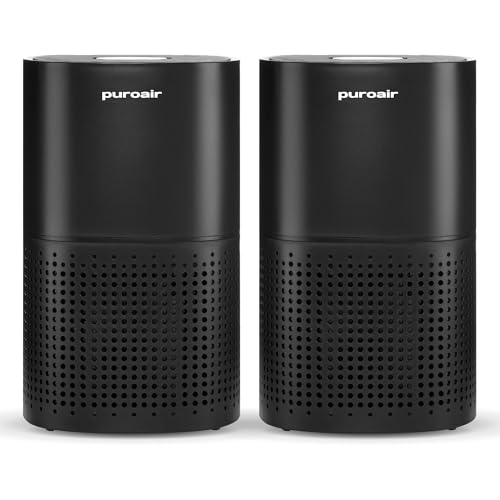
Covers large areas up to 1,115 sq ft.
Filters 99% of common household pollutants.
Operates automatically for continuous air cleaning.
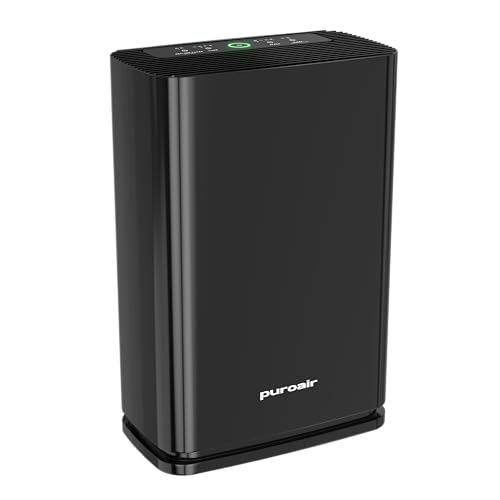
Covers large areas up to 2,145 sq ft.
Filters 99% of smoke, pollen, and dust.
Automatically cleans air 24/7.

Covers large areas effectively up to 1200ft².
Integrated fragrance function for pleasant aroma.
Smart air quality sensor for real-time monitoring.

Covers large areas quickly and efficiently.
HEPASilent technology ensures quiet operation.
Smart features enhance air quality monitoring.
The most useful performance measure is independently tested clean-air delivery rate, or CADR. Look for model-specific smoke, dust, pollen, or PM2.5 CADR in the AHAM Verifide directory, the ENERGY STAR room-air-cleaner dataset, or testing that follows ANSI/AHAM AC-1. A room-size figure is meaningful only when its ceiling height, fan setting, and target air changes are clear. In the supplied reviews, headline coverage figures from roughly 1,000 to 4,200 square feet often conflicted with verified or independently supported room ratings. Some larger figures represented only one air change per hour, a 30-minute cleaning pass, or an undisclosed condition. A smaller verified room rating at a stated air-change target is usually the more useful buying figure.
Independent verification should apply to the exact product, not merely to a brand, filter percentage, seller badge, or related model. Check the AHAM Verifide Directory, California Air Resources Board list, ENERGY STAR Certified Room Air Cleaners Product Finder, and—where relevant—UL Product iQ or Intertek’s ETL directory. Electrical-safety claims should be traceable to a current North American listing for the complete appliance and power supply. A certification claim that cannot be found in the relevant public directory is missing verification, not proof of a defect.
Ozone and secondary emissions deserve separate attention. Mechanical fan-and-filter designs, CARB-listed mechanical products, and ENERGY STAR records reporting 0.0, 1, or 2 ppb ozone provide more useful evidence than an unsupported “zero ozone” statement. Ionizers, electrostatic charging, plasma, UV, and anion features require closer scrutiny for ozone and reactive byproducts. A low measured result is not the same as a UL 2998 zero-ozone validation, and products with electronic treatment should disclose the test basis.
Pet-hair claims also need careful interpretation. A washable or replaceable pre-filter can catch larger airborne hair and coarse dust before they load the fine-particle filter, but it cannot clean settled fur. Odor claims are a different question from particle claims: activated carbon may help, but without disclosed carbon quantity and model-specific chemical-gas testing, litter-box, urine, VOC, and smoke-gas performance remains uncertain. Source cleanup is still necessary.
Finally, check operation and ownership details. Noise figures should identify the fan setting; a sleep-mode number does not describe high-output operation. Look for a filter reminder, clear instructions to remove packaging, a realistic replacement interval, model-matched replacement filters, and safeguards against operating with a depleted filter. Disposable fine-particle and carbon filters create recurring waste even when the pre-filter is washable. Among the supplied products, no single category-wide contraindication was identified, but repeated warnings make precise room sizing, caution around unsupported odor claims, and scrutiny of ozone-producing features especially important; one product also carried a California Proposition 65 lead warning that was not quantified.
The scores below reflect the supplied assessments. Higher-scoring products generally combined model-specific performance evidence with bounded claims and practical maintenance information; lower-scoring products more often relied on broad coverage, odor, or filtration claims without complete-appliance testing.
This measures independently tested CADR for smoke, dust, pollen, or PM2.5 and whether it fits the claimed room. It matters because pet dander and suspended hair are airborne particles, while settled fur is not. The strongest supplied results were the high-scoring products with AHAM or ENERGY STAR CADR and room-size data; lower scores marked products with only airflow or filter-percentage claims.
This measures ozone and reactive byproducts from ionizers, plasma, electrostatic, UV, or similar features. It matters because a purifier should not add an avoidable respiratory irritant while treating pet air. High scores were associated with mechanical designs, CARB listings, or model-specific results such as 0.0–2 ppb ozone. Lower scores reflected electronic treatment without model-specific emissions or zero-ozone validation.
This measures whether claims about dander, hair, dust, and allergy relief match demonstrated particle performance and realistic use. High-scoring products distinguished airborne particles from settled hair and avoided promising to cure allergies. Lower-scoring products blurred filter efficiency, room cleaning, odor removal, or health outcomes, or relied on large pet-focused claims without independently verified CADR.
This measures model-specific evidence for urine smell, litter-box odor, VOCs, or other gases beyond a particle-filter claim. It matters because HEPA-style particle filtration does not establish gas removal. Higher scores reflected disclosed activated carbon or some supporting evidence, while lower scores reflected no carbon quantity and no independent chemical-gas test. Across the supplied products, odor evidence was consistently weaker than particle evidence.
This measures current North American electrical-safety certification for the exact purifier and power supply, together with recall and serious-warning history. It matters because pet homes often run purifiers for long periods and may place them near bedding or furnishings. Higher scores reflected credible listings or stronger safety documentation; lower scores commonly resulted when marketplace UL or ETL claims could not be confirmed publicly.
This measures whether the exact model’s cleaning and safety claims are supported by identifiable third-party certification or reporting. It matters because seller badges and unspecified laboratory language do not establish complete-appliance performance. Higher-scoring products had AHAM, ENERGY STAR, or CARB records tied to the exact model. Lower-scoring products lacked a searchable record or relied mainly on manufacturer claims.
This measures whether room size, air changes, power, and sound are tied to fan settings and a stated test basis. It matters because sleep-mode noise is not the sound level at useful cleaning output. Higher scores came from products disclosing CADR-based room ratings and low- and high-speed context. Lower scores reflected a single quiet figure or a large room claim without airflow or air-change detail.
This measures whether claims state their test method, model, conditions, and limitations without implying that a purifier removes all pollution, replaces ventilation, or prevents disease. It matters because pet marketing often combines particle, odor, germ, and allergy language. Higher scores belonged to products that separated verified CADR from manufacturer claims. Lower scores reflected inflated coverage, unsupported odor or health promises, and blurred filtration percentages.
This measures energy used to deliver verified clean air, including standby use where reported. It matters because a pet purifier may run continuously, so low wattage alone is not enough if airflow is weak. Higher-scoring products paired strong CADR with ENERGY STAR or reported efficiency such as clean-air-per-watt figures. Lower scores reflected missing efficiency evidence or large coverage claims without verified output.
This measures disposable-filter burden, replacement-part availability, service life, repair support, and whether washable-filter language is misleading. It matters because pet hair can load filters quickly. Higher scores belonged to products with washable pre-filters, clear service intervals, available matching replacements, and longer stated filter life. Lower scores reflected frequent disposable changes, sold-out replacements, or unclear longevity and repair support.
This compact, corded room air purifier uses a three-layer disposable filter, comprising a prefilter, a HEPA filter, and activated carbon. It has automatic particle sensing, three fan speeds, sleep mode, a timer, child lock, and a replacement reminder. The manufacturer says to replace the filter about every 90 days. Its strongest evidence is independent model-specific certification. ENERGY STAR lists smoke, dust, and pollen CADR values of 183, 181, and 204 cfm, respectively, and a 284 square foot room size. CARB lists it as a mechanical air cleaner, and ENERGY STAR records ozone emissions of 0 ppb. The manufacturer’s 1,000 square foot claim is framed as one-hour coverage, not continuous high-rate cleaning of that full area.
This product suits a pet household that wants independently documented particle cleaning in a bedroom, home office, nursery, or similarly sized enclosed room. Its verified smoke CADR of 183 cfm supports rooms around 284 square feet at an 8-foot ceiling, with faster cleaning in smaller rooms. It is also relevant for people who want a mechanical, low-ozone device with automatic fan adjustment, rather than an ionizer or fragrance-based odor treatment. Buyers should be comfortable replacing a proprietary disposable filter about every 90 days.
It is not well matched to someone expecting one unit to continuously clean a 1,000 square foot open-plan area, especially with high ceilings, doors open, or strong smoke sources. Its independently listed room size is 284 square feet. It is also not a substitute for cleaning litter boxes, laundering fabrics, removing moisture that supports mold, or ventilating safely. People with serious asthma, severe chemical sensitivity, or a need for demonstrated odor and VOC reduction should seek a product with disclosed sorbent capacity and model-specific gas testing.
The health case is strongest for airborne particles. ENERGY STAR independently documents particle-cleaning output and 0 ppb ozone, while CARB lists this model as a mechanical air cleaner. That matters because EPA advises avoiding devices that intentionally produce ozone. A HEPA and carbon filter can capture airborne particulate matter and may help with some gases and odors, but filtration does not replace source control or ventilation. The manufacturer uses a disposable combined filter and advises replacement every 90 days, sooner with pets, smoke, or heavier pollution. This helps preserve airflow and particle performance, but creates recurring filter waste. Genuine replacement filters are sold and a two-year warranty is offered. No matching CPSC recall or product safety warning was found in the public databases reviewed. Exact ETL or UL listing evidence, however, was not confirmed in the public certification directories reviewed.
This is a 11.7-pound, app-connected room air purifier for pet households. It uses a washable pre-filter, a combined particle and activated-carbon filter, PM2.5 and TVOC sensing, and an automatic scraper that moves collected hair into a removable tray. It is designed for a single room, not whole-home treatment. The manufacturer lists 21 to 53 dB operation, a 39 W rating, and filter replacement about every 6 months. Its core particle performance is independently supported. AHAM-derived data for this exact product reports CADR values of 148 cfm for smoke, 152 cfm for dust, and 163 cfm for pollen, with a 229-square-foot rating at roughly 4.8 air changes per hour. California lists it as a certified mechanical air cleaner. Levoit’s 70 percent odor reduction claim comes from a chamber test with isovaleric acid, not a published, independently verified gas-cleaning rating.
It suits a pet household using one enclosed bedroom, office, or modest living area of about 229 square feet with an 8-foot ceiling, especially where airborne dander, dust, pollen, and floating fur are the main concerns. The independently reported smoke CADR of 148 cfm gives a concrete basis for particle cleaning in that size room. It also fits users willing to use the app, empty a hair tray, and replace a proprietary filter roughly twice a year.
It is not suited to buyers who need verified removal of strong litter-box, urine, smoke, or renovation odors, because the activated-carbon amount and a chemical CADR are not published. It is also not a whole-home solution, a substitute for ventilation, or a solution for settled hair and dander that must still be vacuumed or cleaned. People seeking an independently confirmed UL or ETL electrical listing should choose a product with that exact certification publicly documented. California residents concerned about a lead exposure warning may also prefer a product without that warning.
The important health positive is that California lists this exact product as a certified mechanical air cleaner. Mechanical filtration avoids the intentional ionization, plasma, or UV mechanisms that can create ozone or reactive byproducts. Independent AHAM-derived figures also document meaningful cleaning of airborne fine particles in a roughly 229-square-foot room. This can reduce airborne particle exposure, but it does not remove settled pet material and does not replace source cleanup or ventilation. Levoit uses a washable pre-filter and an automatic hair-clearing tray, which may reduce pre-filter maintenance. The main filter remains disposable and should be replaced about every 6 to 8 months, with earlier replacement possible in heavy-shedding homes. A compatible manufacturer replacement filter is available, and the product has a two-year warranty. The manufacturer product page also displays a California Proposition 65 warning for lead, without explaining the exposure pathway or the component involved. No exact-product CPSC recall was located in the checked recall resources.
This is a compact, corded room air purifier, about 12.2 inches wide and 15.75 inches tall, with four fan speeds, auto mode, a particulate display, sleep mode, timers, child lock and an aroma pad. Its documented filter assembly uses a washable pre-filter ahead of particle and activated-carbon layers. The washable part is the pre-filter, not the main particle filter. MOOKA states that the product can clean up to 2,200 square feet per hour, runs as low as 20 dB in sleep mode, and carries CARB, ETL and DOE certification. Those are manufacturer claims. No model-specific CADR, sound test report, ENERGY STAR record, or publicly verifiable CARB or ETL listing was found for this exact product, so its practical cleaning rate and claimed certifications remain unconfirmed.
This product suits a pet household that wants a floor-standing unit for one regularly occupied bedroom, office, or contained living area, and is prepared to run it for long periods and maintain it. The washable pre-filter is useful where fur and lint accumulate, while the 2,000-hour reminder gives a practical prompt to inspect the disposable filter. It is most appropriate when the stated coverage figure is treated cautiously, rather than as proof that one unit can clean an entire large open-plan home.
It is not suited to people who need independently documented smoke, dust, pollen, or PM2.5 cleaning performance for wildfire smoke, severe allergies, asthma, or a high-risk household. Those uses need a product with a verified CADR sized to the actual room and ceiling height. It is also not suited to households expecting dependable removal of litter-box, urine, renovation, or chemical odors, since carbon quantity and gas-removal results are not disclosed. Avoid using the aroma pad if fragrances trigger symptoms.
The documented filtration path is mechanical, with a washable pre-filter, a particle filter and activated carbon. The product is marketed without UV light, ionization, or plasma treatment, which avoids the known ozone concerns associated with some electronic air-cleaning technologies. MOOKA also claims no ozone release and CARB certification, but those claims were not independently confirmed for this exact product in the public records searched. No product-specific CPSC recall or warning was found in the reviewed public safety resources. The washable pre-filter can reduce loading on the disposable main filter, and the manual gives a 2,000-hour replacement reminder. However, the main filter remains a consumable, and the manufacturer does not disclose its carbon quantity, a calendar replacement interval, repair parts, or a verified service life. The listing's washable H13 wording conflicts with the manual, which directs users to wash only the pre-filter and replace the main filter. Clean the pre-filter, replace loaded filters, and remove all protective packaging before operation.
This is a compact, floor-standing pet-focused air purifier, measuring 7.09 by 11.81 by 16.14 inches and weighing about 7.9 pounds. It uses two side-mounted composite filters with a washable static pre-filter, H13 HEPA media, and activated carbon. The controls include five fan settings, auto mode, a PM2.5 display, timer, sleep mode, lock, and a filter reminder. The manufacturer states a 176 CFM CADR and 2,500-square-foot hourly coverage, but no AHAM or ENERGY STAR record was found to independently verify particle-cleaning output. California CARB does independently list this exact model under Executive Order G-25-026, confirming compliance with California ozone-emission and electrical-safety requirements. That safety certification is the strongest independently confirmed fact for this unit.
This product fits a pet household using it in a small or medium enclosed room, especially near a pet bed, litter area, or other location where airborne hair and dust are a routine nuisance. It suits users who value a washable hair-catching pre-filter, automated fan control, a visible PM2.5 indicator, and a filter-change reminder. Its independently confirmed CARB certification is useful for people who specifically want documented low-ozone and electrical-safety compliance in a portable air cleaner.
It is not suited to someone who needs independently verified particle performance for a large open-plan area, a 2,500-square-foot room, wildfire-smoke planning, or a medically sensitive household. The published CADR and coverage figures are not backed by an AHAM or ENERGY STAR listing, and the coverage claim is not consistent with the reported airflow at a typical ceiling height. It is also not for buyers needing verified odor or VOC removal, because carbon quantity and gas-reduction testing are undisclosed.
The most meaningful health finding is California CARB certification for this exact model. CARB certification requires compliance with California indoor-air-cleaner rules that address ozone emissions and electrical safety. No U.S. recall, regulator warning, or public safety action for this product was identified in the searched sources. The product is described as a mechanical-filter unit with H13 HEPA media, activated carbon, and a washable static pre-filter. Air filtration can supplement source control and ventilation, but it cannot remove all indoor pollutants or resolve pet-waste, mold, or moisture sources. Activated carbon can reduce some odors and gases, but effectiveness depends heavily on the amount of sorbent, which is not disclosed here. The washable pre-filter may reduce hair-related loading, while the composite HEPA and carbon filters are disposable and the instructions call for replacement about every six months. No energy-use data or ENERGY STAR certification was found.
The HEAPETS P339 is a large, 21 to 22 pound floor-standing pet air purifier with app and touch controls, a PM2.5 display, four fan modes, and a replaceable multilayer filter system. The manufacturer describes a static-cotton pet-hair prefilter, HEPA media, activated carbon, bio-enzyme media, UV light, and an anion function. It is intended for airborne pet hair, dander, dust, smoke particles, and odors. The manufacturer states a 205 CFM airflow claim and up to 4,200 square feet refreshed once per hour, but no model-specific AHAM CADR report was found. California's official list did include this exact model as a mechanical air cleaner under a certificate dated December 31, 2024. That listing supports prior ozone-regulatory review, but it is not a current independent CADR, electrical-listing, or zero-ozone validation record.
This product suits a pet household that wants a tall, app-controlled unit with a serviceable hair-catching prefilter and can place it in one primary open room. It is most appropriate for buyers who will treat the stated 205 CFM as an unverified maximum-airflow claim, keep the unit close to the occupied area, vacuum the prefilter regularly, and replace the composite filter when prompted. It may also fit households that value a visible PM2.5 indicator and pet lock, while recognizing that these features do not establish cleaning effectiveness.
It is not well suited to people with asthma, severe allergies, chemical sensitivity, or high concern about ozone who need a current independent zero-ozone validation for every operating mode. The anion and UV features make that evidence especially important. It also is not suited to buyers who need independently verified CADR for wildfire smoke, a clearly documented room size at a normal ceiling height, or low-energy performance data. Do not rely on it to remove settled fur, resolve litter-box hygiene, cure allergies, or correct mold and moisture problems.
California's official air-cleaner list included the P339 as a mechanical air cleaner under a certificate dated December 31, 2024. That is the strongest independent record located. However, the manufacturer's own description also identifies UV light and an anion function. EPA warns that ionizers and certain UV-equipped air cleaners can produce ozone, so the unsupported zero-ozone claim should not be treated as equivalent to a current UL 2998 validation. No relevant CPSC recall or public safety warning was located in the searches performed. The product uses disposable composite filtration media, plus replaceable static-cotton prefilters that can be vacuumed but are not washable. The documented composite-filter service life is about 2,000 operating hours, and a reminder is provided. This design can reduce main-filter loading from pet hair, but it still creates recurring filter waste. No ENERGY STAR certification, wattage data, standby-power figure, repair-parts catalog, or independently verified clean-air-per-watt result was found.
This is a 13.2-pound, app-connected portable room air cleaner with a washable pre-filter, a disposable particle filter, and an activated-carbon layer. It is designed for a single room, with a wide intake intended to intercept airborne pet hair before it clogs the filter. The main filter still needs regular replacement, while the washable screen only handles larger debris. The exact model is listed in ENERGY STAR data as a fan-and-filter unit with a 242 CFM smoke CADR, 263 CFM dust CADR, and 240 CFM pollen CADR. Those independently reported figures support particle cleaning in a roughly 375 square foot room with an 8-foot ceiling, not the much larger 1,875 square foot headline unless accepting a far lower air-change rate. ENERGY STAR also reports 0.0 ppb ozone for this model. Activated carbon is present, but no model-specific chemical-gas reduction result was found.
This product suits a pet household using one enclosed bedroom, office, or living room of roughly 375 square feet or less with standard-height ceilings. Its independently reported particle CADR is useful for airborne dander, dust, pollen, and fine smoke particles when the unit is run consistently at a sufficiently high fan setting. It also fits people who want app scheduling, a filter reminder, and a washable screen that can be cleaned of visible fur. Buyers should expect routine replacement of the main filter every 6 to 12 months, depending on loading.
It is not suited to treating an entire open-plan home, a large room near the 1,875 square foot headline, or rooms with high ceilings if rapid particle reduction is needed. Households managing pet odor from urine, litter, or persistent upholstery contamination should not treat the carbon filter as source cleanup, since model-specific gas-removal testing was not found. It is also not a substitute for vacuuming, laundering bedding, cleaning soft furnishings, ventilation, veterinary care, or medical allergy treatment. People requiring publicly verifiable UL or ETL certification should seek documentation before use.
The strongest health evidence is for airborne particles. ENERGY STAR lists the exact model with a 242 CFM smoke CADR and reports 0.0 ppb ozone. Its fan-and-filter mechanism avoids ionization, plasma, and UV treatment features that can raise questions about reactive byproducts. California's air-cleaner program describes mechanical units as using physical filtration rather than generating ozone, although a current exact-model CARB entry was not located in the public list searched. The product has a washable pre-filter, but that does not make its fine-particle filter washable. Levoit documents a disposable combined particle and carbon replacement filter, typically changed every 6 to 12 months. This reduces clogging from pet hair but creates recurring filter waste. A California Proposition 65 warning accompanies the manufacturer replacement-filter page, identifying lead exposure as a potential concern for California consumers. No exact-product CPSC recall was located in the searched records.
This two-unit package contains compact, corded room air purifiers, each about 8.6 inches wide and 14.2 inches tall. Each uses a three-stage replaceable filter with a pre-filter, a HEPA-grade particle layer, and activated-carbon pellets. It has four fan speeds, a particle sensor with automatic mode, a timer, and a filter-change indicator. Its strongest documented performance evidence is independent certification. ENERGY STAR lists model-specific smoke, dust, and pollen CADRs of 183, 181, and 204 CFM, respectively, with a 284-square-foot room-size figure. California lists this exact product as a CARB-certified mechanical air cleaner. The manufacturer’s 1,000-square-foot coverage claim is not aligned with those figures or with independent testing that found about 144 square feet at maximum fan speed. The carbon layer exists, but independent testing found too little carbon to make a major odor difference.
This product fits households that need two compact purifiers for separate small rooms, such as bedrooms, nurseries, home offices, or pet sleeping areas. It is most suited to buyers prioritizing documented particle removal, low ozone emissions, automatic fan adjustment, and a modest physical footprint. Run each unit at its higher settings when particle reduction matters, especially during pollen events, indoor dust disturbance, or smoke infiltration. Plan for frequent replacement filters, particularly in homes with pets or recurring outdoor-air pollution.
It is not suited to someone expecting one unit to clean a large open-plan living space, basement, or an entire 1,000-square-foot area. The verified and independently measured cleaning outputs support much smaller rooms. It is also a poor fit where pet urine odor, litter-box odor, smoke smell, or VOC reduction is the main goal, because its carbon quantity is limited and source cleanup remains necessary. People seeking a certified True HEPA filter designation or infrequent filter replacement should also look for a product with those properties documented clearly.
The safety evidence is unusually concrete for the core air-cleaning mechanism. California lists the exact model as a CARB-certified mechanical air cleaner, rather than an ionizing or plasma device. ENERGY STAR identifies fan-and-filter technology and reports 0.0 ppb ozone emissions. No CPSC recall, CPSC warning, SaferProducts.gov result, or FTC action specific to PuroAir was located in the searched U.S. public databases. Particle-cleaning and energy figures are independently documented through ENERGY STAR, including 183 CFM smoke CADR and 4.4 smoke CADR per watt. The environmental tradeoff is consumables. This product uses a non-washable combined filter, and the manufacturer advises replacement as often as every 2 to 4 months in demanding conditions. Dedicated replacements are available, but that schedule creates recurring filter waste and cost. Its two-year manufacturer warranty offers some support for appliance longevity.
This is a floor-standing, corded room air purifier with a particle filter and activated-carbon layer, an air-quality sensor, automatic mode, sleep mode, timer, child lock, and a filter-change indicator. The manufacturer manual identifies a combined HEPA and activated-carbon filter with a prefilter screen, rather than an ionizer, UV lamp, or plasma treatment system. Its defining evidence is model-specific particle performance. EPA ENERGY STAR data list the PA400 at 262 cfm smoke CADR and 236 cfm dust CADR. Those figures support meaningful particle cleaning in a single room, but not the broad 2,000 square foot headline without knowing ceiling height, air-change target, and fan setting. California lists the same model as a CARB-certified mechanical air cleaner. The carbon layer is relevant to pet odors, but no independent model-specific chemical-gas reduction result was located.
This product suits a household wanting independently documented particle cleaning for one medium-sized bedroom, living room, or pet area, especially where airborne dander, pollen, dust, or smoke particles are the central concern. Its verified smoke and dust CADR data make it easier to size than a purifier relying solely on a HEPA percentage. It also fits users who prefer mechanical filtration and want auto mode, sleep mode, a child lock, and a filter-change reminder. Plan for genuine replacement filters about every three months, with earlier changes possible in high-load conditions.
It is not suited to buyers who need verified odor, ammonia, urine-smell, or VOC removal as the primary goal. The product has an activated-carbon layer, but there is no located model-specific independent gas-reduction result or disclosed carbon mass. It is also not appropriate for a truly 2,000 square foot open plan area when fast particle cleanup is required, since that headline does not state air changes or operating speed. People needing a fully verified electrical listing should seek a product whose exact current listing is readily searchable in the relevant certification directory.
The strongest health evidence is for airborne particles. EPA ENERGY STAR data identify model-specific smoke and dust CADR values, and California classifies the product as a mechanical air cleaner. That classification matters because the design does not rely on an ionizer or other intentional ozone-generating technology. No product-specific recall or CPSC safety warning was located in the checked public sources. The filter combines particle media, a prefilter, and an activated-carbon layer. That can help with airborne dander and some odors, but it cannot remove settled pet hair, replace cleaning, solve moisture or mold sources, or establish medical allergy relief. The carbon performance is not independently quantified. Ecologically, the unit uses a disposable, non-washable filter, with manufacturer guidance to replace it around every 90 days. A two-year registered warranty is documented, while the lifetime warranty requires an active filter subscription.
This is a compact, DC-powered room air purifier measuring 6.49 by 6.49 by 9.84 inches. Manufacturer materials describe a three-stage filter with a prefilter, H13 HEPA media, and activated carbon, plus five fan modes, a particulate sensor, a filter reminder, and an aroma pad for optional essential oils. The stated power draw is 5 watts, and the stated sleep-mode sound level is 15 dB. Its central limitations are evidentiary. No model-specific AHAM CADR result or other independent particle-cleaning report was located, so the claimed 1,200 ft² coverage cannot be translated into real room air changes. The California air-cleaner register lists Lunino E-200 under certificate G-24-019, not this product, despite listings associating that certificate with this model.
This product suits someone seeking a compact, low-power mechanical-filter unit for a small bedroom, desk area, or other contained space, and who is prepared to treat the large-room claim cautiously. It is also suitable for a household that can replace filters every 3 to 6 months as directed and wants a reminder light to support that routine. Use it as a supplemental particle-control measure, alongside cleaning, source control, and ventilation where practical.
It is not well suited to buyers who need documented performance for a large, open-plan room, wildfire smoke, severe pet-allergen exposure, or a medically sensitive household. Those uses need a model-specific smoke CADR and clearly stated room-sizing basis, neither of which was located here. It is also a poor fit for fragrance-sensitive people, households with pets or people who react to essential oils, or anyone who wants independently confirmed CARB and electrical-safety listings for this exact product.
The reported filtration approach is mechanical, with a prefilter, HEPA media, and activated carbon. That is preferable in principle to intentional ozone-generating technology, but the exact product's CARB listing could not be confirmed. The public CARB register instead associates the certificate cited in marketplace material with Lunino's E-200. No product-specific recall was located in the CPSC recall records searched through August 16, 2026. The optional aroma pad is separate from air cleaning. Adding essential oils introduces fragrance chemicals into the room, so it is sensible to leave that feature unused in fragrance-sensitive households. The manufacturer states that the disposable filter should be replaced every 3 to 6 months. Dedicated replacements are currently listed, which supports maintainability, but this schedule also creates recurring filter waste. A stated two-year limited warranty provides some support for longer product use.
The Blue Pure 311i Max is a 19-inch-tall, Wi-Fi connected room air purifier with a washable fabric pre-filter around a replaceable particle-and-carbon main filter. It has auto and night modes, a PM2.5 sensor, and four fan-speed settings. Blueair states a 6 to 9 month main-filter interval, depending on use and air conditions. Its defining evidence is unusually concrete. ENERGY STAR lists this exact product for the US and Canada with CADRs of 283 cfm for smoke, 314 cfm for dust, and 365 cfm for pollen, plus a 439 square foot room size. CARB also lists it as certified. The much larger one-hour coverage figure is a manufacturer-stated calculation at a lower air-change target, so it should not be treated as equivalent to the independently listed 439 square foot rating.
This product suits a pet household that needs independently documented reduction of airborne particles in a bedroom, office, or medium-size living area. Its verified 283 cfm smoke CADR and 298 cfm PM2.5 CADR support meaningful fine-particle cleaning when it is sized around the independently listed 439 square foot room rating. It also fits users who will replace the main filter on schedule and value an automatic mode, app controls, a washable outer pre-filter, and a low-emission certification record.
It is not designed for buyers expecting one product to remove shed hair from surfaces, cure pet allergies, eliminate litter-box or urine odor, or fix dampness and mold. Those problems require cleaning, source control, ventilation, and where applicable moisture remediation. It is also a weaker fit for very large open plans, rooms with ceilings above 8 feet, or people who require fast cleaning while keeping fan noise minimal. Buyers who require a publicly confirmed UL or ETL listing for the exact product should seek that documentation before use.
The product has a strong health-evidence base for airborne particles. ENERGY STAR lists the exact product as certified for the United States and Canada, with 283 cfm smoke CADR, 314 cfm dust CADR, 365 cfm pollen CADR, and 2 ppb ozone emissions. CARB separately lists it as a certified electronic air cleaner. These records are more useful than a filter percentage alone because they measure the complete appliance's clean-air delivery. Its filter combines particle media with activated carbon, but the carbon amount and independent gas-removal performance are not disclosed. That limits confidence for persistent pet and chemical odors. EPA guidance also emphasizes that air cleaning supplements, rather than replaces, source control and ventilation. Ecologically, the washable fabric pre-filter can reduce loading on the main filter, while the main filter is still disposable every 6 to 9 months according to Blueair. The manual directs owners to recycle the appliance as electronic waste.


