Best Overall
9% off
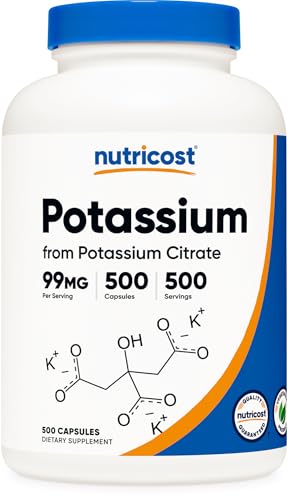
Nutricost Potassium Citrate 99mg
Supports healthy electrolyte balance effectively.
Easy-to-swallow, convenient daily dosage.
High-quality, non-GMO, and gluten-free formula.
 Lauren Wilson
Supports healthy electrolyte balance effectively.
Easy-to-swallow, convenient daily dosage.
High-quality, non-GMO, and gluten-free formula.

Supports muscle function and heart health effectively.
Easy-to-swallow size for convenient daily use.
Vegan-friendly and free from artificial additives.

Combines two forms of potassium for effectiveness.
Includes essential vitamins for bone health.
Contains omega-3s for added heart support.
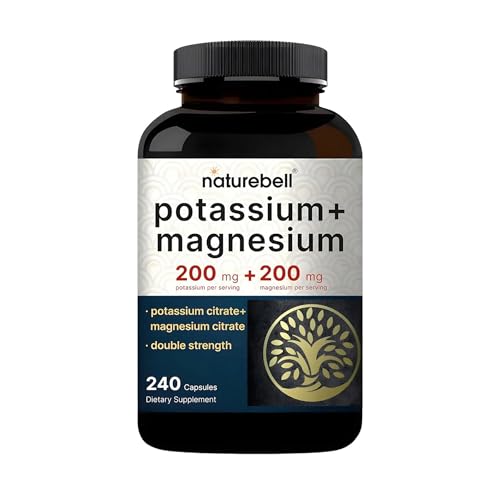
Combines potassium and magnesium for optimal support.
Non-GMO and free from common allergens.
Easy-to-swallow, convenient daily dosage.

Combines potassium bicarbonate and glycinate forms.
Supports healthy blood pressure levels effectively.
Contains 120 servings for long-term use.

Combines magnesium, potassium, and essential vitamins.
Helps reduce leg cramps and muscle tension.
Supports better sleep and overall calmness.

Sugar-free formula for healthier consumption.
Comprehensive blend supports muscle and energy.
Convenient gummy form for easy intake.

Promotes improved energy and vitality levels.
Contains a rich blend of essential minerals.
Easy-to-take liquid form for better absorption.

Includes magnesium and B6 for enhanced absorption.
Convenient gummy form for easy consumption.
Helps relieve muscle and night leg cramps.

Convenient measurement tools included for easy use.
Dissolves well in water or beverages.
Free from gluten and genetically modified organisms.
The label should distinguish elemental potassium from the weight of potassium citrate, potassium chloride, potassium gluconate, potassium bicarbonate, or another compound. For example, a claim such as “1,000 mg potassium citrate” does not necessarily mean 1,000 mg potassium. A strong label states the elemental amount per serving, identifies the serving size, gives the daily directions, and makes clear whether a capsule, two gummies, or a scoop supplies that amount. Compound weight, per-container quantity, and a large “high potency” number can otherwise make products look comparable when they are not.
Serving design matters particularly with bulk powders and liquids. A measured scoop or tablespoon can be less precise than a capsule, and a small measuring error can materially change potassium intake. Look for a clearly defined serving, dilution volume where relevant, water and food directions, storage instructions, and a stated maximum. A product should not rely only on a generic “ask a doctor” warning. Useful information identifies kidney disease or reduced potassium excretion, heart failure, adrenal disease, diabetes or other relevant conditions, potassium-raising medicines, and symptoms that require medical attention.
A simple formula can make total intake easier to understand. Multi-electrolyte products and gummies should disclose potassium, sodium, magnesium, calcium, chloride, vitamins, sweeteners, botanicals, excipients, and allergens separately. “Sugar-free,” “vegan,” “third-party tested,” “GMP,” and “made in the USA” are not, by themselves, proof of elemental-potassium potency or contaminant control. Buyers should also check lot number and expiration information and look for a current, batch-matched certificate of analysis. A useful report names the purchased lot, laboratory, date, methods, potassium assay, pass limits, and testing for relevant contaminants such as toxic elements and microbiological contamination. Laboratory accreditation should cover the relevant work, not merely be mentioned in marketing.
For independent finished-product verification, the exact product should be currently listed in a credible registry such as USP Verified, NSF Certified Dietary Supplements, NSF Certified for Sport, Informed Sport, or Informed Choice, when applicable. Certification of a facility, brand, or ingredient is not the same as certification of the finished product. Quality claims should also be considered alongside the responsible manufacturer’s identity, contact details, lot and expiration details, manufacturing controls, recalls, warning letters, and adverse-event or regulatory history.
Packaging evidence is more limited in this category. A lower-waste claim should be supported by packaging specifications, recycled content, recyclability information, refill options, or responsible-sourcing documentation. A pouch or bulk container may reduce repeated purchases, but that alone does not establish a lower environmental footprint.
Across the supplied reviews, people with chronic kidney disease, reduced potassium excretion, known high blood potassium, heart failure, adrenal insufficiency, significant liver disease, or diabetes-related potassium-handling concerns are repeatedly told to seek clinician guidance. The same applies to people taking ACE inhibitors, ARBs, potassium-sparing diuretics such as spironolactone, amiloride, or triamterene, potassium-containing medicines, trimethoprim-containing medicines, or potassium salt substitutes. Excess potassium can cause weakness, palpitations, paralysis, and dangerous heart-rhythm changes. These products should not be used to self-treat palpitations, persistent cramps, dehydration, suspected deficiency, kidney stones, or other unexplained symptoms. Gummy products should be kept away from children, and bulk powders should be avoided by anyone unable to measure them reliably.
The topics below focus on what a buyer can verify from the label, directions, quality records, and packaging evidence. Scores distinguish products that disclose and substantiate these details from products that rely mainly on broad claims or incomplete public information.
This measures whether the stated use is plausible at the actual elemental-potassium dose while keeping foreseeable risks low. A high score combines a useful, honestly framed dose with appropriate warnings and a simple formula; the supplied products scoring in the low 70s generally had clearer dosing or more restrained use cases. Lower scores were associated with unclear doses, broad cramp or energy claims, and multi-ingredient uncertainty.
This measures whether the label separates elemental potassium from the weight of its citrate, chloride, gluconate, or bicarbonate compound and gives a realistic serving and daily amount. High-scoring products clearly stated figures such as 99 mg, 300 mg, 365 mg, or 1,020 mg elemental potassium. Low-scoring gummies and liquids used large compound-weight headlines or failed to publish a complete Supplement Facts panel.
This measures whether warnings address hyperkalemia—the dangerous buildup of potassium in the blood—and identify kidney, heart, and medication risks. Higher-scoring products at least acknowledged relevant medical use and interactions, while lower-scoring products used only broad medication disclaimers. Across the set, even relatively better scores did not consistently provide prominent warnings naming kidney disease, ACE inhibitors, ARBs, potassium-sparing diuretics, trimethoprim, or urgent symptoms.
This measures whether the format and directions limit accidental high intake, stomach irritation, and misuse. Capsules and clearly portioned tablets generally scored better because they avoid weighing powder; meal or water directions also helped. Powders and liquids can still be practical when dilution and serving amounts are clear, but unclear scoop sizes, no daily maximum, or contradictory serving math lowered scores.
This measures whether active nutrients, minerals, sodium, sweeteners, botanicals, excipients, serving sizes, and allergens are fully disclosed. Simple single-ingredient powders and short capsule formulas scored in the mid-to-high 80s. Gummy and liquid products scored lower when magnesium, vitamins, sodium, botanicals, or inactive ingredients were missing or described inconsistently, even when vegan, sugar-free, or allergen-free claims were made.
This measures current, registry-confirmed certification of the exact finished product for identity, strength, purity, and contaminant control. A high score requires an active listing in a recognized program such as USP Verified or NSF Certified Dietary Supplements; facility or brand claims do not qualify. The supplied products generally scored around 68–78 because exact-product registry confirmation was not established, although one product had independent contaminant certification outside those registries.
This measures whether a buyer can obtain a current certificate of analysis matched to the bottle’s lot, showing elemental-potassium assay, relevant contaminants, laboratory identity, methods, date, and pass limits. Most products scored around 68–74 because reports were unavailable, generic, or required a lot number. One powder had a historical independent report with potassium, heavy-metal, and microbiological results, but it was not current or matched to present stock.
This measures documented finished-product control for toxic elements, microorganisms, and other relevant impurities. Higher scores reflected independent contaminant certification or a historical laboratory report; lower scores reflected only manufacturer statements such as “third-party tested” without results, methods, or limits. A clean ingredient list reduces formulation trade-offs but does not itself prove contaminant safety.
This measures whether claims about hydration, cramps, recovery, blood pressure, energy, pH, kidney stones, or heart and bone support match human evidence for the exact formula and elemental dose. Higher-scoring products used narrower nutritional descriptions or disclosed a dose that could be compared with evidence. Lower scores commonly involved treating compound weight as potassium, promoting broad wellness outcomes, or implying cramp relief without product-specific support.
This measures whether the responsible firm, contact details, lot and expiration information, manufacturing controls, recalls, warning letters, and relevant regulatory history are readily verifiable. The supplied products generally scored in the low-to-mid 70s when a U.S. address or customer contact and basic traceability were available. Scores were limited when accountability depended mainly on unsupported GMP or testing claims, even where no product-specific FDA action was identified.
This measures whether packaging minimizes unnecessary material and whether recyclability, recycled content, refill options, or responsible sourcing are documented without compromising moisture protection, tamper evidence, or child safety. Most supplied products clustered around the same middle score because no credible packaging specifications were found. Bulk pouches and tubs may reduce replacement frequency or individual packaging, but the supplied evidence does not establish that they are recyclable or lower-waste.
This is a 500-capsule potassium citrate supplement. The current manufacturer product page states that each capsule provides 99 mg of elemental potassium from potassium citrate, with 500 labeled servings in the larger bottle. That is a small addition to dietary potassium, not a replacement for potassium-rich foods or clinician-directed treatment of low blood potassium. An independent retailer label listing identifies potassium at 99 mg, or 2% Daily Value, and lists rice flour, gelatin capsule, microcrystalline cellulose, vegetable-source magnesium stearate and stearic acid, and silicon dioxide. Nutricost states that the product is non-GMO, gluten-free, made in a GMP-compliant facility, and third-party tested. The facility, rather than this finished product, is listed by NSF to NSF/ANSI 455-2 GMP requirements. No batch-matched certificate of analysis was publicly available for review.
This product fits a healthy adult who wants a small, clearly quantified potassium addition and prefers capsules over powders, drink mixes, or multi-electrolyte formulas. The large bottle is practical for someone intending to use the labeled one-capsule serving over a long period and who can tolerate gelatin. It is most appropriate when a clinician or dietitian has already reviewed the person's overall potassium intake, kidney function, medical conditions, and medicines. Its 99 mg amount is modest, so expectations should be limited to incremental dietary supplementation.
It is not appropriate for self-treatment of suspected potassium deficiency, persistent muscle cramps, kidney stones, dehydration, or heart symptoms. People with chronic kidney disease, heart failure, liver disease, adrenal insufficiency, or type 1 diabetes need individualized potassium advice. Those taking an ACE inhibitor, ARB, spironolactone, amiloride, other potassium-sparing diuretics, potassium-containing medicines, or medicines that can raise potassium should ask their prescriber before use. It also does not suit vegans because the listed capsule is gelatin, or people who need a publicly available batch-specific test report.
Potassium is essential for nerve signaling, muscle contraction, and normal heart rhythm. In healthy people with normal kidney function, modest supplemental potassium is generally handled by the kidneys. Risk changes substantially when potassium excretion is impaired or medicines reduce potassium loss. NIH identifies kidney disease, ACE inhibitors, ARBs, and potassium-sparing diuretics as important hyperkalemia risks. Severe hyperkalemia can cause weakness, palpitations, paralysis, and dangerous rhythm disturbances. The manufacturer states that the product is non-GMO, gluten-free, and third-party tested. NSF currently lists Nutricost Manufacturing for dietary-supplement GMP facility certification, but that is not an independent certification of this finished product's contents or contaminants. No public lot-matched test report was found. No product-specific FDA recall or warning-letter record was identified in the reviewed searches. The bottle is a long-use plastic package, but the manufacturer provides no verified recycled-content, recyclability, refill, or responsible-sourcing documentation.
This is a 120-capsule potassium citrate supplement sold as a 60-serving bottle. Vykee’s own product page states that one serving is two capsules and supplies 500 mg of elemental potassium as citrate, or 10.64% of the Daily Value. That is a meaningful nutritional amount, but it is not a replacement for a potassium-rich diet or a treatment dose for diagnosed low potassium. The product page presents heart, muscle, electrolyte, blood-pressure, energy, and cramp-support claims. Potassium is essential to normal nerve, muscle, fluid, kidney, and heart function, although those broad benefits do not establish that this specific 500 mg serving will relieve cramps or improve energy in a healthy user. The most important product-specific concern is inconsistent dose communication. The marketplace record describes 500 mg per capsule, while the manufacturer describes 500 mg per two-capsule serving.
This product is most suited to a healthy adult who has discussed potassium intake with a clinician or dietitian, wants a plainly dosed capsule rather than a drink mix, and specifically wants 500 mg elemental potassium per listed daily serving. It can be useful for tracking supplemental potassium alongside dietary intake because the manufacturer gives a serving size and Daily Value. It is better suited to routine nutritional supplementation than to self-treatment of persistent cramps, palpitations, dehydration, kidney stones, or suspected potassium deficiency, which need individualized medical assessment.
It is not suited to people with chronic kidney disease, reduced potassium excretion, heart failure, adrenal insufficiency, uncontrolled diabetes, or a history of high blood potassium unless a clinician specifically directs its use. People taking ACE inhibitors, ARBs, potassium-sparing diuretics, potassium-containing medicines, or other medicines that affect potassium should seek pharmacist or prescriber advice first. It is also a poor fit for anyone needing a highly verified dose, a publicly available batch-specific certificate of analysis, or independently certified sport-supplement status. Keep it away from children unless a pediatric clinician recommends it.
The nutritional strength is that the manufacturer identifies potassium as the nutrient and citrate as the form, instead of presenting only a compound weight. Its stated 500 mg elemental-potassium serving equals 10.64% of the Daily Value. Potassium is physiologically important, but supplemental potassium requires more care than ordinary wellness marketing suggests. People with impaired kidney function or medicines that reduce potassium excretion can develop dangerous hyperkalemia, sometimes without early symptoms. Vykee states that its products are made in GMP-certified facilities, tested by third parties, and supported by a lot-number report portal. Those are manufacturer statements, not independently verified finished-product certifications or publicly reviewed batch reports for this product. Searches did not identify a product-specific FDA recall or warning letter. No credible packaging material, recycled-content, recyclability, refill, or sourcing documentation was found, so the environmental footprint cannot be meaningfully assessed beyond the small plastic supplement bottle format.
This is a grape-flavored gummy supplement sold as two 60-gummy bottles, for 120 gummies total. The marketplace listing identifies potassium citrate and potassium gluconate as the potassium sources, alongside omega-3, magnesium, calcium, turmeric extract, vitamins D3, K2, B6, B12 and E, folate, and zinc. It is marketed for electrolyte balance plus heart, nerve, muscle, bone, brain, circulation, and energy support. The defining limitation is dose clarity. The public listing promotes “1200 mg” of two potassium forms, but it does not provide a clearly stated elemental-potassium amount or public amounts for the other active ingredients. That prevents a reliable comparison with dietary intake or clinical dosing. Potassium is essential for nerve transmission and muscle contraction, but the NIH notes that excess can be dangerous when potassium excretion is impaired or certain medicines are used.
This product is most relevant to a healthy adult who specifically wants a chewable potassium-containing supplement and is willing to verify the bottle label before use. The two-bottle, 120-gummy format may suit someone planning a longer routine rather than a short course. It is better aligned with a person seeking a general dietary supplement than someone trying to self-treat cramps, low blood potassium, kidney stones, high blood pressure, or a diagnosed nutrient deficiency, because the publicly available elemental-potassium dose is unclear.
It is not appropriate for people with chronic kidney disease, known high blood potassium, heart failure, liver disease, adrenal insufficiency, or type 1 diabetes without clinician guidance. People using ACE inhibitors, ARBs, potassium-sparing diuretics, potassium-containing medicines, or other medicines that affect potassium should ask a clinician or pharmacist first. It also does not fit buyers who need a precisely quantified potassium dose, complete active-ingredient amounts, a lot-specific test report, or an independently certified finished product. Keep gummies away from children, who may mistake them for candy.
The brand’s own site identifies Nextdia Nutritional Products as the distributor and supplies a Fountain Valley, California address, phone number, and email. It states that products are made in the United States with global ingredients. This improves basic contact traceability, but it is not the same as independent finished-product certification. No current USP, NSF, Informed Sport, or Informed Choice listing for this finished product was located during the review. No public lot-specific certificate of analysis was found to confirm elemental potassium, heavy metals, or microbiological results for the purchased bottle. The listing makes purity, potency, vegan, and allergen-related claims, but publicly available information does not give a full quantitative Supplement Facts disclosure or a complete excipient and packaging specification. No specific recycled-content, refill, or recyclability documentation was located, so the environmental footprint cannot be meaningfully substantiated beyond the protective plastic gummy packaging.
This is a 240-capsule potassium and magnesium supplement. The manufacturer’s Supplement Facts image identifies a three-capsule serving with 200 mg elemental potassium as potassium citrate and 200 mg elemental magnesium as magnesium citrate, providing 80 servings. It is a capsule product, not a drink mix, so it does not replace fluid or sodium lost through substantial sweating. The elemental amounts and citrate forms are clearly shown on the manufacturer label image. NatureBell also lists silicon dioxide, magnesium stearate, rice flour, and a gelatin capsule, so it is not vegetarian. The manufacturer says the product is third-party tested and uses a double-sealed, UV-protected amber bottle, but no public batch-matched certificate of analysis, named laboratory report, or recognized finished-product certification listing was located during this review.
This product suits a healthy adult who specifically wants a modest, clearly labeled supplemental amount of potassium and magnesium in citrate forms, prefers capsules to flavored powders, and can tolerate a three-capsule serving. It is most relevant as a supplement to food intake, not as treatment for a diagnosed electrolyte abnormality. The 80-serving bottle may also suit someone planning a consistent daily routine who has reviewed their total potassium and magnesium intake with a clinician or pharmacist when medicines are involved.
It is not appropriate for people with chronic kidney disease, reduced kidney function, heart failure, type 1 diabetes, liver disease, or adrenal insufficiency unless a clinician directs use. Those taking an ACE inhibitor, ARB, spironolactone, amiloride, triamterene, potassium-containing medicines, or other medicines affecting potassium should obtain individualized advice. It is also unsuitable for vegetarians and people avoiding gelatin. Anyone seeking rapid rehydration after heavy sweating should use a product designed to provide fluid and sodium, rather than relying on these capsules.
The product’s strongest health transparency point is its Supplement Facts image. It identifies 200 mg elemental potassium as potassium citrate and 200 mg elemental magnesium as magnesium citrate per three-capsule serving. Potassium is essential for normal cell function, and magnesium supports normal physiological functions, but potassium intake can become dangerous when kidney excretion is impaired or when certain medicines reduce potassium loss. Supplemental magnesium can also cause diarrhea, nausea, and abdominal cramping. NatureBell states that the product is third-party lab tested, double sealed, and packed in a UV-protected amber bottle. Those are manufacturer statements, not publicly documented lot-specific proof. No public certificate of analysis or recognized independent certification for this finished product was located. The amber bottle may help protect light-sensitive contents, but the reviewed materials do not document recycled content, bottle resin type, refill options, or local recyclability, so its packaging waste profile cannot be established.
This is a 120-capsule potassium supplement for adults. One capsule supplies 300 mg of elemental potassium, listed as potassium bicarbonate and potassium glycinate complex. The disclosed inactive ingredients are a cellulose capsule and vegetable stearate. The manufacturer directs users to take one capsule daily with a meal, or follow clinician direction. The bottle therefore provides up to 120 daily servings. ([supplementfirst.com](https://supplementfirst.com/products/designs-for-health-k-2-potassium?utm_source=openai)) Its main stated use is nutritional support for healthy blood pressure already in the normal range. Human trials and meta-analyses support higher potassium intake as a way to modestly lower blood pressure in some people, especially those with hypertension, low baseline potassium intake, or high sodium intake. However, many trials used substantially larger supplemental amounts than this 300 mg serving, so a clinically meaningful blood-pressure effect from this exact daily dose is not established. ([pubmed.ncbi.nlm.nih.gov](https://pubmed.ncbi.nlm.nih.gov/28024910/?utm_source=openai))
This product fits an adult who has been advised by a clinician to increase potassium modestly and wants a simple capsule rather than a flavored electrolyte blend or powder. Its 300 mg serving is clearly labeled and its 120-capsule format can suit a roughly four-month once-daily routine. It is most sensible when potassium intake, kidney function, and medicines have already been reviewed, particularly because the claimed blood-pressure role is nutritional support rather than a substitute for evaluating or treating hypertension. ([supplementfirst.com](https://supplementfirst.com/products/designs-for-health-k-2-potassium?utm_source=openai))
It is not appropriate for self-treatment of high blood pressure, muscle cramps, fatigue, or suspected low potassium without clinical assessment. People with chronic kidney disease, heart failure, liver disease, type 1 diabetes, or adrenal insufficiency need individualized advice because they may develop hyperkalemia at ordinary potassium intakes. People using ACE inhibitors, ARBs, spironolactone, amiloride, or other potassium-retaining medicines should have a pharmacist or prescriber review the full regimen before use. Pregnant or breastfeeding users should also seek clinician guidance. ([ods.od.nih.gov](https://ods.od.nih.gov/factsheets/Potassium-HealthProfessional/?trk=public_post_reshare-text&utm_source=openai))
The health-positive feature is label clarity. Independent label-database material and manufacturer documentation agree that one capsule provides 300 mg elemental potassium from potassium bicarbonate and potassium glycinate complex, with a short disclosed excipient list. The take-with-meal direction is sensible for a capsule, but the available label information does not give specific, prominent safeguards for kidney impairment or potassium-retaining medicines. Those omissions matter because dangerous hyperkalemia can occur in susceptible people. ([supplementfirst.com](https://supplementfirst.com/products/designs-for-health-k-2-potassium?utm_source=openai)) No current exact-product USP, NSF dietary-supplement, Certified for Sport, or Informed certification listing was located. No public lot-specific certificate of analysis was found for this product. Searches also did not identify an FDA recall or warning letter specific to this product, but that is not independent proof of finished-product purity. The product is sold in a conventional capsule bottle, and no credible recycled-content, recyclability, refill, or lower-waste packaging documentation was located. ([info.nsf.org](https://info.nsf.org/Certified/Dietary/Listings.asp?ProductType=Vitamin&StandardExt=FP&utm_source=openai))
This two-bottle pack supplies 120 strawberry gummies, with two gummies as a serving and 60 total servings. The manufacturer-displayed Supplement Facts state 200 mg elemental potassium as potassium citrate, 60 mg elemental magnesium from 500 mg magnesium glycinate, 50 mg calcium carbonate, 10 mg zinc, 100 mg vitamin C, vitamins D3, K2, and B6, 100 mg chia-derived omega-3, and 10 mg black pepper. It also lists xylitol and erythritol, zero added sugar, and 15 calories per serving. ([lukaree.com](https://lukaree.com/cdn/shop/files/1_b54f1ee9-b1e1-4581-bb01-ca8ace8e11fc.png?v=1766397804&width=1600)) The key qualification is label consistency. Current marketing calls out 200 mg potassium citrate and describes whole-food calcium, while the displayed facts panel identifies 200 mg potassium and calcium carbonate. Sleep, cramp, mood, muscle, immune, and bone claims are broad, and no human study of this exact formula or lot-matched independent report was located. The serving is modest rather than a high-potassium dose, but potassium still warrants medication and kidney safety screening. ([lukaree.com](https://lukaree.com/products/potassium-magnesium-gummies-60-count))
This product suits a healthy adult who specifically wants a chewable, modest-dose mineral and vitamin add-on rather than a high-dose potassium product. The facts panel gives 200 mg elemental potassium and 60 mg elemental magnesium per two gummies, with no added sugar and a disclosed sweetener system based on xylitol and erythritol. It is most relevant to someone whose clinician or pharmacist has already confirmed that supplemental potassium fits their diet, medicines, and kidney function. ([lukaree.com](https://lukaree.com/cdn/shop/files/1_b54f1ee9-b1e1-4581-bb01-ca8ace8e11fc.png?v=1766397804&width=1600))
It is not suited to people with chronic kidney disease, known high blood potassium, heart-rhythm problems, or an unexplained history of weakness or palpitations without clinician guidance. People using ACE inhibitors, ARBs, potassium-sparing diuretics, potassium-containing medicines, or trimethoprim should seek individualized advice before adding potassium. It is also a poor fit for buyers who need a registry-confirmed certification or a batch-specific independent test report, and for households seeking a supplement specifically evaluated for children. ([ods.od.nih.gov](https://ods.od.nih.gov/factsheets/Potassium-HealthProfessional/?trk=public_post_reshare-text&utm_source=openai))
The disclosed formula provides 200 mg potassium and 60 mg elemental magnesium per serving, not 500 mg elemental magnesium. Magnesium from supplements can cause diarrhea, nausea, and abdominal cramping at higher intakes, while impaired potassium excretion or certain medicines can raise the risk of hyperkalemia. The visible label does not show targeted warnings for those higher-risk groups. ([lukaree.com](https://lukaree.com/cdn/shop/files/1_b54f1ee9-b1e1-4581-bb01-ca8ace8e11fc.png?v=1766397804&width=1600)) Lukaree markets this product as third-party lab certified and uses GMP-related language, but an active finished-product certification was not identified in the reviewed independent certification registries, and no lot-specific certificate of analysis was provided. No product-specific public FDA recall or warning letter was identified in the sources reviewed. The reviewed materials do not provide recycled-content, recyclability, refill, or responsible-sourcing documentation, so its packaging footprint cannot be substantiated beyond the need for a moisture-protective gummy container. ([lukaree.com](https://lukaree.com/products/potassium-magnesium-gummies-60-count))
This is a raspberry-flavored, sugar-free gummy electrolyte supplement sold as two 60-gummy bottles. The available product label directs adults to take two gummies with a meal, giving 30 servings per bottle. That serving is labeled as 1,000 mg of elemental potassium, supplied as potassium citrate, not merely 1,000 mg of the citrate compound. The same label lists 150 mg magnesium from citrate and glycinate, 200 mg calcium, 50 mg sodium, 5 mg zinc, vitamin B6, vitamin B12, and 10 mg black pepper extract. The ingredient and allergen information is unusually specific for a gummy. The marketed leg-cramp, energy, and performance uses are less well established. Potassium has essential physiologic roles, but human evidence does not support potassium as a general treatment for ordinary leg cramps. No current exact-product USP, NSF, Informed Sport, or Informed Choice certification, or batch-matched independent certificate of analysis, was verified.
This product is most suited to a healthy adult who specifically wants a high, clearly stated potassium serving in a chewable format and can review total potassium intake from food, salt substitutes, medicines, and other supplements. It may fit someone who dislikes tablets and prefers a sugar-free gummy with magnesium, calcium, and modest sodium included. It is not a substitute for evaluating persistent cramps, recurrent dehydration, or suspected electrolyte deficiency with a clinician, especially because the cramp claim is not well supported for typical adult leg cramps.
It is not suited to people with chronic kidney disease, reduced kidney function, heart failure, adrenal insufficiency, type 1 diabetes, liver disease, existing high blood potassium, or unexplained palpitations or muscle weakness unless a clinician has directed use. People taking ACE inhibitors, ARBs, potassium-sparing diuretics, potassium-containing medicines, regular NSAIDs, or trimethoprim-containing medicines should seek clinician or pharmacist guidance first. It is also not a good fit for children, for people needing treatment of a diagnosed potassium disorder, or for households wanting independently certified and lot-tested supplement quality evidence.
The available product label is transparent about the active formula. Per two gummies, it lists 1,000 mg potassium as potassium citrate, 150 mg magnesium, 200 mg calcium, 50 mg sodium, 5 mg zinc, vitamins B6 and B12, and 10 mg black pepper extract. It also identifies pectin, monk fruit extract, stevia, coconut oil, sodium citrate, and natural raspberry flavor. The label states zero added sugar and excludes several common dietary ingredients, including dairy and gelatin. A retailer repeats the manufacturer's statements that the gummies are made in a cGMP-certified U.S. facility and third-party tested, but no exact-product certification listing, independent laboratory report, or batch-matched certificate of analysis was verified. Searches did not identify a product-specific FDA recall or warning letter, which is not proof of finished-product quality. The product is supplied in small plastic gummy bottles, and no recycled-content, recyclability, refill, or other packaging-impact documentation was found.
KM is a 32 fluid ounce liquid mineral and botanical supplement. The manufacturer describes it as a roughly one-month supply and directs adults to shake it, then use a 15 mL serving directly or mixed with water. Its current directions are ambiguous, saying 15 mL daily while also referring to morning and evening use. The manufacturer lists potassium citrate and glycerophosphate, calcium, iron, iodine, 13 named botanicals, caramel color containing sulfites, glycerin, flavoring, and methylparaben and propylparaben. It does not publish a current elemental-potassium amount or botanical quantities on the product page. A Canadian KM licence record lists 2.4 mg potassium, but is marked not marketed and cannot confirm the composition of this U.S. product. The formula's strongest claims involve pH balance, blood oxygenation, detoxification, energy, digestion, and cramp comfort, none supported by product-specific human trials located in this review.
This product is most suited to an informed adult who wants a bitter liquid botanical-mineral tonic, accepts a 15 mL routine that may be mixed with water, and is not relying on it to correct a medically confirmed potassium deficiency. The user should have normal kidney function, no relevant medication interactions, and a clinician who can review the complete formula if regular use is planned. It is more practical for someone comfortable with a one-month bottle than for someone needing precise nutrient dosing.
It is not suited to people with chronic kidney disease, heart failure, liver disease, adrenal insufficiency, diabetes with potassium concerns, or a history of high potassium. People taking ACE inhibitors, ARBs, potassium-sparing diuretics, potassium-containing medicines, trimethoprim, or medications affected by herbs should use clinician guidance instead. Pregnant or nursing people, children, people with hypertension or heart-rhythm concerns, and anyone seeking measured potassium replacement should choose a product or treatment with clear dosing and tailored medical oversight.
The public ingredient list identifies potassium citrate and glycerophosphate, calcium, iron, iodine, chamomile, sarsaparilla, dandelion, horehound, licorice, seneca snakeroot, passionflower, thyme, gentian, saw palmetto, alfalfa, dong quai, and celery. It also lists caramel color containing sulfites, natural flavors, glycerin, methylparaben, and propylparaben. This conflicts with the manufacturer's broader statement that the formula contains nothing artificial. The manufacturer says KM is tested for heavy metals, but no independently issued, lot-matched certificate was available to verify assay or contaminant limits. Searches of public USP, NSF, Informed Sport, and Informed Choice registries did not identify a current certification for this finished product. Searches of FDA public recall and warning-letter resources did not identify a KM-specific action. No recycled-content, recyclability, refill, or responsible-sourcing documentation was found for the plastic bottle, so its packaging footprint remains unverified.
This is a 60-count strawberry gummy supplement with 30 two-gummy servings. The independently photographed Supplement Facts panel lists 1,300 mg potassium gluconate, providing 100 mg elemental potassium, plus 200 mg magnesium as magnesium glycinate, 2 mg vitamin B6 as pyridoxal-5-phosphate, and 100 mg L-theanine per serving. The ingredient amounts and the distinction between potassium gluconate and elemental potassium are unusually clear. The potassium amount is only 2% of the Daily Value, while magnesium supplies 48%. That makes it a modest potassium add-on rather than a replacement for dietary potassium or clinician-directed treatment of low potassium. The product presents hydration, leg-cramp, heart-rhythm, energy, calm, and sleep-related claims, but no finished-product independent certification, batch-matched certificate of analysis, or product-specific clinical evidence was located. The visible label also does not present kidney-disease, medication-interaction, or hyperkalemia guidance.
This product suits a healthy adult who specifically wants a low elemental-potassium gummy rather than a high-dose potassium medicine, and who also values a meaningful magnesium contribution. Its 30-serving bottle and two-gummy format may suit someone who dislikes tablets and wants to track intake from a fully itemized label. It is most appropriate as a modest dietary supplement, not as self-treatment for confirmed low potassium, recurrent cramps, dehydration, palpitations, or a heart-rhythm concern.
It is not appropriate for people with chronic kidney disease, heart failure, type 1 diabetes, liver disease, adrenal insufficiency, or known high potassium unless a clinician advises the total potassium intake. Avoid self-selecting it while taking an ACE inhibitor, ARB, potassium-sparing diuretic, potassium-containing medicine, or other medicine that can increase potassium. It also does not fit buyers seeking clinician-directed correction of hypokalemia, since 100 mg elemental potassium per serving is small and recurrent cramps or palpitations need medical assessment.
Potassium is essential for nerve, muscle, kidney, and heart function. In healthy people with normal kidney function, kidneys usually regulate excess intake. Risk changes substantially with impaired potassium excretion or medicines that retain potassium. NIH notes that ACE inhibitors, ARBs, and potassium-sparing diuretics can raise potassium, and severe hyperkalemia can cause weakness, palpitations, paralysis, and dangerous arrhythmias. The visible product label does not provide these targeted safeguards. The formula is transparent about its active ingredients, has zero listed sugar, and states vegan and gelatin-free status. Those are label claims, not independent certification. Searches did not locate a product-specific USP or NSF certification listing, a lot-matched independent certificate of analysis, or documented recycled-content, recyclability, refill, or sourcing evidence. The packaging appears to be a conventional single-use gummy bottle, so its environmental attributes cannot be confirmed.
This is a 1 kg tub of unflavored potassium chloride powder. Nutricost states that one 1/8 teaspoon, 0.7 g serving, provides 365 mg elemental potassium from potassium chloride. The stated directions are to mix one serving daily with 6 to 10 ounces of water, or use as directed by a health professional. A container is stated to hold about 1,425 servings. The clearly stated elemental-potassium amount is useful for tracking intake, but this is still a concentrated bulk powder. Its 365 mg serving is a modest contribution to daily potassium intake, not a substitute for clinical evaluation or monitored treatment of low blood potassium. Nutricost states that the product is third-party tested and made in a GMP-compliant facility. The manufacturing facility is listed by NSF to its GMP facility standard, but no current public certification for this exact finished product or batch-matched certificate of analysis was found.
This product fits a healthy adult who has been advised to increase potassium intake, understands their total intake from foods, salt substitutes, drinks, and supplements, and wants a plain potassium chloride powder rather than capsules or flavored electrolyte mixes. The small stated serving, 365 mg potassium, can be measured into a beverage for a routine that has already been discussed with a clinician or dietitian. The 1 kg size is most practical for regular, careful home use rather than occasional supplementation.
It is not appropriate for people with chronic kidney disease, known high potassium, heart failure, type 1 diabetes, liver disease, adrenal insufficiency, or a history of potassium-related heart rhythm problems unless their clinician has specified a dose and monitoring plan. People taking ACE inhibitors, ARBs, spironolactone, amiloride, eplerenone, aliskiren, or regular NSAIDs should not self-dose potassium. It is also a poor fit for households where children could access a bulk powder, or for anyone needing clinician-managed treatment of confirmed hypokalemia.
Potassium is an essential nutrient, and the stated serving provides 365 mg elemental potassium. In people with normal kidney function, potassium from foods is generally handled by kidney excretion. Risk changes substantially with impaired potassium excretion or interacting medicines. NIH notes that kidney disease and medicines including ACE inhibitors, ARBs, and potassium-sparing diuretics can raise the risk of dangerous hyperkalemia. Prescription potassium chloride labeling also directs dilution and administration with meals to reduce gastrointestinal irritation. Nutricost states that this product is independently tested by ISO-accredited laboratories, but a buyer-accessible, lot-specific report was not located. NSF currently lists Nutricost Manufacturing for GMP facility certification, which supports process controls but does not verify the identity, potency, or contaminants of this finished tub. No product-specific recyclable-content, refill, or recycling documentation was found, so its 1 kg plastic container has no verified lower-waste packaging advantage.


