Best Overall
13% off

Portable Charger 12000mAh with Built-in Cables
Convenient built-in cables eliminate extra clutter.
High capacity ensures multiple device charges.
Compact design makes it easily portable.
 Daniel Kenitz
Convenient built-in cables eliminate extra clutter.
High capacity ensures multiple device charges.
Compact design makes it easily portable.

Compact design easily fits in pockets.
Fast charging with 45W Power Delivery.
Versatile USB-C input and output.

High-capacity 20000mAh for extended device use.
65W fast charging supports laptops and tablets.
Ultra-compact design for easy portability.

High-capacity for extended device charging.
Smart display shows charging status clearly.
Fast charging with 200W power delivery.

High-capacity power bank for extended use.
Triple 100W USB-C ports for fast charging.
Built-in retractable cables for convenience.

High capacity for multiple device charges.
Built-in USB-C cable for convenience.
Fast charging with 87W power output.

High capacity for extended outdoor use
Multiple charging ports for versatile connectivity
Durable waterproof design for rugged environments
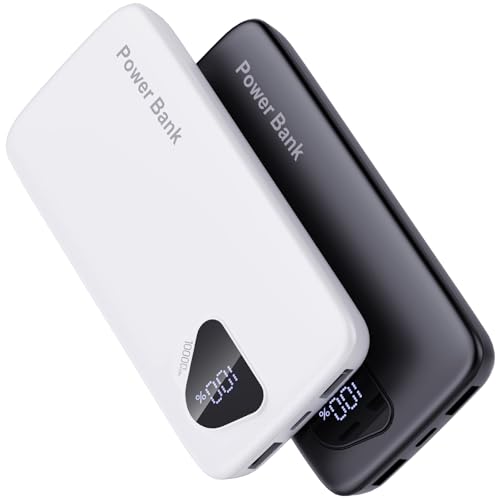
Built-in cables for hassle-free charging.
Slim design makes it travel-friendly.
Multiple outputs for charging multiple devices.
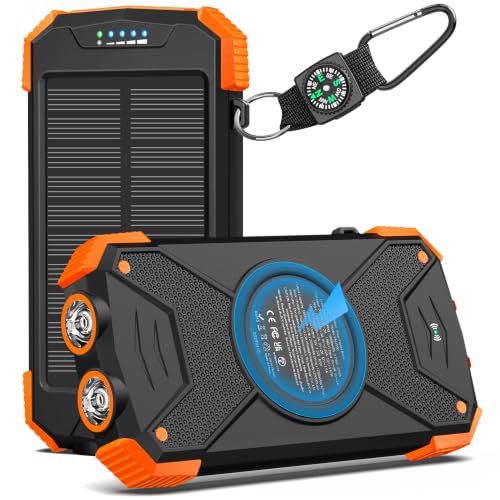
Convenient wireless charging capability.
Dual flashlight perfect for camping trips.
Solar panel for eco-friendly charging.

Compatible with Mlok/Picatinny rail systems.
Durable, compact, and shock-resistant design.
Reliable power for tactical gear and optics.
Capacity is commonly advertised in milliamp-hours, or mAh, but that figure usually describes the cells rather than the energy available at the output. Voltage conversion and heat losses reduce delivered energy. The supplied reviews show why independent load testing matters: tested usable energy can be materially lower than nominal cell capacity, while some products closely approach their stated rated output. Look for an exact-product test that reports watt-hours, voltage, current, load conditions, sustained output, recharge time, and multi-port behavior. A headline such as “100W,” “170W,” or “200W” may be a brief peak or a shared maximum, not power available continuously from every port. Port sharing can reduce several connected outputs to modest levels.
For USB-C products, check the manual’s per-port power profiles, voltage and current limits, cable rating, and combined-output rules. “Fast charging” is not enough by itself. USB-IF certification can provide independent evidence for applicable USB Type-C and USB Power Delivery implementations. Wireless claims should be checked against the Wireless Power Consortium’s Qi database where applicable; FCC authorization addresses radio equipment and wireless-power emissions, not complete battery fire safety.
Battery and fire protection is a separate question from charging performance. For power banks, look for an exact-model listing in UL Solutions Product iQ under UL 2056, or an exact-model ETL listing in Intertek’s directory. Larger portable power stations may fall under UL 2743. A listing should identify the exact model and the applicable standard; a general safety badge, a certified cable, or a manufacturer’s statement is not equivalent evidence. The supplied products also illustrate that protections such as overcharge, short-circuit, temperature, crush, or damaged-cell handling can be stated in a manual without a public independent test record.
Travel claims require a watt-hour figure, not just mAh. Most supplied power banks are described as carry-on products below 100 Wh, but they must remain in cabin baggage and airlines may impose stricter limits. A larger bank between 101 and 160 Wh may require airline approval, while power stations above 160 Wh are not passenger-aircraft products. A permanent label and an exact-product UN 38.3 transport test summary make the battery easier to identify and handle correctly.
Also check the maker, model, warranty, serial or batch information, recall support, cycle-life disclosure, replacement parts, and end-of-life instructions. A product can have strong measured output yet limited repair or recycling support. Conversely, a long warranty does not prove safety or capacity.
Across the supplied products, the recurring safety caveats are clear: no exact-model UL, ETL, or CSA listing was found for most products; public UN 38.3 documentation was often missing; several capacity, watt-hour, cable, warranty, or output claims conflicted; and independent multi-port testing was frequently unavailable. Do not fly with a power bank that is damaged, swollen, leaking, unusually hot, smoking, or otherwise malfunctioning. Do not use damaged batteries, expose them to crushing, water, or excessive heat, or place lithium products in household trash or curbside recycling. Large power stations are not airline power banks, and low-power models should not be treated as laptop or appliance backup without documented output limits.
The scores below reflect the supplied reviews and the frozen topic weights. A high score indicates stronger exact-product evidence or support in that topic; it does not remove limitations identified elsewhere in the review.
This measures current third-party certification appropriate to the design, including protection against battery, charging, overheating, shock, and fire hazards. It matters because a lithium battery can fail dangerously when damaged or improperly charged. Among these products, the portable power station with an exact SGS listing to UL 2743 scored 92, while most ordinary power banks scored around 68–76 without a located UL, ETL, or CSA listing.
This measures specific, test-supported handling of overcharge, over-discharge, short circuit, overload, temperature extremes, impact, and damaged cells. It matters because power banks are often charged and carried in bags or near other belongings. Higher-scoring products had documented protection details plus stronger testing or thermal evidence; lower-scoring products mainly repeated manufacturer safeguards without exact-model abuse or fault-test records.
This measures whether the buyer can identify the responsible maker, model, serial or batch, support channel, warranty, and remedy if a safety issue appears. It matters when a product is recalled or stops behaving normally. The strongest supplied scores, including 84, paired named makers with clearer support and recall processes; lower scores reflected inconsistent manufacturer information, limited support detail, or no workable serial-number pathway.
This measures whether watt-hours, transport testing, labels, and flight claims are accurate and permanent. It matters because power banks belong in carry-on baggage and larger batteries may need approval or cannot fly. Products with verified or clearly documented 37–90 Wh markings scored higher, up to 90; products with missing watt-hours, conflicting capacity, or stated energy above ordinary passenger limits scored lower.
This measures whether ports and wireless systems have verified power negotiation, clear limits, suitable cables, and honest shared-output information. It matters because a “fast” label may hide reduced power when several devices are connected. Higher scores, such as 88, were supported by exact-product testing of USB-C profiles and cables; lower scores relied mainly on listings or manuals without USB-IF, Qi, or independent interface evidence.
This measures independently measured watt-hours, sustained output, recharge speed, and multi-port behavior against the listing. It matters because cell-level mAh is not the same as energy delivered to a device. Products with exact-model load tests scored as high as 91; products without independent capacity or output testing were commonly around 68–72. Shared-output limits and thermal throttling are especially important for laptop-capable banks.
This measures whether mAh, Wh, fast-charge, laptop, flight, water, solar, flashlight, and compatibility claims are specific and qualified. It matters because inflated capacity or unrealistic solar and waterproofing implications can lead to unsafe or disappointing use. Higher-scoring products, up to 85, separated cell capacity from rated output and qualified limits; lower-scoring products had conflicting specifications or unsupported broad claims.
This measures public exact-product evidence from certification bodies, laboratories, regulators, and credible testers. It matters because buyers should not have to rely only on marketing. Scores reached 90 where an exact safety listing and independent performance evidence were available. Products near 68–69 generally had identifiable makers and manuals but no located NRTL listing, independent load test, or complete transport record.
This measures cycle-life disclosure, warranty, replaceable cables or wear parts, repair information, and practical support. It matters because a sealed battery or failed integrated cable can end the useful life of an otherwise functional product. The supplied scores were generally stronger where warranties and service routes were stated; they were weaker where no cycle-life figure, repair path, replacement battery, or cable option was found.
This measures whether the maker provides usable U.S. recycling or take-back instructions, including for recalled or damaged batteries. It matters because lithium batteries can ignite in trash or ordinary recycling streams. Scores were highest where a maker offered a recycling route or mail-back pathway, reaching 82; lower scores reflected general disposal advice without a product-specific program. Lithium products should go to an appropriate battery recycler or household hazardous-waste route.
This is a compact lithium-polymer phone power bank with fold-out wall prongs, a built-in USB-C cable, a built-in iOS-compatible cable, USB-C and USB-A connections, and a percentage display. It is intended to charge phones away from an outlet, then recharge directly from a wall outlet or through USB-C. The available exact-model manual states 12,000mAh capacity, 22.5W maximum output, PD20W USB-C output, and pass-through charging. Those are manufacturer-stated specifications, not independently measured results. The supplied product record instead states 10,000mAh and 20W, so the exact capacity and peak-output configuration are not consistently documented. Public searching found a UL 2056 test report for the named manufacturer, but it identifies a different model and is not an exact-model NRTL listing.
This format suits a person who mainly charges a phone and values packing fewer accessories. The built-in wall plug and attached cables can simplify an overnight bag, commuter kit, or day bag, while the display gives a stated percentage rather than a simple row of lights. It is most suitable when the buyer can confirm the capacity and watt-hour marking printed on the received product, and uses it as a convenience charger rather than relying on a precisely verified energy reserve.
It is not well suited to travelers who need clearly documented aviation labeling, people who must know verified usable capacity before a long trip, or users charging heat-sensitive equipment unattended. It also is not the right fit for households seeking an exact-model third-party safety listing, documented battery cycle life, or a manufacturer take-back route. Anyone needing dependable multi-device fast charging should avoid assuming the advertised peak output applies to every port at once, because no verified shared-output specification was found.
The manufacturer is identifiable as Dongguan Xionel Electronic Technology, and the product record supplies a model designation and one-year limited warranty. The available manual describes overcharge, over-discharge, short-circuit, overcurrent, overvoltage, and overheating protections. These are manufacturer-stated protections, not independently confirmed exact-model test results. No exact-model CPSC recall or public safety warning was found in the reviewed sources. The key safety limitation is verification. A publicly available UL 2056 report names the manufacturer but covers another power-bank model, so it does not establish certification of this product. Capacity claims also conflict between available records. For disposal, do not place a lithium-ion power bank in household trash or curbside recycling. EPA directs consumers to battery collection or household hazardous-waste routes, and damaged or recalled batteries need special handling. No product-specific take-back program was located.
The INIU P50 is a compact lithium-polymer power bank with a stated 10,000mAh, 36Wh battery, two USB-C ports, one USB-A port, and a short detachable USB-C lanyard cable. It is intended for wired charging of phones, tablets, handheld gaming devices, and limited emergency laptop top-ups. The manufacturer states a 45W maximum single-port output, 20W input, and 15W maximum total output when more than one device is connected. Independent testing of the matching P50-E1 version measured 32.1Wh usable energy during 45W phone charging, 28.9Wh at sustained 45W output, and 33.9Wh at 10W. The same testing confirmed 45W USB-C PD output and an included 5A e-marked cable. It is a genuinely small unit at about 160g, but its 36Wh energy store can only partly recharge most laptops.
This suits a commuter, student, or traveler who wants a small wired backup battery for a phone, tablet, earbuds, handheld console, or occasional low-power laptop top-up. Its independently tested usable energy and confirmed 45W USB-C output make it practical for rapid single-device charging, while the 160g body and removable short cable reduce what must be carried. It also fits travelers who keep power banks in cabin baggage and confirm their airline's current battery rules before departure.
It is not suited to people who need a full laptop recharge, long off-grid runtime, or fast charging for several devices at once. The tested capacity is 36Wh nominal and the total shared output falls to 15W. Households that require documented third-party electrical safety listing should choose a product with a current exact-model UL, ETL, or CSA record. Do not use any lithium power bank that is swollen, damaged, unusually hot, smoking, or subject to a recall.
The P50 uses a lithium-polymer battery, so damage, overheating, water exposure, and improper disposal remain fire risks. Its stated 36Wh capacity is below the FAA's 100Wh passenger threshold, but power banks must travel in carry-on baggage, not checked baggage. Independent testing found up to 45°C during sustained laptop charging, so avoid covering it or leaving it in a hot enclosed space while heavily loaded. No public exact-model NRTL safety listing or UN 38.3 test summary was found. INIU does provide a three-year manufacturer-stated replacement warranty and a detachable cable, both of which can extend useful life. The maker had a 2025 recall for a different BI-B41 power bank due to overheating and fire hazards, with serial-number checking and refunds. At end of life, this product should go to a dedicated battery or electronics recycler, never household trash or curbside recycling.
This product is a compact lithium-polymer power bank for charging USB-C laptops, tablets, phones, and smaller accessories away from a wall outlet. It has two USB-C outputs, one USB-A output, a detachable USB-C lanyard cable, and a percentage display. Manufacturer documentation lists 20,000mAh, 74Wh, 65W maximum output, 45W input, and a roughly 4.3 by 2.8 by 1.1 inch body. Independent testing provides meaningful performance evidence. Macworld reported that it recharged a flat M2 MacBook Pro to 87%, while Stiftung Warentest recorded 65W as the maximum total and per-output power in its product test. Its documentation is not fully consistent, however. INIU's product page also lists 119W total output, which conflicts with its 65W manual specification and independent reporting. Public exact-product UL, ETL, CSA, USB-IF, and UN 38.3 records were not verified in this review.
This product suits a traveler, student, or mobile worker who needs one compact battery for a USB-C laptop plus a phone or tablet, and who can work within a 65W ceiling. The independent MacBook result makes it particularly relevant for moderate-use laptop top-ups rather than sustained workstation loads. Its stated 72Wh to 74Wh capacity is under the FAA's 100Wh carry-on threshold, provided it is carried in cabin baggage and the airline's own rules are followed. It also fits buyers who value a three-year manufacturer warranty and clear percentage display.
It is not suited to users who need verified third-party electrical safety listing for a household, school, workplace, or travel policy. Public evidence did not verify an exact-product UL, ETL, or CSA listing, nor a public UN 38.3 test summary. It is also a poor fit for high-demand large laptops that need more than 65W during heavy workloads, or for people who routinely power several devices at high speed. Buyers who require repairable electronics or a disclosed battery cycle-life target will not find those details here.
The product uses a sealed lithium-polymer battery, so overheating, swelling, leakage, crushing, and short circuits require caution. The available instructions say not to expose it to heat, fire, moisture, mechanical shock, or short circuits. Those are appropriate handling directions, but they are manufacturer instructions rather than public evidence of exact-product abuse testing. No exact-product NRTL safety listing was verified. A different INIU 10,000mAh power bank was recalled by the CPSC on December 5, 2025 after reports of overheating and fires. That recall does not identify this product, but it makes model and serial-number traceability important. INIU offers a three-year warranty and says it collects discarded products, although its public recycling page does not provide a clear U.S. take-back route for this unit. At end of life, EPA guidance is to keep lithium batteries out of trash and curbside bins, then use a battery recycler or household hazardous-waste program.
This is a roughly 609 g upright lithium-ion power bank with two USB-C ports, one USB-A port, a color TFT status display, and a stated 90Wh battery. It is meant for bag carry, supplying phones, tablets, and USB-C laptops when wall power is unavailable. The manufacturer rates one USB-C port at up to 140W, the second at up to 100W, and total output at 200W. Independent exact-product testing recorded 73Wh delivered at a 10W load, close to the maker's stated 90Wh internal energy after normal conversion losses. The same test measured about 198W across the two USB-C ports, but found the highest 200W output fell to 65W after the battery reached 56 percent. UGREEN documents a 2-year limited warranty for direct U.S. purchases and lists 13 claimed protection functions, but no public exact-product UL, ETL, or CSA listing was located.
It suits travelers, field workers, and students carrying a USB-C laptop plus phone or tablet in a backpack. The useful case is a device set that can accept USB-C Power Delivery, especially where a short burst of high shared output matters more than pocketability. Its 90Wh stated capacity fits the standard U.S. passenger threshold for carry-on power banks, provided it travels in the cabin and the airline has no stricter rule. The display also helps users monitor active input and output rather than guessing from LEDs.
It is not for anyone seeking a pocket phone charger, since this is a roughly 609 g, tall battery pack intended for a bag. It is also unsuitable for users who need a guaranteed 200W output through most of the discharge cycle, because an independent load test recorded a reduction to 65W once charge reached 56 percent. Households that require independently listed battery protection should select a product with a public exact-model UL, ETL, or CSA record. Do not use a swollen, leaking, damaged, or unusually hot power bank.
The product uses five 21700 lithium-ion cells. A product-specific material safety document identifies the cell chemistry as lithium nickel cobalt aluminate and states that the battery passed UN 38.3 transport testing. UGREEN also describes protections for temperature, overcurrent, voltage, overcharge, over-discharge, overload, short circuit, and manual reset. Those protection claims are manufacturer-stated, not independently certified through a public U.S. NRTL listing. No CPSC recall for this exact product was located in the review check. The disclosed 2-year limited warranty and stated 1,000-cycle, 80 percent capacity claim support longer use, though the cycle claim is not independently verified. The battery is not user-replaceable and no product-specific U.S. take-back program was found. At end of life, keep it out of household trash and curbside recycling, protect the terminals, and use a battery or household hazardous-waste collection route.
This is a 25,000mAh lithium-ion laptop power bank with two built-in USB-C cables, one retractable, plus USB-C and USB-A ports. It weighs about 595 g and is intended to recharge phones, tablets, cameras, handheld consoles, and USB-C laptops away from an outlet. Anker specifies a 90Wh battery, 100W maximum from each USB-C cable or port, and 165W total output. The most useful performance figure is independently measured rather than advertised. An electronic-load test recorded an average delivered energy of about 74Wh across several loads, roughly 80 percent of the stated cell energy. Anker also clearly qualifies shared output, stating that up to 165W is available with two devices, while three or four devices are limited to 130W. Public searches did not locate an exact-product UL, ETL, or CSA listing, so the electrical safety case relies mainly on manufacturer documentation rather than a publicly verifiable North American safety certificate.
This product suits a frequent traveler, commuter, field worker, or student who needs meaningful laptop backup power while carrying a bag rather than a pocket-sized battery. It is especially relevant for USB-C laptop users who can work within a 100W per-port limit and who value having two attached cables available. The independently measured delivered energy supports planning around roughly 74Wh rather than assuming all 90Wh reaches a device. It also fits travelers who can keep the power bank in carry-on baggage and check their airline's battery rules.
It is not suited to people who need a light pocket power bank, since it weighs about 595 g and is nearly two inches thick. It is also not the right fit where a publicly verifiable North American safety listing is a firm requirement, such as safety-sensitive workplaces or households that require exact UL, ETL, or CSA documentation. Avoid relying on the 165W headline for three or four devices, because shared output is manufacturer-limited to 130W. Do not use a damaged, swollen, wet, or overheating power bank, and never pack it in checked baggage.
The product uses a high-energy lithium battery, so the main health issue is fire risk if it is damaged, overheated, wet, or improperly charged. Anker documents temperature monitoring and a temporary no-recharge mode after high-power discharge, but these protections are manufacturer-stated. No public exact-product UL, ETL, or CSA certificate was located. A September 2025 CPSC recall involved several other Anker power bank models because their batteries could overheat, but it did not name this product. For travel, the documented 90Wh capacity is within the FAA's 100Wh passenger threshold. Power banks must stay in carry-on baggage, protected from damage and short circuits. Anker offers an 18-month warranty and states that replacement parts or service for charging accessories released after September 2023 will be available for at least three years after production ends. Its U.S. recycling program is clearest for District of Columbia participants, so buyers elsewhere should confirm a local lithium-battery recycler before disposal.
This product is a 20,000 mAh portable power bank with an integrated USB-C cable, a separate USB-C port, and a USB-A port. It weighs about 430 g and is intended to recharge phones, tablets, and USB-C laptops away from an outlet. The integrated cable and USB-C port are manufacturer-rated for up to 65W, while combined output is rated at up to 87W. Its performance claims have useful external support. One detailed load test measured 61.5 to 66 Wh of usable output energy, depending on voltage and load, which is 83 to 89 percent of the nominal cell energy. A separate hands-on USB-C test observed roughly 62W delivered to a MacBook Air after negotiating a 65W profile. The product does not support pass-through charging, so it cannot recharge itself and another device at the same time.
This product suits a traveler or commuter who needs a substantial phone reserve plus occasional USB-C laptop charging, and who prefers carrying one less loose cable. The independently measured usable energy supports several phone recharges or a meaningful laptop top-up, rather than a full replacement for wall power. It also fits users whose USB-C laptop accepts 65W or less and who can tolerate a roughly 430 g battery in a day bag. For flights, keep it accessible in carry-on baggage and confirm the airline's own rules.
It is not suited to people who require independently verified battery fire certification for use around vulnerable occupants, in unattended settings, or in risk-sensitive workplaces. It is also a poor fit where a replaceable cable, published cycle-life data, or repair access is essential. Users who need to recharge the battery while powering other devices should avoid relying on it because pass-through charging was not supported in testing. Do not use a swollen, damaged, wet, modified, or overheated power bank, and do not pack one in checked baggage.
The exact safety sheet sets a 32 to 95°F operating range and warns against opening, crushing, burning, wet exposure, and use after damage or modification. It also identifies a U.S. responsible party for FCC matters and states FCC Part 15 and Canadian ICES-003(B) electromagnetic compliance. Those are useful traceability and emissions details, but they are not independent certification that the battery pack meets a U.S. fire-safety standard. No public exact-product UL, ETL, or CSA listing was located in this review. CPSC recall notices examined for Anker in 2025 named other power-bank models, not this product. Anker provides a recall portal and a District of Columbia mail-back recycling program, and says replacement parts or service for charging accessories released after September 2023 will be available for at least three years after production ends. The built-in cable may reduce accessory waste, but its non-user-replaceable design and the absence of a published battery cycle-life figure limit confidence in long-term repairability.
This is a rugged-looking lithium-polymer power bank with a solar panel, two USB-A outputs, one USB-C input/output, dual LED lights, and a carabiner. Product materials state a 49,800 mAh battery at 3.7 V, 15 W maximum output, and a 7 by 3.4 by 1.2 inch body weighing about 1.06 pounds. It is intended for phone charging, outdoor backup use, and emergency lighting. The product materials describe solar input as a slow emergency replenishment method rather than a practical everyday charging source. They also claim a smart protection chip, three-device charging, and water, dust, and drop resistance, but no public exact-product safety listing, USB certification, laboratory capacity test, or UN 38.3 test summary was located. Capacity and protection claims therefore remain manufacturer-stated rather than independently confirmed.
This product suits a car camper, hiker, or household emergency-kit user who wants a relatively large, corded-rechargeable phone battery with basic lighting and accepts that the solar panel is only a slow backup source. It is most appropriate when the buyer can recharge it from a wall outlet before leaving and use it mainly for phones, lights, and other low-power USB equipment. Its stated three-port layout can be useful for a small group, but output behavior under simultaneous use has not been independently verified.
It is not suited to frequent airline travelers. The stated 49,800 mAh at 3.7 V works out to roughly 184 Wh, which exceeds the FAA passenger-aircraft limit for spare lithium batteries and power banks. It also is not a good fit for people who need independently listed fire safety, documented USB-C Power Delivery profiles, verified waterproofing, or measured usable capacity. Households needing dependable outage equipment should not treat the solar panel or unverified fast-charge claim as a substitute for tested emergency-power planning.
The key safety limitation is evidence quality. Product materials claim a lithium-polymer battery, a protection chip, and overcharge, overcurrent, short-circuit, overload, overheat, and undervoltage protections. However, no public exact-product UL, ETL, CSA, USB-IF, or independent load-test record was located. No exact-product CPSC recall or regulatory warning was located during this review, but that does not establish independent safety certification. The claimed capacity and voltage imply about 184 Wh. That is above the FAA threshold for power banks on passenger aircraft, which are forbidden above 160 Wh. The product also lacks clear public documentation of a UN 38.3 transport test summary. Its battery is not described as user-replaceable, and no manufacturer take-back program was located. At end of life, keep it out of trash and curbside recycling, protect terminals, and use a battery or electronics collection program.
This is a two-pack of slim pocket power banks sold as the FancyBean M7. Each unit measures 5.83 by 2.68 by 0.63 inches and has built-in USB-C and Lightning charging cables, two USB-A outputs, a USB-C input, and a percentage display. The available manual states 5V, 2A input and output ratings, which indicates basic 10W charging rather than documented USB Power Delivery fast charging. Capacity documentation is inconsistent. The catalog title and an independently listed retail page identify this configuration as 10,000mAh, while a manual published for the same product identifies each bank as 12,800mAh. Neither source provides cell watt-hours, rated delivered energy, combined-output limits, a public UN 38.3 test summary, or independent load-test results. The product is marketed for air travel, but its permanent watt-hour marking and transport documentation could not be confirmed.
This product fits a budget-focused phone user who wants two small backup batteries for low-power daily charging, such as commutes, day trips, school bags, or keeping one unit in each household bag. It is most suitable when built-in USB-C and Lightning leads are more useful than high charging speed, and when the buyer can accept basic manufacturer-stated 5V, 2A charging. Keep the product's capacity inconsistency in mind, and rely on the label on the received unit rather than the listing alone for travel details.
It is not well suited to buyers who need independently documented battery safety certification, verified usable capacity, or a public transport test summary. Avoid relying on it for laptops, high-wattage tablets, or time-critical fast charging because USB Power Delivery profiles and multi-port limits are not documented. It is also a poor fit for frequent flyers who need a clearly marked watt-hour value before travel, or for households that require a clear manufacturer process for swollen, damaged, or recalled lithium battery products.
No active CPSC recall or safety warning specific to FancyBean M7 or its named manufacturer was located in the CPSC sources searched. That is not the same as proof of safety. No exact-model UL 2056, ETL, or CSA listing was located, and the available materials did not provide a public UN 38.3 test summary. Those records matter because lithium battery transport testing covers hazards including thermal exposure, vibration, impact, crushing, overcharge, forced discharge, and external short circuit. The product contains a non-user-replaceable lithium battery, and no maker take-back or recycling program was found. Do not place an end-of-life, damaged, hot, leaking, or swollen unit in household trash or curbside recycling. U.S. EPA guidance directs consumers to separate lithium battery or electronics recycling and household hazardous-waste channels, with terminals protected where applicable. Built-in cables are convenient, but their failure can make an otherwise usable sealed battery harder to keep in service.
This is a pocket-size lithium polymer power bank with a labeled 37Wh battery, USB-C and USB-A charging, a low-power wireless charging pad, a small integrated solar panel, and dual flashlights. Its label and FCC authorization identify the same wireless power-bank design, while the manufacturer lists a 10,000mAh nominal cell capacity and a 20W USB-C claim. The strongest product-specific performance evidence is a third-party UL 2056 test report, rather than a UL certification listing. That report measured 5,941mAh against a 6,000mAh rated output capacity at 5V, and documented short-circuit, thermal, vibration, and shock testing. It also lists solar input at only 5V and 0.23A, about 1.15W, so solar is realistically a maintenance or emergency input, not a practical way to refill the battery in the field.
It suits a person who wants a compact, labeled 37Wh backup battery for a day hike, commute, festival, or travel carry-on. The useful case is topping up one phone, earbuds, a small light, or another low-power USB device after charging the bank from a wall outlet beforehand. Wireless charging adds convenience for a compatible phone when speed is not the priority. The documented measured output capacity also provides more support than a nominal cell-capacity claim alone.
It is not suited to people who need a primary off-grid power source, multi-day charging without access to wall power, or dependable solar replenishment. The documented solar input is only about 1.15W, so sunlight should not be treated as a dependable full-recharge method. It is also not the right fit for buyers who require a power bank with a current UL, ETL, or CSA directory listing, publicly verifiable Qi certification, a published UN 38.3 test summary, or clearly documented multi-port fast-charge limits.
The exact product has an FCC authorization for wireless power transmission and a third-party test report using UL 2056 requirements. That report records protection-oriented evaluations including temperature operation, output short circuit, vibration, and mechanical shock. However, it should not be described as UL listed. A test report from a non-NRTL laboratory does not provide the ongoing factory surveillance and public listing associated with an NRTL certification. The product contains a rechargeable lithium battery. It should be protected from crushing, water intrusion, heat, and short circuits, especially during solar exposure or transport. The manufacturer provides support contact details and states a replacement promise, but no public cycle-life specification, parts pathway, battery service option, or take-back program was found. At end of life, do not place it in household trash or curbside recycling. EPA guidance calls for lithium batteries to go to an appropriate battery, electronics, or household hazardous-waste collection point.
This is a compact lithium-polymer power bank intended to mount to M-Lok or Picatinny rails while also serving as a backup charger for phones and compatible accessories. The product page states a 5,200mAh capacity, 5.66-ounce weight, 3.6 by 1.8 by 1.2 inch body, two ports, a USB-C cable, and a four-level battery indicator. The stated electrical limits are modest, USB-C is listed at 5V and 2.4A for input and output, while USB-A is listed at 5V and 2.4A total output. Those are manufacturer-stated figures, not independently load-tested results. Public searches did not identify an exact-product UL, ETL, CSA, USB-IF, or third-party capacity-test record. The page identifies DongGuan CharmFox Electronics as manufacturer and states a one-year limited warranty.
This product suits a user who specifically needs a small, rail-mountable reserve power source for low-power compatible accessories or a phone, and who can work within the stated 12W maximum charging level. Its listed size and weight favor short-duration backup use where mounting convenience matters more than large stored energy. The buyer should be comfortable treating the listed capacity and charging figures as manufacturer statements, because public independent performance and certification records were not located.
It is not suited to people who need independently confirmed fire-safety certification, documented abuse testing, or a published transport test summary before keeping a lithium battery in a vehicle, travel kit, or sensitive equipment setup. It is also a poor fit for laptop charging, fast charging above the stated 12W level, or long runtime needs. Households needing transparent recycling support, repair options, or verified usable-capacity results should look for documented evidence of those items.
The product uses a lithium-polymer battery. Such batteries can overheat or ignite after physical damage, short circuiting, improper design, or assembly failures, which makes verified protection and transport documentation meaningful. No exact-product public listing was found in major North American safety-certification registers, and the product page does not publish specific fault-protection details or a UN 38.3 transport test summary. No exact-product recall or CPSC warning was identified in the public recall sources searched. The identified manufacturer and one-year limited warranty provide some traceability, but no cycle-life figure, repair pathway, replacement-battery plan, or product-specific take-back instruction was located. At end of life, lithium-ion products should not enter household trash or curbside recycling. They should go to an appropriate battery or electronics recycler, and any damaged battery needs careful, manufacturer-directed handling.



