Best Overall
30% Coupon

ForestLeaf Red Yeast Rice with CoQ10 Supplement
Combines red yeast rice with CoQ10 for enhanced benefits.
Free from citrinin, ensuring safer consumption.
Includes organic flaxseed and alpha lipoic acid.
 Lauren Wilson
Combines red yeast rice with CoQ10 for enhanced benefits.
Free from citrinin, ensuring safer consumption.
Includes organic flaxseed and alpha lipoic acid.

Combines red yeast rice with CoQ10.
High potency with 1200 mg per serving.
Vegan and Non-GMO formulation.

High potency with 1200mg concentrated formula.
Enhanced absorption with BioPerine inclusion.
Non-GMO and vegan-friendly formulation.

Sugar-free formula supports healthier lifestyle.
Combines Red Yeast Rice with CoQ10 for heart health.
Includes Citrus Bergamot for added vascular benefits.
Organic US-grown red yeast rice ingredient.
Non-GMO for peace of mind.
High potency at 1200mg per serving.

Combines cholesterol support with heart health benefits.
Includes CoQ10 for enhanced energy and vitality.
Non-GMO formula with no unnecessary fillers.

High 1800mg dosage for effective heart support.
Vegan-friendly formula suitable for plant-based diets.
Contains 180 servings for long-lasting supply.

Comprehensive blend supports overall heart health.
Includes essential vitamins and minerals.
High potency ingredients for maximum effectiveness.

Combines red yeast rice and CoQ10 for heart health.
Non-GMO and free from artificial additives.
Supports healthy cholesterol levels naturally.

Combines red yeast rice with CoQ10 benefits.
Supports cardiovascular health effectively.
Maintains lipid levels within normal range.
The most useful label is one that identifies monacolin K and monacolin KA separately, or at least clearly reports total monacolins with a current lot-specific assay. A raw red yeast rice or extract weight is not an active dose and cannot be meaningfully matched to human studies that state monacolin K amounts. “20:1,” “10:1,” “extra strength,” “standardized,” and “high absorption” are also not substitutes for a measured active-compound result. Conflicting extract ratios, undisclosed serving weights, and multi-ingredient blends make comparison harder still. Added CoQ10, plant sterols, citrus bergamot, astaxanthin, niacin, or vitamins may be relevant to a buyer’s routine, but they do not resolve uncertainty about red yeast rice activity.
Citrinin deserves separate attention. It is a fermentation-associated mycotoxin that can harm kidneys, and a “citrinin-free” claim is only a marketing statement unless it is supported by a recent, finished-product report for the bottle’s lot. The strongest evidence is an independent certificate from an ISO/IEC 17025-accredited laboratory using a validated LC-MS/MS or HPLC-MS/MS method, with a stated detection limit and a non-detect or quantified result. The same kind of current, product-specific documentation is useful for heavy metals, microbial limits, and other contaminants. Facility-level GMP registration or certification can show manufacturing oversight, but it does not prove that a particular finished bottle has a known monacolin dose or passed current contaminant testing.
Look for a real lot number, expiration date, responsible U.S. business, and usable safety contact. These details make a bottle traceable if a recall or investigation occurs. Independent finished-product verification is stronger when the exact product and current lot appear in a credible program or laboratory record, rather than when a brand says that its ingredients or facility are tested. For environmental claims, look for a product-specific USDA organic certificate or searchable organic record, sourcing or fermentation-material traceability, and clear packaging-material or recycling information. “Natural,” “green,” and “eco-friendly” wording alone is not evidence.
The recurring safety message across the reviewed products is to avoid treating red yeast rice as a predictable replacement for prescribed cholesterol treatment. Products with meaningful monacolin exposure may cause muscle symptoms, liver or kidney effects, and medicine interactions. Pregnancy, trying to conceive, and breastfeeding repeatedly appear as reasons not to use these products; several reviews also identify children, liver or kidney disease, unexplained muscle pain, and previous statin-related muscle symptoms as situations requiring avoidance or clinician guidance. Statins and other interacting medicines, grapefruit, and substantial alcohol use likewise warrant medical or pharmacy review. A clinician should help assess the product, medicines, symptoms, and lipid monitoring before use.
The topics below focus on what can be checked on the product and its current evidence—not on a raw ingredient number or a broad brand promise. Across the supplied products, the clearest weaknesses were missing monacolin K details and absent public, lot-specific testing; the strongest relative results came from products with more specific labeling, independent testing evidence, or clearly documented facility and sourcing information.
This measures whether a plausible cholesterol benefit is supported by the disclosed formula without avoidable statin-like or kidney-related risks. For red yeast rice, raw rice weight is not enough: benefit and risk depend on active monacolin exposure and citrinin control. Supplied scores ranged from 51 to 72; higher-scoring products generally combined clearer precautions or active-compound information with fewer unresolved safety concerns.
A high score means the label or current lot report identifies and quantifies monacolin K, monacolin KA, or total monacolins instead of reporting only fermented-rice weight. This matters because monacolin K is chemically identical to lovastatin. Most supplied products disclosed no individual monacolin dose; the strongest relative transparency scores were 74, while several products scored 48–52 because active exposure could not be estimated.
This measures independent finished-lot testing for citrinin, with a stated low detection limit and a result that can be checked. Citrinin is a fermentation-associated mycotoxin that can harm kidneys, so “citrinin-free” on a listing is not equivalent to a batch report. Scores ranged from 68 to 83. The higher result reflected independent testing evidence, although the supplied review still noted limits around lot identification and public analyte details.
This measures independent finished-product testing for heavy metals, microbes, and other relevant contaminants, with results traceable to the current product and recognized methods or limits. A brand’s general third-party-testing statement is weaker than a product- and lot-specific report. Supplied scores ranged from 55 to 73; higher-scoring products had stronger facility or testing evidence, while no reviewed product supplied a complete public current-lot record for every major contaminant.
A strong label plainly explains that meaningful monacolin exposure can act like lovastatin and addresses muscle, liver, kidney, pregnancy, alcohol, grapefruit, and medicine-interaction risks. Generic advice to consult a clinician is less useful. Scores ranged from 42 to 88. The better-scoring labeling included concrete warnings about statins, medicines, liver disease, pregnancy, breastfeeding, or stopping for muscle symptoms; lower scores left important risks unstated.
This measures whether a buyer can identify the bottle’s batch and expiration date and reach the responsible U.S. business if there is a safety concern. A lot-coded bottle and usable contact route are more actionable than an anonymous marketplace listing. Supplied scores ranged from 70 to 76, so differences were modest; the higher-scoring products more consistently documented a responsible business, contact route, or visible lot information.
This measures whether the product is presented as a dietary supplement without impermissible disease-treatment claims or suggestions that added or enhanced lovastatin is a lawful supplement ingredient. Scores ranged from 62 to 86. Higher-scoring listings generally used support language and avoided promises to treat disease; lower-scoring products made stronger cholesterol, LDL, absorption, or mechanism claims without a disclosed active dose or matching substantiation.
This measures whether marketing reflects the evidence for preparations with known monacolin doses and acknowledges that commercial products vary. Claims of guaranteed results, drug equivalence, or treatment are especially problematic when monacolin K is not measured. Supplied scores ranged from 54 to 87. The higher relative scores used narrower “support” language, while lower scores paired cholesterol claims with substantial uncertainty about active exposure.
A high score means the stated serving, ingredient form, and active-compound information allow a buyer to compare the actual product with human red yeast rice studies. A two-capsule serving or a raw 1,200 mg extract amount does not establish that connection without monacolin data. Scores ranged from 50 to 74; products disclosing total monacolins or a clearly defined serving scored better than products with unknown active exposure.
This measures verification of the exact finished supplement through a credible independent program or a current, identifiable laboratory report—not merely ingredient testing or factory GMP status. It matters because red yeast rice activity and citrinin can vary by batch. Scores ranged from 68 to 80. The strongest relative result included independent product testing evidence; many others relied on manufacturer claims or facility-level oversight without a public finished-lot certificate.
This measures checkable sourcing and packaging information: organic certification where claimed, rice or fermentation-material traceability, recyclable or reduced-material packaging, and clear recycling instructions. Vegan or “natural” does not establish lower impact. Scores ranged from 68 to 78. The strongest relative evidence combined organic documentation or certification claims with a specific packaging statement, while most products lacked farm-level sourcing and end-of-life packaging details.
This listed 180-capsule red yeast rice supplement is intended for adults taking three capsules daily with a meal. ForestLeaf's current official formula, shown in its 90-capsule presentation, discloses 1,215 mg of Monascus purpureus red yeast rice, 300 mg organic flax seed, 225 mg alpha lipoic acid, and 60 mg ubiquinone CoQ10 per daily serving. The formula uses a hypromellose capsule. The defining limitation is that neither the official facts panel nor the available product materials quantify monacolin K or its acid form. That makes the cholesterol-lowering exposure impossible to connect to clinical research or to assess as a statin-like dose. The product is marketed as citrinin-free and third-party tested, but no current, batch-specific independent report was publicly available to verify citrinin, monacolins, metals, microbes, or the claimed testing methods.
This format is most relevant to an adult who has already discussed red yeast rice with a clinician or pharmacist, is not pregnant or nursing, and wants a multi-ingredient daily capsule rather than plain red yeast rice. It provides disclosed amounts of CoQ10, alpha lipoic acid, flax seed, and red yeast rice, plus a stated vegetarian and allergen-free capsule profile. It is better suited to someone who can verify the lot number and ask the company for current test documentation before use.
It is not appropriate for people who are pregnant, breastfeeding, under 18, or managing unexplained muscle pain, liver disease, kidney disease, or prior statin intolerance without clinician guidance. People taking statins, cholesterol medicines, anticoagulants, transplant drugs, certain antifungals or antibiotics, or other prescription medicines need individualized interaction review. It also does not suit buyers who need a known monacolin K dose, a publicly verifiable citrinin result, or clinical evidence tied directly to the exact finished formula.
Red yeast rice can contain monacolin K, which is chemically identical to lovastatin. Products with meaningful monacolin exposure may lower cholesterol, but can also carry statin-like muscle, liver, kidney, and medicine-interaction risks. ForestLeaf's label-level warning covers pregnancy, nursing, and prescription medicines, but it does not specifically explain those risks. The public formula does not disclose monacolin K, so neither expected benefit nor statin-like exposure can be estimated from the label. ForestLeaf states that it tests every lot for heavy metals and microbiological components through independent third-party laboratories. It also markets this product as citrinin-free. Those are meaningful quality claims for this ingredient category, but current lot reports, lab accreditation details, detection limits, and finished-product results were not publicly available for checking. Organic flax seed is stated in the formula, while broader rice sourcing, fermentation traceability, packaging materials, recycling instructions, and independently verified sustainability practices were not disclosed.
This is a 120-capsule dietary supplement combining red yeast rice and CoQ10 in a hypromellose capsule. The independently archived product label lists 1,200 mg red yeast rice and 100 mg CoQ10 per two-capsule serving. Directions say to take that serving one to two times daily with meals, making the bottle a 30 to 60 day supply depending on use. The defining limitation is that the label gives only the mass of red yeast rice. It does not quantify monacolin K, its active acid form, or citrinin. That prevents a meaningful connection between this exact product and clinical red yeast rice studies. The package states third-party lab verification and GMP facility sourcing, but no current, lot-specific public report was found for this finished product.
This product is most suited to an informed adult who specifically wants a simple red yeast rice plus CoQ10 capsule, prefers a bottle with 60 labeled two-capsule servings, and is already discussing cholesterol management with a clinician or pharmacist. The person should be able to review all medicines and understand that the listed 1,200 mg is raw red yeast rice, not a measured monacolin dose. It is also better suited to someone who can retain the bottle for lot tracing and stop use promptly if concerning symptoms occur.
It is not suited to pregnancy or breastfeeding, people under 18, or anyone using a prescription statin without prescriber oversight. People with active liver disease, unexplained liver-enzyme elevations, kidney concerns, prior statin muscle symptoms, or substantial alcohol intake need a clinician-led alternative. Avoid unsupervised use with grapefruit or medicines that can raise lovastatin exposure, including certain antifungals, macrolide antibiotics, HIV medicines, cyclosporine, gemfibrozil, colchicine, and some heart-rhythm medicines. The undisclosed monacolin dose makes self-management especially difficult in these groups.
Red yeast rice is not a risk-free food-like ingredient. NCCIH explains that monacolin K is structurally identical to lovastatin, and meaningful exposure can bring statin-type muscle, liver, kidney, and drug-interaction risks. It also notes that citrinin can damage kidneys. This product’s label has only a broad consult-a-physician caution, rather than specific safeguards tied to those risks. The package states third-party lab verification, GMP facility sourcing, U.S. manufacture with global ingredients, and a recycling prompt. The independent NSF register confirms that the company has one listed finished dietary supplement, but that listing is for a liver-support capsule rather than this red yeast rice product. No public lot-specific testing or responsible rice-fermentation sourcing documentation was found for this product. The label does provide a lot and best-by statement, which supports basic traceability.
This is a 120-capsule vegan red yeast rice supplement for adults, sold as a 60-serving bottle. The manufacturer states that a serving supplies 1,200 mg of organic red yeast rice extract and 80 mg of CoQ10, and markets it for cardiovascular and cholesterol support. It also claims a 20:1 extract, although the same product page later describes the extract as 10:1. The central limitation is that neither the product page nor the available label information quantifies monacolin K or its acid form. Those are the statin-like compounds that determine both cholesterol-lowering activity and key risks. The manufacturer states that citrinin is screened by a third-party ISO 17025 laboratory to below 1 ppm, but it does not publish a current lot-specific certificate of analysis. The company provides a U.S. mailing address, phone number, and email contact.
The narrow fit is an adult who has already discussed red yeast rice with a clinician and wants a capsule format with manufacturer-stated CoQ10, vegan ingredients, and a roughly two-month bottle. It is most relevant where a clinician is prepared to review medicines, liver and kidney history, and follow-up lipid testing. The product's undisclosed monacolin content means it is not suited to someone trying to select a known statin-like dose or match a specific clinical study.
It is not appropriate for pregnancy or breastfeeding, or for people who use prescription statins without explicit clinician guidance. People with liver disease, kidney disease, unexplained muscle symptoms, substantial alcohol intake, or medicines that can interact with statins need medical review first. It also does not fit buyers who need independently accessible batch results for monacolin K, citrinin, metals, or microbiology. The unknown monacolin dose prevents reliable comparison with clinical dosing or prescription therapy.
Red yeast rice is fermented rice that can contain monacolin K, a compound structurally identical to lovastatin. Federal health information notes that products with meaningful monacolin exposure can cause statin-like muscle, liver, kidney, and drug-interaction risks. It also notes that citrinin can damage kidneys. The manufacturer says this product is screened for citrinin below 1 ppm by a third-party ISO 17025 laboratory, but a current lot-specific report was not made public. The manufacturer claims organic red yeast rice, vegan capsules, non-GMO ingredients, and U.S. production. The product page does not provide an organic certificate, named certifier, rice sourcing record, packaging material specification, or recycling instructions. The company received an FDA warning letter dated October 30, 2023 for disease-related claims involving a separate MSM eye-drop product. That action did not identify this red yeast rice product as recalled.
This is a two-bottle gummy dietary supplement for adults, with 60 gummies per bottle and a labeled use of two gummies daily. That makes the 120-gummy package a 60-day supply. The Supplement Facts panel lists 2,400 mg red yeast rice from Monascus purpureus, 200 mg CoQ10, 500 mg plant sterols and stanols, 200 mg citrus bergamot extract, vitamin D3, vitamin K2, magnesium, turmeric extract, and black pepper extract per daily serving. The composition and sugar-free claim are manufacturer-stated through the product label and Amazon listing. The label does not quantify monacolin K or monacolin KA, the statin-like compounds that determine red yeast rice's cholesterol-lowering activity and risk. It also claims citrinin-free and third-party testing, but no current batch-specific independent report was publicly traceable. The displayed safety text covers storage and keeping it away from children, not the statin-like interaction and pregnancy precautions relevant to red yeast rice.
This product is most suited to an adult who specifically wants a gummy, sugar-free format and is looking for a labeled combination of red yeast rice, CoQ10, plant sterols, and citrus bergamot in a two-month package. It may also suit someone who avoids gelatin and wants disclosed milligram amounts for most listed ingredients. That fit is about format and label composition, not a verified cholesterol-lowering outcome. A clinician or pharmacist should review the ingredient list before use, especially when medications or chronic conditions are involved.
It is not suited to people who are pregnant, breastfeeding, taking a prescription statin, or managing liver, kidney, or unexplained muscle problems without clinician guidance. Red yeast rice with meaningful monacolin K can behave like lovastatin, yet this product does not state that active dose or provide the safety warnings needed to manage interactions. It is also a poor fit for buyers who need independently documented citrinin results, heavy-metal and microbiology testing, a named certification program, or a traceable current-lot certificate before using a fermentation-derived supplement.
The label identifies a substantial daily amount of Monascus purpureus red yeast rice, 2,400 mg, but does not identify monacolin K or its acid form. That omission matters because these compounds are chemically related to lovastatin, and their level can determine both cholesterol effects and statin-like adverse-effect risk. Federal health information also notes that citrinin can damage kidneys and that products labeled citrinin-free have sometimes tested positive in category testing. This product displays citrinin-free, cGMP, third-party-tested, gluten-free, non-GMO, and American-quality graphics. The named testing organization, laboratory methods, current batch report, and certification-register entry were not publicly available, so these should be treated as manufacturer claims rather than independent verification. The bottle is plastic, and the listing offers no recycling instructions, packaging-material specification, or independently checkable sourcing documentation beyond a general statement that the red yeast rice is sourced from Asia.
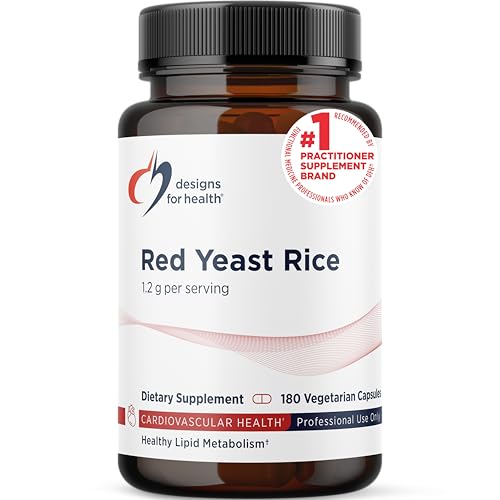
This is a 180-capsule red yeast rice supplement. The labeled serving is two vegetarian capsules, taken once daily in the evening, providing 1.2 g of organic red yeast rice from Monascus purpureus. That makes one bottle a 90-day supply at the stated use. The label identifies the raw fermented-rice material, but it does not state the amount of monacolin K or its acid form. That matters because monacolin K is chemically identical to lovastatin, and human studies showing LDL reduction use preparations with stated monacolin exposure. The manufacturer states that its U.S.-grown organic material is assayed for undetectable citrinin and appropriate naturally occurring monacolins, but no current batch-specific independent certificate was publicly available for this product.
This product is most relevant to an adult already working with a clinician on mildly elevated cholesterol who specifically wants a simple, single-ingredient red yeast rice format. The 90-day bottle and once-daily evening directions may suit someone who can follow a consistent routine. It is better suited to a buyer who understands that the 1.2 g rice amount does not reveal the active monacolin dose, and who is prepared to review medicines, liver history, and follow-up lipid testing with a health professional.
It is not appropriate for pregnancy, breastfeeding, or anyone who may become pregnant, because the product label carries a pregnancy warning. People taking statins or medicines with statin-type interactions, people with active liver disease, substantial alcohol use, prior statin muscle symptoms, or unexplained muscle pain should not self-manage with it. It also does not suit buyers who need a verified monacolin dose, a batch-specific citrinin result, or independently published heavy-metal and microbiology testing before use.
The product uses organic red yeast rice, and the manufacturer states that the rice is U.S.-grown and USDA-certified organic. That is a meaningful sourcing claim, but a product-specific organic certificate and further farm or fermentation traceability were not publicly located. No packaging material specification, recycling guidance, or reduced-packaging evidence was found. The label states that the product is made in an NSF GMP registered facility, and Designs for Health facilities are listed in NSF's dietary-supplement GMP register. The manufacturer also states that it assays red yeast rice for undetectable citrinin. Those are useful quality signals, but they do not replace a public current-lot report. Red yeast rice can expose users to monacolin K, which acts like lovastatin, and citrinin can harm kidneys. The available warning is narrower than the full set of statin-like precautions.
This product is a 240-count vegetarian capsule supplement intended for adults. The manufacturer directs adults to take three capsules daily with food, making the bottle an 80-day supply. Its manufacturer-stated daily formula combines 1,200 mg red yeast rice with 100 mg CoQ10, flush-free niacin, and fat-soluble vitamin C. An independent retailer identifies vegetable cellulose as the capsule ingredient. The central limitation is that the product does not publicly quantify monacolin K or its acid form, the statin-like compounds that determine both cholesterol effect and risk. No current, lot-specific public certificate was located for monacolins, citrinin, heavy metals, or microbiology. That prevents a meaningful match to red yeast rice clinical studies, which report monacolin doses, and leaves the kidney-toxin and potency profile uncheckable for a purchased bottle.
This format is most relevant to an adult who has already discussed red yeast rice with a qualified clinician, wants a long-duration capsule bottle, and specifically prefers a combined red yeast rice and CoQ10 routine instead of separate products. The three-capsule daily serving and 240-capsule count suit someone comfortable with a multi-capsule routine. Because the active monacolin amount is not disclosed, it is better suited to a user seeking general supplement support rather than someone who needs a measurable, evidence-matched cholesterol intervention.
It is not suited to people who are pregnant, nursing, trying to conceive, under 18, or who need a clinician-managed cholesterol treatment. It is also unsuitable for people taking statins or medicines with statin-like interaction risks without prescriber approval. People with prior statin intolerance, unexplained muscle pain, liver disease, kidney disease, substantial alcohol intake, or complex medication regimens need a product with clearer medical oversight and batch-specific active-compound and citrinin data. It also does not fit buyers who require independently published contaminant testing before use.
Red yeast rice is not a routine low-risk botanical. NCCIH explains that monacolin K is structurally identical to lovastatin, and meaningful exposure can bring statin-like muscle, liver, kidney, and drug-interaction risks. NCCIH also identifies citrinin as a kidney-toxic fermentation contaminant. The manufacturer describes this product as third-party tested and says its products are tested for heavy metals and microorganisms, but the available evidence does not include a public, current lot report for this finished capsule or a disclosed citrinin detection limit. The manufacturer describes direct sourcing from single-origin suppliers and uses broad eco-certified language. Those statements are not accompanied by an organic certificate, named rice-growing region, fermentation-material traceability, packaging material specification, or recycling instructions for this product. The vegetarian cellulose capsule is a concrete material detail, but the bottle’s environmental profile remains largely undocumented.
This is a 180-capsule red yeast rice supplement for adults. The stated serving is three vegan capsules daily with a meal, supplying 1,800 mg of red yeast rice, so one bottle is described as a 60-day supply. The formula is listed as red yeast rice with vegetable-cellulose capsules and rice flour. The manufacturer identifies Monascus purpureus fermented rice and says the product is third-party tested in an ISO 17025 certified facility. However, it does not publish a current lot report showing monacolin K, its acid form, citrinin, metals, or microbiology results. That omission is especially important because cholesterol effects and statin-like risks depend on monacolin content, not the stated raw-rice amount. The available safety text does warn against use in pregnancy, breastfeeding, and liver disease, and advises medical consultation for medicines or health conditions.
This format is most relevant to an adult who specifically wants a vegan red yeast rice capsule and is comfortable taking three capsules daily for the manufacturer-stated 60-day supply. It is more suitable for someone using it only after a clinician has reviewed their cholesterol results, current medicines, liver history, and other cardiovascular risk factors. The listed $29.99 bottle may also suit a buyer seeking a simple, single-ingredient-style formula rather than a blend. Its active statin-like exposure remains unknown, so laboratory monitoring matters more than the raw ingredient amount.
It is not appropriate for people who are pregnant, may become pregnant, breastfeeding, under 18, or who have liver disease, consistent with the product safety information. People taking prescription statins or medicines with possible statin interactions should not treat this as a casual alternative, because red yeast rice can contain monacolin K, which is chemically identical to lovastatin. It is also a poor fit for anyone who needs a verified citrinin result, a quantified monacolin dose, or public batch-specific contaminant testing before using a cholesterol-focused supplement.
Red yeast rice is fermented with Monascus purpureus and can contain monacolin K, the same compound as lovastatin. Human research supports cholesterol lowering for preparations with known monacolin doses, but this product does not disclose that dose. The manufacturer says it is third-party tested in an ISO 17025 certified facility, yet no current product-specific laboratory report was located to confirm potency, citrinin, metals, or microbiology. Citrinin is a kidney-toxic fermentation contaminant, and public health guidance notes that red yeast rice with meaningful monacolin exposure can carry statin-like muscle, liver, kidney, and medicine-interaction risks. The manufacturer lists a vegan capsule and claims no gluten, dairy, soy, or preservatives. It identifies a U.S. business address and email contact. No public evidence was found for organic rice, fermentation-material traceability, lower-impact sourcing, recycled content, or bottle recycling instructions. The product is sold in a bottle, but the available materials do not substantiate an environmental packaging claim.
This is a 60-capsule, 30-serving multi-ingredient dietary supplement. The manufacturer directs adults to take two capsules daily. It combines CoQ10, red yeast rice, omega-3, magnesium, niacin, zinc, vitamin D3, and vitamin K2. A retailer listing states 200 mg CoQ10, 3,000 mg red yeast rice, 3,000 mg omega-3, and 500 mg magnesium complex per daily serving. Those amounts are manufacturer-stated, not independently confirmed. The defining limitation is that no current public lot report was found that measures monacolin K or monacolin KA, the statin-like compounds that determine both cholesterol-lowering potential and drug-like risk. No public finished-product citrinin, heavy-metal, microbial, or independent certification result was located. The manufacturer provides a general medication and pregnancy consultation warning, but not the detailed statin-like precautions relevant to red yeast rice.
This format may suit an adult who has already discussed red yeast rice with a clinician and specifically wants a two-capsule daily combination of manufacturer-stated CoQ10, red yeast rice, magnesium, omega-3, niacin, zinc, D3, and K2. It is most relevant where convenience matters more than tailoring each ingredient separately. Because the active monacolin exposure is not disclosed, use requires individualized medical review rather than assuming it will provide a predictable cholesterol-lowering effect.
It is not suited to people who are pregnant, trying to conceive, breastfeeding, under medical evaluation for abnormal cholesterol, or managing liver, kidney, or unexplained muscle problems. People taking a statin or other cholesterol medicine, certain antibiotics, antifungals, HIV medicines, or other interacting prescriptions should not self-combine this formula with their treatment. It also does not suit buyers who need a documented monacolin dose, citrinin non-detect result, independently verified contaminant testing, or verified NSF certification.
Red yeast rice is made by fermenting rice with Monascus yeast. Its monacolin K can be chemically identical to lovastatin, so a preparation with meaningful monacolin content can lower cholesterol but can also carry statin-like muscle, liver, kidney, pregnancy, and medicine-interaction concerns. This product's public materials identify raw red yeast rice, but no current public assay was found for monacolin K, monacolin KA, or citrinin. Citrinin is a fermentation-associated contaminant linked to kidney toxicity. The manufacturer names Allseason Enterprises, LLC as distributor and provides a support contact. However, NSF's January 12, 2026 public notice says Clean Nutraceuticals was not NSF GMP certified and an unauthorized NSF GMP certificate bearing the company name had been distributed. No verifiable lower-impact rice sourcing, organic certification, packaging-material specification, or recycling instruction was found for this product.
This is a 240-capsule vegetarian red yeast rice and CoQ10 supplement. The stated use is two capsules daily, giving 120 servings, or about four months. NatureBell states that each daily serving provides 100 mg CoQ10 and red yeast rice described as 2,400 mg herbal equivalent from a 4:1 Monascus purpureus extract. A retailer description instead specifies 600 mg extract for that 2,400 mg equivalent, so the extract-to-equivalent presentation should be read carefully. The defining limitation is that neither the brand page nor the available product material discloses monacolin K or its active acid-form dose. That means its cholesterol-lowering exposure cannot be connected to studies of standardized red yeast rice. The brand also posts a California Proposition 65 warning for cancer and reproductive harm, while its public quality graphic does not provide a lot-specific laboratory report, citrinin result, laboratory identity, date, or numerical contaminant results.
This format may suit an adult who specifically wants a long-supply vegetarian capsule combining red yeast rice extract with a stated 100 mg daily CoQ10 amount, and who has already reviewed the ingredient with a clinician. The two-capsule daily routine and 120 servings are practical for someone seeking a four-month supply. Its use is best limited to buyers who understand that the stated red yeast rice equivalent is not a disclosed monacolin K dose and therefore does not establish a predictable cholesterol effect.
It is not suited to people who are pregnant, breastfeeding, have liver, kidney, or unexplained muscle problems, or take statins or other medicines with statin-like interaction potential. Red yeast rice with meaningful monacolin K can produce lovastatin-like muscle, liver, kidney, and medication-interaction risks. It is also a poor fit for anyone who needs a clinically comparable cholesterol-lowering dose, documented citrinin control, or a product-specific independent certificate of analysis. The Proposition 65 warning is another reason sensitive households should seek individualized medical guidance.
NatureBell identifies a vegetarian capsule and states that the formula is non-GMO and free of several common allergens. It also says the product undergoes third-party laboratory testing and displays a graphic listing microbiology and heavy-metal panels as passed. However, the available material is not a certificate of analysis. It gives no named laboratory, accreditation, lot number, testing date, detection limit, or numerical result, and it does not show citrinin testing. Health uncertainty is unusually important for this ingredient. Monacolin K is chemically identical to lovastatin, but this product does not quantify monacolin K or its acid form. Federal health information notes that red yeast rice products can vary widely, and products with meaningful monacolin exposure can have statin-like adverse effects and interactions. NatureBell's product page also carries a California Proposition 65 warning for cancer and reproductive harm. No independently checkable sourcing, organic certification, packaging recyclability instructions, or reduced-packaging evidence was found.
This is a 120-capsule red yeast rice and CoQ10 supplement. The verified label lists a two-capsule evening serving with 1,200 mg organic red yeast rice, Monascus purpureus, and 40 mg CoQ10, providing 60 servings. It is marketed for maintaining lipid levels already in the normal range, rather than for treating high cholesterol. The defining limitation is that the label does not quantify monacolin K or its acid form. Those compounds determine both cholesterol effects and statin-like exposure. Designs for Health states that its red yeast rice is organic, US-grown, and tested to have undetectable citrinin, but no current lot-specific independent report was publicly available. Retail listings for this product also carry a California Proposition 65 warning for lead exposure.
This product is most relevant to an adult who has already discussed red yeast rice with a clinician, is seeking a 60-day capsule format, and specifically wants CoQ10 included rather than purchasing it separately. It fits only where the goal is support of lipid values already in the normal range and where a roughly $72.49 bottle fits the budget. Because its active monacolin exposure is not disclosed, use should include medication review and follow-up rather than self-directed cholesterol treatment.
It is not suited to people who are pregnant, trying to conceive, breastfeeding, have liver, kidney, or unexplained muscle problems, or cannot promptly obtain medical advice. People taking a statin, cyclosporine, warfarin, gemfibrozil, high-dose niacin, certain antifungals or antibiotics, HIV medicines, or other interacting drugs should choose a clinician-reviewed approach instead. It is also a poor fit for buyers who need a quantified monacolin dose, publicly available batch testing, or reassurance about the posted lead exposure warning.
Red yeast rice can contain monacolin K, a compound structurally identical to lovastatin. Human evidence supports cholesterol lowering for preparations with meaningful, stated monacolin exposure, but this product provides only the 1,200 mg raw red yeast rice amount. That prevents a reliable connection between this bottle and clinical doses. Red yeast rice may cause statin-like muscle, liver, kidney, and medicine-interaction risks. Citrinin is also a kidney-toxic fermentation contaminant. The brand states that citrinin is undetectable, but a public batch-specific independent result was not found. The manufacturer states that the red yeast rice is USDA-certified organic and grown in the United States, which is useful sourcing information but was not independently verified for the current product lot. No product-specific public packaging specification or recycling guidance was found. Retail listings also show a California Proposition 65 warning for lead exposure, so contamination control deserves particular attention.


