Best Overall
15% off
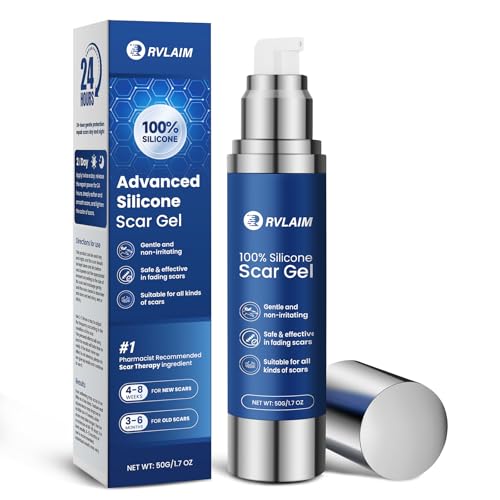
Rvlaim Silicone Scar Gel Cream
Promotes smooth, scar-free healing effectively.
Fast-absorbing and non-greasy formula.
Suitable for various skin types.
 Lauren Wilson
Promotes smooth, scar-free healing effectively.
Fast-absorbing and non-greasy formula.
Suitable for various skin types.

Effective on both old and new scars.
Suitable for various scar types and sizes.
Made with maximum strength pure silicone.

Flexible and easy to cut for custom sizes.
Reusable design for cost-effective scar treatment.
Gentle on skin, ideal for sensitive areas.

All-natural formula, safe for sensitive skin.
Effective on both old and new scars.
Dermatologist-tested for trusted results.

Combines Vitamin C, Hyaluronic Acid, and Vitamin E.
Targets dark spots and uneven skin tone effectively.
Suitable for all skin types, gentle formula.

Extra long roll for extended coverage.
Medical grade silicone for effective scar healing.
Reusable strips for cost-effective use.

Medical-grade silicone for effective scar healing.
Extra-long sheets for larger scar coverage.
Reusable design for extended use and value.

Combines scar treatment with SPF protection.
Fast-drying and water-resistant formula.
Suitable for children over 6 months.

Helps reduce appearance of post-acne scars.
Contains antioxidants and vitamin E.
Smooths and moisturizes skin effectively.

Supports faster healing and recovery time.
Contains natural ingredients like turmeric and arnica.
Suitable for vegans and vegetarians.
Whether a product works depends on more than its headline ingredient. Look for directions that specify clean, dry, intact skin; application frequency or wear time; how long to continue; cleaning and replacement rules for sheets; and what to do if irritation develops. A realistic claim describes gradual improvement in scar appearance, thickness, color, pliability, redness, itching, or discomfort—not “removal.” The supplied products commonly describe treatment periods of several weeks to several months, which is more credible than an instant-result promise.
Evidence should be separated into three levels. First, human research on silicone gels or sheets supports the category, but reviews describe many trials as small, biased, or low-certainty. Second, a controlled study of the exact marketed formula is stronger than evidence for an ingredient or older version of a product. Third, independent verification should identify the tested lot, laboratory, method, results, and pass criteria. Claims such as “medical-grade,” “100% silicone,” “hypoallergenic,” or “dermatologist-tested” are not substitutes for a complete ingredient list, biocompatibility testing, or a lot-specific report from an ISO/IEC 17025-accredited laboratory.
For products making medical-device claims, buyers should be able to trace the exact manufacturer and device through FDA 510(k) records, device listings, or clearly applicable 510(k)-exempt device obligations. This does not mean FDA approval. For an OTC sunscreen, look for a compliant Drug Facts panel, approved sunscreen actives, a stated SPF, broad-spectrum labeling, and water-resistance information only when the required testing and labeling support it. A material’s claimed UPF or a marketplace “waterproof” description is not the same as a sunscreen Drug Facts label.
Headline figures can mislead. “100% silicone” does not show the silicone concentration in a finished formula, clinical performance, or batch consistency. A large patient count may come from an observational study of an older or related formula rather than a controlled trial of the current product. “Reusable” is incomplete without a maximum reuse period, cleaning instructions, replacement threshold, and skin-break guidance. “Fragrance-free” does not prove low allergy risk, and botanical or sunscreen ingredients can still irritate. A high customer rating or sales rank also does not establish scar outcomes, safety, or regulatory accountability.
Across the supplied products, do not use any gel, sheet, cream, or stick on open, bleeding, infected, draining, broken, scabbed, or otherwise unhealed skin. Do not treat serious burns, rapidly enlarging or painful scars, ulcerated scars, scars restricting movement, or worsening redness as routine cosmetic concerns. Stop for rash, swelling, burning, or other allergic symptoms and seek advice when needed. People with adhesive, silicone, sunscreen, fragrance, essential-oil, preservative, or botanical sensitivities should check the full formula and use clinician guidance where appropriate. Infants, children, pregnancy, breastfeeding, and people taking medicines—particularly around surgery or when supplements contain bromelain or arnica—may require individualized medical advice.
These topics distinguish a plausible scar-care format from a product whose claims, safety boundaries, accountability, and environmental information are less clear. Scores are based on the supplied reviews; higher scores indicate stronger performance against that topic, not proof that a product will work for every scar.
This measures whether the format matches human evidence for the scar type claimed. Silicone gels and sheets scored higher when positioned for healed, raised postoperative, hypertrophic, or keloid scars; products aimed broadly at acne pits, stretch marks, or every scar scored lower. A high score reflects appropriate indication and mechanism, not a promise of scar removal.
This measures instructions that keep products off open, infected, bleeding, or unhealed skin and explain age limits, stop-use advice, and referral warnings. Products with official labels and explicit intact-skin restrictions scored higher. Lower-scoring products relied on general “healed scar” language or did not clearly address drainage, infection, broken skin, or when medical assessment is needed.
This measures avoidable exposure to fragrance, essential oils, botanicals, preservatives, adhesives, and sunscreen filters, along with ingredient disclosure and testing. Simple silicone-based products or products with complete lists scored better. Scores fell when formulas were incomplete, inconsistent, scented, rich in botanicals, or lacked product-specific irritation and sensitization evidence.
This measures whether a product can maintain practical contact for its stated schedule. Higher-scoring products gave concrete application frequency, wear time, dimensions, gradual-use instructions, or cleaning and replacement rules. Lower scores reflected vague directions, unclear reuse limits, uncertain film persistence, or a regimen that was difficult to follow during recovery.
This matters because exposed healing scars need properly labeled sun protection, but silicone alone is not sunscreen. Higher scores went to products with a Drug Facts label and stated broad-spectrum SPF. Products with no sunscreen claim were not penalized for making an unsupported claim; unverified UPF, water-resistance, or marketplace sunscreen language was treated cautiously.
This measures whether the legal identity, manufacturer, and regulatory pathway can be checked. Higher scores went to products with an official OTC label, named responsible manufacturer, or traceable device-category information. A listing or label is not FDA approval, and lower scores reflected missing clearance or listing information, unclear accountability, or medical claims without corresponding documentation.
This measures independent human evidence for the exact marketed formula or a materially identical product. The supplied products generally had category-level silicone evidence but no controlled trial of the current formula, so scores clustered around the middle. A high score requires meaningful scar outcomes, safety reporting, and a well-described controlled study—not merely a large observational series or ingredient research.
This measures recent, product-specific third-party testing for ingredients, silicone identity, contamination, microbiology, or SPF. Strong documentation would name the lot, method, laboratory, results, and pass criteria, ideally from an ISO/IEC 17025-accredited laboratory. Most supplied products lacked public lot-specific reports, so marketing claims such as “medical-grade” or “100% silicone” remained unconfirmed.
This measures whether advertising distinguishes gradual appearance improvement from removal and stays within the supported scar types. Higher scores went to products that limited claims or acknowledged the need for separate sunscreen. Scores fell when listings promised removal, universal scar treatment, keloid-bump elimination, acne-pit correction, or stretch-mark treatment without matching evidence.
This measures disposable material, packaging transparency, and justified reusability. Reusable sheets with stated cleaning and reuse periods scored relatively well, as did compact products, though compact packaging alone does not prove a lower footprint. Scores were limited when manufacturers omitted material composition, recycled content, recyclability, packaging weight, refill options, or disposal instructions.
This is a 1.7-ounce, 50 mL topical scar gel. It is intended to be spread on scarred skin and left as a fast-absorbing, non-greasy layer. The product listing states that it is made with 100% medical-grade silicone and is meant for old and new surgical, burn, C-section, hypertrophic, keloid, acne, stretch-mark, cut, and abrasion scars. Silicone gel as a category has human trial and systematic-review support for helping prevent or manage raised hypertrophic and keloid scars after burns, surgery, or trauma, although the evidence has important risk-of-bias limitations. That evidence does not verify this product itself. No public human study, third-party formula report, full ingredient disclosure, or traceable FDA clearance for this product was located. Its listing also combines a 100% silicone claim with references to additional nourishing and scar-reducing ingredients, so the actual formula cannot be independently assessed.
This format is most relevant to an adult with a fully healed, closed, raised scar from surgery, a burn, or trauma who prefers a leave-on gel instead of a sheet. Silicone gel is a reasonable evidence-based mechanism for managing hypertrophic or keloid scar appearance, and a 50 mL tube may be practical for small or irregular areas. Use should be cautious because the product-specific formula, dosing schedule, and safety documentation were not independently verified.
It is not appropriate for open, oozing, infected, bleeding, freshly sutured, or otherwise unhealed skin. People with a current rash, disrupted skin barrier, known silicone sensitivity, or prior reactions to topical scar products need clearer warnings and ingredient disclosure than this listing provides. It is also a poor fit for someone expecting treatment of acne pits, broad stretch marks, or permanent scar removal, because those outcomes are not established by the silicone-gel evidence identified.
The product is marketed as 100% medical-grade silicone, gentle, and non-irritating, but those are manufacturer claims rather than independently substantiated product facts. No public biocompatibility report, dermatologist-test report, complete ingredient list, or accredited third-party laboratory report was located. Public searches did not identify a product-specific clinical trial or traceable FDA clearance. No SPF or broad-spectrum claim was found, and the seller instead advises using separate sunscreen on sun-exposed scars. For safety, the visible instruction only says to apply after cleaning scarred skin. Comparable cleared silicone scar-gel labels specifically exclude open or infected wounds and advise stopping use for irritation, so the missing boundaries here matter. No packaging-material disclosure, recycling instruction, reuse claim, or sustainability certification was located. The disposable 50 mL tube therefore has unknown material composition and end-of-life handling.
This is a 30 g, pump-pack silicone scar gel intended for face and body use. The brand states that it is a 100% medical-grade silicone formula which dries into a thin, breathable layer. A separate marketplace listing identifies silicone ingredients and lists a 24-month shelf life, but no lot-specific independent analysis was found to confirm the exact formula or the 100% claim. Human research supports topical silicone gels most clearly for prevention and management of postoperative, hypertrophic, and keloid scars after skin has healed. The brand's routine is to apply to clean, dry skin two or three times daily, with an 8-week course for newer scars and 3 to 6 months for older scars. Its much wider marketing also includes stretch marks, acne scars, burns, cuts, scrapes, and insect bites, claims that extend beyond the strongest silicone-gel evidence.
This product is most suited to an adult who has a fully closed, dry surgical, C-section, burn, hypertrophic, or keloid scar and wants a small, non-sheet silicone option for a months-long routine. The 30 g pump can be practical for scars on mobile or irregular areas where tape is inconvenient. It suits someone who can apply a thin layer two or three times daily and who understands that improvement, if it occurs, is gradual and generally means a softer, flatter, less noticeable scar rather than erasure.
It is not appropriate for open cuts, scrapes, fresh burns, bleeding skin, drainage, infection, or a surgical incision that has not fully healed. People with an expanding, painful, itchy, infected, or rapidly changing scar should seek clinical assessment rather than rely on topical care. It is also a poor fit for someone seeking proven treatment of pitted acne scars, active acne, or stretch marks, because those uses are not strongly supported by the silicone-gel evidence. Anyone with prior reactions to silicone products should patch test cautiously and stop if irritation occurs.
The useful health feature is the silicone-gel format. Systematic reviews of topical silicone gels report potential improvement in postoperative scar features, especially for prevention or management of raised abnormal scars, although study quality and bias remain limitations. That category evidence does not verify this particular formula. The product's stated silicone-only composition and fragrance-free positioning may reduce exposure to common fragrance allergens, but the company does not provide an accessible product-specific biocompatibility, patch-test, or independent laboratory report. Safety communication is the major concern. Marketing includes cuts and scrapes, but scar gel should be reserved for healed skin. The exact product's packaging also presents FDA, CE, and ISO-style symbols without accessible supporting records, while the brand's site says FDA has not evaluated its statements. No product-specific recall, warning letter, or reported adverse-event record was located in the searched sources. Packaging and disposal details, recycled-content information, and substantiated recyclability claims were not provided.
This is a cut-to-length silicone scar tape roll measuring 1.8 inches by 157 inches, or about 4 meters. It is intended to be trimmed, placed on clean, dry skin, and used over scars from surgery, C-sections, burns, and raised scars. An independent reseller confirms the roll dimensions and states that it can be gently cleaned for reuse. The product itself is represented as breathable, waterproof, hypoallergenic silicone tape, but those material and performance claims are manufacturer-stated rather than supported by a disclosed test report. Silicone sheeting is a plausible format for healed hypertrophic and keloid scars, although systematic reviews find the clinical evidence limited or low certainty. No controlled human study on this exact product, complete ingredient disclosure, lot-specific certificate of analysis, or independent biocompatibility report was located. Its broad marketing for acne scars and stretch marks reaches beyond the scar types most directly addressed by the silicone-sheet evidence.
This format suits an adult with a fully closed, dry, healed linear surgical or C-section scar, or a raised hypertrophic scar, who needs a narrow tape that can be cut to length. The 1.8 inch by 157 inch roll is particularly practical where a pre-cut patch would leave gaps or create excess offcuts. It is most appropriate for someone able to monitor skin tolerance, clean the tape between uses, and keep expectations focused on gradual improvement in the appearance of a healed raised scar rather than scar removal.
It is not appropriate for open, bleeding, infected, draining, or otherwise unhealed wounds, and it should not be treated as a burn dressing for an acute or severe burn. People with a history of adhesive reactions, active rash, eczema, fragile skin, or impaired sensation need more complete safety information and medical guidance before prolonged occlusion. It is also a poor fit for buyers seeking proven treatment for indented acne scars, stretch marks, or guaranteed fading, because product-specific clinical evidence and support for those claims were not located.
The useful health feature is the format, a silicone tape intended for scar coverage. FDA classifies silicone sheeting for scar management as a Class I device category that is generally exempt from premarket notification, but that category status is not proof that this specific product is FDA cleared or registered. No exact product listing, clearance record, product-specific human trial, or independent batch-testing report was located in the reviewed records. No U.S. recall or warning letter for this product was identified in the searches performed. Claims such as medical-grade, hypoallergenic, latex-free, dermatologist-tested, and waterproof were not backed by a disclosed laboratory report or certification register entry. The tape's stated reusability could reduce replacement material compared with single-use patches, but there is no verified maximum reuse period, packaging specification, material composition, or disposal guidance. Reuse also requires cleaning and stopping if irritation or contamination is suspected.
This is a 28 g, roughly 1 oz, topical ointment sold as a scar treatment for surgical scars, acne marks, burns, stretch marks, and older scars. The public drug label identifies 0.5% allantoin as the active ingredient and classifies the product as a skin protectant. Its labeled use is to help prevent, temporarily protect, and relieve chapped or cracked skin, with directions to apply as needed. That label does not list scar reduction, acne scarring, stretch marks, burns, or keloids as uses. It also contains tea tree, peppermint, and sage oils alongside beeswax, coconut oil, jojoba oil, zinc oxide, magnesium oxide, and silver stearate. The listing's dermatologist-tested and hypoallergenic claims could not be independently confirmed with a product-specific test report. No controlled human study of this exact formula was located.
This product is most suited to an adult who specifically wants a small topical ointment with a traceable OTC label for temporary protection and relief of chapped or cracked skin. It may fit someone who can tolerate fragranced botanical oils and values having complete ingredient disclosure and standard first-aid style warnings. For a buyer considering it because of a healed scar, the practical fit is limited to those who understand that the scar-focused marketing has not been matched by product-specific clinical evidence or a scar indication on the official label.
It is not suited to people with a known allergy or prior rash from tea tree, peppermint, fragrance, or botanical essential oils. It should not be used on deep wounds, puncture wounds, animal bites, serious burns, or skin that needs medical assessment, as the label specifically warns against those uses. It is also a poor fit for people seeking a proven regimen for hypertrophic scars, keloids, acne pits, stretch marks, or fresh postoperative scars, because the official labeling does not cover those uses and no controlled study of this formula was found.
The strongest accountability feature is its public OTC drug label. It identifies Aidance Scientific as the manufacturer, lists 0.5% allantoin as the active skin protectant, and provides the full inactive ingredient list. The label includes standard safety boundaries, including external-use-only, eye-avoidance, stop-use advice, and a warning against use on deep wounds, punctures, animal bites, and serious burns. The formula is not a low-sensitizer design. It includes tea tree, peppermint, and sage oils, while medical literature documents allergic contact dermatitis from tea tree oil and identifies peppermint oil as a contact allergen in some patch-tested patients. The listing's hypoallergenic and dermatologist-tested language was not supported by a public product-specific report. The 28 g tube is disposable, and no public packaging-material, recycling, reuse, or lot-specific third-party testing information was located. Zinc oxide is present, but the label has no SPF or broad-spectrum sunscreen claim.
TruSkin Vitamin C Serum is a 2 fl oz leave-on facial serum, not a silicone scar sheet, scar gel, sunscreen, or wound product. The manufacturer directs users to apply 3-5 drops to clean face, neck, or hands once or twice daily, avoid direct eye contact, then follow with moisturizer and sunscreen. It also calls for a 24-48 hour patch test before full-face use. The manufacturer-published ingredient list identifies sodium ascorbyl phosphate, aloe, witch hazel, MSM, sodium hyaluronate, vitamin E, jojoba oil, several botanical extracts, phenoxyethanol, and ethylhexylglycerin. Its stated purpose is brightening, dark-spot appearance, hydration, and fine-line appearance. Independent scar reviews support silicone and certain clinician-led treatments for hypertrophic scars and keloids, not this vitamin C serum as a scar-specific treatment. No product-specific controlled scar study or independent lot test report was located.
This serum suits an adult who wants a 2 fl oz cosmetic facial product for uneven tone, sun-related dark-spot appearance, dullness, or mild fine-line concerns, and who can patch test before regular use. It is most relevant for someone comfortable using a leave-on serum once or twice daily and adding a separate sunscreen afterward. The full disclosed ingredient list is useful for buyers who already know which cosmetic ingredients they tolerate. Its fit is for routine cosmetic skincare, not for active wound care or scar remodeling.
It is not suited to anyone seeking treatment for a fresh wound, a bleeding, infected, or unhealed area, or a surgical incision without clinician guidance. People managing raised hypertrophic scars or keloids need scar-specific options and professional assessment, because this serum is not silicone therapy and has no located product-specific scar trial. Those with known reactions to witch hazel, geranium, aloe, botanicals, preservatives, or leave-on vitamin C products should avoid assuming an unscented label means low allergy risk. Children and people with severe eczema or active facial dermatitis should seek individualized advice first.
The manufacturer gives useful basic safety directions, including external use only, avoiding direct eye contact, and patch testing for 24-48 hours. That is meaningful for a leave-on product with sodium ascorbyl phosphate, witch hazel, phenoxyethanol, and several plant extracts. It is still a cosmetic, not an FDA-approved scar treatment or sunscreen. FDA does not preapprove ordinary cosmetics, and no independent batch-specific laboratory report or exact-product clinical scar study was located. The brand describes the formula as vegan, cruelty-free, and free of parabens, sulfates, phthalates, PEGs, and synthetic fragrance. Its current Leaping Bunny certification claim could not be independently confirmed through a current public registry entry during this review. The 2 fl oz serum is sold in a reusable pump bottle format, but the manufacturer does not provide package-material, recycling, refill, or disposal details. Those omissions limit confidence about packaging waste and end-of-life handling.
This is a 120-by-1.5-inch, trim-to-size silicone scar tape roll for covering healed scars. The manufacturer lists medical-grade silicone gel and non-woven polyurethane film, with no added adhesive or natural-rubber latex. It directs users to apply it to clean, dry skin, wash it gently between uses, and reuse it for up to seven days. Its best-supported role is conservative care for intact raised scars, including hypertrophic scars and keloids. Independent Cochrane reviews find that silicone sheeting may improve some scar outcomes, but the available trials are small and low or very low certainty. Nuvadermis also markets this tape for wrinkles and UPF 70 sun protection, but it does not publish product-specific clinical results, test reports, or the substantiation for those claims.
This product is most suited to an adult with a fully closed, dry, intact surgical or injury scar that is raised, thickened, or at risk of hypertrophic scarring. The 120-inch roll is practical for people who need custom lengths for a long incision or several small areas, rather than pre-cut pieces. It also suits someone willing to follow a repeated routine of cleaning the skin, washing the tape, air-drying it, and replacing it when adhesion or cleanliness declines. A clinician's timing guidance remains important after surgery.
It is not for open, bleeding, infected, draining, or otherwise unhealed wounds. Do not use it as a substitute for wound care, antibiotics, or assessment of worsening redness, pain, heat, swelling, or discharge. People with known reactions to silicone, polyurethane films, tapes, or prolonged occlusion should patch-test cautiously and stop if irritation occurs. It is also a poor fit for someone seeking proven treatment for depressed acne pits, stretch marks, or persistent facial wrinkles. Children and people with severe or recurrent keloids should use it only with clinician guidance.
The manufacturer discloses a short materials list for the tape, medical-grade silicone gel and non-woven polyurethane film, and says it contains no added adhesive or natural-rubber latex. It also gives useful core safety boundaries: external use only, nonsterile, do not apply to open or unhealed skin, and discontinue use for rash or allergic reaction. Those directions are important because occlusive products can aggravate irritated or compromised skin. The brand states that its products are dermatologist-tested, HRIPT patch-tested, and Leaping Bunny certified, but public test reports and certification-register confirmation were not located for this assessment. No exact-product FDA clearance, recall, warning letter, or published product-specific clinical study was located. Reuse for up to seven days can lower material use versus daily-disposable strips, but the silicone-polyurethane tape and its release liner are not accompanied by recycling or disposal guidance.
This is a four-sheet pack of skin-tone silicone scar sheets. Each sheet measures 4 by 1.6 inches, can be trimmed to the scar, and is intended for external use on clean, dry, fully healed skin. The listed materials are polydimethylsiloxane with a polyurethane film and a PE release film. The product contains no sunscreen claim or Drug Facts panel. The manufacturer states that the sheets can be worn up to 24 hours and reused for up to one week with appropriate care. It also says they are for surgical scars, keloids, and other new or old scars. Silicone sheeting has human evidence for prevention and management of hypertrophic and keloid scarring after closure, although systematic reviews rate much of that evidence low or very low certainty. No controlled human study, laboratory report, or batch-specific certificate was located for this exact product.
This product suits an adult with a closed, dry, uncomplicated linear scar, such as a healed C-section, tummy tuck, or other surgical incision, who wants a cut-to-size silicone sheet rather than a liquid gel. The 4 by 1.6 inch sheets are most useful where several short sections can be trimmed from each sheet. It is also a reasonable format for someone prepared to clean the skin and sheet regularly, monitor for irritation, and use it consistently for weeks or months with realistic expectations about gradual appearance changes.
It is not for an open, bleeding, scabbed, infected, draining, or otherwise unhealed wound. It is also not a substitute for clinical assessment of a painful, rapidly enlarging, recurrent, or function-limiting keloid. People with a prior reaction to adhesives or prolonged occlusive dressings should use caution and stop if rash develops. It is a poor fit for buyers who need verified product-specific clinical results, publicly available biocompatibility testing, or a clearly documented regulatory identity. It does not provide sunscreen protection.
The material disclosure is unusually concrete for a consumer scar sheet. The label identifies polydimethylsiloxane, polyurethane film, and PE release film, with no listed fragrance, essential oil, or botanical extract. That reduces exposure to several common avoidable cosmetic sensitizers, but it does not replace product-specific irritation, sensitization, or biocompatibility testing. The warning to avoid open or unhealed skin, plus stop-use advice for rash or allergy, is appropriate for a nonsterile adhesive sheet. Silicone sheeting is a reasonable evidence-based format for healed hypertrophic scars and keloids, but the evidence does not establish that this particular sheet performs as claimed. The company states that sheets are washable and reusable, which can reduce disposable-sheet waste. However, the sheets and their release liners are mixed plastic materials, and no disposal guidance, packaging specification, recycling claim, public laboratory report, or product-specific clinical study was located. No sunscreen protection is claimed.
This is a 10 g leave-on silicone scar gel with broad-spectrum SPF 30. It is intended for scar management on intact skin, including areas that flex or receive sun exposure. The FDA-posted Drug Facts label identifies avobenzone 3%, homosalate 15%, meradimate 5%, octisalate 5%, and octocrylene 10% as sunscreen actives. Its inactive base is cyclopentasiloxane, dimethicone, dimethicone crosspolymer, and silicon dioxide. Directions on the verified label are concrete: apply a thin, even layer to clean, dry skin twice daily, let it dry, and wait 15 minutes before sun exposure. Silicone gel has human evidence for improving hypertrophic scar outcomes, but the product-specific evidence located was a large observational study rather than a controlled independent trial. The FDA-posted label supports SPF 30 and broad-spectrum status, while it does not display a water-resistance claim.
This product suits an adult with a fully closed surgical, traumatic, or burn scar who wants silicone scar care and daytime SPF in one thin gel. It is particularly practical for visible, mobile areas such as the face, hands, or joints, where a sheet may be inconvenient. The 10 g tube is best suited to a small scar or a short trial of a twice-daily routine. Users should be able to apply it consistently for months and tolerate chemical sunscreen filters.
It is not for open, bleeding, infected, damaged, or otherwise unhealed skin, including a fresh incision before the clinician says scar treatment can begin. It is also not appropriate for third-degree burns or direct use near eyes or mucous membranes. People with a history of allergic reactions to sunscreen, especially octocrylene-containing formulas, should seek individualized advice or use a different approach. Caregivers should ask a clinician before use on infants under 6 months, as the label directs.
The health case rests on two separate, verifiable elements. The FDA-posted Drug Facts label documents broad-spectrum SPF 30, the active UV filters, twice-daily directions, and safety warnings. The silicone-gel mechanism is supported by controlled research and systematic reviews for hypertrophic scars, although that evidence does not mean every scar type, especially pitted acne scars, will respond similarly. The formula is fragrance-free by its listed ingredients, but it contains several organic sunscreen filters and carries a rash warning. No public, recent lot-specific third-party testing report was located for this product's silicone content, contaminants, or sunscreen performance. FDA device-listing information identifies BioCorneum Scar Gel as a Class I silicone scar-management device, while the sunscreen portion is listed as an OTC drug. Packaging and disposal details, recycled-content information, and a tube recycling program were not substantiated.
This is a 1 fl oz leave-on facial gel for areas left rough or uneven after acne. The manufacturer directs users to apply it to clean, dry affected skin daily and not rinse. It contains bakuchiol, dimethicone, sea buckthorn oils, rosehip oil, vitamin E, squalane, centella-derived compounds, and tripeptide-1. Proactiv states that the formula improves the appearance of post-acne scars, pores, and uneven texture, and is clinically shown to resurface and smooth skin. The ingredient list is independently confirmable from the manufacturer, but bakuchiol concentration, the product's clinical-study protocol and results, and product-specific third-party testing were not publicly supplied. Human bakuchiol research exists for photoaging, acne, and post-inflammatory hyperpigmentation, not for this exact gel or established indented acne scars.
This product is most suited to an adult with fully healed post-acne marks or mild surface roughness who wants a small, leave-on facial treatment and can use sunscreen consistently. Its one-ounce tube and daily spot-application directions fit a targeted routine rather than broad body-scar care. It may also suit people avoiding added fragrance, provided they have tolerated botanical oils and preservative-containing facial products before. Expectations should stay limited to cosmetic improvement in texture or appearance, not removal of established scars.
It is not suited to open pimples, picked lesions, bleeding skin, infected areas, or wounds that have not fully healed, because the published directions do not provide wound-care instructions. It is also a poor fit for people seeking evidence-based treatment of deep ice-pick, boxcar, rolling, hypertrophic, or keloid scars. People with known reactions to bakuchiol, rosehip, sea buckthorn, centella-derived ingredients, phenoxyethanol, or leave-on facial products should avoid it or seek individualized advice first.
The published formula is fragrance-free by ingredient listing and contains no sunscreen active ingredients or SPF claim. It instead tells users to apply separate SPF 30 or higher sunscreen outdoors. That distinction matters because post-acne discoloration can be worsened by sun exposure, while this gel itself is not a labeled sunscreen. Bakuchiol has some human research in other formulas, including a 0.5% photoaging study and small studies of acne or post-inflammatory hyperpigmentation. A systematic review found that much of the broader bakuchiol clinical literature was unblinded, combination-formula research with substantial risk of bias. Proactiv does not publicly disclose this gel's bakuchiol level, a product-specific clinical report, a lot-specific certificate of analysis, or independent contaminant and stability testing. The tube's material and disposal guidance are also not disclosed, limiting packaging and recycling assessment.
WoundVite is an oral dietary supplement, not a silicone sheet, gel, dressing, or sunscreen. One bottle supplies 60 vegan capsules, or 30 daily servings. The label directs adults to take two capsules once daily with food and says use for six months or longer for optimal results. Its disclosed formula includes vitamins A, C, D, E and B12, zinc, selenium, iron, copper, amino acids, hyaluronic acid, probiotics, arnica, and a 275 mg blend containing bromelain, turmeric, chlorella, calendula and grape seed extract. The manufacturer markets it for surgery recovery, wound care, tissue remodeling and scar healing. Human review evidence supports nutrition support mainly in specific malnourished or chronic-wound settings, often with calorie and protein-containing formulas, rather than proving this capsule reduces established scars. No controlled human study of the marketed WoundVite formula was identified. The manufacturer states that it is made under CGMP conditions and third-party tested, but no public lot-specific laboratory report was found.
This product is most specifically suited to an adult who has been advised by their surgeon, pharmacist, or clinician to consider a multinutrient supplement during recovery, and who can review the complete ingredient list against current medicines and other supplements. It may fit someone who prefers capsules over drink powders and is prepared for the manufacturer-stated six-month regimen. Its role is nutritional support, not direct scar treatment. A clinician should determine whether nutrition deficits, dietary intake, surgery type and medical history make supplementation appropriate.
It is not appropriate as a substitute for wound assessment, infection treatment, surgical follow-up, adequate protein and calorie intake, or a proven local treatment plan for a healed raised scar. People with open, draining, infected, bleeding, or worsening wounds need clinical evaluation rather than self-treatment with a supplement. Avoid self-starting before surgery, during pregnancy or nursing, or when taking prescription medicines, especially where bleeding risk or interactions are possible. Children should not use it because the label limits the product to adults.
The label identifies WoundVite as a dietary supplement and discloses its vitamins, minerals, botanicals, amino acids, probiotics and capsule excipients. The manufacturer states that the product is vegan, uses non-GMO ingredients, is made in a US FDA-registered facility following CGMP, and is third-party tested. Those are manufacturer statements, not public certification or lot testing records. No verified NSF, USP, Informed Choice, or comparable certification listing was located. FDA does not preapprove dietary supplements for safety, effectiveness or labeling. A search did not identify an FDA recall or warning letter specifically naming WoundVite or Zen Nutrients. The formula includes several ingredients that can be relevant to medication and pre-surgery decisions, so its own physician-consultation warning matters. Packaging material, recycled content, refill options and disposal guidance were not disclosed, so the environmental profile cannot be confirmed beyond its capsule format.


