Best Overall

Claritag Advanced Skin Tag Remover Kit
FDA-cleared for safe, effective use.
Works quickly, within 7-14 days.
Provides up to 10 treatment cycles.
 Lauren Wilson
FDA-cleared for safe, effective use.
Works quickly, within 7-14 days.
Provides up to 10 treatment cycles.

Fast results in just one treatment.
Clinically proven and FDA-cleared.
Includes serum for enhanced effectiveness.

FDA cleared for safe skin tag removal.
Includes multiple tips for precise application.
Comes with protective SkinShields for treatment.

Fast-acting formula for quick wart removal.
Suitable for multiple types of skin issues.
Easy application for convenient home use.

Easy application with convenient brush applicator.
Dries clear and stays waterproof.
Gentle yet effective 17% salicylic acid formula.

Safe for both men and women.
Easy to use at home.
Effective on various skin types.

Convenient home use for effective skin tag removal.
Portable design makes it easy to carry.
Suitable for girls and women of all ages.
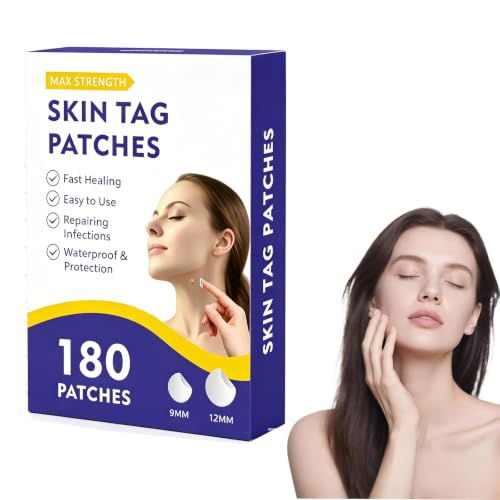
Convenient at-home skin tag removal solution.
Includes 180 patches for extensive use.
Safe and effective for wart removal.

Fast-acting formula provides quick results.
Natural ingredients offer gentle skin care.
Effective on hands, feet, and body.

Simple one-button operation for easy use.
Lightweight design ideal for travel.
Advanced technology ensures effective skin tag removal.
What matters first is whether the product is authorized for the exact job it claims to do. For a device, look for an FDA 510(k) clearance that matches the product, model, intended use, and consumer labeling—not merely a claim that the brand is “FDA registered” or that a similarly named device exists. The FDA device listing and product-classification record should also match the actual unit. For a topical product, check whether its active ingredient, concentration, formulation, directions, and labeled indication fit an applicable OTC pathway or an identifiable federal drug label. “FDA approved,” “clinically proven,” and “professional results” are not interchangeable claims.
Treatment control is another important separator. A credible cryotherapy product should identify its cryogen, applicator temperature or tested cooling behavior, charging or saturation step, contact time, repeat-treatment limit, and protective method. The supplied cleared examples specify contact windows such as 40 seconds or two 20-second applications; a vague instruction to freeze until the area changes is not equivalent. For electrical products, a number of intensity levels is not a measured dose unless output, tip geometry, contact time, and operating instructions are supplied. For liquids, a headline concentration can mislead when it conflicts with the actual label, vehicle, or dose. A wart-treatment concentration is not evidence for skin-tag treatment.
Look for independent evidence tied to the exact product configuration. Useful evidence includes an FDA clearance summary with performance testing, a current FDA listing, a product-specific human study in PubMed or ClinicalTrials.gov, or an ISO/IEC 17025-accredited laboratory report identifying the sold model, lot, method, and measured output. Bench testing, usability testing, or evidence for a different clinical device can support context but cannot prove that an unverified copy works the same way. Customer ratings and sales figures do not establish removal success, healing, scarring, or regulatory status.
A responsible label should help the buyer decide whether the growth should be treated at all. Repeated warnings across the supplied products exclude moles, birthmarks, dark or hairy growths, changing, painful, itchy, bleeding, infected, crusted, or uncertain lesions, and sites such as eyelids, eyes, face, mouth, mucous membranes, genitals, and other difficult-to-see areas. Several products also exclude younger users, pregnancy or breastfeeding, diabetes, poor circulation, immune compromise, cold-sensitive blood conditions, bleeding disorders, blood-thinner use, impaired healing, and people prone to abnormal scarring. Freezing, acids, heat, or electrical arcs can cause burns, frost injury, bleeding, infection, pigment change, permanent scarring, eye injury, or delayed diagnosis. A clinician should assess an uncertain growth rather than relying on a home-removal claim.
These topics reflect the practical questions a buyer should ask before using a product that deliberately freezes, chemically damages, constricts, or electrically injures skin tissue. Higher scores indicate stronger support in the supplied reviews; they do not remove the need to identify the lesion correctly or follow the product’s labeling.
This measures whether the label distinguishes an ordinary skin tag from a mole, wart, changing or bleeding lesion, uncertain growth, or high-risk site, and directs the user to a clinician when needed. High-scoring examples required several skin-tag characteristics and listed detailed exclusions; low-scoring listings promoted broad treatment of moles or bumps without clear referral instructions.
This covers controls intended to limit chemical burns, frost injury, bleeding, infection, scarring, and pigment change, including protective discs or pads, aftercare, and stop-use directions. Higher-scoring products supplied protective hardware and defined limits, while lower-scoring pens, patches, and liquids lacked verified wound-care or tissue-protection instructions. Even the stronger products still carried meaningful injury warnings.
This measures age limits, medical contraindications, medication cautions, pregnancy warnings, and prohibited body sites. The strongest supplied labeling excluded conditions such as diabetes, poor circulation, immune compromise, pregnancy, blood-thinner use, and sensitive sites. Lower scores reflected all-ages or broad face-and-body claims, or missing directions for children, pregnancy, circulation problems, impaired healing, and abnormal scarring.
This asks whether treatment strength is repeatable: cryogen temperature and contact time, chemical concentration and dose, ligation size, or electrical output and settings. High scores were associated with defined protocols such as charging for a specified period and holding for 40 seconds. A display or nine intensity levels alone scored less strongly when output, contact time, and tip specifications were unverified.
This measures whether active ingredients and concentrations, cryogens, propellants, materials, and relevant hazards are identified consistently. Stronger products had federal label information or FDA-filed composition details. Lower-scoring products had conflicting propellant names, undisclosed formulas, or headline concentrations that disagreed with federal records. Flammability, pressure, inhalation, eye-contact, and ingestion hazards are especially relevant.
This measures the exact brand and model’s history of complaints, injuries, recalls, warning letters, and corrective actions. Scores were generally moderate because several products had no located adverse-event or recall record, but some exact or related products had reports involving burns, discoloration, expelled contents, or malfunction. No reported event proves causation or establishes a rate, and no record found is not proof of safety.
This measures whether the exact product, model, intended use, and consumer labeling match an FDA clearance, device listing, drug label, or other applicable U.S. pathway. High scores went to exact cleared cryotherapy products. Low scores reflected borrowed names, mismatched clearance numbers, different manufacturers, wart products marketed for skin tags, and listings that called products FDA-cleared without a matching public record.
This measures independent verification of the sold product’s identity, performance, and safety-relevant specifications. Stronger evidence included FDA review documents, public device records, and testing tied to the configuration. A retailer description, seller certificate, historical similarly named device, or evidence for another model does not verify the product in the buyer’s package. Scores fell sharply when model matching could not be established.
This measures human evidence for the actual mechanism, concentration, temperature, contact time, and configuration being sold, including removal and healing outcomes. Some cleared products had clinical, usability, or bench programs, but public summaries did not always publish skin-tag clearance or healing results. Evidence that salicylic acid treats ordinary warts, or that clinician electrosurgery works, does not validate an untested home configuration.
This measures whether claims such as painless, scar-free, fast, clinically proven, dermatologist recommended, FDA approved, or environmentally safer are qualified and supported. Higher-scoring products kept claims closer to documented labeling. Lower-scoring products paired broad claims with contradictions, such as all-ages marketing against an adult-only clearance, genital-wart claims against a do-not-use label, or a clearance number belonging to unrelated software.
This measures disposable applicators, tips, patches, batteries, electronics, packaging, propellants, and disposal guidance. Products without aerosol or electronic parts tended to score somewhat better, while single-use cryogenic systems carried canister, foam, plastic, and refrigerant impacts. A disclosed HFC-152a propellant was identified with a 100-year global-warming potential of 124. Recycling or household-hazardous-waste instructions were often absent.
This is a reusable, hand-operated cryogenic device that freezes a skin tag between foam-padded heads. It includes a base that charges the tips with cooling gas. The FDA-cleared use is over-the-counter treatment of skin tags in adults age 21 or older. ([accessdata.fda.gov](https://www.accessdata.fda.gov/cdrh_docs/pdf22/K222356.pdf)) The public FDA-filed summary identifies the refrigerant as HFC-152a and specifies two 20-second applications to a tag, with capacity for 10 treatments. It also reports biocompatibility, mechanical, temperature, effective-duration, and human-factors testing. ([accessdata.fda.gov](https://www.accessdata.fda.gov/cdrh_docs/pdf22/K222356.pdf)) The manufacturer limits use to skin-colored, soft, flexible 2-6 mm tags on the neck, chest, underarms, back, or groin, and says a treated tag may fall off within 7-14 days. ([claritag.com](https://www.claritag.com/pages/claritag%C2%AE-guide))
This product suits an adult age 21 or older who has a small, soft, flexible, skin-colored tag that fits the manufacturer’s 2-6 mm description and is located on the neck, chest, underarm, back, or groin. It is most appropriate for someone able to follow a precise two-application freezing routine, avoid flames and heat, and protect the treated site while it heals. The FDA-cleared indication is specifically skin tags, not moles, warts, or uncertain skin growths. ([accessdata.fda.gov](https://www.accessdata.fda.gov/cdrh_docs/pdf22/K222356.pdf))
It is not for anyone under 21, or for people with diabetes, poor circulation, or a blood condition affected by extreme cold. It should not be used on the eyelid or other excluded locations, or on a lesion that is dark, irregular, changing, bleeding, painful, or not clearly a typical skin tag. People who cannot safely manage a flammable pressurized aerosol, need help reaching the site, or need diagnostic certainty should seek clinical assessment instead. ([accessdata.fda.gov](https://www.accessdata.fda.gov/cdrh_docs/pdf22/K222356.pdf))
The strongest health finding is a real match between the sold product and public U.S. device records. The FDA clearance covers OTC skin-tag treatment in adults 21 and older, and the device record lists it as commercially distributed. The FDA-filed summary identifies HFC-152a, two 20-second freeze applications, foam pads in a plastic holder, and warnings against eye exposure, inhalation, heat, flames, puncture, and direct gas spraying. Misuse can cause burns, scarring, or blindness. ([accessdata.fda.gov](https://www.accessdata.fda.gov/cdrh_docs/pdf22/K222356.pdf)) Environmental tradeoffs remain substantial. The whole unit is discarded once empty, and its pressurized HFC-152a refrigerant is flammable. EPA materials assign HFC-152a a 100-year global-warming potential of 124 under the cited AR5 basis. No refill path, material-recovery program, or product-specific disposal guidance beyond disposal after emptying was identified. ([accessdata.fda.gov](https://www.accessdata.fda.gov/cdrh_docs/pdf22/K222356.pdf))
This is a home cryotherapy kit with a pressurized dimethyl ether, propane, and isobutane canister, a skin-tag holder, and 12 single-use foam applicators. It also includes a 7 g Skin Restore Serum, intended only after the treated tag has fallen off. The manufacturer instructs users to charge an applicator for 3 to 5 seconds, wait 15 seconds, then freeze the tag for 40 seconds and no longer. The underlying Freeze'n Clear cryosurgical system is FDA-cleared for over-the-counter treatment of skin tags, and FDA records identify the same clearance in an adverse-event record for the Complete Care version. FDA's public clearance summary also describes clinical and usability work involving more than 300 subjects, but it does not publish detailed removal-rate or healing-outcome results. The manufacturer says most treated tags fall off in about two weeks.
This product is designed for an adult who can confidently identify a small, soft, flexible, skin-colored tag, 2 to 6 mm in size, on the neck, chest or breast area, underarm, back, or groin. It fits someone who can follow a timed, multi-step freezing procedure, use one disposable applicator per tag, and monitor the site while it heals. It is also important that the user has none of the label-listed circulation, immune, pregnancy, or cold-sensitivity contraindications.
It is not for anyone uncertain that a growth is a skin tag, or for moles, birthmarks, dark, hairy, bleeding, painful, infected, changing, or unusually shaped lesions. Do not use it on the face, eyelids, eyes, ears, mouth, genitals, anus, or inside the body. It is also unsuitable for people under 22, people with diabetes, poor circulation, cold-sensitive blood conditions, weakened immunity, pregnancy, or breastfeeding. Anyone with current or prior skin cancer or precancerous lesions should seek clinical assessment instead.
The core freezing device is supported by an FDA clearance for over-the-counter skin-tag treatment. Its instructions contain unusually detailed screening and use limits, including lesion characteristics, restricted body sites, medical contraindications, a maximum 40-second freeze, and instructions to seek help for concerning changes. The canister contains dimethyl ether, propane, and isobutane, all flammable pressurized propellants. Use requires ventilation and distance from flames, heat, and ignition sources. Safety history warrants attention. FDA's adverse-event database includes serious injury reports for this product line, including burns, prolonged bruising, discoloration, and a reported second-degree burn. These reports do not prove the product caused each event, but they reinforce the need for strict lesion screening and timing. Ecologically, the propellants have low ozone-depletion potential and relatively low global-warming potential compared with fluorinated aerosol propellants, but the product still creates disposable foam-tip, plastic, metal-canister, and serum-packaging waste.
This is a five-application, pressurized cryotherapy pen for home treatment of skin tags. The manufacturer directs adults 22 and older to surround an eligible tag with a disposable foam SkinShield, activate the pen for exactly two seconds, then hold its chilled applicator on the tag for 20 seconds. A tag that remains after two weeks can be retreated, up to three total cycles. The product has useful control features, including a single-use tip, a fixed contact-time limit, and a surrounding-skin shield. FDA’s public device listing identifies a Compound W Nitro Freeze Skin Tag Remover as a Class II cryosurgical device. However, the public regulatory and manufacturer records do not cleanly match on the gas formulation or referenced clearance, so the exact authorization and technical identity of this unit cannot be independently confirmed from the available records.
This product is most suited to an adult age 22 or older who has already identified a small, soft, flexible, skin-colored skin tag on an approved body area and can follow timed instructions precisely. The user should be comfortable handling a pressurized device, applying a protective foam ring closely around the tag, and monitoring healing for two weeks. It is better suited to someone treating a limited number of clearly typical tags, because the package provides five applications and each tag may require more than one cycle.
It is not suited to anyone under 22, pregnant or breastfeeding, or anyone with diabetes, poor circulation, or a blood condition affected by extreme cold. Do not use it for an uncertain growth, a mole, a changing, bleeding, painful, dark, or unusually shaped lesion, or a lesion near the eye. It is also unsuitable for households where careful storage away from children, heat, flames, and inhalation exposure cannot be assured. A clinician should assess growths that do not match the label’s skin-tag description.
The strongest health protections are procedural rather than clinical. The maker specifies a two-second charge, 20-second treatment limit, single-use tips, protective SkinShields, no more than three treatment cycles, and clinician follow-up if the tag remains. Its warnings acknowledge important hazards, including frost injury, burns, permanent scarring, eye injury, inhalation effects, and pressure-related explosion risk. The product labeling also limits use to adults 22 and older and excludes important higher-risk health conditions. A significant transparency issue remains. The manufacturer’s ingredient section identifies dimethyl ether and propane, while its warning text and retail labeling describe nitrous oxide. This conflict prevents a reliable assessment of the actual gas hazard and climate profile. If nitrous oxide is present, it is a potent greenhouse gas. The pen, disposable tips, foam shields, and pressurized canister also create single-use waste. Do not puncture or burn the canister, and check local household-hazardous-waste or aerosol guidance for disposal.
This is a rechargeable, pen-format cryosurgical home device sold for common warts, plantar warts, and skin tags. The package record lists a lithium-ion battery, and the maker-linked product page describes nine intensity levels, two larger probes, and 15 precision needles. Those equipment details are manufacturer-stated rather than independently measured. Its defining evidence is regulatory. FDA cleared the Skin Clinic Freeze Point for Warts and Skin Tags for over-the-counter treatment of common and plantar warts and skin tags, with skin-tag treatment limited to adults 22 and older. The manufacturer identifies the GJW product as a proprietary name under that cleared device. The public clearance documents do not provide its exact cooling output, contact times, full materials list, or a public human study of this particular retail configuration.
This product is most specifically suited to an adult who has a confidently identified common or plantar wart, or a clearly typical skin tag, and wants an over-the-counter device whose indicated uses match those conditions. Skin-tag users should be at least 22 years old. It also suits someone willing to read the included instructions closely and use a controlled, localized treatment tool rather than an acid liquid or disposable aerosol system. The stated multi-probe kit may be useful when targets differ in size, although its output details are not publicly available.
It is not for anyone treating a mole, a new, changing, itchy, painful, dark, irregular, or bleeding growth, because those lesions require clinical assessment. Do not use it on or near eyelids, genital skin, or a lesion whose identity is uncertain without a clinician's direction. It is also unsuitable for skin-tag users under 22. People with impaired healing, poor circulation, diabetes, immune suppression, a tendency toward pigment change or scarring, or medicines that increase bleeding should seek clinician-specific advice before destructive skin treatment.
The key health positive is an exact U.S. 510(k) clearance for the underlying Skin Clinic Freeze Point device. FDA's cleared indication covers common warts and plantar warts for over-the-counter consumers, and limits skin-tag treatment to adults 22 and older. The manufacturer product page ties GJW-02 to that cleared device name and lists it as a Class II cryosurgical product. Important gaps remain. Public sources reviewed do not disclose the exact energy or cooling specification, full material composition, detailed contraindications, or product-specific clinical outcomes. Dermatology guidance warns that home removal can cause infection, bleeding, scarring, and delayed cancer diagnosis when the lesion is misidentified. Ecologically, its rechargeable battery may reduce disposable aerosol use, but the device, battery, packaging, and single-use needles still need appropriate local electronic and sharps disposal. No product-specific recycling instructions were located.
This is a three-bottle liquid wart remover sold for topical use on hands and feet. The product record states that each bottle contains 4 mL and that the active ingredient is 17% salicylic acid. A brush applicator is intended to place the liquid directly on a lesion, where it dries into a clear, water-resistant film. The stated concentration is within the FDA OTC wart-remover monograph range for salicylic acid in a collodion-like vehicle. Human research supports topical salicylic acid for common and plantar warts as a treatment category, although no independent test report, exact product label, or product-specific clinical study was located. Most importantly, the catalog record also includes genital warts among its stated benefits. That conflicts with standard 17% salicylic-acid wart-remover labeling, which says not to use it on genital warts, facial warts, mucous membranes, moles, or birthmarks.
This product is most suited to an adult who has a clearly recognizable common wart on the hand or a plantar wart on the sole, and who wants a liquid salicylic-acid format for repeated, localized treatment. The listed 17% concentration matches the upper end of the FDA OTC monograph range for this kind of liquid wart remover. It is better suited to someone able to follow a complete Drug Facts label and stop if surrounding skin becomes irritated, rather than someone seeking a rapid cosmetic removal treatment.
It is not appropriate for skin tags, moles, birthmarks, changing or bleeding growths, lesions of uncertain identity, facial lesions, eyelids, mucous membranes, or genital warts. The catalog record's genital-wart claim is specifically at odds with standard salicylic-acid wart-remover warnings. People with diabetes, poor circulation, reduced sensation, infected or red skin, or difficulty applying a corrosive liquid precisely should seek clinician guidance. It is also not a good fit for households needing confirmed child-use directions, full ingredient disclosure, or independently verified product testing.
Salicylic acid is a keratolytic active ingredient with evidence for common and plantar warts, but it can also injure normal skin when misapplied. Standard labels for comparable 17% liquids exclude genital warts, face and mucous membranes, moles, birthmarks, irritated or infected skin, and people with diabetes or poor circulation. The catalog claim for genital warts is therefore a meaningful safety concern, not merely missing documentation. The sold format is three small liquid bottles with brush applicators, rather than an aerosol or electronic device. No propellant was disclosed, but the exact inactive ingredients, flammability status, safety data sheet, packaging materials, and disposal instructions were not independently confirmed. No exact product-specific recall, warning letter, adverse-event record, independent laboratory test, or clinical study was located in this review. That absence does not establish safety or quality performance.
This is a compact, consumer home-use product marketed for removing skin tags in adult men and women. The current marketplace page describes it as lightweight and simple to operate, but does not provide a usable explanation of the removal mechanism, treatment intensity, ingredients or materials, treatment count, or detailed instructions. The defining issue is limited product-specific evidence. Searches did not identify an exact FDA clearance, product-specific clinical study, independent laboratory report, public device record, or manufacturer technical documentation for this unit. The listing’s “safe and effective” language is therefore a seller claim, not independently demonstrated product performance. FDA has separately warned that self-treatment of moles and uncertain lesions can delay diagnosis and that lesion-removal products can cause injury and scarring.
This product is narrowly suited to an adult who has already had a small, typical skin tag identified by a clinician and is looking for a compact home-use format. That buyer should be comfortable working from limited public documentation, because the current listing provides only broad claims of simple operation and portability. It is most relevant where the buyer values a small, single-applicator product and understands that the product-specific mechanism, treatment limits, and clinical performance have not been independently established.
It is not suited to anyone trying to identify or remove a mole, a changing, irregular, dark, painful, bleeding, crusting, or uncertain lesion. It is also not appropriate for lesions on or near the eyelids, genitals, or other sensitive sites without clinical advice. People prone to abnormal scarring or pigment change, those with impaired circulation, diabetes, reduced sensation, immune suppression, active skin infection, or difficulty following precise instructions need clinician guidance because the product lacks publicly verifiable contraindications and aftercare information.
No exact-product FDA clearance, public device record, independent laboratory report, or product-specific clinical study was located during verification. The marketplace page makes broad safety and effectiveness claims but does not publicly identify the product’s mechanism, formula, materials, treatment intensity, or instructions. That missing information prevents meaningful assessment of burns, bleeding, infection, scarring, pigment change, or whether the product has adequate safeguards against treating the wrong lesion. FDA has warned that products marketed for removal of moles and other lesions can cause injury and scarring, and that moles should be evaluated by a health professional. No exact-product recall, warning letter, or public adverse-event record was found. The listing also provides no materials disclosure, reusable or refillable design information, packaging details, battery information, propellant identity, or disposal guidance, so its waste and climate profile cannot be verified.
This is a rechargeable, hand-held plasma pen sold for home removal of skin tags, moles, warts, freckles, tattoos, and other visible lesions. The seller says it creates a precision plasma arc that causes superficial skin trauma, and lists 12 intensity settings, an LED battery display, two coarse needles, 20 fine needles, and USB charging. Those are manufacturer-stated specifications, not independently verified performance data. The listing makes unusually broad claims, including full-body use, scar-free results, zero side effects, painless operation, and removal of moles. It does not provide a measured electrical output, contact-time limit, needle material, sterilization status, or product-specific clinical evidence. A search of FDA clearance and listing resources did not identify U.S. authorization for this exact plasma pen and its advertised mole-removal use.
This product is most narrowly suited to an informed adult who is seeking a rechargeable personal-grooming device, has already had a small, clearly benign skin tag assessed by a qualified clinician, and understands that the seller's performance and scar-free claims are unverified. That user would need to be able to follow hygiene and aftercare instructions, use a low setting cautiously, and accept that the listing does not provide validated energy specifications or independent evidence for the exact pen.
It is not appropriate for anyone considering treatment of a mole, a changing, itchy, painful, bleeding, dark, irregular, or uncertain growth, or any lesion near the eye. It is also unsuitable for children, people with a pacemaker or other implanted electronic device, people with broken, inflamed, or infected skin, and anyone unable to manage wound care. People prone to pigment changes or scarring should seek professional assessment because the listing's scar-free assurance is not supported by independent evidence.
The principal health issue is the mismatch between the product's broad at-home lesion-removal marketing and the safeguards expected for a device that deliberately injures skin. The seller describes a plasma arc that produces superficial micro-trauma, but also claims zero side effects, no scars, painless operation, and suitability for moles and full-body use. FDA and the American Academy of Dermatology warn that home products marketed to remove moles or skin lesions can cause injury, infection, scarring, bleeding, and delayed cancer diagnosis. No exact-product FDA clearance, independent laboratory report, clinical study, ingredient or material disclosure, or recognized certification was found. The rechargeable design avoids disposable batteries, but the product still contains an electronic battery system and uses replaceable needles. No verified recycling instructions, battery chemistry, sharps-disposal details, or broader sustainability program were found. Used needles should be treated as sharps and disposed of under applicable local requirements.
This product is a box of 180 blue adhesive skin-treatment patches. The Amazon listing says the patches contain high-strength, maximum-strength salicylic acid and are intended for common, plantar, and flat warts, corns, calluses, and skin tags. It also claims waterproof, stain-proof wear and long-lasting adhesion for home use. The seller does not provide a numeric salicylic-acid concentration, full inactive-ingredient list, treatment duration, age limit, or visible Drug Facts panel. That is especially important because standard 40% salicylic-acid wart-patch labels carry specific exclusions for diabetes, poor circulation, irritated or infected skin, the face, genitals, mucous membranes, moles, and birthmarks. The product's skin-tag and all-skin-types claims are not supported by exact-product clearance, clinical evidence, or independent testing located in this review.
This format is most relevant only to an adult with a clearly recognized common or plantar wart on intact skin, who understands that the listing identifies salicylic acid but does not disclose its concentration or full directions. The large 180-patch quantity may be practical for repeated application to a limited, clinician-confirmed wart area. Use should follow a complete package label if supplied, rather than relying on the broad claims displayed online. The product is not supported here for skin-tag removal.
It is not appropriate for anyone trying to treat a skin tag, mole, birthmark, changing or bleeding growth, or a lesion that has not been identified by a clinician. Avoid use on the face, eyelids, genitals, mucous membranes, irritated, red, infected, or broken skin. People with diabetes, poor circulation, reduced sensation, children, and anyone who cannot confirm the product's concentration and directions should use a clinician or pharmacist as the safety reference, because the listing omits the safeguards normally carried by salicylic-acid wart patches.
The central health concern is the mismatch between the product's broad claims and its incomplete safety disclosure. The listing calls the formula maximum-strength salicylic acid, gentle for sensitive areas, and suitable for all skin types, yet does not show a concentration, Drug Facts panel, contraindications, or stop-use directions. Human evidence supports salicylic acid for uncomplicated cutaneous warts as a treatment category, but does not verify this product's exact dose, patch design, or use on skin tags. FDA materials state that over-the-counter drugs cannot legally be sold for mole or skin-tag removal, and dermatology guidance warns that home removal can cause injury, infection, scarring, and delayed diagnosis. No exact-product third-party testing, clearance, certification, recall, or safety record was located. The 180 individually used patches also indicate recurring disposable material use. No recycling, disposal, packaging-material, or other environmental information was provided.
This is a 30 mL brush-on liquid marketed for home removal of skin tags, warts, and corns. The current product images identify salicylic acid and list witch hazel, botanical extracts, aloe vera, and glycerin, but do not state the salicylic acid concentration or a complete formula. The package calls it a fast-acting film formula, while the listing also uses the term freeze off without giving a cryogenic agent, temperature, or freezing specification. Its package images provide some meaningful self-screening limits. They describe a tag as soft, flexible, skin-colored, and 2 to 6 mm, and exclude moles, birthmarks, eyes, eyelids, and skin above the neck. The listing nevertheless markets skin-tag removal in the United States. FDA states that there are no legally marketed over-the-counter drugs for skin-tag removal, making that use claim the defining concern for this product.
This product is narrowly suited only to an informed adult who has a small, soft, flexible, skin-colored growth within the package's stated 2 to 6 mm range, located below the neck, and who understands that the listing's skin-tag claim is not supported by a lawful OTC drug pathway in the United States. The brush format may suit someone seeking a localized liquid application. Its 30 mL bottle is a relatively large format for this type of spot treatment, although the active concentration and total expected treatment course are not disclosed.
It is not for anyone with an uncertain, changing, bleeding, painful, dark, irregular, infected, or irritated lesion, because self-identification can delay appropriate diagnosis. It is also not for moles, birthmarks, eyelids, eyes, facial or other above-neck skin. The package itself excludes people with diabetes, blood conditions, pregnancy, or breastfeeding. Children, people with poor healing or circulation, and anyone seeking a clearly authorized consumer skin-tag treatment should choose a clinician-led option instead.
The most useful health information comes from the current package imagery, not independent verification. It identifies salicylic acid and shows exclusions for moles, birthmarks, eyes, eyelids, above-neck skin, diabetes, blood conditions, pregnancy, and breastfeeding. It also gives narrow appearance and size criteria for a claimed skin tag. Those are valuable safeguards, but they do not replace clinical assessment of an uncertain lesion. Important gaps remain. The label image does not provide the salicylic acid percentage, full ingredient quantities, a product-specific safety data sheet, or independent testing tied to this bottle. FDA has warned that OTC skin-tag-removal drugs are not legally marketed in the United States and that self-treatment of lesions can cause injury, scarring, and delayed diagnosis. No refill, recycling, packaging-material, or disposal guidance was located. The 30 mL glass bottle, plastic cap, brush, and outer carton create mixed-material waste, with no stated recovery pathway.
This is a compact, aerosol-form home skin-removal kit sold for skin tags. The catalog describes a 1-fluid-ounce product with one-button operation, a 2.47-ounce package weight, and a lightweight travel-oriented format. Its category metadata also calls it a wart-removal product, while the title focuses on skin tags, so the intended lesion type is not consistently presented. FDA's public device database records a cryosurgical product named L.C.S.3000 that was cleared in 1993 for a different company, Cryodyne Technologies. That record supports that the name has historical cryosurgical-device history, but it does not independently establish that this current Nodhaul unit is the same cleared configuration. I could not verify the sold unit's propellant blend, freezing temperature, contact time, included skin guards, instructions, or age and site restrictions.
This product is most narrowly suited to an adult who has already had a clinician identify a small, typical skin tag and who can inspect the physical package for complete instructions, contraindications, treatment timing, and ingredient or propellant disclosure before use. The stated compact, one-button format may fit a person seeking a portable home-use tool. That use case depends on confirming that the actual package clearly limits treatment to appropriate, benign skin tags and gives adequate protective directions.
It is not suited to children, pregnant people, people with impaired circulation or reduced sensation, people prone to keloids or pigment changes, or anyone with diabetes unless the product labeling and a clinician specifically address those risks. It is also unsuitable for moles, bleeding, painful, changing, irregular, or uncertain lesions, and for lesions on eyelids, genitals, mucous membranes, or other sensitive areas. People seeking treatment for warts should not assume this skin-tag-focused product is appropriate because its stated indications are inconsistent.
The primary health concern is traceability. A historical FDA record exists for a cryosurgical product with this name, but that record names Cryodyne Technologies, not Nodhaul. I could not verify that the current item is the same device, nor could I locate product-specific independent testing, instructions, or human outcomes. FDA has warned that unapproved consumer mole and skin-lesion removers can cause injury and scarring, and lesion misidentification can delay diagnosis. The catalog identifies this as an aerosol, but no reliable disclosure of its cryogen, propellant, canister materials, disposable parts, or disposal instructions was located. That prevents a meaningful estimate of climate impact, flammability precautions, or recycling options. I did not locate an FDA recall, warning letter, or adverse-event record specifically naming Nodhaul or this current product, which is not equivalent to confirmation of a clean safety record.


