Best Overall

FlexSeries Electric Head Shaver by Freebird
Versatile attachments for complete grooming solutions.
Waterproof design enables convenient wet/dry use.
Cordless feature offers easy portability and flexibility.
 Lauren Wilson
Versatile attachments for complete grooming solutions.
Waterproof design enables convenient wet/dry use.
Cordless feature offers easy portability and flexibility.
Magnetic detachable blades for easy cleaning.
Dual-speed power adjusts to shaving needs.
Long battery life enhances convenience and use.

Flexible blades provide a close, comfortable shave.
Long battery life ensures extended cordless use.
Waterproof design allows easy wet or dry shaving.

Turbo speed feature ensures quick shaving.
Waterproof design allows easy cleaning.
Versatile 5-in-1 grooming attachments included.

360° flexing head for seamless contouring.
ComfortCut blades ensure a gentle shave.
Suitable for both men and women.

Ergonomic design for comfortable grip and use.
Versatile for both head and face shaving.
Long-lasting battery with quick recharge feature.

Efficient and comfortable multi-directional shaving.
Long-lasting battery with quick recharge feature.
Ergonomic design for easy grip and control.

Flexible heads adapt to every contour.
IPX7 waterproof for versatile wet/dry use.
LED display for easy battery monitoring.

Magnetic 6D rotary blades for smoother shaving.
Waterproof design allows easy cleaning.
Versatile grooming kit for head and beard.

High-speed 10000 RPM motor ensures quick shaves.
IPX7 waterproof for convenient wet or dry use.
LED display provides clear battery and usage info.
What determines whether one works is not the blade count alone. Look for clear instructions about the growth length the product can handle, shaving direction, pressure, damaged foils, irritated skin, cleaning, drying, and replacement heads. A useful design has a removable or openable cutting assembly, a practical way to remove hair and skin oils, and a published replacement-head path. A warranty helps, but it does not make a battery or cutting head repairable.
Wet-use labels need careful reading. IPX5 means protection against water jets; IPX6 means protection against more powerful water jets; IPX7 concerns temporary immersion under defined test conditions. Those numbers only substantiate the claimed ingress level when tied to the exact product and an original accredited laboratory report or a recognized certification listing. Several supplied products use IPX5, IPX6, or IPX7 language without that evidence, and some have conflicting water claims. “Waterproof” or “shower safe” should not be treated as permission to submerge every model, use it while charging, or expose its charging port to water.
Electrical safety is a separate question from water resistance. The strongest evidence is a public listing for the complete shaver and supplied charging system from an OSHA-recognized Nationally Recognized Testing Laboratory, such as UL Product iQ, Intertek’s ETL directory, or CSA’s listing database, within the scope of UL 60335-2-8 and applicable battery or charger standards. A CE mark, RoHS statement, seller certificate, FCC document, or generic test report does not establish the same thing. Among the supplied products, public exact-product listings were generally not located; one manual states that the product nameplate carries an Underwriters Laboratories listing symbol, but the complete public listing was not supplied.
Runtime and charge-time figures are commonly maximum or manufacturer-stated values. They can conflict across a product page, manual, and catalog record, and actual use may vary with hair length, speed, pressure, and battery condition. Blade count, “close shave,” “skin-friendly,” “hypoallergenic,” “anti-pinch,” and “reduced irritation” are not independent performance or medical evidence. A credible performance result would identify the exact model, test method, sample size, conditions, and results. A credible skin-material claim would identify metals, coatings, plastics, and lubricants, rather than naming only stainless steel or using “hypoallergenic.”
Across the supplied products, buyers should assume that full contact-material disclosure, independent irritation testing, and user-replaceable batteries are uncommon. Several products lack dependable replacement-head availability or detailed drying instructions. Do not shave over open cuts, infected or severely irritated skin, or active folliculitis without individualized clinical advice; recurrent folliculitis, razor bumps, eczema, or suspected contact allergy also warrant caution. Stop using a product with a damaged foil, abnormal noise, overheating, or charging damage. Rechargeable products and lithium-ion batteries should not go in household trash or curbside recycling; use an appropriate electronics or battery collection route.
These topics separate practical maintenance features from evidence that a product is safe, durable, and honestly described. Scores are comparative signals from the supplied reviews, not clinical findings or certification by themselves. The strongest products still commonly lack full material disclosure, independent performance testing, or a public electrical-safety listing.
This measures evidence that the shaver limits nicks, pulling, heat, razor burn, and ingrown-hair risk during ordinary use. For a scalp shaver, clear pressure, direction, growth-length, damaged-foil, and irritated-skin instructions matter. Supplied scores ranged from 68 to 78: higher-scoring products had more practical safeguards or hands-on comfort evidence, while lower scores reflected unsupported comfort claims or limited instructions.
This measures whether metals, coatings, plastics, lubricants, and allergy-related claims are identified for the parts touching skin. Stainless steel alone is not a complete material declaration, and “hypoallergenic” is not proof of allergy safety. Scores ranged from 60 to 74. The higher scores reflected somewhat clearer material statements; even those products generally lacked alloy details and exact-product irritation or biocompatibility testing.
This measures whether hair and skin oils can be removed safely, with usable cleaning, drying, and replacement guidance. Rotary heads can retain debris, so removable cutters, rinse instructions, brushing, air drying, and regular replacement matter for folliculitis concerns. Scores ranged from 68 to 83. The higher scores went to products with detailed after-use routines, while lower scores had rinse claims without drying or cleaning intervals.
This measures protection against overheating, fire, burns, battery failure, and unsafe charging for the complete shaver and supplied charger. A specified voltage limit and dry charging instructions help, but the strongest evidence is exact-model third-party testing to applicable appliance and battery standards. Scores ranged from 54 to 84. The low outlier had contradictory battery and charging information; the highest score had clearer charging requirements and stated listing evidence.
This measures whether shower, rinsing, and wet/dry claims match a defined ingress-protection level and safe-use instructions for the exact product. IPX5, IPX6, and IPX7 describe different water exposures, not a universal “waterproof” guarantee. Scores ranged from 52 to 80. Higher scores had clearer model-specific instructions or stated limits; lower scores had conflicting ratings or no independent ingress report.
This measures unresolved recalls, warnings, or recurring serious incidents involving the exact shaver, battery, charger, or responsible company. A clean search is not proof that a product is safe, but unresolved action is a meaningful warning. Scores ranged from 61 to 77. Lower scores reflected a Proposition 65 warning or less reassuring documentation; no supplied product had a reported exact-product recall in the reviewed searches.
This measures whether runtime, charge time, blade count, water rating, close-shave, comfort, and accessory claims match exact-model documentation and remain internally consistent. Scores ranged from 52 to 80. Higher-scoring products had manuals that clarified use limits and specifications; lower scores reflected conflicting runtimes, battery descriptions, water ratings, or unsupported “close” and “gentle” language.
This measures whether an OSHA-recognized testing laboratory publicly lists the complete exact-model appliance for applicable U.S. safety requirements. A seller certificate, CE mark, RoHS statement, FCC filing, or generic report is not equivalent. Scores ranged from 68 to 84, but most reviews found no public listing. The highest score was supported by a manual stating an Underwriters Laboratories listing symbol.
This measures exact-model testing of closeness, speed, runtime, comfort, and wet/dry use using a disclosed method, sample, conditions, and results. Star ratings and influencer demonstrations do not substitute for that evidence. Scores ranged from 68 to 78. The strongest scores came from products with independent hands-on reports of scalp-shaving speed or comfort; most had only manufacturer claims and no controlled human-use study.
This measures whether cutters, guards, cleaning parts, and batteries can be replaced and remain available at reasonable cost. For a shaver, a replacement head can prevent disposal of the handle when foils dull or cutters wear. Scores ranged from 62 to 87. Higher-scoring products had official replacement heads and clear intervals; lower scores involved sold-out parts, unclear compatibility, or no battery-service path.
This measures battery-disposal guidance, take-back or recycling support, packaging claims, and whether environmental language is specific rather than vague. Rechargeable operation does not eliminate end-of-life concerns, especially when batteries are sealed. Scores ranged from 68 to 78. Higher-scoring products gave clearer local recycling or battery-disposal directions; most still lacked a brand take-back program and should not enter household trash or curbside recycling.
This is a cordless, five-head rotary grooming kit for shaving a closely trimmed scalp and for using interchangeable clipper, nose and ear trimmer, brush, and massage attachments. The manufacturer says the standard FlexSeries has a 600 mAh rechargeable battery and about 90 minutes of shaving runtime. It also sells replacement shaving heads and separate replacement clipper and guard sets. Its strongest practical support is maintenance guidance. Freebird instructs users to rinse the running shaving head, open the head, and let parts dry completely before reassembly. The company offers a three-year limited warranty for the device. However, the water rating is not consistently documented. Freebird materials variously describe the standard product as IPX5 and IPX6, while the catalog record limits wet use to damp conditions and cautions against direct water flow. No public exact-product laboratory report or public electrical-safety listing was located.
This suits an adult who keeps scalp hair at stubble length and wants a cordless rotary tool with a clipper attachment for longer growth, rather than relying on the rotary head alone. It is also suited to someone willing to rinse and fully dry the head after use, replace the shaving head on the stated schedule, and use the published warranty process if a defect occurs. The included guards make it more practical for maintaining short facial or body hair between close scalp shaves.
It is not well suited to someone who needs independently documented electrical certification, independently tested waterproofing, or a clearly specified contact-material system because public evidence for those points was not located. People with known metal allergies, recurrent folliculitis, active razor bumps, broken skin, or a current skin infection should seek individualized clinical advice and avoid treating broad comfort claims as medical evidence. It is also a poor fit for users expecting to submerge the product or expose it to strong shower spray.
The replaceable stainless-steel shaving head, separate clipper and guard replacement parts, and three-year limited warranty can help keep the device in service after common wear items deteriorate. Freebird also gives useful rinse-and-air-dry instructions. This matters because shaving equipment can retain debris, and dermatology guidance advises regular disinfection of electric shavers when folliculitis is a concern. Material transparency remains limited. The brand identifies the shaving blade as stainless steel but does not publish the alloy, coatings, plastics, or any exact-product irritation or biocompatibility testing. No product-specific battery recycling or take-back program was found. The rechargeable lithium-polymer battery should not be placed in household trash or curbside recycling. Use an electronics or battery recycler that accepts battery-containing devices. Searches did not identify a relevant CPSC recall or public safety warning for this product.
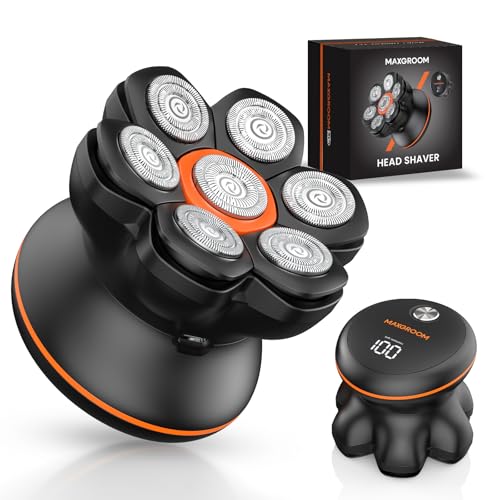
This is a compact cordless rotary head shaver with seven floating cutting modules, intended for scalp, face, and body grooming. The manufacturer lists a 5 W USB-C rechargeable design, wet and dry use, and an IPX6 water-resistance claim. Its official product page also describes dual-speed operation and a lift-open cutting head that can be rinsed under running water. The available documentation is not fully consistent. The official product page gives both 90-minute and 100-minute runtime statements, while a separately published JK-1688 manual lists 70 minutes. The product page claims a 0.10 mm close shave and reduced tugging, but no independent exact-product shaving or irritation test was located. Public searches also did not identify an exact-product UL, ETL, CSA, or other publicly listed U.S. electrical-safety certification.
This product suits an adult who keeps scalp hair very short and wants a small cordless rotary shaver for frequent home grooming, especially someone willing to rinse the cutting area after use and purchase replacement heads through the manufacturer. The manufacturer-stated IPX6 and wet/dry design may suit users who prefer shaving with water or foam. It is better suited to someone comfortable treating advertised runtime and close-shave figures as estimates, rather than as independently verified performance results.
It is not a strong fit for people with active folliculitis, open cuts, severe razor bumps, scalp eczema, or a history of metal or coating sensitivity unless a clinician has advised them on shaving. The disclosed contact-material information is incomplete, and no exact-product irritation testing was located. It also does not suit households that require publicly verifiable electrical-safety certification, or users who need a clearly documented shower-use limit, battery-service path, or manufacturer recycling program.
Shaving can irritate follicles and contribute to razor bumps or folliculitis, especially when the skin is shaved too closely or the tool is not kept clean and dry. The available instructions support rinsing the cutting area, but they do not give a full drying or replacement schedule. Use the shaver only with an undamaged head, clean it regularly, and avoid charging or handling the cable with wet hands. The product uses a lithium battery, yet no product-specific take-back or battery-disposal guidance was located. U.S. EPA guidance says lithium-ion batteries and products containing them should not go in household trash or curbside recycling. Replacement heads are available through the manufacturer, which can reduce premature disposal of the whole shaver. No relevant CPSC recall or public warning was identified in the checked sources, but no public U.S. electrical-safety listing was located either.
This is a cordless seven-head rotary shaver for scalp, face, and other short-hair grooming. It uses a rechargeable lithium battery, Type-C cable charging, a two-speed motor, LED status display, cleaning brush, and a protective cover. The head is intended to follow a bald scalp's curves, and the instructions say to move it against hair growth in controlled strokes. The manufacturer documentation gives practical rinse-cleaning steps and warns users to inspect the foil before use, keep charging equipment dry, and avoid using damaged parts. Those are useful safety instructions. Key specifications are not consistently documented, however. The brand's product page contains both IPX6 and IPX7 water claims, and its battery-capacity figures conflict with the manual. No public exact-product electrical safety listing or independent human shave-performance report was located.
This product fits an adult with a closely cropped or bald scalp who wants a compact cordless rotary shaver for regular home grooming and is prepared to clean it after each session. The stated two-speed control may be useful for someone who prefers to start with slower, lighter passes around the neck or more sensitive areas. It also suits a user who already has a suitable dry 5V USB power source and will follow the manual's limits on charging, rinsing, and checking the foil for damage.
It is not well suited to people with active folliculitis, persistent razor bumps, open cuts, scalp infection, severe skin sensitivity, or known metal and coating allergies without advice from a dermatologist. Shaving itself can aggravate irritated follicles, and this product has no independent irritation or hypoallergenic testing. It is also a poor fit for households that require verified third-party electrical certification, fully documented shower-use limits, readily available replacement cutters, or a user-replaceable battery for long-term repair.
The manual includes several practical safeguards. It says to check for a damaged or deformed foil before use, keep the charging cable and charger dry, avoid wet hands while connecting power, and rinse the shaver only after separating it from the cable. It also directs users to clean the blade and hair compartment. This matters because shaving can contribute to folliculitis and razor bumps, while poorly cleaned grooming tools can add hygiene concerns. Material transparency remains limited. The available product documentation identifies ABS, stainless steel, and titanium-coated blade language, but not a complete contact-material specification or allergy testing. There was no identified recall or public incident pattern for this product, but no public third-party electrical safety listing was found either. The manual says its lithium battery should be recycled locally, yet it does not provide a take-back program or battery-removal method. Do not place a lithium-battery device in household trash or curbside recycling.
This product is a rechargeable rotary head shaver and grooming kit intended mainly for scalp shaving. The manufacturer describes a detachable seven-blade floating shaving head, Type-C charging, an LED battery display, and five included grooming attachments. Its stated charge time is 1.5 hours and stated operating time is 90 minutes. Those runtime, charging, wet-use, and comfort figures are manufacturer statements, not independently tested results located for this product. The defining practical feature is the removable shaving-head assembly, which the manufacturer says can be rinsed after shaving. The brand also states that replacement shaving heads should be changed every three to six months. A separate seven-blade replacement head is listed by the brand, although it was shown sold out when checked. No public independent performance report, exact-product electrical-safety listing, or accredited waterproof test report was located.
This product suits a person who regularly shaves a bald scalp or keeps very short facial hair, wants a compact cordless rotary format, and is willing to follow a frequent cleaning and replacement routine. It is particularly relevant for someone who values being able to remove the entire shaving head and rinse away hair after each session. It also fits users who want trimmer, nose-hair, massage-brush, and cleaning-brush attachments in the same kit, while treating the stated 90-minute runtime as an unverified manufacturer estimate.
This product is not well suited to people with known metal, coating, plastic, or lubricant sensitivities, because the full skin-contact material stack is not disclosed. It is also a poor fit for anyone who requires a publicly verifiable electrical-safety certification, independently documented shower safety, or independent evidence of low-irritation shave performance. People with active cuts, inflamed skin, recurring folliculitis, or severe razor bumps should be cautious with any close-shaving tool and seek individualized clinical advice if symptoms persist.
The strongest hygiene feature is the manufacturer-described detachable shaving head. Removing and rinsing it after use can help clear hair and skin oils, but the available instructions do not provide a detailed sanitizing and drying protocol. That matters because shaving can contribute to folliculitis, and dermatology guidance advises regular cleaning of electric shavers to reduce bacterial colonization. The manufacturer also recommends replacing the shaving head every three to six months. The brand lists stainless steel for its separate replacement head, but does not identify the grade or fully disclose other skin-contact materials. No public independent electrical-safety listing, waterproof test report, recall, or product-specific safety warning was located in the sources checked. The rechargeable battery is not user-serviceable according to available product information, and the brand provides no product-specific recycling or take-back route. EPA guidance says rechargeable batteries should not go into household trash or curbside recycling.
This is a cordless rotary scalp shaver for hair shorter than 2 mm. It has a four-head shaving unit, a hair chamber, a rinsing stand, cleaning brush, mirror, travel case, USB cable, and four spare shaving heads. Philips states a one-hour charge provides up to 90 minutes of use, with a five-minute quick charge intended for one shave. The product is documented for dry use, use with foam or gel, and cordless shower use. Its U.S. manual directs users to shave with hair growth, use gentle pressure, avoid damaged or severely irritated skin, and inspect guards and cutters before use. Philips also identifies the compatible HS740 replacement heads, with a stated six-month replacement interval. The manual carries a statement that the product nameplate bears the Underwriters Laboratories listing symbol. No independent, exact-product human performance test was located.
This product suits an adult who routinely keeps scalp hair very short, generally below 2 mm, and wants a cordless shaver for dry use or shower shaving. It is particularly practical for someone willing to follow a cleaning routine after every shave, including rinsing the head and hair chamber, air drying, and doing a more thorough monthly clean. It also fits a user who values supplied spare heads and can plan for Philips HS740 head replacements about every six months.
It is not intended for shaving long scalp hair, facial hair, body hair, or areas with skin growths, skin disease, severe irritation, open damage, or damaged shaving guards. People with a severe nickel allergy or an active scalp condition should seek clinician guidance before use because the product does not publish a full contact-material or allergy-test dossier. It is also unsuitable for households expecting user-replaceable batteries, or for users who cannot reliably provide a certified compatible USB power source and keep charging components dry.
The strongest health safeguards are practical rather than clinical. Philips supplies specific instructions to use the product only on intact scalp skin, avoid hard pressure, shave in the direction of growth, inspect the cutters and guards, and clean after each use. The manual also says it is waterproof for cordless bath, shower, and tap-rinsing use, while the USB cable and power source must remain dry. The product documentation states that its nameplate carries an Underwriters Laboratories listing symbol. Philips identifies the replacement heads as surgical-grade Swedish steel and directs users to replace them every six months. The replaceable head system and included spare heads can extend the product's usable life, although the internal lithium-ion battery is not user-serviceable. For disposal, Philips directs users to local battery-disposal programs or Call2Recycle and says a qualified professional should remove the battery. No current recall or regulatory action specific to this product was located in the reviewed U.S. sources.
This cordless rotary head and face shaver is designed for closely cropped scalp and facial hair. The product uses a four-head cutting system and a palm-held format. Skull Shaver states that the included Carver head is intended for coarse or thick hair, and that the product can provide up to 70 minutes of cordless operation from its built-in lithium-ion battery. The published care guidance is unusually specific. It calls for frequent rinsing, cleaning the removable head, drying the unit before storage, and changing the cutting head about every three to six months. However, the available product materials conflict on water resistance, with both IPX5 and IPX6 claims appearing for this product line. No public independent laboratory shave test or public electrical-safety listing for this exact product was located.
This product suits an adult who regularly keeps scalp hair very short and wants a cordless rotary tool with a compact, hand-held grip. It is most appropriate for someone willing to follow the maintenance routine, including frequent head rinsing, thorough drying, and periodic cutting-head replacement. The Carver head is manufacturer-described as intended for coarse or thick hair, so that use case is particularly aligned with the supplied configuration. It also fits users who value access to official replacement heads and chargers.
It is not well suited to people with open cuts, active skin infection, severe folliculitis, or damaged scalp skin, because the instructions say not to shave over these conditions. People with a known metal allergy or those requiring full disclosure of all skin-contact materials should be cautious, since the stainless-steel claim does not provide a complete materials specification. It is also a poor fit for users who require independently verified waterproofing or electrical certification before using a rechargeable appliance in the shower.
The product has practical hygiene guidance, including frequent rinsing of the removable head, drying before storage, and timely head replacement. These steps matter because shaving can contribute to folliculitis, and dermatology guidance recommends cleaning electric shavers regularly to reduce microbial contamination. The instructions also say to stop use if the foil or head is damaged and to avoid shaving open wounds or infected skin. The main transparency concern is a California Proposition 65 warning that appears on a United States retail listing and in the available manual. It warns of potential exposure to chemicals associated with cancer or reproductive harm, but does not identify the chemical or route of exposure. The built-in lithium-ion battery is not user replaceable. The manual directs users not to discard electrical products with household waste, but no product-specific take-back program was found. End-of-life disposal should use an electronics or battery collection route rather than household trash.
This is a cordless rotary grooming kit built around a seven-head scalp shaver. The listed kit also includes a hair trimmer, nose-hair trimmer, cleaning brush, USB cable, and 3 mm, 5 mm, and 7 mm guide combs. It is intended primarily for frequent bald-head maintenance, with face and neck use also claimed. The product page states that its flexible heads follow scalp contours, that the magnetic shaving head can be rinsed, and that the rechargeable lithium-ion battery runs for up to 90 minutes. It also claims IPX7 wet and dry use, including shower shaving, plus a replaceable shaving head. Those are manufacturer statements, not independently verified test results. The listing identifies stainless steel as the blade material, but does not identify the steel grade, coatings, plastics, lubricants, or replacement-head materials. No public exact-product electrical safety listing or independent shave-performance report was located.
This product suits an adult who keeps a closely cropped or bald scalp and wants one cordless kit for routine home touch-ups. Its stated wet and dry use, rinseable removable head, LED battery display, and included trimmer attachments fit someone who values convenience and accepts manufacturer-stated performance figures. It is more appropriate for intact, non-irritated skin and for a buyer prepared to clean and dry the head carefully after use. The listed one-year manufacturer warranty may also matter to users who want a defined support period.
It is not well suited to anyone with active scalp irritation, cuts, folliculitis, recurrent razor bumps, metal sensitivities, or a history of contact dermatitis unless a clinician has advised use. The listing specifically says not to use it on damaged or irritated skin. It is also a weaker fit for households seeking publicly listed electrical certification, independently demonstrated waterproofing, or detailed material disclosure. People who need confirmed replacement-head availability, a service manual, battery repair access, or a documented recycling route should seek clearer support documentation.
The product page advises against use on damaged or irritated skin, which is a useful basic safeguard. Its stainless-steel blade claim is limited, because the steel grade and the materials in the skin-contact head are not disclosed. The page also claims less pulling and irritation, but no independent human-use study for this product was found. Dermatology guidance notes that shaving can trigger folliculitis and razor bumps, and that electric shavers should be kept clean and dry. A rinseable head helps with debris removal, but it does not replace thorough drying and regular cleaning. No product-specific recall or safety warning was located in the CPSC recall search reviewed. No public third-party electrical safety certification listing was located. The replaceable-head claim could reduce disposal if compatible heads remain available, but no official parts catalog or battery-service instructions were found. The manufacturer also provides no identified take-back, battery-recycling, or packaging-reduction program. Rechargeable batteries should be handled through an appropriate battery or electronics recycling channel rather than household trash.
This is a cordless rotary shaver for scalp, face, and beard use. It has six floating rotary cutting sections, a detachable magnetic shaving head, LED battery display, travel lock, cleaning brush, storage bag, and USB-C cable. The manufacturer identifies stainless steel blades and states that the head follows facial and scalp contours. Ufree states a 7,000 RPM motor, IPX6 wet or dry use, a two-hour charge, and up to 150 minutes of runtime. Its published instructions say to detach the head, rinse the head and body, brush remaining debris out, and let all parts air-dry before reassembly. Those are useful hygiene directions, but no independent exact-product shave, waterproofing, electrical-safety, or skin-irritation test report was located.
It suits an adult who shaves a closely cropped scalp or short facial stubble and wants a compact cordless rotary format with a removable head for rinsing. It is especially practical for someone willing to clean and fully dry the cutter after use, use the travel lock in luggage, and accept manufacturer-stated rather than independently verified wet-use and runtime figures. It is intended for short hair, not for reducing a long beard or dense scalp growth before shaving.
It is not a strong fit for people with active folliculitis, painful razor bumps, open cuts, or a history of metal or coating sensitivity without clinician guidance. Shaving itself can irritate follicles, and the product does not provide exact-material or irritation-test evidence. It also does not suit households seeking a publicly verifiable electrical-safety listing, people who need documented shower-safe testing, or users who require readily available official replacement cutters to keep an appliance in service for years.
The product has a practical cleaning design, but hygiene depends on following the instructions. The head is designed to detach, and the published guide directs users to rinse, brush out debris, and air-dry parts before storage. Dermatology guidance notes that shaving can contribute to folliculitis and razor bumps. Clean, dry grooming equipment and light shaving technique matter, especially for acne-prone or irritation-prone skin. Ufree identifies the blades as stainless steel, but does not publicly identify the full contact-material system or provide exact-product irritation testing. No relevant U.S. recall, warning, or public incident pattern was identified in the searched records. The product contains a rechargeable lithium-ion battery. Published guidance says to follow local battery-disposal rules, but no brand take-back or product-specific recycling program was located. The cutter is described as replaceable when dull, although official replacement-part availability was not substantiated.
This is a cordless rotary head-grooming kit with seven floating cutters, a detachable magnetic shaving unit, LED battery display, USB-C cable, and several attachments. The seller describes it as a 5-in-1 set for head shaving, short-hair trimming, nose grooming, facial cleansing, and massage. It is principally designed for routine bald-head maintenance. The seller states 10,000 RPM, up to three hours of runtime, and an IPX7 wet/dry design. I did not find an exact-model manual, laboratory report, or independent shave test supporting those figures. Wet use requires particular caution because another retailer’s entry for the same TX2466 model lists Wet/Dry as “No,” directly conflicting with the seller’s shower-use claim. The product page also does not identify the metals, coatings, plastics, battery chemistry, or skin-contact materials.
This product suits an adult who already keeps a closely cropped or bald scalp and wants a compact, cordless rotary grooming kit with a removable head and several secondary attachments. It is most appropriate for dry, sink-side grooming where the user can rinse the detachable head, let it dry fully, and monitor battery level on the display. The listed accessories may also be useful for someone who wants occasional nose trimming and short-hair touch-ups without maintaining separate devices.
It is not suited to people who need documented shower-safe operation, especially anyone planning to charge or handle it in a wet bathroom environment. The conflicting wet/dry information leaves the water-use limit unresolved. People with active folliculitis, open cuts, severe razor bumps, contact allergies, or highly reactive skin should also avoid relying on unspecified contact materials and untested comfort claims. It is a poor fit for buyers who require verified electrical certification, readily purchasable replacement cutters, repair access, or clear battery recycling instructions.
The product has no disclosed skin-contact material specification. That means the cutter alloy, coatings, plastics, and any lubricants cannot be assessed for nickel sensitivity, fragrance exposure, or other contact concerns. The seller promotes a removable, rinseable shaving head and dry storage, which can make routine debris removal more practical. However, no exact-model cleaning manual was found. Dermatology guidance notes that shaving can contribute to folliculitis and that reusable electric shavers should be cleaned regularly and kept dry. No matching recall or public incident result was found in the CPSC recall and SaferProducts search tools during this review. That is not proof of electrical compliance or safety. No public UL, ETL, CSA, or TÜV listing for the complete product was located. The seller also provides no identified take-back program, battery-disposal instruction, packaging claim, or repair documentation. Detachable construction may help routine cleaning, but replacement cutter availability and battery serviceability remain unverified.


