Best Overall
20% Coupon
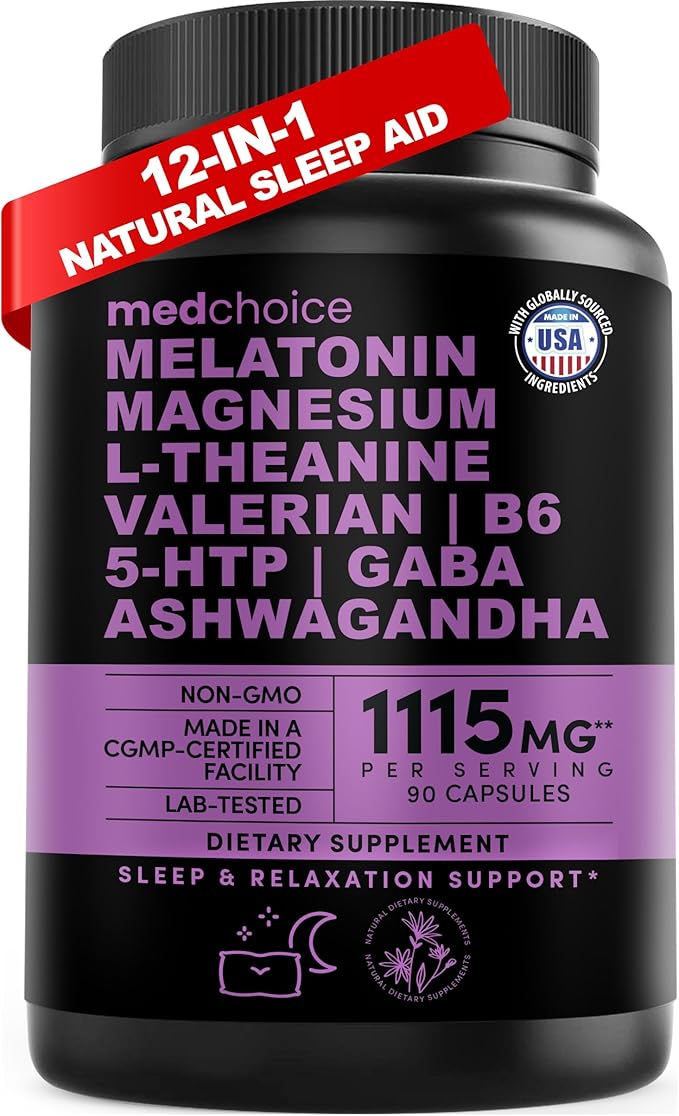
MEDCHOICE 12-in-1 Melatonin Sleep Aid
Combines 12 natural sleep aid ingredients.
Includes 500mg magnesium glycinate for relaxation.
Contains 5mg melatonin for better sleep.
 Lauren Wilson
Combines 12 natural sleep aid ingredients.
Includes 500mg magnesium glycinate for relaxation.
Contains 5mg melatonin for better sleep.

Non-habit forming for safe, long-term use.
Includes natural ingredients like Ashwagandha and Valerest.
Contains 5mg of melatonin for effective sleep support.

High dosage per serving for effective relaxation.
Non-habit forming and suitable for vegans.
Includes additional magnesium and Vitamin B6.

Melatonin-free for gentle, natural sleep support.
Non-habit forming, safe for regular use.
Balanced blend of calming, stress-reducing ingredients.

Plant-based ingredients for natural hormone balance.
Supports mood, focus, and restful sleep.
Vegan and non-GMO formula, made in USA.

Melatonin-free for natural sleep support.
Contains calming ingredients like Valerian Root.
Vegan-friendly formula with added nutrients.

Promotes faster and deeper sleep naturally.
Non-habit forming with natural ingredients.
Customizable dosage for individual needs.

Contains seven essential forms of magnesium.
Supports natural sleep and brain functions.
Highly rated for effective stress relief.

Combines magnesium and quercetin for added benefits.
Supports both relaxation and immune health.
Easy-to-swallow option for daily use.

Sugar-free formula with wild elderberry flavor.
Contains Reishi mushrooms for natural sleep support.
No melatonin, reducing dependency concerns.
The first question is whether the exact product and dose have relevant human evidence. A study of 200 mg L-theanine, 120 mg Shoden ashwagandha, 2 g Magtein magnesium L-threonate, or 28–30 mg standardized saffron does not automatically validate a different extract, dose, combination, or timing. A headline such as “500 mg magnesium” may describe the weight of a magnesium compound rather than elemental magnesium. Likewise, “6,000 mg valerian” or “4,000 mg ashwagandha” may reflect an extract equivalent rather than the amount of extract delivered. Buyers should look for the chemical form, extract ratio or standardization, serving size, timing, and dose of every active ingredient.
Formula design matters as much as an individual ingredient. Many supplied products combine melatonin with valerian, ashwagandha, GABA, 5-HTP, tryptophan, passionflower, chamomile, lemon balm, hops, or other calming ingredients. More ingredients do not mean more reliable sleep, and stacking can increase uncertainty about sedation and interactions. A single active or a short, fully disclosed formula makes it easier to judge the evidence and avoid duplicating ingredients. The product should also state nonactive ingredients, allergens, sweeteners, colors, and capsule materials; “sugar-free,” “vegan,” or “gluten-free” claims remain label statements unless independently verified.
Quality claims need more than “GMP” or “third-party tested.” The strongest batch evidence is a current certificate of analysis matched to the lot on the bottle, showing identity and potency plus relevant heavy-metal, microbial, contaminant, and undeclared-drug screening. A facility GMP listing is not finished-product certification. For external verification, buyers can check whether the exact finished product—not merely the company or a different flavor—is listed in the USP Dietary Supplement Verification, NSF Certified Dietary Supplements, Informed Choice, or Informed Sport registries. Some supplied products had stronger documentation: one had an NSF finished-product listing and a posted lot report; others had only manufacturer testing statements or reports for selected ingredients.
Finally, assess the advertising and the maker. Claims such as “deep sleep,” “all four sleep stages,” “wake refreshed,” “no grogginess,” or guaranteed insomnia relief are stronger than the evidence supplied for most formulas. Look for a responsible company name, address, lot and expiration information, customer contact, recall process, and a clean regulatory record. Packaging and sourcing claims should identify specific recycled, recyclable, refillable, or responsibly sourced practices rather than relying on words such as “natural” or “sustainable.”
Safety caveats recur across this category. These products are intended for adults and should be kept away from children. Melatonin and multi-ingredient calming formulas can cause drowsiness and may impair driving or machinery use; alcohol, sleep medicines, sedatives, and other calming products can add to that risk. Pregnancy and nursing require clinician guidance. Melatonin, ashwagandha, magnesium, 5-HTP, tryptophan, and botanicals such as valerian or chamomile raise different interaction concerns, including with blood thinners, antidepressants or other serotonin-active medicines, antiseizure drugs, thyroid medicines, immunosuppressants, diabetes or blood-pressure medicines, antibiotics, and bisphosphonates. Kidney disease, liver concerns, thyroid or autoimmune conditions, epilepsy, planned surgery, and unexplained daytime sleepiness also warrant professional advice. One supplied product carried a lead and reproductive-harm warning, and another category product had a documented Canadian recall; buyers should check the current label and lot rather than assume a general quality claim applies to every bottle.
The topics below separate likely usefulness from formula safety, label clarity, batch verification, regulatory conduct, and environmental responsibility. Scores are used comparatively within this supplied group; a higher score indicates stronger assessed performance, not proof that a product will work for every buyer.
This measures whether the exact ingredients, forms, timing, and daily doses sold have credible human evidence for the sleep benefit claimed. It matters because evidence for melatonin, L-theanine, magnesium, saffron, botanicals, and GABA varies sharply by dose and use. Supplied scores ranged from 56 to 81: higher-scoring products matched studied doses more closely, while lower scores relied on uncertain evidence or undisclosed amounts.
This measures whether the label explains sedation, next-day impairment, driving, interactions, pregnancy or nursing, children, and relevant conditions. Sleep formulas need unusually clear warnings because many combine several calming or serotonin-active ingredients. Scores ranged from 50 to 80. Higher-scoring examples addressed driving, alcohol, medicines, or other practical precautions; lower-scoring products used broad consultation language without naming important risks.
This measures whether dose, combination, and directions avoid unnecessary high-dose or multi-sedative stacking. It matters when melatonin is combined with valerian, ashwagandha, GABA, 5-HTP, tryptophan, or multiple calming botanicals. Scores ranged from 45 to 86. The higher end included a single mineral or single active, while lower scores reflected dense blends, high melatonin, excessive magnesium, or overlapping sedatives.
This measures whether a current, lot-specific independent report verifies identity and potency and checks relevant contaminants, microbes, and undeclared drugs. It matters because a label or generic “third-party tested” statement does not establish what is in the purchased bottle. Scores ranged from 52 to 82. Higher-scoring products had a matched or more substantial lot report; lower scores lacked a current bottle-specific report.
This measures disclosure of allergens, sweeteners, flavorings, colors, capsule materials, and other inactive ingredients. It matters because gummies and drink powders can contain polyols, flavorings, colors, or declared allergen exposures, while capsules may use gelatin or other excipients. Scores ranged from 68 to 87. Higher scores provided complete other-ingredient and allergen statements; lower scores left buyers with less detail.
This measures whether every active, chemical form, extract ratio or standardization, and per-serving dose is disclosed without a proprietary blend. That is essential for comparing a sleep ingredient with human evidence and spotting duplicate sedatives or serotonin-active compounds. Scores ranged from 52 to 90. High scores came from fully itemized labels; low scores reflected hidden blend amounts or conflicting product information.
This measures whether the exact finished product appears in a credible independent certification registry. It matters because “GMP” and “third-party tested” may describe a facility or brand process rather than the bottle being purchased. Most supplied products scored 68–70 without a verified finished-product listing. The strongest score, 86, belonged to a product listed in the NSF dietary-supplement registry.
This measures whether advertising stays within qualified, evidence-matched structure-function claims instead of promising deep sleep, all sleep stages, no grogginess, or treatment of insomnia. Scores ranged from 30 to 74. Higher-scoring products used more restrained wording; lower-scoring products made broad recovery or guaranteed-outcome suggestions, or had material conflicts between label and sales-page claims.
This measures whether the responsible company, facility, lot identification, contact route, recall process, and regulatory history can be checked. It matters when buyers need to report an adverse event or determine whether a warning applies to their bottle. Scores ranged from 38 to 83. Higher scores reflected identifiable companies and facility records; lower scores reflected certification problems, warnings, or weaker traceability.
This measures whether reduced packaging, recyclability, reuse, and botanical sourcing are specifically substantiated and independently checkable. It matters because a pouch, jar, capsule bottle, or powder tub has different material and end-of-life implications. Scores ranged from 68 to 78, but the reviews generally found little product-specific documentation. The higher-scoring gummy had stated recycled and recyclable pouch claims, while most others had unverified conventional packaging.
This is a 90-capsule nighttime dietary supplement for adults. The label directs users to take two capsules with water at least one hour before bed, providing 45 servings. It combines 5 mg melatonin with 100 mg elemental magnesium from magnesium glycinate, plus L-theanine, valerian, chamomile, GABA, passionflower, lemon balm, ashwagandha, griffonia extract supplying 5-HTP, black pepper extract, and vitamin B6. A publicly accessible product-label image confirms the individual ingredient amounts and extract ratios, rather than a proprietary blend. That is a meaningful transparency strength. The same label carries manufacturer claims of vegan, non-GMO, gluten-free, cGMP-facility production, and third-party lab testing. No current lot-specific certificate or independently listed finished-product certification was located. Human evidence for this exact 12-ingredient formula was not located, and insomnia guidelines advise against melatonin, valerian, chamomile, and passionflower for chronic insomnia.
This product is most suited to an adult who wants a capsule rather than a sweetened gummy, prefers a fully quantified multi-ingredient label, and has already reviewed the formula with a clinician or pharmacist. Its defined two-capsule, one-hour pre-bed routine may fit someone using melatonin only for occasional, short-term schedule disruption rather than as treatment for chronic insomnia. It is more workable for people who specifically want a vegan capsule and who are not combining it with other sleep aids, alcohol, or interacting medicines.
It is not suited to children, pregnant or nursing people, or adults seeking treatment for persistent insomnia, sleep apnea, or unexplained daytime sleepiness. People using antidepressants or other serotonin-affecting medicines should avoid self-starting it because it contains griffonia-derived 5-HTP. It also warrants clinical review for people taking sedatives, blood thinners, anti-seizure medicines, thyroid hormone, diabetes or blood-pressure medicines, or immunosuppressants. People with thyroid or autoimmune disorders, liver concerns, or upcoming surgery should choose a clinician-guided approach instead.
The accessible label identifies 5 mg melatonin per serving, 100 mg magnesium from magnesium glycinate, and separately quantified botanicals and amino-acid-like ingredients. It also lists the nonactive ingredients, which are a vegetable capsule, vegetable magnesium stearate, silicon dioxide, and rice flour. The bottle makes vegan, gluten-free, non-GMO, cGMP-facility, and third-party-testing claims, but these are manufacturer statements rather than independently verified finished-product certifications. Safety is the defining concern. Melatonin can cause sleepiness and may require medical supervision with epilepsy or blood-thinning medicines. Ashwagandha may cause drowsiness, has rare liver-injury reports, and can interact with sedatives, thyroid medicines, immunosuppressants, and some diabetes or blood-pressure medicines. The formula also includes 5-HTP, which needs professional review with antidepressants. No specific recycled-content, recyclability, reduced-packaging, organic, or responsibly sourced botanical documentation was located.
Relaxium Sleep is a 60-vegan-capsule dietary supplement sold as 30 nightly servings. The manufacturer directs adults to take two capsules 30 to 60 minutes before bed. Each serving is listed with 5 mg melatonin, 500 mg L-tryptophan, 100 mg magnesium from oxide, citrate, and bisglycinate, 125 mg standardized ashwagandha, 100 mg GABA, plus chamomile and passionflower. The formula also contains 228.9 mg Valerest, a proprietary valerian and hops blend, so the individual valerian and hops doses are not disclosed. The maker publishes a 40-person study of a closely matching formula, but FDA's April 2025 warning letter raised concerns about the study being conducted without the required investigational application and about the data's validity and integrity. Melatonin has human evidence for modest sleep-onset help, while support for chronic insomnia and the full multi-ingredient formula is less certain.
This format fits an adult who wants a premeasured, capsule-based bedtime supplement and is specifically looking for a melatonin-containing product rather than a prescription sleep medicine. It may be most relevant for occasional difficulty falling asleep or a disrupted schedule, where melatonin's evidence is more applicable than it is for chronic insomnia. The 30-night bottle and two-capsule routine suit someone able to take it consistently 30 to 60 minutes before bed and who has reviewed medication interactions with a clinician or pharmacist.
It is not suited to children or households where unsupervised child access is possible. Avoid it during pregnancy or breastfeeding. People with liver disease, thyroid or autoimmune disorders, planned surgery, or hormone-sensitive prostate cancer should discuss the ashwagandha component with a clinician. It also needs clinician or pharmacist review for people using blood thinners, sedatives, antiseizure medicines, antidepressants or other serotonin-active medicines, thyroid medicine, diabetes or blood-pressure medicine, or immunosuppressants. Do not combine it with alcohol or use before driving.
The product uses a vegan hypromellose capsule and the current manufacturer page names its nonactive ingredients. Its label guidance warns against use with alcohol, driving, or operating machinery, and says to seek professional advice during pregnancy, nursing, or medication use. That is useful baseline guidance, but it does not fully spell out the interaction concerns relevant to ashwagandha, melatonin, and L-tryptophan. No current lot-matched independent laboratory report, USP verification, NSF dietary-supplement certification, or other externally checkable finished-product certification was located. FDA issued American Behavioral Research Institute, the listed distributor behind the formula, a warning letter dated April 30, 2025 over its conduct of a Relaxium sleep study. The company makes Made in USA and quality claims, but I found no specific, independently checkable packaging-reduction, recyclability, or botanical-sourcing program for this product.
This is a 120-capsule adult supplement intended for once-daily use, two capsules with water. The current product label and marketplace listing identify 750 mg GABA and 150 mg L-theanine per serving, plus magnesium, vitamin B6, and vitamin B12. The listing names magnesium oxide and pyridoxine HCl, and lists rice flour, cellulose capsule, and magnesium stearate as other ingredients. Its sleep positioning rests mainly on calming ingredients rather than melatonin. Human evidence supports a modest improvement in subjective sleep outcomes with L-theanine overall, but the research does not establish this exact GABA and L-theanine formula as a treatment for insomnia. The brand states that the product is laboratory tested and made in a GMP-certified facility, but a current lot-specific independent certificate of analysis was not publicly available for verification.
This product suits an adult who wants a melatonin-free capsule option for occasional winding down, and who prefers a simple GABA and L-theanine formula over a broad herbal sleep blend. Its 60-day supply may suit someone comfortable with a two-capsule daily routine and with reviewing supplements alongside a clinician or pharmacist. The evidence is most relevant to modest subjective improvements in sleep quality or sleep onset, not to diagnosing or treating chronic insomnia.
It is not appropriate for children, pregnancy, or nursing, consistent with the product warning and the limited safety data for supplemental GABA and high-dose L-theanine in these groups. People using benzodiazepines, zolpidem, other sedating medicines, alcohol, or blood-pressure medicines should not treat the listing's general medication warning as sufficient individualized advice. It also is not a substitute for clinical assessment of persistent insomnia, sleep apnea symptoms, severe depression, or medication-related sleep problems.
GABA has not been associated with serious adverse events in the clinical evidence reviewed by USP, but it can cause a transient blood-pressure reduction. L-theanine may add to drowsiness from sleep medicines. The product does state adult-only use, medication consultation, and avoidance in pregnancy or nursing, but it does not give targeted guidance for sedative stacking, blood-pressure treatment, or driving and next-day alertness. The current marketplace label identifies a vegan cellulose capsule and discloses rice flour and magnesium stearate. It also makes non-GMO, gluten-free, soy-free, dye-free, made-in-USA, GMP, and laboratory-tested claims. The responsible company is identified as Nutra Harmony LLC. No current lot-matched independent test report, finished-product certification registry entry, or substantiated reduced-waste packaging or responsible-sourcing documentation was located. No product-specific FDA recall or warning letter was identified in the checked public records.
This is a 90-capsule, melatonin-free nighttime supplement. The bottle provides 45 servings, with directions to take two capsules with water at least 60 minutes before bed. Its disclosed formula supplies 70 mg elemental magnesium from 500 mg magnesium glycinate, plus L-tryptophan, valerian, chamomile, GABA, passionflower, lemon balm, L-theanine, ashwagandha, griffonia extract supplying 5-HTP, black pepper extract, and vitamin B6. The full Supplement Facts panel, extract ratios, excipients, directions, and broad safety cautions are visible on the manufacturer label. Evidence does not establish that this exact 12-ingredient combination improves sleep. Independent reviews and NCCIH describe the sleep evidence for valerian and several botanical sleep ingredients as inconsistent or limited. The bottle claims third-party testing and production in a cGMP-certified facility, but no current lot-specific report or finished-product certification registry listing was located.
This product is most suited to an adult who specifically wants a melatonin-free capsule for an occasional bedtime wind-down, values seeing each ingredient and extract ratio, and is not using alcohol, sedatives, or medicines that affect serotonin. The 90-capsule bottle is a 45-night supply when used as directed. It is most appropriate for someone who treats it as a supplement with uncertain sleep benefit, rather than as a treatment for persistent insomnia or a substitute for clinical sleep care.
It is not appropriate for children, pregnancy, breastfeeding, or anyone preparing for surgery without clinician direction. People taking antidepressants, other serotonin-affecting medicines, sedatives, anti-seizure medicines, thyroid hormone, diabetes or blood-pressure medicines should seek medical advice before use. It also does not fit people with autoimmune or thyroid disorders, liver concerns, ragweed-related chamomile allergy, suspected sleep apnea, or chronic insomnia needing an evidence-based assessment. Avoid combining it with alcohol and do not drive after taking it.
The manufacturer label identifies a responsible distributor in Alpine, California, provides a telephone number and email contact, and instructs users to check the bottle bottom for lot and expiration information. It also discloses microcrystalline cellulose, L-leucine, and hypromellose, and carries manufacturer claims of vegan, non-GMO, and gluten-free. The displayed magnesium amount is 70 mg elemental magnesium, below the adult supplemental upper limit of 350 mg. Important limits remain. The brand claims third-party testing and a cGMP-certified facility, but no lot-matched independent certificate of analysis was publicly available to verify identity, potency, microbial testing, contaminants, or undeclared substances. No USP, NSF, Informed Choice, or Informed Sport listing for this finished product was located. No product-specific packaging material, recyclability, botanical sourcing, organic status, or chain-of-custody evidence was provided, so environmental claims cannot be substantiated.
This is a 60-capsule, once-daily herbal and nutrient product marketed for cortisol balance, mood, focus, and sleep. The bottle label identifies 150 mg ashwagandha root powder, 100 mg rhodiola root extract, 75 mg L-theanine, 40 mg holy basil leaf, 15 mg sunflower-derived phosphatidylserine, 20 mg magnesium oxide, and vitamins B6 and B12 per capsule. It also contains a 197 mg proprietary blend of licorice root, eleuthero root, and magnolia bark. The disclosed L-theanine and ashwagandha amounts are below the doses most consistently associated with sleep benefit in human reviews, and the ashwagandha is not identified as a standardized extract. The manufacturer provides an adult-use, pregnancy, nursing, and medication consultation warning, but no current lot-specific independent laboratory report or finished-product certification was located.
This product is most suited to a healthy adult who wants a once-daily capsule with modest amounts of several stress-oriented ingredients, rather than a high-dose single-ingredient sleep aid. It may also suit someone who values a vegan capsule and wants the label to disclose most active amounts and common capsule excipients. The user should be comfortable treating the sleep and cortisol language as tentative wellness positioning, because the available human sleep evidence does not directly validate this exact formula or these doses.
It is not well suited to pregnancy or nursing, children, or people using prescription medicines without pharmacist or clinician review. In particular, people with thyroid or autoimmune disease, liver concerns, diabetes, blood-pressure treatment, seizure treatment, use of sedatives, or planned surgery should not rely on the general label warning alone. It is also a poor fit for anyone seeking a fully quantified formula, independently certified supplement, current lot-specific potency and contaminant results, or a sleep product whose ingredients match studied doses.
The bottle names NUTRA HARMONY LLC in Casper, Wyoming and supplies a phone number, giving buyers a responsible party and contact route. Its manufacturer-stated features include a vegan capsule, non-GMO claim, and manufacture in the United States. The label also gives a specific facility allergen statement, noting processing in a facility that handles milk, eggs, wheat, soy, fish, tree nuts, and peanuts. The product image displays a GMP claim, but no externally checkable listing for this finished product was located in major supplement certification registries. No current lot-specific independent certificate was found to confirm identity, potency, microbes, heavy metals, or undeclared substances. FDA database searches did not identify a matching recall or warning letter, but absence from those databases is not product testing. The bottle is plastic, and no substantiated recycled-content, recyclability, refill, botanical sourcing, or other packaging-impact documentation was located.
This is a melatonin-free, adult bedtime supplement supplied as 60 vegetarian capsules, or 30 two-capsule servings. The label directs users to take two capsules 30 to 45 minutes before bed with a light snack. Each serving lists 140 mg magnesium from hydroxide, glycinate, and citrate, plus 200 mg valerian root extract, 200 mg L-theanine, 125 mg PharmaGABA, and 100 mg 5-HTP. Its most consequential strength is that the active doses are disclosed rather than hidden in a proprietary blend. The 200 mg L-theanine dose overlaps with ranges assessed in recent human sleep reviews. However, the finished five-ingredient combination has not been independently shown to improve sleep, and evidence for valerian in chronic insomnia remains inconsistent. Retailer-hosted label information also provides substantial use warnings, but no current lot-specific independent certificate of analysis was located.
This product fits an adult seeking a melatonin-free capsule for occasional bedtime relaxation who can take it 30 to 45 minutes before sleep and does not need to drive, work, or drink alcohol afterward. It is most suited to someone who values a disclosed multi-ingredient formula and specifically wants 200 mg L-theanine, a dose with some human sleep evidence. It is not a targeted treatment for diagnosed insomnia, and the 30-serving container suits a short trial only when a clinician or pharmacist has cleared relevant medicines.
It is not suited to children or to people who are pregnant or nursing. Avoid self-starting it if taking antidepressants or other medicines that affect serotonin, or when using alcohol, sedatives, or other sleep products, because 5-HTP and the calming ingredient stack raise interaction and impairment concerns. People with kidney disease should follow the label's instruction to consult a clinician. Those with chronic insomnia, sleep apnea, unexplained daytime sleepiness, or persistent sleep disruption need assessment and evidence-based care rather than relying on this blend.
The label provides better-than-minimal practical safety direction. It limits use to adults, warns against alcohol, driving, and heavy machinery, advises against use during pregnancy or nursing, and flags kidney disease and prescription medicines, including antidepressants. That matters because the formula combines multiple calming agents and includes 5-HTP, a serotonin precursor. The active ingredients and their serving doses are visible, and the capsule uses hypromellose with a short other-ingredients list that includes vegetable magnesium stearate and organic rice hulls. The manufacturer states that the product is gluten-free, non-GMO, vegan, and made in the United States with domestic and international ingredients. These are manufacturer or retailer-hosted claims, not independently confirmed finished-product certification. No listing for this exact sleep product was located in major independent supplement-certification registries, and no current lot-specific certificate of analysis was publicly available. No product-specific recall or FDA warning letter was located in the searches performed. Packaging and botanical sourcing claims were not substantiated beyond the stated organic rice hull excipient.
Sleep Breakthrough is a 60-capsule, melatonin-free bedtime supplement. The manufacturer directs adults to take two capsules about one hour before bed, making the bottle a 30-night supply. Its current Supplement Facts panel lists vitamin B6, 35 mg magnesium glycinate, zinc, 588 mg L-glycine, 200 mg each of L-taurine and L-theanine, and 75 mg magnolia bark extract standardized to 2% honokiol plus magnolol. The most evidence-aligned component is 200 mg L-theanine. Human systematic reviews report modest sleep benefits at doses that include this amount, although the finished multi-ingredient product itself has not been clinically tested. The glycine amount is well below the 3 g used in small human sleep studies. The manufacturer fully discloses doses and excipients, but its product pages make unusually absolute claims about rapid sleep and deep sleep that exceed what the available finished-product evidence establishes.
This product is most suited to an adult who prefers a capsule over a flavored drink, wants a melatonin-free evening supplement, and understands that the most supportable sleep ingredient is 200 mg L-theanine rather than the formula as a whole. It may fit someone seeking a simple 30-night trial for occasional difficulty winding down, provided they are not combining it with alcohol, sedating medicines, or other nighttime supplements and can discuss use with a clinician if they take medications.
It is not appropriate for children or for anyone who needs to drive, work, or remain alert after taking a sleep supplement. Pregnant or nursing people, people with serious medical conditions, and those using prescription medicines should seek clinician advice first. People using benzodiazepines, sleep medicines, anti-anxiety medicines, alcohol, or other sedating products should avoid self-stacking this formula. It is also a poor fit for someone seeking a product backed by lot-specific independent testing, finished-product certification, or a clinically tested formula for chronic insomnia.
The official label is unusually clear for a multi-ingredient sleep product. It identifies magnesium as glycinate, vitamin B6 as pyridoxal-5-phosphate, zinc as picolinate, and magnolia bark as a 2% honokiol plus magnolol extract. It also lists hypromellose, microcrystalline cellulose, and ascorbyl palmitate. The product is described as vegan, gluten-free, and soy-free, and its official product information identifies BIOptimizers USA Inc. in Reno, Nevada as the responsible business. The manufacturer states that the product is made in a GMP-certified facility and backed by a certificate of analysis, but no current lot-matched report or independent finished-product certification was publicly verifiable. No specific recycled-content, recyclability, refill, botanical sourcing, organic, or third-party environmental certification evidence was located for this bottle. The plastic capsule-bottle format therefore has an unsubstantiated environmental profile.
This is a 30-capsule magnesium supplement sold for sleep, relaxation, stress response, and broader wellness. The catalog unit supplies 15 servings when used as two capsules, and the manufacturer directs users to take two capsules with an evening meal. Its stated serving supplies 500 mg elemental magnesium, plus 2 mg vitamin B6 and 1 mg manganese. The formula lists seven magnesium forms, including bisglycinate, citrate, malate, taurate, orotate, chelate, and Sucrosomial magnesium listed as magnesium oxide. The 500 mg total is disclosed, but the amount of each form is hidden in a proprietary blend, so the dose of the forms most relevant to sleep research cannot be checked. Human sleep evidence for oral magnesium remains limited and inconsistent, rather than establishing this specific formula as a treatment for insomnia.
This product is most suited to an informed adult who specifically wants a capsule-based magnesium supplement, prefers a two-capsule evening routine, and can tolerate magnesium at a high supplemental amount. It may also suit people who need a manufacturer-stated vegan, gluten-free, and soy-free formula. The user should not expect it to function like an established insomnia treatment. It is more appropriate for general magnesium supplementation and a personal relaxation routine than for diagnosing or managing persistent sleep disruption.
It is not suited to children, since the stated 500 mg daily supplemental magnesium amount exceeds the upper limit for ages 9 to 18 and the manufacturer says it is not for children. People with impaired kidney function, frequent diarrhea, or significant gastrointestinal sensitivity should seek clinician guidance because magnesium clearance and tolerance can be reduced. Those taking antibiotics, bisphosphonates, diuretics, or acid-reflux medicines should ask a pharmacist about timing and interactions. It is also not a substitute for assessment of chronic insomnia, loud snoring, gasping, or daytime sleepiness.
The main health issue is dose, not sedative stacking. This is a magnesium-centered formula without melatonin, botanicals, or other conventional sedatives, but its 500 mg supplemental magnesium serving is above the NIH adult upper limit of 350 mg from supplements and medicines. Digestive effects are plausible, and people using interacting medicines need individualized timing advice. The available label provides general medical-condition and adverse-effect cautions, but not detailed interaction or pregnancy and nursing guidance. The manufacturer identifies its magnesium forms and nonactive ingredients, although the proprietary blend prevents verification of each form's dose. No independently checkable finished-product certification or current lot-matched laboratory report was found in the reviewed public records. The bottle is described as made in the United States with domestic and imported ingredients, but no substantiated recyclable-packaging, reduced-waste, or responsibly sourced ingredient program was identified. No product-specific FDA recall or warning letter was located in the reviewed searches.
This product is a 120-capsule adult supplement intended for once-daily use with food. The manufacturer label specifies 72 mg elemental magnesium from 400 mg magnesium glycinate, plus 50 mg quercetin dihydrate from Japanese sophora flower buds. It is marketed for relaxation and sleep support, with a 120-day supply when used as directed. Its most important distinction is that the 400 mg front-label figure refers to magnesium glycinate compound weight, not elemental magnesium. The full active and inactive ingredient panel is disclosed on the manufacturer label. Sandhu Products' Livermore facility is independently listed to NSF/ANSI 455-2 dietary-supplement GMP standards, but that verifies facility controls, not the potency, purity, or certification of this exact finished product.
This product fits a generally healthy adult who wants a low-dose magnesium capsule rather than a multi-sedative sleep blend, prefers a 120-day bottle, and values a fully stated ingredient panel. It is most appropriate for someone seeking modest relaxation support as part of sleep hygiene, not as a treatment for insomnia. The 72 mg elemental magnesium dose may also suit a buyer who already gets magnesium from food or another supplement and wants to avoid high supplemental totals.
It is not a good fit for people seeking a clinically established treatment for chronic insomnia, frequent night waking, sleep apnea, or severe daytime sleepiness. People with impaired kidney function should seek medical advice because magnesium toxicity risk rises when renal clearance is reduced. People taking tetracycline or quinolone antibiotics, oral bisphosphonates, blood-pressure medicines, cyclosporine, pravastatin, or fexofenadine should discuss timing and interactions with a clinician. Pregnancy, nursing, and pediatric use also need professional guidance.
The stated formula is comparatively simple, with 72 mg elemental magnesium, 50 mg quercetin, a vegetable cellulose capsule, microcrystalline cellulose, and rice hull extract. Sandhu Products' Livermore facility is currently listed by NSF for dietary-supplement GMP controls. That is meaningful manufacturing oversight, but it does not replace an independently accessible, lot-matched test report for this product. The brand's third-party-testing statement could not be independently confirmed through a public certificate for a current bottle. A 2021 California Proposition 65 notice alleged lead exposure from two other Sandhu supplements, not this magnesium product. No product-specific FDA recall or warning letter was located in the reviewed sources. The manufacturer provides no substantiated information on bottle resin, recycled content, recyclability, reduced packaging, botanical sourcing, or environmental certification. As a result, the packaging and sourcing footprint cannot be evaluated beyond the product's small capsule format.
This is a 60-gummy, 30-night sleep supplement for adults. The suggested use is two gummies before bed. Each serving discloses 100 mg GABA, 200 mg reishi fruiting-body 10:1 extract, 60 mg saffron 10:1 extract, 60 mg passionflower 10:1 extract, 60 mg chamomile extract, and 50 mg corydalis 10:1 extract. The pouch is melatonin-free and uses maltitol and isomalt instead of sugar. Its most evidence-relevant component is saffron. Human trials and reviews suggest some sleep-quality benefit from saffron extracts, although this product's complete six-ingredient combination has not been clinically tested. Plant People says batches are third-party tested, but a current WonderSleep lot-specific report was not available in its public lab-report repository. The brand site also displays a California lead exposure warning.
This product fits an adult who wants a melatonin-free gummy bedtime routine, prefers a fully dose-disclosed botanical formula, and has occasional poor sleep or stress-related difficulty winding down rather than diagnosed insomnia. It is particularly relevant for someone interested in saffron because the product supplies 60 mg extract per serving, a dose directionally consistent with small human sleep studies. It also suits people avoiding gelatin, gluten, and added sugar. Use is best considered only after reviewing medications and health conditions with a clinician.
It is not a suitable casual choice for pregnancy, nursing, children, people with liver disease or a history of supplement-related liver injury, or anyone taking sedatives, anticoagulants, or multiple prescription medicines without clinician review. Chamomile can trigger reactions in people allergic to ragweed, daisies, chrysanthemums, or marigolds, and may interact with warfarin or sedatives. People with chronic or severe insomnia, sleep apnea, marked daytime sleepiness, or persistent nighttime symptoms need assessment rather than relying on a gummy supplement. The California lead exposure warning is also relevant for households seeking to minimize heavy-metal exposure.
The company is independently listed by B Lab as a Certified B Corporation, certified since January 2021. Plant People also states that this pouch is recycled and resealable, but it does not provide product-specific, independently verifiable material composition or local recycling instructions. A flexible pouch may reduce shipping weight, yet recyclability depends on its construction and local collection systems. Health transparency is stronger on dose disclosure than on verification. The label identifies all six actives and the sweeteners and other ingredients. The company says its mushroom products receive third-party tests for contaminants and microbial quality, but a public, lot-specific report for this product was not found. Its own site carries a California warning for lead-related cancer and reproductive-harm exposure. That warning does not establish the amount in a serving, but it is important context for repeat use.


