Best Overall
20% off

Azomabox Smart Ring Health Monitor
Sleek design that complements any style.
Provides real-time health metrics monitoring.
Comfortable fit for all-day wear.
 Daniel Kenitz
Sleek design that complements any style.
Provides real-time health metrics monitoring.
Comfortable fit for all-day wear.
Discreet, stylish design fits any occasion.
Comprehensive health tracking features included.
Long-lasting battery for extended use.

Unique sleep apnea monitoring without subscription fees.
Impressive 12-day battery life for extended use.
Comprehensive health tracking for Android and iOS users.

Ultra-thin design ensures comfortable everyday wear.
No app fee for standard features adds value.
10-day battery life minimizes frequent recharging.

Tracks multiple health metrics seamlessly.
No subscription fee required for full features.
Waterproof design suitable for everyday use.

Sleek carbon fiber design for durability.
Organizes up to 14 keys efficiently.
Reduces pocket clutter and noise.

Stylish design with a unique starburst pattern.
Comfortable fit for everyday wear.
Durable yellow gold finish resists tarnishing.

Sleek design suitable for all occasions.
Comprehensive sleep and fitness tracking features.
Durable silver finish with adjustable sizing options.

Stylish design with a feminine touch.
Tracks sleep and fitness accurately.
Durable and comfortable ceramic material.
No subscription fees required for use.
Comfortable and stylish rose gold design.
Comprehensive health monitoring features included.
Whether one works depends first on fit and contact. A ring that rotates, is too loose, or becomes tight as fingers swell can affect optical sensing and comfort. Buyers should look for a sizing kit or clear sizing process, instructions for keeping sensors against the palm side of the finger, and directions for removing the ring during swelling, irritation, injury, exercise, heat, or damaged coatings. Disclosed skin-contact materials are useful, but a serious substantiation record is a finished-product biocompatibility assessment such as ISO 10993-5 and ISO 10993-10 or ISO 10993-23, plus nickel-release or alloy testing where relevant.
Accuracy claims need more than a percentage in a listing. For heart rate, HRV, oxygen, sleep, temperature, and activity, look for a peer-reviewed human study or an independent ISO/IEC 17025-accredited laboratory report for the exact model and firmware. The methods should identify an appropriate reference method—such as ECG, pulse oximetry, polysomnography, or actigraphy—and explain participants, skin tones, sexes, ages, fit conditions, movement, error ranges, and limitations. A claim such as “medical-grade,” “AI accuracy,” or “99%” is difficult to interpret when the study, population, protocol, or error definition is missing.
Disease-related features deserve a higher bar. Blood pressure, glucose, sleep apnea, arrhythmia, oxygen-risk detection, fertility, and treatment claims should either have FDA authorization for that exact product and intended use or be absent. A disclaimer that a ring is not a medical device does not authorize a prominent diagnostic-sounding feature. In particular, unauthorized blood-pressure and blood-glucose claims can encourage harmful self-management or delay care. Fertility and ovulation scores also require caution: an overnight temperature trend is not, by itself, confirmation of ovulation or a substitute for clinical advice.
Also check the parts that are easy to overlook. A wireless claim should match an FCC filing and, where applicable, a Bluetooth SIG qualification. A waterproof or IP68 claim should be tied to a model-specific IEC 60529 test report; a depth number is not proof of safe swimming. Battery and charger safety should be supported by traceable UL Product iQ, Intertek ETL, IEC 62133-2, or applicable UL 2054 documentation. Review the app’s collection, sharing, encryption, deletion, and security-update terms before connecting biometric data. Finally, ask how a sealed battery, charger, and ring will be repaired, replaced, or recycled in the United States.
Across the supplied products, the recurring safety boundary is clear: these rings are not suitable for diagnosing or managing blood pressure, blood oxygen, sleep apnea, arrhythmia, glucose, fertility, pregnancy-related concerns, or other medical conditions. Do not use readings to change medication, train through symptoms, delay clinical assessment, or respond to an emergency. Several products also lack model-specific validation, skin testing, battery certification, water testing, privacy controls, or recycling routes; people with metal sensitivity, irritated or damaged skin, swollen fingers, or a need for dependable clinical data should choose accordingly.
The scores below compare the supplied products against the frozen health, ecology, and evidence topics. A high score indicates stronger supporting evidence and safer boundaries in that area; it does not turn a wellness ring into a medical device or establish accuracy that the review did not locate.
This measures whether the product offers plausible wellness value while clearly saying it is not for diagnosis, treatment, or emergency care. For rings, useful warnings include stopping for redness, swelling, heat, or a stuck fit and consulting a clinician instead of acting on readings. The supplied scores range from 45 to 78; higher-scoring products generally had clearer nonmedical instructions, while low scores included stronger or riskier health framing.
This measures whether disease-related claims—such as blood pressure, glucose, sleep apnea, arrhythmia, oxygen risk, or fertility—are FDA-authorized for the exact product and intended use, or absent. It matters because a disclaimer cannot validate an unauthorized feature. Scores range from 25 to 96. The low end includes products advertising blood-pressure monitoring without located authorization; higher scores generally avoided named diagnostic claims or clearly framed outputs as general wellness.
This measures validation of heart rate, HRV, oxygen, temperature, sleep, activity, and other outputs against suitable reference methods in real people and across fit, motion, age, sex, and skin-tone conditions. Among these products, scores range from 50 to 70. A high score reflects better available support, but several reviews still found no exact-product peer-reviewed validation; one independent test also found exercise heart-rate and sleep-classification errors.
This measures disclosed skin-contact materials, irritation or sensitization evidence, nickel or alloy testing, sizing guidance, and instructions for swelling, exercise, and damaged coatings. Finger rings remain in continuous contact and can become difficult to remove when fingers swell. Scores range from 68 to 74. Higher-scoring products more often supplied practical sizing or removal guidance, while no supplied product had a located finished-product biocompatibility report.
This measures protection against overheating, fire, shock, and battery failure in the ring and charging case, including traceable battery or charger testing and safe charging instructions. Scores range from 68 to 75 for electronic rings. Stronger reviews included precautions such as charging dry, using supplied equipment, avoiding heat, and stopping if the ring becomes hot; no supplied electronic ring had a located model-specific UL, ETL, or IEC battery report.
This measures what the app collects and shares, whether consent and deletion are meaningful, whether data are encrypted, and whether security updates or vulnerability reporting are credible. Rings can gather sleep, reproductive, location, and other sensitive data continuously. Scores range from 48 to 96 across the supplied products. Higher scores came with clearer protections; lower scores included broad third-party sharing, no-deletion statements, missing policies, or data not encrypted in transit.
This measures whether an independent laboratory or peer-reviewed investigator tested the exact product rather than relying on seller statements. For a ring, the report should identify model, firmware, methods, results, limitations, and commissioning details. Scores range from 66 to 70 among supplied products. The range is narrow because most reviews found no exact-product validation; the clearer exception was independent two-week testing of app syncing and battery life, not clinical accuracy.
This measures whether listings and apps distinguish measured signals from estimates, scores, AI interpretations, and medical conclusions, with visible limitations. Smart-ring language can make an estimate sound like a vital sign or a clinical result. Scores range from 30 to 90. Higher-scoring products used clearer wellness boundaries; lower scores included “medical-grade,” “AI,” precision, or blood-pressure language without matching error data, authorization, or explanation.
This measures whether FCC, Bluetooth, water-resistance, safety, and material credentials trace to the exact model and test standard. Buyers should be able to match a model number to the FCC Equipment Authorization System, Bluetooth SIG database, or a model-specific IEC 60529 report. Supplied scores range from 68 to 98, but reviews repeatedly found mismatched or absent records, including related-model wireless approvals that did not verify the product sold.
This measures whether the ring and case can tolerate the water, sweat, wear, charging cycles, and software support implied by the listing. A model-specific ingress report matters more than an IP68 or depth number copied into a listing, and the case may have different limits from the ring. Scores range from 52 to 75. Conflicting depth, IP, battery, warranty, and runtime claims were recurring reasons for lower confidence.
This measures service life, repair or replacement support, packaging and material disclosure, and a practical U.S. take-back or certified recycling route for the ring and charging case. Every electronic ring creates battery and electronics waste, especially when its battery is sealed. Scores are mostly 68 to 70, showing little separation: reviews commonly found no brand-specific take-back, repair pathway, or recycling plan. Batteries should not go in household trash.
This product is a rigid, display-free smart ring in US size 8 that pairs by Bluetooth with the LuckRing phone app. Its published product description says it has a matte stainless-steel exterior, an epoxy-resin inner surface, a stated 3.8 g weight, and tracks heart rate, blood oxygen, HRV, sleep, activity, skin-temperature fluctuation, stress, and menstrual-cycle information. Those are manufacturer-stated specifications, not independently validated measurements. The companion app is listed in Google Play as a general fitness and wellness tool, with an explicit statement that it is not intended for medical use. That limitation is important because no model-specific human validation study, medical authorization, finished-product biocompatibility report, battery safety report, or water-ingress test report was located. The app listing was updated in June 2026, which is some evidence of continuing software maintenance, but it also declares that data is not encrypted.
This product suits an adult who already knows their stable ring size and wants a low-profile, display-free wellness log for trends in steps, sleep timing, exercise, and general recovery habits. It is most appropriate for someone comfortable using a phone app, treating outputs as approximate personal observations, and removing the ring if it becomes tight during heat, exercise, travel, or swelling. The stated size range and rigid closed-band design make careful sizing especially important.
It is not appropriate for anyone who needs clinically reliable oxygen, heart-rhythm, blood-pressure, glucose, fertility, sleep-apnea, or illness detection information. People making medication, insulin, emergency, pregnancy, or treatment decisions should use appropriate clinician-guided and authorized tools instead. It is also a poor fit for people with known metal or resin contact sensitivity, frequent finger swelling, impaired sensation, or a need for clearly documented encryption and health-data deletion controls. Children should not use it as a health-monitoring device.
The available product description identifies a stainless-steel exterior and epoxy-resin inner surface, but no finished-product biocompatibility, sensitization, or nickel-release evidence was found. The product description recommends sizing the rigid band about one-half to one size larger, and the related LuckRing manual advises against an overly tight fit because it can affect circulation. Remove any ring that causes pressure, numbness, discoloration, pain, or skin irritation. The LuckRing app calls itself general fitness and wellness use only, which is an appropriate boundary for a non-medical tracker. However, its Google Play disclosure says data is not encrypted. No brand-specific U.S. take-back, repair, recycling, battery-replacement, or certified recycling program was located. Because this is a sealed lithium-polymer electronic product, it should be routed to an appropriate electronics or battery recycler rather than household trash at end of life.
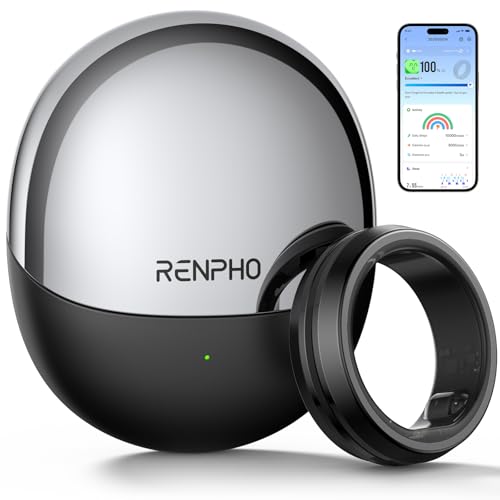
This product is a titanium-exterior smart ring for continuous wellness tracking. It pairs by Bluetooth with the Renpho Health app on iOS and Android, and is intended to log heart rate, blood oxygen, sleep, stress, steps, distance, calories, and selected walking and running activity. It has no display and includes a USB-C charging case. RENPHO states a 7-day ring battery life, a 5 ATM water-resistance rating, no app subscription fee, and an 18-month warranty. Its user manual clearly says it is not a medical device and that app information is for reference, not diagnosis, treatment, or professional care. The exact radio hardware does have a matching U.S. FCC authorization. However, no peer-reviewed human validation or independent laboratory accuracy report for this product was located. An independent hands-on review reported substantial step overcounting in use, so activity figures should be treated as directional wellness estimates.
This product suits an adult who wants a screen-free, finger-worn record of general sleep timing, resting trends, and everyday movement, and who is comfortable treating the results as wellness information rather than clinical measurement. It is particularly relevant for someone who wants the Renpho Health ecosystem without an ongoing app charge, can use the official sizing process, and is willing to verify unusual readings against how they feel or a conventional device. Its manufacturer-stated 5 ATM rating may also suit routine handwashing and swimming use.
It is not appropriate for anyone who needs dependable detection or management of arrhythmia, sleep apnea, low oxygen, pregnancy-related concerns, diabetes, or any urgent symptom. Do not use its oxygen, heart, stress, or sleep outputs to delay medical evaluation. It is also a poor fit for users who require demonstrably accurate exercise and step measurement, because independent hands-on testing reported large step overcounts. People with metal sensitivity, active finger dermatitis, swelling, circulation problems, or difficulty removing a tight ring should seek individualized medical guidance before continuous wear.
The most useful safety feature is clear manufacturer guidance that this is a non-medical wellness product and that app outputs are only for reference. The documented U.S. FCC authorization confirms the exact product's Bluetooth transmitter is authorized for its listed frequency range. The manual also gives battery precautions, including not dismantling the battery, avoiding excessive heat, using the correct charger, and seeking care after electrolyte contact. The titanium claim is limited to the exterior. No finished-product biocompatibility, nickel-release, or skin-sensitization report was found, so continuous-contact tolerance is not independently established. No U.S. recall or regulatory warning specific to this product was located in the searches performed. The rechargeable battery is non-replaceable, and no manufacturer take-back, repair pathway, or certified recycling program specific to the ring and charging case was found. Use a qualified electronics recycler when it reaches end of life.
RingConn Gen 2 is a display-free titanium smart ring for continuous sleep, activity, heart-rate, HRV, blood-oxygen, temperature, respiratory-rate, stress, and menstrual-cycle tracking through a phone app. The size 11 version has a stated 13.5 mAh ring battery. RingConn states that the ring weighs 2 to 3 g, is 2 mm thick, uses Bluetooth 5.0, stores 5 to 7 days of data offline, and typically runs for 10 to 12 days per charge. Its defining claim is sleep-apnea monitoring, including a manufacturer-stated 90.7% accuracy figure. That claim is not matched here by a product-specific FDA authorization or a published independent validation report for this Gen 2 product. RingConn's own manual calls the product non-medical and says it is not intended to diagnose, treat, cure, or prevent disease.
This product suits an adult who wants a small, screen-free way to view personal sleep, activity, and overnight trend data in a phone app, and who is willing to use a sizing kit carefully. It is especially relevant for someone who values a stated 10 to 12 day battery interval and does not want an ongoing subscription for the advertised tracking features. It is appropriate only when its scores, trends, and alerts are treated as wellness information rather than clinical findings.
It is not for anyone seeking a diagnostic sleep-apnea test, medical oxygen monitor, arrhythmia assessment, blood-pressure device, or emergency alert system. People with suspected sleep apnea, chest symptoms, fainting, persistent low oxygen readings, severe daytime sleepiness, or changes in a known heart or lung condition should seek clinical assessment instead. It is also unsuitable for users with active finger wounds, severe swelling, known reactions to wearable materials, or a need to wear rings during heavy manual work or contact sports.
The ring's titanium-alloy body, PVD coating, and medical-grade epoxy resin are manufacturer-disclosed materials, but public finished-product biocompatibility reports were not found. Its instructions provide meaningful fit and skin precautions. They advise avoiding an overly tight fit, pausing use for irritation, removing the ring for heavy work, and seeking medical help if it cannot be removed. The manual also expressly identifies it as a non-medical product. Radio compliance is better documented than several other claims. An FCC test report identifies the Gen 2 model family and records a pass under the applicable Part 15 wireless test standard. RingConn also publishes a privacy policy with deletion and consent controls, although its blood-pressure beta feature may retain and isolate raw signal data until the beta period ends. For disposal, RingConn says to keep the ring and internal battery out of household trash, but no practical US take-back program, repair pathway, or certified recycler partnership was located.
This is a screen-free smart ring for continuous wellness and activity tracking. It uses Bluetooth 5.0, a wired magnetic charging dock, and optical, temperature, and motion sensors to report heart rate, blood oxygen, sleep, activity, stress-related trends, and skin-temperature trends in the companion app. The manufacturer specifies a 2.5 to 4 g titanium-steel ring, depending on size, with 5 to 7 days of offline storage. Its clearest safety distinction is manufacturer labeling that it is not a medical device and must not be used to diagnose, treat, cure, or prevent disease. The manual also says Gen 2 Air does not include sleep-apnea monitoring. A U.S. FCC authorization is traceable to this exact product model. The IP68 rating and up-to-10-day battery life are manufacturer-stated, not backed here by publicly available model-specific ingress or battery-safety test reports.
This product suits an adult who wants a low-profile, screen-free way to review broad personal wellness trends, especially overnight sleep timing, resting heart rate, activity, and recovery patterns. It is most appropriate for someone willing to use the sizing kit carefully, wear the ring consistently, and treat app outputs as context for habits rather than clinical results. The manufacturer-stated up-to-10-day battery life may also suit users who prefer less frequent charging and do not need built-in GPS or a display.
It is not suitable for anyone who needs diagnosis, treatment guidance, emergency alerts, or dependable medical monitoring for low oxygen, arrhythmia, blood pressure, sleep apnea, pregnancy, or other health conditions. The manual explicitly says it is not a medical device. People with poor circulation, finger abrasions, light-sensitive epilepsy, photosensitizing medication use, or a tendency toward hand swelling should consult a clinician and follow the removal guidance. It also does not fit users who need reliable swim or diving use, because the manual excludes several water and heat exposures.
Health highlights include unusually direct safety labeling for a consumer ring. The manual says it is not a medical device, tells users not to adjust exercise, sleep, or diet based on the product without professional guidance, and lists conditions that may make use unsuitable. It also advises removing the ring if it becomes difficult to take off because of swelling. The finished ring is described by the manufacturer as titanium steel, but public skin-sensitization, irritation, and alloy-release reports were not located. The wireless record is traceable through the FCC for this product model, and the manual identifies IP68 protection. However, public model-specific test reports for the IP rating and rechargeable battery were not located. RingConn offers U.S. trade-in return locations, which can extend reuse, but no clear U.S. recycling or repair route was found. Its published end-of-life policy is also inconsistent about whether Gen 2 Air is covered.
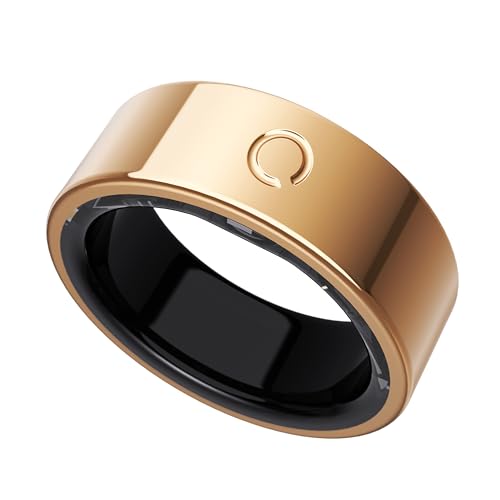
This is a display-free, rose-gold smart ring in size 11 that connects by Bluetooth to the Da Rings phone app. The supplied product information describes a 3.67 g titanium-steel ring with an 18 mAh lithium-polymer battery, a charging case, and claimed five-day battery life. It is intended to log steps, sleep, heart rate, stress-related scores, activity, and menstrual-cycle information. The companion app is publicly available from both major mobile app stores, and its Apple listing explicitly calls it a general-wellness product rather than a medical device. The included manual tells users to select a comfortable fit, keep the contact surface dry and clean, stop use for redness or swelling, and charge in a dry environment. No model-specific human validation study, accredited laboratory report, or traceable FCC, Bluetooth, IP68, or battery-safety certification record was located in this review.
This product suits an adult who wants a small, screen-free wellness tracker for casual review of activity and sleep patterns, already uses an iPhone or Android phone, and is comfortable checking results in the Da Rings app. It is most appropriate for someone who treats heart-rate, sleep, stress, and cycle outputs as personal trend information rather than clinical measurements. Careful sizing matters because reliable skin contact and comfortable all-day wear are central to both the manual instructions and optical-sensor performance.
It is not suited to anyone using wearable data to manage diabetes, heart-rhythm symptoms, low oxygen concerns, suspected sleep apnea, fertility decisions, medication, or emergency care. Those uses need appropriate clinician assessment and validated medical equipment. It is also a poor fit for people with a known metal sensitivity, recurring finger swelling, or damaged skin under the ring unless a clinician advises otherwise. People needing strong deletion controls or minimal health-data sharing should account for the companion app's disclosed privacy limitations before using it.
The most useful health safeguard is the companion app's general-wellness disclaimer. It says the app is not a medical device and its information is not intended to diagnose, treat, cure, or prevent disease. The manual also advises users to stop wearing the ring if redness or swelling develops, keep its skin-contact area dry and clean, and charge it only in a dry environment. These are sensible precautions, but they do not replace missing model-specific skin testing, sensor validation, and battery-safety documentation. No specific U.S. recall, FDA warning letter, or product-specific exposure warning was located in the reviewed sources. The rechargeable lithium-polymer battery means the ring and charging case should not enter household trash or curbside recycling. The brand did not provide a U.S. take-back, repair, or recycling program in the materials located, so end-of-life handling should use a qualified electronics or battery recycling route.
This product is a passive pocket key organizer, not a smart ring. It has no biometric sensors, app, wireless connection, battery, charger, health metrics, or medical function. Keys are stacked on two posts and retained with screws, with a loop piece for a car fob or other larger item. KeySmart states that the Original accommodates up to 14 keys and advises against placing large plastic-covered car keys inside because they may not swing smoothly. Independent retailer documentation for this specific carbon-fiber version identifies 2 mm carbon-fiber shells, black stainless-steel hardware, a 0.53-ounce listed weight, and no battery. The supplied catalog material field says aluminum, which conflicts with the carbon-fiber and stainless-steel descriptions and should be clarified before purchase.
This suits an adult who wants to reduce the pocket bulk, jingle, and sharp protrusions of a set of ordinary flat house, office, mailbox, or padlock keys. It is most appropriate for someone comfortable assembling a screw-retained key stack and occasionally adjusting spacers. The included loop makes it more workable for a separate car fob. It is also suitable for people who deliberately want a fully passive organizer with no companion app, charging routine, location tracking, or collection of personal data.
It is not for anyone seeking a wearable health device, smart-ring functions, emergency alerts, sleep tracking, activity data, or medical guidance, because this product has none of those capabilities. It is also a poor fit for key sets dominated by thick plastic automotive keys, unusually shaped keys, or many built-in fobs, since KeySmart says bulky plastic-covered keys may not swing smoothly in the stack. People with reduced hand dexterity may prefer a simpler organizer because setup and adjustment require handling small screws and spacers.
Health considerations are limited because this is a passive key holder rather than a body-worn electronic or medical product. It does not monitor health, make disease claims, transmit data, or require charging. That avoids the battery, privacy, sensor-accuracy, and harmful self-management concerns associated with actual smart rings. No product-specific CPSC recall or FDA medical-device action was identified in the public sources searched. The finished material composition still needs clearer listing disclosure because the catalog says aluminum while outside product descriptions identify carbon-fiber shells and stainless-steel hardware. From an environmental perspective, its lack of a battery, charger, app-dependent electronics, and disposable sensors avoids a common source of small-device e-waste. KeySmart states a two-year normal-wear replacement warranty for products bought directly from its site, which can support longer use. No product-specific repair guide, take-back program, recycled-content claim, packaging disclosure, or U.S. recycling route for the carbon-fiber and metal parts was found.
This product is a non-electronic jewelry sleeve intended to slide over an Oura Ring Gen 4. The size-8 version is one of the manufacturer-listed sizes 5 through 10. It is meant to change the tracker’s appearance, not to measure health data, provide wellness guidance, charge a device, or replace the underlying ring. PAVOI states that the cover uses round cubic zirconia in a pavé design with 14K yellow-gold plating, and that the Oura Ring is not included. The brand calls the cover hypoallergenic, but no product-specific nickel-release, sensitization, or finished-product biocompatibility report was located. PAVOI’s general materials guide says ordinary 14K-plated pieces may use a brass or sterling-silver core, but the exact base metal and plating thickness for this cover are not disclosed there.
This suits an adult who already owns an Oura Ring Gen 4 in size 8 and wants a removable, jewelry-style pavé appearance for dry, lower-friction occasions such as work, dinner, or events. It is most suitable for someone who can remove it before workouts, handwashing, bathing, swimming, and lotion application, and who understands that it is an accessory rather than a smart ring. The stated sizing range can help buyers match the size of their existing tracker, although fit should be checked carefully before extended wear.
It is not suited to anyone seeking a standalone health tracker, diagnostic tool, sensor upgrade, protective sports cover, or waterproof everyday layer. People with known jewelry allergies, contact dermatitis, nickel sensitivity, finger swelling, circulation concerns, or a history of rings becoming stuck should be cautious because product-specific skin-safety testing and swelling or removal instructions were not located. It is also a poor fit for jobs or routines involving frequent handwashing, sanitizer, sweat, swimming, chemicals, or heavy manual work.
This is an inert jewelry accessory, not a medical or wellness device. It makes no disease, diagnostic, treatment, sensor-accuracy, or physiological-monitoring claims, and it has no battery, charger, wireless connection, app, or biometric-data handling of its own. That avoids the electronic and data-privacy risks associated with an actual smart ring. PAVOI describes the cover as 14K yellow-gold plated with cubic zirconia and hypoallergenic, but no independent, product-specific testing report was found to substantiate the skin-contact claims. The brand’s care guidance is important for skin contact and longevity. It advises removing plated jewelry before exercise, handwashing, showering, swimming, and contact with sweat, lotions, perfume, or other liquids. PAVOI says its jewelry uses recycled metals and recyclable packaging, but this is a brand-level statement rather than product-specific verification. No U.S. take-back or dedicated recycling route for this accessory was located. No product-specific CPSC recall or FDA action was found in the checked public sources.
This is a screen-free Bluetooth wellness ring in silver, size 10, used with an iOS or Android phone. The product description says it records sleep, heart rate, blood oxygen, stress, activity, HRV, and cycle-related trends, with results viewed in an app rather than on the ring. It has no built-in GPS or display and contains a lithium-ion battery. The manufacturer-stated package includes a charger, USB-C cable, booklet, and one-year limited warranty. Related product descriptions state 5 to 7 days of ring battery life and IP68, 50-meter water resistance, but no model-specific laboratory report was located to verify runtime, water resistance, sensor accuracy, materials, or charging safety. Treat every health reading as a wellness trend, not a diagnosis or emergency warning.
This product suits an adult who wants a small, screen-free way to review broad wellness trends on a phone, especially sleep timing, general activity, and resting patterns. It is most appropriate for someone comfortable treating the outputs as rough personal observations rather than precise measurements. The stated iOS and Android compatibility, included charger, no stated subscription fee, and limited warranty may fit a buyer who wants basic app-based tracking and has confirmed their ring size before ordering.
It is not suitable for anyone who needs a medical device or dependable alerts for low oxygen, arrhythmia, sleep apnea, fertility decisions, diabetes, or illness management. It should not guide medication, emergency, or treatment decisions. People with a metal allergy, eczema, damaged finger skin, swelling, circulation problems, or a history of jewelry irritation should wait for finished-material disclosure and consult a clinician if needed. It is also a poor fit for users who require GPS, a display, notifications, independently verified accuracy, or documented privacy controls.
The product is presented as a general wellness ring, not as a cleared diagnostic device. That framing is appropriate only when users keep the data in the wellness category. The FDA distinguishes low-risk healthy-lifestyle products from products intended to diagnose, treat, or prevent disease. No evidence was located that this specific ring has FDA authorization for medical claims, or that its health metrics have been independently validated against ECG, pulse oximetry, or sleep-lab reference methods. The ring contains a lithium-ion battery and is sold with charging equipment, but no exact-product battery safety certification, charging test report, material biocompatibility report, or recycling program was located. The brand's public site describes stainless steel in its newer product family, but it does not provide a finished-material specification or nickel-release evidence for this product. Do not place the ring or its battery in household trash or curbside recycling. Use a certified battery or electronics recycler that accepts small lithium-ion devices.
This is a screen-free ceramic smart ring in pink, offered in sizes 6 through 10 and used with the QRing phone app. Hitienx says it records sleep, activity, heart rate, heart-rate variability, blood oxygen, stress-related patterns, and cycle insights. It is positioned for general wellness pattern tracking, not diagnosis or treatment. The manufacturer states a 3 to 5 day ring battery life, 15 to 30 days with the supplied charging case, iOS and Android compatibility, and no subscription. Its own product page identifies Ring 4 as ceramic and IP65, intended for splashes, sweat, and light water contact, not prolonged water exposure or submersion. That conflicts with the Amazon product record, which calls this version IP68, so water use should follow the more restrictive IP65 guidance.
This product fits an adult who wants a small, screen-free accessory for observing personal sleep, movement, and heart-rate patterns over time, and who can use an iOS or Android phone. It is most appropriate for someone comfortable treating app outputs as rough wellness context rather than precise measurements. The ceramic finish, pink color, size range, included charging case, stated 3 to 5 day ring battery estimate, subscription-free core access, and manufacturer-stated one-year limited warranty are practical considerations for this use case.
It is not suitable for anyone who needs reliable medical monitoring of oxygen level, heart rhythm, sleep disorders, fertility, or any other health condition. Do not use its readings to decide whether to seek care, change medication, or respond to an emergency. It also does not fit swimmers or people expecting shower and submersion protection, because the manufacturer limits Ring 4 to IP65-style splash and sweat exposure. Privacy-sensitive users should take particular care because the companion app's Apple and Google disclosures conflict, and Google states data is not encrypted in transit.
The important health positive is the manufacturer's explicit general-wellness boundary. It says the ring cannot diagnose, treat, or prevent disease, does not replace professional medical advice, and should not be used instead of emergency services. That is more responsible than presenting sleep, blood oxygen, HRV, stress, or cycle outputs as medical conclusions. However, no independent validation was located for this exact product's sensors or algorithms, so its metrics should be read as trend estimates. Material disclosure is limited to a ceramic finish. No finished-product biocompatibility or sensitization testing, detailed composition, battery safety report, certified charging documentation, or product-specific recycling or take-back program was located. The stated one-year limited warranty may support repair or replacement for qualifying defects, but it is not an end-of-life plan. The ring contains a battery and electronics, so it should be routed through an appropriate electronics or battery recycling program rather than household trash.
This is a screen-free smart ring in rose gold, size 10, intended for continuous wellness tracking through the Opove phone app. The manufacturer specifies a titanium-alloy ring with PPG, temperature, and accelerometer sensors, a stated weight range of 3.1 to 3.59 g, Bluetooth connectivity, and 5 to 8 days of battery life. Charging is through the included size-specific charger and USB-C cable. It reports heart rate, HRV-based stress, sleep, blood oxygen, fingertip temperature, activity, and cycle-related insights. The app-store listing and privacy policy explicitly describe it as a general wellness product, not a medical device, and advise medical consultation for health advice. However, no model-specific peer-reviewed accuracy study, accredited laboratory report, FDA authorization, or publicly traceable FCC, Bluetooth, battery-safety, or water-resistance certification was located in this review.
This product suits an adult who wants a lightweight, screen-free record of sleep, activity, heart-rate patterns, and wellness trends, and who is comfortable treating the results as personal context rather than clinical measurements. It is particularly relevant for someone who will use the sizing kit carefully, wear a snug but not tight ring, and prefers an app with no stated recurring subscription. The ring may also suit a user who values stated in-app deletion, portability, and AI-data permission controls.
It is not appropriate for anyone who needs reliable detection, diagnosis, treatment guidance, or monitoring for arrhythmia, sleep apnea, low oxygen, fertility, illness, or another medical condition. People with a history of jewelry allergy, metal sensitivity, finger swelling, circulation issues, or skin irritation should seek material details and medical guidance before continuous wear. It is also a poor fit for users who require independently validated readings, audited cybersecurity, publicly verifiable radio and battery certification, or documented swim-proof testing.
The most important health safeguard is the product’s own wellness-only positioning. Its app-store listing says it is not a medical device and should not diagnose, treat, cure, or prevent disease. The privacy policy similarly says oxygen readings are for wellness reference, skin temperature is not core temperature, and AI-generated interpretations should not guide medical decisions. These are useful limits, although the product’s measurement accuracy remains unverified by public model-specific research. The brand states that the ring is titanium alloy and provides 24-hour sizing guidance, but it does not publicly provide finished-material biocompatibility testing, alloy composition, or nickel-release results. No product-specific recycling or take-back route was found. Opove states a one-year warranty and a 30-day trial, which may support replacement during early ownership, but neither is an end-of-life recycling program.



