Best Overall

TABWEE Kids Tablet 10 Inch 2026 Edition
Kid-friendly interface with educational apps.
Durable design with a protective case.
Long battery life for extended use.
 Daniel Kenitz
Kid-friendly interface with educational apps.
Durable design with a protective case.
Long battery life for extended use.

Ample storage with 20GB RAM and expandable memory.
Durable case designed specifically for kids' use.
Easy parental control for safe browsing.

Powerful octa-core CPU ensures smooth performance.
Large storage with 10GB RAM and 1TB expandability.
Parental controls and Kids Space for safe use.

Ample storage with 8+64GB and 1TB expandability.
Pre-installed educational apps enhance learning.
Durable EVA case for excellent protection.
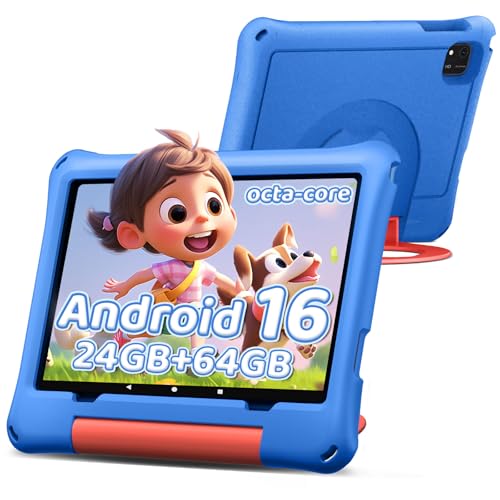
Powerful performance with octa-core processor.
Ample storage expandable up to 1TB.
Built-in parental controls for safer use.

Robust parental controls ensure safe usage.
Expansive 1TB expandable storage for apps.
Durable case ideal for kids' active play.

Durable case designed for active kids.
Enhanced parental controls for safe usage.
Dual WiFi ensures faster, stable connection.

User-friendly interface suitable for kids.
Durable design with protective case included.
Long battery life for extended use.
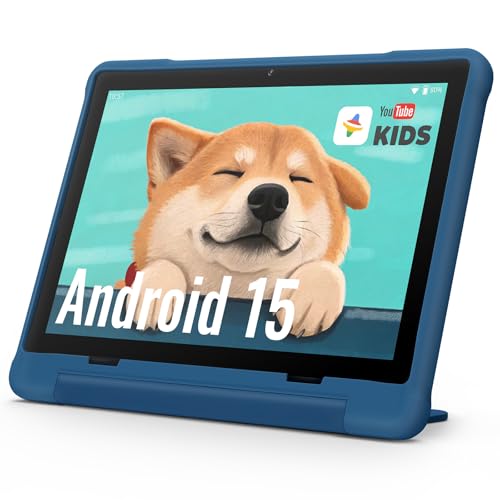
Large expandable storage for more apps and media.
Pre-installed parental controls ensure safe usage.
Fast WiFi 6 for smooth online experiences.

Large storage capacity with expandable 1TB option.
Includes robust parental controls for safety.
Fast 5G WiFi and Bluetooth 5.3 connectivity.
Start with the physical match. Check the model number, operating system, installed physical RAM, storage, display resolution, battery rating, wireless hardware, charger markings, and included case against the delivered product. Several supplied listings advertise figures such as 20GB, 21GB, 24GB, or 30GB of RAM that include virtual-memory expansion, while manuals identify much smaller amounts of physical memory. Android 15 and Android 16 claims also conflict across listings for related products. Storage claims can similarly combine internal capacity with microSD expansion; a stated 1TB or 2TB card limit is not the same as included storage. Battery runtime is a seller estimate affected by settings and use, not a safety certification or guaranteed result.
For radio traceability, look for a physical FCC ID and an FCC Equipment Authorization System record that match the tablet’s model, radio bands, and exposure documentation. A Wi‑Fi or Bluetooth authorization supports radio compliance, but it does not certify the battery, charger, case, or child-safe materials. For charging and electrical safety, the stronger evidence is a current, model-matched UL, ETL, or TÜV certificate covering the relevant tablet, battery, and supplied adapter. A USB‑C port or a stated 5V/2A input describes the connection; it does not prove that the charging system passed independent safety testing.
Child-directed packaging and accessories deserve separate attention. A Children’s Product Certificate supported by testing from a CPSC-accepted laboratory should cover applicable requirements for lead, phthalates, small parts, sharp edges, and any electrically operated toy-like features. A “kid-proof,” “shockproof,” or “drop-proof” case is only a marketing claim unless the maker discloses a suitable drop method, test surface, sample count, pass criteria, and laboratory details. A warranty is useful, but it does not establish that the battery is replaceable or that parts will remain available.
For everyday health, treat eye-care, low-blue-light, reading-mode, learning, behavior, or developmental promises cautiously. A model-specific TÜV Rheinland Low Blue Light or Flicker Free record is more meaningful than an unqualified display label, but screen comfort does not replace breaks, sleep protection, suitable content, or adult supervision. Family Link and comparable kids modes can provide profiles, app approvals, time limits, purchase controls, and web restrictions when correctly configured; they still need hands-on checking for bypasses, reset behavior, offline use, and permissions.
Privacy and longevity are equally important. Review the exact kids-mode privacy policy, preloaded apps, camera and microphone permissions, advertising practices, and parental-consent flow. A dated security-update commitment, current patch level, and stated end-of-support policy are stronger than an Android version number alone. For service life, look for documented parts and battery service, a realistic warranty, repair options, EPEAT or ENERGY STAR records, quantified environmental information, and a U.S. take-back or recycling route.
Across the supplied products, the recurring safety caveat is that none had the full combination of independent electrical certification, child-material testing, long-term security support, and repair or recycling documentation. Several also had conflicting hardware or Android claims. No category-wide contraindication was found, but young children and any child able to bypass settings require close adult setup and continuing supervision; eye-care wording, protective cases, and parental-control claims should not be treated as substitutes for that supervision.
For kids’ tablets, a reassuring feature is not the same as verified protection. The scores below reflect how specifically each product’s claims and documentation were supported in the supplied reviews; stronger scores generally belonged to products with clearer model matching, traceable records, or documented controls, while lower scores reflected conflicts, missing policies, or seller-only claims.
This measures whether the tablet supports age-appropriate use without unsupported eye-care, learning, behavioral, or developmental promises. For this category, high-scoring products pair specific, qualified comfort information with usable family controls; lower-scoring products make broad eye-protection claims or imply that kids can use the device without close supervision. No supplied product had model-specific evidence making screen features a substitute for breaks or a family media plan.
This measures protection against overheating, shock, battery failure, and charging hazards for the exact tablet and supplied adapter. Scores clustered around 68–71 because the reviews generally found stated charging details but no model-matched UL, ETL, or TÜV certification. A higher score therefore reflects better documentation or clearer identification, not proof that an uncertified charger or battery is unsafe. USB‑C and 5V/2A descriptions alone are not independent safety evidence.
This measures whether the tablet, case, stylus, and accessible parts are documented for the stated child age, including chemical, small-parts, sharp-edge, and toy-like electrical risks. Scores were mostly 68–70 because no supplied product had a located Children’s Product Certificate and supporting third-party material report. A protective EVA or silicone case may help routine handling, but it does not establish lead, phthalate, small-part, or mechanical compliance.
This measures whether the sold Wi‑Fi, Bluetooth, or cellular radio can be matched to a U.S. authorization, physical label, bands, and exposure records. Higher-scoring products included model-matched FCC documentation, such as the Plimpton Kids 20 and several documented tablet families; lower scores reflected absent labels or unresolved model differences. FCC radio evidence supports wireless compliance only—it does not certify charging safety, materials, privacy, or software.
This measures whether cameras, microphones, accounts, kids modes, advertising, and preloaded apps minimize and clearly explain child-data collection, with parental control and consent. Scores ranged from 50 to 74. Higher-scoring products had a documented provider policy or clearer account framework; the lowest-scoring example had an adult-oriented privacy policy that conflicted with its child marketing. Parents should still review every app, permission, advertising setting, and account flow.
This measures profiles, app approvals, time limits, purchase restrictions, content and web filtering, and resistance to easy bypass on the exact software. Higher-scoring products documented Google Family Link or similar controls; lower scores reflected manufacturer-only claims or no hands-on testing. Across the set, controls depend on a supervised account and adult setup. None should be assumed to resist factory resets, offline behavior, or every purchase route without testing.
This measures whether the maker identifies the exact hardware and Android build, provides current patches, and commits to a dated support period. Scores ranged from 68 to 83. Lenovo’s documented Android version, upgrade path, and two years of field security patches produced stronger evidence than products with only an Android 15 or 16 headline. A current version number without a patch date, update channel, or end-of-support policy is incomplete protection.
This measures whether the advertised Android version, physical versus virtual RAM, storage, display, battery, processor, connectivity, and special claims match the actual model. Scores ranged from 48 to 82. The strongest supplied example had clearly documented core specifications; many lower-scoring products conflicted on Android version, RAM, battery, processor, PPI, storage limits, or even dimensions. Buyers should verify Settings, build information, storage, labels, and hardware rather than trusting headline totals.
This measures how broadly current, authoritative records identify the exact hardware variant behind safety, radio, environmental, and performance claims. Scores ranged from 68 to 86. Higher-scoring products had model-specific FCC or ENERGY STAR records and clearer documentation; lower-scoring products relied mainly on seller pages or related-model records. A generic badge, shared manual, or processor specification is weaker than a registry entry that matches the device delivered.
This measures whether the tablet can survive normal child use and remain usable through repair, replacement, warranty, and parts support. Scores ranged from 62 to 76. Higher-scoring products had clearer warranties, cases, or a possible replacement touchscreen; lower scores included charging, touchscreen, or case-fit complaints and no repair path. “Drop-proof” wording is not enough without a disclosed test, and a case does not show that the battery can be serviced.
This measures energy use, materials and packaging transparency, longevity, and responsible disposal. Most supplied products scored 68–73 because they lacked EPEAT or ENERGY STAR records, quantified disclosures, or a U.S. take-back route. Lenovo’s exact model had ENERGY STAR certification, while Amazon’s Fire 7 had a U.S. Trade-in route for refurbishment or recycling. A warranty or microSD slot can extend usefulness, but neither proves responsible end-of-life handling.
This is a 10.1-inch Wi-Fi kids tablet intended for children ages 6 to 12. The catalog describes a 1280 x 800 LCD, 64GB internal storage, a microSD slot, 2MP front and 5MP rear cameras, a 5,000mAh battery, a protective case, and a basic stylus. It is meant for streamed media, games, school tasks, drawing, and parent-managed access. Published K10 documentation independently located online describes Android 15, 4GB physical memory plus 8GB virtual expansion, 64GB storage, and an estimated 6 to 8 hours of use. Those details conflict with this product page's Android 16, 16GB memory, and 550-hour battery-life claims. The documentation also describes child profiles, time limits, app access controls, and website filtering, but these controls were not independently hands-on tested on this exact sold unit.
This product suits a household seeking a basic, supervised large-screen device for a school-age child to watch downloaded or streamed content, make video calls, use simple education apps, or draw with a stylus. Its stated 64GB storage, microSD expansion, case, and stand are practical for local media and shared family use. It is more appropriate where a parent can configure accounts, regularly check permissions and content settings, supervise charging, and treat the stated parental controls as one layer of protection rather than a complete safety system.
It is not well suited to households that require confirmed electrical certification, traceable radio authorization, documented child-safe materials, or independently tested drop protection before a child uses the device. It also does not fit families that need a clearly documented child-data policy, verified COPPA-style parental consent, or tested resistance to a child bypassing controls. Avoid relying on the advertised Android version, memory figure, or battery-runtime claim for compatibility-sensitive school software, long travel days, or security-managed use until the delivered product is checked directly.
The protective case and built-in parental-control claims may help structure use, but they do not replace adult supervision, content review, sleep routines, physical activity, and screen-free times. American Academy of Pediatrics guidance favors a family media plan tailored to the child and household. The product's eye-care language is not backed by a model-specific TÜV low-blue-light or flicker-free certificate, so it should not be read as proof of eye-health protection. No public model-matched electrical-safety certificate, child-product certificate, materials report, FCC record, environmental certification, repair-parts policy, battery-service policy, or U.S. take-back program was located. The published K10 documentation does state a four-year manufacturer warranty and a removable protective case, which may support longer use if support is honored. The brand privacy policy says its products may collect device identifiers, network data, approximate location, usage information, screen-time settings, and advertising-related data, which deserves parent review before account setup.
This is a 10-inch Wi-Fi Android tablet marketed for children, with a touchscreen, front and rear cameras, USB-C charging, a protective case with stand, and a microSD slot. The product is intended for entertainment, reading, schoolwork, and parent-managed app access rather than as a toy or a medically protective screen device. An independent retail mirror corroborates a 64GB storage claim, 1280 by 800 display, 2.0 GHz octa-core processor, parental-control claims, and storage expansion up to 1TB, though expansion requires a separately obtained card. The seller states Android 16 and up to six hours of use. Publicly available product records conflict on Android version and advertised memory, including 20GB, 24GB, and an 8GB physical-memory description, so the installed configuration should be checked on arrival.
This product suits a household seeking a basic shared Wi-Fi screen for a school-age child, where a parent will inspect the installed Android version, available storage, security-patch date, charger labeling, and control settings before regular use. Its stated 10-inch screen, case, stand, 64GB internal storage, and optional microSD expansion fit reading, downloaded media, video calls, and light educational apps. It is more appropriate when caregivers can supervise setup and use a family media plan rather than relying on the tablet's eye-comfort or parental-control marketing alone.
It is not suited to households that require documented electrical certification, a traceable children’s-materials certificate, verified wireless authorization, or a formal privacy and security-support commitment before a child uses the device. It is also a poor fit for families needing tested resistance to drops, a replaceable battery, readily available repair parts, or a manufacturer recycling route. Do not treat the reading mode or low-blue-light claim as eye-health protection, and do not rely on the preloaded controls without testing restrictions, purchases, web access, and reset behavior yourself.
The product is sold with a child-oriented case and claims low-blue-light reading mode, but no model-specific TÜV low-blue-light or flicker-free certificate was located. The American Academy of Pediatrics recommends family rules, screen-free times and places, quality content, privacy review, and parental controls. Those measures remain important because a comfort setting does not replace supervised, balanced use. No CPSC recall or public regulator warning specifically naming this product was located in the searched sources. That is not proof of certification or material safety. Public records did not provide a traceable Children’s Product Certificate, electrical-safety listing, FCC document, battery-service plan, repair-parts policy, EPEAT registration, ENERGY STAR record, or U.S. electronics take-back route. The included case may help protect the device, but no disclosed drop-test method or repairability evidence supports a longer service life.
This is a 10.1-inch Wi-Fi kids tablet in a pink EVA case, intended for streamed media, simple games, reading, video calls, and parent-managed child accounts. Independent retail material identifies it as model K10 with 64GB of internal storage, microSD expansion up to 1TB, a 1280 by 800 display, and a 6000mAh battery. The advertised 10GB memory figure is described as 4GB physical RAM plus 6GB virtual expansion, not 10GB of installed RAM. Its child-focused software claim is Google Kids Space with parental controls. Google documents that Kids Space can work with Family Link for time limits, app approvals, blocking, and web restrictions when a supervised child account is set up. The product materials make an anti-blue-light eye-comfort claim, but no matching TÜV low-blue-light or flicker-free certificate was located. Publicly checkable records also did not establish model-matched electrical certification, radio authorization details, security-support dates, or repair and recycling provisions.
This product suits a budget-conscious household seeking a large, Wi-Fi-only screen for supervised entertainment, reading, and basic child apps at home or while traveling. It is most appropriate where an adult will create a supervised Google child account, configure Family Link before regular use, review app permissions, and set limits around meals, sleep, schoolwork, and offline activities. The included EVA case and expandable storage are practical for a child who watches downloaded content or uses simple educational apps, rather than demanding games or intensive multitasking.
It is not suited to households that require documented electrical certification, traceable U.S. radio authorization, independently verified child-material testing, or a published security-support lifecycle. It is also a poor fit for buyers who need confirmed Android 15 software, 10GB of physical RAM, dependable manufacturer repair support, or formal e-waste take-back. Children who may remove protective cases, access unrestricted settings, or use the device without an adult setting up Family Link should not rely on the preloaded kids mode alone for safety or privacy protection.
Google’s documented Kids Space and Family Link tools can support time limits, app approvals, app blocking, web restrictions, and parental management, but they require a supervised child Google account and active setup. The American Academy of Pediatrics recommends household media rules, screen-free times and places, privacy checks, quality content, and room for non-screen activities. The tablet’s anti-blue-light language is not backed here by a model-matched TÜV Rheinland low-blue-light or flicker-free record, so it should not be treated as an eye-health safeguard. No model-specific electrical certificate, Children’s Product Certificate, FCC filing match, accredited drop-test report, or published repair and recycling program was located. A CPSC recall search did not identify a COLORROOM tablet recall, but that is not proof of certification or low risk. The lack of a battery-service route and end-of-life plan also leaves important practical questions for a child product likely to experience wear and battery aging.
This is a Wi-Fi-only, 10.1-inch Android tablet marketed for children. The seller states that it has a 1280 x 800 LCD, 64 GB of storage with microSD expansion, front and rear cameras, a 5,000 mAh lithium-ion battery, and an EVA foam case with a stand. It is intended for videos, reading, games, and parent-managed apps at home or while traveling. Several retailers repeat the same model-specific configuration, including Android 15, Wi-Fi 6, 64 GB storage, and an eight-hour runtime claim, but these are seller or manufacturer statements rather than independent measurements. The stated A333 processor and Mali-G57 graphics align with Allwinner's current A333 platform information, but Allwinner describes that processor as five-core, not octa-core. That is a concrete conflict with the product's octa-core advertising.
This product suits a household seeking a large, basic Wi-Fi screen for a child to watch downloaded videos, read illustrated books, or use parent-selected apps, provided an adult is prepared to inspect the setup before handing it over. The included case and claimed expandable storage are relevant for shared family use, travel, and offline media. It is better suited to low-consequence entertainment and supervised learning than to a household that needs documented safety certification, managed support, or dependable long-term software maintenance.
It is not suited to families that require independently documented charger and battery safety, a traceable radio authorization, or tested child-material compliance before use. It also does not fit households relying on parental controls as a standalone safeguard, because the exact kids mode, installed apps, reset resistance, and Family Link compatibility were not independently tested. Avoid treating the eye-protection claim as a health intervention. Children who use it should still have adult supervision, screen-time limits, breaks, and age-appropriate content settings.
The product's eye-protection language is not supported by a model-specific TÜV low-blue-light or flicker-free certificate, and no human evidence was provided that its screen setting prevents eye harm or improves development. Screen-comfort settings can be useful preferences, but they do not replace the supervised, balanced media use recommended for children. The advertised parental controls may be strengthened through Google Family Link if the tablet supports it and a parent completes the account setup, but the exact product configuration was not verified. No public certification or report was located for the included charger, battery pack, EVA case materials, children's product testing, or a U.S. recycling and take-back program. The product contains a lithium-ion battery, which should not go in household trash or curbside recycling. At end of life, the whole device should go to an electronics or battery recycler that accepts lithium-ion batteries. No recall or regulatory warning specific to this product was located in the checked U.S. sources.
This is a 10-inch Wi-Fi kids tablet with a 1280 x 800 LCD screen, USB-C charging, 64GB stated internal storage, a protective case, and front and rear cameras. The seller describes a Unisoc T606 octa-core processor, a 6000mAh battery, Bluetooth 5.0, parental controls, and Android 16. A second retailer reproduces many of those specifications, including the 5MP front and 8MP rear cameras and a stated six-hour runtime, but this is not independent laboratory verification. The headline 24GB memory figure needs qualification. A retailer description identifies it as 4GB physical memory plus 20GB virtual expansion, so it should not be read as 24GB of installed RAM. The product also makes eye-protection language without a model-specific low-blue-light or flicker certificate. No exact-model FCC authorization, electrical-safety certification, children’s product certificate, software-support commitment, or independent test report was located.
This product fits a household seeking a basic, larger-screen Android device for supervised streaming, ebooks, downloaded videos, and simple educational apps. It is most suitable when an adult is prepared to inspect the settings, use a supervised Google child account where supported, add Family Link controls, and manage storage expectations. The included case and stated microSD expansion can be useful for everyday handling and keeping offline content available. Its stated six-hour battery runtime makes it more appropriate for shorter home or travel sessions than extended unsupervised use.
It is not suited to households that require documented electrical certification, a traceable children’s materials certificate, or verified drop testing before giving a connected device to a child. It also does not fit buyers who need a published security-update schedule, independently verified parental-control testing, or clear child-data practices from the tablet maker. Avoid treating the 24GB headline as installed memory, because the available description identifies most of it as virtual expansion. It is also unsuitable where eye-care claims are a deciding safety requirement.
The product is marketed to children aged roughly 2 to 12 and includes cameras, wireless connections, app access, and claimed parental controls. Those features make adult setup important. Google documents that Family Link can limit apps, manage screen time, require approvals for Play downloads and purchases, and set Chrome website restrictions when a supervised account and compatible Android device are used. Those controls do not replace supervision, and purchase approval only covers transactions using Google Play billing. No product-specific CPC, FCC record, UL, ETL, TÜV, EPEAT, ENERGY STAR, battery-recycling program, repair-parts policy, or environmental certification was located. CPSC guidance says children’s products subject to applicable safety rules require a written certificate based on testing by a CPSC-accepted lab. No recall or CPSC warning specifically naming this product was located in the search performed. The seller’s eye-protection language lacks a matching third-party certificate or human-evidence support for this screen.
This is a Wi-Fi-only, 10.1-inch children’s tablet sold with a protective case, a 1280 x 800 IPS display, USB-C charging, a 3.5 mm headphone jack, 64 GB of storage, and claimed microSD expansion up to 1 TB. It is intended for child entertainment and educational apps, with a seller-stated parental-control mode and front and rear cameras. Several basic hardware claims are repeated by third-party retail listings, including the screen size, 64 GB storage, 6000 mAh battery, and 5 MP front plus 8 MP rear cameras. They are not backed by an accessible manufacturer manual or independent lab report. More importantly, listings for the same C3 model conflict on Android version, installed memory, claimed runtime, and warranty length. The current product page says Android 16 and 24 GB RAM, while other listings describe Android 14 or 15 and identify part of the advertised memory as virtual expansion.
This product suits a household that wants a larger child screen for downloaded videos, ebooks, simple learning apps, and supervised video calls, and that values a bundled protective case and wired-headphone option. It is most appropriate where an adult can set up the device, inspect the installed Android version and security patch level, choose apps individually, and keep use within a family media plan. Its claimed expandable storage may also be useful for offline media on trips, subject to testing the chosen microSD card.
It is not suited to families that need documented electrical certification, traceable radio authorization, a published child-data policy, or independently tested materials before giving a connected device to a young child. It is also a poor fit where parents need reliable, tested controls that resist app installation, account changes, factory resets, and web-filter bypass. Avoid relying on the advertised memory, operating-system version, battery runtime, or warranty duration for school, accessibility, or long-term support planning because public listings conflict on those points.
Screen time and content choice remain more important than a tablet’s general eye-comfort language. Public listings mention low blue light, but no model-specific TÜV Rheinland low-blue-light or flicker-free record was identified. The American Academy of Pediatrics encourages a family media plan and active parent involvement rather than treating device features as a substitute for supervision. The headphone jack can help limit disruption around others, but safe listening volume still depends on adult guidance. The product is marketed for children, yet no public Children’s Product Certificate, CPSC-accepted laboratory report, material disclosure, battery certification, charger certification, FCC label record, repair-parts program, or U.S. recycling and take-back program was identified for this exact model. CPSC explains that children’s products subject to applicable safety rules require testing and a written certificate. The bundled case may reduce everyday cosmetic damage, but no disclosed drop-test method, replaceable-battery policy, or parts availability demonstrates long service life.
This is a 10.1-inch Wi-Fi Android tablet sold for children ages 2 to 12. It has a 1280 by 800 display, 64GB stated storage, a microSD slot, cameras, USB-C charging, and a bundled protective case. The product listing also states a 6000mAh battery and up to six hours of video playback, but these runtime and charging claims were not independently tested. Its defining software claim is Google Kids Space with parental controls. Google documents that Kids Space, when configured with a supervised child account and Family Link, can support app approvals, app blocking, screen limits, and web restrictions. The exact product’s installation and setup were not independently tested. Product documentation linked to this exact product conflicts with the current listing on Android version and memory configuration, so the delivered software and physical RAM should be checked in Settings after setup.
This product suits a household seeking a basic large-screen Android device for supervised videos, simple games, reading, and travel use, where a bundled case and expandable storage are practical. It is most appropriate when an adult will create a supervised Google child account, configure Family Link, review installed apps, and confirm the actual Android version, security patch date, storage, and RAM in Settings before regular use. The stated six-hour video runtime should be treated as a manufacturer estimate, not a verified result.
It is not suited to households that require independently documented electrical certification for the exact tablet and charger, or traceable proof of child-safe materials for a child-targeted device. It is also a poor fit where reliable long-term security updates, repairable batteries, replacement parts, or a published recycling route are necessary. Families relying on strict controls should not assume they work by default. Family Link and a supervised child account need to be configured, and controls should be tested before unsupervised use.
Google’s documented Kids Space and Family Link tools can provide practical safeguards, including time limits, app blocking, approval controls, and Chrome content restrictions. Those protections depend on a supervised child account and parent setup. They are not a substitute for adult supervision or a family media plan. The eye-comfort claim is manufacturer-stated only. No product-specific low-blue-light or flicker-free certificate was located. The bundled case may reduce ordinary bump damage, but no disclosed drop-test method, battery-service route, repair parts program, or accredited durability report was found. No current model-matched electrical-safety listing, children’s materials certificate, FCC traceability record, environmental certification, or U.S. take-back program was located. No product-specific CPSC recall or warning was found in the review search. The unresolved Android and memory conflict is important because accurate software identification is central to safe updates and parental setup.
This is a 10.1-inch Wi-Fi kids tablet sold with an EVA-style protective case, USB cable, microSD expansion claim, and a stated 6,000 mAh battery. The product is presented for children aged 3 and older, with an Android interface intended for games, videos, reading, and parent-managed access. An independent reseller page repeats the advertised 1,280 x 800 display, 4 GB physical RAM plus claimed virtual-memory expansion, Kids Space, and an 8 to 12 hour battery-use estimate. Those remain manufacturer-stated specifications, not laboratory-confirmed results. Google documents that Kids Space can work with Family Link for app limits, approvals, and time controls, but the product itself was not independently tested to confirm setup, reset resistance, or software behavior. Public product descriptions also conflict on internal storage, stating both 32 GB and 64 GB for what appears to be the same configuration.
This product suits a household seeking a basic, large-screen device for supervised videos, ebooks, simple games, and downloaded media, especially where an included case and expandable-storage claim are useful. It is most appropriate when a parent is prepared to set up a child Google account, Family Link, Kids Space settings, app approvals, screen-time limits, and content restrictions. The stated 1,280 x 800 screen and 6,000 mAh battery may be adequate for casual use, but those performance details should be treated as manufacturer-stated rather than independently measured.
It is not suited to families that need documented electrical certification, verified child-material testing, a traceable wireless authorization label, or a confirmed security-update schedule before placing a connected device in a child's hands. It is also a poor fit for households needing dependable long-term repair support, a replaceable battery, published drop-test results, or a manufacturer recycling route. Children who need unrestricted school software, demanding games, reliable high-definition streaming, or independently verified storage capacity may need a product with more transparent technical documentation.
The checked listing evidence identifies Google Kids Space and parental controls, and Google confirms that compatible Kids Space setups can use Family Link for screen limits, app blocking, approvals, purchase controls, and web-content choices. These controls require active parent setup and do not make the tablet a substitute for supervision. The American Academy of Pediatrics advises using household media rules that preserve sleep, physical activity, and screen-free time. The product's eye-protection wording was not matched to a model-specific low-blue-light or flicker-free certificate. No public model-matched CPC, material test report, electrical-safety listing, battery certification, charger certification, or independently verified drop test was found. No product-specific recycling or take-back pathway, EPEAT registration, ENERGY STAR listing, repair-parts policy, or battery-service plan was found either. The public product descriptions also disagree on storage capacity, which weakens confidence in the precision of the advertised specifications.
This is a 10.1-inch Wi-Fi Android tablet marketed for children age 3 and older. The product listing states 64GB of storage, 8GB of memory, a 1280 by 800 LCD, a 5,000mAh lithium-polymer battery, Bluetooth 5, Wi-Fi 6, a case, Kids Space, and Family Link. Storage expansion to 512GB is also manufacturer-stated. Its strongest independently traceable point is radio compliance. An FCC equipment authorization for tablet model E0097 includes K106A as a listed variant in its user documentation, with Wi-Fi and Bluetooth test materials and RF exposure documentation. This does not independently verify the advertised Android version, memory configuration, battery runtime, supplied charger safety, case composition, or the current security-patch level. Family Link can provide substantial controls when the tablet is set up with a supervised child Google account, but the exact setup was not hands-on tested.
This product fits a household seeking a large, entry-level Wi-Fi screen for supervised videos, reading, downloaded media, and simple Android apps, where a parent is willing to configure a child Google account and actively use Family Link. It is most appropriate when the stated 64GB storage, microSD support, case, and one-year warranty are checked immediately after delivery. Its radio documentation is a useful traceability point for a family that wants confirmation that the wireless tablet variant has an FCC authorization.
It is not suited to households that need independently documented charger and battery certification, verified child-safe material testing, or a disclosed repair and replacement-parts program. It is also a poor fit where parents cannot create and maintain a supervised Google account, since the listed Family Link protections depend on that setup and have limits outside Google-controlled services. Families needing a guaranteed security-support period, confirmed current patch level, reliable web-filter testing, or formal privacy disclosures for all preloaded apps should require those records before use.
The radio hardware has meaningful U.S. traceability. The K106A appears in the user documentation for an FCC-authorized tablet variant, and the associated filing includes Wi-Fi, Bluetooth, and RF exposure testing. The manual reports a highest measured SAR value below the FCC limit, but this is a compliance result, not a reason to treat wireless use as risk-free or to disregard normal supervised-use habits. Family Link can help parents set limits, control apps, approve Google Play purchases, and filter Chrome use when a child uses a supervised account. The American Academy of Pediatrics still recommends family rules, quality content, screen-free times and parental involvement, rather than relying on device controls alone. No model-specific electrical-safety listing, children’s materials certificate, repair policy, take-back program, ENERGY STAR record, or EPEAT record was located. No matching CPSC recall or public incident report was found in the checks completed, but absence of a match is not proof of safety.
This is a 10-inch Android tablet marketed for children ages 3 to 12. The listing describes Android 14, a 1280 by 800 display, 64GB of built-in storage, microSD expansion up to 1TB, Wi-Fi, Bluetooth, a 5,000mAh lithium-ion battery, and a protective case with a stand. It is intended for streaming, games, reading, basic schoolwork, and parent-managed app use. The configuration needs careful reading. An independently mirrored listing identifies the advertised 14GB figure as 3GB physical memory plus 11GB virtual memory, rather than 14GB of installed physical memory. The same listing supports the stated 64GB storage, 10-inch display, A523 processor platform, and included case, but these remain seller or manufacturer specifications rather than lab-confirmed performance results. No model-specific public safety certificate, FCC authorization match, software-support commitment, or independent performance test was located.
This product suits a household seeking a basic large-screen Android device for supervised videos, ebooks, simple games, and offline media, where a protective case and expandable storage matter more than demanding performance. It is most appropriate when an adult will set up a supervised child Google account, configure Family Link, review installed apps, and keep charging supervised. Buyers should treat the memory as a 3GB physical-memory device with virtual-memory assistance, which is more suitable for light, one-app-at-a-time use than heavy multitasking.
It is not well suited to families that need documented electrical certification, material testing, traceable radio authorization, or a published child-data policy before placing a connected device with a young child. It also does not fit households needing reliable long-term security patches, repairable batteries, replacement parts, or an established recycling route. Avoid assuming the seller’s 14GB memory headline means 14GB of physical memory. It is also a poor fit for demanding games, many simultaneous apps, or unmanaged web access.
The product is marketed directly to children, so adult setup remains important. The American Academy of Pediatrics advises family media planning, age-appropriate boundaries, and active discussion alongside technical controls. Family Link can add useful account-level screen-time, app, permission, purchase, and content controls on supervised Android use, but it does not substitute for caregiver oversight. No low-blue-light or flicker-free certification was located, and there is no basis to treat the display as an eye-health feature. No model-matched public electrical-safety certificate, Children’s Product Certificate, materials report, FCC record match, recall, or exposure warning was located in the searched U.S. sources. Absence of a public record is not proof of a defect, but it prevents independent confirmation. Environmental information is also limited. No EPEAT or ENERGY STAR listing, packaging disclosure, repair-parts plan, battery-service policy, or U.S. take-back route was found for this product.



