Best Overall

Grace & Stella Gold Under Eye Masks
Vegan and cruelty-free soothing gel formula.
Effective against dark circles and puffiness.
Generous pack of 48 pairs included.
 Lauren Wilson
Vegan and cruelty-free soothing gel formula.
Effective against dark circles and puffiness.
Generous pack of 48 pairs included.

Contains retinol for effective skin restoration.
Includes hyaluronic acid for deep hydration.
Offers a generous 48 pairs per package.

Reduces puffiness with cooling gel effect.
Hydrates skin with hyaluronic acid.
Brightens under-eye area with niacinamide.

Contains marine collagen and pearl extract.
Helps reduce dark circles and puffiness.
Includes 30 pairs for extended use.

Instantly soothes and refreshes tired eyes.
Combines caffeine and peptides for effective depuffing.
Convenient six-pair pack for multiple uses.

Brightens and firms under-eye area effectively.
Easy to apply, stays in place well.
Reduces puffiness and dark circles noticeably.

Contains natural marine collagen for enhanced skin elasticity.
Hydrates deeply with hyaluronic acid.
Effectively reduces puffiness and dark circles.

Hydrates and refreshes tired eyes effectively.
Includes a variety for different needs.
Easy to apply and stays in place.
Reduces puffiness and dark circles effectively.
Infused with 24k gold and collagen.
Provides a soothing, cooling sensation.

Infused with amino acids and collagen.
Effective for reducing puffiness and dark circles.
Generous supply with 40 pairs included.
Whether a patch “works” depends on the finished product, not just an attractive ingredient list. Humectants such as glycerin and sodium hyaluronate can support a temporarily moisturized appearance. Caffeine, niacinamide, peptides, vitamin C derivatives, retinal or retinol, botanicals, collagen, and snail-derived ingredients may be promoted for additional benefits, but concentrations, directions, tolerability, and finished-product testing matter. A study of another ingredient—or a maker’s claim that a product is “clinically tested”—does not establish that the exact patch produces a durable result.
The most useful performance evidence is a controlled human study of the exact patch, with relevant under-eye outcomes, objective or blinded assessment, clear duration, statistics, and disclosed conflicts of interest. Small, immediate-use perception studies can support limited claims about how hydrated or refreshed skin looked after application; they do not prove lasting wrinkle, dark-circle, firmness, or eye-bag improvement. Percentages can also mislead when they come from a small group, lack a control group, measure only immediate impressions, or do not disclose the protocol.
For safety, look for a complete, current ingredient declaration that matches the package, clear directions, warnings, quantity, responsible business, lot or batch information, and a way to report reactions. Fragrance-free can reduce one common exposure, but several supplied formulas still contain botanicals, preservatives, aroma ingredients, propylene glycol, dyes, or vitamin A derivatives that may trouble sensitive eyelid skin. Eye-area pigments should be identified and permitted for that use; a glittered or colored patch deserves particular caution when no migration or compatibility testing is available.
Water-rich patches need preservation and contamination controls. Individually sealed pairs reduce repeated handling, while jars require careful storage and hygienic use. Stronger substantiation would include preservation testing under ISO 11930, microbial examination consistent with USP <61> and <62>, ISO 22716 manufacturing controls, and current lot-specific evidence from an accredited laboratory. No supplied product had all of those records publicly available.
Certifications and registries should be specific to the product or its documented controls. Examples in the supplied evidence include the National Eczema Association Seal of Acceptance and a Leaping Bunny certificate; brand-only vegan, cruelty-free, “hypoallergenic,” dermatologist-tested, or biodegradable wording is weaker without an issuing-body registry entry, certificate scope, date, and product identification. Environmental claims likewise need named materials, recycled content, accessible recycling or composting conditions, or a documented life-cycle assessment.
Every supplied option creates disposable patch waste. Buyers should consider pair count, jars, scoops, foil, sachets, and outer packaging, while remembering that packaging reduction must not compromise freshness. Across the reviews, the recurring safety concerns were formula or label inconsistencies, absent finished-product eye-area testing, undisclosed active concentrations, and insufficient microbial documentation. Several products also contained retinoids or fragrance-related ingredients without adequate periocular or pregnancy-sensitive guidance. Do not use a patch on broken, inflamed, infected, or recently treated skin; avoid the eye itself; stop for stinging, rash, swelling, tearing, or other irritation. People with eyelid eczema, recurrent contact dermatitis, known ingredient allergies, or current eye symptoms should use particular caution and seek clinical advice when appropriate.
These topics distinguish a briefly refreshing cosmetic treatment from one that is better documented for repeated use near the eyes. The supplied scores are comparative signals within this group, not proof that any product is risk-free or clinically effective.
This considers unresolved recalls, serious adverse-event concerns, ingredient-safety issues, and the quality of the product’s safety support. For a water-rich patch used beside the eye, a high score means no identified regulatory safety signal plus clearer safety substantiation; a low score reflects unresolved formula or regulatory concerns. Supplied scores ranged from 63 to 78.
This measures fragrance, essential oils, sensitizing preservatives, dyes, complete disclosure, and finished-formula tolerability near the eyelids. A high-scoring product generally avoids listed fragrance or essential oils and gives buyers a usable ingredient list, while a low-scoring one may contain aroma, fragrance, retinoids, botanicals, or conflicting declarations. Scores ranged from 48 to 82.
This covers patch edges, migration, abrasion, serum movement, glitter, and whether disclosed colorants are permitted around the eye. A high score is supported by identified eye-area colorants and lower migration concerns; a low score reflects glitter or unidentified pigments without ocular compatibility evidence. Supplied scores ranged from 54 to 79.
Hydrogel patches contain water and may be stored in jars or handled with a scoop, so preservation and contamination control matter. Higher scores reflect individually sealed or otherwise protected formats and clearer quality controls; lower scores reflect shared containers without public preservation, microbial, or lot-specific evidence. Scores ranged from 64 to 76.
This examines whether promoted ingredients such as retinal, retinol, caffeine, botanicals, or acids have clear amounts, warnings, frequency guidance, and stop-use instructions. A high score means the product pursues cosmetic benefits with understandable exposure guidance; a low score reflects undisclosed concentrations or missing retinoid and pregnancy-sensitive advice. Scores ranged from 58 to 80.
This measures whether buyers can identify the exact formula, quantity, responsible business, directions, warnings, lot information, and reaction-contact details. A high score means listing and package information are consistent and traceable; a low score reflects missing declarations or formula conflicts. Supplied scores ranged from 48 to 82.
This asks whether promises stay within supportable appearance claims rather than implying permanent, medical, or drug-like correction. Higher scores belonged to products that framed hydration, cooling, brightness, or temporary de-puffing more cautiously; lower scores reflected inflated or inconsistent wrinkle and dark-circle language. Scores ranged from 48 to 83.
This measures evidence for the exact patch in human users, including relevant outcomes, controls, objective or blinded assessment, duration, and transparent reporting. A high score may reflect product-specific testing, but maker-reported small or immediate studies remain limited; a low score means no located human study. Scores ranged from 68 to 78.
This evaluates current third-party testing, audited certification, or a public registry for the exact product or its manufacturing controls. A high score is supported by verifiable certification or independent evidence, while a low score relies mainly on brand wording. Supplied scores ranged from 68 to 82; most products lacked public lot testing or complete certification records.
This measures disposable hydrogel pairs and the associated jar, spoon, sachets, foil, trays, and shipping materials per treatment. A higher score indicates less avoidable material for the treatment format, while a lower score reflects substantial recurring waste or extra packaging. All supplied patches are discarded after use, and scores ranged from 45 to 70.
This checks whether vegan, biodegradable, compostable, recyclable, recycled-content, biobased, or climate claims identify the exact material and usable end-of-life conditions. A high score requires specific support rather than broad green wording; a low score reflects unsupported or conflicting claims. Supplied scores ranged from 60 to 71, with no product having complete life-cycle documentation.
This is a 48-pair tub of single-use gold hydrogel under-eye patches. The manufacturer directs users to apply them to clean, makeup-free under-eye skin for 15 to 20 minutes, discard them, then pat in remaining serum. It is intended for temporary hydration and a less puffy, smoother-looking under-eye area. The current manufacturer ingredient list is fragrance-free and centers on glycerin, carrageenan, humectants, allantoin, hydrolyzed vegetable protein, and sodium hyaluronate. It also contains mica, iron oxides, and titanium dioxide for its gold appearance. FDA lists those declared color additives as permitted for cosmetic use in the eye area. The brand's Leaping Bunny certification was independently documented. However, no public clinical study, finished-product eye-compatibility report, preservation challenge test, or lot-specific microbiology certificate was located.
This product suits an adult who wants a short, cooling-style hydration step before makeup, after travel, or after a poor night's sleep, and who understands that any smoothing or de-puffing effect is cosmetic and likely temporary. The 48-pair tub is practical for frequent users who are comfortable storing and handling a multi-use container. It is a more suitable match for people without a history of reactions to leave-on eye products, propylene glycol, or phenoxyethanol.
It is not well suited to people with eyelid eczema, active dermatitis, a known preservative or propylene glycol allergy, recurrent eye irritation, or a current eye infection. Contact-lens wearers and people prone to watery eyes should avoid placing patches close to the lash line and stop if serum migrates into the eye. It also does not fit buyers seeking clinically demonstrated correction of persistent dark circles, structural eye bags, pigmentation, or wrinkles, because product-specific human evidence was not found.
The current manufacturer list is fragrance-free and contains no retinoid, exfoliating acid, caffeine, or essential oil. Its gold appearance comes from mica, iron oxides, and titanium dioxide, all of which FDA lists as allowed for cosmetic eye-area use. Grace & Stella's Leaping Bunny certificate independently supports its animal-testing policy. No product-specific FDA recall, warning letter, or import alert was identified in the public sources reviewed. Important evidence gaps remain. The brand has not published a finished-formula periocular tolerance report, microbial challenge test, batch microbiology certificate, or clinical results report for these patches. Each treatment uses two disposable hydrogel patches, and the 48-pair format is supplied in a multi-use tub. No package material weights, recycled-content documentation, biodegradability certification, compostability evidence, or product life-cycle assessment was located.
This product is a 48-pair set of purple, disposable hydrogel under-eye patches. The manufacturer directs users to place a pair on clean, makeup-free under-eyes for 20 to 30 minutes, discard the patches, then pat in remaining essence. It is intended as a short treatment for the appearance of puffiness, dark circles, dryness, and fine lines. The manufacturer-published ingredient list identifies a water, glycerin, propylene glycol, carrageenan, and glucomannan hydrogel base, with allantoin, sodium hyaluronate, ceramide NP, and retinyl palmitate. It contains no listed fragrance or essential oil. Its purple appearance comes from synthetic fluorphlogopite and listed mineral pigments. FDA lists the disclosed titanium dioxide, iron oxides, and ferric ferrocyanide as permitted for cosmetic eye-area use. No public finished-product clinical report, ocular compatibility report, preservation challenge test, or lot-specific certificate of analysis was located.
This format suits an adult who wants a brief, occasional under-eye hydration ritual rather than a proven treatment for persistent dark circles or bags. The 48-pair count is most practical for frequent users, shared self-care settings, or event preparation. It may also fit people who prefer to avoid fragrance and essential oils near the eye area, provided they tolerate retinoids and humectants. Use only on intact skin and keep the serum out of the eyes.
It is not well suited to people with very reactive eyelid skin, active eczema around the eyes, known sensitivity to retinoids, propylene glycol, or cosmetic pigments, or a history of eye-area contact dermatitis. Pregnant or breastfeeding users who avoid topical vitamin A derivatives should select a non-retinoid patch unless their clinician advises otherwise. It also does not suit buyers seeking published clinical proof, batch-level microbiological documentation, or a low-waste reusable treatment format.
The declared formula is fragrance-free and contains no listed essential oil, which is useful for reducing avoidable scent exposure near the eye. Retinyl palmitate is a vitamin A derivative reviewed by the Cosmetic Ingredient Review, but this product does not disclose its level or provide retinoid-specific precautions on the checked manufacturer page. The listed purple colorants, titanium dioxide, iron oxides, and ferric ferrocyanide, are permitted by FDA for cosmetic eye-area use. No FDA recall or warning letter specific to this product or brand was identified in the checked FDA sources. The manufacturer describes the brand as vegan and Leaping Bunny certified, but an issuing-body registry entry for this specific product was not located during this review. Each use ends with discarding a pair of hydrogel patches. The manufacturer did not publish packaging weights, recycled content, recyclability instructions, compostability evidence, or a product life-cycle assessment, so the environmental impact of 48 single-use treatments remains insufficiently documented.
This is a jar of 30 pairs of single-use hydrogel under-eye patches. The manufacturer directs users to lift each patch with the supplied spatula, press it under the eye for 20 to 30 minutes, remove it, and discard it. It is a cosmetic intended to temporarily hydrate, cool, and improve the appearance of puffiness, dark circles, and fine lines. The finished-formula ingredient list is publicly available and starts with water, glycerin, niacinamide, caffeine, and sodium hyaluronate. It contains no listed fragrance or essential oil. The package documentation identifies Dewycream Inc. in Albany, New York, gives a service email, and provides external-use, avoid-eye-contact, irritation, storage, and child-safety cautions. The maker reports a 32-person clinical study with hydration and puffiness results, but has not published its protocol, controls, duration, or full report.
This product suits an adult who wants a short, occasional under-eye hydration and cooling step before makeup, after poor sleep, or during a morning routine. It is especially relevant for someone who prefers fragrance-free products and wants a 30-pair format rather than individually wrapped sachets. The $20.99 listed price works out to about $0.70 per pair before tax. It is best treated as a cosmetic refresh step for temporary appearance changes, not as a treatment for persistent dark circles or pronounced bags.
It is not a good fit for anyone with an active eye infection, inflamed eyelid skin, open eczema, or a current unexplained rash around the eyes. Those users should avoid eye-area cosmetics until healed and seek clinical advice when appropriate. People with known reactions to botanical extracts, shea, PEG-based solubilizers, or niacinamide should patch test cautiously or choose a product with more specific tolerance testing. It also does not suit buyers seeking independently published clinical evidence, quantified active concentrations, or low-waste reusable care.
The disclosed formula avoids listed fragrance and essential oils, and it does not contain retinoids or exfoliating acids that can be harder to tolerate near the eyelids. Sodium hyaluronate has a Cosmetic Ingredient Review safety assessment covering current cosmetic uses. The package also says to avoid direct contact with eyes, discontinue use for irritation, keep the product out of children's reach, and use each patch once only. No relevant FDA recall, warning letter, or import alert was identified in the searches performed. Important evidence gaps remain for a water-rich, eye-area product. The brand has not made public a lot-specific microbiology certificate, preservative challenge test, or independent ocular compatibility report. The maker calls the product vegan and cruelty-free, but no matching third-party certification or registry entry was found. Thirty pairs of disposable hydrogel patches create recurring single-use waste, and there is no public documentation of patch composition, recycled content, recyclability, compostability, or package weights.
This is a box of 30 pairs of single-use, glitter hydrogel under-eye patches. The manufacturer directs users to place one patch beneath each eye for 15 minutes, with refrigeration suggested for a cooling effect. It is marketed for temporary hydration, a fresher-looking eye area, puffiness, dark circles and fine lines. An independently published ingredient list identifies water, glycerin, red algae, marine collagen, sodium hyaluronate, pearl extract, glycols, botanical extracts, hydroxyacetophenone and 3-O-ethyl ascorbic acid. That supports a humectant-focused formula, but not the product-specific before-and-after claims. The manufacturer displays a "dermatologically tested in the USA" statement, yet no public test report, ocular compatibility report, clinical study, microbiological certificate or preservative-challenge result was located. The marketplace vegan description also conflicts with the disclosed marine collagen and pearl extract.
This format suits an adult who wants a short, occasional hydration-focused under-eye step before an event or after a poor night of sleep, and who is comfortable with colorful disposable patches. Thirty pairs provide repeated use without opening a shared jar, and the 15-minute manufacturer-stated routine is simple. It is most appropriate for people seeking a temporary moisturized, smoother-looking effect rather than treatment of persistent dark circles, swelling or wrinkles. It is not a good fit for someone who requires independently demonstrated performance outcomes.
People with very reactive eyelids, eyelid eczema, a history of reactions to eye cosmetics, or known sensitivity to botanical extracts should be cautious because no public periocular compatibility report was found. Those with fish or shellfish allergies, or anyone avoiding animal-derived ingredients, should avoid relying on the vegan marketplace description because the independently published formula lists marine collagen and pearl extract. Do not use on irritated, infected or broken skin, and stop use if burning, redness, swelling or eye discomfort occurs. Persistent one-sided swelling, pain, vision changes or severe dark circles warrant clinical assessment.
The disclosed formula is fragrance-free on the independently published ingredient list and is centered on humectants such as glycerin, sodium hyaluronate and trehalose. It also includes marine collagen, pearl extract and botanical extracts. These ingredients make the vegan marketplace description unreliable. Public FDA recall, warning-letter and import-alert searches did not identify a product-specific action, but that does not substitute for finished-product safety testing. The manufacturer says the patches are individually packed and single use, which reduces reuse and handling of a wet product. It also produces recurring waste from 60 disposable hydrogel pieces and their packaging. No public documentation was found for recyclable, compostable, biobased or recycled-content materials. The manufacturer’s dermatological-testing statement was not accompanied by a public protocol, laboratory report or eye-area compatibility result, and the glitter colorants or material were not clearly disclosed in the independently published formula.
This product contains six pairs of crescent-shaped, serum-soaked hydrogel patches for the under-eye area. Apply one pair to clean, dry skin, leave it on for at least 10 minutes, discard it, then pat in the remaining serum. Summer Fridays states that it can be used daily or as needed. The published ingredient list is substantial and fragrance-free, with glycerin, niacinamide, caffeine, sodium hyaluronate, panthenol, oat extract, peptides, several botanical extracts, and disclosed colorants. The National Eczema Association independently lists this exact product as carrying its Seal of Acceptance. Summer Fridays also reports an independent 30-person clinical study in which all participants showed immediate improvement in hydration and barrier function, but the full study protocol, measurements, and report are not public.
This product suits an adult who wants a short, cosmetic hydration step before makeup, after travel, or when the under-eye area looks temporarily dry or puffy. The six-pair box fits occasional use rather than a long treatment course. It is especially relevant for buyers who prefer a fragrance-free listed formula and value the National Eczema Association Seal of Acceptance. Expectations should stay focused on immediate moisture, comfort, and a refreshed appearance, rather than treatment of persistent dark circles or structural under-eye concerns.
It is not a low-risk choice for someone with a known allergy to any listed botanical, especially anise, pine, oat, cucumber, green tea, ginseng, or berry extracts. People with active eyelid dermatitis, broken skin, recent eye procedures, eye infection symptoms, or a history of reactions to eye cosmetics should seek clinician guidance and avoid applying a new product close to the eye. It also does not suit buyers seeking publicly available ocular testing, ingredient concentrations, or reusable low-waste care.
The strongest externally confirmed health signal is the National Eczema Association Seal of Acceptance listing for this exact product. Its published ingredient list is fragrance-free and includes humectants and soothing ingredients such as glycerin, sodium hyaluronate, panthenol, allantoin, and oat extract. It also contains caffeine, niacinamide, peptides, numerous botanical extracts, and colorants. Sensitive users should still check the complete list because fragrance-free formulas can contain sensitizing botanicals. No product-specific FDA recall, warning letter, or import alert was identified in the reviewed FDA sources. The product is disposable after each use, with six pairs per box. That format can reduce reuse contamination at the treatment level, but it also generates repeated hydrogel and packaging waste. The brand states vegan and cruelty-free status, but no product-specific third-party environmental certification, recycled-content documentation, compostability evidence, or life-cycle assessment was located.
This is a box of six pairs of gold foil under-eye patches, each intended for one 10 to 15 minute use on clean, dry skin. The brand directs users to place the foil side up, remove the patches after use, and pat in remaining serum. It is a short-contact cosmetic treatment intended to hydrate and temporarily improve the appearance of puffiness, dark circles, and fine lines. The brand publishes a detailed current ingredient list that starts with water, glycerin, butylene glycol, and 1,2-hexanediol, followed by peptides, humectants, amino acids, botanical extracts, panthenol, jojoba oil, and sodium hyaluronate. An independently maintained ingredient database reproduces the same packaging-derived list, although its record was last updated in 2022. The brand also reports favorable consumer-use results, but no study protocol, participant count, control group, objective measurements, or full report was located.
This product suits an adult who wants a portable, short-contact under-eye treatment before makeup, after travel, or before an event, and who values individually sealed portions over a reusable jar format. The six-pair box makes sense for occasional rather than daily use. It is most appropriate for someone without a history of reactions to its listed botanicals, who understands that hydration and temporary de-puffing are appearance-focused cosmetic effects rather than treatment for an underlying eye or skin condition.
It is not well suited to people with active eyelid eczema, recent eye procedures, broken or irritated under-eye skin, or a prior allergy to calendula, aloe, skullcap, jojoba, or other cosmetic botanicals. People who require ophthalmologist-tested products, published patch-test data, or lot-level microbial documentation should choose a product that makes those records available. It is also a poor fit for low-waste routines because each application uses a disposable pair and individual packaging.
The current disclosed formula contains humectants and skin-conditioning ingredients including glycerin, panthenol, sodium hyaluronate, beta-glucan, amino acids, acetyl hexapeptide-8, and copper tripeptide-1. It does not list fragrance, lavender oil, retinoids, exfoliating acids, or cosmetic color additives. That reduces some common eye-area exposure concerns, but does not establish universal tolerability. The formula still contains multiple botanical extracts, and no public finished-product periocular safety test was located. Individually sealed single-use pairs offer a practical contamination-control advantage over repeatedly opened wet patches. They also create six sets of disposable patches and pouches per box. The brand says it is optimizing post-consumer recycled content and mono-material packaging when available, but does not identify the package materials, recycled-content percentage, recycling pathway, or third-party environmental certification. Its cruelty-free, vegan-friendly, BPA-free, nut-free, and synthetic-fragrance-free statements are brand claims, not product-specific third-party certificates located in this review.
This product is a 12-pair set of disposable hydrogel patches placed beneath the eyes for 10 to 15 minutes, then discarded. An independent retailer identifies the pack as 36 g, which conflicts with the 12-fluid-ounce catalog field. The intended use is short-term hydration and a temporarily refreshed appearance for dry or puffy-looking under-eyes. The manufacturer publishes a full ingredient list with glycerin, trehalose, sodium hyaluronate, hydrolyzed collagen, pearl extract, and several botanical extracts. The listed formula contains no fragrance, essential oil, or added colorant. MAREE also states that the product is dermatologist tested and clinically tested in the United States, but no study report, protocol, laboratory name, or results for the finished patches was publicly available for verification. The brand supplies directions and a U.S. business address, but no public lot-specific microbiology or ocular compatibility report was located.
This product suits an adult who wants a brief, low-complexity under-eye hydration ritual and prefers to avoid fragrance and essential oils. The 12-pair format fits occasional use before makeup, travel, or mornings when under-eyes look temporarily dry or puffy. It is most appropriate for someone who treats the patches as a cosmetic comfort product with possible short-lived appearance benefits, rather than expecting treatment of persistent dark circles, eczema, allergies, or structural eye bags.
It is not a strong fit for people with active eyelid dermatitis, a current eye infection, inflamed skin around the eyes, known sensitivity to hydrogel masks, marine-derived ingredients, propylene glycol, or botanical extracts. Anyone who needs clinically documented improvement in dark circles, wrinkles, or swelling should look for a product with a published finished-product trial. It is also unsuitable for buyers seeking low-waste skincare or independently documented microbiological and periocular safety testing.
The published ingredient list is a relative safety strength. It does not list fragrance, essential oils, retinoids, exfoliating acids, or color additives, and it identifies the main humectants and botanical extracts. The manufacturer advises a patch test for extra-reactive skin. No product-specific FDA recall, warning letter, or import-alert entry was located in the public FDA sources reviewed. That is reassuring but does not replace finished-product safety substantiation. MAREE states that the patches are dermatologist tested and made with sustainable components, but no test report, accredited laboratory documentation, manufacturing certification, or environmental certification was available for confirmation. The patches are single-use and discarded after each session. No evidence was found that the hydrogel or packaging is recyclable, compostable, biobased, or made with verified recycled content. Keep the product away from the eye itself, stop use if irritation occurs, and do not use on infected or inflamed skin.
This is an 18-pair variety set of disposable hydrogel under-eye patches, with three pairs each in gold, pink, blue, purple, bronze, and white. The brand directs users to apply a pair to clean, dry under-eye skin for 15 to 20 minutes, remove it, and leave the remaining serum on the skin. It is designed for temporary hydration and a refreshed-looking under-eye area. The defining feature is six genuinely different manufacturer-disclosed formulas, rather than one serum in different colors. They include humectants such as glycerin and sodium hyaluronate, plus variant-specific ingredients including vitamin C, caffeine, niacinamide, botanical extracts, peptides, and retinyl palmitate. FDA materials confirm that the listed iron blue, iron oxides, mica, and titanium dioxide colorants are permitted for cosmetic eye-area use. No public finished-product clinical study, preservation test, or third-party dermal or ocular compatibility report was located.
This product suits a buyer who wants occasional, short under-eye treatments and values being able to inspect six disclosed formulas before use. The 18-pair box is practical for someone who wants to try hydrating, caffeine, vitamin C, peptide, niacinamide, and retinoid-containing options without committing to a large quantity of one formula. It is most appropriate for users without known sensitivity to retinoids, propylene glycol, phenoxyethanol, or the botanical extracts in the blue patches, and who accept disposable treatments.
It is not a strong fit for people with recurrent eyelid dermatitis, fragrance-independent cosmetic allergies, rosacea around the eyes, or a history of reactions to plant extracts, preservatives, or propylene glycol. People avoiding topical retinoids during pregnancy, while breastfeeding, or under clinician guidance should avoid the purple formula unless their clinician approves it. It also does not suit buyers seeking a product with published clinical results, independently released ocular compatibility testing, lot-specific microbial documentation, or a lower-waste reusable treatment format.
The six formulas are water-rich hydrogel products with glycerin, carrageenan or glucomannan, and several standard cosmetic preservation-support ingredients. The manufacturer discloses the formulas, and the listed iron blue, iron oxides, mica, and titanium dioxide are FDA-permitted for eye-area cosmetics. The ingredient lists do not show added fragrance or essential oils. However, the purple patches contain retinyl palmitate and the blue patches contain multiple botanical extracts, so a patch test is sensible for sensitive users. No matching FDA recall, warning letter, or public regulatory action was located in the sources reviewed. That is not the same as independent proof of finished-product safety. No public clinical study, ocular compatibility report, preservation-challenge result, microbial certificate, or current third-party cruelty-free certification record was found for this product. The patches are disposable single-use treatments, which limits reuse-related contamination but creates a meaningful waste burden. The vegan and cruelty-free statements are manufacturer-stated, not independently verified here.
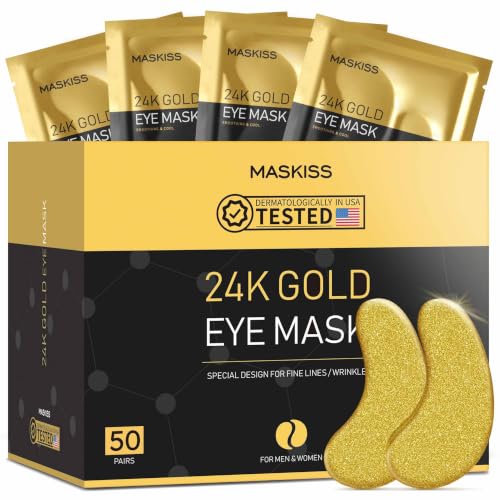
This product is a container of 50 pairs of gel under-eye patches intended to sit below the eyes for 20 minutes, then be removed while remaining serum is patted in. The manufacturer says to use them twice daily or at least weekly, and markets collagen, hyaluronic acid, 24K nano gold, and plant extracts for hydration and a more refreshed-looking eye area. The official product page supplies the pair count and use instructions but does not provide a full ingredient declaration or a finished-product test report. A third-party ingredient transcription for Maskiss 24K Gold Eye Mask lists humectants including glycerin and sodium hyaluronate, plus mica, fragrance, botanical extracts, methylparaben, diazolidinyl urea, and iodopropynyl butylcarbamate. That transcription conflicts with the catalog description of this product as fragrance-free and unscented, so buyers should check the current package label before use.
This product fits an adult who wants a frequent, short under-eye hydration ritual and values a large 50-pair supply over individually sealed treatments. It is most suited to someone treating temporary tired-looking or dry-looking under-eyes as a cosmetic appearance concern, not a medical condition. Because the public evidence is limited, the appropriate user is comfortable with manufacturer-led benefit claims, checks the current package ingredient panel, and patch tests before placing the patches near the eyes.
It is not well suited to people with fragrance allergy, contact dermatitis, known sensitivity to formaldehyde-releasing preservatives, gold sensitivity, or a history of reactions around the eyelids. The ingredient transcription includes parfum and several potential sensitizers despite the catalog's fragrance-free description. People with an active eye infection, inflamed eyelid skin, broken skin, unexplained dark circles, persistent swelling, or vision symptoms should avoid cosmetic self-treatment and seek appropriate clinical advice instead.
The main health issue is disclosure quality. The manufacturer promotes a gentle, side-effect-free formula, but a third-party transcription of the product's ingredient panel lists fragrance, botanical extracts, gold, diazolidinyl urea, and iodopropynyl butylcarbamate. FDA notes that fragrance, gold, and formaldehyde-releasing preservatives can be relevant cosmetic allergens. Mica, also listed in that transcription, is permitted by FDA for cosmetic use around the eye. Stop use if irritation occurs, and do not apply near an infected or inflamed eye area. The patches are disposable treatments, so 50 pairs mean 50 used pairs of gel material plus the container and shipping materials. No package material specification, recycled-content documentation, compostability evidence, or third-party environmental certification was found. The catalog's vegan and cruelty-free wording is manufacturer-stated, with no public certification record located for this product.
This product is a 40-pair set of gold-colored hydrogel under-eye patches intended for short cosmetic treatments targeting the appearance of puffiness, dark circles, dryness, and fine lines. The brand says the patches contain collagen, amino acids, Centella asiatica, and mica, and markets them for at-home use around the under-eye contour. The brand page confirms a 40-pair option, but it does not publish a complete ingredient panel, directions, warnings, a finished-product safety report, or clinical results. Two third-party ingredient records list water, glycerin, hydrolyzed collagen, corn amino acids, Centella, chamomile extract, allantoin, phenoxyethanol, mica, and Aroma. That reported Aroma conflicts with the retail claim that the product is fragrance-free or unscented.
This product suits a buyer who wants a sizeable supply of disposable hydrogel patches for occasional cosmetic hydration and a temporarily refreshed under-eye appearance. The 40-pair count is practical for people who use patches before events, after travel, or as part of a regular self-care routine. It is better suited to buyers comfortable with manufacturer-led cosmetic claims and with checking the delivered package label before first use, especially because the complete current ingredient declaration was not published by the brand page reviewed.
It is not well suited to people with fragrance sensitivity, a known chamomile or botanical allergy, active eyelid dermatitis, inflamed skin around the eyes, or an eye infection. Third-party formula records list Aroma and chamomile extract despite fragrance-free retail wording. People seeking evidence-based treatment for persistent dark circles, swelling, eczema, or changes in vision should not treat cosmetic patches as a substitute for clinical assessment. It also does not meet the needs of shoppers requiring publicly available clinical testing, batch microbiology data, or verified vegan sourcing.
The reported formula is relatively simple, with glycerin, hydrolyzed collagen, allantoin, Centella, chamomile extract, phenoxyethanol, mica, and Aroma among the ingredients listed by third-party databases. Mica is permitted by FDA for cosmetic eye-area use. No product-specific FDA recall or warning letter was found in the enforcement sources reviewed. Still, a public finished-formula eye-area safety study, microbial test report, and lot-specific certificate of analysis were not located. The main disclosure issue is the mismatch between fragrance-free or unscented retail wording and third-party records that list Aroma. This matters for the delicate eyelid area and for fragrance-sensitive users. Each treatment uses a disposable pair of hydrogel patches, creating ongoing single-use material waste. No product-specific recycled-content, recyclable, biodegradable, compostable, biobased, or life-cycle documentation was found in the reviewed brand material.


