Best Overall

SUNUV SUN2C 48W UV LED Nail Lamp
Compatible with all gel types.
Quick drying with 48W power.
Convenient 4 timer settings.
 Lauren Wilson
Compatible with all gel types.
Quick drying with 48W power.
Convenient 4 timer settings.

Three timer settings for versatile drying options.
Fast curing with 48W power efficiency.
Compatible with various gel polish types.
Rechargeable and cordless for easy mobility.
80W power ensures fast drying times.
Mirror base enhances curing efficiency.
Fast drying with powerful 180W capability.
Convenient auto sensor for hands-free operation.
Versatile with four timer settings for flexibility.

Rechargeable and portable for easy use.
Large touch display for simple operation.
Fast curing with adjustable timer settings.

Quick drying with 48W power for salon results.
Four timer settings offer flexible drying options.
User-friendly design with a sleek black finish.

Compact design for easy home use.
Rechargeable with convenient gooseneck positioning.
Multiple timers and auto sensor for flexibility.

Portable design with cordless convenience.
Quick drying with 54W power.
Durable metal base enhances stability.

Cordless design for convenient mobility.
Five timer settings for customized drying.
Elegant rhinestone design enhances aesthetics.

Cordless convenience enhances portability and ease of use.
Fast curing with a powerful 72W output.
Versatile timer settings for customized drying times.
A more substantiated product has model-specific evidence rather than generic claims. Look for an independent ISO/IEC 17025 laboratory report identifying the exact product, operating distance, wavelength spectrum, irradiance map, timer setting, and gel systems tested. The report should show complete curing at the stated settings, including relevant layer thicknesses and nail positions. A gel maker’s compatibility list and curing instructions are also more useful than a claim that the lamp works with “all” gels. Independent evidence matters because electrical input watts are not the same as ultraviolet output, and figures such as 30W, 54W, 80W, 120W, or 180W do not establish dose or cure performance.
For exposure, seek an IEC/EN 62471 photobiological-safety report for the exact model and operating distance, using recognized risk-group methods such as ANSI/IES RP-27. A timer, motion sensor, or low-heat setting can help avoid unnecessary run time, but none replaces measured exposure data. The relevant wavelengths in the supplied products include 365 nm, which is UVA, and 405 nm, which is near-visible violet; calling a curing wavelength non-ultraviolet does not make it so. A gradual or “low-heat” mode is useful only if its temperature control and cure instructions are supported by testing.
Electrical claims should be traceable to the exact lamp and supplied adapter in an OSHA-recognized testing laboratory directory, such as UL Product iQ, Intertek’s ETL directory, or the CSA Group database. CE, RoHS, generic FCC language, or seller-issued certificates alone are not equivalent U.S. product-safety listing evidence. Buyers of cordless products should also look for battery chemistry, IEC 62133-2 and UN 38.3 documentation, charging instructions, and a realistic U.S. recycling route.
Prefer a stable, cleanable opening; removable bases can help with pedicures and residue removal, but decorative crevices may be harder to clean. A written warranty, replacement adapter or battery policy, repair route, and take-back program are meaningful signs of a longer service life. Conflicting bead counts, wattages, dimensions, warranty terms, or battery descriptions are reasons to treat the product identity and claims cautiously.
Across the supplied products, the recurring safety caveat is that none had located independent, exact-model proof of spectrum, hand dose, complete curing, temperature performance, and U.S. electrical listing together. Most are therefore better suited to adults who already have compatible gel instructions and can apply thin layers while keeping uncured gel off the skin. People with acrylate or methacrylate allergy, unexplained nail-area dermatitis, photosensitivity, or prior reactions should not rely on broad compatibility claims; several reviews also caution against use by children or by professional users needing documented process control. Stop if there is unusual heat, rash, itching, swelling, pain, nail lifting, or persistent irritation, and keep rechargeable products out of household trash and curbside recycling at end of life.
The scores below reflect the supplied reviews and the evidence available for each exact product. A higher score means the relevant controls or documentation were stronger among these products; it does not mean a product was independently certified or risk-free.
This measures whether the lamp’s spectrum and timed hand exposure are kept as low as practical while still curing the intended gel, with model-specific output and protective guidance. Among the supplied products, stronger results came from concrete timers, exposure advice, and warnings; lower results reflected missing irradiance and dose measurements or misleading wavelength language. No product had complete exact-model exposure proof.
This measures whether independent testing shows complete curing for the claimed gels, layer thicknesses, thumbs, and edges. It matters because an apparently hard surface can still conceal incomplete curing and residual sensitizing material. Scores clustered in the high 60s to 70, but every supplied review reported no independent exact-product cure study. A higher score therefore reflects better instructions or compatibility evidence, not laboratory validation.
This measures whether instructions address compatible gels, thin coats, full cure times, skin cleanup, symptoms, and stopping use. It matters because uncured gel and under-curing can expose users to sensitizing acrylates. Higher-scoring products gave more practical directions about thin layers, skin contact, or reactions; lower-scoring products omitted several of those steps. No product supplied a complete allergy-prevention protocol.
This measures tested temperature rise and whether a genuinely slower or low-heat mode controls painful curing heat without compromising the cure. Timed gradual modes improved scores among the supplied products, but the reviews consistently noted that independent nail-position temperature testing was absent. A manufacturer’s “low-heat” label is therefore weaker than measured temperature control and compatible cure instructions.
This measures whether the exact lamp and supplied power system are listed by an OSHA-recognized testing laboratory to an applicable U.S. standard. Corded products avoid rechargeable-battery hazards, but still need adapter and electrical verification. Cordless products add charging and battery risks. The supplied scores were generally similar because no exact UL, ETL, or CSA listing was located for the reviewed products and adapters.
This measures stability, hand and toe access, cleanable surfaces, controls, and features that reduce contact with uncured gel or contamination. Removable bases, automatic sensors, enclosed openings, and goosenecks helped products score higher. Lower results reflected limited cleaning guidance, decorative crevices, or designs intended only for single-nail flash curing. A removable base improves access but does not prove disinfection suitability.
This measures whether wattage, speed, “UV/LED,” compatibility, lifespan, and safety claims are defined and supported. The main distinction is electrical input watts versus measured UV output and cure dose. Products with conflicting wattages, bead counts, or broad “all gel” claims scored lower; clearer instructions and more restrained descriptions scored higher. None justified treating headline wattage as proof of curing.
This measures traceable third-party reports and certification records matched to the exact lamp and included adapter. A high score requires more than generic reports, CE, RoHS, FCC language, or seller certificates. Scores remained mostly in the high 60s because no supplied product had located exact-model proof combining independent cure, spectrum, photobiological, thermal, and U.S. electrical testing.
This measures whether the responsible business, model, support contact, warranty route, and product identity are consistent, with recall and incident records available. Products with published U.S. contacts, serial or model information, and support scored better. Conflicting specifications, unclear manufacturers, or limited support reduced scores. No supplied review identified a product-specific recall, but a clean recall search is not certification.
This measures credible longevity evidence, warranty coverage, replacement parts, repair options, and take-back support. Products with a stated warranty and identifiable support scored better, while products lacking parts or repair routes scored lower. Across the set, LED boards, cords, adapters, or batteries were commonly not replaceable, and no supplied product had a fully documented repair-and-take-back pathway.
This measures whether a cordless lamp discloses its battery and provides safe end-of-life directions and a realistic U.S. recycling route; corded products receive an advantage by avoiding an unnecessary rechargeable battery. Corded models generally scored higher on this topic. Cordless reviews commonly lacked chemistry, replacement, certification, or take-back details, so their convenience adds an unresolved battery-disposal burden.
This is a corded, dome-style gel nail curing lamp for home manicures and pedicures. SUNUV describes dual 365 nm and 405 nm LEDs, automatic hand sensing, four timed cycles, and a removable magnetic mirrored base. Its support material identifies an ABS housing and a stainless-steel base panel. It is intended for gel products, not ordinary air-dry nail polish. The key limitation is evidence quality. SUNUV gives coating guidance such as thin layers and 30 to 90 second cures, but no independent, model-specific irradiance map, spectrum report, or gel cure testing was located. Its own current materials also conflict, listing both 30 and 33 LEDs, and presenting both a two-year product-page warranty statement and a one-year written warranty policy. Those inconsistencies make the precise performance and longevity claims less dependable.
This product suits an adult home user who already follows the cure instructions for a known gel system and wants a full-hand lamp with a removable base for occasional pedicures. It is most appropriate for someone comfortable applying very thin coats, cleaning uncured product from surrounding skin before curing, and using the gel maker's stated cure time rather than assuming every gel will cure identically. The written one-year defect policy also gives a defined support path for a direct-store purchase.
It is not well suited to people with a prior acrylate or methacrylate reaction, active nail-fold irritation, photosensitivity, or a clinician's instruction to limit UVA exposure. Those users need product-specific medical guidance and a gel system with clear compatibility information. It is also a weak fit for salon operators, frequent users, or anyone needing documented electrical listing, measured hand exposure, validated low-heat performance, or independently verified cure results for particular builder, hard, or extension gels.
The lamp emits the UVA-adjacent wavelengths commonly used to cure gel products. SUNUV recommends short timed use and advises frequent users to protect the backs of their hands. That is relevant because UV nail-lamp studies show measurable exposure, while FDA notes that residual reactive methacrylate monomers in artificial nail systems can cause allergic reactions in sensitized people. Keep uncured gel off skin, use thin layers, and stop using the gel system if irritation occurs. SUNUV identifies a U.S. business contact and offers a one-year limited warranty, but no model-matched public test report or registry entry was located to independently confirm the advertised ETL claim, UV dose, cure performance, or heat control. The lamp is corded and has no rechargeable battery. However, SUNUV does not offer replacement cords or publish a product take-back or electronics-recycling program, so end-of-life handling should use a local electronics recycler.
This is a compact, corded gel-curing lamp for one hand or foot at a time. The stated body size is 7.5 by 5.9 by 3.5 inches, and the design includes a removable magnetic base, automatic hand sensor, and 5, 30, and 60 second buttons with a 99 second automatic cycle. It is intended for UV or LED-curable gel products, not ordinary air-dry polish. SUNUV states that its lamps use 365 and 405 nm LEDs and lists the SUNone at 28.8 W. Those are manufacturer figures, not an independently mapped spectrum or irradiance report for this unit. A published cell-culture study used a similarly named SUNONE or SUN1 24/48 W lamp, but its 48-LED description does not cleanly match this 30-LED product, and it was not a human safety or gel-cure validation study.
This product suits an occasional home user who already uses UV or LED-curable gel with clear manufacturer cure instructions, wants a small corded lamp, and values timed cycles plus a removable base for occasional pedicures. It is most appropriate when each gel layer is kept thin, uncured material is kept off skin, and the stated gel-specific cure time is followed. The one-year warranty offers a defined support route for a manufacturing defect, although replacement parts are not sold separately.
It is not well suited to a salon or frequent user who needs independently verified full cure across several professional gel systems, especially builder gels, extensions, dark colors, or thicker layers. It is also a poor fit for people with prior acrylate allergy, unexplained reactions to gel products, photosensitivity, or a need for documented photobiological and electrical certification for the exact unit. Buyers seeking repairable equipment or a manufacturer e-waste return route should choose a product with those services documented.
The lamp emits UV-range light according to SUNUV, which lists 365 and 405 nm wavelengths and advises frequent users to apply SPF to the backs of their hands. That is useful exposure advice, but it does not replace a model-specific photobiological safety report. Published research on a similarly named lamp family found reduced keratinocyte viability after prolonged cell exposure, yet it cannot establish the human risk or dose of this particular product. Acrylate allergy is principally a gel-product risk, and thin layers, skin cleanup, and full gel-specific curing remain important. No CPSC recall was located in the checks conducted. The corded design avoids a rechargeable battery, but the product is still electronic waste at end of life. SUNUV publishes a one-year limited warranty, while also stating that replacement LED boards and power cords are not sold. No dedicated U.S. recycling or take-back route for this product was located.
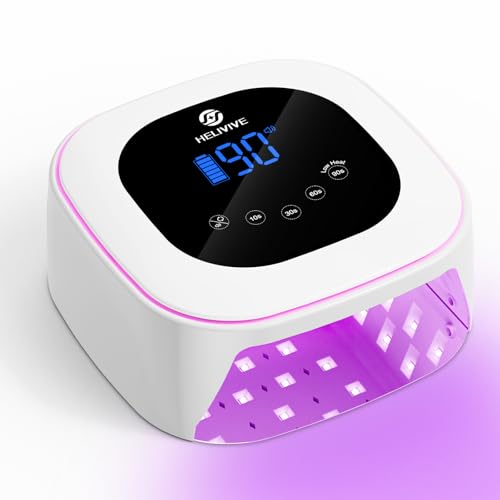
This is a white, cordless nail-curing lamp with a rechargeable battery, four timed cycles, automatic hand sensing, an ambient-light ring, and a reflective removable base. The product record lists a 12 V battery-powered design and a 2.47-pound packed weight. Third-party marketplace records consistently identify the product as model L30 and describe 36 dual-source LEDs, 10, 30, 60, and 90-second settings, and a magnetic removable base. The claimed 80 W rating, up to seven hours of cordless operation, and compatibility with all gel products are manufacturer-stated claims repeated by resellers. No model-specific spectrum, irradiance map, cure testing, photobiological-safety report, temperature-rise report, battery test documentation, or U.S. electrical-safety listing was located. Therefore, its actual UV dose, gel compatibility, and charging safety cannot be confirmed from public evidence.
This product fits an adult home nail-art user who specifically needs a portable curing setup for occasional gel-polish practice, training, or use away from a nearby outlet. The removable base and stated hand and foot chamber are practical for users who want easier access for routine cleanup between applications. It is most appropriate for someone prepared to follow the cure instructions from their chosen gel manufacturer, use thin layers, and treat the lamp's performance and safety claims as unverified rather than laboratory confirmed.
It is not well suited to professional settings that need documented electrical listing, repeatable curing validation across named gel systems, or a traceable service and replacement-parts program. People with a history of acrylate allergy, photosensitivity, UV-sensitive skin conditions, or medicines that increase light sensitivity should not rely on its broad safety claims because no product-specific dose or exposure guidance was found. It is also unsuitable for households seeking clear rechargeable-battery disposal instructions and a manufacturer take-back route.
UV nail lamps in published category studies have generally emitted predominantly UVA radiation, but measured output and permissible exposure have varied substantially between models. This product has no public model-specific spectrum or hand-exposure test, so its UV dose cannot be inferred from the stated 80 W rating or LED count. Published dermatology evidence also links uncured acrylate and methacrylate nail products with allergic contact dermatitis. Preventing gel from touching skin and fully curing a gel according to that gel maker's instructions remain important. This cordless product contains a rechargeable battery, with one marketplace record describing three lithium-ion cells. No public battery chemistry label, UN 38.3 summary, replacement-battery program, or brand take-back scheme was found. EPA advises keeping lithium-ion batteries and battery-containing electronics out of household trash and curbside recycling, and using dedicated battery or electronics collection instead. No product-specific U.S. recall was identified in the CPSC recall sources searched.
This is a white, corded tabletop gel-curing lamp sold for home or salon manicures. The product listing describes a 9 by 8 by 4 inch ABS housing, touch controls, automatic hand sensing, an LCD display, 42 LEDs, and four timed settings. It is intended for UV and LED gel products, not conventional air-dry nail polish. The core performance claims remain manufacturer-stated. Gugusure says its lamps use dual-source LEDs, work with 99 percent of gel polishes, and offer a 99-second low-heat setting. A third-party, affiliate-supported hands-on blog describes a similar 42-bead, corded unit and reports successful curing with thin gel coats and builder gel, but it is not an accredited laboratory cure, spectral, temperature, or electrical-safety test. No exact-product photobiological-safety report, irradiance map, gel compatibility list, or U.S. NRTL listing was located in this review.
This product fits an adult home user who already understands gel application, uses thin layers, and is prepared to follow the gel maker's stated curing instructions. Its corded tabletop format, touch timers, and automatic sensor suit a fixed manicure station rather than travel use. It is also more appropriate for someone using a gel system whose manufacturer provides a compatible wavelength and cure-time recommendation. The published warranty and direct email support offer a defined contact route if the unit arrives faulty.
It is not suited to people with a prior acrylate allergy, unexplained nail-fold rash, photosensitivity, or a condition or medicine that increases sensitivity to UV, unless a clinician advises otherwise. It is also a poor fit for users who need documented UV dose limits, independently verified gel compatibility, or an OSHA-recognized electrical-safety listing for a salon policy. Avoid relying on it to cure thick, opaque, or unfamiliar gels without the gel maker's compatible-lamp instructions.
UV-curing lamps expose the hands to ultraviolet radiation, but this product has no located model-specific spectrum, irradiance, exposure-dose, or photobiological-safety report. Gugusure advises sunscreen or manicure gloves for frequent or sensitive users and advises against staring into the LEDs. Those are sensible precautions, but they do not replace measured output data. The seller also does not provide complete allergy-control instructions for preventing gel contact with skin, recognizing symptoms, or stopping use after a reaction. FDA notes that reactive methacrylate traces can cause redness, swelling, pain, and allergic reactions in sensitized people. The lamp is corded, so it does not add a rechargeable-battery waste stream. Gugusure publishes a six-month warranty, expandable to 12 months, but no repair guide, replacement power-part catalog, or electronics take-back route was found. No Gugusure-specific CPSC recall or public safety warning was located during this review. The responsible business and customer-service route are publicly identified, which improves follow-up accountability.
This is a rechargeable, cordless UV and LED gel-curing lamp for hands or feet. Lavinda sells the black version as a 54W unit with a magnetic detachable base, automatic hand sensor, four timers, including a 90-second low-heat setting, and a claimed 4 to 6 hours of cordless use. Those are manufacturer statements, not independent performance findings. A matching Lavinda instruction sheet specifies 365 nm and 405 nm light, 30 lamp beads, a 12V, 2A original adapter, and a three-hour charge time. The product catalog instead says 36 beads, so the bead-count specification is inconsistent. No model-specific irradiance map, UV dose measurement, photobiological-safety report, or independent gel cure test was located. That matters because the product is marketed for many gel systems, while proper curing depends on the gel formula, applied thickness, wavelength, and exposure time.
This product suits an experienced at-home gel user or mobile nail technician who already follows the curing instructions supplied by each gel maker, uses thin coats, keeps uncured material off skin, and wants a cordless lamp with a removable base. It also fits someone who values an available one-year warranty and direct brand support. It is most appropriate where portability and a timer-based workflow matter more than independently documented optical output or validated compatibility with a particular gel system.
It is not well suited to a person with a past acrylate allergy, unexplained fingertip dermatitis, eczema around the nails, or prior reactions to gel, acrylic, or nail glue. Those users need clinician guidance and highly controlled exposure practices. It is also a poor fit for users who need independently verified UV dose data, a confirmed U.S. electrical-safety listing, or documented cure validation for a specific builder gel, extension gel, or professional gel line. Do not treat the general compatibility claim as proof for a particular formula.
The stated 365 nm and 405 nm dual-source design is consistent with the wavelength range used by many gel-curing products, but it does not establish the actual hand dose or prove safe, complete curing. Published nail-lamp research shows that exposure depends greatly on the individual lamp and hand position. The manual warns against prolonged direct eye exposure and includes a low-heat timer, but independent UV, temperature-rise, and cure testing for this product was not located. Acrylate monomers in uncured gel can cause allergic contact dermatitis, especially when product contacts skin or curing is incomplete. The product instructions do not adequately address those risks. The rechargeable design may reduce dependence on a mains outlet, yet battery chemistry, removal instructions, and brand-supported recycling are not disclosed. At end of life, the lamp and its battery should not enter household trash or curbside recycling. A matching CPSC recall was not located during this review search.
This is a corded tabletop UV LED gel-nail curing lamp for home manicures and pedicures. SUNUV lists 36 LEDs, 365 nm and 405 nm wavelengths, a hand sensor, LCD countdown, and 10, 30, 60, and 99-second cycles. Its current product page also gives thin-layer use instructions, with 30 seconds for base coat and 60 to 90 seconds for color and top coat. The manufacturer states that the 99-second setting is a lower-heat cycle and that the unit has over-temperature protection. Those are useful operating features, but no public independent irradiance map, spectrum test, cure test, hand-temperature test, or photobiological-safety report was located for this specific product and supplied adapter. SUNUV also claims ETL compliance, but an exact product listing in the public Intertek directory was not located during verification.
This product suits an adult home user who already uses gel products with clear manufacturer curing instructions and wants timed, hands-free curing in a compact corded format. It is most appropriate for careful users who apply very thin coats, keep uncured product off surrounding skin, and are willing to follow the gel maker's stated lamp compatibility and cure times. The LCD timer and motion sensor can make repeated coat-by-coat application more controlled than manually timing every cycle.
It is not well suited to people with a known acrylate or methacrylate allergy, active hand dermatitis, broken skin around the nails, or a prior reaction to gel systems. They should avoid casual experimentation with uncured gel and obtain clinical advice where appropriate. It is also a poor fit for users who need documented model-specific electrical listing, UV safety measurements, or independently verified curing of a particular professional gel system. The public evidence located does not provide those confirmations.
UV-cured gel systems can expose skin to sensitizing acrylate and methacrylate monomers if uncured product contacts the skin or if cure is incomplete. FDA advises following labeled directions and avoiding skin contact with methacrylate monomers. Published dermatology evidence links home UV-cured nail products with allergic contact dermatitis, and incomplete curing can leave residual monomers. SUNUV's thin-layer instructions and timer guidance are relevant controls, but they are manufacturer guidance, not validated cure evidence for every gel. SUNUV states 365 nm and 405 nm LEDs, a lower-heat cycle, over-temperature protection, and ETL compliance. Public independent reports confirming these safety and performance claims for this exact product were not located. The unit is corded, so it does not add a rechargeable battery waste stream. SUNUV offers a one-year limited warranty, but no replacement-parts, repair, manufacturer take-back, or electronics-recycling program for this product was identified. End-of-life disposal should use a local electronics recycler rather than household trash.
This is a compact, cordless UV and LED gel-curing light with a flower-shaped 10-bead head on a flexible gooseneck. It is intended mainly for close, targeted flash curing of nail tips, extension gel, glue, or nail art rather than for enclosing an entire hand. The maker states that it has a 1,800 mAh rechargeable battery, a recommended working distance of about 5 cm, touch controls, an auto sensor, and 10, 30, 60, and 90 second cycles. The supplied product information gives gel-specific times and advises thin coats and compatible UV or LED gel, but no independent spectrum, irradiance map, or cure-completeness report was found for this exact product. Its stated 30 mW/cm² irradiance is therefore not independently confirmed. Available documentation also presents both 30 W and 10 W figures, weakening clarity about electrical power versus optical output.
This product suits an adult DIY gel user who needs a small, cordless positioning light for brief, localized flash curing while holding a press-on tip, extension, charm, or glue placement steady. The adjustable head and short timer options are practical where a full-hand lamp would be awkward. It is most appropriate for users who already have the gel maker's specific cure instructions, can apply very thin layers without touching surrounding skin, and can use a separate full-cure process when their gel system requires one.
It is not well suited to buyers who need independently verified curing of a particular gel system, especially professional users responsible for repeatable service across many clients. People with a prior acrylate allergy, unexplained fingertip or eyelid dermatitis, photosensitivity, or a medicine that increases UV sensitivity should seek clinical advice before UV gel services. It is also a poor fit for households needing verified battery and charger certification, a documented low-heat setting, replaceable battery support, or clear recycling instructions.
UV and LED nail lamps commonly emit UVA-range radiation, and laboratory studies of nail dryers show that sufficiently intense or prolonged exposures can damage cultured cells. This product's instructions advise users not to stare into the light and give timed use, but the available material does not show an exact-product IEC 62471 photobiological test, spectrum, or exposure-risk classification. Use only the shortest gel-maker-specified cycle, keep uncured gel off skin, and stop use if a rash, itching, swelling, or nail changes occur. The cordless design contains a rechargeable battery, stated by the maker as 1,800 mAh, but its chemistry, replacement method, transport testing, and end-of-life directions were not located. Makartt publishes a 12-month electronics warranty and U.S. business contacts, which improves support traceability. No product-specific CPSC recall was located during this review. The maker does not publish a repair-parts, battery-replacement, or take-back program for this product, so disposal should use an appropriate local battery and electronics collection route rather than household trash.
This is a battery-powered UV LED nail-curing lamp for gel polish, base and top coats, and builder gel. The product record lists 54 W, a 15,600 mAh rechargeable battery, four timers from 15 to 99 seconds, and a roughly 2.65-pound body. It is intended for hands or feet, with an automatic hand sensor and a removable metal base. Seller-published instructions describe 24 LED beads, a reflective interior, up to 10 hours of claimed runtime after about two hours of charging, and a 99-second low-heat mode. Those are manufacturer-stated operating claims, not independently confirmed performance figures. No matching IEC 62471 photobiological report, irradiance map, wavelength spectrum, gel-specific cure test, or exact-product U.S. safety-listing record was located.
This product suits a home user or mobile nail technician who specifically values a cordless, relatively large curing chamber and is prepared to follow the gel maker's own lamp, layer-thickness, and cure-time instructions. Its stated long runtime, removable base, sensor, and selectable timers are practical for intermittent sessions away from a convenient outlet. It is more appropriate for someone using a known compatible gel system than for someone expecting one lamp to validate every gel formula or extension product.
It is not well suited to people with a prior acrylate or methacrylate allergy, unexplained nail-fold rash, damaged skin around the nails, or a need for clearly documented UV exposure limits. It also does not fit buyers who require a verified U.S. electrical safety listing, a traceable battery certification, repair parts, or manufacturer recycling support. Professional settings needing validated cure performance across named gel systems should use equipment supported by model-specific spectral and cure evidence.
UV-curing gel systems can leave sensitizing acrylate or methacrylate residues when uncured material contacts skin. FDA advises following product directions and avoiding skin contact with methacrylate-containing artificial-nail materials. Published research also shows that nail lamps vary substantially in UVA output. This product supplies timers and a no-direct-viewing warning, but no matching spectrum, irradiance, exposure-dose, or photobiological-safety report was found. The product has a built-in rechargeable battery, but its chemistry, user replacement path, transport testing, and disposal guidance are not disclosed in the located product material. Do not place a rechargeable lamp or its battery in household trash or curbside recycling. EPA recommends separate battery or electronics collection. No U.S. recall or regulatory action specifically identifying this product was located in the searches performed.
This is a cordless, rechargeable nail-curing lamp for UV and LED gel systems. Product documentation describes 36 dual-source LEDs at 365 nm and 405 nm, five timer choices from 10 to 99 seconds, an automatic hand sensor, and a removable reflective base. It is intended for home manicures, pedicures, or mobile nail work, not for conventional air-dry polish. The dual-wavelength, timer, low-heat, and removable-base details are manufacturer-stated and were repeated in independent retail documentation. No traceable independent irradiance map, gel cure test, photobiological-safety report, or temperature-rise test for this product was located. That matters because wattage alone does not establish cure quality or UV dose. Its decorative rhinestone housing and removable base may make routine wipe-downs less straightforward than a smooth, sealed enclosure.
It suits a home gel user or mobile nail technician who specifically needs a rechargeable lamp that can be moved between a vanity, pedicure area, and a location without a nearby outlet. The removable base, sensor, and timed cycles are useful for someone already using gel products with clear manufacturer curing directions and who can apply very thin coats without touching uncured gel to skin. It is most appropriate where portability and a decorative finish matter more than independently documented optical and electrical performance.
It is not well suited to anyone with a previous acrylate or methacrylate allergy, unexplained fingertip dermatitis, or a history of photosensitivity without clinician advice. It is also a poor fit for salons that need documented electrical certification, traceable cure validation for specific professional gel systems, or a verified ultraviolet exposure assessment. Avoid relying on it for thick builder gels, opaque colors, or unfamiliar gel brands unless that gel maker confirms compatibility. Households needing simple, smooth surfaces for frequent disinfection may also find the rhinestone finish impractical.
The product is stated to emit 365 nm and 405 nm light. These wavelengths can cure compatible gels, but they also make model-specific ultraviolet dose important. No independent report was located to establish this lamp's spectrum, irradiance, exposure risk group, or complete cure performance. The available instructions advise cleaning gel spills and using the gradual 99-second setting for heat comfort, but they do not provide robust allergy prevention guidance such as matching each gel to its approved lamp, avoiding skin contact, recognizing symptoms, and stopping use after a reaction. A rechargeable battery reduces dependence on a cord during use, but the product documentation does not clearly identify battery chemistry, replacement options, transport testing, or a U.S. take-back route. EPA advises keeping lithium-ion batteries and battery-containing devices out of household trash and curbside recycling, and using dedicated electronics or household hazardous-waste collection. No product-specific recall was located, but no exact-model U.S. NRTL listing or independently traceable safety certificate was found either.
This is a rechargeable tabletop UV and LED gel-curing lamp for one hand or foot at a time. Published product documentation describes a 72 W unit with 30 LEDs, five timers from 10 to 99 seconds, an automatic hand sensor, a detachable base, touch controls, and two included lithium-polymer batteries. Its stated dimensions are 7.68 by 7.68 by 3.75 inches. The 99-second setting is described by the published manual as a low-heat mode, while a full charge is claimed to take about three hours and deliver up to seven hours of operation. These are manufacturer-stated specifications, not independently confirmed results. The product is advertised for many gel types, but no exact-model spectrum, irradiance map, gel compatibility list, or cure testing was located. That matters because wattage alone cannot establish complete curing of a particular gel system.
This product suits an adult home user or mobile nail technician who values cordless placement, a single-hand curing chamber, and straightforward timed sessions. It is most appropriate when the user already owns a gel system whose manufacturer specifies compatible wavelengths and cure times, and can follow those instructions rather than relying on the lamp's universal-gel claim. The detachable base may also suit users who need to wipe down the interior after routine manicure or pedicure use.
It is not a strong fit for people with a prior acrylate allergy, unexplained fingertip dermatitis, light sensitivity, photosensitizing medicines, or a history of skin cancer unless they first obtain clinician guidance. It also does not suit users who need a documented electrical-safety listing, a measured UV exposure report, or independently verified curing for professional gel systems. Avoid it for regular polish, which the published instructions say it does not dry, and for children who may not follow UV and battery precautions.
UV nail lamps as a category can emit predominantly UVA radiation, and measured exposure varies substantially by lamp and use position. Research on other lamps finds typical manicure use often has low estimated risk, but some lamps have exceeded safety limits and the evidence does not establish this product's output. The published instructions advise avoiding direct eye exposure, but they do not give model-specific UV dose data or hand-protection guidance. Incomplete curing can leave sensitizing acrylate monomers in gel products, so thin application, preventing gel from touching skin, and using the gel maker's specified lamp and cure time are important. The product contains rechargeable lithium-polymer batteries, yet no product-specific removal, recycling, or take-back route was located. EPA guidance says lithium-ion batteries and devices containing them should not enter household trash or curbside recycling because of fire risk, and should go to dedicated battery or e-waste collection.


