Best Overall

Xtra Muse Vlogging Camera 4K/120fps
Exceptional video clarity with 4K/120fps capability.
Smooth footage thanks to 3-axis gimbal stabilizer.
Quick and accurate face/object tracking feature.
 Daniel Kenitz
Exceptional video clarity with 4K/120fps capability.
Smooth footage thanks to 3-axis gimbal stabilizer.
Quick and accurate face/object tracking feature.

AI face tracking enhances video quality effortlessly.
Magnetic mount offers versatile shooting angles.
WiFi connectivity enables easy content sharing.
Smooth footage with 3-axis stabilization.
Clear audio with included microphone.
High-quality video at 4K/120fps.

330° rotating lens for versatile filming angles.
Face tracking ensures focused, clear videos.
Compact design perfect for on-the-go vlogging.

High-resolution 4K video for clear vlogs.
Convenient flip screen for easy selfies.
Comes with extra battery for longer use.
High-resolution 64MP for clear, sharp videos.
Convenient 270° rotation touchscreen for versatile shooting.
Comes with night vision and remote control.

High-resolution 64MP for stunning video quality.
Rotatable touchscreen simplifies vlogging and selfies.
Includes essential accessories like microphone and extra battery.

High-resolution 64MP autofocus for crisp images.
Convenient 180° flip screen for easy vlogging.
Includes two batteries for extended shooting time.

High-resolution 96MP for stunning image clarity.
Convenient 180° flip screen for easy vlogging.
Built-in WiFi for seamless sharing and connectivity.

High resolution 48MP for stunning photos.
Autofocus and anti-shake ensure clear shots.
Includes two batteries for extended use.
The most important performance question is not whether a listing says “4K,” “5K,” “8K,” or a large megapixel number. Useful evidence should show the actual resolution, frame rate, bitrate, lens detail, autofocus behavior, stabilization, low-light noise, dynamic range, and audio quality. Independent testing with disclosed methods and original sample files is stronger than a retailer specification. In the supplied set, several products advertise 64MP, 75MP, 80MP, 88MP, 96MP, or 100MP stills even though the reviews identify conflicting sensor information, interpolation concerns, or no independent image test. Digital zoom is another recurring trap: an 18x or 20x digital figure enlarges the captured image; it does not provide the reach of an optical lens. “4K at 120fps” may also be a special slow-motion mode rather than a general recording setting, while an 8K mode may be limited to 15fps. Look for a mode table that states the resolution, frame rate, bitrate, codec, recording limits, and supported memory cards.
Reliability matters as much as image quality. A useful camera should complete recordings without overheating, corrupting files, stopping unexpectedly, or delivering much less battery life than claimed. Independent endurance tests should identify the resolution, frame rate, stabilization setting, storage media, ambient temperature, and runtime. A stated battery duration is not the same as repeatable testing. Built-in storage or a supplied card can reduce setup friction, but buyers should still check the required speed class and carry backup media when recordings matter.
Connected cameras need additional scrutiny. For Wi-Fi or Bluetooth, the exact product and transmitting hardware should match a U.S. FCC authorization record, including the FCC ID, grantee, model, and radio functions. App convenience does not establish privacy or security. Review the app-store disclosures, privacy policy, update history, firmware notes, and any independently checkable security information. The supplied reviews include conflicts between app-store “no data collected” declarations and privacy policies describing device, usage, diagnostic, account, photo, video, or sharing data.
Safety and durability claims also need exact-model evidence. A strong battery and charging record would include model-specific UL or ETL certification, appropriate charger or audiovisual-equipment listing, and battery documentation such as IEC 62133-2 where applicable. Waterproof claims should identify the precise depth, duration, closures, temperature limits, and an IP rating or credible test evidence. “Waterproof” without those conditions is not enough; several products are explicitly not water resistant.
Across the supplied reviews, no product had every desired certification and test record. Repeated concerns include unverified image and audio quality, unclear long-recording endurance, missing charging or battery certification, and weak repair, recycling, or security documentation. One action camera had independent evidence of good daylight stabilization but also a reported indoor 4K/60 thermal shutdown. Buyers should not rely on any camera for wet, impact-prone, professional, evidentiary, or important one-time recording unless its exact operating limits and performance have been established.
The reviews assess these cameras across health, ecological, and evidence-related issues. Scores are strongest where a product has an exact, checkable record or repeatable testing; they are weaker where claims depend mainly on listings, inconsistent specifications, or undocumented support.
This measures protection against overheating, swelling, shock, and fire from the camera, battery, and charger. It matters because nearly every camera here uses rechargeable cells or supplied charging equipment. Higher-scoring products still lacked some certifications; lower-scoring products had no model-specific UL or ETL listing, IEC 62133-2 documentation, or charger record. The supplied scores range from 68 to 74.
For Wi-Fi and Bluetooth cameras, this checks whether the actual radio hardware matches a U.S. FCC authorization. That matters when a camera transfers footage, uses remote control, or connects to an app. Products with exact FCC records generally scored about 86–92, while products with unverified or incomplete radio identification scored as low as 68–70. An FCC record addresses radio authorization, not privacy or battery safety.
This measures how a camera and app handle recordings, location, account information, diagnostics, updates, and sharing. It matters because wireless cameras can expose personal footage or device data beyond the camera itself. Higher scores in this set reached 79 where no app or fewer connected functions reduced exposure; lower scores reached 48 where app disclosures conflicted. A store privacy label alone was not treated as independent security certification.
This checks whether water resistance, mounting, drop, and rugged-use claims apply to the exact product and tested conditions. It matters for travel, cycling, body mounting, and filming near water. Most products scored roughly 70–78 because they were either explicitly not water resistant or lacked independent ingress and drop evidence. A high claim still needs depth, time, closure, temperature, and IP or laboratory documentation.
This measures what the camera actually records: resolution, frame rate, bitrate, lens detail, autofocus, stabilization, low-light noise, dynamic range, and usable audio. It is especially important because large 4K, 8K, or megapixel figures can be interpolated, mode-limited, or otherwise misleading. Scores ranged from 60 to 86. The stronger result belonged to a product with independent daylight video and stabilization testing; most others had only manufacturer claims or hands-on impressions.
This measures whether long recordings finish without heat shutdowns, corrupted files, unexpected stops, or disappointing runtime. It matters for events, travel, and any footage that cannot easily be repeated. Scores ranged from 68 to 79. Higher-scoring products had independent endurance evidence or clearer operating documentation, while many relied on stated battery duration. One product’s tested indoor 4K/60 behavior still included thermal shutdown, showing why settings and temperature matter.
This measures whether claims such as 4K, 8K, megapixels, zoom, stabilization, night vision, tracking, and recording time are specific and supported. It matters because the supplied listings repeatedly mixed digital and optical zoom, unqualified megapixel figures, conflicting sensor descriptions, and special-mode frame rates. Scores ranged from 52 to 78. Higher scores reflected clearer qualification and fewer contradictions, not proof that every headline claim was independently measured.
This measures the strength and traceability of exact-model records and reproducible third-party tests. It matters because seller badges and self-issued certificates cannot establish performance, radio identity, electrical safety, or waterproofing by themselves. Scores ranged from 68 to 88. The strongest products combined FCC records with independent reviews or documented technical evidence; the weakest had mostly marketplace claims and no original test files or accredited certification records.
This measures whether a camera can remain useful through replaceable batteries or wear parts, manuals, service, spare parts, warranty coverage, and firmware or app support. It matters because a failed battery or unsupported app can turn a working camera into e-waste. Scores ranged from 62 to 81. Removable batteries, replaceable lens covers, published manuals, and firmware notes separated the stronger products from listings with no repair path.
This assesses whether the maker provides practical U.S. routes for reuse, recycling, and separate battery handling. It matters because most supplied products contain lithium batteries, including some sealed designs that complicate removal. Scores were mostly 65–72, reflecting limited manufacturer take-back and disposal documentation. Removable batteries improved practical longevity, but no supplied product had a clearly documented, product-specific U.S. recycling route.
This checks whether recycled-content, recyclable packaging, carbon, or reduced-packaging claims identify the material, scope, comparison, and realistic U.S. recycling access. It matters because generic “eco-friendly” language does not tell a buyer what can actually be recycled. Scores clustered around 68–72, largely because products made few quantified claims and lacked packaging specifications or substantiation. No unverified green claim should be treated as a benefit.
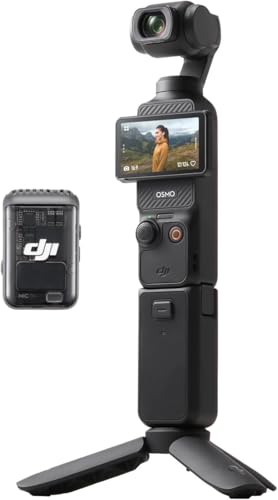
This is a pocket-sized, gimbal-mounted video camera for vlogging, travel clips, social video, and live streaming. It records to a microSD card, uses a 2-inch touchscreen, and connects through Wi-Fi and Bluetooth to the Xtra mobile app for preview, remote control, transfers, and editing. The maker states it uses a 1-inch CMOS sensor, records 4K slow motion up to 120 fps, offers 10-bit X-Log, and has a mechanical three-axis gimbal. Its radio hardware is independently traceable. The exact camera has an FCC equipment authorization matching the maker, product name, Wi-Fi bands, and Bluetooth. The manufacturer also explicitly says it is not waterproof. Battery figures need context. The stated 161-minute maximum was measured at 1080p at 24 fps, 25 C, with Wi-Fi and screen off, rather than at demanding 4K settings.
This fits an adult creator who wants a small camera for short travel clips, walking narration, casual vlogs, vertical social posts, and controlled indoor or fair-weather outdoor recording. It is especially relevant for someone who values an integrated gimbal and does not want to assemble a separate camera, stabilizer, and monitor. Users should be comfortable treating the 4K, X-Log, tracking, and battery claims as manufacturer statements, carrying a suitable microSD card, and testing settings before an important recording.
It is not suited to rain, watersports, beach spray, dusty work sites, or any situation requiring an IP rating or verified drop resistance. It is also a poor fit for paid shoots, events, legal documentation, or lengthy unattended recording where independently tested heat behavior, recording reliability, audio performance, and exact battery life are essential. Privacy-sensitive users who do not want an app collecting account, device, diagnostic, and usage information should avoid connecting it unless those tradeoffs are acceptable.
The strongest independently confirmed safety-related point is radio compliance. The camera has a matching FCC authorization for its Wi-Fi and Bluetooth functions, with public test exhibits and a U.S. responsible party. No relevant CPSC recall or public safety action was found in the checks performed. However, no model-specific North American UL or ETL electrical-safety certification, battery safety report, or certified charger listing was located. Use a reputable USB-C Power Delivery charger and follow the maker's charging instructions. The company provides a two-year camera warranty, support contact, manuals, and app-based firmware delivery, which can help extend useful life. It does not publish a product-specific U.S. take-back program, battery-removal instructions, recycled-content details, packaging specifications, or substantiated environmental claims. The product should be kept dry, and the owner should use local e-waste and battery collection options at end of life rather than placing electronics in household trash.
This is a small handheld vlog camera with a rotating, face-tracking lens assembly, a 1.72-inch touch screen, Wi-Fi control, USB webcam mode, and microSD recording. A published HJD-05 manual describes 4K recording at 30 fps, a 2400 mAh battery, support for cards up to 256 GB, and a stated maximum of 90 minutes of 4K recording. Those are manufacturer-stated specifications, not independently measured results. One important independently checkable point is the wireless hardware. An FCC authorization for HJD-05 covers 2.4 GHz Wi-Fi under the underlying manufacturer, although the product label should still be checked for the matching FCC ID. No independent laboratory tests were located for its actual resolution, stabilization, autofocus, audio, heat management, or battery runtime. The available manual specifically says it is not waterproof.
This product fits a casual indoor creator who wants a compact camera for short, stationary talking clips, simple self-recording, or occasional webcam use. Its documented rotating lens and face-tracking function are most relevant when one person is filming themselves near a tripod or desk. It also suits users comfortable treating 4K, battery duration, photo resolution, and stabilization statements as manufacturer claims rather than tested performance. It is better matched to controlled, dry settings than demanding travel or action capture.
It is not appropriate for water activities, rainy outdoor work, or any situation that requires a sealed action camera, because the available manual says it is not waterproof. It is also a poor fit for users who need verified long-recording reliability, dependable low-light video, strong audio, measured stabilization, or predictable professional output. Households that require independently certified charging safety or clear battery replacement and recycling support should seek a product with those records and support materials.
The HJD-05 has a meaningful radio-compliance record. An FCC authorization identifies 2.4 GHz Wi-Fi hardware for the HJD-05 model, with test and exposure exhibits available in the authorization file. That does not establish electrical safety certification for the battery, cable, or any separately supplied power adapter. No model-specific UL or ETL listing was located. No CPSC recall or safety warning for HolyEye or the HJD-05 was located in the review search. Connected use needs care. The manual links the camera to HDV CAM for preview, control, and file transfer. Google Play says the app collects and shares no data, but also says its data is not encrypted. The manual identifies a 2400 mAh battery but does not provide battery removal, take-back, recycling, spare-parts, or repair instructions. No substantiated environmental, recycled-content, or packaging claims were found.
This compact handheld camera combines a 1-inch stacked CMOS sensor, a mechanically stabilized 3-axis gimbal, a rotating 2-inch touchscreen, and microSD recording. It is designed for handheld vlogs, travel clips, family footage, and vertical or horizontal social video. The Creator Combo adds a battery handle, mini tripod, wide-angle lens, carrying bag, and DJI Mic 2 transmitter. DJI documents 4K recording to 60 fps and 4K at 120 fps in Slow Motion mode, plus a 130 Mbps maximum bitrate. Independent hands-on testing confirmed strong video performance and useful stabilization. DJI's 166-minute battery figure applies only at 1080p/24 with Wi-Fi and screen off. Independent testing instead recorded 113 minutes at 4K/60 on the internal battery, while a stationary 4K/60 run stopped from heat after 70 minutes.
This product suits a solo creator, traveler, family documentarian, or small business that needs smooth handheld video without assembling a separate camera and gimbal. It is especially suited to short and medium takes, walking footage, direct-to-camera clips, and vertical social video. The Creator Combo is relevant for users who will use the included wireless microphone and battery handle. Buyers should be comfortable managing microSD media, charging by USB-C PD, and using an app for activation and firmware updates.
It is not suitable for rain, swimming, watersports, dusty rough-use work, or any assignment that needs a certified weather-sealed camera. It is also a poor fit for unattended stationary 4K/60 sessions where heat shutdown would disrupt an event, class, interview, or long podcast. Choose something else if you require a user-swappable internal battery, documented drop resistance, a verified cybersecurity certification for the exact product, or a manufacturer-provided United States recycling and battery-disassembly pathway.
The camera uses a 10.01 Wh lithium-ion battery. DJI publishes charging and operating temperature limits, and its safety material identifies the camera and bundled microphone transmitter. The camera radio hardware is traceable to a matching FCC authorization, which is stronger evidence than a package-only wireless claim. No product-specific North American UL or ETL electrical listing was located, so charging safety should still depend on following DJI's temperature limits and using appropriate USB-C PD equipment. The camera is explicitly not water resistant, and its exposed moving gimbal deserves protection from impacts, moisture, and grit. DJI provides online repair intake, a 12-month warranty for major Creator Combo electronics, manuals, and firmware support through December 31, 2026. However, the battery appears integrated, and no product-specific United States take-back program, clear battery-removal guide, or quantified packaging and recycled-content documentation was found. Local electronics and lithium-ion battery recycling remains the practical end-of-life route.
This is a slim, handheld pocket camera intended for casual vlogging, travel clips, video calls, and social-media recording. It uses a fixed wide-angle lens that the seller describes as rotating through 330 degrees, with Wi-Fi transfer, a 1.72-inch screen, 16 GB card, mini tripod, carrying bag, USB cable, and one lithium-polymer battery. External retailer records independently repeat the basic HJD-05 model, 16 GB bundle, 330-degree lens movement, 4K video claim, and no-water-resistance disclosure. The most important independently confirmed fact is its Wi-Fi radio. The exact HJD-05 model has a U.S. FCC equipment authorization for 2.4 GHz 802.11b, g, and n Wi-Fi. The advertised 4K video, 75 MP stills, autofocus, face tracking, digital stabilization, 90-minute battery life, and recording quality remain manufacturer-stated. No independent image-quality, audio, thermal, runtime, or continuous-recording test for this exact product was located.
This product fits a casual creator who wants a small, simple camera kit for short travel clips, desk videos, social posts, or occasional self-recording. The rotating-lens format may be useful when switching between the person holding the camera and the surrounding scene without repositioning the whole unit. It is better suited to users who can accept manufacturer-stated image and battery specifications, will keep it dry, and primarily need 2.4 GHz Wi-Fi sharing with an authorization record that can be matched to the exact model.
It is not suited to people who need documented charging safety certification, a proven battery replacement path, or a camera for unsupervised charging in sensitive settings. Avoid it for rain, poolside, water sports, or dusty and impact-prone work because it is stated not to be water resistant and no ruggedness evidence was found. It also does not meet the needs of creators who require independently measured sharpness, low-light quality, reliable long-form recording, verified stabilization, external-audio performance, or a published cybersecurity and firmware-support program.
The connected-camera highlight is specific and independently checkable. Federal authorization records match the HJD-05 model to a 2.4 GHz Wi-Fi transmitter, with a listed operating range of 2412 to 2462 MHz and support for 802.11b, g, and n. That confirms radio authorization, not recording quality, privacy practices, or electrical safety of the full charging system. The product uses an included lithium-polymer battery, but no exact-model UL or ETL listing, battery test report, charger safety certification, or public battery-replacement instructions were located. No product-specific U.S. recall was found in the searched CPSC materials. The maker also did not provide a public U.S. take-back program, battery disposal route, repair-parts catalog, repair manual, or quantified recycled-content or packaging claim. Do not place the camera or battery in household trash, and use local e-waste and battery collection guidance.
This is a small, fixed-lens camera intended for casual photos, self-recording, webcam use, and phone sharing. It is sold with a 32 GB microSD card, two removable lithium-ion batteries, a USB-C cable, and a flip-up 3-inch screen. Published product instructions describe 18x digital zoom, rather than optical zoom, so magnified images are expected to lose detail. The available product documentation states 4K recording, 64 MP stills, Wi-Fi, autofocus, and a 180-degree screen, but independent image, audio, stabilization, low-light, and endurance testing for this product was not found. A public FCC authorization exists for a W08 Wi-Fi camera from Shenzhen Shangren Technology, including 2.4 GHz Wi-Fi testing. The consumer-facing materials do not clearly connect that authorization and its label to the Gavonde-branded unit.
This fits a casual user who wants a compact, low-complexity camera for daylight snapshots, simple travel clips, school projects, or self-recorded videos. The flip screen can help a single person frame themselves, and the stated included card and two removable batteries reduce the number of accessories needed at setup. It is most appropriate where recordings are non-sensitive and where the buyer can accept manufacturer-stated imaging claims without independent confirmation of output quality or runtime.
It is not suited to people who need dependable evidence of video quality for paid work, events, long recordings, low-light use, fast action, or important family footage. It is also a poor fit for users who need clear privacy documentation, a named app developer, security-update commitments, or transparent data practices. Do not treat it as waterproof or rugged. Households that need independently verified charging safety, repair access, replacement parts, or formal battery recycling support should require that documentation first.
The strongest independently checkable finding is a public FCC authorization for a W08 Wi-Fi camera from Shenzhen Shangren Technology. It records 2.4 GHz Wi-Fi testing and identifies an FCC ID, although the Gavonde product materials do not clearly display that identifier or establish the branded retail unit as the authorized configuration. No matching UL or ETL listing for the camera, supplied batteries, or charger was located. No CPSC recall or public safety warning for Gavonde was found in the searched recall resources. The batteries appear removable, which is preferable to a sealed pack when replacement is needed. Published materials identify BL-5C lithium-ion batteries, but no brand-operated U.S. take-back route, battery disposal instructions, repair parts catalog, repair manual, warranty-service network, or firmware-support record was found. There were also no specific recycled-content, packaging-reduction, or other substantiated environmental claims to assess.
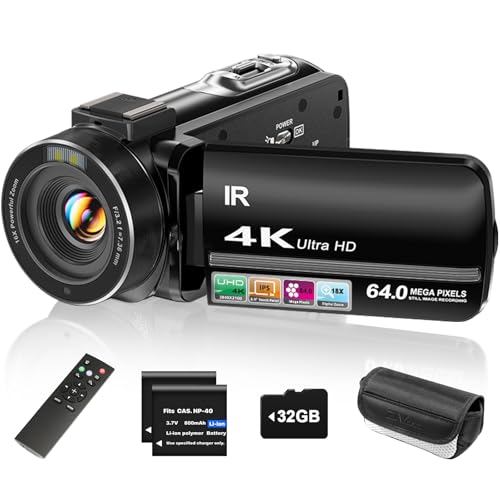
This is a compact handheld camcorder for casual vlogs, family clips, webcam use, and simple recordings to a microSD card. Its published documentation describes 4K video, 64MP stills, a 3-inch 270-degree rotating touchscreen, 18x digital zoom, infrared night vision, USB connection, and two removable rechargeable batteries. It also lists a 32GB card, remote, charging cable, bag, and lens cap in the package. The available documentation describes the remote as infrared, not Wi-Fi or Bluetooth, and lists USB as the camera connection. That limits connected-camera privacy exposure, although it also means there is no independently documented cybersecurity or firmware-support record. The published materials do not provide sensor size, video bitrate, frame-rate tables, battery capacity, charging specifications, or original sample files. No qualified independent laboratory test located for this exact product establishes its actual detail, stabilization, low-light performance, audio quality, recording endurance, or thermal behavior.
This product suits a casual indoor or fair-weather user who wants a simple card-recording camcorder with a flip-out touchscreen, local USB transfer, and the stated starter accessories. It is most appropriate for short family clips, stationary talking-head recordings, basic school projects, or occasional self-recording where the user can control lighting and keep spare batteries available. It also fits someone who prefers a camera with no documented account, app, cloud, Wi-Fi, or Bluetooth setup. Expectations for image quality and recording duration should remain modest because those outcomes have not been independently measured for this product.
It is not suited to buyers who need independently established video quality for professional work, paid client shoots, fast action, demanding low light, or dependable long-form event recording. It is also unsuitable for rain, poolside, boating, dusty work, or other rugged use because the documentation says it is not water resistant and provides no validated durability rating. Households concerned about battery charging safety should seek a product with an exact-model North American electrical-safety listing and documented battery and charger specifications. It is also a poor fit for users needing reliable repair parts, published firmware support, or a manufacturer recycling program.
The product uses removable rechargeable batteries, a practical design point because depleted packs can be replaced without discarding the camera. Its documentation advises storing batteries in a cool, dry place and avoiding extreme temperatures. However, no exact-product listing was located in the checked UL or Intertek certification resources, and the available material does not identify battery chemistry, capacity, charger output, protection circuitry, or battery-safety testing. No product-specific recall or public safety report was located in the checked U.S. consumer-product safety resources. The published documentation says the product is not water resistant, which is a useful limitation to follow. It documents USB connectivity and an infrared remote, with no companion app, cloud, Wi-Fi, or Bluetooth function described. No manufacturer take-back route, U.S. recycling instructions, repair-parts catalog, repair manual, environmental certification, recycled-content claim, or packaging-material disclosure was located. Batteries should be removed for long storage and taken to a battery collection program rather than placed in household trash.
This is a handheld, fixed-lens vlogging camcorder with a 3-inch touch screen that rotates 270 degrees. It uses removable camera batteries, records to an SD card, and is intended for self-recording, basic event video, webcam use, and file transfer over Wi-Fi. A product-specific manual states that the box includes two 1800mAh camera batteries, a 32GB card, an external microphone, small tripod, bag, HDMI cable, and remote. The same manual states 5K at 20 fps, 4K at 60 fps, 64MP stills, 16x digital zoom, infrared monochrome night vision, manual focus, and recording while connected to power. These figures are manufacturer-stated, not independently measured. No qualified independent image, audio, thermal, runtime, sealing, or durability testing for this product was found.
This product fits a casual creator who wants a self-facing screen, basic webcam function, removable batteries, and an accessory bundle for indoor or fair-weather recording. It is most suitable for short clips, talking-head videos, family events, or simple desktop streaming where manual focus, digital zoom, and manufacturer-stated capture specifications are acceptable. The user should be comfortable checking focus and managing files manually, and should avoid treating headline resolution as independently proven image quality.
It is not suited to users who need verified video quality for paid work, dependable long-form recording, or clear low-light and stabilization performance. It is also unsuitable for wet-weather, watersports, dusty job sites, or use where an IP rating or drop-tested enclosure is required. Households needing independently verified charger and battery safety certification, documented privacy and security updates, repair parts, or a maker-supported U.S. recycling program should seek a product with those records.
The manual identifies removable camera batteries and gives basic care instructions: charge before first use, avoid extreme temperatures and direct sunlight, store in a cool dry place, and remove batteries during extended non-use. Those are sensible handling measures, but no model-specific North American electrical-safety listing or battery test documentation was found. No product-specific U.S. recall or CPSC warning was located in the checked recall sources. Wi-Fi is stated for remote control and transfers. An FCC authorization exists for an X70 4K camera with 2.4 GHz Wi-Fi, but the available records do not establish from product labeling that it is this exact BREGOO unit. No privacy policy, app data disclosure, security-update commitment, take-back program, battery recycling instructions, or substantiated packaging and environmental claims were found. The removable battery design may help replace a worn pack, but spare-parts availability and service support are not documented.
This is a compact, fixed-lens point-and-shoot camera aimed at beginner travel, selfie, and casual video use. It is sold with a 3-inch flip screen, a 32 GB memory card, two rechargeable batteries, charger, straps, bag, and USB-C cable. A retailer listing independently repeats those package and feature claims, including 4K video, 64 MP stills, Wi-Fi, autofocus, digital stabilization, and 16x digital zoom. The strongest independently confirmed product-specific fact is wireless compliance. FCC records identify the DC103 and its Songdian manufacturer under FCC ID 2BNYY-DC103, with 2.4 GHz Wi-Fi test and RF exposure documentation. That validates the radio identity, not image quality or battery safety. No independent resolution, low-light, audio, endurance, drop, or waterproof test for this exact product was located.
This product suits a beginner who wants a small, simple camera for daylight travel snapshots, family events, short clips, and front-facing self-recording. The flip screen and stated all-in-one package reduce the need to source a card, spare battery, charger, strap, or carry bag separately. It is most appropriate where Wi-Fi transfer convenience matters and where the buyer understands that the 16x figure is digital zoom, rather than optical reach. The confirmed FCC record provides useful assurance that the identified Wi-Fi hardware has a matching U.S. authorization.
It is not suited to creators who need measured evidence of sharp 4K footage, dependable continuous recording, strong low-light results, clean audio, or effective stabilization while walking. It is also unsuitable for rain, pool, beach, watersport, or rugged-use situations because it is stated to be not water resistant and there is no independent durability evidence. Buyers who require a documented electrical-safety listing for supplied batteries and charger, a named app with privacy disclosures, ongoing firmware updates, repair parts, or a defined recycling program should require that documentation before relying on this product.
The camera's Wi-Fi implementation has unusually good traceability for this type of compact product. FCC materials match the DC103 model to Songdian Technology Guangdong and include 2.4 GHz Wi-Fi test documentation, an RF exposure assessment, label information, and a U.S. service-of-process contact. This is radio compliance evidence, not a certification of camera performance, cybersecurity, battery safety, or charging safety. The package is stated to use removable rechargeable lithium-ion batteries, which is preferable to a permanently sealed battery when replacement is available. However, no model-specific North American electrical-safety listing for the batteries, charger, or complete product was located. No clear product-specific repair parts catalog, firmware schedule, privacy or security-update commitment, battery take-back route, electronics recycling program, recycled-content claim, or packaging specification was located. The product is stated to be not water resistant, so it should be kept dry and protected from moisture.
This compact fixed-lens camera is intended for casual photos, self-recording, and webcam use. Its documentation describes a 3.5-inch flip LCD, Wi-Fi transfer through Viipulse, USB webcam mode, a 32 GB card, and two removable 1,050 mAh lithium-ion batteries. It uses a fixed 4.7 mm f/1.8 lens with 20x digital, rather than optical, zoom. The product documentation advertises up to 96 MP stills and 8K video at 30 fps. These are manufacturer-stated specifications, not figures supported by located independent resolution, bitrate, autofocus, stabilization, audio, low-light, or endurance tests. The documentation notes that digital zoom can reduce image quality and states that the camera is not water resistant. Viipulse is presented as the app for local Wi-Fi control and file transfer.
This product fits a casual creator who wants a small, fixed-lens camera for daylight snapshots, occasional self-recording, school projects, or a basic USB webcam setup. The articulated screen can help with framing oneself, and the documented two-battery bundle can reduce interruptions during short sessions. It is most appropriate for someone who treats the 8K, 96 MP, autofocus, and anti-shake labels as unverified manufacturer specifications, uses the included card only as a starting point, and is comfortable moving files by USB if app connection is unreliable.
It is not suited to anyone who needs demonstrated image quality for paid work, important events, low-light shooting, long takes, or reliable audio. There is no located independent test evidence for those conditions. It is also unsuitable for rain, beach, pool, or action use because the documentation says it is not water resistant and no impact or sealing evidence was found. Privacy-sensitive users and households should take particular care with the Wi-Fi app because its store data labels and linked privacy policy do not give consistent collection disclosures.
The documented battery arrangement is a relative serviceability strength. The camera uses two removable 1,050 mAh lithium-ion batteries, and its safety instructions say to use specified batteries and charging equipment, keep the camera dry, and avoid disassembly. However, no model-specific UL, ETL, IEC 62133-2, or comparable North American electrical-safety record was located. Searches of CPSC recall and incident resources did not identify a product-specific safety action as of September 20, 2026, but that does not independently establish electrical safety. Wi-Fi use relies on Viipulse. Its Apple and Google store declarations say no data are collected, while the developer privacy policy describes device, network, and optional photo or video-related processing. No product-specific security-update policy or firmware release record was located. Removable batteries can make replacement more practical, but no AUREAPIX U.S. take-back, recycling, spare-parts, repair manual, or packaging-material program was located.
This is a compact, fixed-lens point-and-shoot camera intended for casual photos, simple vlogging, webcam use, and travel. Its documentation describes a 3-inch 180-degree flip screen, autofocus, 16x digital zoom, USB-C connection, a 32GB card, and two removable lithium-ion batteries. The stated video format is AVI, with 2160p recording claimed. The key limitation is evidence quality. The maker and manual state 4K video and 48MP still files, but no independent laboratory test with original sample media was located to establish actual detail, bitrate, autofocus behavior, stabilization, audio quality, low-light performance, or recording endurance. Documentation is also inconsistent, with a one-year warranty in one product record and an 18-month replacement and refund warranty in the published manual.
This product suits a beginner or teen who wants a small standalone camera for daylight snapshots, school projects, casual travel clips, or simple talking-head video. It is most appropriate for someone who values a front-facing screen, removable spare battery, included memory card, and USB webcam mode more than measured image quality or advanced controls. It also fits users who will keep the camera dry, use the supplied charging equipment carefully, and accept that the advertised imaging figures have not been independently validated.
It is not suited to users who need verified image quality for paid work, dependable long-form event recording, strong low-light results, or known audio and stabilization performance. Do not treat the digital zoom as a substitute for an optical telephoto lens. It is also unsuitable for rain, pool, beach-spray, underwater, drop-prone, or other rugged use because the manual says it is not water-resistant and provides no impact or ingress certification. Households seeking independently listed charging safety equipment or a documented battery recycling route need more evidence.
The manual identifies two removable lithium-ion batteries and allows charging either in a charging stand or through the camera's USB-C port. It instructs users to avoid high temperatures, store batteries in a cool, dry place, and remove the battery for long storage. Those are sensible precautions, but no exact-model North American electrical-safety listing or battery-test documentation was located in the searched UL and Intertek resources. A CPSC recall and warning search did not locate a Duluvulu or DC101 action as of October 4, 2026. That is not a safety certification. The manual says the product is not water-resistant, so moisture exposure should be avoided. Removable batteries can make replacement and separate recycling more practical, but no manufacturer take-back program, U.S. recycler partnership, packaging specification, recycled-content claim, or environmental certification was located.



