Best Overall
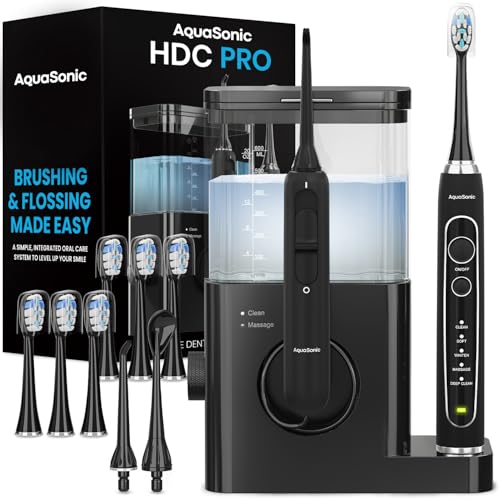
Home Dental Center PRO – Black Series Pro+
Combines brushing and flossing in one unit.
Power toothbrush ensures a thorough clean.
Water flosser improves gum health effectively.
 Lauren Wilson
Combines brushing and flossing in one unit.
Power toothbrush ensures a thorough clean.
Water flosser improves gum health effectively.
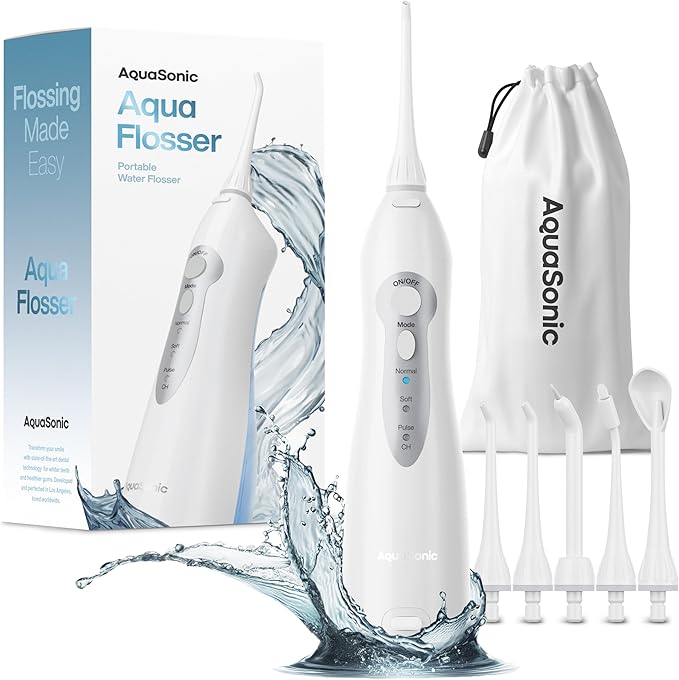
Cordless design makes it highly portable.
Five interchangeable jet tips for versatile cleaning.
Waterproof build suitable for use in the shower.
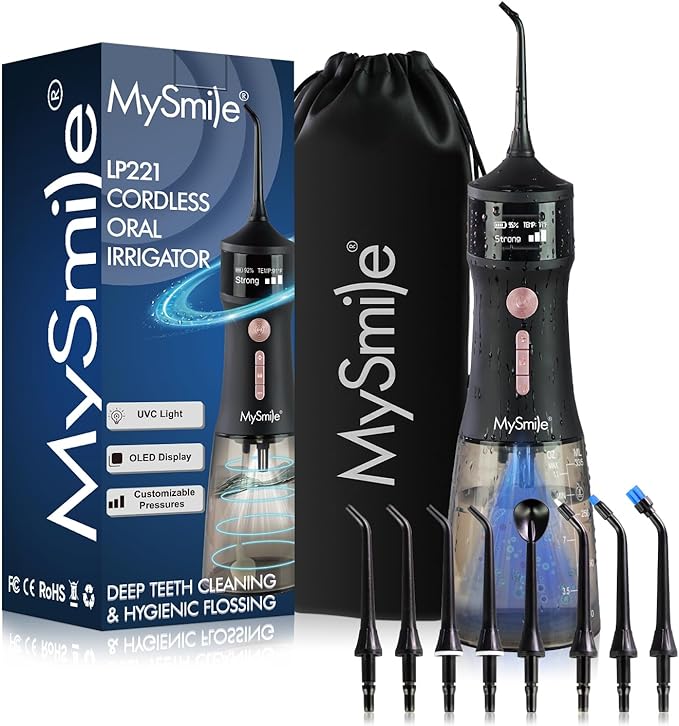
UVC sterilization enhances hygiene and safety.
OLED display provides easy mode selection.
Portable design ideal for home and travel.

ADA acceptance ensures trusted dental care.
Efficiently cleans with strong water pressure.
Compact design ideal for small spaces.

Cordless design ideal for travel convenience.
Waterproof for safe bathroom use.
Rechargeable battery ensures long-lasting performance.
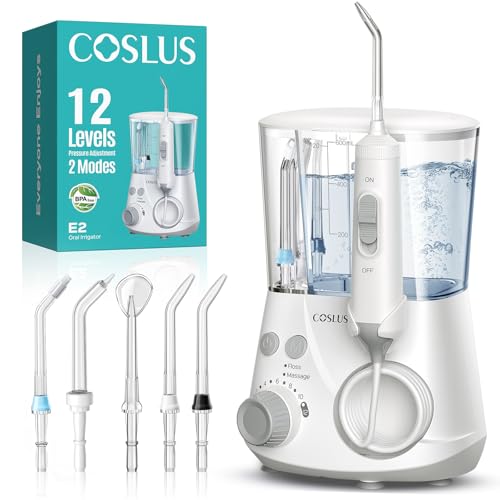
Customizable with 12 pressure settings.
Includes 5 jet tips for multiple users.
Ideal for braces and sensitive gums.

Ten adjustable pressure settings for customized cleaning.
Seven unique tips for varied dental needs.
ADA acceptance ensures trusted dental care.

Compact design perfect for travel use.
Powerful cleaning with 300ML water reservoir.
Rechargeable and waterproof for convenient use.

IPX7 waterproof design ensures safe use in shower.
Comes with 4 replacement tips for versatile cleaning.
Rechargeable and travel-friendly for convenience on-the-go.

Large tank reduces frequent refills.
Multiple pressure levels suit various needs.
Convenient USB-C charging capability.
A useful product should make the water jet controllable, the mouth-contact parts secure, and the water path easy to empty, rinse, dry, and maintain. Look for a low starting setting and clearly described pressure controls rather than relying on a large maximum-pressure number. Pressure claims can mislead: a stated range such as 30–110 or 50–150 psi is not independent proof that the device delivers that output accurately or safely. Likewise, pulse counts, “deep cleaning,” waterproofing, bacterial-reduction, and plaque-removal figures are meaningful only when the exact finished product, test method, population, and laboratory or clinical report are identified.
For gum-health claims, the most useful independent check is an exact product or clearly defined product family in the ADA Seal of Acceptance database, with wording limited to supported outcomes such as plaque removal or helping prevent and reduce gingivitis when used as directed. A manufacturer-hosted study, an FDA device listing, or a marketplace “ADA” badge is not equivalent to a product-specific ADA acceptance or a peer-reviewed human study. FDA classification as a Class I oral irrigation device also does not mean that a product was FDA approved or cleared for broad medical outcomes.
Electrical safety deserves extra attention because these products combine water and electricity. A credible check is an exact-model listing for the flosser and supplied power equipment in UL Product iQ or Intertek’s ETL directory, through an OSHA-recognized testing laboratory. An IPX rating, FCC or RoHS marking, a manufacturer’s waterproof claim, or a generic certification statement does not substitute for that model-specific U.S. electrical-safety verification. Buyers should also check charger requirements, keep charging ports dry, and follow the instructions about charging near water.
Cleanability is not the same as a UV or UVC claim. More useful features include a removable reservoir, instructions to empty water after every use, air-drying guidance, washable parts, internal flushing or vinegar-cleaning instructions where specified, and replaceable tips. A larger tank mainly reduces refilling; it does not prove better cleaning or hygiene. Tip availability, replacement intervals, warranty coverage, and parts such as reservoirs, hoses, handles, or chargers help determine whether the device can remain useful instead of becoming electronic waste after one worn component fails.
Across the supplied reviews, recurring cautions are to use these products only as directed, begin gently, keep the jet out of the nose and ears, and avoid use after recent oral surgery or with open oral wounds without professional advice. Persistent bleeding, pain, swelling, infection, loose teeth, active or severe periodontal disease, and complex implant or orthodontic care call for dental guidance. Mouth-contact tips should not be casually shared, and reservoirs should be emptied, rinsed, and dried. One review also recorded a serious crown-displacement allegation and another a charging-fire report involving a closely related cordless version; neither establishes causation for the reviewed product, but both make pressure control and supervised, dry charging important.
The scores below reflect the supplied assessments, with electrical safety and independent verification weighted more heavily than the other topics. A high score indicates stronger model-specific support or better documented controls; it does not turn a consumer water flosser into a treatment for dental disease.
This measures credible human evidence that the exact product, or a clearly equivalent model, helps reduce gingivitis or gum bleeding alongside brushing. Among the supplied products, the highest scores belong to products with ADA-supported plaque and gingivitis wording; lower scores reflect category-level evidence only, manufacturer claims, or no exact-product study. No score supports treating periodontitis or replacing professional care.
This covers adjustable output, pulsation, secure nozzles, warnings, and controls that reduce gum trauma or detached-part hazards. Higher-scoring products provide low starts, several pressure levels, and clearer mouth-use instructions. Lower-scoring products lack a verified pressure range, independent force testing, or detailed nozzle safeguards. A high maximum psi figure alone is not evidence of safer or more effective cleaning.
This measures whether the reservoir, tubing, handle, and tips can be emptied, rinsed, dried, and replaced without leaving stagnant water or encouraging cross-user contamination. Higher-scoring products combine removable tanks with drying or flushing instructions and washable parts. Lower-scoring products provide only basic draining directions or leave internal hoses and pumps difficult to clean. UVC marketing is not a substitute for a documented cleaning routine.
This measures protection from shock, overheating, fire, unsafe charging, and water ingress, with emphasis on exact-model certification by an OSHA-recognized testing laboratory. The strongest supplied scores belong to products with better documented electrical safeguards, but several still lacked a publicly checkable UL or ETL record. IPX7, FCC, RoHS, or a waterproof claim does not independently verify the flosser and charger for U.S. use.
This measures whether water delivery is likely to remain dependable and whether tips, seals, reservoirs, pumps, batteries, hoses, or chargers can be replaced. Higher-scoring products have accessible replacement tips, parts, and warranties. Lower-scoring products have limited service information, sealed batteries, uncertain tip supply, or no independent durability testing. Replaceable mouth-contact tips matter for both hygiene and keeping the main device in use.
This measures disclosure of reservoir, seal, nozzle, and mouth-contact materials, along with compatible liquids and replacement guidance. Higher scores reflect clearer material or liquid-use information and practical warnings. Most supplied products disclose only broad plastic descriptions, so scores remain moderate. Claims such as BPA-free do not identify every contact material or prove compatibility with mouthwash and other rinses.
This measures whether safety and oral-health claims are publicly checkable for the exact finished product. Higher-scoring products have an ADA record, model-specific testing, or traceable regulatory and laboratory documentation. Lower-scoring products rely on marketplace badges, generic certificates, manufacturer-hosted data, or unverified UVC and plaque claims. A family-level acceptance should not automatically be transferred to a different model.
This measures whether the listing limits claims to supported adjunctive oral-hygiene benefits. Higher-scoring products use narrower language such as plaque removal or helping reduce gingivitis when directed. Lower-scoring products claim to prevent cavities, cure or heal gum disease, remove nearly all bacteria or plaque, whiten teeth, or replace floss without matching evidence. Marketing scope matters even when the device may still be useful.
This measures whether the responsible manufacturer or importer, model, instructions, device listing, recalls, and adverse-event history can be followed through U.S. records. Higher scores reflect clearer identity and fewer unresolved safety signals. Lower scores reflect incomplete model information or limited history. A traceable Class I device listing shows identity and classification, not FDA approval or proof of clinical benefit.
This measures water and consumables use, durability, rechargeable-battery design, replaceable parts, packaging, and end-of-life guidance. Higher-scoring products offer replacement tips or larger serviceable components and clearer recycling directions. Lower scores reflect sealed batteries, scarce parts, or no take-back information. Rechargeable power avoids disposable cells during use but still creates battery and electronics waste when the device reaches end of life.
The AquaSonic Home Dental Center Pro is a countertop oral-care set with a separate rechargeable sonic toothbrush and a corded water flosser. The box is stated to include six ProFlex brush heads, two jet tips, a tongue scraper, power adapter, manual, and warranty card. A third-party retail record identifies a 600 mL reservoir, while AquaSonic's own current product page confirms adjustable flossing pressure but does not publish a pressure range or flow rate. The available instruction copy directs users to fill and securely seat the tank, attach a tip, select a brushing mode, and use a two-minute timer. It also directs users to rinse tips, empty the tank after use, and store the unit dry. AquaSonic sells compatible replacement brush heads and water-flosser tips. The toothbrush in the bundle may share a product family with ADA-accepted AquaSonic toothbrushes, but I could not confirm an ADA Seal, clinical study, electrical-safety listing, or waterproof test certificate for this complete product or its water flosser.
This product suits an adult or couple who want a fixed countertop routine that combines powered brushing with water flossing, have room near a sink and outlet, and are willing to follow drying and tip-cleaning steps after use. It is also practical for someone who values replaceable brush heads and flosser tips rather than treating the set as disposable. Sensitive users should begin at the lowest available water-pressure setting and adjust only if comfortable. Its 600 mL stated tank capacity is most useful for home use rather than travel.
It is not well suited to buyers who need independently documented electrical certification, a verified ingress-protection rating, or published pressure and flow data before using an appliance near a sink. It is also a poor fit for households that will share tips without keeping them separate, or for users unlikely to empty and dry the reservoir after each session. Anyone with active gum pain, unexplained bleeding, recent oral surgery, implants requiring individualized care, or periodontal treatment should seek guidance from their dental clinician before choosing a pressure setting or relying on water flossing.
Water flossers are recognized by the ADA as one type of interdental cleaner, and broader clinical evidence suggests oral irrigation can improve gingival-health measures when added to brushing. That category evidence should not be read as proof of this product's specific gum-health, plaque, whitening, or dentist-level claims. I could not verify a clinical trial or ADA Seal for the complete set or its water flosser. The supplied toothbrush family has ADA-accepted models, which is narrower than acceptance of this combined product. For hygiene, the available instructions advise rinsing tips, emptying residual water, removing and rinsing the tank, and storing the unit dry. AquaSonic offers replacement heads, tips, and a charger, plus a one-year warranty. However, the company does not provide a material declaration for water-contact parts, a battery-recycling plan, packaging details, charging-energy data, or recycled-content verification. No U.S. product recall or regulator warning specific to this product was located in the checked CPSC and FDA sources.
This is a compact, cordless oral irrigator that directs a water stream between teeth and along the gumline. It is intended as an addition to toothbrushing for clearing food debris and supporting daily interdental cleaning. Product materials published by outside sellers describe three modes, Normal, Soft, and Pulse, rotating tips, a rechargeable lithium battery, and an IPX7 waterproof claim. Capacity records for this older version describe a small 150 mL reservoir, which may require a refill during a full-mouth session. The strongest product-specific evidence is limited to manufacturer and retail documentation, not published clinical testing of this exact unit. Broader research on oral irrigators suggests possible short-term gingivitis benefit alongside brushing, but the evidence is low to very low certainty and does not establish the product's advertised five-times effectiveness claim. The product is not listed as an ADA Seal accepted flosser.
This product suits an adult who wants a compact, rechargeable adjunct to brushing for routine food-debris removal, especially when conventional flossing around braces, fixed retainers, or crowded teeth is difficult. The Soft mode may be a sensible starting setting for a new water-flosser user or someone with gum tenderness. It also fits people who need a portable unit for travel or a small bathroom. Use it as part of ordinary home oral hygiene, not as evidence-based treatment for periodontal disease.
It is not well suited to someone seeking a flosser with product-specific clinical trials, ADA acceptance, or publicly verifiable UL or ETL listing for the finished product and charger. People with active gum bleeding, periodontal disease, recent oral surgery, painful ulcers, loose dental work, implants needing individualized care, or swallowing and dexterity limitations should ask their dentist or hygienist about technique and appropriate tips first. It is also a poor fit for households wanting clear shared-use disinfection instructions or a user-replaceable battery.
FDA classifies oral irrigation units as Class I dental devices, and this category is generally exempt from premarket notification. That category status is not a product-specific clearance, safety certification, or clinical endorsement. Searches did not identify an ADA Seal record for this flosser, an exact-model UL or ETL listing, or a published human study of this unit. The category-level evidence supports only a cautious adjunctive role beside brushing. The rechargeable battery avoids frequent disposable battery use, and included replaceable tips can extend use of the main unit. However, public documentation does not clearly identify the plastics and elastomers in the reservoir and mouth-contact parts, battery-removal steps, or a dedicated U.S. recycling program. Emptying the reservoir, rinsing removable water-contact parts, and drying tips between uses remain important because the available documentation does not provide a detailed, independently verified water-path disinfection protocol.
This is a rechargeable, handheld water flosser with a detachable 335 mL reservoir, USB charging, OLED display, four modes, selectable pressure levels, eight included tips, and a 120-second UVC cycle. It is intended to supplement toothbrushing by flushing debris around teeth and the gumline. The manufacturer states a 40 to 150 PSI range and 2,000 to 2,800 pulses per minute. Its most concrete strengths are serviceability and cleaning access. The product manual instructs users to detach and brush the tank, rinse the internal tube and gravity-ball intake, empty remaining water, and air-dry before storage. MySmile also currently sells dedicated replacement tanks and tip sets. However, no model-specific human clinical study, ADA Seal listing, or publicly checkable model-specific UL or ETL certification record was located.
This product suits an adult or older child, with adult supervision for children, who wants a cordless water flosser with a larger handheld reservoir and is willing to follow hands-on cleaning steps after use. It is especially practical for people who value replaceable tips and a separately available reservoir, or who need to begin at a gentler pressure because of sensitivity. It is an adjunct to brushing and ordinary dental care, not a substitute for either.
It is not well suited to someone who needs independently verified safety certification, clinical evidence for the exact unit, or fully disclosed mouth-contact materials. People with active periodontal disease, unexplained bleeding, painful gums, recent oral surgery, or a clinician-directed oral-care regimen should seek dental guidance rather than rely on the product's wellness claims. It is also a poor fit for households unlikely to empty, rinse, and air-dry the reservoir and internal water path after use.
The useful health feature is cleanability, not the UVC claim alone. The manual instructs users to detach the reservoir, brush scale from it, rinse the tube and gravity-ball intake, replace tips every three months, and empty and air-dry the device before longer storage. Those steps directly address retained water and shared-tip hygiene. The product also has a soft setting and clear instruction not to eject a tip during spraying. MySmile sells replacement tips and a model-specific reservoir, which can extend the usable life of the rechargeable device. The lithium-ion battery is built in, and no battery-removal or manufacturer recycling procedure was found. At end of life, the device should go to a battery or electronics recycler that accepts lithium-ion products, rather than household trash or curbside recycling. No product-specific FDA recall or CPSC recall was located in the checked U.S. databases.
This is a cordless, rechargeable water flosser with a detachable 300 mL reservoir. It is used by filling the tank, choosing Clean, Soft, or Massage mode, then tracing the stream along the gumline and between teeth. COSLUS includes two standard jet tips plus orthodontic, periodontal, and tongue-cleaning attachments. The official manual states a 30 to 120 PSI pressure range, 1,400 mAh battery, IPX7 rating, 5 W input, and a supplied USB cable without an adapter. It also displays an ETL mark. Separately, the ADA registry accepts a Coslus Oral Irrigator for plaque removal and helping prevent or reduce gingivitis, but its public page does not identify this C20 model and currently links to a different Coslus product. That makes the C20-specific ADA connection less transparent than it should be.
This product fits an adult or teen who wants a cordless oral irrigator for daily between-teeth cleaning, particularly around braces, crowns, or implants, and who values a larger handheld tank. The Soft mode may be useful for someone learning water flossing or easing into a lower-intensity routine. It also suits a single user who will remove and dry the nozzle, drain the reservoir after use, clean the unit regularly, and replace tips on schedule. The included specialized tips make the format practical for several routine cleaning tasks.
It is not a good fit for buyers who need a publicly traceable, model-specific electrical certificate, independently published ingress test report, or fully documented materials in the water path. It is also unsuitable for households likely to share one attached nozzle, since each person should use a separate tip and keep it dry. People with persistent gum bleeding, significant gum pain, loose teeth, recent dental surgery, or uncertainty about using a periodontal attachment should seek individualized advice from a dental professional rather than rely on this product as a substitute for care.
The manual carries detailed safety directions. It says to use water below 40 C, keep the charging cable away from water, avoid a damaged cable or appliance, stop use if pain occurs, avoid sharing nozzles, drain remaining water after use, and dry the unit before storage. Its maintenance section directs users to wash and dry the reservoir and replace the nozzle periodically. The manual also displays an ETL mark and an IPX7 claim, although an independently searchable certificate for this exact product was not found. The oral-health evidence is stronger at the Coslus product-family level than at the model-documentation level. The ADA has an active acceptance page for a Coslus Oral Irrigator covering plaque removal and helping prevent or reduce gingivitis when used as directed. COSLUS identifies the C20 as included, but the public ADA page does not name it and links to E40. Environmentally, the rechargeable 1,400 mAh battery and available replacement tips may reduce disposable-tip use, but COSLUS does not disclose recycled content, packaging composition, or a dedicated end-of-life recycling route.
This is a cordless, rechargeable water flosser with one rotating jet tip, an integrated removable water tank, USB charging cable, and three operating modes, Normal, Soft, and Pulse. It is intended for directing water between teeth and along the gumline after brushing. AquaSonic says the product is portable, waterproof for ordinary use, and suitable for travel. The documented care instructions are a defining practical strength. They direct users to empty and rinse the tank after every use, detach it for soap-and-water cleaning, dry it completely, and replace the jet tip every 3 to 6 months. AquaSonic also sells replacement tips and states a one-year warranty. However, no exact-product clinical study, ADA acceptance record for this water flosser, or publicly checkable electrical listing was identified.
This product suits an adult who wants a compact, cordless adjunct to twice-daily brushing and is willing to maintain it carefully. It is especially practical for a person who prefers a water jet to string floss, wants a Soft mode while learning, and has access to a sink for filling and draining after each use. It also fits a buyer who values replaceable tips and a stated one-year warranty, but accepts that the health claims are manufacturer claims rather than exact-product clinical findings.
It is not well suited to someone seeking an independently certified oral irrigator with publicly verifiable electrical testing, exact clinical evidence, or published pressure specifications. It is also a poor fit for a household intending to share one device without separate tips and rigorous cleaning. People who are pregnant, have a heart condition, have recently had oral surgery, or have a condition affected by water pressure should follow the product instructions and consult an appropriate clinician before use. Do not treat it as care for periodontitis or a replacement for professional dental treatment.
The manufacturer gives useful hygiene directions, including emptying the tank after each use, rinsing the tip, washing the detachable tank with mild soap and water, and drying it before reattachment. Those steps can reduce stagnant-water residue when followed consistently. The product has one supplied tip, and AquaSonic sells replacements, which is preferable to discarding the whole device when a tip wears out. The larger evidence picture is less complete. Oral irrigators as a category may reduce gingivitis in the short term when used with brushing, but the evidence is low certainty and does not validate this exact product. No public ADA acceptance for this water flosser, exact-model UL or ETL listing, or exact-product clinical testing was identified. The generic FDA category for oral irrigation units is Class I and exempt from premarket notification, which is not an independent endorsement. Material specifics and battery end-of-life instructions are not publicly detailed, so recycling planning remains limited.
This is a corded countertop oral irrigator with a detachable 600 mL reservoir, a hand-held hose, 12 pressure settings, two operating modes, and five supplied nozzle types. It is used over a sink to direct a pulsed water stream along the gumline and between teeth. The manual specifies 12 V, 2.0 A input, 24 W power, and an IPX4 water-resistance rating. Its strongest product-specific documentation is the instruction manual. It directs users to begin at the lowest setting, confirms nozzle installation with an audible click, use water below 40 C, empty remaining water, and air-dry the tank after cleaning. There is no publicly located clinical study, ADA acceptance record, UL listing, or ETL listing that names this countertop product. COSLUS has an ADA-accepted E40 oral irrigator, but that is a separate cordless model and does not verify this unit.
This product suits an adult household user who wants a countertop water flosser with a large reservoir, a pressure dial, and dedicated tips for braces or tongue cleaning. It is most appropriate for someone prepared to use it as an addition to twice-daily brushing, start with a low setting, and perform the stated emptying and drying routine after use. The 600 mL tank may be useful for users who prefer not to refill a small handheld reservoir during a cleaning session.
It is not a good fit for people who need independently verified electrical certification for a bathroom appliance, or who plan to use an irrigator in the shower. The stated IPX4 rating and manual warnings require keeping the base and power connection away from immersion. People with periodontitis, recent oral surgery within two months, persistent gum bleeding, painful gums, or dental implants with active problems should seek individualized dental advice rather than treat this as a substitute for care. It also needs supervised use around children and vulnerable users.
Water irrigators can be a useful adjunct to brushing, but the broader clinical evidence is not definitive. A Cochrane review found possible short-term gingivitis improvement from oral irrigation, while evidence for longer-term benefit, plaque reduction, and cavity prevention was limited or inconsistent. This product's manual appropriately tells people with periodontal disease or recent oral surgery to consult a clinician, but the exact product does not have publicly located clinical testing or ADA acceptance. For hygiene, the manual directs users to empty the reservoir, clean it with room-temperature water, invert it to air-dry, and rinse tips. It also specifies tip replacement every three or six months depending on tip type. The product is corded, so it does not contain a rechargeable battery, but it remains an electronic appliance. No public recycling program, packaging specification, or detailed material declaration was located. No product-specific U.S. recall or regulator warning was located in the searched records.
This is a corded countertop oral irrigator for home use. It has a removable, covered 22-ounce reservoir, a coiled hose and handle, 10 pressure settings, two modes, a 360-degree rotating tip, and seven included tips for general cleaning, braces, implants, and periodontal pockets. Waterpik states a 90-second reservoir capacity, 1,400 pulses per minute, and a one-minute timer with a 30-second pacing cue. The important independent point is that the ADA's current Seal guide lists Waterpik Water Flossers among powered interdental cleaners for plaque and gingivitis prevention. That supports use as an adjunct to toothbrushing, not as treatment for periodontitis or a substitute for dental care. The manufacturer provides detailed cleaning directions, tip replacement intervals, replacement parts, and a three-year limited warranty. The electrical-safety listing for this exact product was not publicly verifiable in the searched UL and Intertek registers.
This product fits an adult or supervised household user who has counter space near a suitable North American outlet and wants a water-based interdental cleaning routine alongside brushing. Its large reservoir can cover a full routine without refilling, while the rotating handle and included orthodontic, implant, and pocket-oriented tips make it practical for people managing braces, crowns, bridges, implants, or hard-to-reach back teeth. It also suits users willing to follow periodic descaling, drying, and tip-replacement instructions.
It is not suited to unsupervised children or people unable to safely handle a corded appliance around a sink. It should not be used in a bath, with wet hands on the plug, or where it could fall into water. People with open oral wounds, those advised to take antibiotic premedication before dental procedures, or anyone with a complex periodontal condition should ask a dentist before use. Avoid it if regular reservoir washing, internal flushing, and replacement-tip upkeep are unlikely to happen.
The strongest health check is the ADA Seal listing for the Waterpik Water Flosser family in the plaque and gingivitis prevention category. That is more meaningful than marketplace marketing, although broader systematic-review evidence for water irrigation remains limited and uncertain over longer follow-up. The manual appropriately limits use to water or a dentist-recommended solution, warns against directing the jet into the nose or ears, and instructs first-time users to begin at the lowest pressure. For hygiene, the reservoir detaches for washing and can go on a dishwasher's top rack. Waterpik also directs users to empty leftover liquid, air dry the reservoir, replace most tips every three months, and flush the system with diluted vinegar periodically. Replaceable tips, reservoir, handle, and hose repair support can extend useful life. However, internal electrical components are not consumer serviceable, detailed plastics and seal materials are not publicly disclosed, and no product-specific U.S. end-of-life recycling instruction was located.
This is a cordless, rechargeable oral irrigator with a manufacturer-stated 300 mL detachable reservoir, four water modes, five supplied tips, and a rotating nozzle. It is meant to direct a pulsed stream along the gumline and between teeth as an addition to toothbrushing. The public manual states a 50 to 150 PSI range, 1,500 to 2,000 pulses per minute, IPX7 water resistance, and charging from a 5V, 1A USB source. The practical strengths are its removable tank and explicit after-use cleaning steps. The manual says to empty, wash, rinse, and air-dry the reservoir, and to replace tips every three months. However, no product-specific clinical study, ADA acceptance record, or publicly checkable UL or ETL listing was located. Oral irrigators as a category have limited, low-certainty evidence for short-term gingivitis benefit, which cannot establish the same outcome for this product.
This product suits an adult seeking a compact, cordless adjunct to brushing who values a relatively large removable tank and is willing to follow regular cleaning steps. It is most suitable for someone who wants to begin on a lower water setting, can charge it only with an appropriate 5V, 1A USB source, and will replace the tips on schedule. It may also be practical for braces or other areas where directing water around hardware is useful, provided the user follows dental advice and does not treat it as a substitute for brushing or professional care.
It is not well suited to buyers who require independently verified electrical certification, product-specific clinical evidence, or detailed material disclosure before using a battery-powered device in the mouth. People with severe periodontal disease, recent oral surgery, active mouth injuries, unexplained bleeding, or significant pain should consult a dentist before use, as the manual itself advises for severe gum disease and post-surgical use. It is also a poor fit for shared households that cannot reliably clean, dry, and separately manage the tips between users.
The available manual gives useful operating limits. It specifies low, medium, high, and pulse modes, a stated 50 to 150 PSI output range, and warnings to keep the charging port dry, use a 5V, 1A charger, securely seat the nozzle, and avoid prolonged immersion. It also advises consulting a dentist after oral surgery or with severe periodontal disease. Those are manufacturer-stated instructions, not independent safety certification. The water path has a practical hygiene advantage because the tank is described as removable and the instructions call for emptying and air-drying it after use. Tips can be replaced, which can extend functional use. Still, the material description is only plastic, the sealed lithium-polymer battery has no stated removal path, and no product-specific U.S. recycling guidance was located. Searches did not identify a product-specific recall or adverse-event record, but an absence of publicly located reports does not establish safety history or certification.
This is a cordless, rechargeable water flosser with a manufacturer-stated 300 ml reservoir, seven attachment heads, USB charging, a travel bag, and an IPX7 water-resistance claim. It is intended for directing a pulsed water stream around teeth and the gumline as an addition to brushing. The available instructions describe five pressure settings from 30 to 110 psi and advise new users to begin low. The brand's storefront separately advertises 140 psi, so the actual output specification is not consistently documented. Published clinical evidence supports oral irrigation as a possible short-term adjunct for gingivitis, but no model-specific human study, ADA acceptance, or publicly checkable electrical listing was found for this product.
This product suits an adult who wants a portable, rechargeable adjunct to twice-daily brushing and is prepared to rinse, empty, and dry the tank and tips after each use. Its stated 300 ml capacity and interchangeable attachments may be practical for travel, braces, or users who want a dedicated gumline or tongue-cleaning tip. A buyer should be comfortable treating the pressure, waterproofing, and battery claims as manufacturer-stated rather than independently certified.
It is not well suited to people who need a clinically validated device for active gingivitis, significant gum bleeding, periodontitis, recent oral surgery, or a complex dental appliance plan. Those users should follow a dentist or hygienist's direction and may need a product with model-specific clinical support. It also does not fit households seeking verified electrical certification, clear mouth-contact material disclosure, a documented charger specification, or a repairable device with a defined battery recycling route.
Oral irrigators can be a useful brushing adjunct, but the evidence base is limited and mixed. A Cochrane review found possible short-term gingivitis improvement with oral irrigation plus brushing, while evidence for longer-term benefit and plaque reduction was uncertain. That category evidence does not establish the same result for this particular product. The instructions give useful hygiene steps, including emptying the reservoir, air drying it, rinsing tips, and replacing tips every three months. However, the product's water-path materials and approved liquid limits are not clearly disclosed. The rechargeable design can reduce disposable-battery waste, but no battery chemistry, user-removal method, or brand recycling program was found. At end of life, the complete device should go to an appropriate electronics or battery collection program, not household trash or curbside recycling.
This product is a cordless, rechargeable water flosser for directing a pulsed water stream along the gumline and between teeth. The manufacturer states that it has a 300 ml removable tank, five intensity levels spanning 30 to 110 PSI, three rotating tips, IPX7 water resistance, and USB-C charging. Its manual identifies a 2500 mAh rechargeable battery, 5 V, 1 A charging, and 5 W rated input. The manual gives concrete use and safety directions, including using warm water, rinsing the nozzle and tank after use, not sharing nozzles, and avoiding forceful contact with gums or teeth. It also permits battery removal for disposal. No public ADA acceptance, exact-product human gum-health trial, or U.S. NRTL electrical listing was located. The manufacturer’s 99.99% plaque-removal claim is not matched by publicly available human evidence for this product.
This product suits an adult who wants a portable water flosser for daily adjunct cleaning, particularly someone with braces or tight bathroom and travel space who values a larger onboard water supply. The five intensity levels may help a new user begin at a less forceful setting and work upward. It is also a practical fit for a single user willing to rinse, dry, and maintain the tank and nozzle after each use, and to follow the stated charging limits with a suitable 5 V USB power source.
It is not well suited to buyers who require independently confirmed clinical gum-health benefits, an ADA-accepted product, or publicly checkable U.S. electrical safety listing for the finished unit and charger. Households intending to share one flosser should avoid sharing tips, and would need a clear separate-tip hygiene routine. It is also not appropriate as a substitute for brushing, professional periodontal care, or dental assessment when gum bleeding persists, pain develops, or gum disease is suspected.
The manufacturer’s manual has useful safety basics. It directs users to begin with the lowest intensity, avoid forcefully pressing the nozzle against gums or teeth, use only water or diluted mouthwash, keep charging dry, and stop use if the product is damaged. The manual also says to rinse and dry the nozzle and tank after each use. These are practical measures, but no detailed water-path disinfection protocol or published replacement interval was located. The product uses a rechargeable lithium battery and the manual illustrates battery removal before disposal. That can reduce electronic waste if followed correctly. U.S. EPA guidance says lithium-ion batteries and products containing them should not enter household trash or curbside recycling, and instead should go to electronics recyclers, participating takeback programs, or household hazardous-waste collection. The brand does not provide a specific U.S. takeback program or detailed materials declaration. Its BPA-free and FDA-certified-materials language remains manufacturer-stated, not independently documented.


