Best Overall
28% off

TAGRY Wireless Earbuds with Charging Case
Long battery life with 60 hours playback.
Convenient LED power display for easy monitoring.
Versatile wireless charging and waterproof design.
 Daniel Kenitz
Long battery life with 60 hours playback.
Convenient LED power display for easy monitoring.
Versatile wireless charging and waterproof design.

Secure fit with rotatable ear hooks.
Impressive 48-hour battery life.
IP68 rating for water and dust resistance.

Long battery life of up to 75 hours.
Secure earhooks ideal for intense workouts.
IPX7 waterproof rating for sweat resistance.
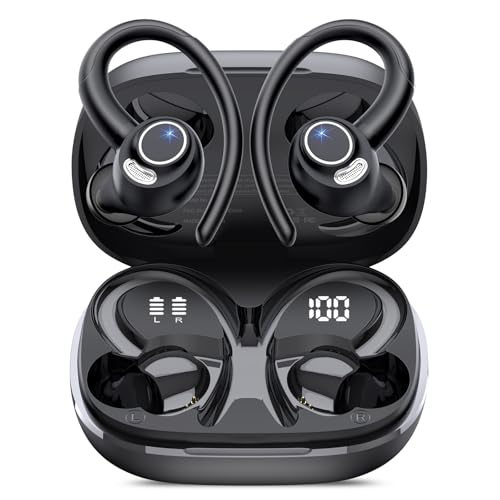
Excellent noise cancellation with ENC technology.
Long battery life, up to 48 hours.
Secure fit with earhooks for sports activities.

Clear calls with noise-canceling microphone.
Durable IP7 waterproof for sports use.
Convenient LED display for battery status.
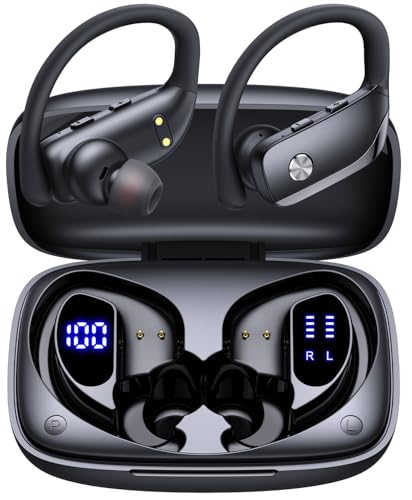
Long 48-hour battery life for extended use.
Secure earhooks ideal for intense workouts.
Convenient LED display for battery status.

Long 80-hour playtime with wireless charging.
Secure earhook design for active use.
IPX7 waterproof for reliable durability.
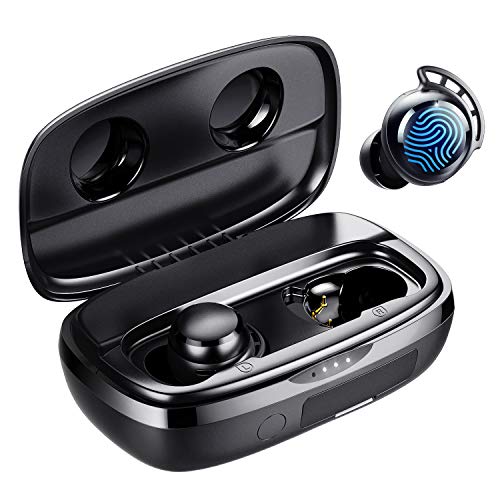
Impressive 110 hours of battery life.
Reliable IPX8 waterproof protection.
Convenient touch control for easy use.

Long 48-hour playback for extended use.
Secure fit with over-ear hooks for workouts.
LED display for easy battery monitoring.

Waterproof design ideal for swimming workouts.
32GB memory for extensive music storage.
Secure fit ensures comfort during activities.
Start with the exact water rating. An IP code should identify the earbuds and, separately, the charging case. The first digit concerns dust protection; the second concerns water protection. IPX4 generally indicates splash and sweat resistance, while IPX5, IPX7, and IPX8 describe different levels of water exposure. These numbers do not automatically mean that swimming, showering, deliberate submersion, or wet charging is safe. Look for an IEC 60529 test report for the exact model and configuration, ideally from an ISO/IEC 17025-accredited laboratory whose accreditation can be checked through an ILAC MRA signatory. A case without its own rating should be kept dry.
Battery and charging evidence matters because every product here contains rechargeable lithium batteries. Clear instructions should specify the charging input, cable or charger limits, drying requirements, temperature precautions, and warnings about crushing, heat, fire, disassembly, and damaged batteries. A UL, Intertek ETL, or CSA listing for the exact charging system is stronger evidence than a seller’s general safety statement. A clean recall search is useful context, but the absence of a located recall is not proof that no incident has occurred.
Fit affects both comfort and practical safety. Multiple tip sizes, hooks, fit instructions, cleaning guidance, and—where offered—transparency or awareness modes can help users keep earbuds secure and hear nearby sound. These features do not make cycling, driving, swimming, or working around machinery safe. For hearing, look for a stated maximum output, volume controls, exposure warnings, or listening-dose features that are transparently documented and independently measured. “Noise cancelling” may refer to active listening noise cancellation or merely microphone noise reduction for calls; those are different functions.
Wireless claims should also be traceable. A matching FCC authorization, label, manual, responsible U.S. party, and Bluetooth qualification record help establish that the product sold is the product tested. Battery life should be read as a test result only when conditions are disclosed. Runtime changes with volume, active noise cancellation, calls, codecs, and case charging, so “48,” “60,” “80,” or “110 hours” may describe a manufacturer maximum rather than ordinary use. Independent testing in the supplied reviews sometimes found lower or more specific results.
Across the reviewed products, recurring limitations are important: no charging case had a clearly established water rating; many water claims lacked an exact-model accredited test report; several manuals warned against submersion despite broad waterproof marketing; and no product offered a verified maximum-output or exposure-monitoring system. Users should not rely on these earbuds for hearing protection, traffic awareness, or hazardous work. Keep wet earbuds out of their case until fully dry, keep charging equipment away from water, use moderate volume, and send sealed lithium-battery products to an appropriate electronics or battery recycler rather than household trash. Swimming-specific open-ear products still require caution because their immersion claims were also not independently verified in the supplied data.
The topics below explain what the review assessed for this category. Higher scores reflect stronger evidence and clearer limits within this supplied product set; they do not turn a manufacturer claim into independent certification.
This measures whether the exact earbuds—and separately the case—have a clearly scoped IP rating supported by testing. It matters because most listings rate only the earbuds and leave the case vulnerable. Higher-scoring examples had defined ratings and clearer use limits; lower-scoring products had broad waterproof wording, conflicting manuals, or no exact-model ingress report.
This covers the battery, case, cable, charging instructions, and third-party safety certification. It matters because wet ports, heat, damaged lithium cells, and unsuitable chargers can create overheating or fire risks. The supplied products generally scored in the high 60s to mid-70s; stronger results reflected concrete charging precautions, while lower results lacked UL, ETL, or CSA evidence.
This measures whether the product gives honest, practical help with volume and listening exposure without implying that ordinary earbuds protect hearing. Higher-scoring products documented volume warnings, Safe Hearing support, or usable controls; lower-scoring products lacked maximum-output figures, exposure monitoring, volume limits, or independent acoustic measurements. No supplied product established a verified hearing-protection system.
This assesses tips, hooks, fit guidance, cleaning instructions, and transparency or awareness features. Secure fit can reduce loosening during exercise, while cleaning helps manage sweat, wax, and residue. Scores were higher where products supplied several tips, adjustable hooks, fit tests, or transparency modes; lower scores reflected fewer fit options or no awareness feature. Awareness modes are not substitutes for traffic attention.
This measures whether the exact wireless design can be matched to a U.S. FCC authorization, labeling, responsible party, and Bluetooth qualification. It matters because a Bluetooth version or model name in a listing may not match the tested hardware. Higher-scoring products had model-specific FCC records; lower-scoring products had no matching authorization or only an uncertain family connection.
This measures whether water, sweat, swimming, runtime, noise control, microphone, and connection claims are precise and consistent with the evidence. Higher-scoring products used defined limits such as IPX4 or IP55 and matched claims more closely to reviews. Lower-scoring products had conflicting runtimes, inflated waterproof language, mismatched noise-cancellation descriptions, or manuals that narrowed the listing’s promise.
This measures model-specific evidence from competent outside bodies, including accredited laboratory reports, certification directories, FCC records, and Bluetooth qualification data. Higher-scoring products combined multiple traceable records and independent testing; lower-scoring products relied mainly on seller or manufacturer statements. Water and charging claims were the areas most often missing exact-model third-party proof.
This covers repeatable testing of battery life, connection, calls, noise control, and water resistance under disclosed conditions. Higher-scoring products had independent runtime or noise-reduction measurements close to stated figures. Lower-scoring products had only manufacturer estimates, no disclosed test method, or unresolved differences between listing figures and observed use.
This checks for relevant recalls, overheating, fires, unsafe-product reports, and an identifiable responsible party. A higher score means no relevant action was located and the product’s responsibility trail was clearer; a lower score reflects uncertainty or related brand incidents. Across the supplied reviews, no exact-product recall was located, but that absence is not proof of zero incidents.
This measures battery durability, replaceability or serviceability, warranty support, repair options, and recycling routes. It matters because sealed batteries can make otherwise usable earbuds disposable. Higher-scoring products had longer or clearer warranty support and, notably, a defined mail-in recycling route; lower-scoring products offered no repair, battery service, parts, or take-back program.
This assesses disclosed materials, packaging, durability, recycled content, and specific end-of-life claims. Higher scores in this set were modest because products generally identified only broad materials such as plastic, metal, ABS, or silicone, without third-party environmental verification. A general carbon-neutral or greener-packaging statement was not treated as proof of responsible materials or reduced waste.
This is a pair of stemmed, in-ear Bluetooth earbuds with touch controls, built-in call microphones, a plastic charging case with a numerical LED battery display, USB-C charging, and wireless charging. The supplied manual documents three sets of ear tips, single-earbud operation, and safety instructions. It also advises keeping listening volume moderate, avoiding use while driving or cycling, wiping off liquids quickly, and not switching on an earbud after submersion until it is dry. The maker states that the earbuds have IPX5 water resistance and up to 60 hours of combined playback. Independent hands-on reviews confirm the case display, wireless charging, lightweight fit, and roughly six-hour single-charge use, but published reviews do not provide a laboratory water test, battery test protocol, or acoustic output measurement. The charging case should not be treated as water resistant.
This product fits a listener who wants simple in-ear earbuds for podcasts, casual music, calls, gym sessions, or light rain, and who can keep the charging case dry. It is suited to people who value a visible battery indicator, wireless charging, USB-C charging, and the ability to try different ear-tip sizes. It also suits users comfortable managing volume themselves, because the supplied instructions provide hearing cautions but there is no documented exposure limiter or companion app.
It is not suited to swimming, showering, rinsing under a faucet, or carrying the case in wet conditions. The manual says liquid submersion voids warranty coverage. People who need verified electrical-safety certification, a clearly traceable U.S. responsible party, or a published battery safety report should use a product with those records. It is also a poor fit for people who need active noise cancellation, an awareness mode, reliable high-volume sound, multipoint connection, or structured hearing-exposure controls.
The strongest health guidance comes from the supplied instructions, not an independent safety certification. They warn that extended high or moderate volume can permanently damage hearing, advise moderate or low volume, and say not to use the earbuds while driving, cycling, operating machinery, or when surrounding sound is needed. They also specify using the supplied charging cable and an appropriate adapter. No matching UL, ETL, or CSA listing was located for the earbuds or charging case. The water claim needs careful limits. The earbuds are marketed as IPX5, but the manual says to wipe liquid away promptly and says submersion voids warranty coverage. Treat the case as dry-use equipment. The product uses rechargeable batteries and a plastic case, but no replaceable-battery design, repair-parts program, packaging material disclosure, or manufacturer recycling program was located. At end of life, lithium-ion devices should go to an appropriate battery or electronics recycler, not household trash.
The Soundcore Sport X20 is a true-wireless, in-ear workout earbud set with adjustable over-ear hooks, physical controls, active noise cancellation, a transparency mode, five silicone tip sizes, and a USB-C charging case. The manufacturer specifies 11 mm dynamic drivers, Bluetooth 5.3, a 580 mAh, 2.158 Wh case battery, and an 18-month limited warranty. The earbuds, not the charging case, carry a manufacturer-stated IP68 dust and water-ingress rating. The manual says to dry the earbuds and USB-C port fully before charging. Soundcore reports up to 12 hours per charge in normal mode or 7 hours with noise cancellation, with up to 48 and 28 hours respectively using the case under stated test conditions. Consumer Reports independently lists 12 hours with ANC off and 7 hours with ANC on, and reports very good sound and excellent active noise reduction. FCC records also document radio authorization and model-family SAR testing.
This product suits adults who need in-ear earbuds that are less likely to shift during gym sessions, running, cycling, or high-sweat training. The adjustable hook design, five tip sizes, fit test, and physical buttons are especially relevant for people whose ordinary stem-style earbuds loosen with movement. It also fits listeners who want switchable noise cancellation and transparency, plus manufacturer-stated long normal-mode runtime that was broadly corroborated by Consumer Reports. It is intended for personal audio, not for sleep monitoring or hearing protection.
It is not a strong fit for people who need documented hearing-exposure controls, such as a volume ceiling, dose tracking, or maximum-output data. It is also unsuitable for children or for households where small rechargeable earbuds could be accessible, because of ingestion and lithium-battery hazards. People needing a water-resistant charging case, fully documented swimming limits, or public third-party proof of the IP68 test should choose a product with those details. Runners and cyclists should not treat transparency mode as a substitute for traffic awareness.
The product documentation usefully separates the water claim from charging practice. It specifies IP68 only for the earbuds and instructs users to dry both the earbuds and USB-C port before charging. It also provides fit, cleaning, and transparency-mode guidance. FCC documentation supports lawful U.S. radio use for the Sport X20 model family and includes model-specific RF exposure testing. Public documentation did not show a maximum sound-output figure, volume cap, or listening-dose warning. No recall for this exact product was found in the U.S. recall search. However, CPSC recalls have covered other Anker and Soundcore lithium-battery products, including speakers and power banks, for overheating and fire hazards. Those actions do not establish a defect in this product, but they make careful charging and prompt attention to heat, swelling, odor, or damage sensible. The 18-month warranty helps, but the batteries are built in and no verified repair, replacement-battery, materials-composition, packaging, or take-back details were located.
This product is a pair of true wireless, in-ear sport earbuds with flexible over-ear hooks, physical controls, a USB-C charging case, and three supplied ear-tip sizes. It is intended for running, gym sessions, and everyday phone or tablet listening. The manufacturer states that the earbuds use 14.2 mm dynamic drivers, Bluetooth 5.4, an ENC call microphone, and up to 15 hours per earbud charge or 75 hours including the case. Water resistance is manufacturer-stated as IPX7, but no model-specific accredited test report was located. The available manual also says not to submerge the earbuds, avoid hot water and vapor, and keep them away from water. The charging case has no separately stated water rating. A third-party hands-on review reported secure fit and usable sound, but did not publish a repeatable laboratory method.
This product suits an adult who wants low-complexity workout earbuds that are less likely to fall out during jogging, lifting, or indoor exercise. The ear hooks, physical buttons, and included tip sizes are concrete advantages for users who dislike touch controls or need a more anchored fit. It also fits someone comfortable treating the stated 75-hour total runtime and IPX7 protection as manufacturer claims, rather than independently certified performance. It is most appropriate for sweat, rain, and routine dry storage of the case.
It is not suited to swimmers, shower users, or anyone likely to immerse the charging case. The manual cautions against submersion, hot water, and vapor despite the IPX7 marketing claim. It is also not the right safety-focused choice for children, people managing tinnitus or hearing loss, or households needing a documented volume limit, exposure tracking, and verified maximum-output data. Choose another product if public FCC traceability, third-party electrical-safety certification, repair parts, or a manufacturer recycling program are required.
The strongest health-positive design elements are mechanical rather than certified. Over-ear hooks and three tip sizes can help achieve a stable fit, and the manual instructs users to clean the speaker area and charging contacts, keep the product away from fire and temperature extremes, and use a suitable USB charging source. Those are useful basic precautions, but they do not substitute for a public battery-safety listing. No model-specific UL, ETL, CSA, FCC, Bluetooth qualification, accredited water-test report, or independent acoustic report was located. Public CPSC recall searches did not identify a recall for this brand or product, although the responsible US party was not clearly identified in the available documentation. The stated TPU construction is a limited material disclosure. A manufacturer-stated two-year warranty may reduce early disposal, but no battery replacement, repair-parts, take-back, recycled-content, or packaging-reduction program was located. Rechargeable earbuds and their cases should be routed to an appropriate battery or electronics collection program rather than household trash.
This is a pair of in-ear, over-ear-hook wireless earbuds for exercise, supplied with a USB-C charging case, cable, and three silicone tip sizes. The product page states Bluetooth 5.4, a 48-hour combined battery claim, touch controls, ENC call processing, and an IP7 waterproof claim. Those are manufacturer-stated specifications, not independent performance results. The wireless hardware has stronger traceability than most of its claims. FCC filing material identifies YT18 as a model variant of the MD033 earphone family, with a Part 15 radio authorization and a 2023 laboratory RF report. That filing identifies Bluetooth 5.3 hardware, 13 mm drivers, a 10 m range, and 40 mAh earbud batteries with a 400 mAh case. These differ from the current product page's Bluetooth 5.4, 14.2 mm, and 15 m statements.
This product fits an adult who wants low-cost ear-hook earbuds for gym sessions, running, walking, or calls where a stable physical fit matters more than documented acoustic accuracy. It is particularly suited to users willing to select among the included tip sizes, clean and dry the earbuds after sweating, and treat the claimed 48-hour total runtime as a manufacturer figure. The FCC-linked product-family record also provides useful traceability for a U.S. Bluetooth device.
It is not appropriate for swimmers, shower use, or anyone who may place the charging case near water, because the case is specifically not water resistant and no public model-specific ingress report was found. People with hearing sensitivity, children needing volume safeguards, or users who want a published maximum output should choose a product with documented listening protections. It also does not suit buyers who require independently measured call quality, battery endurance, active noise cancellation, charging certification, or repair support.
The clearest verified safety point is radio traceability. The YT18 is included in a U.S. FCC-authorized earphone family, and the authorization materials include a laboratory RF compliance report for the representative model. This confirms legal radio authorization, not water resistance, battery safety, sound level, or overall product quality. Water claims require restraint. Jesebang describes the earbuds as IPX7 or IP7, while the case is not waterproof. Dry the earbuds fully before charging or returning them to the case. No public UL, ETL, or CSA safety listing was located for the charging system, and no public acoustic output limit or safe-listening feature was found. A search of U.S. recall resources did not identify a recall or safety warning for this product or brand. The stated two-year warranty is useful, but no documented battery replacement, repair program, take-back program, recycled-content claim, or packaging evidence was found.
This product is a pair of stem-style, in-ear Bluetooth earbuds with a USB-C charging case, touch controls, silicone tips in three sizes, microphones, and a front battery display. The manufacturer states Bluetooth 5.4, a 15 m unobstructed range, 14.2 mm dynamic drivers, ENC call processing, and up to 36 hours of combined playback. Those are manufacturer claims, not independently confirmed performance figures. The strongest external documentation is radio compliance. FCC authorization material for Shenzhen Enle Industry lists A90 Pro among the tested model variants. An independent teardown measured each earbud at 3.7 g and the complete set at 41.7 g. Water protection is much less clear. Current marketing calls the earbuds IP7 waterproof, while an earlier A90 Pro guide describes them as only sweatproof and slightly waterproof, says not to submerge them, and directs users to keep them dry before charging.
This product fits an adult seeking lightweight, low-cost in-ear earbuds for casual music, calls, desk work, or gym use where the earbuds can be wiped dry before returning to the case. It is especially suited to someone who values a visible case battery display, multiple supplied tip sizes, and documented FCC radio authorization. The user should be comfortable treating the stated battery life, call improvement, bass response, and water resistance as manufacturer claims rather than laboratory-confirmed guarantees.
It is not appropriate for swimming, showering, rinsing under a tap, or any use that depends on reliable immersion protection. The conflicting water instructions and lack of an accessible model-specific water test make those uses unsuitable. It also does not suit cyclists, runners, or pedestrians who need awareness of traffic because no transparency mode is documented. Choose a different product for children, hearing-sensitive users needing output limits or exposure controls, or households requiring independently listed charging safety and repairable batteries.
The product has a traceable wireless compliance record. FCC authorization documents from the named manufacturer include A90 Pro among tested Bluetooth-earbud models, which is stronger evidence than a generic Bluetooth claim. The supplied guidance also tells users to clean ear tips and nozzles, keep charging contacts dry, avoid extreme temperatures and fire, and avoid charging damage after moisture exposure. The main safety concern is scope of the water claim. Current manufacturer marketing uses IP7 waterproof language, but an earlier product guide says the earbuds are sweatproof and slightly waterproof and warns against submersion. Treat the charging case as dry-only because no water rating for it was found. No U.S. recall or product warning was located in the searched CPSC records, but no third-party battery listing, acoustic-output data, repair pathway, recycling program, or materials and packaging disclosure was found. The sealed rechargeable design therefore remains an e-waste concern when battery capacity declines.
This product is a pair of true wireless, over-ear-hook earbuds for workouts, calls, and everyday Bluetooth listening. The supplied manual describes physical buttons, three sizes of silicone ear tips, adjustable ear hooks, a USB-C charging case with a battery display, and Bluetooth pairing under the name T16. The manufacturer states up to 80 hours of combined playtime, but no model-specific independent runtime test was located. Water protection is described as IPX7 in an older T16 manual, yet no accredited test report was found and the charging case is not separately rated. The radio has stronger documentation: an FCC authorization record for T17 expressly identifies T16 as an identical model except for its name, with Part 15 test documentation.
This product fits an adult user seeking inexpensive button-controlled earbuds for dry or sweaty gym sessions, walking, or running, where a wraparound hook is more useful than a compact in-ear-only shape. It is also suited to someone who values a visible case battery display and can clean the charging contacts and sound grilles regularly. The documented radio authorization provides some traceability for U.S. Bluetooth use. Treat the stated long combined runtime as a manufacturer claim, not a tested result.
It is not for swimming, showering, or anyone who needs confirmed protection for both earbuds and charging case in wet conditions. It also is not a strong fit for people who need a certified charging system, independently measured battery life, maximum-volume data, or app-based safe-listening controls. People with sensitive skin should be cautious because the manual identifies silica gel and TPE contact materials and warns of possible reactions. Children should not have unsupervised access because of the rechargeable battery and small parts.
The clearest independently checkable result is the radio record. FCC documentation for the authorized T17 identifies T16 as the same product apart from its model name, and the associated file contains Part 15 radio test material. That confirms wireless authorization, not water resistance, charging safety certification, sound quality, or battery endurance. The manual provides useful but manufacturer-originated care guidance: clean wax and sweat from the grilles and charging contacts, stop use if irritation occurs, and keep the product away from children and pets because it contains a battery. No relevant U.S. recall was located in the CPSC search reviewed. Environmental support is limited. The manual displays a recycling symbol, but no verified U.S. take-back route, battery replacement service, repair-parts program, recycled-material disclosure, or packaging-impact documentation was found.
This product is a pair of Bluetooth sport earbuds with flexible over-ear hooks, touch controls, three ear-tip sizes, a USB-C charging case, and wireless charging support. It is intended for music, calls, and exercise use. The manufacturer states up to eight hours from the earbuds and up to 80 hours total with the case, plus an IPX7 water-resistance claim for the earbuds. The manual identifies a 600 mAh, 2.22 Wh charging-case battery and a 5 V, 1 A input limit. It also gives cleaning, battery, and listening-break guidance. Separately, the T60 model is covered by an FCC equipment authorization for Bluetooth transmission in the United States. That authorization confirms radio compliance for the listed model, not sound quality, battery runtime, charging safety certification, or water-resistance testing.
This product suits an adult or teen who wants hook-style Bluetooth earbuds for gym sessions, walks, runs, or routine outdoor use, and who values a physical fit system over a low-profile earbud shape. It is also suited to someone comfortable following basic care instructions, including drying the earbuds before charging and using a modest 5 V, 1 A charging source. The manufacturer-stated long case runtime may be useful for people who prefer fewer recharges between ordinary listening sessions.
It is not suited to swimmers, shower users, or anyone who needs a water rating independently verified for immersion. The case has no stated ingress rating, so it should not be treated as rainproof or washable. People who need certified charging safety, independently measured call quality, verified battery endurance, or a maximum-volume limit should choose a product with those records. It is also unsuitable for users needing repairable earbuds, replaceable batteries, or a documented U.S. recycling and take-back pathway.
The clearest independently confirmed point is radio traceability. The T60 model appears in an FCC authorization record for a Bluetooth wireless sport-earbud device. Its manual also provides useful baseline safety instructions, including the specified 5 V, 1 A input, cautions about heat and battery damage, dry-cloth cleaning guidance, and advice to take 5 to 10 minute listening breaks each hour. Water protection remains manufacturer-stated. The brand calls the earbuds IPX7 and frames them for sweat and light rain, but no model-specific accredited water-test report was located, and the charging case is not assigned a water rating. No UL, ETL, or CSA safety listing was located. The manual marks the product for separate electronic-waste collection, but no U.S. repair, battery replacement, take-back, recycled-content, or packaging documentation was found. No relevant U.S. recall or regulatory warning was found in the searched records.
This product is a pair of true wireless, in-ear Bluetooth earbuds with a charging case, touch controls, microphone, silicone tips, and removable ear hooks. The product manual filed for this version confirms USB-C case charging, USB-A output, a 5 V charging input requirement, and approximately 90-minute earbud and 210-minute case charging times. Tribit states up to 110 hours of total listening from the case and says its 2,600 mAh battery can also provide emergency phone charging. An independent hands-on review of the FlyBuds 3 line also observed roughly five hours per earbud charge and about 100 hours total, but it does not establish those results for this exact revision. The product is radio-authorized for the United States under FCC Part 15.
This product suits an adult who wants simple in-ear audio for commuting, gym sessions, travel, or occasional calls and values long intervals between charging more than compactness. It is also practical for someone who can use the case's USB-A output as a small emergency phone backup. The supplied hooks and multiple silicone tips give a better starting point for users who need a more secure fit than a smooth, hook-free earbud can provide. Use the supplied fit options carefully and keep the charging case dry.
It is not suited to swimmers, people intending to rinse the product after exercise, or anyone who needs a clearly warranted water-safe system. The charging case has no stated ingress rating, and the manual's liquid warning conflicts with the IPX8 marketing. It is also a poor fit for users who need active noise cancellation, an awareness mode for cycling or traffic, automatic pause on removal, hearing-exposure controls, or a documented maximum output. Keep the small earbuds away from children because of swallowing risk.
The strongest independently checkable safety point is wireless traceability. This exact product version has an FCC authorization for Bluetooth operation, and its public manual identifies Shenzhen Thousandshores Technology as the applicant. The manual also provides a 5 V charging instruction, charge-status indicators, temperature cautions, and warnings not to disassemble, crush, strike, or burn the built-in lithium battery. No relevant CPSC recall or product-safety warning was located in the review. Water protection is less clear. Tribit markets IPX8 protection, but no public test report for the exact product was found, the case is not separately rated, and the manual warns against deliberate liquid contact. The earbuds and case are principally plastic, with silicone tips and hooks. A one-year warranty is documented, but no repair, replaceable-battery, take-back, recycled-content, or packaging-material documentation was located. Recycle the product through an electronics or lithium-battery collection route rather than household trash.
This is a pair of true wireless, in-ear sport earbuds with flexible over-ear hooks, physical controls, a charging case with a numeric battery display, three ear-tip sets, and a USB-C charging cable. The documented case battery is 3.7 V, 600 mAh, or 2.22 Wh, with a 5 V, 1 A charging input. The product is intended for calls, music, and exercise use. The manual manufacturer-states an IPX5 rating for the earbuds, meaning sweat and limited water exposure are the intended use, but it also says not to put the product in water. The charging case has no separate IP rating. A U.S. radio authorization can be traced through the FCC identifier printed in the manual to an FCC grant for the underlying radio model. The advertised 80-hour total playtime was not supported by an independent runtime test found in this review.
This product suits an adult listener who wants low-complexity Bluetooth earbuds for gym sessions, walks, calls, or running where an over-ear hook is preferred over a loose in-ear fit. It is also a reasonable fit for someone willing to clean the charging contacts and speaker grilles periodically, use the included tip options, and keep the product away from immersion. Its physical buttons may suit users who prefer not to rely on touch controls while exercising. Use a conservative device volume, especially during long sessions.
This product is not suited to swimmers, shower users, or anyone expecting the charging case to tolerate rain, rinsing, or water immersion. It is also not the right safety-focused option for children who need parental loudness limits, or for people who want built-in exposure tracking and verified maximum-output data. People with ear irritation from silicone or elastomer materials should be cautious because the manual notes a potential allergic reaction. Do not use it where blocking outside sound could create a traffic, cycling, workplace, or personal-safety risk.
The strongest independently checkable point is radio traceability. The manual identifies the earbuds with an FCC identifier that corresponds to an FCC grant for a 2.4 GHz Bluetooth device. That confirms a radio-authorization record, but it does not verify the product's waterproof, battery, or acoustic claims. No relevant U.S. recall or product safety warning for this exact product was found in the CPSC recall search reviewed. For health use, the manual advises breaks, cleaning of earwax and debris from the grille, and stopping use if itching or swelling occurs. It does not provide a listening-dose feature, volume cap, or measured maximum loudness. The product uses rechargeable batteries in a sealed earbud and case system. A recycling symbol appears in the manual, but no U.S. take-back program, replacement battery service, repair pathway, or independently verified environmental packaging claim was found. Recycle the complete product through an appropriate electronics or rechargeable-battery collection route rather than household trash.
This is a wraparound, open-ear bone-conduction headphone set for exercise and swimming. It has onboard 32GB music storage, so files can be played without a phone, plus Bluetooth for dry-land use. The supplied accessories listed in the instructions include a magnetic charging cable, adjustable retaining rope, and earplugs. PSIER states an IPX8 rating with submersion up to 2 meters for one hour, and says to use MP3 mode underwater because Bluetooth does not transmit effectively through water. Its instructions also say to rinse after chlorinated or saltwater exposure, dry fully before charging, and keep the magnetic contacts dry. The claimed eight-hour playtime, 32GB capacity, and water rating are manufacturer-stated, not independently validated for the PSIER-branded unit. A public lab file exists for an S18 made by another company, but PSIER does not identify that company or an authorization label on its own product page.
This product fits an adult lap swimmer or runner who wants open ears rather than sealed ear tips, can load MP3 files manually, and is prepared to follow water-care steps closely. It is especially relevant where a phone cannot remain nearby, because the manufacturer instructs users to switch to onboard MP3 playback in the water. The adjustable rope may help buyers who need a more secure wraparound fit during movement. It is best suited to users comfortable treating the published water and battery claims as manufacturer statements rather than independently confirmed product results.
It is not suited to anyone who needs independently documented immersion testing, a confirmed U.S. safety listing, or fully traceable wireless authorization for the exact sold unit. It also does not fit buyers seeking medically oriented hearing protection, a maximum-volume limit, or measured sound-output data. Children should not handle or charge it without adult supervision because it contains a non-serviceable lithium-ion battery and magnetic charging contacts. Avoid charging immediately after swimming, and avoid relying on open-ear awareness as protection in traffic, around boats, or in other high-risk environments.
The open-ear design leaves the ear canal unsealed, and the instructions tell users to place the transducers on the cheekbones, adjust the retaining rope for stability, avoid prolonged high volume, and remain aware in hazardous surroundings. They also give useful hygiene directions, including a fresh-water rinse after pool or saltwater use, gentle cleaning, and thorough drying before charging. These are practical safeguards, though there is no published maximum-output figure, safe-listening limiter, or independent acoustic result for this product. A public S18 test report issued to DongGuan Kemi records EN IEC 62368-1 electrical-safety testing for a 170mAh lithium-ion battery, but PSIER does not document a direct link between that tested sample and its sold units. Searches located no matching PSIER recall in the U.S. Consumer Product Safety Commission recall database, which is not proof that no incidents exist. PSIER states a 12-month warranty, while repair parts, battery replacement, packaging composition, recycled content, and take-back or recycling arrangements were not documented.



