Best Overall
16% off

TP-Link Deco BE63 Tri-Band WiFi 7 Mesh System
High-speed connectivity with 10 Gbps performance.
Advanced AI-Roaming for seamless device switching.
Robust security features with HomeShield integration.
 Daniel Kenitz
High-speed connectivity with 10 Gbps performance.
Advanced AI-Roaming for seamless device switching.
Robust security features with HomeShield integration.

Supports multiple high-speed connections seamlessly.
Extensive coverage for large spaces.
Advanced security features with HomeShield.

Ultra-fast speeds enhance streaming and gaming.
Advanced security features protect your network.
Supports multiple devices with efficient connectivity.

Covers large areas up to 6,600 Sq.Ft.
Dual 2.5G ports for faster connections.
Advanced AI-Roaming for seamless connectivity.

Covers large areas up to 6,000 sq.ft.
Supports up to 70 devices seamlessly.
Fast 5 Gbps speed with 2.5GB port.

Offers high-speed 6GHz WiFi for gaming.
Equipped with 5 x 2.5G Ethernet ports.
Ideal for both home and business use.

Offers fast dual-band connectivity for seamless streaming.
Features advanced security with a private IoT network.
Includes 2×2.5G ports for superior data transfer.

Fast dual-band Wi-Fi 7 connectivity.
Compact design ideal for travel.
Supports secure VPN for privacy protection.

Fast internet speeds with WiFi 6 technology.
Compatible with major cable providers.
Combines modem and router in one device.
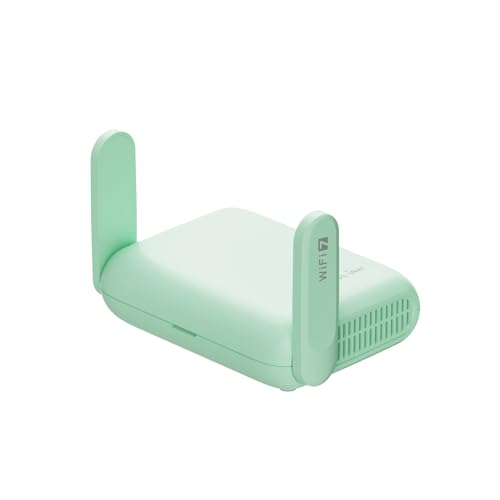
Compact design enhances travel convenience.
Wi-Fi 7 ensures fast, reliable connections.
Supports multiple VPNs for secure browsing.
What determines whether a router works well is the combination of radio bands, channel width, antenna and spatial-stream design, placement, backhaul, Ethernet ports, and client compatibility. A tri-band or quad-band model may provide 6 GHz capacity, while several supplied products are dual-band and omit 6 GHz. Wi‑Fi 7 features such as Multi-Link Operation (MLO), 320 MHz channels, and 4K-QAM only help when the connected client supports them and the local radio environment allows them. Mesh systems also depend on satellite placement and whether the links between units are wireless or wired. For latency-sensitive use, a wireless satellite can behave differently from the primary router.
Headline speed figures need careful interpretation. A number such as 3.6, 5, 7.2, 9.3, or 30 Gbps is generally an aggregate or theoretical wireless link rate, not the speed one device will receive from the internet. Real performance changes with client capability, distance, walls, interference, traffic, backhaul, and the internet plan. Wired ports can impose another limit: a router may advertise multi-gig wireless while offering only gigabit LAN ports, or its 2.5 Gbps or 10 Gbps interfaces may still be constrained by the modem, switch, storage device, or cable. Coverage and device-count figures are also estimates, not guarantees for every floor plan.
For a substantiated product, look for model-specific evidence rather than a label alone. The FCC Equipment Authorization System should tie the exact U.S. hardware to authorized 2.4, 5, and, where applicable, 6 GHz operation and RF-exposure conditions. Wi‑Fi Alliance certification or reproducible testing with compatible Wi‑Fi 7 clients is stronger evidence for 6 GHz, 320 MHz, MLO, throughput, latency, and interoperability claims. Independent tests should identify the exact model and hardware version. Electrical safety is a separate question: a router and its supplied adapter should be traceable to an OSHA-recognized NRTL directory, such as UL Product iQ or Intertek’s ETL directory, with no unresolved CPSC or Amazon safety alert.
Buyers should also examine administration and maintenance. WPA3, unique setup credentials, HTTPS or other secure management, guest and IoT separation, disabled unnecessary remote access, signed or authenticated updates, and a clear vulnerability-reporting route reduce household risk. A published security-support end date is more useful than a general promise to issue updates. Privacy depends on whether local browser administration remains practical and what the app, account, cloud services, parental controls, analytics, and subscriptions collect or require. Finally, compare disclosed idle and active power, external-adapter efficiency, warranty and support life, replaceable accessories, repair information, and manufacturer or retailer recycling routes.
Recurring cautions in the supplied reviews are important. Several products lack publicly verified UL or ETL certification for the exact router or adapter, so the absence of a directory record should not be treated as proof of an electrical defect—but it is an evidence gap. No exact-model power measurements were found for most products. Multiple products require or encourage app accounts and cloud services, and some advanced security or parental-control functions require subscriptions. Dual-band designs repeatedly omit 6 GHz, 320 MHz operation, or fully simultaneous MLO. Buyers should also avoid treating whole-home coverage claims as guarantees, especially in large or obstructed homes, and should check hardware-revision support status where the retailer record does not identify the revision.
These topics cover household exposure and security, the router’s ongoing resource use and end-of-life options, and whether important Wi‑Fi 7 and safety claims can be independently checked for the exact product. Scores range widely across the supplied products: a high score reflects stronger, more specific evidence, while a lower score usually marks missing certification, unclear support, cloud dependence, or claims that testing did not reproduce.
This measures whether the exact U.S. product has FCC authorization and documented compliance for its radio bands and exposure conditions. It matters because Wi‑Fi routers operate continuously across 2.4, 5, and sometimes 6 GHz. High-scoring products in the set reach 92–96 through traceable FCC filings and exposure documentation; lower results, such as 87–90, still reflect authorization but less complete or less specific evidence.
This measures independent safety certification for the router and supplied adapter, together with recall checks. It matters because a router and its power supply remain energized for long periods. Scores cluster around 70–73: the reviews generally found no relevant recall, but most could not locate an exact UL, ETL, or other NRTL directory record. A high score therefore requires both model-specific certification evidence and no unresolved hazard, not merely normal operation.
This measures how much household network information the product, app, account, and optional services collect, retain, share, or require in the cloud. It matters because administration, parental controls, threat protection, analytics, and remote access may expose device identifiers, usage, location, browser history, or network metadata. The supplied scores run from 65 to 77: higher results correspond to workable local administration and clearer controls, while lower results reflect stronger account or cloud dependence.
This measures protections such as unique administrator credentials, WPA3, HTTPS management, guest and IoT separation, restricted remote access, and authenticated updates. These controls matter because a poorly configured home router can expose every connected device. Supplied scores range from 78 to 88. The higher-scoring products document strong setup-password rules, local management, network isolation, and safer defaults; lower-scoring products leave more hardening to the owner or have configuration limitations.
This measures whether the maker publishes a support end date, supplies timely fixes, and accepts vulnerability reports. It matters because a router remains exposed after a flaw is discovered unless updates continue. Scores range from 55 to 89. The strongest example publishes support through August 31, 2031; other higher-scoring products show current security releases and reporting channels but no firm end date. The lowest result reflects an end-of-life hardware-revision concern and uncertain retail revision.
This measures whether advertised speed, coverage, device count, latency, security, and parental-control claims explain their conditions and paid-feature limits. It matters because aggregate link rates and square-foot figures can be mistaken for guaranteed home performance. Scores range from 54 to 83. Higher-scoring products disclose client, building, interference, and service limitations or have independent testing; lower scores include broad claims that testing qualified or contradicted.
This measures whether the exact product’s Wi‑Fi 7, 6 GHz, 320 MHz, MLO, and backward-compatibility claims are certified or reproducibly tested. It matters because products sold as Wi‑Fi 7 differ substantially: several supplied models have no 6 GHz radio, and testing found alternating rather than simultaneous MLO in multiple designs. Scores range from 54 to 88; certification plus exact-product testing separates the highest results from label-only claims.
This measures whether FCC, electrical-safety, Wi‑Fi, recall, security, and performance evidence identifies the exact U.S. hardware and remains current. It matters because product families, regional versions, adapters, and hardware revisions can differ. Scores range from 82 to 85, so every supplied product has some useful traceability, but none has complete evidence across every area. Higher results combine regulator records, certification, and independent tests rather than manufacturer statements alone.
This measures disclosed, independently testable idle and active electricity use and power-supply efficiency. It matters because routers and mesh satellites operate continuously, and a three-unit system has several persistent loads. Scores span 68–84. Most reviews found no exact-model power measurement; the strongest evidence is a model-specific report listing 4.1–4.5 W networked standby and adapter efficiency above 86 percent. Manufacturer estimates or general efficiency statements are weaker.
This measures support longevity, replaceable accessories, documentation, repair options, and credible recycling or take-back routes. It matters because keeping a router working longer avoids premature electronic waste. Scores range from 62 to 80. Higher-scoring products combine longer documented support or warranty, recycling or trade-in information, and usable documentation. Lower scores reflect no spare-parts or repair program, no product-specific take-back route, or an end-of-life hardware version.
This product is a three-unit, tri-band whole-home mesh router system. Each tall desktop unit has four 2.5 Gbps Ethernet ports, a USB port, internal antennas, and a supplied 12 V, 2.5 A power adapter. Setup and routine management are centered on the Deco mobile app, with web management also documented. FCC test and RF-exposure filings list this product as electrically and radio-equivalent to the tested Deco BE65 family, supporting U.S. 2.4, 5, and 6 GHz authorization. TP-Link states that it supports Wi-Fi 7, 320 MHz channels, WPA3, MLO, guest networks, and a separate IoT network. Independent testing confirms Wi-Fi 7 operation, but characterizes its MLO as alternating, meaning a client uses one band at a time rather than simultaneous multi-band links. The advertised maximum speeds and broad-home coverage remain conditional on compatible clients, wired or fiber service, placement, interference, and building construction.
This product suits a large, busy home that can place three nodes effectively and has, or expects to add, multi-gig internet, wired backhaul, or several high-bandwidth wired devices. It is particularly relevant where a homeowner wants 6 GHz capacity alongside separate guest and IoT networks, and is willing to use the Deco app for setup and account-linked services. Buyers should treat its high wireless link-rate figures as capability ceilings, not expected internet speeds, and should have compatible Wi-Fi 7 clients to use its newer radio features.
It is not well suited to buyers who need fully simultaneous MLO behavior for specialized low-latency or multi-link workloads, because independent testing found an alternating implementation. Privacy-sensitive households that do not want app-linked management, cloud services, or optional browsing and URL analysis should examine the settings and service terms closely. It also is a poor fit for households without a practical three-node placement plan, wired equipment above gigabit speeds, or Wi-Fi 7 clients. Buyers prioritizing published support end dates, repair parts, independently verified power use, or a documented U.S. take-back route need more evidence than is publicly available here.
The radio evidence is comparatively strong. FCC-family filings identify this product, document 2.4, 5, and 6 GHz Wi-Fi testing, and include RF-exposure evaluation. The installation guide also states FCC Part 15 compliance. No product-specific CPSC recall or Amazon safety alert was identified in the records checked. However, a public U.S. NRTL directory match for the exact router and supplied adapter was not located, so independent electrical-safety certification cannot be confirmed from the available records. This is always-on equipment, yet TP-Link does not publish model-specific measured idle or active power consumption. The listed adapter output is up to 30 W, which is not the same as measured use. TP-Link publishes corporate sustainability information and general recycling guidance, but no product-specific U.S. mail-back or take-back program was found. Its two-year manufacturer warranty and active firmware downloads can help extend use, while the sealed consumer-router design and lack of public spare-parts information limit repairability.
This is a tri-band home router for a wired modem or fiber gateway, with 2.4 GHz, 5 GHz, and 6 GHz Wi-Fi, six external antennas, one USB 3.0 port, and five multi-gig Ethernet ports. It can be administered through a local browser or the Tether app, and offers router and access point modes, guest networks, an IoT network, VPN client and server functions, and optional HomeShield services. Its wireless radio configuration is independently traceable to a U.S. FCC authorization that lists this product as a related model and includes 2.4 GHz, 5 GHz, and 6 GHz testing. TP-Link states a combined 9.7 Gbps physical link rate, 320 MHz channels, and Multi-Link Operation, while clearly noting that real throughput, coverage, and feature availability depend on compatible clients, conditions, and firmware. Independent testing of the corresponding BE9700 version measured 2.201 Gbps at 15 feet.
It suits a household with a multi-gig internet plan, a wired NAS or desktop, and at least some current Wi-Fi 7 devices that can use 6 GHz, 320 MHz channels, or Multi-Link Operation. It is also relevant for a three-bedroom-scale home where a single centrally placed router is practical and where several wired multi-gig connections matter. People who prefer local browser setup can use it without making the app their only administration path, while still having access to guest and IoT network separation.
It is not well matched to households that need documented independent electrical certification for every supplied component, verified low idle power, or a published long-term support end date. It also is not a complete solution for very large, unusually dense, or structurally difficult homes where one router may leave weak areas. Buyers without multi-gig wired equipment or compatible Wi-Fi 7 clients may not realize the stated headline link rates. Privacy-sensitive households should avoid enabling cloud-linked services unless they accept the associated account and usage-data handling.
The product's radio compliance is unusually well traceable. U.S. FCC equipment-authorization records cover this product as a related model in the tested family, including 2.4 GHz, 5 GHz, and low-power indoor 6 GHz operation. These records include RF exposure material and radio test reports. No product-specific U.S. recall or regulator exposure warning was found in the checked sources. Electrical certification is less transparent. The router uses a 12 V, 3.3 A external adapter, but no public exact-model UL, ETL, or equivalent NRTL listing was located. TP-Link provides a two-year U.S. warranty and downloadable firmware, manuals, and open-source code, which can help keep it usable. However, no measured energy-use report, spare-parts program, or clearly documented U.S. manufacturer take-back program for this product was located. Use a certified local electronics recycler at end of life.
The NETGEAR Nighthawk BE9300 is a standalone indoor tri-band WiFi 7 router for an existing cable, fiber, DSL, or satellite modem. It includes a 12 V, 3.5 A external power adapter, Ethernet cable, four internal antennas, one 2.5 Gbps internet port, two 2.5 Gbps LAN ports, two 1 Gbps LAN ports, and USB 3.0 storage sharing. Local browser administration is available alongside the Nighthawk app. Its 2.4, 5, and 6 GHz radio hardware is independently traceable to an FCC authorization that includes indoor-use and 20 cm separation conditions. NETGEAR states a combined 9.3 Gbps maximum link rate, including a 5.8 Gbps 6 GHz radio using 320 MHz channels. Those are theoretical PHY rates, not a promise of household internet speed. Consumer Reports independently identifies this exact product as a WiFi 7 router with guest-network and automatic-firmware-update functions, though its detailed lab results are not public.
This router suits a household with a single modem connection, a multi-gig internet plan or fast local network storage, and a practical need for 6 GHz WiFi. It is especially relevant where one router can be placed centrally in an indoor home of roughly the manufacturer-stated 2,500 square feet. The buyer should have compatible WiFi 6E or WiFi 7 clients to make meaningful use of 6 GHz and 320 MHz capability, and should be willing to install firmware updates and review app privacy choices during setup.
It is not suited to people who need a verified whole-home mesh system, measured coverage guarantees, or publicly demonstrated Multi-Link Operation performance. Large, dense, multi-floor, or detached-building properties may need a designed multi-access-point installation rather than reliance on a single-router coverage claim. It is also a poor fit for buyers who require an exact published security-support end date, independently listed electrical-safety documentation for every supplied component, or a router with fully documented low-power operating consumption. Do not use it outdoors or closer than 20 cm to people during normal operation.
The radio compliance evidence is strong. The FCC authorization identifies this Nighthawk product family, covers 2.4, 5, and 6 GHz operation, and specifies indoor use, a minimum 20 cm separation from people, and restrictions intended to keep the 6 GHz operation within authorized limits. The product should be positioned on a stable indoor surface with ventilation, using its supplied adapter and observing the manufacturer's electrical-safety guidance. The supplied adapter is specified as 12 V, 3.5 A, but public evidence did not establish an exact U.S. Nationally Recognized Testing Laboratory listing for the router-adapter package. No applicable recall was located in the CPSC record search. NETGEAR provides current firmware and a vulnerability-reporting route, helping extend useful life. However, the company has not published model-specific power measurements, adapter-efficiency documentation, repair parts information, or a fixed end-of-support date. Those omissions limit confidence about lifetime electricity use and long-term e-waste reduction.
This product is a three-unit indoor mesh Wi-Fi system. Each compact unit has two auto-sensing 2.5 Gbps Ethernet ports, and the system uses only the 2.4 GHz and 5 GHz bands. It is designed to distribute a single home network across multiple locations, with optional Ethernet backhaul between units. TP-Link states 3.6 Gbps aggregate wireless link rates, 160 MHz channels, Multi-Link Operation, WPA3, guest networks, and an isolated IoT network. The radio hardware is traceable to an FCC authorization that includes RF exposure documentation for this model. Independent testing of the closely matching retail product confirms strong wireless speeds for typical broadband service, while finding that it lacks 6 GHz. TP-Link also discloses important limits: real throughput and coverage depend on clients, building materials, congestion, and the internet connection. Some HomeShield protection and parental-control functions require a paid subscription.
This product suits a household that needs to spread Wi-Fi through several rooms or floors and can place three units with reasonably clear paths between them. It is most appropriate for ordinary broadband up to about 1 Gbps, streaming, video calls, smart-home devices, and casual gaming. It also fits households able to use Ethernet backhaul, since each unit has two 2.5 Gbps ports. Buyers should be comfortable managing the network through the Deco mobile app and keeping firmware current.
It is not suited to households specifically seeking a 6 GHz Wi-Fi 7 network, 320 MHz channels, or a dedicated third radio for wireless backhaul. Competitive gamers and latency-sensitive users should avoid relying on a wireless satellite connection, because independent testing found only fair wireless latency. It is also a poor fit for people who require fully local administration with minimal cloud involvement, or who need independently documented power consumption, public adapter safety certification, repair parts, or formal end-of-life recycling evidence before installation.
The product has a traceable FCC authorization, including radio-frequency exposure reports. Its manual directs installation at least 20 cm from people during operation, which is the separation condition used for its FCC compliance statement. No relevant U.S. consumer recall or regulator warning for this exact product was located in the searched CPSC and Amazon safety sources. Electrical evidence is less complete. The supplied power supply is identified as model T120150-2B4, but a matching public UL or ETL certification record was not located. TP-Link publishes regular firmware releases and a vulnerability-reporting process, which can extend useful service life. However, no product-specific measured electricity use, repair documentation, spare-parts program, or verified take-back route was found. The cloud-linked app and optional monitoring features also involve data collection that households should review before enabling.
This is a three-unit, dual-band Wi-Fi 7 mesh system for an existing modem or gateway. It includes one router and two satellites, each with a 2.5 Gig Ethernet port, plus three external power adapters. The manufacturer rates the set for combined wireless speeds up to 5 Gbps and coverage up to 6,000 square feet. Those are maximum-condition claims, not measured whole-home guarantees. The router and satellites are traceable to an FCC equipment authorization covering the exact underlying hardware, including RF exposure and 5 GHz radio testing. Independent testing confirmed working Wi-Fi 7 features, multi-gig wired throughput, and strong long-range results. It is dual-band only, so it does not provide the 6 GHz band or Wi-Fi 7 320 MHz channels.
This product fits a household that needs a simple three-point mesh layout for a larger home, has an internet plan at or below 2.5 Gbps, and wants wired backhaul as an option. It is particularly relevant where smart-home devices need their own Wi-Fi network and where the owner will use the local browser controls to set WPA3, secure any guest network, and keep automatic firmware updates enabled. It also suits buyers whose client devices primarily use 2.4 GHz or 5 GHz Wi-Fi.
It is not for households specifically seeking the full highest-bandwidth Wi-Fi 7 feature set, because there is no 6 GHz radio or 320 MHz channel support. It is also not appropriate for privacy-sensitive users who cannot accept account, app, telemetry, diagnostic, and cloud-service data handling described in NETGEAR's policies. Households unable to review the guest-network security setting should avoid enabling it unprotected. Very large or difficult layouts should treat the stated coverage as an estimate rather than a demonstrated result.
The radio hardware is unusually well traceable for a consumer mesh system. The router and satellites share an FCC equipment authorization with public 2.4 GHz and 5 GHz test material, RF exposure documentation, and an indoor-use designation. No product-specific CPSC recall or Amazon safety alert was located during the review. However, public evidence did not verify an exact-model UL, ETL, or other NRTL safety certification for the bundled external adapters, so electrical-safety traceability is incomplete. The product has three always-on units and three external adapters. NETGEAR documents the hardware input as 12V, 1.5A, but does not publish measured idle or active electricity use, or a verified efficiency rating for the supplied adapters. External adapters are replaceable accessories, and NETGEAR publishes firmware and setup documentation, but repair parts and a product-specific take-back program were not established. Its stated security-support policy ends firmware updates three years after last sale.
Flint 3 is a desktop tri-band Wi-Fi 7 router for a home or small office. It has 2.4 GHz, 5 GHz, and 6 GHz radios, five 2.5GbE Ethernet ports, a USB 3.0 port, four external antennas, and a supplied 12V, 4A adapter. It is intended to replace or sit behind a separate fiber, cable, or other broadband modem. Its radio identity and U.S. 6 GHz indoor operation are independently traceable through an FCC equipment authorization and associated Part 15 test record. Manufacturer documentation states theoretical link rates of 688 Mbps, 2882 Mbps, and 5765 Mbps by band, rather than a single-client internet-speed promise. Independent testing of this exact product found excellent throughput and good range. The same testing and another hands-on review found that Multi-Link Operation can need careful client and firmware compatibility, so the largest Wi-Fi 7 gains are not automatic in every household.
This product suits a technically engaged household or small office that has multi-gig broadband or fast local storage, needs several 2.5GbE wired connections, and can benefit from a 6 GHz Wi-Fi 7 network. It is also appropriate for an owner comfortable managing settings locally, applying firmware updates, and selectively using VPN, guest-network, DNS filtering, or dual-WAN functions. The best fit is a space where the router can be centrally placed, since the highest 6 GHz performance is most useful at shorter distances and with compatible Wi-Fi 7 devices.
It is not well suited to a buyer who needs a simple, fully managed setup with no networking decisions, or who expects the advertised combined wireless rate to match one device's everyday internet speed. Homes dominated by older Wi-Fi clients will not receive the main Wi-Fi 7 and Multi-Link Operation benefits. It is also a weaker fit for a large or obstructed multi-story property that needs whole-home coverage from one location, or for buyers who require publicly verified U.S. adapter safety certification and a manufacturer-operated U.S. recycling program.
The radio compliance record is a notable strength. The exact product has an FCC authorization for 2.4 GHz, 5 GHz, and low-power indoor 6 GHz operation, with a Part 15 test report marked as passing. The authorization limits 6 GHz use to the permitted indoor access-point conditions, which matters because 6 GHz rules are location and use specific. No relevant U.S. product recall or safety alert was found in the checked databases. The included adapter is specified at 12V and 4A, but its exact U.S. NRTL listing was not publicly verified. GL.iNet states that this product meets RoHS and WEEE requirements, and it lists recyclable packaging and Climate Pledge Friendly eligibility. Those are manufacturer statements. The product has a two-year warranty and active firmware status, which can help extend useful life, but public evidence of U.S. take-back, repair parts, and measured always-on power use remains limited.
This is a vertical, dual-band home or small-office router using 2.4 GHz and 5 GHz Wi-Fi, with five Ethernet ports. Tenda documents two 2.5 GbE WAN/LAN ports, three Gigabit ports, five external antennas, a 2.0 GHz quad-core processor, 512 MB RAM, and a supplied 12 V, 2 A power adapter. It can be managed through a local browser interface or Tenda's app. The U.S. radio hardware is independently traceable to an FCC equipment authorization covering 2.4 GHz and 5 GHz operation. It is a Wi-Fi 7 product, but it has no 6 GHz radio and its documentation specifies up to 160 MHz operation rather than 320 MHz. Tenda states that compatible clients can use Multi-Link Operation across its two bands. The quoted 7,141 Mbps total is a laboratory maximum, not an expected whole-home speed.
This product suits a technically attentive home or small office that needs a dual-band router with two 2.5 GbE ports, several wired connections, local browser administration, and configurable guest or IoT separation. It is most relevant where 2.4 GHz and 5 GHz Wi-Fi clients are already in use and a buyer can set a strong Wi-Fi password immediately, leave remote administration off, and check firmware periodically. It can also suit users willing to work with developing OpenWrt support rather than expecting polished third-party firmware integration.
It is not suited to households that need 6 GHz Wi-Fi, 320 MHz channels, or independently tested proof of Wi-Fi 7 performance and Multi-Link Operation behavior. It is also a poor fit where setup must be safe with little user intervention, because the documented defaults list Wi-Fi without a password. Buyers requiring a publicly verifiable UL or ETL listing for both router and supplied adapter, a published security-support end date, or measured idle-power data should use a product with those exact records. Privacy-sensitive users who avoid cloud-linked device and network telemetry should also limit app and remote-management use.
The strongest health-related evidence is radio compliance. The U.S. hardware is linked to an FCC authorization, and the publicly available test materials identify 2.4 GHz and 5 GHz testing under the relevant unlicensed radio rules. This does not establish that all installation choices are risk-free, so keep the unit installed and used as instructed and retain its supplied antenna configuration. No product-specific CPSC recall or Amazon safety alert was located in the checks performed. Electrical evidence is less complete. Tenda specifies a 12 V, 2 A external adapter, but no public UL or ETL directory result was found for the exact supplied adapter. Tenda provides firmware files, browser-based updates, a repair-service portal, and a security reporting contact, which can help extend useful life. However, no measured power-use report, U.S. take-back program, spare-parts catalog, or public support end date was found. Recycle the router and adapter through a responsible electronics recycler rather than household trash.
This is a compact, dual-band Wi-Fi 7 travel router for making a private local network from hotel Wi-Fi, Ethernet, phone tethering, or a USB modem. It has fold-up antennas, a touchscreen, one USB 3.0 port, and one 2.5Gbps WAN plus one 2.5Gbps LAN port. Independent reviewers examined the exact product and confirmed its portable format and dual 2.5Gbps wired connectivity. The maker states 688Mbps on 2.4GHz and 2882Mbps on 5GHz, with Multi-Link Operation, OpenWrt-based software, VPN tools, and Type-C PD input. Those are local-network or theoretical figures, not promised internet speeds. Independent testing confirms Wi-Fi 7 and MLO support, but characterizes its MLO as a limited alternating implementation. It has no 6GHz band, so it cannot offer the 6GHz or 320MHz capabilities associated with some Wi-Fi 7 products.
This product fits a traveler, remote worker, or technically confident household that regularly faces hotel portals, shared Wi-Fi, Ethernet drops, or phone tethering and wants to connect several personal devices through one configured network. The small enclosure, foldable antennas, international plug accessories, Type-C PD input, USB port, and dual 2.5Gbps Ethernet ports are concrete travel-oriented advantages. It also suits users prepared to set an administrator password, install firmware updates, and configure VPN, DNS, guest-network, or access-control settings themselves.
It is not well suited to a large home that needs whole-home coverage, several wired client ports, or mesh expansion. Its two radios cover only 2.4GHz and 5GHz, and independent testing does not establish full simultaneous MLO behavior. It is also a poor fit for buyers who require independently listed electrical certification for every included component, documented low idle power, a published repair-parts program, or a long guaranteed support date. Travelers should also avoid leaving its screen visible in shared spaces because it can display Wi-Fi credentials and a connection QR code.
For U.S. radio compliance, the exact product is traceable to FCC authorization 2AFIW-BE3600, granted on May 1, 2025. Its documentation identifies FCC Part 15 compliance, and the independent FCC record covers the product's authorized 2.4GHz and 5GHz operation. This is not a 6GHz device. No relevant CPSC recall or Amazon product safety alert was located during this review. The electrical picture is less complete. The product uses Type-C PD input and the maker lists power draw below 18W without USB load, but no public idle-power test, external-adapter efficiency marking, or NRTL listing for the included U.S. adapter was found. GL.iNet offers a two-year warranty and maintains a vulnerability-reporting process, but its general lifecycle policy can end firmware updates two years after last manufacture. No public spare-parts, repair manual, or manufacturer take-back program for this product was located.
This is an indoor cable modem and dual-band WiFi 6 router in one unit. It connects directly to cable service through coaxial cable, then supplies 2.4 GHz and 5 GHz WiFi plus four Gigabit Ethernet ports. NETGEAR states that it uses DOCSIS 3.1, supports older DOCSIS 3.0 service, and has AX2700 class WiFi with 0.9 Gbps on 2.4 GHz and 1.8 Gbps on 5 GHz under compatible, favorable conditions. Its radio compliance is independently traceable. FCC authorization records identify the exact CAX30 as an AX2700 cable modem router and include an RF-exposure report evaluated under FCC Part 2 and FCC guidance. It is a WiFi 6 product, not a WiFi 7 product. It has no 6 GHz radio, 320 MHz channels, or Multi-Link Operation. NETGEAR also qualifies its headline speeds, stating that real throughput and coverage vary with clients, traffic, and building conditions.
It suits a household with conventional cable internet that wants one indoor device for modem and WiFi duties, has provider approval for this model, and mainly uses WiFi 5 or WiFi 6 clients. It is most practical where four Gigabit wired ports are sufficient and a separate modem, router, and their extra cables would be inconvenient. The buyer should be comfortable checking firmware status, setting a strong administrator password, and confirming the permitted speed tier with the cable provider before activation.
It is not suited to households specifically seeking WiFi 7 features, 6 GHz capacity, 320 MHz channels, or Multi-Link Operation. It is also a poor fit for users needing faster-than-Gigabit wired connections, cable voice bundles, or cable service that does not approve customer-owned modems. Privacy-sensitive households that want to avoid vendor apps, accounts, analytics, and optional cloud security services should use local browser administration where possible and review settings carefully. Anyone unwilling to maintain firmware should avoid leaving any internet gateway unmanaged.
For household radio exposure, the strongest evidence is the exact-product FCC record. The CAX30 filing identifies the radio equipment and includes an RF-exposure evaluation under FCC Part 2 and the FCC's equipment-authorization guidance. This supports compliance testing for its authorized 2.4 GHz and 5 GHz operation. No CPSC recall or public safety warning for this product was located in the verification work. Electrical evidence is less complete. NETGEAR supplies a power adapter, but a public UL or ETL listing for the exact router and bundled adapter was not confirmed. The product is always on, yet no exact measured idle or active power figure was located. NETGEAR provides documentation, a limited warranty, firmware downloads, and current security advisories, which can help keep it useful. Public evidence for replacement parts, formal repair access, and a product-specific U.S. take-back route was limited.



