Best Overall

Rhino USA Adjustable Trailer Hitch Silver
Durable aluminum construction ensures long-lasting use.
Offers versatile 6-inch drop/rise adjustment.
Includes weatherproof anti-theft locking pin.
 Daniel Kenitz
Durable aluminum construction ensures long-lasting use.
Offers versatile 6-inch drop/rise adjustment.
Includes weatherproof anti-theft locking pin.

Versatile fitting for multiple towing needs.
High weight capacity for heavy-duty towing.
Adjustable drop/rise for various vehicle heights.
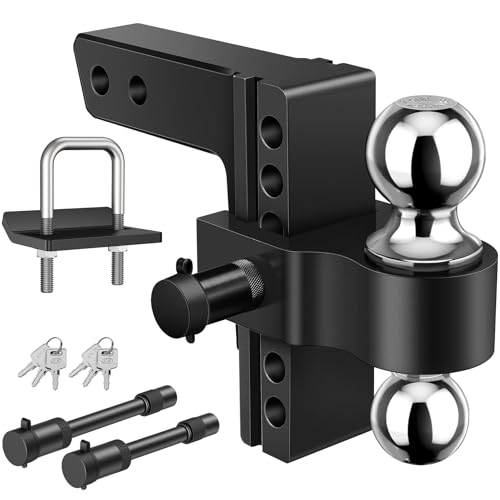
High weight capacity of 12,500 lbs.
Anti-rattle lock ensures quiet towing.
Dual ball sizes for versatile use.

Versatile tri-ball mount for various towing needs.
Heavy-duty construction ensures long-lasting durability.
Convenient tow hook for added utility.

Versatile with three ball sizes for towing.
Durable aluminum construction ensures long-lasting use.
Anti-theft pin enhances security and safety.

Durable aluminum build ensures long-lasting use.
Versatile with adjustable 6-inch drop/rise.
Includes anti-theft pins for added security.

Durable aluminum build ensures long-lasting use.
Weatherproof design protects against harsh conditions.
Anti-theft features provide added security.

Versatile with 8" drop or rise adjustment.
Durable build for long-lasting performance.
Easy to install on 2" receiver.

Strong aluminum build ensures long-lasting durability.
Double locks provide enhanced security and stability.
Adjustable design offers versatile towing height options.

Easy height adjustments for towing versatility.
Durable construction ensures long-lasting performance.
Compatible with a wide range of vehicles.
Start with the receiver size and label. The supplied products are mainly for 2-inch receivers, while one is for a 2.5-inch receiver. Do not assume an adjustable mount can increase the vehicle or receiver's tow rating. The lowest applicable gross-trailer-weight and tongue-weight limit controls. Tongue weight is especially important: several products advertise gross trailer weights but disclose no tongue-weight limit. A headline such as 12,500, 14,000, 18,000, or 20,000 pounds may describe only one ball, may conflict with another figure on the same listing, or may be unsupported by product-specific testing.
Match the ball diameter to the trailer coupler label. A dual-ball mount does not make every trailer compatible, and a tri-ball mount still requires the correct ball-specific rating. Measure the receiver and loaded coupler heights before choosing the adjustment range; a stated 4, 4.5, 5, 6, or 8 inches is not a guarantee that the connection will be level. Set the height, fully engage the adjustment pins and clips, secure the receiver connection, and check the coupler latch and safety chains before every trip.
For a substantiated load claim, look for a complete report tied to the exact product and claimed rating. The strongest supplied evidence identified SAE J684 as the test basis and named test reports, dates, and a laboratory; the frozen evidence checks also recognize SAE J3352 and VESC V-5. An independent report should identify the model, method, results, laboratory, report number, and date. A generic certificate, a seller assertion, or wording such as “tested,” “heavy duty,” “forged,” or “SAE compliant” is not equivalent. A laboratory claim is more meaningful when its ISO/IEC 17025 accreditation and current scope can be checked through A2LA or another ILAC-MRA signatory directory.
Also examine the instructions. Useful guidance covers receiver fit, height measurement, torque, pin engagement, coupling, lubrication, wear and damage checks, corrosion inspection, and retirement from service. A warranty and reachable support help with defects, but they do not replace load testing or a tongue-weight rating. Durable model or lot identification, recall information, and replacement pins, locks, or other retention parts are additional signs of support.
Environmental claims should be specific. Look for the principal metals, coatings, packaging, recycled content, and replaceable parts, with documentation that follows FTC guidance. Corrosion claims are stronger when they identify the finish and provide product-specific ASTM B117 or ASTM G85 results from an accredited laboratory; neither method alone proves outdoor service life. Across the supplied products, recurring limitations include missing independent load evidence, missing tongue-weight limits, incomplete installation and inspection guidance, and unverified corrosion or chemical disclosures. One product also had an expired compliance notice, and several listings contained contradictory capacity or warranty information. Do not tow near a headline maximum, use a hook or shackle for recovery, or rely on included locks until the applicable limits and instructions are clear.
For this category, health and ecology are closely connected to mechanical reliability. A failed or incorrectly matched hitch can cause trailer detachment, loss of control, or crush injuries, while unclear finishes and poor corrosion support can increase handling concerns and shorten service life. The scores below reflect the supplied reviews, not a new certification or safety finding.
This measures whether the design, markings, and instructions address detachment, loss of control, crush, and road-user risks. For an adjustable hitch, high performance means clear limits, inspection points, and no unresolved safety action. Supplied scores ranged from 54 to 83: the higher-scoring products generally had more usable safety direction, while lower scores reflected sparse instructions, conflicting claims, or unverified retention details.
This measures disclosure of meaningful exposure from coatings, plating, oils, and metal residues, including specific warnings rather than unexplained generic language. It matters when buyers handle balls, pins, lubricants, and finished metal during installation and inspection. Scores ranged from 52 to 70. The clearest weakness was a product with a DEHP warning but no component, exposure-route, or measured-level explanation; most others lacked a product-specific chemical declaration.
This measures whether the product explains receiver size, coupler and ball matching, height adjustment, and the lowest applicable vehicle, receiver, trailer, and tongue-weight limit. It is central because an adjustable mount cannot raise a vehicle's capacity. Scores ranged from 60 to 78. Higher-scoring products stated fit parameters, ball-specific limits, or lowest-rating guidance; lower scores were associated with broad fit claims, missing tongue limits, or contradictory capacities.
This measures whether the adjustable section, pins, clips, locks, ball head, and any hook or shackle remain secure within permitted towing use. For this product type, high scores require positive retention and warnings against unsupported recovery or other uses. Scores ranged from 60 to 82. Higher scores were linked to clearer locking arrangements and instructions; lower scores reflected inconsistent lock information or missing retention and recovery limits.
This measures directions for setup, height selection, torque, coupling, pin engagement, lubrication, wear checks, and removal from service. Such guidance helps prevent installation and pre-trip mistakes. Scores ranged from 68 to 79. The strongest supplied manuals included height measurement, cleaning, lubrication, and checks for cracks, wear, corrosion, and secure pins. Lower-scoring products commonly lacked torque values, inspection intervals, wear limits, or retirement criteria.
This measures whether gross trailer-weight and tongue-weight limits are supported by a complete product-specific structural report using SAE J684, SAE J3352, VESC V-5, or an applicable equivalent. It is the most important evidence distinction in this category. Scores ranged from 50 to 86. Nearly all products lacked a located passing report; the highest score reflected a dated, product-specific SAE J684 compliance notice, although that notice had expired.
This measures whether an independent party checked the exact model, method, date, results, laboratory, report number, and accreditation scope. A generic certificate or seller statement is not enough. Scores ranged from 68 to 85. The highest score belonged to the product with the named historical AMECA notice and laboratory information; the remaining products had no located accredited, traceable report supporting their advertised ratings.
This measures whether capacity, fit, ball sizes, adjustment range, materials, locks, anti-rattle features, and recovery claims match the exact product and state exclusions. Scores ranged from 48 to 75. Higher scores separated ball-specific limits and stated system constraints. Lower scores reflected conflicting 12,500-, 14,500-, 18,000-, or 20,000-pound figures, inconsistent finish descriptions, or warranty claims that disagreed with product fields.
This measures durable model or lot identification, reachable support, recall information, replacement retention parts, and a corrective-action path. It matters if a pin, lock, weld, or other component later proves defective. Scores ranged from 55 to 75. Higher scores reflected a lifetime warranty or accessible support and recall review; lower scores reflected no warranty, weak lot tracing, limited support, or no documented replacement-parts pathway.
This measures whether the hitch resists rust, coating loss, and galvanic damage long enough to avoid premature replacement. Aluminum, steel, plating, and powder or anodized finishes were disclosed inconsistently across the set. Scores ranged from 60 to 73. Higher scores reflected more consistent material and maintenance information, but no supplied product had the independent, material-specific corrosion evidence needed for strong confidence in service life.
This measures disclosure of principal metals, coatings, packaging, recycled content, and replaceable parts, without overstated environmental claims. It matters because a repairable, durable metal hitch may avoid discarded hardware. Scores ranged from 69 to 84. The highest score came from a product with an Amazon-displayed Recycled Claim Standard Blended claim for at least 50% recycled material; most others disclosed only a basic metal type and finish.
This is a 2-inch receiver adjustable ball mount for conventional trailer towing. The silver 6-inch version is intended to alter ball height for a more level trailer connection. Rhino USA identifies a reversible dual-ball arrangement with 2-inch and 2-5/16-inch ball sizes, plus two locking pins. These are manufacturer-stated configuration details. Rhino USA states maximum limits of 12,500 lb gross trailer weight and 1,250 lb tongue weight for this receiver line. Those limits do not increase the lower rating of the vehicle, receiver, trailer, coupler, ball, safety chains, or any other part of the towing system. The brand provides a setup video, but no complete product-specific SAE or VESC structural test report, accredited laboratory report, or full written inspection manual was located in this review.
This format suits an owner of a truck or SUV with a properly rated 2-inch Class III or IV receiver who tows conventional trailers with different coupler heights or alternates between 2-inch and 2-5/16-inch couplers. It is most relevant where measuring for a level loaded trailer calls for up to 6 inches of adjustment. The user should be prepared to verify the tow vehicle, receiver, trailer, coupler, ball, safety-chain, gross trailer weight, and tongue-weight limits before every towing setup.
It is not appropriate for a 2.5-inch receiver, a weight-distribution setup unless the vehicle and hitch makers specifically approve the combination, or recovery and pulling uses outside conventional trailer towing. It also does not suit users who need independently documented compliance testing before relying on a 12,500 lb rating. Avoid using it to compensate for an overloaded trailer, an underrated vehicle receiver, a damaged coupler, incorrect ball diameter, or a trailer that cannot be made level within its adjustment range.
Rhino USA identifies the main hitch structure as aluminum. That can avoid structural red-rust typical of unprotected steel, and aluminum is widely recyclable. However, the product information reviewed does not specify the alloy, recycled content, coating chemistry, packaging materials, corrosion-test method, salt-spray duration, or a route for recycling the assembled product. Replacement locking pins are sold separately, which can help retain a usable hitch if a pin is lost or damaged. The manufacturer posts a California Proposition 65 warning that names di(2-ethylhexyl) phthalate, or DEHP, as associated with cancer and reproductive harm under California law. The warning is chemical-specific, but it does not identify which component contains DEHP or quantify exposure. No product-specific CPSC or NHTSA recall result was located in the official databases searched on August 16, 2026. No accredited, product-specific structural or corrosion test report was located.
This is a 19 pound adjustable ball mount for a 2 inch receiver. It combines fixed 1-7/8 inch, 2 inch, and 2-5/16 inch balls in one head, with seven pin positions intended to provide up to 6 inches of drop or rise. It is meant to let one tow vehicle connect to trailers using different coupler sizes while setting a more level trailer height. The seller states ball-specific gross trailer weight limits of 8,000, 10,000, and 12,500 lb, plus a 3,000 lb trailer-hook claim. It also states alloy-steel construction, black powder coating, two adjustment pins, and a locking receiver pin. Those are manufacturer claims reproduced by retail sources, not independently confirmed product-specific test results. No published installation manual, tongue-weight rating, SAE or VESC test report, accredited laboratory report, or independent certification for this exact product was located.
This product suits an owner of a vehicle already equipped with a properly rated 2 inch Class 3 or Class 4 receiver who alternates among conventional trailers with the three listed coupler sizes. It is most relevant where a 6 inch adjustment range can level the trailer and the actual loaded trailer weight remains below every applicable limit. The buyer should be prepared to confirm the vehicle manual, receiver label, trailer coupler label, safety-chain requirements, and the lowest tongue-weight limit before use.
It is not suited to anyone who needs documented capacity verification for commercial, frequent heavy-load, fleet, or safety-critical towing. It is also unsuitable where a weight-distribution hitch is required, where the receiver is smaller than 2 inches, or where the trailer needs a different ball size or greater drop. Do not treat the 12,500 lb claim as permission to exceed the vehicle, factory receiver, coupler, tire, trailer, or hitch-ball tongue-weight limits. The hook should not be assumed suitable for vehicle recovery without a separately documented recovery rating.
The product is stated to use alloy steel with black powder coating and some electroplated surfaces. These finishes may reduce direct metal exposure and weathering in ordinary handling, but no safety data sheet, coating composition, Proposition 65 warning, or chemical declaration for this exact product was located. That means users cannot determine from public documentation whether the coating, plating, packing oils, or residues contain listed chemicals or how exposure is controlled. Steel construction is potentially recyclable, but the seller does not publish recycled-content information, packaging details, replaceable-component listings, or an end-of-life program. The brand website lists a general contact email and phone number, while the product listing states a two-year warranty. No public recall, CPSC warning, or NHTSA recall specific to this product or brand was located in the searches performed. Absence of a located recall does not verify structural safety.
This is an adjustable dual-ball trailer hitch for a vehicle with a standard 2-inch receiver. It provides up to 6 inches of rise or drop adjustment and reverses between 2-inch and 2-5/16-inch balls. The kit is intended to level a trailer coupler relative to the tow vehicle, then retain the shank and ball mount with two locking pins. It also includes a U-bolt style anti-rattle tightener. Kohree states that the aluminum hitch is rated to 8,000 pounds gross trailer weight on its 2-inch ball and 12,500 pounds on its 2-5/16-inch ball. Those are manufacturer claims, not ratings supported by a public product-specific SAE, VESC, or accredited laboratory report located in this review. A separately hosted manual gives useful setup steps and says to stay within the lowest hitch, trailer, and tow-vehicle limits, but it does not provide torque values, numeric tongue-weight limits, or detailed retirement criteria.
This product suits an owner of a light or medium conventional trailer who already has a properly rated 2-inch receiver, a compatible 2-inch or 2-5/16-inch coupler, and documented vehicle towing limits. It is most practical where the trailer height varies enough to need up to 6 inches of adjustment and the owner will complete a hands-on pretrip check of both locks, pin engagement, coupler seating, safety chains, and anti-rattle clamp. The manufacturer-stated ratings should be treated as upper product claims, not permission to exceed any lower vehicle, receiver, trailer, coupler, or tire limit.
It is not suited to a buyer who needs independently documented load testing, an identified SAE or VESC compliance report, or a traceable accredited laboratory result before towing near the stated limits. It is also unsuitable for any 2.5-inch receiver because the manufacturer says the anti-rattle feature does not fit that receiver size. Avoid using it where the trailer requires a different ball diameter, where tongue weight is not known, or where the tow vehicle, receiver, trailer coupler, safety chains, brakes, or tires have a lower rating than the planned load.
The product is a metal towing component rather than a consumer chemical product, but its coating and metal-contact disclosures are limited. Kohree identifies high-strength aluminum for the hitch, stainless steel for the locking pins, and a steel anti-rattle tightener, while describing the hitch surface as rust-proof. It does not publish the aluminum alloy, coating chemistry, plating details, corrosion-test results, or a product-specific safety data sheet. This limits assessment of coating exposure, service life, and recyclability beyond the general recyclability of metal. No product-specific U.S. recall, safety alert, or Proposition 65 action for this hitch was located in the sources reviewed. Kohree LLC did settle a California Proposition 65 matter involving alleged styrene exposure from covered 3D pens, not this hitch. That record does not establish a chemical exposure issue for this product. No recycled-content, packaging-material, or replacement-parts commitment was found, so end-of-life and repair information remains limited.
This is an adjustable ball mount for a vehicle with a 2-inch receiver. It combines 1-7/8-inch, 2-inch, and 2-5/16-inch trailer balls, a tow hook, a swivel shackle, two locking pins, and a hitch tightener. The seller's published specification says it provides 4.5 inches of rise or drop and weighs about 32 pounds. The stated ball-specific gross trailer limits are 6,000 pounds for the 1-7/8-inch ball, 7,500 pounds for the 2-inch ball, and 10,000 pounds with 1,000 pounds tongue weight for the 2-5/16-inch ball. These are manufacturer-stated ratings repeated by marketplace resellers, not supported by a product-specific SAE, VESC, or accredited laboratory report located in this review. The shackle and hook are marketed for recovery use, but no separate working-load limit or recovery test evidence was found.
This product suits an owner of a truck or SUV with a confirmed 2-inch receiver who alternates among trailers using the three stated ball diameters and needs up to 4.5 inches of height correction. It is most appropriate when the actual loaded trailer, tongue weight, vehicle rating, receiver label, coupler rating, safety chains, and every component in the towing system are all within the lowest applicable limit. The user should be prepared to inspect pins, locks, holes, welds, ball surfaces, and coating before each tow.
It is not suited to anyone who needs independently documented proof of the advertised 10,000-pound rating, a published SAE or VESC compliance record, or a traceable accredited laboratory report. Avoid using it as evidence that a vehicle or receiver can tow more than its factory rating. It is also unsuitable for recovery work where the hook or shackle must have a documented working-load limit and recovery instructions. Buyers without a 2-inch receiver, a correctly matched coupler, or a safe method to verify loaded tongue weight should not use it.
The available product information identifies alloy steel construction and chrome trailer balls, and claims a corrosion-resistant finish. That is more useful than a vague material claim, but it does not identify the steel grade, coating chemistry, plating process, recycled content, packaging materials, or end-of-life handling. No safety data sheet or material declaration was located, so meaningful user exposure from plating, oils, or coating residues cannot be assessed beyond normal precautions such as washing hands after handling dirty or damaged hardware. No exact-product recall, CPSC action, or NHTSA safety action was identified in the sources searched. That is not proof of absence of defects. The main service-life concern is coating damage. A syndicated purchaser report describes paint chipping and rust after nicks, while no ASTM B117 or G85 corrosion report was found. Regular cleaning, prompt coating touch-up, dry storage, and retirement after cracks, bends, severe corrosion, worn balls, or damaged pins are prudent.
This is an adjustable ball mount for a vehicle with a 2 inch receiver. It combines a 6 inch rise or drop shank with a rotating three-ball head, offering 1-7/8 inch, 2 inch, and 2-5/16 inch ball diameters. The listing assigns gross trailer weight limits of 3,500 pounds, 8,000 pounds, and 12,500 pounds respectively to those ball sizes. The product page identifies aluminum construction and a powder-coated finish, and it shows a locked receiver pin plus a separate retention pin and O-rings for the adjustable head. Those are manufacturer-stated product details, not independently confirmed specifications. No product-specific SAE J684, SAE J3352, VESC, or accredited laboratory report was located to substantiate the stated tow ratings, retention performance, corrosion performance, or the exact aluminum alloy. A tongue-weight rating was also not provided on the accessible listing.
This product fits an owner of a truck or SUV with a confirmed 2 inch receiver who occasionally tows conventional trailers with 1-7/8 inch, 2 inch, or 2-5/16 inch couplers and needs up to 6 inches of stated height adjustment. The user should already know the vehicle's factory tow and tongue limits, the receiver label rating, the trailer's loaded weight, tongue weight, and required ball size. It is most appropriate where the actual towing demand remains below every applicable component limit.
It is not suited to towing setups where the loaded tongue weight is unknown, close to a component limit, or dependent on a stated capacity that has not been independently documented. Owners of vehicles with a receiver other than 2 inches, trailers needing a different coupler size, or trailers requiring weight-distribution equipment need a product and instructions specifically approved for that system. It also does not suit users who require published torque data, a detailed inspection protocol, corrosion-test evidence, traceable test reports, or readily documented replacement parts before use.
The accessible product page identifies aluminum and a powder-coated finish, but does not state the aluminum alloy, coating formulation, plating materials, corrosion-test method, salt-spray duration, or laboratory result. Aluminum is widely recyclable as a material, but this product does not disclose recycled content, disassembly guidance, packaging composition, or a replacement-parts pathway. The listing's corrosion-resistance language is therefore a manufacturer claim rather than independently documented service-life evidence. No Proposition 65 warning or chemical-specific exposure disclosure appeared on the accessible product page. That absence does not establish that coatings, oils, metal residues, or lock components have no relevant exposure. California's warning program explains that a warning should identify a listed-chemical exposure concern through the manufacturer or importer, but no such product-specific explanation was located. Searches of the available NHTSA, CPSC, and Amazon recall resources did not locate an action identifying this product, though the listing also lacks a clearly accessible recall procedure or lot-level traceability information.
This is an adjustable aluminum ball mount for a vehicle with a 2-inch receiver. It has a reversible dual-ball head, with 2-inch and 2-5/16-inch chrome-plated steel balls, and two keyed locking pins. The supplied guide shows seven height holes and lists a 6-inch configuration for this version. Its stated ratings are 8,000 pounds gross trailer weight and 800 pounds tongue weight on the 2-inch ball, or 12,500 pounds and 1,250 pounds on the 2-5/16-inch ball. Those are manufacturer-stated figures in the supplied manual, not independently confirmed test results. The available guide gives a short illustrated assembly sequence and identifies aluminum as the main material, but it does not provide alloy grade, ball steel specification, structural test report, SAE or VESC compliance record, or a complete towing inspection procedure.
This product is suited to an owner of a truck or SUV that already has a correctly rated 2-inch receiver and a trailer coupler sized for one of its two stated balls. It is most relevant where a modest height adjustment is needed to bring a light or medium trailer closer to level. The owner should be able to verify the vehicle receiver label, vehicle towing limits, trailer coupler rating, ball diameter, gross trailer weight, and tongue weight, then use the lowest applicable limit.
It is not suited to anyone who needs independently documented proof for commercial work, frequent maximum-capacity towing, fleet use, or a safety-critical hauling application. It is also unsuitable where the vehicle has a 2.5-inch receiver unless an appropriately rated solution is selected, or where a trailer needs more than the stated 6-inch adjustment range. Do not use it to increase a vehicle, receiver, trailer, coupler, safety-chain, tire, or brake-system rating. Buyers needing detailed setup and inspection instructions will need those from their vehicle and trailer manufacturers.
The main body is identified as aluminum and the two balls as chrome-plated steel. Aluminum and steel are broadly recyclable metals, but the product documentation does not identify alloy grades, recycled content, plating chemistry, packaging materials, or an end-of-life and replacement-parts program. The listing advises washing off salt and dirt, drying the unit, and greasing the balls. That maintenance may help preserve the finish, although no ASTM B117 or G85 corrosion-test result was provided. No product-specific safety data sheet, coating declaration, or detailed chemical exposure information was located. California Proposition 65 maintains a chemical list and warning framework, but no product-specific warning or related notice was found in the reviewed materials. Searches of the relevant NHTSA and CPSC recall resources did not identify a recall for this product or brand at the time checked. The supplied guide does show locking-pin installation, but it does not replace routine checks for damage, engagement, corrosion, or wear before towing.
This is an adjustable ball mount for a vehicle with a 2-inch receiver. It combines 1-7/8-inch, 2-inch, and 2-5/16-inch trailer balls in a rotating head, with a stated 6-inch rise or drop range. The manufacturer lists gross trailer weight limits of 3,500 lb, 8,000 lb, and 12,500 lb by ball size, so the 12,500 lb figure is the maximum stated rating, not the limit for every ball. The product is manufacturer-stated to use reinforced aluminum arms, medium-carbon-steel balls, an anodized and coated finish, height-adjustment pins, locking hardware, and rubber pads. An exact-product independent structural test report, tongue-weight rating, laboratory accreditation record, and downloadable installation or inspection manual were not located. No AstraGuard recall was located in the searched U.S. recall resources, which is not independent proof of safe performance.
This product suits an owner of a light or medium-duty truck or SUV that already has a properly rated 2-inch receiver and occasionally tows trailers with different coupler sizes or deck heights. It is most relevant where a 6-inch height range is enough to level the trailer and the user can confirm the trailer coupler, vehicle rating, receiver rating, safety chains, and ball-specific limit before each trip. It also requires a buyer willing to perform a careful pretrip inspection because detailed published guidance was not found.
It is not for towing above the lowest rating of the vehicle, receiver, trailer, coupler, ball, pin, and any reducer adapter. It is also unsuitable for users who need a documented tongue-weight rating, independently available structural test report, or a complete torque and inspection manual before selecting towing hardware. Do not treat the rotating head or integrated hook as authorization for vehicle recovery, lifting, or any use not expressly rated in written instructions. It is also a poor fit where more than 6 inches of correction is needed.
The main safety-relevant positive is that the listing separates the stated trailer-weight limits by ball diameter. That helps avoid reading the 12,500 lb maximum as a universal capacity. The product is also manufacturer-stated to use pins and locking hardware for height adjustment and receiver retention. However, safe towing still depends on the lowest rated component in the whole connection, including vehicle, receiver, trailer, coupler, ball, chains, and loaded tongue weight. The stated aluminum-arm and anodized construction may reduce corrosion compared with unprotected bare metal. The balls are stated to be medium-carbon steel, so exposed steel surfaces and locking hardware still need routine cleaning and inspection. No alloy designation, coating test, corrosion test, chemical declaration, recycling-content claim, packaging specification, or replacement-parts program was found. No AstraGuard product recall or exposure-specific warning was located in the searched U.S. recall and Proposition 65 resources.
This is a receiver-mounted, height-adjustable trailer ball mount for a 2-inch vehicle receiver. The product is presented as an 8-inch drop or rise unit with a rotating tri-ball head offering 1-7/8 inch, 2 inch, and 2-5/16 inch ball diameters. It includes adjustment pins and a locking receiver pin, according to the seller's product information. The stated maximum gross trailer weight is 12,500 pounds, and the stated construction is alloy steel with a powder-coated finish. Those are manufacturer-stated specifications, not independently substantiated test results. A separate marketplace listing confirms that Mmtowus offers an 8-inch tri-ball hitch model, but it does not independently confirm the stated load rating, metal grade, coating performance, tongue-weight limit, or testing method. No product-specific SAE J684 report, accredited laboratory report, or accessible owner manual was located.
This product is suited to an owner who already has a 2-inch receiver and occasionally switches among trailers with 1-7/8 inch, 2 inch, and 2-5/16 inch couplers. The user should be able to measure coupler height, set a level towing attitude, and verify the receiver, vehicle, trailer, coupler, ball, safety-chain, and tongue-weight limits before every trip. It is most appropriate where the actual loaded trailer weight remains comfortably within the lowest marked limit in the complete towing system, rather than relying on the ball mount's advertised maximum alone.
It is not suited to users who need independently documented proof for a 12,500-pound towing application, commercial-duty use, or frequent heavy towing. It also does not suit anyone unable to confirm a loaded tongue-weight limit, receiver rating, coupler rating, and vehicle towing rating. Do not treat it as a recovery point or assume the hook is rated for snatch recovery, since no product-specific recovery rating or test evidence was located. Buyers needing detailed installation, inspection, corrosion-service, or replacement-parts documentation need a product with those materials available.
The main safety issue is evidence quality, not a confirmed defect. Searches did not identify a Mmtowus product-specific recall or regulatory action in the reviewed U.S. sources. However, no independent structural report, SAE J684 conformance report, accredited laboratory scope, or accessible installation and inspection manual was found for this exact product. The advertised 12,500-pound rating should therefore be treated as a seller claim and constrained by the lowest rating of the tow vehicle, receiver, coupler, ball, and trailer. The product is described as alloy steel with a powder-coated finish. Powder coating may reduce exposed-metal corrosion, but no coating chemistry, safety data sheet, salt-spray result, maintenance procedure, or metal-recycling information was located. There was also no specific chemical exposure disclosure for coating residues, oils, plating, or metal handling. Keeping pins, holes, balls, and coating damage inspected and maintained is important for service life and reduces premature disposal of heavy metal components.
This product is an adjustable aluminum ball mount for a vehicle with a 2-inch receiver. It provides up to 4 inches of drop or rise in 1-inch positions and has integrated 2-inch and 2-5/16-inch balls. It is intended to bring a trailer coupler closer to level while allowing the user to change ball size without changing the whole mount. The maker states a 14,000-pound structural rating, while its product description separately limits the 2-inch ball to 8,000 pounds and the 2-5/16-inch ball to 12,500 pounds. It also states that two stainless keyed locks and an added safety pin retain the mount and adjustable ball assembly. No product-specific SAE, VESC, or accredited-laboratory load report was located, and no accessible installation or inspection manual was found during verification.
This product fits an owner of a truck, SUV, or RV that already has a correctly rated 2-inch receiver and needs a compact adjustable ball mount for trailers with couplers that sit within 4 inches above or below the vehicle's normal ball height. It is most suitable when the user can confirm the trailer coupler size, receiver rating, vehicle tow limit, trailer rating, and tongue-weight limit before each trip. The 2-inch and 2-5/16-inch balls support stated limits that must be treated separately.
It is not for anyone who needs documented third-party validation of a 14,000-pound towing claim, formal SAE or VESC test evidence, or a complete published installation manual. Do not use it to increase a vehicle, receiver, trailer, coupler, safety-chain, or tire rating. It is also unsuitable where the coupler requires a ball other than 2 inches or 2-5/16 inches, where a level setup needs more than 4 inches of drop or rise, or where the exact receiver fit and pin engagement cannot be checked in person.
The main injury-control feature claimed for this product is redundant retention. The maker describes two keyed stainless locks plus a separate safety pin, but no independent retention or fatigue test report was located. Safe towing still depends on using the lowest rating in the full system, including the vehicle, receiver, ball, coupler, trailer, chains, and tires. A product-specific pre-trip and inspection manual was not available to verify detailed setup, torque, lubrication, or wear guidance. The body is described as aluminum with stainless lock hardware. That can reduce the amount of exposed ferrous metal compared with an all-steel mount, but the finish description is inconsistent and no salt-spray report, coating specification, recycled-content claim, replacement-parts list, or end-of-life guidance was found. No product-specific recall, CPSC safety action, or Proposition 65 notice was located in the searches conducted, but the manufacturer also did not provide chemical or coating disclosures.
This product is an adjustable dual-ball trailer hitch for a vehicle with a 2.5-inch square receiver. It is configured with 2-inch and 2-5/16-inch balls, and the ball platform can be positioned for up to 6 inches of drop or rise to help level a compatible trailer. Two keyed receiver pins and six keys are listed as included. The seller states that the body is aluminum or aluminum-magnesium alloy, while the balls are chrome-plated steel. It also states 8,000 pounds gross trailer weight on the 2-inch ball and 18,500 pounds on the 2-5/16-inch ball. Those are manufacturer-stated ratings reproduced by a reseller, not independently confirmed test results. No product-specific SAE or VESC test report, accredited laboratory report, detailed tongue-weight rating, or complete installation and inspection manual was located.
This product suits an owner of a truck already equipped with a correctly rated 2.5-inch receiver who needs to alternate between trailers using 2-inch and 2-5/16-inch couplers. Its stated 6-inch height range can be useful where trailer tongue height changes between a boat, equipment, or utility trailer. The user should be prepared to confirm the loaded trailer weight, tongue weight, coupler rating, vehicle towing limit, receiver label, and safety-chain setup independently before towing.
It is not for vehicles with a 2-inch receiver, or for any setup needing an adapter to make this 2.5-inch shank fit. It is also unsuitable for users who cannot establish a loaded tongue-weight limit, need a documented third-party load report, or need formal installation and inspection instructions before using an adjustable hitch. Do not treat the stated hitch rating as an increase to the tow vehicle, factory receiver, trailer coupler, tires, brakes, or safety-chain capacity.
The main material information is manufacturer-stated aluminum or aluminum-magnesium alloy construction with chrome-plated steel balls. Aluminum can avoid red-rust on the main body, while plated steel balls still need routine inspection for plating loss, corrosion, deformation, and wear. The seller claims a protective silver powder-coated finish, but no ASTM B117 or ASTM G85 corrosion report, alloy grade, coating thickness, or maintainable finish specification was found. No product-specific chemical declaration, safety data sheet, recycled-content claim, packaging specification, or end-of-life guidance was located. Searches of the public NHTSA and CPSC recall resources did not identify a Tlvuvmo hitch recall during this review. That absence does not validate the towing ratings or replace pre-trip checks. The lack of an accessible inspection manual and replacement retention-parts documentation remains important for long-term safety and service life.


