Best Overall
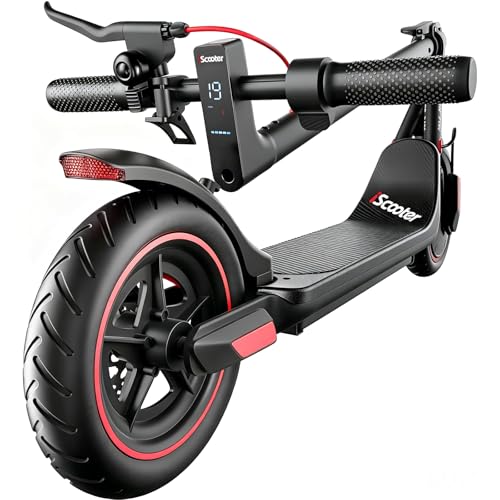
Electric Commuter Scooter 500W
Powerful 500W motor for swift commutes.
Convenient folding design simplifies storage.
Reliable dual braking system enhances safety.
 Brianna York
Powerful 500W motor for swift commutes.
Convenient folding design simplifies storage.
Reliable dual braking system enhances safety.
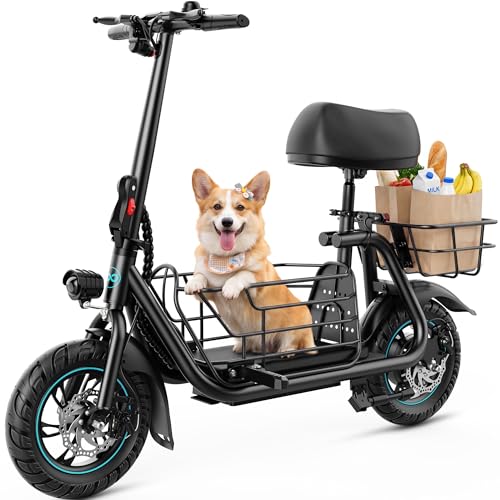
Powerful 550W motor for smooth rides.
Convenient foldable design for easy storage.
Spacious basket perfect for pets and cargo.

Powerful 800W motor for smooth, fast rides.
Adjustable handlebar height for personalized comfort.
Long 25-mile range on a single charge.

Powerful motor for efficient commuting.
Long range ideal for daily travel.
Foldable design enhances portability.

Powerful 450W motor for smooth rides.
Long 20 miles range on a single charge.
Convenient folding design for easy storage.

Powerful motor reaches speeds up to 31 MPH.
Long 40-mile range for extended rides.
All-terrain tires handle diverse surfaces smoothly.
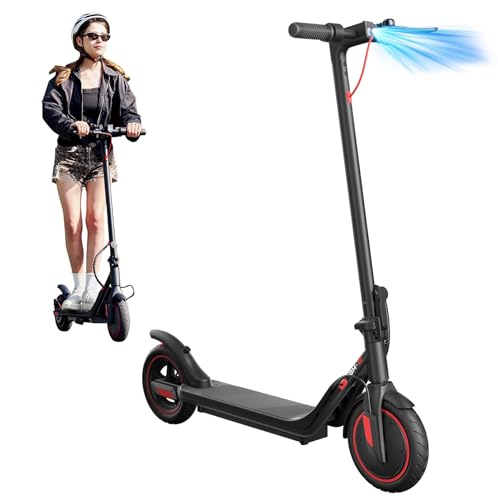
Efficient 350W motor for smooth rides.
Convenient folding for easy storage.
Reliable double braking system for safety.

Powerful 800W motor for a smooth ride.
Compact folding design enhances portability.
RGB lights add a fun visual appeal.

Long-lasting battery for extended travel distance.
Lightweight design for easy portability.
Smooth ride with advanced suspension system.

Impressive range for longer commutes.
Powerful motor for faster speeds.
Durable design for reliable performance.
Start with the rider and route. Check the stated rider-and-cargo limit, not just the headline capacity, and leave room below it when the documentation conflicts. Consider whether you can safely manage the product’s weight: the supplied products range from roughly 27 to 77 pounds. Tire type also changes the experience. Pneumatic tires can improve compliance but require pressure checks and can puncture; solid or honeycomb tires avoid inflation and ordinary puncture repairs but do not establish wet-road grip or structural durability. Suspension, lighting, reflectors, a bell, and separate mechanical and electronic braking are useful features, but manufacturer-stated equipment is not the same as measured performance.
Battery and charger evidence deserve particular attention. A meaningful UL 2272 claim should match the exact product, battery, charger, controller, wiring, and battery-management configuration in UL Product iQ, or in an exact-model ETL or TÜV record. A component-only battery listing does not establish certification of the complete scooter. A credible record should identify the manufacturer, model, tested configuration, standard, and current certification status. This matters especially where a building, employer, insurer, or local rule requires certified micromobility equipment.
Treat range, speed, motor power, hill ability, water resistance, and load ratings as conditional claims. Range changes with rider weight, speed, terrain, temperature, wind, tire pressure, battery condition, and riding style. A result tested with a 165-pound rider at 9 or 11.4 mph on level ground is not a promise at 20 or 30 mph. “Peak” motor power is not the same as rated or continuous power. Across the supplied products, listings also conflict on battery capacity, motor output, range, speed, load, tire size, charging time, braking configuration, model name, and water rating. Prefer a model-specific manual and a test report that states conditions over a large headline number.
For crash risk, look for model-specific braking distance, brake-failure behavior, stability, lighting, steering, wheel, folding, structural-fatigue, and load testing. An identified ISO/IEC 17025-accredited laboratory, checked through A2LA or ANAB, provides stronger evidence than an unsupported claim. Water ratings should be backed by an exact-model IEC 60529 test report and accompanied by realistic limits for rain, puddles, cleaning, storage, and wet charging. No rating should be treated as permission to ride through heavy rain, deep puddles, snow, or standing water unless the documentation clearly supports it.
Recurring caveats in this group are substantial. Several products lack publicly checkable complete-system certification, independent braking or structural testing, or documented ingress testing. Many are not suited to passengers, children, pets on the deck, rough roads, steep routes, snow, or regular heavy rain. Attended charging with the supplied or approved charger is a recurring requirement; do not charge while sleeping, away, or near combustibles, and stop using a hot, swollen, leaking, damaged, smoking, or unusual-smelling battery. Buyers should also expect limits on portability, maintenance, replacement batteries, repair support, and U.S. battery take-back. Lithium-ion batteries should not go in household trash or curbside recycling; use an appropriate battery recycler or household-hazardous-waste route.
The supplied reviews score products against practical injury prevention, battery safety, service life, and evidence quality—not just features. Higher scores reflect clearer, more model-specific instructions and documentation; they do not mean a product is risk-free or independently certified in every area.
This measures whether the product explains crash, burn, smoke, charging, weather, passenger, helmet, age, and load hazards in model-specific language. It matters because scooter injuries often follow misuse or foreseeable operating conditions. Higher-scoring examples reached 82 with detailed helmet, one-rider, wet-charging, temperature, and inspection guidance; lower scores around 54–58 had less complete or conflicting warnings.
This measures independent safety evidence for the complete electrical system: battery, management system, controller, wiring, motor, and supplied charger. It matters because a component listing or unsupported UL statement cannot confirm compatibility across the whole scooter. The supplied scores range from 68 to 75; the higher result reflects stronger charging documentation, while no product supplied a publicly matched complete-system certificate.
This measures braking redundancy and behavior, tires, steering, lights, reflectors, bell, and speed control, ideally with measured results. It matters because speed and surface changes leave little room for recovery. Scores range from 60 to 84. The strongest example combines practical lighting and dual braking with an independently measured stop; lower-scoring products rely mainly on manufacturer-stated equipment without measured stopping or failure data.
This measures resistance to failure in the frame, stem, bars, deck, wheels, seat mounts, and folding latch, plus inspection and torque guidance. It matters because a folding scooter experiences repeated loads and vibration. Supplied scores range from 64 to 74. Higher-scoring products provide clearer inspection or maintenance instructions; lower scores reflect the absence of model-specific fatigue, load, or folding-latch testing.
This measures whether an ingress rating is independently tested and whether the manual limits rain, puddles, cleaning, storage, and post-water use realistically. It matters because water can affect traction and electrical safety. Scores range from 54 to 75. Higher-scoring products pair clearer limits with documented ratings; lower-scoring products have conflicting ratings or no independent report, so buyers must assume fair-weather use.
This measures whether performance claims identify the exact model and disclose test conditions, including rider weight, speed, terrain, temperature, and the difference between rated and peak power. It matters because headline range and speed are often best-case figures. Scores range from 48 to 74. Higher-scoring documentation states conditions, while lower-scoring listings conflict on power, range, load, or charging time.
This measures whether a claimed certificate or laboratory report can be matched to the manufacturer, exact model, standard, date, and tested configuration in the issuer’s own records. It matters because unsupported certification marks are not buyer-verifiable evidence. Scores range from 55 to 71, but the reviews repeatedly found no public exact-model match for complete electrical, braking, structural, or ingress claims.
This measures the responsible U.S. business, recall support, regulator history, marketplace identity, and model-specific corrective action. It matters because a buyer needs a reachable path if a battery, brake, stem, or charger hazard emerges. Scores range from 58 to 74. Higher-scoring products have clearer support or accountability; lower scores reflect limited responsibility records or unresolved identity and documentation concerns.
This measures whether the buyer can identify the exact model, battery, charger, firmware or app, importer, serial number, compatible parts, and warranty route. It matters when recalls, repairs, or charger substitutions are involved. Scores range from 55 to 78. Higher-scoring products provide model-specific manuals, support contacts, warranty details, or parts; lower scores leave configuration and replacement compatibility unclear.
This measures genuine parts, battery and charger identification, repair support, replacement policy, durability, and a credible U.S. collection route. Repairable parts can keep a scooter in service longer, while lithium-ion batteries need specialized disposal. Scores range from 54 to 77. The higher-scoring product lists batteries, chargers, brakes, controllers, and folding parts; lower scores lack parts catalogs, replacement procedures, or take-back support.
This is a compact, standing electric commuter scooter with 8.5-inch pneumatic tires, a front-wheel 350 W motor, a 36 V 5.2 Ah battery, three speed modes up to a manufacturer-stated 19 mph, and a stated 264-pound rider limit. It folds to 43 by 17 by 18.5 inches and weighs 27.7 pounds, according to iScooter. Its rear mechanical disc brake and front electronic brake, front and rear lighting, flashing brake light, bell, and app connection are manufacturer-stated. An independent road test of a German regulated configuration found the braking controllable, but it is not a U.S. laboratory brake test of this configuration. The manual gives unusually useful range conditions, 100 percent charge, 154-pound load, and 9 mph, while the advertised 15 miles remains a maximum-condition figure. Public U.S. certification records did not yield a matching complete-system electrical listing.
It suits a rider making short, mostly flat trips on paved streets who can store and carry a 27.7-pound folded scooter. The disclosed range protocol makes it most realistic for trips well below the stated 15-mile maximum, with charging available at the destination. It also fits someone willing to maintain pneumatic tire pressure, inspect the folding latch and stem bolts, and use the supplied charger under supervision. The 6 mph and 12 mph modes offer a lower-speed learning option before using its stated 19 mph maximum.
It is not for households that require a publicly verifiable U.S. certification for the complete electrical system, including apartments or workplaces with certified-device rules. It is also a poor fit for frequent rain, deep puddles, rough roads, long daily routes, steep hills, or riders who need suspension. Do not treat it as appropriate for a 12-year-old until iScooter resolves the conflict between the product page's 12-plus statement and the manual's 14-plus recommendation. It is not designed for passengers.
The key health issue is electrical verification. iScooter states that the scooter has battery management and charging protection, and the manual says not to leave it overcharging. Those are manufacturer statements, not a public certification for the complete electrical system. Searches of public U.S. certification directories did not identify a matching listing for this product. In New York City, electric scooters sold there must be certified to UL 2272 by an accredited laboratory and carry the laboratory mark. The manual identifies the manufacturer, charger input and output, battery capacity, support contact, and end-of-life disposal symbol. It also says batteries should be removed before disposal if they are not permanently installed. iScooter does not publish a U.S. battery collection program or a detailed battery replacement procedure. Lithium-ion batteries and battery-containing devices should not enter trash or curbside recycling. They should go to an appropriate battery recycler or household hazardous-waste collection route.
This is a 48.5-pound seated electric scooter for short urban errands and light cargo. The manufacturer states that it has a 36 V, 7.8 Ah lithium-ion battery, 550 W nominal motor, up to 18.6 mph speed, up to 20 miles of range, 12-inch pneumatic tires, two baskets, and a 265-pound combined rider-and-cargo limit. Its battery is built in rather than user-removable. The manufacturer also states that the product has dual disc brakes, a headlight, rear brake light, folding handlebars, an IPX4 water-resistance rating, and UL 2272 certification. The claimed certification could not be matched to a public issuer record for this exact configuration during this review. No independent braking, range, structural-fatigue, ingress, or load-test report for this product was located.
This product fits an adult making short, mostly flat neighborhood trips who wants to remain seated and needs space for groceries or a small, secured cargo load. It is most suited to riders within the manufacturer-stated 5-foot-1 to 6-foot-1 height range and 265-pound total rider-and-cargo limit, with dry storage and a convenient ground-level charging location. The 48.5-pound weight and folding handlebars make it more appropriate for car-trunk storage than for routinely carrying up stairs.
It is not suited to households that need publicly checkable third-party certification before charging a micromobility product indoors, because the stated UL 2272 certification was not independently matched to an issuer record. It is also unsuitable for regular heavy rain, deep puddles, steep hills, long commutes, or riders who need verified braking and range performance. Do not treat the baskets or deck as passenger seating. The conflicting 12+ and 18+ age guidance makes it inappropriate where clear youth-use instructions are required.
The key health issue is charging safety. CPSC advises riders to use only the supplied or manufacturer-approved charger, remain present while charging, avoid charging while asleep, and never use modified battery packs. That matters here because the claimed full-system UL 2272 certification could not be independently confirmed in a public certification record for the exact product. The manufacturer does state battery-management protections and warns against heavy rain and deep water, but those claims were not independently tested in the evidence located. Gyroor had a December 15, 2022 CPSC recall for battery packs in its C3 e-bikes, after ignition reports and injuries. That recall identifies a different product and battery pack, not this scooter. The built-in lithium-ion battery can complicate repair and end-of-life handling. It should not enter household trash or curbside recycling. EPA advises using specialized battery recyclers, electronics recyclers, retailer takeback, or local household hazardous-waste programs.
This product is a foldable adult standing electric scooter with a manufacturer-stated 800 W brushless motor, 48 V 10 Ah battery, 10-inch tubeless off-road tires, dual suspension, and a 264-pound maximum rider load. The documented manual lists a 48.5-pound product weight, a supplied 54.6 V, 1.5 A charger, and a stated 18 to 25 mile range. Its defining practical features are a folding stem with a locking pin and dual lever arrangement, front and rear mechanical disc brakes supplemented by an electric brake, and an IPX4 water-resistance claim. Those are manufacturer-stated specifications, not independently measured results. A publicly checkable certificate or accredited test report confirming the complete electrical system, braking performance, IP rating, or frame fatigue performance was not identified.
This product fits an experienced adult rider who wants a foldable, roughly 48.5-pound scooter for short local trips on dry paved routes and occasional firm, low-speed rough surfaces. It is most suitable for a rider within the stated 264-pound limit who is prepared to inspect fasteners, brakes, tires, and the folding latch before rides. It also suits someone able to store it indoors in a cool, dry place and use only the supplied charger and original replacement parts.
It is not for children under 16, passengers, riders above the stated 264-pound limit, or anyone unable to wear protective equipment and perform routine mechanical checks. It is also unsuitable for regular heavy-rain commuting, deep puddles, pressure-washing, stair riding, jumps, or sustained aggressive off-road use. Households that require independently verified electrical certification before charging a scooter indoors should select a product with a current, public exact-model certificate from a recognized testing laboratory.
The manual appropriately treats this as an injury-risk product. It calls for a helmet, elbow pads, and knee pads, bars passengers, sets a 264-pound load ceiling, requires brake and fastener checks, and warns that loss of control, collisions, and falls can cause severe injury or death. It also says to avoid heavy rain, keep the charging port dry, avoid fire and extreme storage conditions, and use the original battery and charger only. The product uses a 48 V, 10 Ah lithium battery, but no public exact-product certification record for the full electrical system was identified. That leaves battery, controller, wiring, and charger safety verification unresolved. For end of life, the manual says to follow local disposal rules, but offers no stated U.S. battery collection route. Lithium-ion batteries should not enter household trash or curbside recycling, because damage during handling can cause fires. The listed iX3 parts category is a positive service-life feature, although a documented battery replacement and recycling program is still missing.
This is a standing, foldable adult electric scooter with 10-inch tires, dual suspension, a 10.2 Ah battery, front drum braking and rear electronic braking. The product record describes a 20 mph maximum speed, a 1,000 W maximum motor claim, and a claimed maximum range of roughly 37 miles. NAVEE's manual identifies the intended maximum rider load as 265 pounds, despite an inconsistent load field in the marketplace record. The strongest independently checked fact is range, not fire certification. UL Solutions verified 37 miles at 9.3 mph, 28 miles at 12.5 mph, and 22 miles at 20 mph, using a 165-pound load at 25 C. That makes the headline range traceable, but it is a low-speed laboratory result. The available UL record is a performance verification, not a public listing confirming ANSI/CAN/UL 2272 certification of this exact electrical system.
It suits an adult rider whose route is mostly paved, who can store a roughly 48.5-pound scooter indoors, and whose round trip remains well below the independently verified low-speed range. It is especially relevant for a commuter who values suspension, 10-inch tires, signaling, and access to official basic repair instructions. The rider should be prepared to wear a helmet, observe local scooter rules, inspect brakes and tires regularly, and charge only while awake and present with the supplied charger.
It is not suited to households that need verified, publicly searchable proof that the complete electrical system is currently certified to ANSI/CAN/UL 2272. It is also unsuitable for riding in heavy rain, snow, standing water, or icy conditions, despite the stated IPX5 rating. Avoid it for passenger carrying, riders above 265 pounds, rough off-road use, or routes where reliable independently measured braking performance is essential. It is not a practical carry-on transit scooter for users unable to manage its listed weight.
Lithium-ion micromobility devices carry crash and charging-fire risks. NAVEE's manual gives useful core warnings on helmets, one-rider use, load limits, adverse weather, and avoiding water immersion. The product has a manufacturer-stated IPX5 rating, but that rating should be interpreted as limited water resistance, not weatherproof operation. CPSC guidance remains important, use only the supplied or manufacturer-approved charger, stay present while charging, do not charge while sleeping, and stop using damaged battery equipment. UL Solutions independently verified this model's range, energy-consumption, and acceleration claims through December 15, 2026. That verification does not itself establish public certification of the full battery, controller, wiring, motor, and charger system. NAVEE does offer repair guidance and service, which can extend usable life. For disposal, do not place the scooter or its lithium-ion battery in trash or curbside recycling. Use manufacturer instructions and a household hazardous-waste or qualified battery collection route.
The Gyroor C1 is a 43-pound, seated electric scooter with a rear cargo basket, folding handlebar, 12-inch pneumatic tires, and a stated 265-pound rider limit. The manufacturer specifies a 450W continuous, 550W peak hub motor, three speed settings up to 15.5 mph, and a built-in 36V 7.5Ah lithium battery. It is intended for short, seated urban trips rather than off-road use. The supplied manual documents front and rear disc brakes, a bell, headlight, rear light, tire-pressure checks, a locked-folding-mechanism check, and single-rider, helmet, weather, and charging warnings. An SGS North America certificate hosted with an Amazon listing identifies C1 and the named manufacturer as certified to ANSI/CAN/UL 2272, but its current status could not be matched in an issuer-operated public directory. Published range claims conflict, with 20 and 22 miles appearing in manufacturer materials, although the manual gives favorable test conditions for its range figure.
This product fits an adult seeking a low-speed, seated option for short, mostly flat errands or commuting on paved routes, provided the rider is within the stated 265-pound limit and can manage a 43-pound folded scooter. The rear basket and pneumatic tires are practical for carrying a small bag or groceries without a backpack. It is better suited to riders who will inspect tire pressure, brake operation, fasteners, lights, and the folding latch before rides, and who have a dry, attended location for charging.
It is not suited to riders who need verified wet-weather performance, quantified emergency braking performance, steep-hill capability, or public proof of frame and folding fatigue testing. Do not treat it as an off-road product or a passenger carrier. It is also a poor fit for households that cannot charge it while awake and present, cannot keep it dry indoors, or expect simple owner battery replacement. Buyers who need transparent replacement-part availability and a defined battery recycling program need more documentation than was found here.
The C1 manual has useful model-specific risk controls. It calls for a helmet and protective gear, one rider only, avoiding wet, icy, snowy, grassy, cobbled, and high-traffic conditions, checking the folding mechanism and brakes before use, and using only the supplied charger. It also warns not to cover the scooter or charger while charging, not to expose battery contacts to moisture, and not to put battery cells in household waste. CPSC likewise advises attended charging, no overnight charging, and only manufacturer-approved replacement batteries or chargers. A third-party SGS North America certificate document names C1, its 37V 7.5Ah configuration, Shenzhen Chitado Technology, and ANSI/CAN/UL 2272. However, the certificate says validity depends on an SGS directory record, and that record was not publicly located. The product's enclosed battery is not user-removable, and no dedicated C1 recycling or parts program was found. At end of life, use a qualified lithium-ion battery recycler or local household hazardous-waste route, not trash or curbside recycling. Gyroor's separate C3 e-bike battery recall is relevant brand history, but it is not a recall of this product.
This is a foldable, 55.9-pound adult electric scooter with a stated 48 V, 13 Ah, 624 Wh lithium-ion battery, 10-inch pneumatic tires, dual suspension, a 330-pound maximum load claim, and four speed modes that reach a manufacturer-stated 31 mph. It is intended for commuting and mixed-surface riding, rather than casual sidewalk use. The product page states dual disc brakes with EABS, front lighting, side lighting, rear lights, an app, and an IP54 rating. The available manual supports the presence of a bell, brake levers, lights, a folding latch, speed modes, and basic charging precautions. ECOROAD also claims the complete scooter passed UL 2272 testing through TÜV, but no public issuer record or exact configuration certificate was located to independently authenticate that claim. Range claims are inconsistent across available materials, with 37 miles on the current product page, 40 miles in the catalog record, and 25 to 31 miles in the manual.
This product suits an adult rider who needs a relatively heavy, foldable scooter for short to moderate trips on maintained roads or firm paths, can store and charge it in a dry attended area, and is prepared to use a helmet and other protective gear. The lower speed modes may be useful for riders who do not need the stated 31 mph maximum. It is more appropriate for someone able to perform pre-ride tire, brake, latch, and fastener checks than for a hands-off ownership experience.
It is not suited to households that need independently documented battery certification, verified rain capability, or a well-established replacement-parts and battery-recycling route. Riders planning frequent rain, standing-water, steep-hill, high-load, or sustained maximum-speed use should not treat the IP54, range, braking, or structural claims as independently proven. It is also unsuitable for carrying a passenger. At a stated 55.9 pounds, it is impractical for people who must regularly carry a scooter up stairs or lift it onto transit.
At the stated 31 mph maximum, crash consequences can be substantial. CPSC guidance for micromobility products emphasizes one rider per scooter, helmet use, pre-ride checks, and cautious charging. The available manual gives useful basic directions, including checking the scooter before riding, confirming that the folding mechanism is locked, using the original charger, avoiding overcharge, and closing the charging-port cover. It does not provide detailed smoke, overheating, damaged-battery, rain, puddle, cleaning, or storage instructions. ECOROAD advertises UL 2272 testing through TÜV and an IP54 rating, but public issuer records and an exact-product test report were not located during verification. Those claims should therefore be treated as manufacturer-stated, not independently confirmed. The product is described as using an aluminum-alloy frame and lithium-ion battery. ECOROAD also advertises recycled materials, but does not identify the material, percentage, certification, or certification record. No product-specific U.S. battery take-back or replacement-parts program was located.
This is a compact, rigid commuter electric scooter with a folding stem, 8.5-inch pneumatic tires, front-wheel drive, a rear mechanical disc brake, and an electronic brake. The U.S. manufacturer page states a 36 V, 5.2 Ah battery, 350 W maximum motor output, 19 mph maximum speed, 15-mile maximum range, 264-pound rider limit, and 27.7-pound product weight. It includes a charger, bell, front and rear lights, and a spare inner tube. The stated range is explicitly a maximum, not a normal commuting result. The product page says rider weight, road conditions, and temperature affect it. Independent testing of a European i8M configuration with the same 187 Wh battery recorded roughly 6 to 9 miles in cooler, mixed urban riding with an 187-pound rider. That test also found the combined braking controllable, but noted no suspension and limited reserve on rough pavement.
This product fits a single adult or older teen who needs a light, foldable scooter for short, mostly flat trips on maintained pavement, and who can store and charge it in a dry supervised location. It is more suited to a last-mile commute, a short ride to transit, or travel between nearby destinations than to a full-length commute. The stated 264-pound rider limit should not be treated as a target for steep hills, poor surfaces, or carrying extra cargo.
It is not suited to riders needing reliable long range, regular hill climbing, rough-road comfort, or a meaningful safety margin in rain. It is also a poor fit for households that must charge scooters unattended, overnight, near sleeping areas, or where a product with a publicly verifiable complete electrical-system certification is required. Riders close to the stated weight limit, inexperienced riders using busy traffic routes, and anyone transporting a passenger should select a different format.
The key health issue is battery and charging risk. Public product information identifies a 36 V, 5.2 Ah battery and supplied charger, but no current publicly checkable certification listing was found for the complete U.S. electrical configuration. A claim found in secondary manual material for a UL-certified battery would not establish certification of the whole scooter. CPSC guidance is to use only the supplied or manufacturer-approved charger, remain present while charging, avoid charging while asleep, and never use modified battery packs. The product has a stated IP54 rating, but water resistance is not weatherproofing. Keep the charging port and battery area dry, avoid pressure washing, and inspect tires, brake action, folding latch, and fasteners before riding. The manufacturer does provide a parts catalog and U.S. support path, which can extend service life. At end of life, its lithium-ion battery should go to a battery recycler or household hazardous-waste program, never household trash or curbside recycling.
This is a folding adult stand-up electric scooter intended for commuting. ECOROAD’s own product page describes an 800W motor, 48V 10.4Ah battery, 25 mph maximum speed, 8.5-inch pneumatic tires, suspension, app connection, and a stated 330-pound load limit. The same page lists four speed modes and a 54.6V, 2A charger. These are manufacturer-stated specifications, not independently measured results. The product’s defining concern is documentation control. ECOROAD claims ANSI/CAN/UL 2272 certification through TÜV Rheinland, but a current, exact-product certificate was not located in the public issuer records searched. The official manual linked for the ES4 also displays ES6 specifications, including different battery, motor, weight, and charge-time figures. Its instructions do say to lock the folding mechanism and use only the original charger, but the safety guidance is limited for a 25 mph scooter.
This product fits an adult commuter who has a short, mostly dry route, can store and charge the scooter in a monitored location, and is prepared to verify the certification label, battery label, charger label, and actual weight on delivery. The selectable lower speed modes may help a rider begin gradually. It also suits someone who values access to brand-sold service items and can perform or arrange basic tire, brake, and control maintenance. The stated 330-pound capacity should be treated cautiously until the delivered unit and its documentation are confirmed.
It is not suited to riders who need independently documented stopping performance, verified water protection, or publicly checkable certification before bringing a lithium-ion scooter into an apartment or workplace. It is also a poor fit for routine heavy rain, standing water, steep descents, passenger carrying, unsupervised overnight charging, or use by children. The published ES4 documentation conflict makes it unsuitable for buyers who need reliable configuration records for insurance, fleet use, repairs, replacement batteries, or local compliance checks.
Lithium-ion scooter fires and crash injuries are material hazards. CPSC guidance calls for using the supplied charger, staying present while charging, not charging during sleep, and avoiding modified batteries or unapproved replacement packs. The available ECOROAD manual supports the original-charger instruction and says not to overcharge, but it does not give the broader set of model-specific charging and emergency warnings expected for this type of product. ECOROAD claims ANSI/CAN/UL 2272 testing through TÜV Rheinland, but the claim was not publicly verifiable for this exact configuration. The brand does publish a parts catalog with controllers, brake levers, wheels, displays, lights, and other parts, which can support repair rather than early disposal. Battery and charger warranty coverage is stated as six months. No named U.S. battery take-back program, battery chemistry disclosure, or independently checkable recycled-material certification was found. The rain warranty permits light rain and puddles, while excluding soaking and prolonged strong rain.
This is a foldable, stand-up electric scooter with a rear hub motor, 10-inch pneumatic tires, front twin-tube suspension, a 220.32Wh battery, and a 220-pound rider limit. The manufacturer states a 15.5 mph maximum speed and an approximately 19-mile range, tested with a 165-pound rider in economic mode on a flat road. Its stated 8-hour charge time uses the supplied 24.2V, 1.5A charger. The most important independently confirmed point is that UL's certification record names the C2 under SINO MEGWELL TECH INC for UL 2272, which covers the scooter electrical system. The manufacturer also specifies a drum brake plus electronic braking, front and rear lighting, side lighting, and an IPX5 rating. The manual nevertheless instructs riders not to use it in rain, puddles, or rough terrain.
This product suits a single adult rider, within the stated 220-pound limit, whose usual trip is a short paved commute or recreational route in dry weather. It is most appropriate for someone able to manage a 38.8-pound folded scooter, maintain 45-50 psi tires, inspect the folding and steering hardware, and charge the supplied system indoors while awake. The disclosed 165-pound flat-road range condition is especially relevant for riders whose body weight, route, hills, temperature, and speed are close to that scenario.
It is not for riders who need reliable wet-weather transport, off-road capability, curb hopping, cargo carrying, or passenger use. The manual specifically prohibits riding in rain, puddles, rough terrain, and with more than one person. It also does not suit households unable to charge and store a lithium-ion scooter indoors in a cool, dry place with supervision. Riders above the 220-pound limit, people who cannot routinely inspect a folding scooter, and anyone needing documented third-party braking or frame testing should avoid treating the stated features as independently proven performance.
The electrical system has a strong, product-specific safety evidence point. UL's own certification record includes the C2 model under the listed manufacturer for UL 2272. That standard evaluates the powered device electrical system, including the battery system, charger combination, and related circuitry. The manual also identifies the battery pack, supplied charger, charging-temperature range, and warnings against battery disassembly, water intrusion, heat exposure, incompatible batteries, and non-original chargers. The C2 uses pneumatic tires and needs routine inflation and inspection. Its manual directs owners to electronic-waste collection rather than household trash, which is appropriate for a lithium-ion product. However, the manufacturer does not name a U.S. recycling program, published battery replacement pathway, or public spare-parts catalog. Water protection should be treated conservatively because the stated IPX5 rating sits alongside explicit instructions to avoid rain and puddles.
The M1 Lite is a folding stand-up electric scooter for riders age 12 and older. Its manufacturer describes an 8-inch solid-tire design with a 36.5 V, 7.8 Ah, 284.7 Wh lithium battery, a 250 W rated and 500 W peak rear hub motor, three speed modes, app control, and a stated 265 lb rider limit. The model-specific manual identifies the supplied charger and battery pack, which helps prevent incompatible charging substitutions. The manufacturer states a 15.5 mph maximum speed and an approximately 19-mile range under stated conditions, a 165 lb rider, economy mode, and flat road. It also specifies rear electronic braking plus a mechanical foot brake, an LED headlight and taillight, and an IPX5 rating. These are manufacturer statements, not independently measured performance results.
This product fits a rider who needs a compact, folding scooter for short, dry-weather trips on smooth asphalt or cement, and who is willing to follow a detailed pre-ride and charging routine. It is most suited to a rider within the stated 265 lb limit who values solid tires and does not need suspension or independently verified performance testing. The stated 19-mile range is most relevant to lighter riders using economy mode on level routes, not to fast riding, hills, cold weather, or rough pavement.
It is not suited to riders who need a publicly verifiable electrical-system safety listing for the exact scooter, or independently tested braking and structural performance. Avoid treating it as a rainproof, off-road, high-speed, or long-distance commuter product. It is also a poor fit for households that need easy owner battery replacement, a clearly established battery takeback path, or unified manufacturer support contacts. Riders near the load limit, riders carrying cargo, and anyone needing suspension for damaged pavement should choose a different format.
The model-specific manual provides unusually detailed use and charging warnings. It calls for the original charger only, says not to charge or use an overheating, leaking, or unusual-smelling battery, warns against water intrusion and high heat, requires a pre-ride brake check, and limits use to one rider. These instructions align with CPSC micromobility guidance to use the supplied charger, remain present while charging, and avoid modified battery packs. The manufacturer claims an IPX5 rating and describes battery-management protections, but no independent exact-model ingress or electrical-system certificate was located. Its public certification page does not list this model, despite its product page using a UL claim. The battery is marked non-user-replaceable, and the brand offers return-based battery service rather than a clearly documented takeback program. The manual says not to discard battery packs carelessly, but it does not identify a U.S. recycling partner or collection route.



