Best Overall

Alpcour Indoor Bike Trainer Stand with Magnetic Resistance
Quiet operation with noise reduction technology.
Six adjustable resistance settings for varied workouts.
Portable design with foldable frame and carry bag.
 Brianna York
Quiet operation with noise reduction technology.
Six adjustable resistance settings for varied workouts.
Portable design with foldable frame and carry bag.

Smooth, quiet ride with noise reduction technology.
Simple setup with secure dual-lock system.
Compatible with both road and mountain bikes.
Smooth and quiet resistance for a realistic ride.
Easy setup and compatible with many bikes.
Works seamlessly with Zwift for interactive training.

Smooth magnetic resistance for a quiet ride.
Easy setup with Zwift app compatibility.
Foldable design for convenient storage.
Easy to store and transport.
No assembly required for use.
Fits a wide range of bike sizes.

300 Lb High Weight Capacity, Sturdy for All Workouts
Exclusive App & Fitness Courses, Smart Workout Experience
Magnetic Quiet Design, Low-Noise Indoor Riding

Easy to set up and use.
Stable steel frame construction.
Adjustable resistance levels for varied workouts.

Seamless connectivity with Zwift app.
Quiet operation for indoor use.
Adjustable resistance mimics real road feel.

Adjustable design fits various bike sizes.
Foldable for easy storage and portability.
Built-in resistance for effective training sessions.
Compatible with various wheel sizes.
Includes front wheel riser block.
Quick release skewer for easy setup.
Whether a trainer works safely depends first on **fit**. Check wheel diameter, tire width and tread, rear axle type, dropout spacing, brake and frame clearance, and whether the product supports e-bikes or thru-axles. A listing that says “26–29 inches” is not enough if the manual gives a narrower range or omits axle and tire limits. A supplied quick-release skewer may be required; adapters for thru-axles may be separate. The stated combined rider-and-bike limit also needs interpretation: some listings give a capacity, but do not clearly say whether the bicycle is included.
Retention and setup matter as much as the frame. Look for specific instructions covering axle engagement, clamp or lock-ring tightening, tire pressure, roller tension, level flooring, front-wheel support, locked legs, and pre-ride inspection. A high load number does not prove stability. The strongest supplied reviews include hands-on stability findings or detailed manufacturer procedures, but none located a model-specific accredited safety report or independently verifiable certification to ASTM F1250 or ISO 20957-1 and ISO 20957-5. A seller badge alone should not be treated as that evidence; a claimed UL, ETL, TÜV, or similar mark should be confirmable in the relevant certification directory.
Resistance figures also need context. “Six,” “eight,” or “100” levels describe controls, not watts, cadence range, simulated grade, or power accuracy. A substantiated performance claim would include independent measurements across the usable range, ideally from an ISO/IEC 17025-accredited laboratory or a comparative test using a calibrated power meter or dynamometer. The supplied reviews found meaningful variation in some power ranges and no verified power data for many basic trainers. Smart compatibility likewise needs model-specific app documentation, current platform support, wireless qualification or authorization where applicable, and clarity about whether a separate sensor is required. A non-smart trainer cannot automatically change resistance merely because a listing mentions Zwift.
Noise claims are commonly overstated. “Quiet” or “near silent” is not meaningful without speed, tire, surface, distance, and sound-meter conditions. Tire tread, inflation, roller tension, flooring, and cadence can change both noise and vibration. Wheel-on designs also wear the rear tire and can expose the rider to a rotating wheel, roller, drivetrain, pinch points, hot resistance parts, or fluid-leak hazards. Keep children and pets away, use appropriate clothing, and follow cooling and inspection instructions where provided.
Finally, consider useful life. Replaceable resistance units, rollers, feet, skewers, clamps, power supplies, and repair instructions can keep a trainer from becoming waste. Environmental claims should identify materials, recycled content, packaging, coatings, batteries, electronics, and disposal routes rather than relying on vague “green” wording. Across the supplied products, recurring cautions include incomplete compatibility information, unmeasured noise, no independent safety certification, unverified resistance or power claims, and limited evidence for unusual axles, wide or knobby tires, e-bikes, or high-intensity riding. Parking racks and repair stands must not be used for exercise, and free rollers carry a greater balance and fall concern because the bicycle is not clamped.
The topics below separate practical riding safety from evidence quality and environmental responsibility. Scores reflect the supplied reviews; a higher score indicates stronger available support, not a guarantee that every bicycle or riding situation is suitable.
This measures whether exercise, rehabilitation, and weight-loss guidance is sensible and includes warnings to seek professional advice. For these products, strong scores came with gradual-progression and symptom-stop guidance; lower scores were associated with unsupported weight-loss or therapy language. The supplied scores ranged from 58 to 92, with repair and parking stands correctly receiving little or no exercise relevance.
This measures resistance to tipping, slipping, folding, clamp or axle release, and structural failure during realistic riding. For wheel-on trainers, detailed retention steps and independent stability observations distinguish stronger products from unsupported load claims. Supplied scores ranged from 61 to 78 among riding trainers; free rollers scored lower because the bicycle is not clamped, while parking and repair stands are not riding equipment.
This measures whether wheel, tire, axle, dropout, brake, e-bike, and frame limits are specific enough to screen fit before mounting. High-scoring products identify axle widths, wheel and tire limits, and required hardware; lower-scoring products rely on broad wheel-size claims or conflicting manuals and listings. The supplied scores ranged from 52 to 85, showing why diameter alone is insufficient.
This measures safeguards for hot resistance units, tire failure and wear, exposed rollers, pinch points, leaks, and rotating drivetrain parts. Stronger products explain mounting, moving-wheel, clothing, children-and-pets, and stop-use hazards. Lower scores reflect missing hot-surface, leakage, inspection, or tire guidance. The supplied scores ranged from 67 to 82, and friction and fluid systems deserve particular attention.
This measures whether sound claims are tested under stated speed, tire, surface, distance, and meter conditions and whether vibration is controlled. High scores in the supplied set generally reflected more transparent measurements or independent testing; low scores tracked vague “quiet” claims. Scores ranged from 50 to 88, but even a stated decibel figure was limited when its test method was incomplete.
This measures independently tested resistance range, progressive feel, simulated grade, maximum wattage, cadence, and power accuracy. For a trainer, control-count claims are not the same as measured output. The supplied scores ranged from 25 to 80. Higher-scoring products had independent comparative performance evidence, while lower-scoring products had only manufacturer settings or no calibrated power data.
This measures whether app and platform compatibility, automatic resistance, displayed metrics, wireless connections, and privacy claims work for the exact model. A high score requires current support documentation and clarity about sensors, protocols, and automatic control. Scores ranged from 62 to 96; many basic trainers had no smart features, while app-compatible products still required checking whether a separate sensor or adapter was needed.
This measures whether load limits, fit, resistance, quietness, durability, app support, and health claims are precise and supported. High-scoring products avoid material contradictions; lower-scoring ones had conflicting wheel ranges, resistance counts, “magnetic” versus friction descriptions, or vague quietness claims. Supplied scores ranged from 45 to 78, making consistency between the listing, manual, and manufacturer page important.
This measures model-specific third-party evidence of structural and safety testing, preferably from an accredited laboratory or verifiable certifier. The supplied products generally scored 68–70 because no exact-model accredited report, ISO or ASTM certificate, or independently confirmable UL, ETL, or TÜV record was located. A high score in this category therefore means stronger proof, not merely a seller-issued badge.
This measures traceable manufacturer or U.S. responsible-party information, model and batch identification, warranty support, and recall status. Scores ranged from 58 to 85. Stronger products identified support channels, manuals, parts, and warranty routes; weaker cases had inconsistent responsible-party information or short and unclear coverage. A clean recall search is useful but is not independent proof that a product is safe.
This measures durability evidence, replaceable wear parts and electronics, repair instructions, corrosion protection, and warranty support. For trainers, replacement resistance units, rollers, feet, skewers, clamps, or power supplies can extend service life. Supplied scores ranged from 59 to 86: the stronger repair records came from products with active parts channels, while lower scores lacked catalogs or repair pathways.
This measures disclosure of materials, packaging, coatings, batteries, electronics, recycled content, recyclability, and end-of-life handling. Most supplied products scored around 69–72 because they identified some construction materials but did not provide complete environmental documentation. A high score would require specific, supported claims; a metal frame alone does not establish a low footprint or a recycling route.
This is a wheel-on magnetic trainer that holds a bicycle by its rear axle while a resistance roller contacts the rear tire. It folds for storage and includes a front wheel block, replacement quick-release skewer, handlebar cable controller, and carry bag. The available operating manual sets a maximum rider weight of 120 kg, or about 265 lb, and directs users to install the supplied skewer when appropriate, secure the couplings, and avoid over-tightening the roller. The manufacturer describes a stainless-steel frame, rubber feet, magnetic resistance, and six fixed settings. The manual, however, describes seven resistance levels and a wider 26 to 29-inch wheel range, while the product page states 26 to 28 inches or 700c. No independent structural, power, acoustic, or safety test report for this specific trainer was located.
It suits an adult cyclist with a conventional road or mountain bike that can be securely retained by the trainer's couplings and rear axle arrangement, who wants simple indoor pedaling rather than app-linked metrics or automated resistance. It is most appropriate for moderate, seated workouts on a level surface, with adequate room around the bike and a mat to reduce transmitted vibration. The buyer should confirm rear-wheel size, axle type, tire condition, and the manual's 120 kg rider limit before use.
It is not suited to riders who need verified wattage, cadence, app connection, Zwift control, or repeatable power-based training, because this product has no such supported feature set or published performance testing. It is also a poor fit where bike compatibility is uncertain, especially for unusual axle, dropout, wheel, tire, brake, frame, or e-bike configurations. Households with children or pets near the exercise area need a different arrangement or strict access control because the rear wheel and roller rotate while exposed.
Indoor cycling can contribute to aerobic activity, but it does not itself establish a weight-loss or rehabilitation outcome. Federal guidance recommends at least 150 minutes weekly of moderate aerobic activity, or 75 minutes vigorous activity, plus muscle-strengthening activity on two days. The manual's advice to warm up and consult a physician before starting exercise is sensible, particularly for people beginning activity or managing a health condition. The product page's references to weight loss and physical therapy are not paired with product-specific clinical evidence. The manufacturer identifies the frame as stainless steel, which is a material disclosure, but it does not provide a bill of materials, coating details, recycled-content claim, packaging specification, recycling instructions, or a spare-parts catalog. A U.S. responsible business identity, email contact, return address, and product model are available through the manufacturer materials. Searches of the CPSC recall database did not show a listed recall or safety warning for this product at the time checked, but no independent certification or accredited test report was located.
This product is a wheel-on indoor trainer. It holds the rear axle of a compatible bicycle, presses a roller against the rear tire, and uses a fluid resistance unit that becomes harder to turn as wheel speed rises. The supplied riser block supports the front wheel, and the frame folds for storage. Its stainless-steel frame, fluid resistance unit, riser block, anti-slip pads, supplied quick-release skewer, and carrying bag are manufacturer-stated and also substantially described by an independent retailer. The manual gives concrete mounting steps and warns that an overly loose roller adjustment can let the bike come out during use. Compatibility is less clear than it should be. The manual says 26 to 28 inch or 700C wheels, while the current product page says 26 to 29 inch or 700C.
It suits an adult cyclist with a conventional road or mountain bike that uses a rear quick-release axle and falls within the confirmed wheel-size range in the manual. It is most appropriate for simple indoor aerobic sessions where the rider is willing to inspect tire pressure, roller contact, axle retention, and fasteners before each use. Its foldable, non-powered format also fits people who need to store the trainer between sessions and do not need power readings, automatic resistance, virtual riding integration, or app connectivity.
It is not a safe assumption for riders with through-axle bikes, unusual axle hardware, uncertain disc-brake or frame clearance, very wide tires, e-bikes, or a 29-inch wheel unless fit is confirmed directly before use. It is also poorly documented for structured power training because no resistance or wattage calibration was found. Households needing demonstrated low noise should not rely on the near-silent claim, since no decibel test conditions were published. People using cycling as rehabilitation should follow guidance from their clinician or physical activity professional.
Indoor cycling can contribute to aerobic activity when the effort is moderate or vigorous and accumulated consistently. Federal guidance recommends at least 150 minutes weekly of moderate aerobic activity, or 75 minutes vigorous, plus muscle-strengthening activity on two days. The manual appropriately tells users to warm up and consult a physician before starting a workout, but the product's references to weight loss and physical therapy are broad rather than condition-specific. The manual warns against touching the rotating resistance wheel, using the trainer on an uneven surface, and leaving tire contact too loose or too tight. No product-specific recall or regulatory warning was identified in CPSC recall and SaferProducts searches performed for this assessment. The product is described as stainless steel and has no battery or wireless electronics. However, no recycled-content, coating, packaging, disposal, or broader environmental documentation was found. A replacement skewer is available, but repair support for the resistance unit is not documented.
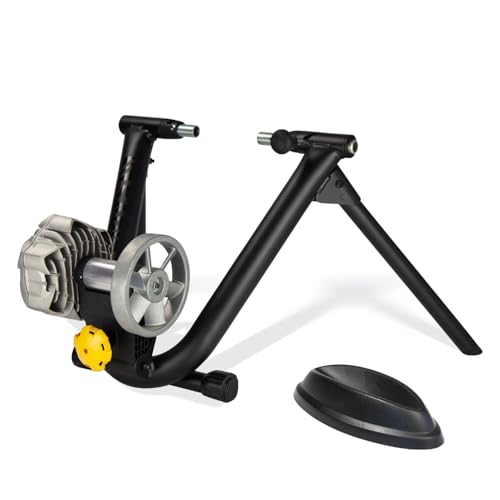
This is a rear wheel-on indoor trainer. The bike’s rear tire presses against a fluid resistance roller, so resistance rises as wheel speed rises and riders change effort mainly through their bicycle gears. It is the non-smart Fluid2 model, which Saris identifies as a basic trainer with a fluid resistance unit, a clutch knob, and optional app use when a separate sensor is added. The manual gives concrete setup controls, including inflating the tire to its maker’s specified pressure and turning the roller knob 2.5 turns after tire contact. Saris states 69 dB at 20 mph, and an independent road.cc review found that figure broadly matched a phone-meter check. That review also reported noticeable rocking during hard bursts, so secure assembly, a level floor, and conservative progression into standing efforts matter.
It suits an adult cyclist who already has a compatible bicycle and wants simple, self-paced indoor aerobic riding without a power outlet or a built-in subscription platform. It is most appropriate for seated endurance rides, recovery sessions, and moderate interval work on a firm, level surface. Buyers should be comfortable checking tire pressure, using the supplied trainer skewer or a compatible thru-axle adapter, and adding a speed or cadence sensor if they want app-based virtual riding.
It is not well suited to riders who sprint hard, race virtually, or regularly ride out of the saddle, because independent testing observed rocking during large efforts. It is also a poor fit for households where children or pets can enter the riding area, or for apartments needing tightly controlled noise and vibration. People needing accurate power data, app-controlled gradients, or automatic resistance should not treat this basic fluid trainer as providing those functions. Confirm axle, dropout, wheel, tire, brake, and frame clearance before mounting any bicycle.
Indoor cycling can contribute to evidence-based aerobic activity when intensity and weekly volume are appropriate. CDC guidance calls for at least 150 minutes weekly of moderate aerobic activity, or 75 minutes vigorous, plus muscle-strengthening activity on two days. The manual appropriately advises medical consultation before starting an exercise program and tells users to stop for chest discomfort, irregular heartbeat, shortness of breath, faintness, or other discomfort. The product has a traceable manufacturer, named model documentation, customer-service contact, and a North American lifetime frame warranty for weld breakage. Saris also currently lists replaceable feet, skewers, and a Fluid2 resistance unit. Its manual excludes rollers, feet, knobs, and some other wear items from warranty coverage. The verified materials and packaging disclosures are limited, and no specific recycled-content, packaging-reduction, or end-of-life recycling program was located. A 2009 CPSC trainer recall concerned different Saris models, not this Fluid2 product.
This product is a non-powered, rear-wheel-on indoor bicycle trainer. A rider mounts a compatible bicycle by its rear axle, with the tire pressing against a 2-inch alloy roller. Magnetic resistance is changed through a handlebar-mounted shifter. Saris states a combined rider-and-bike limit of 300 pounds and five resistance settings. Its fit information is unusually specific for this format. Saris lists 120 mm, 130 mm, and 135 mm rear dropout positions, includes a steel quick-release skewer, and offers a separate adapter for specified 142 x 12 mm and 148 x 12 mm thru-axle bikes. Tire and wheel exclusions matter, including 26-inch wheels and treaded or over-1.5-inch 29-inch tires. Saris also reports 69 dB at 20 mph, but publishes no tire, floor, distance, meter weighting, or independent acoustic test details. It can work with Zwift or Rouvy only after adding a compatible speed sensor.
It suits an adult cyclist who already owns a compatible quick-release bike, or a specified thru-axle bike with the separate adapter, and wants simple indoor pedaling rather than power-based structured training. It is most appropriate for seated, moderate riding on a stable, level surface, with the rear tire inflated to its marked pressure and preferably fitted with a smooth trainer-oriented tire. The defined 300-pound combined limit is important for deciding whether the rider and bicycle are within Saris's stated operating range.
It is not for households where children or pets can approach an operating rear wheel, roller, drivetrain, or pedals. It is also unsuitable for riders above the stated 300-pound combined rider-and-bike limit, for bikes with excluded 26-inch wheels, treaded or wide 29-inch tires, or unconfirmed axle and dropout arrangements. Choose another format if automatic resistance changes, verified power accuracy, quiet use under documented conditions, standing sprints without a careful practice period, or independently confirmed safety testing are required.
Indoor cycling can contribute to aerobic activity, but the product is not a weight-loss treatment. Federal guidance describes at least 150 minutes weekly of moderate aerobic activity, or 75 minutes vigorous, plus muscle-strengthening work on two days. Weight management also depends on dietary intake. Saris's manual appropriately tells users to consult a clinician before starting an exercise program and to stop for chest discomfort, irregular heartbeat, breathlessness, faintness, or other discomfort. The product has no battery, mains power supply, or onboard wireless electronics. Saris identifies a steel quick-release skewer and alloy roller, and sells several replaceable parts for this trainer family. That supports repair after wear. However, Saris does not provide a product-specific bill of materials, recycled-content claim, packaging specification, coating disclosure, or end-of-life instructions. A 2009 U.S. recall affected different Saris Pro Series trainers with a loosening handle pin, not this product.
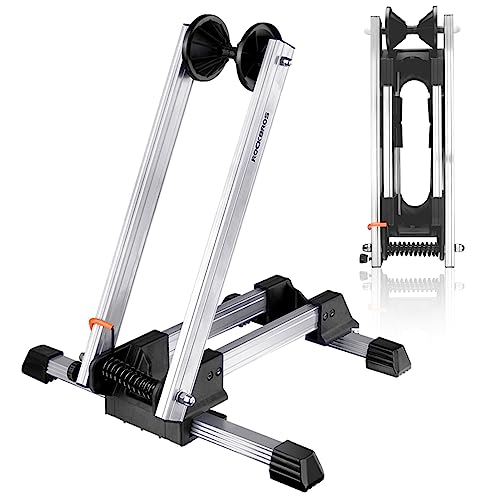
This product is a two-pack of foldable floor stands for parking a bicycle by rolling either wheel into a retaining groove. It is storage equipment, not a stationary bike stand for pedaling or exercise. The manufacturer describes the related T30 design as a push-in parking stand for 20 to 29 inch wheels, with a folding frame, spring mechanism, and protective plastic contact pieces. The most important limitation is functional, it does not clamp the frame or axle, provide rider support, or create resistance. It must not be used while anyone is on the bike. ROCKBROS states that white versions use aluminum alloy, while other official pages describe iron or carbon-steel variants. The catalog's alloy-steel description therefore does not independently establish the material of this exact white two-pack. No independent structural test report or product-specific safety certification was located.
It suits a rider who needs temporary indoor or garage parking for conventional road, commuter, mountain, or children's bicycles whose wheel diameter falls within the stated 20 to 29 inch range. It is most relevant where lifting a bike onto a wall hook is inconvenient, since the manufacturer describes rolling the wheel into the stand instead. It also fits apartments or shared spaces where a compact, foldable storage accessory can be put away after use. Confirm the actual tire width and wheel fit before relying on it.
It is not for anyone seeking a stationary trainer, rehabilitation device, or indoor cycling setup. Do not pedal, sit on, or mount the bicycle while it is in this stand, because the product is designed only for parking and has no rider-load retention system. Buyers with fat tires, unusually wide rims, heavy e-bikes, cargo bikes, nonstandard wheel sizes, or a need for a specified load rating should choose storage equipment with published compatibility and load information. It is also unsuitable where secured, earthquake-resistant, or wall-anchored storage is required.
There is no health, weight-loss, rehabilitation, resistance, power, noise, app, or wireless claim to substantiate because this is a bicycle parking stand, not exercise equipment. Its lack of a tire roller, powered resistance mechanism, and exposed rotating trainer parts removes the heat and tire-contact hazards associated with wheel-on trainers. The relevant safety precaution is simple, use it only to park an unoccupied bicycle on a level surface. ROCKBROS identifies metal construction, a protective coating or plastic contact pieces, depending on the official product page. Those disclosures are useful, but they do not provide recycled-content, coating-chemistry, packaging, repair, or end-of-life recycling information. A search of the CPSC public recall and warning records did not identify a model-specific recall or warning for this product. ROCKBROS provides U.S. contact information and states a two-year warranty, but published parts and repair documentation were not found.
This is an upright, belt-driven indoor cycling bike with manually adjusted flywheel resistance, cage pedals, a small monitor and a tablet holder. The product listing states a 300 pound rider limit, battery-powered display, app connectivity and 100 resistance levels. A separate retailer listing for the same Exercise Bike-002 version describes a 30 pound flywheel and reinforced steel frame, but these figures are manufacturer-stated rather than independently verified. Independent testing of the closely matching classic Yosuda spin-bike design found a smooth belt drive, a manually adjusted friction pad, stable behavior during standing efforts and basic display functions. That testing does not provide calibrated power, resistance, acoustic or structural-load measurements for this exact product. The listing also mixes magnetic and friction terminology, while independent testing describes manual friction resistance without preset levels.
It suits an adult who wants a conventional home spin-bike format for self-paced aerobic riding, has a level floor and is comfortable assembling and periodically checking a mechanical bike. The independently tested matching design offers manual friction adjustment, a belt drive and cage pedals, which fit riders who prefer straightforward effort control over structured automatic resistance. It may also suit someone who will use a personal tablet for non-integrated workout videos or entertainment, rather than relying on the bike to provide accurate training metrics.
It is not suited to riders who need medically supervised rehabilitation, a low step-through format, substantial balance support or dependable automatic resistance changes. It is also a poor fit for power-based training, because no validated watt or accuracy data were found. Households needing verified quiet-operation limits for shared walls or sleeping children should note that no condition-specific decibel report was located. Buyers who specifically want reliable app-led courses, Zwift or Kinomap integration should seek model-specific compatibility confirmation before relying on those functions.
Indoor cycling can contribute to evidence-based aerobic activity when used progressively. Federal guidance recommends at least 150 minutes weekly of moderate aerobic activity for most adults, plus muscle-strengthening activity on two days. Physical activity can support weight management, but weight loss also depends on food intake and individual energy balance. The product's weight-loss course language should therefore not be read as a guaranteed outcome. People with chronic conditions or activity limitations should discuss an appropriate starting plan with a health professional. No exact-product independent ASTM or ISO safety certificate, accredited laboratory report, public environmental-material declaration, packaging specification or end-of-life recycling guidance was located. The available documentation shows basic service contact information and a parts list, and a separate manual description includes an extra brake pad. However, the publicly visible support evidence does not establish a complete replacement-parts catalog or repair pathway for this specific product. No relevant CPSC recall or public product-safety action was located in the searches performed.
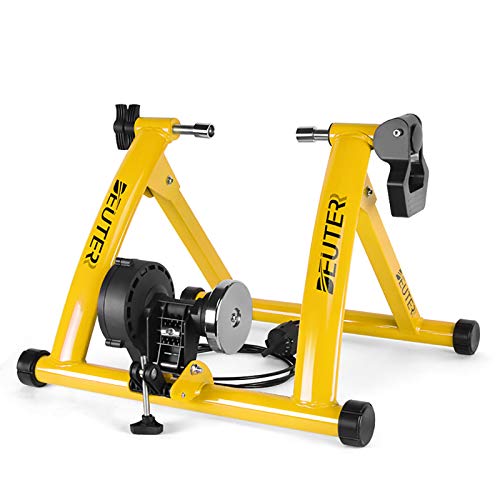
This is a wheel-on magnetic trainer stand that holds a conventional bicycle by its rear axle while the rear tire drives a small resistance roller. It includes a front-wheel riser and uses a handlebar cable control for eight manufacturer-stated resistance settings. An independent hands-on review measured the unit at 19 pounds and found it quick to set up, with no electronic communication protocol or controllable smart functions. Its supplied manual confirms a steel-frame assembly with rubber-capped contact points and a resistance wheel, but it is chiefly pictorial. Independent testing found 130 mm and 135 mm rear-axle compatibility, while wider 142 mm and 148 mm through-axle setups may require third-party adapters. The same testing found basic, low-power magnetic resistance rather than calibrated power measurement or road-like inertia.
This product suits an adult cyclist with a compatible 130 mm or 135 mm quick-release or bolt-on rear axle who wants simple indoor pedaling in a limited space. It is most appropriate for low-complexity aerobic sessions using an existing road or hybrid bike, especially where portability and storage matter more than metrics. Use a smooth road-style tire if household noise is a concern, and inspect clamp engagement, roller alignment, and tire condition before each session.
It is not suited to riders who need verified power, automatic resistance changes, app integration, virtual-riding compatibility, or repeatable interval targets. It also needs caution for bicycles with 142 mm or 148 mm through-axles, rear hub motors, unusual dropout shapes, very wide or knobby tires, damaged axles, or uncertain frame fit. People with balance limitations, a recent injury, cardiovascular symptoms, or a clinician-directed rehabilitation plan should seek appropriate professional guidance before using an unsupported wheel-on setup.
Pedaling can contribute to the weekly aerobic activity recommended for adults, but this stand does not itself establish a health, weight-loss, or rehabilitation outcome. The available documentation gives only a general caution that capable, competent users should use the equipment carefully. It does not provide a progressive exercise plan, medical screening guidance, or instructions that address roller heat, tire wear, exposed rotation, or pinch points in useful detail. The product is a mostly mechanical steel trainer with no battery, electronics, wireless radio, or app-dependent service life. Its manual includes an exploded drawing that could help identify basic hardware and wear components. However, no verified spare-parts ordering channel, corrosion specification, coating disclosure, packaging details, recycled-content claim, recycling instructions, or model-specific third-party safety certificate was located. No product-specific CPSC recall was found in the checked recall resources.
This is a wheel-on smart trainer that clamps a bicycle by its rear axle and presses an alloy roller against the rear tire. It provides electronically controlled resistance through Bluetooth and ANT+ FE-C connections, allowing supported apps to change resistance during structured workouts or virtual routes. It folds for storage and is intended for home use, not commercial or medical settings. Saris states a 300-pound combined rider-and-bike limit, 1,500-watt maximum resistance at 20 mph, 15% grade simulation, and power accuracy within 5%. Those are manufacturer figures, not accredited laboratory results. Independent testing found stable support during hard efforts and generally credible power near training threshold, but also found wheel-on accuracy depends substantially on tire pressure, roller tension, warm-up, and regular calibration. The exact bike fit limits are unusually specific, including exclusions for 26-inch wheels and treaded or wider 29-inch tires.
This product suits an adult home cyclist with a compatible 650b, 700c, limited-width 27.5-inch, or limited-width smooth 29-inch rear tire who wants app-controlled interval training without removing the rear wheel. It is most appropriate for someone willing to install the supplied trainer skewer or the correct optional thru-axle adapter, use a smooth dedicated trainer tire where practical, and perform a warm-up and spindown calibration before important power-based sessions. It also suits users who value access to listed replacement parts and fold-flat storage.
It is not appropriate for riders whose bikes use unsupported 26-inch wheels, treaded 29-inch tires, or tires wider than the stated limits. It is also a poor fit for households needing very quiet indoor exercise, particularly apartments or rooms near sleeping children, because the tire-to-roller system creates noticeable mechanical noise and vibration. Riders needing laboratory-grade power data for testing or competition should not treat its displayed watts as interchangeable with a calibrated power meter. Children under 10 and pets should not access it while assembled or in use.
Indoor cycling can contribute to evidence-aligned aerobic activity when intensity and duration are tailored to the rider. Federal guidance recommends that most adults work toward 150 minutes weekly of moderate aerobic activity, or 75 minutes vigorous, alongside muscle-strengthening work on two days. People who are inactive, have a disability, or have chronic conditions should seek individualized medical guidance before starting vigorous sessions. This product is for home exercise, not medical or rehabilitation use. Saris identifies the M2 as a powered wheel-on trainer with an alloy roller, but does not publish a full material inventory, packaging specification, recycled-content claim, battery-disposal instruction, or end-of-life recycling plan. Its repair outlook is stronger than its environmental disclosure, because Saris lists replaceable resistance, clutch, foot, and power components and provides defined warranty terms. No recall specific to this product was located in the CPSC recall search. A 2009 Saris trainer recall involved different Pro Series models, not this product.
This is a foldable, three-drum indoor roller for riding an existing bicycle in place. Unlike a wheel-on stand that clamps the bike, both wheels rest and rotate freely on the rollers, so the rider must balance and steer while pedaling. ROCKBROS states that the frame and rollers are aluminum alloy, it folds flat, weighs 6.5 kg, and is intended for mountain, road, and folding bikes with 16 to 29 inch wheels. The manufacturer describes parabolic roller shaping as a stability aid and calls the unit adjustable, but does not publish a model-specific resistance curve, wattage range, noise measurement, user weight limit, or independent safety test. The available setup guidance is consequential, particularly correct front-roller positioning, a level surface, tightened hardware, and cautious first rides beside a wall or doorway.
This product suits an experienced cyclist who specifically wants free-rolling indoor practice, has a conventional bicycle within the manufacturer-stated 16 to 29 inch wheel range, and can set it up on a flat floor with clear space around it. It is most appropriate for steady seated pedaling, cadence work, and balance practice where the rider can mount beside a wall or doorway. A buyer should still confirm actual wheelbase and tire fit before use, because the general wheel-size claim does not settle every compatibility question.
It is not suited to riders who need the bicycle positively retained, cannot comfortably balance on rollers, or are returning to exercise with a substantial fall risk. Households with tight spaces, hard nearby furniture, small children, pets, or downstairs neighbors should account for the exposed rotating wheels and unmeasured vibration. It is also a poor match for riders who need quantified power targets, app-connected workouts, automatic resistance changes, very high-load sprint training, or confirmed compatibility with e-bikes, unusually long wheelbases, very wide tires, or atypical frames.
Indoor cycling can contribute to aerobic physical activity, but it is not a treatment and this product does not establish a particular training dose, calorie outcome, or weight-loss result. Federal public-health guidance supports building activity gradually and targeting at least 150 minutes weekly of moderate aerobic activity for most adults, alongside muscle-strengthening work on two days. People with a condition affecting balance, heart symptoms, or exercise tolerance should use individualized clinical advice before beginning a new routine. The identifiable material disclosure is aluminum for the frame and rollers. ROCKBROS also offers a 30-day return policy through its U.S. storefront. No model-specific third-party safety certificate, accredited test report, spare-parts catalog, repair documentation, recycled-content claim, packaging specification, or end-of-life guidance was found. Searches of U.S. recall resources did not identify a recall for this roller product at the time checked, but the available public documentation does not show serial or batch-level traceability.
This is a wheel-on magnetic trainer stand that holds a bicycle by the rear axle while the rear tire contacts a roller. It is intended to turn a compatible bike into an indoor cycling setup, with six resistance settings selected from a handlebar control. The available product manual identifies an iron frame and lists compatibility with 26, 27.5, 28, and 29 inch wheels plus 700C, a quick-release skewer, a front-wheel riser, and a 330 pound load claim. The manufacturer describes a folding pyramid-frame design and states that smooth tires and a mat can reduce noise and vibration. A separate regional seller page for the same product lists 135 kg including the bicycle, rather than 330 pounds, so the load limit is not consistently presented. No model-specific accredited safety test report, power validation, or measured noise test was located.
This product suits an adult cyclist with a conventional compatible wheel-on bike, a level indoor floor, and enough room to mount and dismount carefully. It is most appropriate for self-directed aerobic riding where six manually selected resistance steps are sufficient and where the rider can inspect tire condition, roller contact, axle clamping, and fasteners before sessions. It also suits users who can use a smooth rear tire and a floor mat to reduce transmitted noise and vibration. Beginners should follow the setup instructions closely before applying higher effort.
It is not appropriate for riders who need a confirmed compatibility decision for a thru-axle, unusual dropout, single-speed, cargo bike, e-bike, or nonstandard frame before purchase. It is also unsuitable for households needing documented low-noise operation, accurate power data, app control, automatic resistance changes, or validated safety certification. Avoid it where a worn tire, uncertain axle retention, uneven floor, or limited mounting mobility could make setup unsafe. People with new symptoms, unstable cardiovascular conditions, recent surgery, or rehabilitation needs should obtain individualized guidance before vigorous cycling.
Indoor cycling can contribute to aerobic activity, but results depend on the rider's duration and intensity, not on the stand alone. Public-health guidance recommends adults work toward at least 150 minutes weekly of moderate activity, alongside muscle-strengthening activity on two days. This product does not provide medical, rehabilitation, or weight-loss dosing, and no clinical outcome claim for this unit was found. Start progressively and use professional advice when health status or symptoms make exercise intensity uncertain. The available documentation identifies iron construction and gives basic care instructions, including cleaning, dry storage, fastener checks, and tire inspection. That may help extend service life, but the brand does not publish material sourcing, recycled-content, packaging, coating, disposal, or spare-parts information for this product. No product-specific CPSC recall or safety warning was located in the checked public recall resources. No independent safety certification or accredited test report was located either, so safety evidence remains manufacturer-led.