Best Overall
10% off

MERACH Vibration Plate Exercise Machine
Real-time calorie tracking enhances workout efficiency.
LED display provides clear, easy-to-read data.
Suitable for both men and women.
 Brianna York
Real-time calorie tracking enhances workout efficiency.
LED display provides clear, easy-to-read data.
Suitable for both men and women.

Adjustable motor speeds for customized workouts.
Effective for lymphatic drainage and weight loss.
Compact design, fits easily in small spaces.

Effective full-body workout with minimal effort.
Includes loop bands for versatile exercises.
Compact design fits easily in small spaces.

Combines triple motor oscillation for varied workouts.
Includes 3D/4D vibration for enhanced muscle activation.
Ideal for home use, weight loss, and shaping.
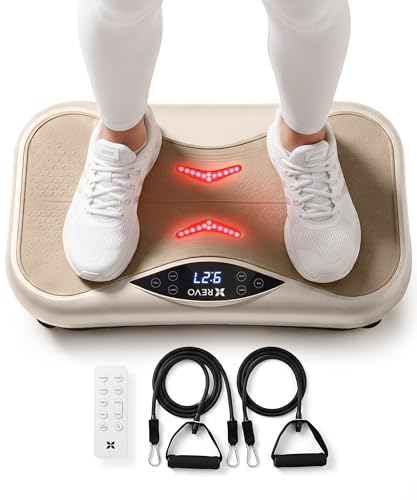
Combines red light therapy and vibration technology.
Includes Bluetooth speakers for enjoyable workouts.
Supports up to 330 lbs for versatile use.

Effective whole-body workout with vibration technology.
Includes resistance bands for enhanced exercise options.
Compact design, ideal for home fitness spaces.
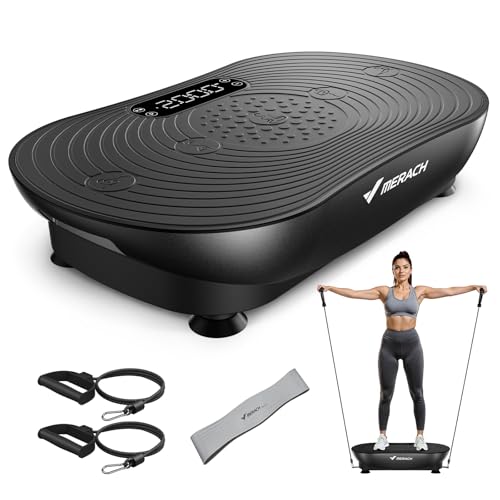
Effective for lymphatic drainage and muscle activation.
Convenient Bluetooth and LED touch screen features.
Compact design suitable for home workouts.

Effective for full-body workouts and toning.
Supports lymphatic drainage and wellness.
Compact design for easy home use.

Extra large platform enhances workout stability.
Manual speed control for personalized sessions.
Low noise operation for a peaceful environment.

Compact design fits easily in small spaces.
Multiple speed settings for customized workouts.
Quiet operation suitable for any environment.
Look first for frequency in hertz, displacement or amplitude in millimeters, acceleration, vibration direction, and measurements taken under realistic user loads. A product that publishes only RPM, vibrations per minute, motor watts, or arbitrary speed levels does not give you a reproducible dose. Even a stated frequency and amplitude should be treated as manufacturer information unless an independent, ISO/IEC 17025-accredited laboratory has measured the exact model with a stated test method. ISO 2631-1 and ISO 8041-1 provide useful reference points for evaluating human exposure and vibration measurement.
Electrical claims require separate scrutiny. Bluetooth or FCC Part 15 testing confirms radio compliance; it does not establish protection against electrical shock, fire, overheating, or motor-related hazards. For a powered home appliance, look for an exact-model listing in UL Product iQ, Intertek’s ETL directory, CSA’s product database, or a TÜV certificate database. The model, not merely the brand or a similar product, should be identifiable. None of the supplied products had a located exact-model UL, ETL, CSA, or TÜV electrical-safety listing.
Check the maximum user weight, platform stability, nonslip footing, resistance-band or handle strength, and protection against unintended movement. These claims are stronger when supported by model-specific load, tip, slip, structural, and accessory-tensile testing from an ISO/IEC 17025-accredited laboratory. Conflicting capacity, dimensions, wattage, voltage, program counts, or warranty terms are reasons to use the more conservative figure or confirm the details before purchase.
A useful manual should explain footwear, surface placement, supervision, posture, session duration, gradual intensity increases, ventilation, cord care, automatic shutoff, and when to stop for symptoms. It should identify people who need clinician advice rather than presenting the plate as treatment. Health claims about lymphatic drainage, detoxification, fat burning, calorie expenditure, circulation, pain, bone density, rehabilitation, or disease-related benefits should be supported by competent and reliable human evidence for the product’s actual dose. Whole-body vibration is not a replacement for ordinary exercise, medical care, or clinician-directed rehabilitation.
Across the reviewed products, recurring cautions include pregnancy, implanted cardiac or electronic devices, cardiovascular disease or symptoms, epilepsy, osteoporosis, recent surgery or injury, acute thrombosis or other clotting concerns, serious balance problems, and unexplained pain or dizziness. Several manuals also caution people with diabetes, neurological or joint conditions, cancer, illness, or vibration sensitivity to seek medical advice. Use should be supervised when balance is impaired, and children should not have unsupervised access. Keep these corded appliances dry, use a level stable surface, inspect damaged cords, and stop for dizziness, nausea, pain, breathing difficulty, abnormal heart rate, or other concerning symptoms.
These topics reflect the review criteria used for the supplied products. A higher score means the available product-specific evidence and documentation were stronger; it does not turn an unverified manufacturer claim into clinical proof or electrical certification.
This measures whether the exact vibration type, dose, posture, session guidance, and intended users are supported by human evidence for the claimed outcome. For these plates, high-scoring products were more restrained about what vibration can do and provided more usable operating information; low-scoring products leaned on lymphatic-drainage, fat-loss, pain, bone, or rehabilitation claims without a matched dose or product-specific trial.
This measures evidence that the powered plate, cord, controls, plug, and overheating protections are suitable for U.S. home use. Scores clustered around 70 because no supplied product had a located exact-model UL, ETL, CSA, or TÜV listing. A higher score reflects better documented precautions or narrower verified information, while a lower score would indicate unresolved fire, shock, overheating, or conformity concerns; FCC radio testing alone is not enough.
This measures whether frequency, displacement, acceleration, waveform, direction, and platform variation are disclosed and verified under realistic loads. Products with stated Hz and amplitude scored somewhat better than products offering only speed levels or RPM, but no supplied plate had a located independent loaded-output report. A high score therefore means more reproducible information, not proof that the dose produces a claimed health outcome.
This covers tipping, slipping, structural failure, unintended movement, user-weight limits, and the strength of supplied bands or handles. The better-scoring products combined stable-surface guidance with clearer stated limits or accessory specifications, but the reviews generally found no independent load, slip, tip, or tensile reports. Conflicting capacity figures, such as 300 versus 400 or more pounds, weaken confidence even when the headline limit is high.
This measures whether the manual clearly identifies higher-risk users and gives practical limits for footwear, posture, supervision, surface, session length, and stopping for symptoms. The strongest examples included specific warnings for pregnancy, implants, heart conditions, thrombosis, epilepsy, and recent surgery, plus timed sessions. Lower-scoring products offered general warnings but omitted important groups or gave contradictory instructions.
This measures whether the buyer can identify the responsible maker, model, support route, warranty, serial or batch information, and remedy process. Higher-scoring products supplied U.S. contacts, serial-number service, named models, or clearer warranty support; lower-scoring products had limited importer or recall-registration information. A lack of a located recall is not proof that a product is safe, and a warranty does not replace traceability.
This measures whether exact-model safety and performance claims are backed by traceable independent testing, preferably from an ISO/IEC 17025-accredited laboratory or recognized certification body. The supplied products generally had no such report for electrical, vibration, load, or accessory performance. The relatively stronger records documented Bluetooth radio testing for a named model, but radio compliance is narrower than appliance safety or exercise-performance verification.
This measures whether claims about weight loss, fat burning, lymphatic drainage, circulation, pain, rehabilitation, bone density, calories, or disease-related benefits match the evidence. Higher-scoring products made fewer or more qualified claims; lower-scoring listings promoted broad outcomes unsupported by product-specific human testing. Whole-body-vibration research is protocol-dependent, and vibration alone should not be presented as a substitute for exercise or medical care.
This measures whether the listing and manual provide consistent units for frequency, displacement, acceleration, power, duty cycle, dimensions, mass, user capacity, noise, accessories, and warranty. The Lifepro Waver Mini scored notably better because its manual supplied frequency, amplitude, timer, and concrete operating information. Products listing only speed levels, or conflicting wattage, voltage, dimensions, program counts, or capacities, were less testable.
This measures whether a heavy electronic appliance can remain useful and be responsibly handled later. The strongest supplied examples were the Lifepro plates, whose stated lifetime support includes repair guidance, parts, or replacement. Most other products had only one- or two-year coverage and no parts catalog, repair instructions, take-back service, or U.S. recycling route. Buyers should plan electronics recycling rather than household disposal.
This measures whether claims about being eco-friendly, recyclable, low-waste, or sustainably made are specific and supported for the whole product. Scores were generally higher where no unsupported green claim appeared, even though documentation was sparse. The weakest environmental evidence involved broad sustainability language without material, recycled-content, packaging, or end-of-life details. A disposal instruction alone is not evidence that the appliance itself is environmentally preferable.
This is a compact, plug-in whole-body vibration platform for standing, seated, or supported exercise at home. It uses oscillating vibration, a remote, 10 manual levels, and an automatic session limit. The manufacturer’s current CV30 page lists a 20.3 by 11.3 by 4.7 inch body, 100 W motor, 7 to 9.6 Hz frequency range, 11 mm amplitude, and 330 lb capacity. Those specifications are not independently measured. More importantly, documents and seller materials for the same model identify materially different dimensions, power input, voltage, and load limits, including 300 lb and 400 lb figures. Its manual provides useful basic operating warnings and a 10-minute shutoff, but no U.S. electrical-safety listing or model-specific third-party vibration, load, slip, or accessory-strength test could be verified.
It fits an adult home user who wants a small platform for short, low-intensity movement sessions, has a clear level floor, can independently balance while stepping on and off, and will treat vibration as an optional addition to ordinary exercise rather than therapy. The documented 10-level control, gradual-start guidance, remote, and automatic session limit are most practical for someone willing to start conservatively and stop if symptoms occur. The stated compact dimensions are useful where storage space is limited.
It is not appropriate as a substitute for rehabilitation, treatment of swelling, circulation problems, pain, digestive symptoms, or weight management. People who are pregnant, have a pacemaker or other implanted device, known cardiovascular or clotting concerns, recent surgery, acute injury, severe balance limitations, or unexplained symptoms should seek clinician-specific advice before using vibration equipment. It also does not suit households needing independently certified electrical safety, verified vibration output, or a confirmed load rating. Children, frail older adults, and people with disabilities require the supervision and medical advice specified in the manual.
The useful health feature is the manual, not the wellness marketing. It directs users to inspect for damage, use a flat dry indoor surface, begin at the lowest level, avoid wet hands, keep children and pets away, and stop for abdominal pain, irregular heartbeat, breathing difficulty, unusual fatigue, or discomfort. It also says the product is for household fitness, not physical therapy. These are meaningful precautions, though they are not a complete contraindication screen. The manufacturer describes ABS and PP construction, a silicone mat, and recyclable packaging, but the broad "eco-preferred" materials statement is not backed by a material, recycled-content, repairability, or life-cycle disclosure. A written warranty and support route may help keep a defective unit in service, yet no U.S. take-back program, parts catalog, or independent durability testing was found. European CE and UKCA statements in the manual do not establish a U.S. electrical-safety certification.
This is a compact, corded whole-body vibration platform for standing exercises, shallow squats, and limited band-assisted movements at home. The manufacturer states that it has 10 speed levels, vibrates at up to 50 cycles per second, has an 11 mm claimed amplitude, carries users up to 400 pounds, and shuts off after 10 minutes. Its stated size is 22.8 by 13 by 6.3 inches and its stated net weight is 17.6 pounds. A public FCC filing independently links the Bluetooth transmitter to this product model and its manufacturer, but that filing addresses radio compliance, not electrical, structural, or exercise-output safety. No exact-model UL, ETL, CSA, or comparable electrical-safety listing, independent vibration-dose report, or load and stability test report was located. The stated 50 Hz and 11 mm figures therefore remain manufacturer claims rather than measured user-dose data.
This product suits an adult home user who wants a small, low-impact exercise accessory for brief, supervised standing or bent-knee sessions, has stable balance, and is within the stated 400-pound limit. It is most appropriate when used as an addition to ordinary strength, mobility, and aerobic activity, rather than as a substitute for them. The short automatic run time and compact stated size also fit people with limited storage who are comfortable following basic equipment checks, level-floor placement, and gradual speed progression.
It is not suited to people seeking treatment for lymphatic problems, pain, rehabilitation needs, weight loss, or circulation disorders, because exact-product clinical evidence and measured dose data were not located. Anyone with a medical condition, abnormal heartbeat, breathing symptoms, poor balance, significant mobility limitations, or a clinician-directed exercise restriction should seek medical advice before use. It is also unsuitable for unsupervised children, multi-user use, wet or outdoor locations, commercial settings, and households unable to provide a flat, clear exercise area.
The strongest independently checkable point is product traceability for its Bluetooth function. A public FCC filing identifies the manufacturer and the 2.4 GHz Bluetooth transmitter for this model. That should not be confused with a U.S. electrical-safety certification. No exact-model UL, ETL, CSA, or similar listing was located, and no independent report was found for output dose, platform loading, slip resistance, or the included resistance bands. The manufacturer claims up to 50 Hz vibration and 11 mm amplitude, but does not publish the acceleration, waveform, or under-load measurements needed to match this unit to human vibration studies. Research suggests some whole-body-vibration applications may help selected outcomes when combined with exercise, but it does not validate broad health claims for this untested product. No environmental marketing claims, repair-parts catalog, or U.S. take-back program was located. Warranty information also needs clarification because the official product page says two years while the available manual says one year.
This is a corded, at-home oscillating vibration platform for standing, squats, stretches, planks, and band exercises. Lifepro states that it has a 200 W motor, 99 speed settings, a 4 to 12 Hz range, 0 to 8 mm amplitude, a 330 lb user limit, and a compact platform about 27.6 by 15.7 by 5.5 inches. It includes a remote, two clip-on resistance bands, and four mini loop bands. The manufacturer provides a practical workout progression and a 1 to 15 minute timer, but its output figures have not been independently published for this product under user load. The manual also has a useful home-use safety section. Its health marketing is much broader than the product-specific evidence located, especially for lymphatic drainage, fat loss, detoxification, arthritis, fibromyalgia, and bone-density outcomes.
It suits a healthy adult who wants a compact, corded home platform for short, low-impact movement sessions and can stand securely without assistance. The stated 4 to 12 Hz range, manual speed control, timer, and progressive exercise guide make gradual familiarization practical. It is also a fit for someone who has a level indoor space, can keep children and pets away during operation, weighs no more than the stated 330 lb limit, and values a manufacturer-stated lifetime repair and replacement commitment.
It is not intended for children under 12, more than one user at a time, commercial settings, damp or outdoor areas, or users above the stated 330 lb limit. People who cannot safely stand and balance independently should not treat it as a passive rehabilitation device. Anyone with a serious health condition, a new injury, persistent back or joint pain, or concerns about vibration exposure should seek clinician guidance first. It is also unsuitable for buyers who require independently verified electrical certification, measured vibration output, or tested band and load safety.
The manual includes meaningful basic safety instructions, including level placement, clearance, dry indoor use, shoes, supervision, a one-person limit, cord care, and unplugging before cleaning. It also identifies a support channel and asks owners to register within 14 days for the stated lifetime warranty. No exact-product U.S. electrical-safety certification listing or independent laboratory test report was located. The manual’s FCC language concerns interference compliance, not electrical shock, fire, structural, or vibration-dose certification. No recall naming this vibration plate was located in the CPSC materials checked. Lifepro did recall separate Bioremedy infrared sauna blankets on October 23, 2025, after overheating reports and burn injuries. That recall does not identify this plate. The warranty's parts and repair promise is a positive durability signal, but no company take-back program, recycled-content disclosure, packaging claim, or environmental certification was located. At end of life, the heavy electronic appliance should go to an appropriate electronics recycler rather than curbside recycling.
This is a corded, floor-standing whole-body vibration platform for adult home use. The manufacturer manual describes three motor motions, up-down, pulsating, and side-to-side, with seven selectable training modes, 60 speed settings, three automatic programs, resistance bands, mini bands, a mat, remote control, and Bluetooth speakers. The manual states a 31 by 18 by 7 inch, 42 pound platform, a 330 pound user limit, 4 to 40 Hz frequency, and three listed amplitudes of 0 to 12 mm, 1.5 mm, and 8 mm. Those are manufacturer specifications, not independently measured output. The manual provides unusually detailed posture, time, footwear, surface, symptom-stop, and medical contraindication guidance. However, no public exact-product electrical safety listing, accredited vibration-dose report, load test, or product-specific human clinical trial was located.
It suits a healthy adult who wants a substantial home vibration platform for short, structured sessions, and who can use it on a flat indoor floor with generous clear space. The stated 330 pound capacity and included resistance bands make it practical for users who want to combine static positions, squats, stretches, or light band work with vibration. It is more suitable for someone willing to follow the manual's gradual progression and safety directions than for someone seeking an unmonitored therapeutic device.
It is not appropriate for children, people above the stated 330 pound limit, or households unable to keep a stable non-slip floor and clear area around a moving platform. The manual says not to use it during pregnancy, after recent surgery or fracture, with certain implanted electronic devices, blood-clot disorders, severe osteoporosis, major spinal conditions, vertigo, serious heart conditions, or impaired balance without medical guidance. It also does not suit buyers who need independently verified vibration dose, safety certification, rehabilitation efficacy, or lymphatic treatment evidence.
The strongest health safeguard is the manual, not independent testing. It identifies many contraindications and gives practical rules for posture, footwear, daily duration, placement, supervision, and stopping for concerning symptoms. The manual also says the product is not a medical device and that suggested health benefits are not certified or endorsed by a regulatory authority. That limitation matters because public whole-body vibration evidence is mixed and condition-specific, and no human study of this exact product was located. No public exact-product electrical safety certification or accredited performance report was located. A CPSC recall dated October 23, 2025 involved Lifepro sauna blankets that could overheat, not this vibration platform. For durability, the manufacturer states it supplies repair parts and guidance under a lifetime warranty, which can extend service life. No product-specific take-back program, recycled-content disclosure, packaging detail, or U.S. end-of-life recycling route was located.
The REVO Wave is a corded, home-use vibration platform with a remote, detachable resistance bands, Bluetooth audio, red LEDs near the lower legs, and five automatic routines. Manufacturer materials state a 17.4-pound unit weight, 180 selectable levels, 330 to 331-pound user capacity, and a 20-minute automatic shutoff. The available manual lists 110 to 120 V input and 180 W power draw. Its central mechanism is described inconsistently as pivot oscillation, up-and-down movement, and sonic vibration. Crucially, the manufacturer does not publish frequency in hertz, displacement, acceleration, or loaded platform measurements. That prevents a user from matching the product's delivered vibration dose to the human research used to support whole-body-vibration exercise. Public exact-model electrical certification and independent performance test records were not located in the checked registries.
This product is most suited to an adult who wants a compact, plug-in platform for short, low-impact movement sessions at home, and who can stand securely with slightly bent knees or use it seated with feet on the platform. It is more appropriate for someone treating vibration as an optional exercise accessory, rather than as treatment for swelling, pain, poor circulation, bone loss, or weight management. The stated 330 to 331-pound capacity may suit larger adults, but that limit is manufacturer-stated rather than independently load-tested in public records.
It is not for children or pregnant people, both of whom the manual excludes. People with deep vein thrombosis, recent surgery, uncontrolled cardiovascular or circulatory concerns, high blood pressure, epilepsy, retinal disease, severe diabetes, cancer, recent infection, major joint or spine injuries, or implanted devices should not self-start based on marketing claims. It is also a poor fit for anyone with unstable balance, a fall-prone household setup, or a need for verified electrical certification, medically validated red-light treatment, measured vibration exposure, or a specific rehabilitation protocol.
Whole-body-vibration research supports only limited, protocol-dependent benefits in some populations. The research depends on clearly reported frequency, amplitude, acceleration, posture, and cumulative training dose. This product does not disclose those measurements, and no exact-product trial or independent output test was located. Its manual does provide meaningful contraindications and practical safety instructions, which is important given the broad health claims used in marketing. The manufacturer states that the unit is assembled in China and provides a replacement-oriented warranty process, but public repair instructions, replacement-parts listings, packaging disclosures, recycled-material information, and a U.S. take-back or recycling program were not located. No product-specific CPSC recall was found in the review, but the available public materials do not show a serial-number registration or a formal recall-notification process.
This is a compact, corded home vibration platform for standing, squatting, seated, and hands-on-platform exercises. It includes a remote and two resistance bands. A manual hosted independently from the catalog describes a 110V, 200W unit measuring about 20.5 by 13.7 by 7.1 inches and weighing 17.6 pounds. It specifies 120 selectable levels, five automatic programs, and a stated amplitude range of 0 to 10 mm. The key limitation is dose clarity. Neither the available manual nor the current brand page gives a usable platform frequency, measured acceleration, waveform, or output under load. The brand states a 330-pound capacity, four suction cups, and a one-year warranty, but no independent load, slip, band-tensile, electrical, or vibration-output report was located. Its marketing also presents fat burning, circulation, lymphatic drainage, and swelling claims that are much broader than product-specific evidence provided.
It suits an adult who wants a compact home platform to add short, low-complexity vibration sessions to an existing exercise routine, and who is within the manufacturer-stated 330-pound capacity. The practical fit is a user with a level, hard floor, room to step on and off safely, and willingness to follow the 10 to 20 minute manual guidance. It is more appropriate for general fitness experimentation than for a buyer seeking measured therapeutic vibration treatment.
It is not for anyone expecting weight loss, lymphatic drainage, swelling reduction, pain treatment, or disease management from the platform alone. People who are pregnant, use a pacemaker, have heart conditions, hypertension, diabetes, osteoporosis, joint problems, recent illness or surgery, or other medical conditions should seek clinician advice before use, as the manual directs. It is also unsuitable for households needing independently certified electrical safety, verified accessory strength, measured vibration output, or repair parts and recycling support.
The manual contains meaningful basic precautions. It calls for a level surface, one user at a time, dry hands, even weight distribution, child separation, power-cord inspection, and medical advice for a long list of health conditions. It also says to stop and cool the unit if it overheats. These are useful directions, though they do not replace medical screening or establish a safe vibration dose for an individual. The brand's public product page makes strong fat-burning, circulation, lymphatic-drainage, and swelling claims, while no exact-product human trial or independent dose test was located. Public certification searches did not provide a traceable exact-product electrical listing. No matching U.S. recall was identified in the sources checked. The product is primarily plastic and electronic, has a one-year warranty, but no located replacement-parts catalog, take-back program, recycled-content disclosure, or end-of-life recycling plan.
This is a compact, corded whole-body vibration platform for home exercise. The product is used standing, seated, or with hands or legs on the platform, with 99 selectable levels, five automatic programs, touchscreen and remote controls, Bluetooth audio, and a default 10-minute timer that can be set from 1 to 20 minutes. The manufacturer manual identifies a 350-pound user limit, 22 by 13.4 by 4.9 inch footprint, 15.9-pound product mass, suction-cup feet, and 150 W rated power. Those are manufacturer-stated specifications, not independently tested results. The listing's 440 W figure conflicts with the manual. Crucially, neither source provides vibration frequency, displacement, acceleration, waveform, or loaded platform measurements. That prevents a buyer from matching the product to the dose used in human whole-body-vibration research. The listing's lymphatic-drainage framing is not supported by model-specific clinical evidence.
This product suits an adult home user who wants a small, low-profile vibration platform for brief, self-directed exercise or light movement sessions and can stand securely without relying on a handrail. It is most appropriate for someone who will treat vibration as an optional supplement to ordinary strength, balance, and aerobic activity, rather than as treatment. The documented timer, compact dimensions, and stated 350-pound capacity may be useful where storage space is limited. The user should be comfortable following the manual's gradual-start, dry-surface, footwear, and supervision guidance.
It is not suitable for children under 10, pregnancy, people with implanted pacemakers or other electrical devices, or people with malignant tumors, because the manual specifically advises against use in those situations. People with unexplained dizziness, irregular heartbeat, breathing difficulty, acute pain, poor balance, recent injury, or a condition requiring rehabilitation should seek clinician guidance first. It also does not fit users seeking a medically validated lymphatic-drainage, pain-treatment, weight-loss, or bone-health device. Households needing independently verified electrical certification, load testing, or accessory testing should select a product with that documentation.
The strongest safety information comes from the manufacturer manual, not independent certification. It gives meaningful contraindications, requires a flat and dry indoor setup, warns against damaged cords and wet hands, limits use to one person, calls for gradual intensity increases, and directs users to stop for troubling symptoms. It also identifies support channels, serial-number use, and warranty registration. No exact-model third-party electrical listing or independent vibration-dose report was located. The absence of frequency, amplitude, and acceleration data is important because research results from whole-body vibration depend on dose and exercise posture. The lymphatic-drainage claim is not substantiated by model-specific human evidence. The product is a 15.9-pound electronic appliance with an ABS housing and corded power. The manufacturer offers a stated one-year warranty and an additional year through registration, which can support continued use. No repair-parts catalog, U.S. take-back program, recycler partnership, recycled-content disclosure, packaging information, or environmental certification was located. No product-specific environmental claims were identified, so there is no green marketing claim to validate.
This is a corded, low-profile oscillating vibration platform for standing exercises, squats, or brief recovery-style sessions at home. The product is listed as plastic, 18.5 by 13.8 by 4.9 inches, and 6.55 kg. It includes a remote, Bluetooth audio, two handled resistance bands, and five loop bands. The seller states a 450-pound user limit, suction feet, a textured surface, a 150 W motor, and settings from 1 to 120 with eight automatic programs. Those are manufacturer statements, not independently verified test results. No model-specific electrical listing, vibration-dose report, load test, band tensile test, or public clinical study was located. The listing also uses clinically loaded claims about lymphatic drainage, toxins, swelling, chronic pain, and rapid fat loss that exceed the evidence available for this unmeasured product.
It suits an adult with limited floor space who wants a compact, corded platform to supplement ordinary movement, bodyweight exercises, or resistance-band work at home. The realistic use case is short, low-intensity familiarization sessions with stable footwear and a clear, level floor, not passive treatment. It may also suit someone who values remote control and built-in audio, provided they treat the seller's capacity, quietness, and output claims as unverified and stay well within their own comfortable balance limits.
It is not appropriate for someone seeking a proven treatment for lymphedema, circulation disorders, chronic pain, swelling, obesity, or rehabilitation after injury or surgery. Those uses need clinician-directed care, especially for people with pregnancy, implanted electronic devices, clotting concerns, recent fractures, severe osteoporosis, uncontrolled cardiovascular conditions, balance impairment, neuropathy, or acute musculoskeletal symptoms. It also does not suit buyers who require independently certified electrical safety, measured vibration exposure, validated load capacity, or a clearly documented warranty and repair route.
Whole-body vibration research suggests possible adjunct exercise effects under controlled protocols, but the protocols commonly report frequency, amplitude, posture, and duration. This product does not publish those dose measures or an exact-product human study. A recent systematic review found that whole-body vibration alone did not significantly reduce body mass or fat mass. That makes the listing's weight-loss, lymphatic-drainage, toxin-flushing, and chronic-pain claims poorly matched to the available evidence. No U.S. recall or public incident pattern for this product was located in the CPSC sources searched. However, no public model-specific NRTL electrical certification or independent safety report was located. Amazon displays Global Recycled Standard sustainability claims, including at least 50 percent recycled material and safer chemicals, but no traceable certificate, scope, transaction record, or product-material breakdown was provided. The listing also provides no parts catalog, repair instructions, take-back program, or clear warranty terms beyond a one-year entry. End-of-life handling should therefore use a local electronics recycler rather than household trash.
This is a compact, corded vibration platform for standing exercises, with a remote, touch controls, detachable resistance bands, and 120 seller-stated speed levels. The product page lists a 22 by 14 by 6 inch ABS-plastic body, 14-pound product weight, and a 330-pound maximum user recommendation. An independently listed version identifies the same Glorygym model and the same core accessories, but does not provide laboratory output data. It is intended for brief at-home whole-body vibration sessions, with the listing promoting a 10-minute routine, core stability, and weight-loss use. The page also claims under-35 dB operation. Frequency, displacement, acceleration, waveform, and output under user load are not disclosed, so its actual vibration dose cannot be matched to human research protocols or independently reproduced.
It fits an adult who wants a small, corded platform for short, low-complexity home movement sessions and who can stand securely without assistance. The stated 22 by 14 inch footprint, remote control, and included bands are practical for a compact room and for adding light upper-body movements. It is better suited to someone treating vibration as an optional exercise adjunct, not someone expecting a measured therapeutic dose, a verified rehabilitation protocol, or a standalone weight-management method.
It is not appropriate for people who need clinically directed rehabilitation, reliable therapeutic vibration settings, or documented medical-device performance. People with impaired balance, recent injury, substantial back symptoms, pregnancy, known clotting concerns, implanted devices, or other health conditions should seek clinician advice before exposure because accessible product-specific contraindication guidance and measured output are absent. It also does not suit households needing independently verified electrical certification, tested band tensile strength, or a confirmed non-slip and stability test for the stated user limit.
Whole-body vibration research suggests possible adjunct benefits in some structured exercise and weight-management programs, but studied platforms commonly report frequency and amplitude. This product does not disclose those dose variables, and no exact-product clinical trial or independent accelerometer report was located. Its direct weight-loss framing therefore goes beyond what can be tied to this unit. The listing also lacks accessible, specific contraindication and session-limit guidance. No product-specific CPSC recall, public incident record, or regulator warning was located in the searches performed. That is not proof of safety. No exact-model certification in major U.S. electrical-safety registries or independent safety report was located either. The product is described as ABS plastic with electronic components, yet no parts catalog, repair instructions, take-back program, recycled-content disclosure, or environmental claim was found. At end of life, it should be handled through an appropriate electronics recycler rather than curbside recycling.
This is a corded, stand-on whole-body vibration platform for home use. It has a remote, display, resistance bands, and manufacturer-stated capacity of 330 lb. The intended routine is standing, squatting, or using the supplied bands while the platform vibrates. The defining limitation is that the manufacturer does not publish the frequency in Hz, displacement in mm, acceleration in g, waveform, or verified output under load. Those are the measurements needed to relate a vibration plate to human research. Its own descriptions also conflict on key details, including 99 versus 990 speed levels, ABS versus metal materials, and substantially different dimensions. No model-specific NRTL electrical listing, independent laboratory report, or public performance certificate was located.
This format suits an adult seeking a small, corded home exercise accessory for gentle standing movement, bodyweight positions, and light band work, provided they treat the vibration function as an unverified training variable rather than therapy. The stated 330 lb limit may suit users within that limit who have stable balance, a level hard floor, and enough open space to use the bands safely. It is more appropriate for someone already able to exercise independently than for a buyer seeking measured rehabilitation equipment.
It is not suited to anyone who needs a clinician-directed rehabilitation device, documented lymphatic treatment, reliable pain treatment, or a quantified training dose. People who are pregnant, have a pacemaker, severe osteoporosis, epilepsy, acute thrombosis, serious cardiovascular disease, recent surgery, unstable joints, neuropathy, dizziness, or impaired balance should seek clinician advice before using whole-body vibration. It is also unsuitable for households needing independently documented electrical certification, verified accessory strength, or clear replacement-parts support.
Whole-body vibration research uses defined frequency, displacement, acceleration, posture, and session duration. Reviews find that outcomes vary substantially by those variables and by the population studied. This product does not disclose or independently verify those dose measurements, so its settings cannot be matched to the evidence base. The available Natini guidance includes sensible basics such as a level surface, athletic footwear, the stated weight limit, and clinician consultation for several health conditions, but model-specific instructions and warnings were not independently confirmed. No Natini vibration-plate recall was located in the CPSC recall search. That is not the same as a safety certification. No exact-product listing with a U.S. NRTL or independent test report was found. Natini describes ABS construction for its 330 lb model, but published specifications are inconsistent. The brand provides no identified spare-parts catalog, repair instructions, take-back program, or electronics-recycling route, and directs warranty questions to Amazon.