Best Overall
7% off

Sportsroyals Multi-Function Power Tower Dip Station
Sturdy build supports up to 360 pounds.
Adjustable foot covers enhance stability.
Multi-function design for diverse workouts.
 Brianna York
Sturdy build supports up to 360 pounds.
Adjustable foot covers enhance stability.
Multi-function design for diverse workouts.

High weight capacity supports intense workouts.
Includes multiple training attachments for versatility.
Durable construction ensures long-lasting use.

Sturdy build supports up to 450 lbs.
Adjustable height for customizable workouts.
Multi-functional design for varied exercises.
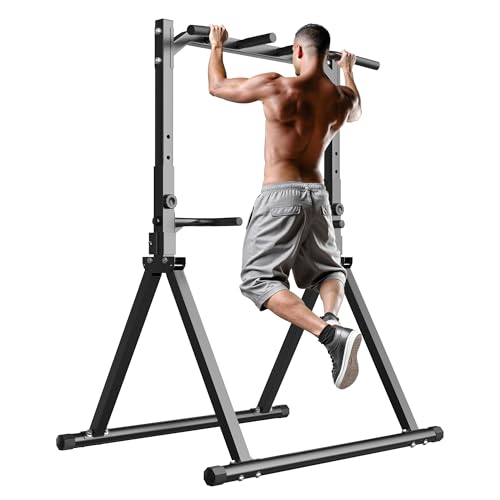
Sturdy triangular structure for enhanced stability.
Foldable design saves space in home gyms.
Multi-functional for diverse workout routines.
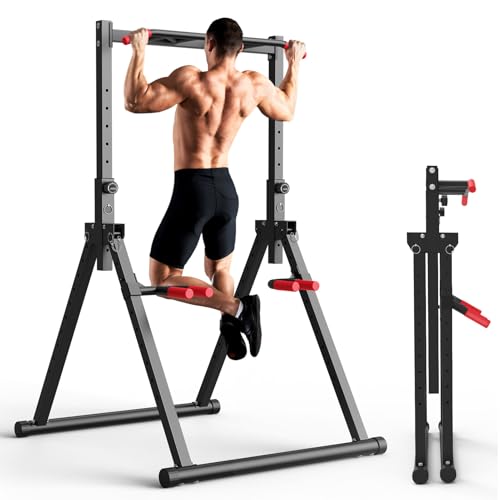
Supports up to 440 lbs for stability.
Foldable design saves space efficiently.
Multi-functionality enhances diverse workouts.

Height adjustable for personalized workouts.
Sturdy construction ensures stability and safety.
Multi-function design supports diverse exercises.

Foldable design for easy storage.
Adjustable height suits all user needs.
Supports up to 450 lbs, ensuring stability.

Sturdy and supports up to 330 lbs.
Versatile with multiple exercise options.
Space-saving design fits home gyms easily.
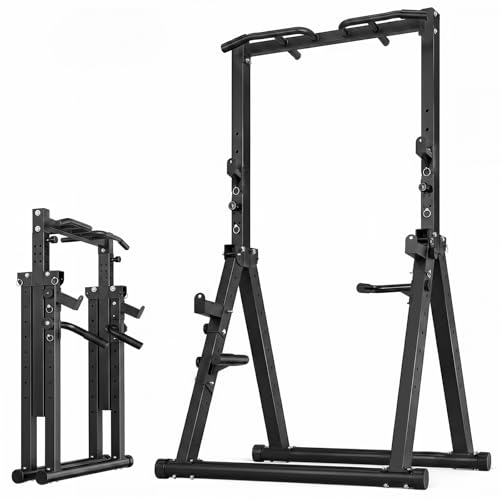
Adjustable height for varied workout intensity.
Foldable design for easy storage.
Sturdy construction ensures safety and stability.

Supports up to 515 lbs, very sturdy.
Versatile with multiple exercise options.
Easy to install on most walls.
The most important distinction is between a stated capacity and demonstrated performance. A number such as 330, 400, 450, 500, 660, or 700 pounds may be only a manufacturer recommendation. It does not necessarily show that the exact tower resists tipping, joint failure, or collapse during pull-ups, dips, swinging, or other changing loads. Stronger evidence would be an exact-model test report addressing ASTM F2276-23 or ASTM F2571-15(2020), or an ISO/IEC 17025 report from an A2LA- or ANAB-accredited laboratory. A certification should also be independently checkable through directories such as UL Product iQ, Intertek ETL, TÜV Rheinland Certipedia, A2LA, or ANAB. No supplied product had that level of independently checkable safety proof.
Buyers should look for a model-specific manual that states the user-weight limit, permitted exercises, required floor conditions, surrounding clearance, anchoring or ballast requirements, adjustment-lock instructions, and inspection or retightening schedule. A broad footprint, heavy frame, triangular or H-shaped base, suction cups, anti-slip feet, locknuts, or welded steel frame may support practical stability, but these features are not substitutes for dynamic testing. A rack intended for kipping pull-ups or muscle-ups should state how it must be anchored; one supplied rack specifically requires floor bolting for those movements.
Headline specifications can also mislead through inconsistency. Supplied listings disagree about capacities, dimensions, adjustment counts, unit weights, and even whether a model is rated at 300, 330, 350, 400, 450, 500, 660, or 700 pounds. Some manuals and listings use different limits, while one manual contains a major pounds-to-kilograms conversion error. A static user-weight figure also does not establish safe added loading, ring work, weighted calisthenics, kipping, or swinging. Buyers should use the most conservative clearly documented limit until the maker resolves conflicts.
Across the supplied products, the recurring safety caveats are substantial: freestanding towers should be placed on a firm, level, non-slip surface; some suction-cup designs are unsuitable for carpet; hardware, pins, feet, grips, welds, and caps need inspection; and controlled repetitions are safer than swinging, kipping, explosive transitions, muscle-ups, or added external loading. Several products lack anchoring guidance, spare-parts information, chemical disclosures, or independent testing. Children should not climb on these stations unsupervised, and people with balance limitations, recent injuries, pain, or rehabilitation needs should use individualized professional guidance. One product also had reported concerns about loose or spinning grips and detachable feet, reinforcing the need to stop use when any component moves or becomes damaged.
The supplied reviews show a consistent pattern: these products can provide practical resistance-training positions, but most structural, chemical, and durability claims remain manufacturer-stated. Higher scores indicate stronger documentation or more controlled design signals within this group; they do not convert into independent certification or a guarantee of safe use.
This measures exact-model evidence against tipping, collapse, and joint failure under realistic user and equipment loads. It matters because pull-ups and dips create changing forces. The supplied scores range from 50 to 74: higher-scoring racks had clearer manuals, anchoring or setup controls, while lower-scoring towers relied more heavily on unverified capacity claims.
This examines base geometry, mass, feet, floor requirements, anchoring or ballast, and limits for moving exercises. Freestanding towers can shift when users swing or pull sideways. Scores range from 63 to 77; higher results reflect clearer floor, clearance, inspection, or anchoring instructions, while lower results leave dynamic-use limits less explicit.
This measures whether frames, welds, pins, bolts, locking hardware, and corrosion protection are supported by construction details and maintenance guidance. Repeated bodyweight loading makes loose hardware important. Scores range from 66 to 76; higher-scoring products supplied more concrete inspection or retightening guidance, while lower scores lacked parts, endurance, or hardware documentation.
This covers sharp edges, exposed tube ends, fasteners, pinch points, grips, dip handles, pads, and adjustment mechanisms. A loose, spinning, torn, or poorly protected contact point can reduce control during a loaded movement. Scores range from 54 to 74; higher-scoring products had better-described padding, capped ends, or contact controls.
This measures adjustment range, grip and support geometry, user limits, footprint, ceiling height, and surrounding clearance. A tower that fits one user or room may not fit another safely. Scores range from 55 to 78; higher-scoring products offered clearer height settings or ranges and more useful space-planning information.
This asks whether the product describes resistance-training uses without promising guaranteed fat loss, medical treatment, posture correction, or rehabilitation. The exercise functions are generally credible, but outcomes depend on programming and the user. Scores range from 52 to 80; higher scores used more restrained exercise claims, while lower scores included unsupported therapeutic or outcome language.
This measures traceable third-party certification or accredited laboratory evidence for the exact product. It matters because seller badges and capacity claims are not independently checkable proof. Scores range from 68 to 70, but the reviews found no exact-model ASTM report, ISO/IEC 17025 report, UL, ETL, TÜV, or comparable certification for the supplied products.
This measures whether capacity, dimensions, materials, adjustments, accessories, standards claims, and warranty terms agree across the listing and documentation. Conflicting numbers make safe planning difficult. Scores range from 48 to 76; higher-scoring products had fewer or less serious discrepancies, while lower scores involved conflicting load limits, dimensions, or adjustment details.
This measures whether the responsible maker, importer, model, contact information, warranty, and safety history can be identified. It matters when a tower has a defect or needs parts. Scores range from 68 to 77; higher-scoring products supplied clearer brand or contact records and no located recall, while lower scores had thin maker traceability.
This measures whether a mostly metal tower can stay in service through durable construction, corrosion protection, manuals, spare parts, repair guidance, warranty support, reuse, and metal recycling. Scores range from 69 to 74. Higher-scoring products had clearer warranties, inspection guidance, or repair signals; nearly all still lacked replacement-parts catalogs and formal end-of-life programs.
This is a freestanding indoor bodyweight station for pull-ups, dips, leg raises, inverted rows and elevated push-ups. The product is listed at 44 by 38 by 83 inches and about 47 pounds, with an alloy-steel frame, padded arm supports and backrest, lower push-up handles, and adjustable feet. It is not designed for commercial or therapeutic use. Its defining limitation is evidence quality. Retail listings and product imagery state a 360-pound maximum load, while an exact-product manual states 280 pounds, despite showing the same model, dimensions and 360-pound marketing image. The manual documents eight pull-up-bar heights from 57.09 to 83.07 inches, five backrest settings, flat-floor use, inspections and weekly bolt checks. No exact-model accredited laboratory report, third-party certification, or ASTM compliance documentation was located.
This product suits an adult home exerciser who wants a single indoor station for basic bodyweight pulling, dipping, supported leg raises, rows and push-ups, has a level floor, and can reserve roughly a 44 by 38 inch footprint plus clear exercise space. It is most appropriate for users comfortably below the more conservative 280-pound figure in the available manual, who will assemble it carefully, inspect it before use, and retighten hardware on the stated schedule. The multiple height and backrest settings may help households with differently sized adult users.
It is not appropriate for anyone who needs a clearly independently verified load rating, commercial-gym durability documentation, or certified dynamic stability testing. Avoid using it near children or pets, on soft, sloped, slippery or uneven flooring, or where there is insufficient overhead and surrounding clearance for moving pull-ups and leg raises. People near or above 280 pounds should not rely on the higher 360-pound marketing figure until the maker resolves the contradiction in writing. It is also not a rehabilitation device or a substitute for clinician-guided exercise after injury.
Regular resistance training can improve strength and physical function when performed consistently, but that evidence applies to training programs rather than proving that this station prevents injuries or corrects posture. The product materials describe foam pads, rubber grips and adjustable foot covers, but neither a coating chemistry disclosure nor independent material testing was located. People sensitive to odors, rubber additives or coating chemicals have little product-specific information to assess. The frame is described as alloy steel, which offers a practical end-of-life route through local ferrous-metal recycling programs. The available manual also supports longer service life by calling for regular bolt checks, damage inspection, dry storage and replacement of use when damaged. A search of public CPSC recall records did not identify a recall for this product or Sportsroyals. However, the responsible company information remains limited to brand support details, and no exact-product safety certificate or accredited test report was located.
This is a freestanding, red alloy-steel home power cage with upper and lower cable pulleys, a pull-up frame, dip bars, J-hooks, safety hardware, a landmine, band pegs and plate storage. Its stated footprint is 56 by 61.6 inches and its stated height is 82.6 inches. It is intended for barbell work, pull-ups, dips, lat pulldowns, seated rows and cable exercises. A seller-hosted product page identifies a 50 by 50 mm, 1.5 mm steel frame, a 150-pound product weight, two reinforcing tabs, a 1,200-pound rack claim and a 500-pound cable claim. Those are manufacturer-stated claims, not independently verified test results. No exact-product ASTM compliance record, accredited laboratory report, or third-party safety certification was located. A separately published instruction page also describes the rack as 200 pounds, creating an unresolved specification conflict.
This product suits an adult home exerciser who wants a compact multipurpose station for moderate barbell practice, pull-ups, dips and plate-loaded cable work, and who has a flat indoor floor, enough ceiling clearance for an 82.6-inch frame, and room around the stated 56 by 61.6 inch footprint. It is better suited to someone willing to assemble with help, verify every fastener before use, inspect the cable path and hardware regularly, and treat the published capacity as unverified rather than as a demonstrated working limit.
It is not a good fit for households with unsupervised children or pets in the training area, users needing documented accessibility accommodations, or people who need a clearly stated individual user limit. It also does not suit lifters planning maximal, dynamic, or unsupervised barbell attempts, because no exact-product independent stability or endurance report was located and component-specific limits are unclear. Avoid relying on it where a rack must be anchored, certified for institutional use, or installed on an uneven floor.
Resistance training can improve strength, muscle size and physical function when it is programmed progressively, but the cage itself does not create those outcomes. The product marketing describes broad training uses rather than a medical treatment or guaranteed body-composition result, which is more realistic. Safe use still depends on exercise selection, load, technique, correctly positioned safeties and a level installation surface. No exact-product independent safety certification, accredited test report, recall record, or regulatory action was located in the searched U.S. sources. The product is described as alloy steel, which is a durable and commonly recyclable ferrous material. However, there is no published coating chemistry, chemical compliance documentation, replacement-parts catalog, or detailed repair program. The one-year stated warranty is useful, but it is limited evidence of long-term repairability.
This is a freestanding steel bodyweight-training station for pull-ups, dips, push-ups, vertical knee raises, and related upper-body exercises. The catalog configuration is listed at 34 by 26.4 by 86 inches and 43 pounds, with a manufacturer-stated 400-pound maximum user weight. The published instructions direct users to use a flat, stable floor, tighten hardware before use, avoid sudden swinging, and use four suction-cup feet. The manufacturer page presents a similarly configured 400-pound tower with multiple adjustments, but its page identifies a different product family and package details. Other published product data also conflict on steel description, dimensions, unit weight, and a 400 versus 450-pound limit. No exact-product ASTM performance report, accredited laboratory report, or traceable third-party safety certification was located. The tower can support productive resistance exercise, but results depend on training dose and technique, not the station alone.
This product suits an adult home exerciser who wants one compact station for controlled pull-ups, dips, knee raises, and push-ups, and who has a solid, level indoor floor and enough overhead room for the full height plus clearance above the bar. It is most appropriate for users who will assemble it carefully, recheck fasteners routinely, remain within the manufacturer-stated 400-pound limit, and avoid kipping or forceful swinging. It can fit a simple bodyweight strength routine rather than a fully equipped strength program.
It is not suited to users who need independently certified load performance, documented dynamic stability testing, or a verified safety record for institutional, rehabilitation, or high-liability settings. Avoid it on uneven, slippery, damaged, or soft flooring, and do not treat suction cups as a substitute for an anchored installation. It is also a poor fit for people planning explosive pull-ups, kipping, weighted bodyweight work, or unsupervised child use. People with pain, recent injury, balance limitations, or medical restrictions should obtain individualized clinical or coaching guidance first.
The useful health case is ordinary resistance exercise, not a special therapeutic effect from the station. Systematic reviews find that appropriately prescribed resistance training improves strength and can improve muscle size and physical function. This product gives access to bodyweight movements that may contribute to that training, but the manufacturer language about hunchback and muscle fatigue is broader than the evidence supports. Stop if exercise causes pain, and progress movement difficulty gradually. The available material description is steel or alloy steel, which is potentially durable and widely recyclable as ferrous scrap. However, sources conflict on whether the product is stainless steel or alloy steel. A published manual describes a one-year warranty and hardware-retightening guidance, but no replacement-parts catalog, coating chemistry, safety data sheet, recycled-content disclosure, or end-of-life program was located. No exact-product CPSC recall was found in the checked U.S. recall sources, but no independent safety certificate or accredited test report was located either.
This is a freestanding, foldable alloy-steel pull-up and dip station for home bodyweight training. It is intended for pull-ups, dips and knee raises, with a triangular folding frame rather than wall mounting. Published seller descriptions state four height settings from 78.7 to 86.8 inches, a 39.4-inch exercise width, and a folded footprint of 46 by 12.5 inches. The listing presents a 300-pound capacity in its title, while product-detail fields and other seller copies state 330 pounds. That is a meaningful safety-critical inconsistency. No exact-product instruction manual, ASTM conformance record, accredited dynamic-load report, or independently checkable safety certificate was located. The triangular layout, adjustable locking points and textured contact surfaces are manufacturer-stated design features, not independent proof against tipping, fatigue, or folding-joint failure during moving exercises.
This format suits an adult home exerciser who wants a freestanding station for controlled pull-ups, dips, knee raises, and similar basic bodyweight work, but needs it to fold away after use. The stated 78.7 to 86.8 inch height range and 39.4-inch exercise width make room measurement important before setup. It is most appropriate for users willing to inspect the joints and locking hardware before training, remain within the more conservative published 300-pound limit, and avoid momentum-heavy movements until stability is personally confirmed on a level floor.
It is not suited to anyone who needs independently certified load performance, especially larger users, households with several users, or settings where the station will see frequent daily use. Do not treat the higher 330-pound figure as established because the product materials also state 300 pounds. It is also a poor fit for kipping pull-ups, swinging leg raises, ring work, muscle-ups, or other high-momentum exercises, since no exact-model dynamic stability evidence or anchoring guidance was found. Households without a level floor, overhead clearance, or a dedicated exercise area should avoid relying on a freestanding folding frame.
The exercise concept is realistic. Pull-ups, dips and knee raises are resistance exercises, and evidence-based resistance-training guidance supports strength and muscle-function benefits when training is progressive and appropriate for the individual. The product itself does not provide verified medical, rehabilitation, or guaranteed body-composition results. The frame is described as alloy steel, a material with an established recycling stream, but the product does not provide a steel grade, coating specification, recycled-content claim, packaging disclosure, or replacement-parts catalog. No exact-product recall or public incident record was located in the CPSC recall and SaferProducts databases during this review. That is not a safety certification. The maker also does not provide accessible coating or contact-material test documentation, so chemical exposure and long-term surface durability remain unverified.
This is a freestanding, foldable bodyweight training tower for pull-ups, dips, push-ups, knee raises, inverted rows, and related calisthenics. The product page identifies alloy steel as the material and states a 440-pound maximum recommendation. It also says the frame uses 2 mm welded steel tubing with a powder-coated finish. Those are manufacturer statements, not independently verified load or durability results. Its most concrete usability features are a stated 39.4-inch width, five pull-up grip positions, and detachable dip and push-up handles with three width settings. The listing identifies a 24-month replacement warranty and 120-day money-back guarantee. No exact-model accredited laboratory report, ASTM conformance record, or third-party safety certification was provided on the product page or located in the certification searches reviewed.
This product suits an adult home exerciser who wants one open-floor station for controlled pull-ups, dips, push-ups, rows, and knee raises rather than a wall-mounted installation. It is most appropriate for someone who can reserve enough room around a 39.4-inch-wide frame, uses deliberate repetitions without kipping or swinging, and is willing to inspect pins, bolts, feet, and welded areas before use. The stated adjustable grip and dip widths may be useful for people refining a comfortable hand and shoulder position.
It is not suited to households that need independently documented dynamic-load safety, such as settings with multiple unsupervised users, teenagers, rehabilitation patients, or users near the stated capacity. It is also a poor fit for explosive calisthenics, kipping pull-ups, weighted pull-ups, or movements that shift the center of mass sharply, because no exact-model tip testing or anchoring instructions were found. People with unstable shoulders, wrists, or balance limitations should seek clinician or qualified trainer guidance before using bodyweight exercises on a freestanding tower.
Bodyweight resistance exercise can support strength, muscle development, and physical function when training is progressive and appropriate to the person. The product is exercise equipment, not a treatment or a guaranteed-results device. Its listing uses broad strength-training language, but it does not make disease-treatment claims. The Federal Trade Commission expects objective health and safety claims to have appropriate substantiation, and the product page does not provide independent testing for its safety claims. The frame is stated to be alloy steel with a powder-coated finish. Steel has a practical recycling route at end of life, but the listing does not identify the coating chemistry, foam-grip composition, rubber-foot formulation, recycled content, spare-parts availability, or packaging materials. No matching CPSC recall or public incident record was located in the searches reviewed, but the seller and manufacturer information available on the listing is limited to the SERTT name and SERTT FITNESS storefront.
This is a freestanding, self-assembled steel power tower for bodyweight pull-ups, dips, vertical knee raises, push-ups, and related upper-body and core exercises. The published footprint is 32 by 41 inches, with a maximum height of 87 inches. A manual reproduced by an independent manual repository lists a 25.4 kg unit weight and a 74.8 to 87 inch adjustable-height range. The 660 lb capacity, 2 mm steel-tube claim, corrosion resistance, padded supports, and suction-cup base are manufacturer-stated. The same manual directs users to place it on a flat concrete floor, tighten bolts and locknuts, and confirm the height pins are engaged. No exact-product ASTM performance report, accredited laboratory report, or traceable third-party safety certification was located.
This product fits an adult home exerciser who wants a single freestanding station for unweighted pull-ups, dips, knee raises, and push-ups, and who has a level hard floor and enough vertical room for its stated 87 inch maximum height. It is most appropriate for users willing to assemble it carefully, recheck fasteners, and treat the published 660 lb capacity as an unverified manufacturer limit. It also suits people who value height adjustment more than a permanently anchored installation.
It is not suited to households with low ceilings, thick carpet, uneven floors, children who may climb on it, or shared spaces where it cannot remain on a stable hard surface. People doing kipping pull-ups, explosive transitions, weighted calisthenics, or high-volume training should seek equipment with exact-model dynamic stability testing and clearly defined load limits. It is also a poor fit for anyone needing documented third-party certification, a known importer contact, replacement-part support, or verified low-chemical material disclosures.
The credible health benefit is from regular resistance training, not from a special mechanism of the tower. Systematic reviews find that resistance training improves strength and hypertrophy compared with no training, but outcomes depend on training dose, progression, technique, nutrition, recovery, and the individual. The product's advertising is relatively restrained when it describes strength-training uses, but its ergonomic and injury-reduction language remains manufacturer-stated rather than clinically tested on this unit. The frame is described as alloy steel with corrosion-resistant 2 mm tubing, which could support a long service life if the finish holds and hardware is maintained. Steel also has a practical end-of-life recycling route. However, no verified coating chemistry, safety data sheet, recycled-content disclosure, replacement-parts catalog, or exact warranty terms were located. No matching recall was found in the official CPSC recall search reviewed, but the available public product information does not clearly identify a responsible U.S. importer or provide a traceable independent safety file.
This is a freestanding, foldable alloy-steel bodyweight station for pull-ups, chin-ups, dips, push-ups, knee raises, and inverted rows. The manufacturer lists a 41.3 by 44.1 inch footprint, 82.7 inch maximum height, four pull-up-bar levels, seven dip-bar levels, and a 450-pound user capacity. It also says the folded unit is 28 inches deep. The available instruction material calls for a level surface, securely tightened connections, controlled movement without swinging, routine inspection, and adjustment of six anti-slip feet. Those are useful operating controls, but no public exact-product ASTM test report, accredited laboratory report, or third-party certification record was located. The public documents also conflict on warranty length, with the US product page stating one year and a reproduced instruction manual stating 24 months.
This product suits an adult home exerciser who wants a compact, freestanding station for controlled bodyweight work and can dedicate a clear, level floor area to it. It is most appropriate for pull-ups, chin-ups, dips, rows, push-ups, and knee raises performed without kipping or fast directional changes. The buyer should be willing to check knobs, pins, bolts, feet, grips, and folding connections before use, and should treat the stated capacity as a manufacturer claim rather than independently verified performance.
It is not suited to users who need documented third-party structural certification, a fixed anchored rack, or verified capacity for highly dynamic calisthenics. Avoid it for swinging pull-ups, kipping, muscle-ups, weighted bodyweight training, or other movements that can impose forces beyond a static user-weight claim. It is also a poor fit for cramped rooms without clear exercise space, uneven or slippery floors, households where children may access it unsupervised, or users who cannot safely inspect and retighten adjustable hardware.
The station supports conventional resistance-style bodyweight exercises. Strength and fitness improvements come from consistent, progressive training rather than from the station itself, and the public product claims are generally framed as exercise functions rather than medical or guaranteed-outcome claims. The safety instructions appropriately call for controlled movement, a stable surface, secure hardware, and removal from service if damage is found. No public exact-product accredited test report or recognizable third-party safety certification was located. No recall or CPSC public incident record for this product was found in the searched databases, but that is not proof of independent safety testing. Alloy steel is a durable and widely recyclable material, and folding may help keep a usable product in service where space is limited. Public materials do not identify the coating chemistry, foam or rubber composition, replacement-part availability, or a recycling program.
This is a freestanding, adjustable pull-up station for bodyweight training at home. The product listing describes an alloy-steel frame, a claimed 330-pound maximum load, eight pull-up height positions from 59 to 85 inches, and an assembled footprint listed as 38.58 by 43.5 by 87.4 inches. It is intended for pull-ups and, according to the manufacturer, can also be used with suspended accessories. The most important limitation is evidence. The stated capacity, reinforced triangular side supports, and thickened tubing are manufacturer claims, not independently traceable test results. No exact-product ASTM test record, accredited laboratory report, or third-party safety certification was located. The listing also reverses length and width between product fields, which makes the footprint specification less precise than it should be.
This product suits an adult home exerciser seeking a freestanding station for controlled, bodyweight pull-ups in a dedicated indoor space. It is most appropriate for users who can measure the roughly 87-inch overall height and base area before assembly, follow the supplied setup instructions, and use deliberate repetitions rather than explosive movement. The stated eight height positions may be useful where multiple users need different bar heights. The manufacturer-stated 330-pound limit should be treated as a limit for ordinary use, not as proof of safety for every attachment or exercise variation.
It is not a suitable choice for households needing independently verified load testing, a documented dynamic-use rating, or a clearly specified anchoring plan. Avoid treating the stated 330-pound figure as permission for kipping pull-ups, swinging leg raises, weighted work, gymnastics rings, hammocks, or suspended sandbags, because the listing does not define the rating conditions for those uses. It also may not suit very low-ceiling rooms, cramped shared spaces, or users who need published clearance guidance, replacement parts, and a detailed maintenance schedule.
Pull-ups and other resistance exercises can contribute to strength when training is progressed appropriately, but the product itself does not establish a particular health outcome. Its listing mostly makes general equipment and exercise-use claims rather than medical, rehabilitation, fat-loss, or guaranteed-result claims. That restraint is appropriate, although the suggestion that children can use the product lacks the detailed supervision, fit, and loading instructions needed for a strong safety claim. The frame is identified as alloy steel, a material with a practical recycling route at end of life. However, the product provides no material declaration for its black coating, grips, feet, plastic caps, or packaging, and no coating test report or Proposition 65 disclosure was located. A search of public CPSC recall resources did not identify an exact-product recall as of October 11, 2026, but the seller information does not provide a clearly traceable manufacturer address, detailed warranty term, or spare-parts catalog.
This is a freestanding, folding bodyweight tower for pull-ups, dips, and grip variations. The available retail record identifies a black product weighing 48 pounds, with adjustable height and a claimed 700-pound maximum load. The same record identifies the product as model DFG-021, while another marketplace listing identifies the related model as DFG-02 and lists China as country of origin. The 700-pound figure, folding format, height adjustment, and multi-grip setup are manufacturer-stated product claims reproduced by retailers, not independently verified performance results. Searches of major third-party certification registers did not surface an exact-product UL, ETL, TÜV, or accredited laboratory certificate. No exact-product operating manual, dimensional drawing, anchoring guidance, dynamic-load test report, or replacement-parts catalog was located. That leaves important questions about usable clearance, adjustment locks, inspection intervals, and the conditions behind the load claim unanswered.
This product suits an adult home exerciser who wants a space-conscious station for basic bodyweight pulling and dipping, has a level hard floor, and can work within conservative self-imposed loading. It is most appropriate for someone comfortable checking every pin, bolt, cap, and rubber foot before use, then starting with controlled repetitions rather than swinging, kipping, or weighted movements. Its adjustable format may suit households with more than one adult user, but only after each user confirms comfortable grip height and surrounding clearance.
It is not suited to users who need documented commercial-gym safety testing, verified dynamic capacity, or a tower with a clearly published inspection and maintenance program. Avoid relying on it for weighted pull-ups, explosive kipping, gymnastics-style swinging, rehabilitation directed by a clinician, or unsupervised use by children. It is also a poor fit for carpeted, uneven, slippery, cluttered, or low-ceiling spaces, and for households where the tower cannot remain clear of walls, furniture, pets, or bystanders during movement.
Bodyweight resistance training can improve strength, muscle size, and physical function when it is practiced consistently and progressed to the individual. The exercise evidence supports the training method, not a special health effect from this particular tower. Users should begin below their perceived capacity, use controlled repetitions, and stop if the frame shifts, a lock does not fully engage, or hardware loosens. No exact-product third-party safety certificate, accredited laboratory report, material declaration, or coating test report was located. No exact-product recall was found in the checked CPSC recall results, but the available product information does not identify a clearly traceable importer or service organization. A mostly metal tower could have a long usable life and is potentially recyclable as ferrous scrap, yet no parts program, repair instructions, corrosion specification, or packaging disclosure was found.
This is a wall-mounted, 2-in-1 upper-body station that combines a pull-up and chin-up bar with a dip station. It is intended for pull-ups, chin-ups, dips, push-ups, leg raises, and similar bodyweight work. Independent retailer listings describe a steel frame, padded arm and back supports, and a manufacturer-stated 515-pound maximum load. The defining safety condition is installation. The manufacturer’s instructions reproduced by independent retailers limit mounting to solid concrete, cement, brick, or tile walls and specifically exclude drywall, hollow brick, honeycomb brick, and sandwich panels. It includes four suspension anchors. I found no exact-product ASTM test record, accredited laboratory report, or listing in major third-party certification directories, so the load figure is a manufacturer claim rather than independently verified dynamic-use proof.
This product suits an adult home-gym user who has a structurally suitable solid wall, can verify the wall construction, and wants a fixed station for controlled bodyweight pull-ups, chin-ups, dips, knee raises, and supported upper-body work. It is most appropriate where the installer can follow the stated wall restrictions and periodically inspect anchors and fasteners. The wall-mounted format can preserve floor space compared with a freestanding station, but it requires a permanent installation location and adequate room around the user.
It is not suited to renters or households unable to confirm solid, load-bearing mounting material. It should not be installed on drywall, hollow brick, honeycomb brick, sandwich panels, or another excluded wall type. It is also a poor fit for users seeking independently certified dynamic-load performance, a portable training station, or clearly documented adjustment ranges and exercise clearances. People planning explosive kipping, swinging, weighted, or high-volume use need installation-specific engineering confidence that the available documentation does not provide.
The exercise claims are broadly realistic when read as training uses rather than guaranteed outcomes. Human evidence synthesized by the American College of Sports Medicine indicates that resistance training can improve strength, hypertrophy, power, endurance, balance, and physical function. This product supplies a way to perform some resistance exercises, but it does not itself establish a training dose, medical benefit, rehabilitation outcome, or individual result. The independently described steel frame is a favorable material choice for eventual ferrous-metal recycling. The available listings also describe padded contact surfaces and a powder-coated or finished steel construction for related Yes4All wall products, but no exact-product coating chemistry, safety data sheet, Proposition 65 disclosure, or material test report was located. CPSC recall searches did not identify a product-specific recall in the sources reviewed, while the brand provides U.S. contact information. No independent safety certification or accredited test evidence was found for this product.