Best Overall
40% Coupon

VitaUp Ashwagandha 1310mg with Black Pepper
Contains black pepper for enhanced absorption.
Supports relaxation and cognitive function.
Made in the USA for quality assurance.
 Brianna York
Contains black pepper for enhanced absorption.
Supports relaxation and cognitive function.
Made in the USA for quality assurance.

Combines multiple adaptogens for enhanced benefits.
Includes organic mushrooms for immune support.
Vegan formula suitable for various dietary needs.

High-potency 15:1 root extract for effectiveness.
Vegan, non-GMO, and gluten-free formulation.
Supports stress relief, focus, and mood balance.

Made with high-quality organic KSM-66®.
Supports relaxation and improved sleep quality.
Non-GMO, gluten-free, and certified vegan.

Tasty, easy-to-chew gummy format.
Promotes relaxation with natural ingredients.
Non-GMO and free from artificial sweeteners.

Clinically studied for maximum effectiveness.
Enhanced absorption with black pepper.
Contains 5% withanolides for potent benefits.

High potency with 1950mg organic ashwagandha root.
Enhanced absorption thanks to black pepper extract.
Supports stress and mood balance effectively.

High potency Shilajit and Sea Moss blend.
Includes adaptogenic Ashwagandha for stress relief.
Added Boron and Magnesium for extra health benefits.

Made with organic, vegan-friendly ingredients.
Supports stress relief and enhances energy.
Free from gluten and genetically modified organisms.
Certified organic and non-GMO for quality assurance.
Supports stress relief and energy naturally.
Vegan, gluten-free, and kosher for diverse diets.
A standardized extract gives more information than a raw powder-equivalent number. For example, a label stating 600 mg of an extract standardized to 5% withanolides implies 30 mg of labeled withanolides, if the specification is accurate. By contrast, 1,950 mg of unstandardized root powder does not establish a comparable withanolide dose. A “10:1,” “15:1,” or “40:1” ratio describes concentration from starting material, not proof of clinical equivalence. Root-only and root-and-leaf products should also not be treated as interchangeable, and a named extract still does not prove that the finished bottle contains the stated amount.
For stress and sleep, the supplied evidence most often supports cautious expectations from short studies of particular preparations and doses. A 600 mg daily KSM-66 dose appears in the human research summarized in the reviews, while a 120 mg Shoden dose appears in sleep research. Those study details can help assess dose plausibility, but they do not establish that an untested product will produce the same result. Claims about cortisol reduction, testosterone, immunity, athletic performance, weight, thyroid support, or disease-related benefits require more caution when the product has not been tested as a finished formula.
Independent verification is the clearest dividing line between a marketing statement and product-level evidence. Look for the exact product in the USP Verified Dietary Supplements list, the NSF Certified Dietary Supplements database under NSF/ANSI 173, NSF Certified for Sport, or Informed Sport’s product and batch search. An ISO/IEC 17025-accredited laboratory report is useful when it is for the finished lot, identifies the laboratory, uses a fit-for-purpose method, and can be matched to the bottle’s lot. A general “third-party tested,” “GMP-certified facility,” or “lab-tested” statement is not equivalent to any of these records.
A strong label should name the species, plant part, extract or powder, daily serving, standardized constituents, all active amounts, other ingredients, manufacturer or distributor, lot number, and expiration date. Finished-lot testing should address lead, arsenic, cadmium, mercury, microbes, and relevant pesticide residues. Organic sourcing can support cultivation and handling claims, but it does not replace finished-product testing. Packaging also matters: capsules and powders avoid the added sugar found in some gummies, while large multi-serving formats may reduce repeat packaging; material and recyclability claims still need substantiation.
Across the supplied products, recurring safety cautions are substantial. Ashwagandha is not appropriate for pregnancy or breastfeeding without qualified clinical guidance, and several reviews advise avoiding self-directed use with liver disease, thyroid or autoimmune disorders, hormone-sensitive prostate cancer, or upcoming surgery. Rare liver injury has been reported, so symptoms such as jaundice, dark urine, itching, unusual fatigue, nausea, or abdominal pain warrant stopping and seeking medical advice. Possible interactions recur with sedatives, anticonvulsants, thyroid hormone, diabetes and blood-pressure medicines, immunosuppressants, and other regular medicines. Gummy products may also add meaningful sugar, while combination formulas can make interaction screening harder. One supplied magnesium combination provides 400 mg supplemental magnesium, above the stated adult 350 mg upper limit, and may cause diarrhea or cramping. Buyers should review the complete label with a clinician or pharmacist when any of these issues apply.
The scores below reflect the supplied product reviews, not a guarantee that any product will work or be safe for every buyer. Higher scores indicate stronger documentation or formulation characteristics within this group; they do not replace checking the label and the lot received.
This measures finished-product control of lead, arsenic, cadmium, mercury, microbes, and relevant pesticides. It matters because organic status or a general purity claim does not show what is in a particular bottle. Most supplied products scored around 70, while one powder scored 52–53 because of a Proposition 65 lead warning and absent lot results; higher scores require recent, credible finished-lot testing.
This measures whether the label clearly warns about pregnancy, breastfeeding, surgery, liver symptoms, thyroid effects, and interactions with sedatives and other medicines. It matters because ashwagandha can cause drowsiness, may affect thyroid function, and has rare liver-injury reports. Scores ranged from 50 to 74: higher-scoring labels gave more usable cautions, while lower-scoring products used broad consultation language or omitted specific risks.
This measures whether every active and excipient is disclosed and whether the formula avoids unnecessary interaction, stimulant, sugar, allergen, or dosing concerns. Single-ingredient or short formulas scored as high as 88, while complex blends and gummies scored lower. A high score means buyers can understand the daily formula; it does not mean every listed ingredient is suitable for every person.
This measures support for identity testing, specifications, batch records, complaint handling, release testing, and meaningful quality oversight. A facility’s self-described GMP status is weaker evidence than product-level certification or an audit-backed system. Most products scored about 70, while the NSF-listed product scored 91. Low or middling scores reflect claims that could not be tied to independently verifiable product controls.
This measures whether the exact finished product is certified or independently tested with identifiable lot-level evidence. Look for a current USP, NSF/ANSI 173, NSF Certified for Sport, or Informed Sport listing, or an ISO/IEC 17025-accredited report matched to the lot. Most products scored 70 despite testing claims; the NSF-listed product scored 94, while a product with one public lot report scored 83.
This measures whether testing supports the stated *Withania somnifera* plant part, extract or powder, and daily withanolide amount. It matters because root powder, root-and-leaf extract, and concentrated extracts are not interchangeable. Scores ranged from 50 to 87. Higher-scoring products named the plant material and provided stronger potency evidence; lower scores reflected conflicting doses, absent standardization, or no lot confirmation.
This measures whether the daily serving and named extract are reasonably comparable to human stress or sleep studies. A 600 mg KSM-66 serving and a 120 mg Shoden serving had clearer research connections in the supplied reviews. Scores ranged from 64 to 85. A large powder-equivalent number scored lower when it could not establish the same active dose or preparation used in studies.
This measures whether stress, sleep, mood, cortisol, energy, immune, testosterone, weight, and disease-adjacent claims stay within the available human evidence and supplement rules. Scores ranged from 50 to 78. Higher scores used narrower structure-function language and disclaimers; lower scores were associated with thyroid, cortisol, performance, cognitive, or disease-related claims that exceeded the evidence for the specific preparation.
This measures whether a buyer can identify the daily dose, plant part, extract or powder, standardized constituents, other ingredients, manufacturer, lot, and expiry. Scores ranged from 55 to 84. Higher-scoring labels made the formula and serving easier to check; lower scores reflected dose conflicts, missing active amounts, incomplete ingredient panels, or no usable way to connect public testing to the bottle received.
This measures whether root sourcing, cultivation or wild collection, geographic origin, and organic or regenerative claims are traceable and independently substantiated. It matters because opaque wild harvesting can create pressure on botanical supplies. Scores ranged from 68 to 86. The highest score came from organic certification and supply-chain evidence; lower scores relied mainly on manufacturer claims without a matching certifier, farm record, or chain-of-custody documentation.
This measures unnecessary material, single-use packaging, and avoidable sugar or bulky delivery formats relative to the usable dose. Large powders and longer capsule supplies can reduce repeat packaging, while gummies add sugar and may create more serving material. Supplied scores ranged from 65 to 76. These scores remain limited where bottle or pouch material, recycled content, and recyclability were not disclosed.
This is a 60-capsule, 30-day ashwagandha supplement intended for adults, with a stated serving of two vegetable capsules daily. VitaUp lists 1,300 mg of organic Withania somnifera root plus 10 mg of organic black pepper fruit per serving, with pullulan capsule material. The catalog title's 1,310 mg figure appears to reflect the combined listed botanicals. The manufacturer markets it for relaxation, mood, focus, energy, immune support, and cortisol balance. Human research supports possible short-term stress and sleep benefits from some ashwagandha preparations, but this product does not disclose a standardized withanolide content, a named clinical extract, or a publicly matchable finished-lot test report. VitaUp states that batches receive third-party purity and potency testing, but the displayed evidence does not identify a lot, laboratory, methods, or results that a buyer can independently check.
This product fits an adult who specifically wants a low-complexity, capsule-based ashwagandha routine rather than gummies or a multi-herb blend. It may suit someone looking to discuss short-term stress or sleep support with a clinician, who values a clearly stated root dose and prefers a vegan pullulan capsule. It is also practical for a person comfortable with two capsules once daily and a 30-day bottle. Its evidence is more useful for a cautious wellness trial than for targeting a diagnosed condition or replacing medical care.
It is not suited to pregnancy, breastfeeding, people preparing for surgery, or those with autoimmune or thyroid disorders without individualized clinical advice. People with liver disease, prior supplement-related liver symptoms, or hormone-sensitive prostate cancer should avoid self-starting it. It also warrants clinician or pharmacist review for people using sedatives, antiseizure medicines, thyroid hormone, diabetes or blood-pressure medication, or immunosuppressants. Buyers who require independently verifiable lot testing, a standardized withanolide dose, or public certification should choose a product with that documentation available before use.
Ashwagandha can cause drowsiness and gastrointestinal symptoms, and rare cases of clinically apparent liver injury have been reported. National health sources also advise avoiding it during pregnancy and breastfeeding, and flag possible thyroid effects and medication interactions. Those cautions matter here because the product information reviewed focuses on benefits and does not prominently lay out those risk groups. VitaUp states that its ashwagandha is organic, made in a U.S. facility, and batch tested, but no public registry match or buyer-matchable finished-lot report was located for this product. A California Proposition 65 60-day notice filed February 6, 2026 named Vitaup Corp and alleged lead exposure from a different Irish sea moss capsule product. That notice is an allegation, not a finding about this ashwagandha product. The bottle format avoids single-serving sachets, but no packaging material, recycled-content, recyclability, or farm-origin documentation was substantiated.
This product is a 60-capsule, plant-based supplement marketed for stress, mood, energy, focus, and immune support. The marketplace record describes it as a 30-day supply, which suggests two capsules daily, but a serving direction was not confirmed from the manufacturer page reviewed. GlowEver states that the formula includes 300 mg of KSM-66 ashwagandha standardized to 5% withanolides and 200 mg of L-theanine. It also names moringa, Panax ginseng, ginkgo biloba, and reishi, shiitake, lion’s mane, chaga, and white button mushroom ingredients. Those are manufacturer-stated specifications, not finished-product test results. No public lot-specific certificate of analysis, recognized product certification, or independently verifiable contaminant report was located for this product.
This is most suited to an adult who specifically wants a compact, multi-ingredient capsule for a short trial of stress and calm-mood support, and who is comfortable relying on manufacturer-stated potency rather than a public finished-lot test report. The stated 300 mg KSM-66 amount is relevant because similar root-extract doses have appeared in short controlled stress studies. It may also suit someone who already knows they tolerate L-theanine and prefers capsules over flavored powders or gummies.
It is not well suited to people who need independently verified purity, exact botanical dosing, or a simple single-ingredient ashwagandha product. Avoid self-starting it during pregnancy or breastfeeding. People with liver disease, thyroid or autoimmune conditions, hormone-sensitive prostate cancer, or upcoming surgery should seek clinical advice first. Consultation is also important for people using sedatives, anticonvulsants, thyroid hormone, blood-pressure or diabetes medicines, or immunosuppressants. The multi-botanical formula adds avoidable uncertainty for people tracking side effects or medication interactions.
The key health issue is not a product-specific recall or warning identified in the review, but the absence of public finished-lot evidence for heavy metals, microbes, pesticides, identity, or stated potency. GlowEver says its products are made in a GMP-certified facility, but does not identify the facility, certifier, audit standard, or release-testing records. The listed formula also combines ashwagandha with ginkgo, ginseng, mushrooms, and L-theanine, which makes it harder to isolate a cause if an adverse effect occurs. Ashwagandha may be tolerated in short-term use, but NIH sources note possible medication interactions and rare liver injury reports. The brand calls several mushrooms organic, yet no organic certificate, farm origin, root sourcing record, or chain-of-custody documentation was found. The bottle is a compact capsule package, but its material and recyclability are not disclosed.
Moon Juice Ashwagandha is a loose, dark brown botanical powder intended to be stirred into coffee, smoothies, chocolate, maple, or baked foods. The maker suggests 1/4 to 1/2 teaspoon daily. The listed container is 1.3 ounces with 72 servings, although the usable amount can vary with how the powder is measured. Moon Juice describes the formula as an organic, 15:1 full-spectrum ashwagandha root extract sourced from India. The product listing identifies KSM-66, and an independent product review reports 600 mg per 1/4-teaspoon serving. That dose is reasonably comparable with commonly studied 300 to 600 mg daily root-extract ranges, but no current finished-product, lot-specific certificate was publicly available to confirm identity, withanolide content, or contaminants for a buyer's jar.
This format suits an adult who specifically wants a single-ingredient ashwagandha powder rather than capsules, gummies, or a multi-herb blend. It is most practical for someone comfortable measuring a bitter powder and mixing it into coffee, smoothies, or food, and who wants to start at the maker's smaller suggested amount. The reported quarter-teaspoon amount is close to doses studied for short-term stress outcomes, but the product is better treated as a cautiously used botanical supplement than as treatment for anxiety, insomnia, or a hormone condition.
It is not suited to people who are pregnant, breastfeeding, managing thyroid disease, or who have current or previous liver problems without clinician guidance. People using sedatives, anticonvulsants, immunosuppressants, thyroid hormone, diabetes medicines, or blood-pressure medicines should seek individualized medical advice because interactions are possible. It is also a poor fit for buyers who need a capsule with a precisely weighed dose, a publicly posted batch certificate, verified contaminant results, or a product certified for sport. Anyone seeking treatment for depression, anxiety, or chronic insomnia needs clinical assessment instead.
Moon Juice states that this is organic ashwagandha root extract sourced from India, and its ingredient page names Madhya Pradesh as the source for the brand's organic ashwagandha. The product is sold in a glass jar and as loose powder, which avoids sachets and other single-use serving waste. However, an organic source claim is not the same as public proof of the finished product's certification chain. A current USDA organic operation record and product-specific chain documents were not located in this review. Moon Juice says it uses third-party testing across its ingredients, but no buyer-matchable finished-lot report was publicly available for this powder. Ashwagandha can be tolerated in short studies, yet NIH and NCCIH flag potential liver and thyroid effects and advise against use during pregnancy and breastfeeding. The brand's own page mentions pregnancy and hypothyroidism, but buyers taking relevant medicines need more complete clinical screening than the product page provides.
This is a 90-capsule, once-daily ashwagandha supplement intended for adult use with food. A retailer’s reproduction of the product information identifies 600 mg of organic KSM-66 ashwagandha root extract, Withania somnifera, per vegetarian capsule. The only other listed ingredients are an organic pullulan capsule and organic rice hulls. The formula is marketed for calm, relaxation, mood, and sleep support. Its 600 mg daily amount is reasonably aligned with the dose range in human sleep research, where benefits were modest and more apparent at 600 mg or more for at least eight weeks. The product itself does not have a publicly available lot-specific certificate of analysis, so its stated identity, withanolide content, contaminants, and microbes cannot be independently matched to a buyer’s bottle.
This product suits a healthy adult who wants a simple, once-daily ashwagandha root extract for occasional stress or sleep support, and who prefers a capsule with no stimulant, melatonin, black pepper, or multi-herb blend. It is also a practical format for someone willing to use a 90-day supply consistently, since the better sleep evidence involved weeks of use. The buyer should understand that the stated composition is not backed by a public batch report.
It is not appropriate for pregnancy or breastfeeding, people with liver disease or prior supplement-related liver symptoms, or people with thyroid or autoimmune disorders without clinical advice. People using sedatives, seizure medicines, thyroid hormone, diabetes or blood-pressure medicines, immunosuppressants, or multiple supplements should ask a clinician or pharmacist first. It also does not suit tested athletes or buyers who require public batch-level verification of potency, banned substances, heavy metals, pesticides, or microbes.
The formulation is relatively simple. Accessible product information names 600 mg of KSM-66 ashwagandha root extract, an organic pullulan capsule, and organic rice hulls. The product is marketed as organic, non-GMO, gluten-free, and vegan. Vegan Action lists Sports Research Corporation as a company using its logo, but I could not independently confirm a product-specific organic certificate, Non-GMO Project listing, or certification record for this exact bottle. Ashwagandha is not risk-free. NIH sources advise avoiding it in pregnancy and breastfeeding and flag possible interactions with sedatives, thyroid medicines, blood-pressure and diabetes medicines, anticonvulsants, immunosuppressants, and other treatments. Rare clinically apparent liver injury has also been reported. No public, lot-matched testing report was found for contaminants or microbes. The bottle is a compact 90-serving capsule format, but no recycled-content, packaging-material, or end-of-life recycling disclosure was found.
This is a 60-count strawberry gummy supplement with a two-gummy daily serving and 30 servings per bottle. Its Supplement Facts image states that each serving supplies 1,000 mg of KSM-66 ashwagandha root extract from a 12-to-1 extract standardized to more than 5% withanolides. It also lists 20 calories, 2 g total sugar, and 1 g added sugar per serving. The root-only KSM-66 format and stated standardization are manufacturer-provided, not independently confirmed for a purchasable lot. Lunakai says it conducts third-party testing and provides certificates, but no finished-lot report with an identifiable lot number, lab identity, accredited method, potency result, heavy-metal result, or microbe result was publicly accessible in the review. The product page also conflicts with its Supplement Facts panel by saying each gummy delivers 1,000 mg, while the panel assigns 1,000 mg to two gummies.
This product suits an adult who specifically wants a chewable, root-only ashwagandha routine instead of capsules, accepts a daily two-gummy serving, and wants the convenience of a 30-day bottle. The manufacturer-stated 1,000 mg serving is within the broad range of extract doses studied for short-term stress and sleep outcomes, although the product itself has not been independently matched to those studies. It is also relevant for people avoiding gelatin who are comfortable with 1 g added sugar daily.
It is not appropriate for people who are pregnant, trying to conceive, or breastfeeding, or for people with liver disease, thyroid disease, autoimmune conditions, hormone-sensitive prostate cancer, or planned surgery unless a clinician specifically advises use. People taking thyroid hormone, sedatives, anti-seizure medicines, immunosuppressants, diabetes medicines, or blood-pressure medicines should seek clinical advice first. It is also a poor fit for buyers who need lot-specific third-party proof of potency, metals, microbes, and pesticides before using a botanical supplement.
Ashwagandha may modestly improve stress and sleep outcomes in some short-term human studies, particularly at doses around 600 mg or more for at least eight weeks. However, evidence varies by extract and study design, so the labeled KSM-66 amount should not be treated as proof that this finished gummy will produce the same result. Ashwagandha can cause digestive symptoms or drowsiness and has been linked to rare liver injury. It can also affect thyroid function and interact with several medicines. The manufacturer states that the gummies are vegan, gelatin-free, corn-syrup-free, preservative-free, and made in the United States with globally sourced ingredients. The formula uses organic tapioca syrup and organic cane sugar, but neither the root source nor its cultivation and organic status is traceable from public product materials. The bottle format avoids individual wrappers, but it is still a single-use container, and no packaging material or recycling guidance was disclosed. No product-specific FDA recall or warning letter was identified in the searches reviewed.
This is a 60-capsule, 30-day ashwagandha supplement. The directed serving is two vegan capsules daily. An independently listed Supplement Facts panel identifies 1,000 mg of organic KSM-66 ashwagandha root extract and 15 mg of organic 4:1 black pepper extract per serving. The brand describes KSM-66 as root-derived and standardized to 5% withanolides, which would equal 50 mg per serving, but no finished-lot certificate was located to confirm the stated potency or identity in the bottle. Its intended uses are relaxation, stress response, sleep, cognition, and athletic endurance. Human trials support possible short-term stress and sleep benefits from some ashwagandha preparations, including root extracts in the same general dose range. Evidence remains less certain for athletic and cognitive outcomes. No public USP, NSF, Informed Sport, or matched accredited-laboratory verification was found for this specific product.
This product suits an adult who wants a simple capsule format rather than powders or sweetened gummies, and who specifically prefers a root-only KSM-66 formula. It is most relevant for short-term experimentation with stress or sleep support after discussing it with a clinician or pharmacist when medicines or medical conditions are involved. The 60-capsule bottle provides 30 daily servings, so it also fits someone who wants a clearly measured one-month routine instead of a loose herbal powder. It is not a substitute for evaluation or treatment of anxiety, insomnia, thyroid disease, or fatigue.
It is not suitable for people who are pregnant, trying to conceive, or breastfeeding. People with liver disease, cirrhosis, thyroid or autoimmune disorders, hormone-sensitive prostate cancer, or an upcoming surgery should seek medical advice and generally consider alternatives. Extra caution is warranted for anyone using thyroid medicine, sedatives, anti-seizure drugs, diabetes or blood-pressure medicines, or immunosuppressants because ashwagandha can interact with these treatments. It also does not fit buyers who require independently certified sport compliance or lot-level contaminant and potency documentation before use.
The positive formulation point is clarity. The available label identifies two active botanical ingredients and a vegetarian capsule, rather than a proprietary blend. It also names ashwagandha root extract, an important distinction because root, leaf, and mixed extracts can differ. The brand states that the extract is organic, root-derived, water extracted, and standardized to 5% withanolides, but public records located in this review did not independently substantiate those claims for the finished product or a buyer's lot. Ashwagandha can cause stomach symptoms or drowsiness and has been linked, rarely, to clinically apparent liver injury. It may affect thyroid function and interact with several medication classes. The label's broad pregnancy and medication warning is useful but incomplete for these specific risks. The bottle format avoids single-serving packets and added sugars, though its material and recyclability are not disclosed. No public product-specific recall or FDA warning letter was located in the sources reviewed.
This product is a 90-count bottle of vegetarian capsules. The manufacturer directs adults to take three capsules once daily, providing 30 daily servings. Its Supplement Facts panel lists 1.95 g of organic ashwagandha root and 15 mg of organic black pepper extract per serving, with a pullulan vegetarian capsule as the only other listed ingredient. The stated botanical is whole root powder, not a standardized extract. The manufacturer specifically says its withanolide content is not standardized and can vary seasonally. That makes the labeled gram amount clear, but it does not establish the daily amount of withanolides or direct equivalence to human trials of standardized extracts. The brand states that it uses outside laboratories for potency, contaminant, and microbe testing, but no current finished-product, lot-matched report was publicly available for review.
This format fits a healthy, nonpregnant adult who specifically wants a simple whole-root capsule rather than a standardized extract, understands that the active withanolide amount is unknown, and plans short-term use for general stress or sleep support. It also suits someone who prefers vegetarian capsules and a 30-day supply. The buyer should be willing to check the bottle for its lot and expiry information and seek current testing documentation directly from the manufacturer before relying on purity claims.
It is not suited to people who are pregnant, breastfeeding, preparing for surgery, living with liver disease, thyroid disease, autoimmune disease, or hormone-sensitive prostate cancer. It is also a poor fit for anyone taking thyroid hormone, sedatives, anticonvulsants, diabetes or blood-pressure medicines, or immunosuppressants without clinician input. Buyers seeking a reproducible clinical dose should choose a product that identifies a standardized extract and publishes a current finished-lot report showing both withanolides and contaminant results.
The main health issue is evidence access. Physician's Choice says its manufacturing partners use independent laboratories, including Eurofins and Light Labs, and describes testing for potency, microbes, lead, mercury, cadmium, and arsenic. However, it does not publish a current, finished-lot report for this product that a buyer can match to the bottle. The formula also lacks standardized withanolide content, limiting confirmation of active potency. A California consent judgment entered in 2020 covered alleged lead exposure from this exact product. It required California testing and either lead control at or below 0.5 micrograms per day or a warning. This does not establish the lead level of a current bottle, but it is relevant history. The root is claimed organic and sourced from a certified-organic farm, yet a product-specific organic certificate and supply-chain origin records were not publicly confirmed. The compact capsule format avoids added sugar and bulky single-dose wrappers, but the bottle material and recyclability are not disclosed.
This is a 90-capsule, multi-ingredient supplement marketed for energy, vitality, focus, and male wellness. A retailer reproducing the product label lists a three-capsule daily serving with 1,000 mg shilajit 10:1 extract, 300 mg sea moss 20:1 extract, 300 mg tongkat ali 300:1 root extract, and 200 mg ashwagandha 30:1 root extract. It also lists magnesium, zinc, boron, CoQ10, PQQ, black pepper extract, rice flour, magnesium stearate, and a bovine gelatin capsule. The formula names plant species and plant parts for the key botanicals, but it does not state the ashwagandha withanolide content or the black-pepper amount. Clean Nutraceuticals states that it tests batches for purity and potency and uses a certified US facility, but no public, lot-specific finished-product report or recognized certification listing was located. Directions are also inconsistent across sources, with three capsules on the reproduced label and two capsules on the brand page.
This product suits an adult who specifically wants a capsule-based, 30-day multi-ingredient routine instead of measuring shilajit resin or taking separate bottles of shilajit, tongkat ali, ashwagandha, minerals, CoQ10, and PQQ. It is most practical for someone without relevant medication use or chronic conditions who can confirm the current bottle directions before use. The buyer should be comfortable with a broad formula and should not treat the listed extract ratios as proof of clinically tested potency.
It is not a suitable self-directed choice for pregnancy, breastfeeding, people under 18, liver disease or cirrhosis, thyroid or autoimmune disorders, hormone-sensitive prostate cancer, or people awaiting surgery. Those using sedatives, anticonvulsants, thyroid hormone, blood-pressure or diabetes medicines, immunosuppressants, or multiple supplements should seek clinician or pharmacist review. It also does not suit vegetarians, vegans, or anyone avoiding bovine gelatin. People seeking a single standardized ashwagandha extract with verified withanolides and lot-specific contaminant testing need a more traceable product.
The label reproduction provides unusually useful ingredient detail for a broad blend, including Withania somnifera root extract and Eurycoma longifolia root extract. It also identifies bovine gelatin and excipients. However, the product has no located public lot-specific report confirming label potency, shilajit composition, heavy metals, microbes, or pesticide residues. That gap matters because shilajit is a mineral-rich raw material and this is a multi-botanical formula. Ashwagandha can cause gastrointestinal effects and drowsiness, and authoritative safety sources describe rare liver injury reports. It should be avoided in pregnancy and breastfeeding and can interact with several medication classes. The brand's generic consultation warning is not a substitute for those specific cautions. No organic certification, origin documentation, cultivation method, or independently substantiated sourcing record was located. Capsule delivery avoids added gummy sugar, but the available information does not identify bottle material, recycled content, or a recycling program.
This is a 180-capsule, single-herb ashwagandha product. Two capsules provide 800 mg of organic Withania somnifera root, with an organic pullulan capsule as the only listed other ingredient. The current brand directions say to take one or two capsules at any time, while an older label record instructed two capsules twice daily. Buyers should use the directions printed on their own bottle. The root identity, amount, and organic status are clearly labeled, and USDA records confirm Organic India USA is certified to handle organic Ashwagandha Capsule products. Regenerative Organic Certified also lists Ashwagandha Capsules under the brand. However, no public lot-specific certificate of analysis, USP verification, NSF dietary-supplement certification, or disclosed finished-product potency result was found. The label does not state withanolides, so the biologically active constituent amount cannot be calculated.
This product fits an adult who specifically wants a minimally formulated, whole-root ashwagandha capsule rather than a multi-ingredient stress product or a sweetened gummy. It is also suited to someone who values independently documented organic and regenerative sourcing and prefers a large bottle. The intended use is occasional stress support and relaxation, not treatment of insomnia, anxiety, fatigue, or another medical condition. A buyer should be comfortable with the absence of a stated withanolide amount and public batch test report.
It is not appropriate for pregnancy or breastfeeding without clinician guidance. People with liver disease, thyroid disease, autoimmune disease, hormone-sensitive prostate cancer, or planned surgery should use particular caution or choose an alternative after medical advice. It is also a poor fit for people taking sedatives, thyroid hormone, diabetes or blood-pressure medicines, immunosuppressants, or anti-seizure medicines because ashwagandha can interact with these treatments. Anyone needing confirmed low lead exposure or lot-level contaminant results should not rely on the label alone.
The sourcing evidence is stronger than the finished-product testing evidence. USDA Organic Integrity records list Organic India USA as a certified handler and specifically include Ashwagandha Capsule products. Regenerative Organic Certified independently lists the brand's Ashwagandha Capsules. The brand states that roots are grown by small-scale farmers in Neemuch, India and that the product is Fairtrade certified, but a public Fairtrade registry match for this exact product was not located in this review. The capsule formula is simple and current brand imagery shows a durable glass jar, which can reduce reliance on bulky single-serve formats. On health, the California Proposition 65 lead warning deserves attention, especially because no public lot result was found. Ashwagandha can cause stomach upset or drowsiness and has rare reports of liver injury. It can also affect thyroid function and interact with several medicines.
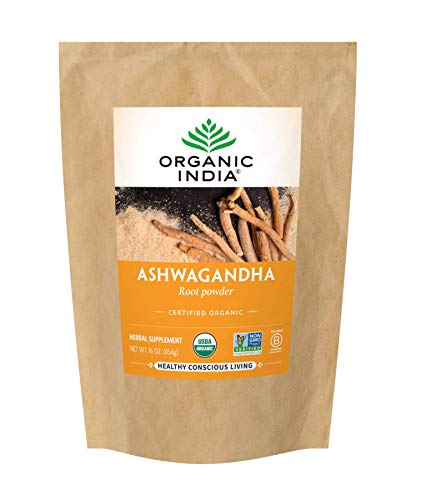
Organic India Ashwagandha Root Powder is a 1-pound loose powder of organic Withania somnifera root. The label specifies 1.7 g per half teaspoon and 267 servings, with no added ingredients listed. It is designed to be mixed into food or drinks as an herbal supplement for stress, energy, or sleep-related wellness use. The organic claim has independent support. The USDA Organic Integrity Database lists the producer's certified operation and specifically includes ashwagandha root powder. However, this is an unstandardized whole-root powder, not a named extract, and the label does not state a withanolide amount. No public finished-lot certificate of analysis, USP verification, or NSF dietary-supplement certification was located. The product label also carries a California warning that use can expose consumers to lead.
This product suits an adult who specifically wants plain, certified-organic ashwagandha root powder rather than capsules or a standardized extract. The 1-pound bag and 267 labeled servings are practical for someone already comfortable measuring a half teaspoon and mixing an earthy botanical powder into smoothies, warm drinks, or food. It is most relevant to short-term, cautious wellness use where the buyer values a root-only formula and understands that the stated gram amount does not establish a known withanolide dose or a clinically equivalent extract dose.
It is not suitable for pregnancy or breastfeeding without clinician direction, and NIH safety guidance advises avoiding ashwagandha in pregnancy and while breastfeeding. People with liver disease or prior supplement-related liver injury, thyroid or autoimmune disorders, hormone-sensitive prostate cancer, or planned surgery should use a different approach unless their clinician approves it. Extra caution is warranted for people taking sedatives, anticonvulsants, thyroid hormone, immunosuppressants, diabetes medicines, or blood-pressure medicines. Those avoiding lead exposure, especially during pregnancy or in households with children, should not overlook the product's California warning.
The product's organic status is the clearest independently substantiated quality attribute. USDA records list the producer's certified operation and include ashwagandha root powder among its certified products. The label identifies a single root ingredient and avoids a proprietary blend, which makes the contents easier to understand. Brand statements about regenerative farming and family-farmer partnerships are manufacturer claims, not product-specific chain-of-custody evidence reviewed here. A major health limitation is the California Proposition 65 lead warning on the label. That warning is not a measured result for a buyer's bag, but it means this product should not be represented as independently verified low in heavy metals. No public finished-lot testing was located. The flexible 1-pound bag holds many servings, but no package-material or recyclability specification was found. Organic certification supports the agricultural production standard, not a substitute for published contaminant testing.



