Best Overall
17% off

ECO-WORTHY 12V 5A Smart Battery Charger and Maintainer
Versatile for lead acid and LiFePO4 batteries.
LCD display provides clear charging status.
Automatic features enhance user convenience and safety.
 Daniel Kenitz
Versatile for lead acid and LiFePO4 batteries.
LCD display provides clear charging status.
Automatic features enhance user convenience and safety.

Supports multiple battery types and voltages.
Includes a 10-step smart charging process.
Features a built-in battery tester and repair mode.

Automatically prevents overcharging and protects batteries.
Suitable for both lead-acid and lithium batteries.
Adapts charging based on temperature conditions.

Smart charging adapts to battery needs.
Versatile for multiple vehicle types.
Compact design for easy storage.

Efficient maintenance with automatic float charge.
Suitable for both cars and motorcycles.
Prevents battery overcharging and extends battery life.
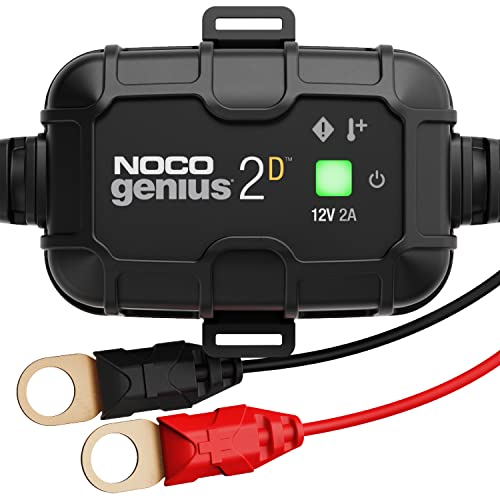
Compact design for easy direct mounting.
Smart technology prevents overcharging efficiently.
Temperature compensation ensures optimal battery care.

Charges multiple battery types efficiently.
Fully-automatic for hassle-free maintenance.
Compact design for easy storage.

Efficient automatic charging and maintenance system.
Compact design, easy to store and use.
Includes desulfation feature for battery longevity.
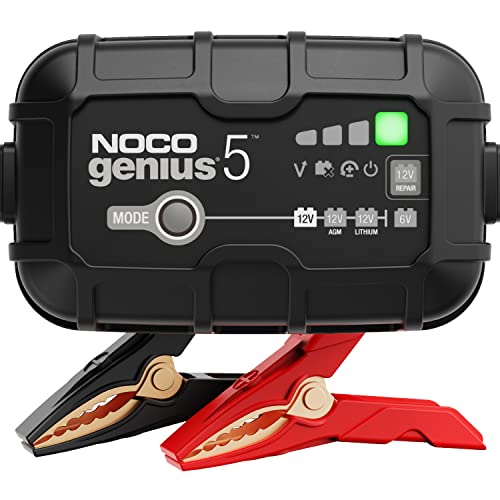
Versatile charging for multiple battery types.
Compact design with user-friendly interface.
Efficient maintenance and desulfation capabilities.

Efficiently maintains battery health over time.
Compact design for easy storage and use.
Automatic shut-off prevents overcharging damage.
The first requirement is a genuine battery match. Confirm the battery voltage, chemistry, capacity, and the charging program specified by its manufacturer. A product described as “universal” may still be unsuitable for lithium batteries, LiFePO4 batteries without a built-in battery-management system, 6V systems, gel batteries, or batteries outside its stated amp-hour range. A 750mA or 1A maintainer may be appropriate for a small powersports battery but is inherently slow for a large or deeply discharged automotive, marine, RV, or deep-cycle battery. Conversely, a 10A charger can be inappropriate if the battery maker limits charging current below that level.
Current ratings are not the same as independently verified charging performance. A headline figure such as 2A, 3A, or 10A should ideally be supported by a model-specific technical datasheet or an independent ISO/IEC 17025 laboratory report using the U.S. Department of Energy battery-charger test procedure in 10 CFR Part 430, Subpart B, Appendices Y and Y1. DOE’s Compliance Certification Database and California’s MAEDbS can help distinguish a documented efficiency or energy-use result from a number copied into a listing. Claims about charge time, float voltage, standby draw, or efficiency should be treated as manufacturer claims unless measured for the exact product.
Safety certification also needs exact-product verification. A UL, ETL, or CSA logo on a listing or label is not enough by itself: check the exact model and applicable scope in UL Product iQ, Intertek’s ETL Listed Product Directory, CSA Group’s listing database, or the OSHA Nationally Recognized Testing Laboratory list and scope information. CE, RoHS, FCC, or a generic test logo does not substitute for a registry-verifiable U.S. safety listing for an engine-starter-battery charger. Certification claims that cannot be matched remain unverified, even when the product otherwise describes reverse-polarity, short-circuit, overheating, overcharge, spark-reduction, or thermal protections.
A useful maintainer should explain its connection sequence, polarity behavior, fault indications, float or maintenance mode, ventilation requirements, wet-location limits, cable routing, and clamp or ring-terminal use. “Smart,” “desulfator,” “repair,” and “revive” are not proof that a failed, sulfated, swollen, leaking, frozen, or shorted battery can be restored. Some products include Force, Supply, or Repair modes that disable safety features or apply higher voltage; these require informed supervision and may endanger connected electronics.
Across the supplied reviews, the recurring caveats are clear: do not charge frozen, swollen, leaking, visibly damaged, or unknown-condition batteries; do not use a charger with the wrong chemistry or voltage; provide ventilation and keep flames, sparks, fuel vapors, and acid exposure away; and do not assume a product is weatherproof when its instructions prohibit rain or snow. Marine batteries generally need shore charging unless the equipment is specifically designed for onboard use. Several products also require occasional monitoring, so “leave connected” should not be read as permission to leave an active charging setup completely unattended.
These topics reflect the supplied reviews’ health, environmental, and evidence checks. Higher scores indicate stronger support in the reviewed material; they do not turn an unresolved certification or performance claim into a verified fact.
This measures protection against shock, overheating, short circuits, and electrical faults, especially whether the exact charger has a legitimate U.S. safety listing for the applicable battery-charger standard. Among the supplied products, the strongest result was 88 for the Schumacher SP1297, whose model family was located in UL Product iQ; lower-scoring products commonly had only unconfirmed UL, ETL, or CSA claims.
This measures whether the stated voltage, chemistry, capacity, and charge program actually match the battery. It matters because a wrong lithium mode, voltage, or capacity range can damage a battery or create a safety hazard. Scores reached 86 where the manual gave a narrow, model-specific scope, while lower results reflected broad claims, conflicting documentation, or missing lithium charge limits.
This measures float or maintenance behavior, reverse-polarity protection, spark reduction, thermal control, and fault indications during long connection. High-scoring products documented connection logic and maintenance stages, such as the 82 scored by the direct-mount NOCO GENIUS2D. Lower scores reflected missing independent support, conflicting instructions, or modes that disable safety features.
This measures controls for lead-acid hydrogen, acid exposure, wet conditions, cable strain, and safe clamp or ring-terminal use. High scores, including 83 for the Schumacher SP1297, were associated with detailed ventilation, acid, grounding, connection-order, and dry-use instructions. Lower scores reflected unclear wet-location limits or unsupported waterproof claims.
This measures whether the exact product and responsible company have a traceable safety record, no unresolved recall or serious incident pattern in the reviewed searches, and a reachable remedy channel. Scores were generally clustered around 70–76. A higher result reflects clearer manufacturer support and accountability, while an absent exact-product recall is not proof that every future defect risk is eliminated.
This measures whether terms such as smart, desulfator, repair, revive, universal, waterproof, lithium-compatible, and safe to leave connected are limited to what the manual and test evidence support. Higher scores reflected clearer chemistry and use limits. Lower scores commonly followed repair claims without restoration testing, broad lithium claims, conflicting wet-use instructions, or unattended-use language that was narrower than the listing.
This measures whether safety, performance, or environmental certifications come from an independent body and match the exact product. The strongest supplied result was 88 for the Schumacher SP1297, supported by a UL Product iQ model-family listing; the lowest was 50 for Unocho, whose claimed certification could not be matched. Generic CE, RoHS, FCC, or printed logos are not equivalent to registry verification.
This measures whether buyers can identify the exact product, manufacturer or importer, electrical ratings, battery limits, safety marks, manual, warranty, and support contact. Scores reached 88 for the NOCO GENIUS2D because its model-specific guide and mounting, wiring, and fault information were unusually complete. Lower scores reflected missing limits, inconsistent listings, or unclear U.S. service and recycling support.
This measures actual delivered current, voltage limits, maintenance consumption, charging time, and efficiency using independent testing or recognized energy records. The NOCO GENIUS10 scored 78 because an independent vehicle-charger test measured output consistent with its 10A claim. Most others scored near 68–72 because efficiency, standby draw, or output figures remained manufacturer-stated.
This measures warranty, durable cables, replaceable accessories, repair or service support, and clear electronics-recycling guidance. Higher scores, such as 77 for the Battery Tender Junior, reflected longer warranty coverage or replaceable connection parts. Across the set, product-specific take-back programs and detailed recycling instructions were usually absent, so a warranty alone does not establish responsible end of life.
This is a compact AC-powered charger and maintainer for one 12V battery at a time. The manufacturer documentation identifies separate charge selections for standard lead-acid batteries, AGM batteries, and LiFePO4 batteries. It includes clamp leads and a fused eyelet lead with an SAE connector for a more permanent vehicle-battery connection. The model manual states 14.5V for standard lead-acid, 14.9V for AGM, and 14.4V for LiFePO4 charging. It also states spark-free, reverse-polarity, short-circuit, and overcharge protections, plus a 72-hour safety timer before the charger stops or changes to storage charging. These are manufacturer-stated safeguards, not independently verified test results. The documentation is inconsistent on output, describing the 5A version as 6A for lead-acid and 4.5A for LiFePO4, while the product listing calls it a 5A charger.
This product suits an owner maintaining a known, healthy 12V lead-acid, AGM, or LiFePO4 battery indoors, especially in a car, lawn tractor, motorcycle, or seasonal equipment that sits unused. It is most appropriate when the battery maker permits the stated charge voltage and current, and the owner can deliberately select the correct chemistry mode. The fused eyelet lead is practical for a battery that needs occasional maintenance without repeatedly attaching clamps. It is a maintenance-oriented unit, not documented as a rapid charger.
It is not suited to outdoor, wet, marine, or exposed installation despite the stated IP64 rating, because the same manual says indoor use only and prohibits moisture, rain, and snow. It is also unsuitable for 24V or higher-voltage batteries, conventional lithium-ion battery packs, frozen batteries, and batteries below 2V without professional assessment. Do not use it where a registry-verifiable U.S. safety listing, independently measured output, or a well-supported battery-recovery function is required. Large deeply discharged banks will charge slowly.
Lead-acid charging can generate explosive hydrogen gas and expose users to acid. The model manual appropriately tells users to ventilate the area, avoid sparks and flames, wear eye protection, keep water and soap nearby, and place the charger away from the battery. It also says to disconnect AC power before connecting or removing the DC clips. Those instructions matter because clamp sparks and poor ventilation can create a serious ignition hazard. The manual documents a one-year warranty and replacement process, but no repair manual, replacement-parts catalog, take-back program, or product-specific electronics-recycling route was found. The charger should not enter household trash. Use local electronics recycling options at end of life. No exact-product CPSC recall or warning was located in the searches performed, but the absence of a recall is not independent proof of electrical safety. No verifiable U.S. NRTL certification for this exact charger was located.
This is a compact plug-in, 4A battery charger and maintainer for engine-starting batteries. The product listing states that it supports 6V and 12V lead-acid batteries, plus 12V LiFePO4 batteries, and offers battery testing, a 10-step charge program, pulse repair, and a supply mode. Its stated size is about 3.7 by 2.2 by 1.6 inches and its listed warranty is one year. The defining limitation is evidence depth. I did not locate a model-specific manual, technical datasheet, DOE efficiency record, or independently published output test for this product. I also could not independently match the exact product to a UL, ETL, or CSA certification record. The claimed compatibility and automatic maintenance functions are plausible for this class, but they remain manufacturer-stated rather than independently confirmed for this unit.
This product fits an owner who needs a small, low-current charger for occasional upkeep of a known-compatible 6V or 12V engine-starting battery, such as a motorcycle, lawn mower, seasonal car, or small boat. It is most appropriate for a buyer prepared to verify battery chemistry, manufacturer charging limits, polarity, and the charger label before use. The 4A stated output favors maintenance and gradual charging over fast recovery of a large, deeply discharged battery.
It is not suited to anyone who requires independently verified U.S. electrical certification, documented outdoor or wet-location suitability, or published charge-voltage limits for a particular lithium battery. Avoid using it as a substitute for diagnosis when a battery is swollen, leaking, hot, frozen, damaged, or unable to retain charge. It is also a poor fit for large batteries needing rapid recharge, unattended use in enclosed spaces, or applications where an exact-model technical manual is required.
Lead-acid batteries can emit flammable hydrogen during charging and contain corrosive sulfuric acid. Battery manufacturers advise charging in a well-ventilated area, avoiding sparks and flames, checking polarity, and stopping if a battery becomes hot. Those precautions remain important here because no independently located product manual established this unit's exact clamp procedure, thermal limits, fault indications, or enclosure rating. The product listing states lead-acid and 12V LiFePO4 compatibility, but lithium charging should follow the battery maker's required voltage profile and temperature limits. No independent efficiency, standby-power, or charge-output test was found for this model. WOLFBOX provides a U.S. support channel and the listing states a one-year warranty, but no exact-model take-back or recycling program was located. Dispose of the charger through an appropriate electronics recycler and return spent lead-acid batteries through a battery retailer or local hazardous-waste program.
The NOCO GENIUS2 is a compact corded 2A battery charger and maintainer for 6V and 12V starter and deep-cycle batteries. Manufacturer documentation limits active charging to batteries up to 40Ah, while describing maintenance use for larger batteries. It has separate 12V lead-acid, 12V AGM, 12V lithium, and 6V lead-acid modes, plus clamps with integrated eyelets and a mounting bracket. The manufacturer specifies 14.5V for ordinary 12V lead-acid, 14.8V for AGM, 14.6V for lithium, and 7.25V for 6V charging. Its lithium setting is expressly limited to 12V lithium batteries with a built-in battery management system. The manual documents polarity, battery-condition, overvoltage, and temperature indicators, but this review could not independently match the exact unit to a public U.S. NRTL safety listing or independent output test report.
This charger suits an owner of a motorcycle, lawn tractor, seasonal car, ATV, or other equipment with a known 6V or 12V battery that fits the documented chemistry and capacity limits. It is especially suited to routine storage maintenance, where the owner can confirm the battery type, choose the correct mode, make connections in a ventilated area, and periodically inspect the battery and leads. The supplied clamps and integrated eyelets also suit a fixed, accessible maintenance setup.
It is not for anyone needing fast recovery of a large, deeply discharged battery, because active charging is limited to 2A and the manufacturer rates normal charging only up to 40Ah. It is not appropriate for lithium batteries without a built-in battery management system, unknown battery chemistries, frozen or physically damaged batteries, or charging in an unventilated space. Users unwilling to follow polarity, chassis-grounding, and Force-mode instructions should avoid this format.
Lead-acid charging can release explosive hydrogen and exposes users to acid and lead-related contamination. The manual gives concrete precautions, including ventilation, eye protection, keeping sparks away, avoiding a closed-in area, and connecting the vehicle-side lead away from the battery. It also carries a California Proposition 65 warning concerning lead and exhaust fumes. The manufacturer states an IP65 enclosure rating, but the manual still says to store the charger dry and discontinue use if it contacts liquid. For energy and waste, NOCO states 30W maximum input power, 87% efficiency, low back-current drain, and an automatic maintenance mode, but independent laboratory or government database results were not located for this unit. The three-year limited warranty and replaceable inline fuse may reduce premature replacement. The documented repair and desulfation functions should not be treated as proof that a failing battery can be restored.
This is a mains-powered charger and maintainer for small vehicle batteries. The product record describes 6V and 12V operation, with 2A at 6V and 4A at 12V, for lead-acid variants and 12V lithium iron phosphate batteries. It is intended for clamp or ring-terminal connection during charging, storage maintenance, or low-current battery recovery. The accessible Amazon-hosted instruction document gives detailed connection, ventilation, acid, spark, and damaged-cord warnings, plus manufacturer-stated reverse-polarity and short-circuit shutdown. However, that document is labeled S10 and specifies a 10A charger, while the product record identifies this as S4 and 4A. It also shows CE, FCC, and RoHS marks, not a U.S. NRTL mark. No matching UL, ETL, or CSA listing, or independent output and standby-power test, was located for this exact product.
This product suits an owner maintaining a compatible 6V or 12V starter battery, such as a motorcycle, lawn equipment, seasonal vehicle, boat, or modest-capacity car battery, who is prepared to verify battery chemistry and voltage from the battery label and owner manual. It is most appropriate for dry, ventilated locations and for users who can follow the stated order of connection and disconnection. Its low claimed charge rate favors routine maintenance and gradual charging rather than rapid recovery of a large, depleted battery.
It is not appropriate for anyone who needs a clearly verified U.S. safety-listed charger for unattended indoor or garage use, because the product's claimed UL status was not independently matched and the accessible instructions do not consistently identify the same model and output rating. Do not use it for lithium-ion batteries other than 12V lithium iron phosphate, frozen, leaking, visibly damaged, or defective batteries, or batteries below the product's stated recovery limits. It is also unsuitable where rain exposure could wet connectors or cables.
The strongest health evidence is instructional rather than third-party certification. The available manual warns that charging lead-acid batteries can generate explosive gas, calls for ventilation and no sparks or flames, advises eye and skin protection around acid, and specifies a chassis connection away from the battery and fuel line where applicable. It also states that reverse-polarity and short-circuit connections shut output off. These are useful controls, but they remain manufacturer statements. The exact product was not found in U.S. recall results reviewed, although a separate GOOLOO wall charger received a United Kingdom high-risk fire alert in June 2024. That alert does not identify this automotive charger. Documentation shows CE, FCC, RoHS, and disposal symbols, but no matched U.S. NRTL listing. The manual advises using a collection point for disposal, yet no U.S. take-back program or repair-parts support was identified.
This product is a plug-in 120V charger and long-term maintainer for one 12V, six-cell lead-acid starter battery. It supplies a stated 1.25A output and includes a combined alligator-clip and fused ring-terminal lead. The manufacturer limits chemistry use to flooded, AGM, GEL, and sealed maintenance-free lead-acid batteries, with a stated 14Ah to 80Ah range. It is not designed for lithium batteries. Its defining function is a manufacturer-described four-stage program that moves from bulk and absorption charging to 13.2V float maintenance. The available technical sheet lists 1.25A bulk current, 14.4V absorption, temperature compensation, reverse-polarity protection, short-circuit protection, and spark-proof connection behavior. The manufacturer also says it is ETL and cETL certified, but this review could not match the exact product to a public Intertek directory record. Independent measurements of actual output, standby draw, or efficiency were not located.
It suits an owner storing one motorcycle, ATV, lawn tractor, personal watercraft, compact car, or similar vehicle with a 12V lead-acid battery in the stated 14Ah to 80Ah range. It is most appropriate where the vehicle sits for weeks or a season and the charger can remain in a dry, ventilated garage or workshop. The 1.25A rate favors steady maintenance and overnight or multi-day charging rather than rapid restoration. Buyers should be able to identify their battery chemistry and voltage, and follow the supplied connection and ventilation instructions.
It is not for lithium battery packs, 6V systems, dry-cell batteries, frozen batteries, or any battery above the stated 80Ah range. It is also unsuitable for outdoor exposure, rain, snow, enclosed charging spaces, or charging a marine battery aboard a boat, because the manual specifically limits those conditions. Households needing fast charging, frequent recovery of deeply discharged batteries, or a charger for a large truck, RV, or high-capacity battery should use a product with an appropriate higher-output, chemistry-specific program. Children should not operate it without responsible supervision.
Lead-acid charging can generate explosive hydrogen gas and expose users to corrosive acid. The manual addresses these risks directly, calling for ventilation, eye and clothing protection, no sparks or flames near the battery, correct grounding, and positioning the charger away from the battery. It also says not to use the product in rain or snow. These are important operating limits, not optional precautions. The manufacturer documents float maintenance, reverse-polarity and short-circuit protection, temperature compensation, and spark-reduction features. It also states ETL and cETL certification, although an exact public registry match was not found in this review. No exact-product CPSC recall or safety warning was located. Ecologically, the 10-year limited defect warranty may help avoid premature replacement, but no independent efficiency or standby-energy test was found, and no manufacturer take-back program for the charger was identified.
This is a compact direct-mount, 2-amp charger and maintainer with permanently attached eyelet terminals for a vehicle, mower, RV, or similar 12V starter battery. It connects to AC power and is intended to stay installed near, but never on, the battery. The manufacturer supplies a bracket, strap, and screws for mounting. NOCO's current manual limits it to 12V lead-acid batteries, including flooded, gel, maintenance-free, calcium, EFB, and AGM types. It specifies charging batteries up to 40Ah and maintaining larger lead-acid batteries, at 14.5V and 2A in normal mode. The manual documents reverse-polarity, over-temperature, high-voltage, shorted-battery, and failed-battery indications. Product documentation and an independent distributor record show an ETL mark for UL 1236, although a public Intertek record for this exact model was not located in this review.
This product suits an owner maintaining a correctly identified 12V lead-acid battery that sits for long periods, such as a seasonal lawn mower, ATV, classic vehicle, small RV system, or stored car. It is especially relevant where a fixed eyelet connection and compact chassis mounting are more useful than repeatedly attaching clamps. The battery should be serviceable, unfrozen, ventilated, and within the stated 40Ah charging range if it needs substantial recharging. It also suits users prepared to follow vehicle-specific mounting and polarity instructions.
It is not for lithium, 6V, 24V, damaged, frozen, or unknown-chemistry batteries. It is also not appropriate for someone expecting rapid recharge of a large, deeply discharged automotive battery, or revival of a battery that cannot hold charge. Do not use it where the charger can get wet, near fuel vapors or other explosive atmospheres, or in an unventilated enclosure. Boats require special caution because the manual says a marine battery should be removed and charged ashore unless onboard equipment is specifically designed for marine use.
The most meaningful safety evidence is the ETL marking documented for the product to UL 1236 and the detailed manufacturer instructions for polarity, heat, ventilation, acid, sparks, cable routing, and battery fault indications. Intertek is an OSHA-recognized Nationally Recognized Testing Laboratory, and UL 1236 is within OSHA's battery-charger standards. That supports electrical-safety confidence, but the exact product listing was not independently retrieved from Intertek's public directory. Lead-acid charging can generate explosive gas and brings acid and lead exposure concerns. The manual calls for ventilation, eye protection, hand washing after battery handling, and includes a California Proposition 65 warning for lead and exhaust fumes. The charger has a manufacturer-stated 87 percent efficiency, under-0.5mA back-current drain, and IP65 housing, but independent energy testing was not found. Its three-year warranty may reduce premature replacement, though NOCO does not describe user repair or a U.S. take-back program in the reviewed material.
This product is a four-bank plug-in battery charger and maintainer. The manufacturer specifies four 2A channels, 8A total, with programs for 6V and 12V lead-acid batteries and 12V LiFePO4 batteries. Its stated limit is charging batteries up to 40Ah, although it also claims maintenance use for larger batteries. It uses four pairs of alligator clamps, and the manufacturer lists a 4-foot power cord and 7.1 by 6.3 by 2.6 inch housing. The available manual gives chemistry-specific voltage programs, including 14.5V for standard 12V lead-acid, 14.8V for AGM, and 14.6V for 12V LiFePO4. It also provides detailed ventilation and clamp-connection instructions. An ETL mark and Intertek control number appear in retail imagery, but an exact model-specific listing could not be independently matched in Intertek's public results. No independent output, efficiency, or long-term maintenance test report was found.
This product fits someone maintaining several small, compatible batteries in a dry garage or workshop, such as 6V or 12V batteries for motorcycles, lawn equipment, ATVs, seasonal vehicles, or battery-powered yard equipment. It is most appropriate when each battery can use a 2A charge rate and is within the stated 40Ah charging range. The buyer should be willing to select the chemistry and voltage mode manually, follow the clamp order in the manual, and provide ventilation for flooded lead-acid batteries.
It is not suitable for charging a battery with unknown chemistry, damaged terminals, a swollen case, a frozen condition, or signs of leakage. It is also a poor fit for people needing a verified weatherproof charger for outdoor exposure, dockside use, or permanent onboard marine charging. Avoid relying on it to revive a failed or heavily sulfated battery, because restoration performance was not independently demonstrated. Users who require registry-verifiable certification and independently measured efficiency data should use a product with those records available.
The manual has useful lead-acid safety content. It directs users to ventilate the charging area, prevent sparks near batteries, wear eye protection, verify polarity, and avoid charging damaged or frozen batteries. These are manufacturer instructions, not independent testing of the protections. The manual also carries a California Proposition 65 warning that the product can expose users to chemicals including lead and exhaust fumes. That warning identifies a potential exposure concern, but it does not quantify exposure from ordinary use. The product itself has no found independent energy-use report under the U.S. battery-charger test procedure, so standby and maintenance consumption remain unverified. Its manual shows a separate-collection symbol intended for European electronic waste, but no U.S. take-back program or repair-parts catalog was found. At end of life, the charger should go to an electronics recycler rather than household trash. The responsible U.S. distributor has conducted CPSC recalls for other VEVOR product categories, but no recall for this charger was found.
This is a compact plug-in 12V lead-acid battery charger and maintainer with 0.8A output, alligator clips, and a ring-terminal lead. It is intended for storage maintenance and slow charging of wet, gel, maintenance-free, calcium, EFB, and AGM batteries. The manufacturer manual specifies a 2-30Ah charging range, while stating it can maintain larger batteries. The manufacturer documents a 14.2V plus or minus 0.2V charging voltage and 13.6V plus or minus 0.2V maintenance voltage. It also documents reverse-polarity, short-circuit, and overcharge protections, a 24-hour transition to maintenance, and no output until a correctly connected battery is detected. The manual and product page display ETL claims, but an exact product listing could not be independently matched in Intertek’s public directory. No independent laboratory measurement of actual output or maintenance energy use was located.
This product suits an owner maintaining a small 12V lead-acid battery during storage, such as a motorcycle, lawn equipment, ATV, or similar seasonal equipment, when the battery maker permits the stated 14.2V charging and 13.6V maintenance voltages. It is also relevant for a buyer who can connect clamps or the supplied ring lead correctly, keep the equipment in a dry and ventilated location, and wants a low-output maintainer rather than rapid charging. The 0.8A output makes it better aligned with maintenance and modest-capacity batteries than fast recovery work.
It is not appropriate for lithium batteries, 6V systems, damaged batteries, frozen batteries, or batteries below the product’s approximately 4V start threshold. Avoid it where the battery manufacturer requires temperature compensation, a chemistry-specific charge profile, or different absorption or float voltages. It is also unsuitable as an outdoor wet-location charger because no independently verified IP rating was found. Users needing fast charging of a large automotive, marine, or deep-cycle battery should not expect 0.8A to provide a quick recharge. Do not rely on desulfation claims to rehabilitate a defective battery.
The manual includes meaningful lead-acid safety directions. It calls for ventilation, keeping sparks and flames away, avoiding charging in enclosed or poorly ventilated areas, positioning the charger away from battery gases, and following correct connection order. These directions matter because lead-acid batteries can release flammable hydrogen and expose users to corrosive electrolyte. The manual also says not to use the charger unless battery voltage matches its rating. Manufacturer materials display an ETL mark and state ETL safety listing, but the exact product could not be verified in Intertek’s public directory. No product-specific independent data was found for output accuracy, maintenance electricity use, or pulse-desulfation effectiveness. No exact-product CPSC recall or warning was located in the public records searched as of August 16, 2026. The manufacturer states a two-year warranty, but no take-back program, repair parts catalog, or product-specific electronics recycling guidance was found. Use local electronics recycling options when the charger reaches end of life.
This is a compact, mains-powered 5A charger and maintainer for 6V and 12V engine-starting batteries. It connects with removable battery clamps that incorporate M6 eyelets, so the eyelets can remain installed for repeat charging. NOCO specifies a 120Ah maximum charging capacity, with maintenance use for all battery sizes, and modes for common 6V and 12V lead-acid types plus 12V lithium batteries with a battery-management system. The manufacturer documents a 5A bulk-charge rating, 75W maximum input, IP65 enclosure rating, 16 AWG output cable, 10A blade fuse, and a three-year limited warranty. The manual gives unusually specific limits for the advanced modes. Force Mode temporarily disables safety features, while Repair Mode can reach 16.5V and is for disconnected 12V lead-acid batteries only. The product documentation displays an ETL and cETL mark, but this review could not independently match the exact product in Intertek’s public directory.
This product suits an owner maintaining a stored motorcycle, lawn tractor, boat, classic vehicle, RV auxiliary battery, or ordinary car battery who can confirm the battery chemistry and voltage first. Its 5A capacity is appropriate for routine charging of lead-acid batteries up to 120Ah and for ongoing maintenance after charging. It also fits users who value a fixed ring-terminal lead for repeated access. Lithium use is limited to 12V batteries with a built-in battery-management system and should follow the battery maker’s specified charge limits.
It is not for a person who needs rapid recovery charging for a large depleted battery, because 5A is a modest bulk-charge rate and NOCO’s listed charge times increase substantially with battery capacity. It is not for 24V systems, non-automotive battery chemistries, lithium batteries without a BMS, frozen or damaged batteries, or any battery whose manufacturer prohibits the listed voltage profile. Avoid Repair Mode on a battery connected to sensitive vehicle electronics. Force Mode is unsuitable for anyone unable to supervise connections closely.
The safety documentation is stronger than the generic product-page claims. It warns against charging in restricted ventilation, charging frozen batteries, exposure to battery acid, explosive atmospheres, and wet handling. It also states that Force Mode puts live power at the connectors and disables safety features, which is important because lead-acid batteries can produce ignitable gas. The manufacturer documents IP65 housing protection, but that rating was not independently verified here. The product literature displays ETL and cETL marks from Intertek, an OSHA-recognized Nationally Recognized Testing Laboratory. However, an exact public registry match was not retrieved, so the mark should be checked on the purchased unit. A California Proposition 65 warning states that the product contains lead, with handwashing advised after handling. NOCO provides a three-year limited warranty and removable connection accessories, which may reduce replacement of the complete charger. No product-specific take-back or recycling program was identified, so disposal should use local electronics-recycling channels.
This three-unit bundle is a low-current 12V battery charger and storage maintainer for lead-acid batteries. Each compact unit is intended to connect by clamps or ring terminals, then charge and monitor a parked vehicle, motorcycle, lawn equipment, or similar battery. The manufacturer manual specifies 800mA output, a 14.2V charging voltage, a 13.6V maintenance voltage, and a 2-30Ah charging range for wet, gel, maintenance-free, calcium, EFB, and AGM batteries. The manufacturer states that the units can remain connected for long periods and have spark-free, reverse-polarity, short-circuit, and overcharge protections. It also claims an ETL safety listing. Intertek is an OSHA-recognized testing laboratory, but an exact-product certification record was not publicly matched in Intertek's searchable directory. No independent bench test of output, standby use, or charging efficiency was located.
This product fits a household managing several stored 12V lead-acid batteries that are within the stated 2-30Ah charging range, such as motorcycles, scooters, ATVs, lawn equipment, compact generator batteries, or small seasonal equipment. It is most suitable when the owner can install one unit per battery in a dry, ventilated location and wants low-current maintenance rather than rapid charging. The three-unit format is practical when multiple compatible batteries need seasonal storage care at the same time.
It is not suited to lithium batteries, 6V systems, or any battery chemistry outside the stated lead-acid types. It is also a poor fit for someone needing to rapidly recharge a severely depleted automotive starter battery, since 800mA is a low charge rate and the stated charging range ends at 30Ah. Do not treat unverified all-weather wording as permission for wet or exposed installation. Anyone unable to provide ventilation, inspect connections, or follow lead-acid safety precautions should avoid unattended use.
Lead-acid charging can create hydrogen gas and involves corrosive electrolyte. The official manual instructs users to ventilate the charging area, prevent arcing, keep children away, and follow battery connection precautions. Those are meaningful safety instructions, but they do not replace a dry location, sound battery case, clean terminals, and inspection of cables before long-term connection. The manufacturer claims ETL safety listing, automatic float maintenance, standby energy saving, and protection against reverse polarity, short circuit, and overcharge. Intertek is a recognized U.S. testing laboratory, but this check did not find a public directory entry that confirms the exact product. No independent energy-use test or verified enclosure rating was found. The two-year warranty may reduce premature replacement, although no manufacturer take-back or electronics recycling program was located. Dispose of failed electronics through an appropriate local electronics-recycling route.


