Best Overall
27% off
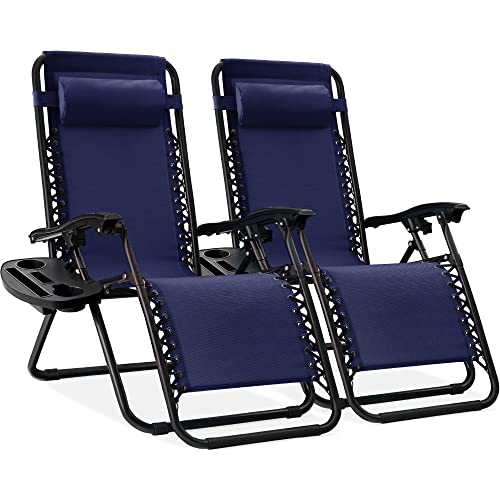
Best Choice Adjustable Zero Gravity Lounge Chairs
Durable steel mesh for long-lasting use.
Adjustable recline offers personalized comfort.
Convenient cup holder trays included.
 Brianna York
Durable steel mesh for long-lasting use.
Adjustable recline offers personalized comfort.
Convenient cup holder trays included.

Smooth rocking motion enhances outdoor relaxation.
Sturdy build ensures long-lasting comfort.
Convenient drink holder for easy access.

Supports lumbar with padded backrest.
Comes with side pockets, cooler bag.
Durable, portable, and easy to fold.

Extra wide seats for added comfort.
Lightweight and easy to carry.
High back design supports posture.

Lightweight and easy to transport.
Convenient cup holder included.
Durable design for various outdoor settings.

Durable construction supports up to 331 lbs.
Adjustable backrest offers four comfortable angles.
Convenient side pockets for easy storage.

Adjustable canopy offers excellent sun protection.
Convenient backpack straps for easy carrying.
Durable and comfortable seating design.

Adjustable to five comfortable reclining positions.
Includes backpack straps for easy carrying.
Comes with a cooler bag and cup holder.

Lightweight design with convenient backpack straps.
Supports up to 400 lbs, ensuring durability.
Reclines fully for maximum comfort and relaxation.

Easy to transport with convenient carrying bag.
Durable materials ensure long-lasting use.
Comfortable seating with supportive backrest.
Start with fit and use. Check the seat height against your ability to lower yourself and stand up, especially with low chairs around 7–12 inches high. Confirm the open and folded dimensions, ground-surface guidance, chair weight, carrying method, and whether the product is intended for firm level ground, sand, or only residential use. A reclining chair should clearly identify how its stops or locks work, and a folding chair should be fully opened before use. Headline capacities such as 250, 300, 330, 350, 400, or 450 pounds are not equivalent to independently demonstrated performance; in the supplied products, some capacities conflicted across listings, including 225 versus 300 pounds, 300 versus 400 pounds, 300 versus 500 pounds, and 350 versus 450 pounds.
The strongest structural evidence is a current pass/fail report for the exact model from an ISO/IEC 17025-accredited laboratory. For outdoor seating, relevant methods can include ANSI/BIFMA X5.4-2020(R2025), EN 581-2, and, where applicable, ASTM F1858 for plastic multipositional chairs or ASTM F1988 for plastic adjustable chaise lounges. A credible report should identify the model and revision, laboratory, test method, date, samples, stated limits, and result. A general factory statement, a retailer description, a manual, or a brand’s claim that testing exists does not provide the same traceable proof. Buyers can check claimed laboratory accreditation through directories such as ANAB, A2LA, or IAS; claimed UL or Intertek marks should also be traceable in the relevant certification directory.
Look separately at realistic-use safety. A chair should resist collapse and forward, rearward, and sideways tip-over in every advertised position. Recline stops, knobs, hinges, elastic cords, support bars, and folding joints should hold securely and limit finger, skin, hair, and clothing pinch or entrapment hazards. A clear instruction manual helps, but it is not a substitute for model-specific mechanical testing. Also distinguish physical shade from tested sun protection: a canopy or a UPF claim needs testing of the actual fabric, color, and relevant condition under methods such as AATCC TM183, with labeling consistent with ASTM D6603.
Outdoor durability is another frequent source of overstatement. “Rust-resistant,” “weatherproof,” or “UV-resistant” wording does not establish performance after sun, wet conditions, salt air, or corrosion exposure. Look for exact-product evidence using relevant UV and salt-spray methods, such as ASTM G154 and ASTM B117. Follow storage instructions carefully; several supplied reviews warn against leaving chairs outdoors, in rain, or exposed to salt and prolonged sun.
Finally, consider materials, chemicals, and what happens when the chair wears out. Named materials are more useful than generic descriptions, but only an exact finished-product chemical report establishes much about coatings, dyes, foam, plasticizers, or metal finishes. A California Proposition 65 warning should identify the chemical and exposure context where possible. Replacement hinges, joints, fabric, or other parts can extend service life; recycled-content and recyclability claims should be specific and substantiated rather than broad environmental language.
Recurring safety caveats in the supplied reviews are significant: no product had publicly located, model-specific accredited structural testing; low seats can make standing difficult; moving folding and recline mechanisms require care and supervision around children; and several products carry capacity or specification conflicts. Salt, rain, prolonged sun, and permanent outdoor storage are poor assumptions unless supported by evidence. One product also had retailer reports of early rust, and another carried a lead-related California warning. These chairs should not be treated as medical support devices, child seats, climbing equipment, or safety-critical seating without stronger documentation.
The supplied assessments show a category where practical features are often documented more clearly than long-term safety, chemical, or environmental performance. Scores below are relative signals from the reviewed products, not certifications: higher scores indicate stronger evidence or disclosure within this set, while lower scores identify larger information gaps.
This measures resistance to frame, joint, fabric, lock, and leg failure, plus forward, rearward, and sideways tip-over in every advertised position. It matters because low beach chairs and recliners can shift as users sit, recline, or stand. Supplied scores ranged from 62 to 74; higher-scoring chairs had clearer operating guidance or sturdier documented formats, but none had a public model-specific accredited safety report.
This measures whether recline stops, locks, hinges, and folding joints hold securely and reduce pinch, shear, laceration, or entrapment hazards. It is especially relevant to multi-position loungers, zero-gravity chairs, and folding beach seats. Scores ranged from 68 to 77. A higher score reflected more concrete adjustment instructions or warnings; a lower score reflected exposed moving parts without independent evidence of lock retention or pinch protection.
This measures whether frames, fasteners, fabrics, coatings, and locks remain safe after outdoor exposure. Beach use adds salt, sand, moisture, and strong sun, while several reviews warned against leaving chairs outdoors. Scores ranged from 52 to 72. Higher-scoring products had more useful maintenance or material information, but no supplied product had public exact-model UV-aging, salt-spray, or corrosion results.
This measures whether a canopy or UPF claim was independently measured on the actual fabric in relevant condition. A canopy can provide physical shade, but it is not automatically tested UV protection. Scores ranged from 70 to 80, with higher scores generally reflecting a specific canopy or a restrained absence of UV promises. The supplied reviews did not locate an exact-product accredited fabric report for any claimed UPF feature.
This measures disclosure and credible testing for textiles, foam, plastics, coatings, finishes, and other skin-contact materials, including specific California warnings. It matters because beach chairs combine synthetic fabric, metal finishes, padding, plastic fittings, and sometimes elastic components. Scores ranged from 48 to 76. Higher scores came from clearer material or warning information; no supplied product had a finished-product chemical report.
This measures whether the exact chair has a current pass/fail report from an ISO/IEC 17025-accredited laboratory covering its stated load, structural strength, durability, and stability. It is the key distinction between an advertised capacity and demonstrated performance. Scores clustered from 68 to 72, but the reviews consistently said no public exact-model accredited report was located, so even the higher relative scores are not certifications.
This measures whether a report or certificate identifies the exact model, revision, laboratory, method, date, samples, limits, and result so a buyer can authenticate it. A broad claim that a brand tests its products is not enough. Supplied scores ranged from 68 to 70, reflecting small differences in documentation quality, but no product had a publicly located, fully traceable certificate covering the chair actually sold.
This measures whether capacity, dimensions, positions, materials, weather resistance, ergonomic language, and origin claims are specific and supported by suitable documentation. It matters because several supplied products had conflicting capacities or dimensions across listings. Scores ranged from 50 to 76. Higher scores reflected clearer specifications and restrained wording; lower scores reflected contradictions or broad performance claims that were not independently demonstrated.
This measures unresolved recalls or credible injury reports, plus identifiable importer information, safety contacts, instructions, and a remedy process. Scores ranged from 70 to 78. Several products had reachable support, warranties, manuals, or importer details, while others offered less accountability. Searches did not identify exact-product recalls for the reviewed items, but no recall record should be mistaken for proof of structural safety.
This measures expected service life, replacement parts, repair guidance, separability of metal, textile, and plastic parts, recycled-content proof, and realistic end-of-life claims. Repair support was a meaningful difference: some chairs offered replacement hinges, joints, rails, fabric, or spare parts, while others had no parts pathway. Scores ranged from 62 to 79. No supplied product had substantiated recycled-content or a complete recovery program.
This product is a pair of folding outdoor zero-gravity lounge chairs with steel frames, Textilene sling fabric, removable padded headrests, and detachable trays with cup and device holders. Each chair is intended for one adult and carries a manufacturer-stated 250-pound capacity. Independent retail listings consistently identify the set, steel frame, Textilene fabric, and no-assembly folding format. The supplied instruction manual specifically covers this chair model. It instructs users to loosen both side knobs to recline, then lock both knobs at the chosen position. The manufacturer describes recline up to 160 degrees. However, no current pass-fail structural, stability, corrosion, UV, or lock-cycle report from an accredited independent laboratory was located. The manual also carries a California Proposition 65 warning for lead and lead compounds.
This set suits adults seeking two portable reclining seats for occasional fair-weather patio, campsite, beach, park, or sports-event use. It is most appropriate for users at or below the manufacturer-stated 250-pound limit who can operate side locking knobs, inspect the frame and elastic supports before use, and place the chairs on firm, level ground. The two-chair format, folding design, headrests, and removable drink and device trays are practical for a household that wants simple outdoor seating without assembly.
It is not a strong fit for anyone needing independently documented load, tip-over, corrosion, or recline-lock performance, including higher-risk users with limited balance, mobility, or ability to get up from a low reclined position. Avoid using it as a step, on uneven or slippery ground, near flames, or after any fabric, cord, frame, hinge, or lock damage. Households seeking a lead-free material declaration, documented low-emission testing, or readily confirmed long-term replacement parts should choose a product with that evidence.
The main health disclosure is significant. The model-specific manual gives a California Proposition 65 warning for lead and lead compounds, stating potential cancer and reproductive-harm concerns. The warning identifies the chemicals but not the relevant component, exposure route, concentration, or testing method. No third-party chemical report, low-emission certification, or independent material-safety certification for the finished chair was located. The chair uses a steel frame and synthetic Textilene sling fabric. Steel may be recoverable where local metal recycling accepts it, but no recycled-content, recyclability, or take-back claim was substantiated for this product. The manual advises discontinuing use of damaged or worn chairs and refers to factory replacement parts, which could extend service life. It does not establish which parts are available or how long support continues. A search of CPSC recall resources and the public unsafe-product reporting portal did not identify a recall specific to this model.
This is a single-seat, folding outdoor rocker with a steel frame, polyester textile, mesh back panel, armrests, a cup holder, phone pocket, and carry strap. It is intended for stationary use at campsites, sporting events, patios, and similar outdoor settings. The manufacturer states that its spring-action mechanism rocks on grass, dirt, or pavement, and rates the chair for users up to 250 pounds. The manufacturer lists open dimensions of 35.6 by 25.2 by 38.8 inches, folded dimensions of 6.3 by 7.3 by 44.1 inches, and a chair weight of 11 pounds. An independent retailer also identifies a steel frame, polyester textile, and powder-coated finish. No current, model-specific public report from an accredited laboratory was found for load capacity, stability, fatigue, corrosion, or folding-mechanism safety. The catalog entry's 7.7-pound weight conflicts with the manufacturer's 11-pound specification.
This chair suits one adult who wants a relatively compact folding rocker for car camping, tailgates, sideline use, patios, or level ground at the beach. It is most appropriate for users at or below the manufacturer-stated 250-pound limit who can carry an 11-pound chair and who value a raised 17.5-inch seat, armrests, beverage holder, and a back panel intended to improve airflow. It also fits buyers willing to store the chair indoors between outings and follow the three-year warranty process if a manufacturing defect appears.
It is not suitable for users above the stated 250-pound capacity, households that need independently documented structural testing, or anyone who needs confidence in performance on unstable slopes, loose sand, wet ground, or uneven terrain. It is also a poor fit for buyers expecting all-season outdoor storage, salt-air resistance, or a weatherproof warranty, because GCI specifically warns that extended sun and outdoor exposure contribute to material breakdown. People needing readily available replacement fabric, frame, or mechanical parts should also look for a product with a more comprehensive parts program.
The product has no canopy or stated UPF claim, so there is no sun-protection performance claim to verify. The available independent retail specification identifies a steel frame, polyester textile, and powder-coated finish, but public material disclosure remains limited. No current, product-specific accredited chemical test report was found for the finished textile, foam, coating, or metal finish, and no product-specific California exposure warning was located in this review. GCI offers a three-year limited warranty for manufacturing and material defects, which can extend service life. However, the warranty excludes fading, rust, moisture damage, and ordinary wear, and instructs owners to store products indoors when not in use. The brand offers only limited replacement parts, so repairability is constrained. A 2014 CPSC recall involved a different GCI stadium-seat product, not this rocker, after a backrest failure. No recall for this product was found.
This product is a two-chair set of oversized, folding quad-style camp chairs for stationary outdoor use such as beach days, fishing, picnics, and lawn seating. Each chair is listed by VEVOR as 38.6 by 24.8 by 39 inches when open, with a 24.4-inch-wide seat, 19.5-inch seat height, padded back and armrests, a cup holder, storage pockets, and an armrest cooler compartment. The packed set is manufacturer-stated to weigh 21 pounds and include two carry bags. VEVOR states that each chair uses 600D ripstop Oxford fabric, cotton padding, a reinforced steel X-frame, and has a 450-pound capacity. Those are manufacturer claims, not independently authenticated load, stability, corrosion, or material-safety results. No public pass-fail report from an accredited laboratory was located for this exact product, and the public product information includes a measurement error, describing 15 mm padding as 0.05 inch.
This product suits adults seeking a roomy pair of folding chairs for car-based outings, backyard gatherings, fishing spots, campsites, or spectator events. The 24.4-inch manufacturer-stated seat width, high back, padded contact areas, carry bags, drink storage, and pockets fit users who prioritize a broad seated footprint and keeping small items nearby. It is most appropriate for people who can inspect the frame and fabric before each use, set it on level, firm ground, and accept that the stated load rating is not independently documented.
It is not suited to buyers who need independently proven seating safety for a higher-body-weight user, a mobility-limited household member, or any setting where a collapse could cause serious injury. Choose a chair with publicly traceable strength, stability, and durability testing if capacity assurance is essential. It is also a poor fit for backpacking or frequent long carries, since the two-chair package is manufacturer-stated to weigh 21 pounds. Users needing beach corrosion protection, all-season outdoor storage, or repairable equipment should seek documented salt, UV, and replacement-part support.
The main material disclosure is 600D Oxford fabric with cotton padding, plus a manufacturer-described reinforced steel frame. VEVOR does not publish product-specific chemical test results for the finished chair, its coatings, dyes, padding, or any plastic components. No California Proposition 65 warning was identified in the reviewed product information, but absence of a displayed warning does not establish chemical testing or low exposure. This chair makes no canopy, UPF, or UV-blocking claim, so there is no unsupported sun-protection promise to assess. No recall or public safety warning was located for this exact chair model in the reviewed CPSC sources. VEVOR has, however, had recalls for unrelated products, including baby loungers, retractable baby gates, and handrails. The company publishes a recall channel and lists customer-service, return, and one-year warranty information. The product has no identified replacement-parts program, recycled-content certification, material-recovery guidance, or separable-component design documentation, which limits repair and end-of-life transparency.
This product is a two-chair set of low, folding beach chairs with high mesh backs, padded arm areas, a cup holder, storage pockets, and carry bags. It is intended for beach, camping, lawn, and picnic use. The catalog lists a 300-pound capacity per chair, a 9.4-inch seat height, and a roughly 23-inch-wide seat area. KingCamp's own closely matching high-back chair page states 600D polyester Oxford seat fabric, a spray-coated steel-tube frame, a 300-pound capacity, and a 7-pound single-chair weight. That page uses a different product designation from the catalog record, so it supports the construction details but does not independently authenticate this exact two-chair configuration. No pass-fail structural, stability, corrosion, or chemical test report for the exact product was located.
This product suits adults seeking low, portable seating for a beach, picnic, campsite, lawn concert, or backyard. It is most practical for people comfortable lowering themselves into a 9.4-inch seat and carrying a folded chair in its bag. The high back, wide stated seat dimensions, mesh sections, cup holder, and small-item storage are useful for relaxed daytime outings. Buyers should treat the 300-pound limit as a manufacturer-stated capacity, not independently verified performance evidence.
It is not well suited to people with knee, hip, balance, or mobility limitations who may find a low seat difficult to enter or exit. It is also unsuitable for anyone who needs independently tested load, tip-over, folding-joint, or pinch-safety evidence, including organizations purchasing for public or supervised settings. Avoid relying on it for permanent outdoor storage, frequent salt-air exposure, or demanding wet-weather use because no product-specific weathering or corrosion test results were located. It has no shade canopy or verified UV-protection claim.
No product-specific recall or safety warning was located in the CPSC recall resources searched for KingCamp chairs, and KingCamp provides a reachable warranty contact and a stated remedy process. That is useful accountability information, but it does not replace independent safety testing. The product is a folding chair with moving frame joints, so users should unfold it fully, keep fingers clear while folding, and inspect fabric, tubes, fasteners, and feet before use. The disclosed construction is polyester Oxford fabric, mesh, steel tubing, and a coated carry bag. No exact-product chemical test report, recycled-content certification, or end-of-life claim was located. Polyester and coated textiles are not readily recoverable through typical household recycling. KingCamp's published warranty says outdoor armchairs have 12 months of coverage and that spare parts may be provided for product-related issues, which can support repair rather than disposal.
This is a two-chair, low-profile folding beach and camping set with a fabric sling seat, armrests, cup holder, and individual carrying bags. It is intended for ground-level outdoor seating at beaches, concerts, campsites, rivers, and picnics. The manufacturer states a 7-inch seat height, 23 by 23 by 23 inch chair size, steel frame, ripstop anti-slip nylon fabric, and 300-pound maximum load per chair. These figures were repeated by an independent retailer, but were not supported by a published laboratory report. The chair does not advertise reclining positions or a shade canopy. Its low center of gravity and broad feet are manufacturer-described design features intended for sand, rather than independently demonstrated stability or anti-sink performance. No model-specific strength, stability, corrosion, UV-weathering, or chemical test report was located.
This product suits adults seeking very low, portable seating for sand, lawns, festival seating areas, or short campsite breaks, especially where a conventional high camp chair would block another person's view. The two-chair format is practical for paired use, and the manufacturer-stated carry bags support car-based trips and short walks from parking. It is most appropriate for users who can comfortably lower themselves to, and rise from, a 7-inch seat and who treat the 300-pound limit as an unverified stated capacity.
It is not a strong fit for anyone with limited knee, hip, balance, or mobility function, because the seat is only 7 inches from the ground and getting up can be demanding. It is also unsuitable for buyers needing documented structural testing, verified corrosion resistance for frequent saltwater use, or a canopy with measured sun protection. Avoid treating it as a recliner, a long-duration support chair, or a chair for users above the stated 300-pound capacity, because public test evidence for those safety margins was not found.
The available product information identifies a steel frame and ripstop anti-slip nylon fabric, but it does not provide a finished-product chemical test report, named coating chemistry, or a product-specific California exposure warning. The catalog record also describes mesh and foam, while the independent retailer does not clearly explain where foam is used. That ambiguity limits meaningful assessment of skin-contact materials and chemical exposure. No model-specific recall was found in the CPSC recall material searched. That is not proof of tested safety, and no public structural, pinch-point, UV, salt-spray, or corrosion report was located. No replacement parts, repair instructions, recycled-content certification, or credible recyclability claim was found. The likely steel-and-synthetic-textile construction may be difficult to recover cleanly if the fabric is permanently attached to the frame.
This product is a low-profile, folding beach chair intended for sand, campsites, parks, and similar outdoor use. It has a stated aluminum frame, 600D Oxford fabric with a water-repellent coating, padded backpack-style carry straps, side storage pockets, headrest, and four reclining positions. The stated unfolded size is 26.8 by 24.8 by 29.5 inches, and the stated product weight is 6.8 pounds. A separate retailer listing matches the core material, size, weight, folding, recline, and 331-pound capacity claims. That listing also describes a 0.9 mm aluminum frame wall thickness. These are seller or manufacturer specifications, not independent proof of load, stability, or durability. No current, model-specific ISO/IEC 17025 laboratory report, named test method, sample details, or pass-fail certificate was located for this product.
This product suits an adult who wants a lightweight, low beach chair for occasional dry-weather outings and values a backpack-style carry option more than a tall seat. It is most appropriate for users within the stated 331-pound maximum who can comfortably sit close to the ground and stand up from an 8.3-inch stated seat height. It also fits people who want simple, no-assembly setup, a reclining backrest, and pockets for small essentials, while accepting that the capacity and durability claims are manufacturer-stated.
It is not well suited to anyone who needs independently verified high-load performance, documented stability testing, or formal evidence that the recline mechanism resists collapse and pinch hazards. People with limited knee, hip, balance, or mobility capacity may find the low stated seat height difficult when standing. Avoid relying on it as a permanently deployed patio chair, a salt-air storage chair, or a rain-exposed chair, because the available product guidance advises against prolonged rain and strong sun exposure. Households needing repairable gear should also look for documented replacement parts.
The available product information identifies an aluminum frame and Oxford fabric, with one retailer specifying 600D fabric and a water-repellent coating. This gives buyers a basic materials description, but it does not identify coating chemistry, foam composition, dyes, restricted substances, or finished-product chemical test results. No model-specific Proposition 65 warning, accredited chemical report, or third-party textile safety certification was located in the sources reviewed. No current CPSC recall or product safety warning for this specific product was located in the CPSC records searched. The brand's US site provides a physical contact address, phone number, customer-service email, and a 30-day return policy. Environmental evidence remains limited. No recycled-content certification, separable-material design guidance, replacement-parts listing, or repair manual was found. The synthetic fabric should be kept in service as long as safely possible and disposed of through locally appropriate textile and metal recovery channels where available.
This is a low-profile, folding beach chair with backpack straps, a rear storage pocket, drink holder, hard armrests, and a canopy that can rotate front to back or fold flat. The catalog lists a 250-pound capacity, steel and aluminum frame materials, polyester seating, four recline positions, and an approximately 11-inch seat height. Independent retailer and older GCI catalog material broadly match the chair format, recline count, hybrid metal frame, and 250-pound stated capacity. The defining feature is its adjustable UPF 50 shade canopy, a manufacturer-stated specification repeated by retailers, not a published test report for this exact chair and canopy fabric. No publicly located ISO/IEC 17025 laboratory report, ANSI/BIFMA or EN 581 report, or traceable certificate demonstrated the stated load, stability, recline mechanism, canopy UV performance, or corrosion resistance for this product.
This chair suits an adult beach, picnic, sideline, or outdoor-event user who wants a low seat, a carry-on-your-back format, and adjustable personal shade. It is most appropriate for fair-weather day use, followed by drying and indoor storage. The stated 250-pound capacity makes it relevant only for users within that posted limit. It also fits someone who values a four-position backrest and storage pocket more than a highly compact or ultralight chair.
It is not suited to anyone above the stated 250-pound limit, anyone who needs independently documented structural or tip-over testing, or households seeking a chair with clearly published pinch-point evaluation. It is also a poor fit for long-term patio storage, salt-air exposure without careful rinsing and drying, heavy rain, or frequent wet use. Buyers who expect easy replacement of worn straps, fabric, cupholders, or corrosion-prone parts should look for a product with a broader parts program.
The chair uses a steel and aluminum frame with polyester textile components. GCI says its products are labeled as required under California Proposition 65, but no product-specific chemical disclosure or public finished-product chemical test report was located for this chair. The canopy's UPF 50 claim appears in GCI catalog material and retailer listings, yet no public independent test documentation was found for the exact canopy fabric. GCI advises indoor storage because prolonged sun, rain, and moisture can degrade fabric and rust steel-containing components. That is especially relevant after beach use, where the company recommends rinsing with fresh water and drying before storage. The brand offers a three-year limited warranty and a claims process, but states that replacement parts are limited and excludes fading, rust, moisture damage, and several wearable accessories. A 2014 CPSC recall involved a different GCI stadium-seat product, not this beach chair.
This product is a two-chair set of low outdoor recliners for beach, lawn, camping, and casual lounging. Each chair is sold as a folding, backpack-carry design with a five-position backrest, padded neck pillow, rear cooler pouch, cup holder, storage pocket, and towel bar. Retail listings outside the catalog also identify a steel or alloy-steel frame and Textilene mesh seating, but they do not provide a full material breakdown. The listed 350-pound capacity is manufacturer-stated, not backed by a publicly available accredited structural report found in this review. Capacity information is also inconsistent across retail copies of this design, which variously state 300, 330, or 350 pounds. No public report was located showing this product passed ANSI/BIFMA or EN outdoor seating strength, stability, recline-lock, pinch-point, UV, or corrosion testing.
This set suits two adults seeking low-profile, portable seating for occasional beach, campground, lawn, or outdoor-event use. It is most relevant where reclining flexibility, a carry-on-back format, and onboard storage matter more than documented commercial-grade durability. The named Textilene mesh and folding design are practical for users who expect damp or sandy conditions and want chairs that can be carried from a car to a site. Buyers should use the stated capacity conservatively because it is not independently substantiated.
It is not suited to buyers who need documented support for a high body weight, frequent heavy use, or use in settings where a collapse could have serious consequences. People with limited balance, mobility limitations, or difficulty rising from a low chair may need a higher seat and independently documented stability. Households with children should supervise folding and recline adjustment because no public evidence was found for guarded pinch points or tested adjustment safety. It is also a weak fit for regular salt-air use without corrosion-test evidence.
The product is described as using a metal frame, foam padding, and Textilene mesh. Textilene is named in retailer listings, but a finished-product chemical disclosure, a specific fabric composition, and an accredited chemical test report were not located. No California Proposition 65 warning specific to this product was identified in the checked sources. The product makes no canopy or UPF claim, so it should not be treated as a source of measured sun protection. Public searches did not identify a CPSC recall or public CPSC incident report specifically naming this product or brand. That is not proof of risk-free performance. No public repair guide, replacement fabric, hardware availability, recycled-content certification, or material-recovery guidance was found. The folding metal frame may be more recoverable than an all-composite chair, but the mixed frame, mesh, foam, and accessory construction is not documented as readily separable.
This is a two-chair set of low-profile, folding outdoor recliners intended for beach, lawn, camping, and concert use. Each chair is listed with an aluminum frame, 600D Oxford fabric, a padded headrest, shoulder carrying strap, cup holder, side pocket, rear storage pocket, and four reclining positions. Those materials and features are manufacturer-stated on the Amazon product page, not independently certified specifications. The most important finding is a safety-specification conflict. The title and headline material advertise support for 400 pounds, while the same product page's safety information gives a maximum weight limit of 265 pounds. Treat 265 pounds as the more conservative stated limit. No current, traceable third-party test report was located for this exact chair covering load capacity, stability, recline durability, or folding-joint safety.
This product suits adults looking for a compact, low-sitting pair of chairs for occasional beach days, lawns, outdoor concerts, or campsites, where carrying two matching chairs and keeping small items nearby matters. It is most suitable for people comfortably below the 265-pound maximum shown in the product safety information, who can sit down into and rise from a low chair without assistance. The stated aluminum frame, shoulder strap, pockets, and four recline settings fit casual portable use, rather than documented heavy-duty or commercial service.
It is not suitable for anyone near or above 265 pounds, because the product page gives conflicting 265-pound and 400-pound limits and no independent load test was found. Older adults, people with knee, hip, balance, or mobility limitations, and anyone who struggles to rise from a low seat should use a higher, more stable seating format. It is also not for households needing documented pinch protection, verified recline-lock testing, salt-air durability evidence, repair parts, or a clearly stated product warranty.
The chair has no canopy or UPF claim, so there is no unsubstantiated sun-protection promise to assess. Its stated materials are aluminum and 600D Oxford fabric. However, no current independent test report was located for the finished chair's textile chemistry, coatings, metal finish, or skin-contact chemical exposure. No specific Proposition 65 warning or chemical disclosure was found in the reviewed listing material. A search of CPSC recall and public safety resources did not surface a recall for this exact product or a clearly matching #WEJOY beach chair. That is not proof that no incidents exist. The product page does provide basic safety directions, but it also presents conflicting weight limits. No replacement-parts listing, repair instructions, recycled-content proof, or material-recovery plan was located. Aluminum may be recoverable where local facilities accept it, while the synthetic fabric and mixed fittings are less straightforward to separate and recycle.
This product is a pair of folding outdoor camp chairs intended for adults, with a steel frame, Oxford-fabric seat, nylon-mesh back, adjustable armrests, cup holder, organizer, and two carry bags. Each chair is listed as 20.3 inches deep, 34 inches wide, and 38.2 inches high, with a 20.5 inch square seat and 21.3 inch backrest. The maker states a 330 lb maximum static capacity per chair and a 5.5 lb chair weight. Those figures are consistently reproduced by independent retail listings, but no publicly available accredited-lab report was found for this exact product. The product is a fixed high-back folding chair, not a recliner. Manufacturer instructions say to fully unfold it before use and to protect it from rain and prolonged strong sun.
This product suits adults seeking a lightweight pair of upright outdoor chairs for occasional use at campsites, sports sidelines, patios, parks, or beach-adjacent settings where chairs can be packed away dry. The 20.5 inch square manufacturer-stated seat, high mesh back, carry bags, cup holder, and organizer make it appropriate for users who value basic convenience over recline functions. It is most suitable for users comfortably below the stated 330 lb static limit and able to inspect that the frame is completely unfolded on firm, level ground before sitting.
It is not suited to buyers who need independently documented structural testing for a higher-risk user, frequent commercial use, or routine loading near the stated 330 lb static limit. It is also unsuitable for someone seeking a reclining beach chair, a low-to-the-ground sand chair, or a chair with verified UV and corrosion resistance. Households with young children should supervise folding and unfolding because the product has moving frame joints and no public evidence of pinch-protection testing. Avoid leaving it outdoors through rain, salt air, or prolonged direct sun.
The material disclosure is basic rather than comprehensive. The maker identifies steel, Oxford fabric, and nylon mesh, while retailer material fields also identify foam. However, no public finished-product chemical report was found for the fabric coating, foam, dyes, metal finish, or substances relevant to skin contact. No product-specific California exposure warning or regulatory action was found in the sources reviewed, but absence of a warning is not chemical-test evidence. The manufacturer instructs users to shield the chairs from rain and prolonged strong sunlight. That limits confidence in long-term outdoor weathering, particularly for fabric coatings, steel components, and folding joints. No public ASTM UV, salt-spray, or corrosion test report was found. The steel frame and textile seat are potentially separable materials, but the maker does not publish replacement parts, repair guidance, recycled-content proof, or a recovery program. A public U.S. support channel and 30-day return process are available.



