Best Overall
5% Coupon

Alpcour Fluid Bike Trainer Stand
Smooth, quiet ride with noise reduction technology.
Simple setup with secure dual-lock system.
Compatible with both road and mountain bikes.
 Brianna York
Smooth, quiet ride with noise reduction technology.
Simple setup with secure dual-lock system.
Compatible with both road and mountain bikes.

Quiet operation with noise reduction technology.
Six adjustable resistance settings for varied workouts.
Portable design with foldable frame and carry bag.
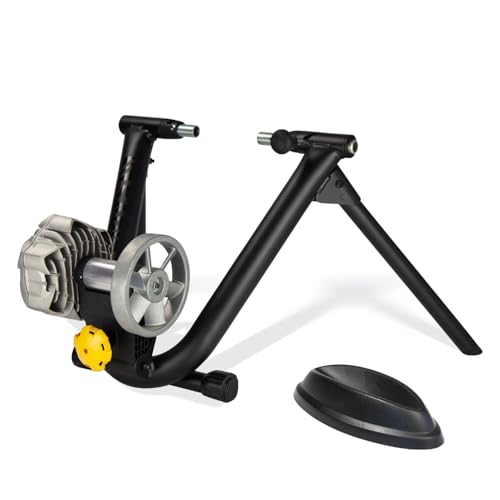
Smooth and quiet resistance for a realistic ride.
Easy setup and compatible with many bikes.
Works seamlessly with Zwift for interactive training.

Adjustable design fits various bike sizes.
Foldable for easy storage and portability.
Built-in resistance for effective training sessions.

Seamless connectivity with Zwift app.
Quiet operation for indoor use.
Adjustable resistance mimics real road feel.

Easy setup and compatible with Zwift app.
Adjustable magnetic resistance for varied workouts.
Quiet operation for indoor cycling sessions.

300 Lb High Weight Capacity, Sturdy for All Workouts
Exclusive App & Fitness Courses, Smart Workout Experience
Magnetic Quiet Design, Low-Noise Indoor Riding
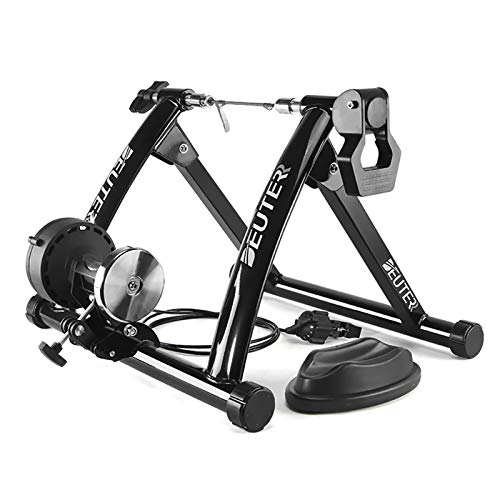
Smooth, quiet magnetic resistance for indoor riding.
Fits a range of wheel sizes, versatile use.
Includes front wheel riser block for stability.

Adjustable resistance levels for varied workout intensity.
Quick-release lever for easy bike setup.
Compatible with multiple wheel sizes.

Smooth, quiet ride with noise reduction technology.
Easy setup and compatibility with most road bikes.
Durable construction and stable design for safe use.
Whether a trainer works safely depends first on retention and fit. Look for exact rear-axle or front-fork standards, dropout spacing, wheel diameters, tire widths, brake and frame-clearance exclusions, required adapters, and setup or torque instructions. A claim such as “26–29 inches” does not establish compatibility with every tire, axle, dropout, carbon frame, or e-bike. Quick-release requirements are common, while through-axle support may require a separately sold adapter. The bicycle maker’s instructions also matter, particularly where a frame manufacturer restricts wheel-on trainer use.
Stability is more than a broad load number. A credible rider-load claim should identify whether the limit includes the bicycle, state the exact model, and be supported by a model-specific independent test. Relevant equipment references include ASTM F2276 and ASTM F2571, or ISO 20957-1 where applicable. No supplied product had a traceable accredited laboratory report covering all of stability, clamp retention, endurance, heat, and noise. An independent review can still be useful, but it is not the same as a formal laboratory safety report.
Headline performance figures also need conditions. “Quiet” is incomplete without speed, tire, resistance setting, floor, and measurement method; one supplied trainer had a manufacturer figure of 69 dB and an independent measurement of 75 dB at the same stated speed. Resistance-level counts can conflict with manuals, and fluid resistance that rises with wheel speed is not the same as selectable or electronically controlled resistance. App compatibility may require a separate sensor, and a trainer described as smart may not control resistance or measure power itself. Maximum wattage, grade simulation, and rider capacity remain manufacturer claims unless independently tested for the exact model.
Indoor use introduces recurring exposure and maintenance questions. Tire-on-roller designs can create tire wear, rubber debris, heat, vibration, noise, and sweat on the floor; fluid systems raise leakage and hot-surface concerns. Prefer clear instructions for tire pressure, ventilation, cleaning, inspections, moving parts, and dismounting. Look for guards or explicit warnings around rollers, pinch points, folding joints, hot resistance units, loose clothing, children, and pets. Repairability matters too: published parts diagrams, replacement resistance units, feet, skewers, adapters, and warranty terms are more useful than a generic durability claim. Steel and aluminum may be recyclable where accepted, but the supplied products rarely disclosed packaging, coatings, elastomers, fluids, or end-of-life routes.
Across the supplied reviews, buyers should treat through-axle, unusual dropout, tire-width, wheel-size, brake-clearance, and frame compatibility as unresolved unless documented for the exact bicycle. Children and pets must be kept away from exposed rotating wheels, rollers, flywheels, and folding mechanisms. People with impaired balance, fall risk, acute injury, cardiovascular or other health concerns, or rehabilitation needs should not assume a trainer is medical equipment; several reviews direct users to seek clinical advice. Free rollers require particular caution because they do not retain the bicycle. Do not ride a storage or repair stand, and do not exceed a stated limit—especially where published limits conflict.
These topics distinguish a trainer that merely permits pedaling from one with clearer limits, safer retention, lower exposure, and a more credible route to continued use. Scores are relative to the supplied products and reflect the reviewed evidence, not a safety certification.
This measures whether the stand supports realistic aerobic exercise claims and gives appropriate limits, warnings, and use guidance without presenting itself as treatment or rehabilitation equipment. Higher-scoring products paired exercise guidance with warnings about symptoms, warm-up, progression, or clinician advice; lower-scoring products leaned more on broad weight-loss, therapy, or fitness language without product-specific evidence.
This measures disclosure and control of tire-rubber debris, heat, sweat, fluid leakage, odors, and contact materials. Wheel-on trainers can wear tires and warm rollers; fluid units can involve hot surfaces or leakage. The strongest supplied scores were associated with more concrete tire, cleaning, or heat warnings, while lower scores reflected missing ventilation, material, debris, or leakage procedures. No supplied product had a complete exposure declaration.
This measures resistance to tipping, sliding, clamp release, and stand failure while mounting, riding, and dismounting. Higher-scoring products documented locking steps, front supports, defined limits, or independent stability observations; lower-scoring products lacked retention detail or, in the case of free rollers, did not retain the bicycle at all. No supplied product had a full accredited model-specific stability test.
This measures whether wheel, axle, dropout, tire, brake, and frame compatibility is specific and safe. Higher-scoring products named dropout spacing, wheel and tire exclusions, axle standards, and adapters. Lower-scoring products gave only a wheel-size range or conflicting limits. A buyer should not infer through-axle, carbon-frame, wide-tire, or unusual-dropout compatibility from diameter alone.
This measures the stand, clamp, roller, resistance unit, fasteners, and their handling of wear, leaks, heat, and sudden resistance loss. Higher-scoring products had replacement units, warranties, or clearer maintenance paths; lower-scoring products lacked endurance evidence, inspection schedules, or repair documentation. None had a supplied independent exact-model endurance, load, or temperature report.
This measures protection from accessible rollers, rotating wheels, hot surfaces, pinch points, sharp edges, and folding hazards. Higher-scoring products supplied clear hands-clear, stop-before-dismounting, clothing, child, and pet warnings. Lower-scoring products left hazards dependent on general caution, especially where rollers or folding joints remained exposed. Free rollers and stationary bikes also require careful control of the surrounding area.
This measures whether resistance, noise, load, app, wheel-fit, and safety claims are specific, conditional, and traceable to the exact model. Higher-scoring products had clearer manuals and fewer contradictions; lower-scoring products had conflicting resistance counts, wheel ranges, or broad “quiet” and “stable” language. A number without its test conditions, included equipment, or model identification should be treated as incomplete.
This measures whether a competent independent tester—not only the seller—verified the exact model’s stability, load, endurance, noise, or resistance. The supplied scores clustered around moderate levels because no traceable accredited laboratory report was found. A stronger substantiation would identify the production version, laboratory, date, methods, results, and an ISO/IEC 17025 accreditation scope where applicable.
This measures safety history, incident transparency, U.S. contact access, warranty, and corrective-action support. Higher-scoring products had clearer warranties and parts or remedy channels, with no unresolved exact-model recall located in the supplied checks. A clean search is not certification: buyers should distinguish an unrelated recall, a different model, and a documented remedy from an absence of located records.
This measures material and consumable burden, tire and roller wear, packaging, durability, and realistic reuse or recycling options. Higher-scoring products combined durable metal construction with folding storage or documented low tire wear; lower-scoring products lacked packaging and end-of-life information. Wheel-on designs still consume tire tread, and no supplied product established a complete environmental assessment or recycling route.
This measures whether wear and safety-critical parts can be identified, bought, and replaced without discarding the whole trainer. The strongest supplied scores came from products with official resistance units, feet, skewers, adapters, or parts diagrams and longer warranty support. Lower-scoring products offered only a general warranty or a single accessory, with no public service manual or parts catalog.
This product is a rear-wheel fluid trainer that converts a compatible bicycle into a stationary indoor setup. The bike mounts by replacing its rear quick-release skewer with the supplied skewer, clamping that skewer into the stand, then bringing the roller against the rear tire. A front-wheel riser block and carrying bag are included. The manufacturer states that the steel frame folds and that fluid resistance rises with pedaling speed. The operating manual provides meaningful setup and hazard instructions, including level-floor use, tightening checks, tire inflation, secure skewer mounting, avoiding the moving resistance wheel, and holding the bike during removal. It also warns that insufficient roller tension can allow the bike to come out of the trainer. Compatibility information is inconsistent, however. The manual specifies 26 to 28 inch or 700C wheels, while the manufacturer page says 26 to 29 inch or 700C wheels.
This product suits an adult cyclist with a conventional quick-release rear wheel and a clearly compatible 26 to 28 inch or 700C road or mountain bike, who wants to pedal indoors during poor weather and can set it up on a level, open floor. It is more appropriate for a rider comfortable checking the skewer clamp, roller contact, fasteners, and tire pressure before each session. It also fits users who need a foldable trainer stored in a bag between sessions and do not require app connectivity or measured power data.
It is not appropriate for riders with a through-axle bike, unusual dropout design, carbon-frame restrictions, uncertain wheel sizing, or a bike manufacturer that prohibits wheel-on trainer use unless they first obtain compatible hardware and frame approval. It is also unsuitable for children using it unsupervised, households where pets can reach the spinning rear wheel, and anyone unable to mount or dismount a clamped bicycle safely. People using cycling as rehabilitation should not treat the product's marketing as a clinical recommendation and should follow clinician guidance.
Indoor cycling can contribute to aerobic activity when used at an appropriate intensity. A systematic review found potential improvements in aerobic capacity and other health measures, while noting limitations in the evidence base. Federal guidance recommends adults generally accumulate 150 to 300 minutes of moderate aerobic activity weekly, or an equivalent vigorous amount, alongside muscle-strengthening activity. This product's manual appropriately advises warming up and consulting a physician before starting exercise, but the brand's physical-therapy and weight-loss marketing is not product-specific clinical evidence. The documented frame material is stainless steel, a durable material that may be recyclable through local metal programs. The product has no electronics or battery. However, the manufacturer does not publish recycled-content, packaging, fluid composition, leakage-containment, disposal, or full repair documentation. Wheel-on use also creates tire and roller contact. The manual warns that over-tightening can damage the tire and resistance unit, while loose adjustment can permit bike release. No product-specific CPSC recall was found in the reviewed public recall sources.
This product is a wheel-on indoor bike trainer. A rear tire presses against a magnetic resistance unit, while the bicycle’s rear axle is held between couplings and a front riser block supports the front wheel. The manufacturer states that it has a stainless-steel frame, a foldable format, an included carry bag, and six cable-controlled resistance settings at the handlebar. The available operating manual provides more useful safety detail than the sales copy. It sets a 120 kg rider limit, directs users to use a level surface, check tire inflation and tightness, fit the front block, and avoid over-tightening the roller because a loose setup can allow the bike to leave the trainer. No model-specific independent stability, endurance, resistance, noise, or certification report was located.
This product suits an adult cyclist with a compatible road or mountain bike, a conventional rear-wheel setup, and a level indoor space who wants basic manual resistance training. It is most appropriate for riders prepared to inspect tire pressure, skewer engagement, clamp tension, roller contact, and fasteners before sessions. It also suits people who value a foldable, non-electronic trainer for occasional home use or storage between rides. The manual’s 120 kg rider limit should be treated as a firm ceiling, not a target for aggressive use.
It is not suited to riders who need independently tested load, stability, noise, or durability data, or to households where children or pets may enter the riding area during use. It is also a poor fit for buyers with unusual rear axle, dropout, disc-brake, tire, wheel, or frame configurations unless their bicycle maker confirms trainer use and fit. People seeking clinical rehabilitation should not rely on the product’s physical-therapy marketing without individualized guidance from a qualified clinician.
Indoor cycling can contribute to aerobic activity when performed at an appropriate intensity and duration. Evidence reviews report potential aerobic-fitness benefits from indoor cycling, while federal guidance recommends adults accumulate 150 to 300 minutes of moderate aerobic activity weekly. This trainer can support that activity, but it is not a medical or rehabilitation device. Its manual appropriately advises warming up and consulting a physician before starting exercise, but the product page also makes weight-loss and physical-therapy claims without a specific program or clinical evidence for this product. The steel frame may offer a durable, recyclable base material, and the manufacturer sells a replacement skewer. However, no bill of materials, chemical disclosure, packaging disclosure, parts diagram, or comprehensive replacement-parts catalog was located. The manual acknowledges tire wear risk from improper roller tension and recommends a mat or sheet to protect flooring from sweat and stains. No product-specific exposure warning, recall, or independent safety certification was located in the sources checked.
This product is a wheel-on indoor trainer that holds a bicycle by its rear axle while an alloy roller contacts the rear tire. It uses a fluid resistance unit and a progressive resistance curve, so effort rises through the bicycle's own gearing rather than through electronically controlled resistance. Saris states a combined rider-and-bike limit of 300 lb, a 69 dB noise result at 20 mph, and compatibility with selected wheel, tire, dropout, and axle configurations. The manufacturer supplies a dedicated quick-release skewer and requires it for quick-release bikes. The manual gives setup steps for a flat, level base and separately identifies 120 mm, 130 mm, and 135 mm rear hub positions. Thru-axle bikes need a separate Saris adapter. Independent model-specific laboratory verification of stability, noise, endurance, or resistance output was not located.
This product suits an adult who already has a compatible road, hybrid, or mountain bike with a rear wheel that meets Saris's documented limits. It is most appropriate for seated aerobic training in a dedicated indoor area with a level floor, enough clearance from children and pets, and tolerance for tire-contact noise. It also fits a user prepared to install the supplied quick-release skewer, check tire pressure, and use a smoother rear tire. Riders with a combined bike and body weight at or below Saris's stated 300 lb limit fit the documented use case.
It is not appropriate for a bike with a 650c or 26-inch wheel, a 29-inch treaded tire, or a 29-inch tire wider than 1.5 inches. A thru-axle bike needs the correct separately sold adapter, so it should not be clamped in without one. It is also unsuitable for users who cannot safely mount, pedal, and dismount a fixed rear-wheel trainer, households where children or pets can enter the exercise area, or anyone needing independently verified safety, load, noise, or performance testing. People with concerning exercise symptoms should follow the manual's direction to stop and seek medical advice.
Indoor cycling can contribute to aerobic physical activity, and systematic-review evidence indicates possible aerobic-capacity benefits, although the evidence base has limitations. Saris's manual appropriately avoids treatment promises. It advises users to consult a clinician before beginning an exercise program, stop for chest discomfort, irregular heartbeat, breathlessness, faintness, or other discomfort, and build high-speed or standing riding only after lower-speed practice. The product has a fluid resistance unit, metal roller, tire-contact surface, and replaceable components. Saris explicitly warns that trainer use shortens rear-tire life, while knobby tires add noise and vibration. A slick, harder-compound tire can reduce those effects, but creates an additional consumable. Official replacement resistance units and feet support repair rather than whole-product disposal. No model-specific independent safety certification or laboratory test report was located. A 2009 CPSC Saris trainer recall involved different Pro Series models, not this Fluid 2 product.
This product is a foldable, free-rolling indoor bicycle roller platform. The bicycle is not clamped at an axle. Its wheels sit on three rollers, so the rider must balance while pedaling, mounting, and stopping. ROCKBROS states that the frame and rollers are aluminum, the unit folds in three sections, weighs 6.5 kg, and is adjustable for 16 to 29 inch road, mountain, and folding-bike wheels. A published setup guide for this roller format specifies a 970 to 1090 mm wheelbase range and instructs beginners to use a wall or stable support while learning. The product listing calls it a resistance roller, but the manufacturer specification lists one setting and provides no resistance curve, power figure, or test conditions. No model-specific independent load, stability, endurance, noise, or safety test report was located.
It suits an experienced cyclist who wants a compact indoor roller for cadence, balance, and steady aerobic riding, has a conventional bicycle that falls within the maker's stated 16 to 29 inch range and the published 970 to 1090 mm wheelbase range, and has clear floor space beside a stable wall for early practice. It is most appropriate for someone prepared to inspect the belt, rollers, fasteners, and floor contact points before use, and to accept that resistance output is not quantified.
It is not appropriate for beginners who cannot safely balance a bicycle without support, children without closely competent adult supervision, or households where pets and bystanders may enter the riding area. Riders seeking hands-free mounting, secure axle retention, controlled rehabilitation, high documented resistance, virtual-training integration, or tested power and noise figures need a different product format. It also needs caution with bikes outside the stated wheel and wheelbase ranges, unusual tire widths, unstable floors, or any bike with an uncertain frame or wheel condition.
Indoor cycling can contribute to aerobic physical activity. A systematic review found possible improvements in aerobic capacity and several health-related measures, while also noting limited high-quality trials. Federal guidance recommends 150 to 300 minutes weekly of moderate aerobic activity, or an equivalent vigorous amount, for substantial adult health benefits. This product does not itself establish exercise intensity, medical suitability, or rehabilitation safety. Users with conditions affecting balance, cardiovascular exercise tolerance, or fall risk should obtain individualized guidance. ROCKBROS identifies aluminum as the main frame and roller material, which is durable and widely recyclable as scrap metal. The company also states that the unit folds for storage. However, it does not publish a complete bill of materials, packaging disclosure, roller and belt replacement catalog, or end-of-life instructions for elastomers and mixed materials. No model-specific CPSC recall or public safety report was located in the searched public sources, and no independent certification or model-specific safety test report was found.
This product is a wheel-on indoor trainer that clamps an existing bicycle by its rear axle and presses an electrically controlled resistance roller against the rear tire. Saris states that it supports Bluetooth and ANT+ FE-C workout control, reports speed, cadence, and power, simulates grades up to 15%, and is rated for a combined rider and bike load of 300 pounds. Its compatibility documentation is unusually specific. It includes a steel quick-release skewer for 120 mm, 130 mm, and 135 mm rear dropout spacing. It can also accept certain 142 x 12 mm and 148 x 12 mm thru-axle bikes with a separately sold adapter. Independent reviewers found the frame stable in hard sprinting, but also found that tire pressure, roller tension, and calibration materially affect power readings and tire wear.
This product suits an adult home cyclist with a compatible quick-release or supported thru-axle bicycle who wants app-controlled indoor aerobic sessions without removing the rear wheel. It is most appropriate for someone able to check tire pressure, lock the supplied skewer correctly, calibrate the trainer, and inspect the setup regularly. The fold-flat frame also fits a user who must store the trainer between sessions. Stay within Saris's stated 300-pound combined rider and bike limit.
It is not appropriate for commercial, industrial, or medical use, which the manual explicitly excludes. It also needs a protected room rather than a shared play area, because the tire and roller rotate in use and the manual tells users to keep children under 10 and pets away. Riders with unsupported wheel diameters, wide or treaded 29-inch tires, or no suitable axle adapter should not force a fit. It is also poorly suited to households needing very low noise or avoiding tire-rubber wear indoors.
Indoor cycling can contribute to aerobic exercise. A systematic review found potential improvements in aerobic capacity and other health-related measures, although the evidence base was limited and did not make this product a medical or rehabilitation device. Saris appropriately states in its manual that the trainer is not for medical use. The safety instructions direct users to inspect parts, remove the bicycle when idle, keep objects away from moving parts, and use only a Saris-supplied replacement power cord if the original is damaged. The main environmental and indoor-use tradeoff is inherent to the wheel-on layout. The manufacturer says trainer use reduces rear-tire life and recommends a harder-compound trainer tire. Independent testing also reported tire debris and high noise when roller contact was excessive. The published warranty provides a repair route for covered defects, but the clutch knob, roller, feet, and several other wear items are excluded. No model-specific accredited safety certification or full independent laboratory report was located. A 2009 CPSC recall involved older Saris stationary trainers, not this product.
This product is a foldable, wheel-on indoor trainer that clamps the bicycle at the rear axle and presses an alloy roller against the rear tire. It uses a non-powered magnetic resistance unit with five manually selected settings. Saris states a combined rider-and-bike limit of 300 pounds, and specifies supported rear dropout spacing, wheel sizes, tire widths, and separate adapters for compatible thru-axle bikes. The product includes a steel quick-release trainer skewer and adjustable leveling feet. It is not a smart trainer. App use depends on adding a separate speed or cadence sensor, and resistance remains manual. Saris publishes assembly directions, including tire-pressure and roller-tightening instructions. An independent hands-on test of the closely related Mag+ found a durable basic design, but reported higher noise than the brand's quiet-ride claim. No model-specific accredited safety, stability, endurance, or noise test report was located.
This product suits an adult cyclist with a compatible quick-release road, hybrid, or eligible mountain bike who wants simple indoor aerobic riding and is prepared to check tire pressure, skewer engagement, roller pressure, and floor level before each session. It is also suited to someone who values a non-powered magnetic mechanism and the ability to obtain official replacement feet, axle hardware, and resistance components. It fits riders whose training does not require automatic resistance changes or built-in power measurement.
It is not appropriate for bicycles with unsupported wheel sizes or tires, including 26-inch wheels, 650c wheels, or 29-inch tires with tread or over 1.5 inches wide. Riders using a thru-axle bike must first confirm the axle specification and obtain the correct separate adapter. Households sensitive to tire noise, vibration, rubber wear, or exposed rotating parts should avoid placing it in shared living areas. It is also unsuitable for users above Saris's stated 300-pound combined rider-and-bike limit or anyone needing clinician-directed rehabilitation equipment.
Indoor cycling can contribute to aerobic activity when the rider controls intensity and duration. Federal guidance recommends adults accumulate 150 to 300 minutes weekly of moderate aerobic activity, or an equivalent vigorous amount, alongside muscle-strengthening work. A systematic review found indoor cycling may improve aerobic capacity and some cardiometabolic measures, while noting that the evidence base included limited randomized trials. This product itself makes no medical or rehabilitation claim, which is appropriate. Saris documents the tire-wear tradeoff rather than hiding it. Its manual says knobby tires increase vibration and noise, advises a slick tire, and states that trainer use shortens rear-tire life. The alloy roller, steel-frame format, and official replacement availability can extend service life, but Saris does not publish a bill of materials, chemical disclosure, packaging breakdown, recycling instructions, or third-party exposure testing. A 2009 CPSC recall involved different Saris Pro-series trainers with a handle-pin fall hazard, not this Mag product.
This product is a freestanding indoor cycling bike, not a bike trainer stand that holds a separate bicycle. It uses a belt drive, a manually adjusted resistance control, a tablet holder, and Bluetooth app features. The available product record describes 100 resistance levels and a 300 lb rider limit. Independent retailer data also identifies the unit as a 27 kg metal bike for indoor use. Indoor cycling can provide aerobic activity, but the evidence supports the activity itself, not a special weight-loss effect from this unit or its app courses. A systematic review found possible improvements in aerobic capacity and some cardiometabolic measures, while noting limited randomized evidence. I found no model-specific independent laboratory report for its load rating, stability, resistance, noise, or durability.
This product suits an adult seeking a basic, self-paced indoor cycling format in a small home exercise area, especially someone who wants manual resistance changes and can safely use an upright bike position. It is most appropriate for riders at or below the manufacturer-stated 300 lb limit who can place it on a level surface, inspect fasteners before use, and tolerate a conventional saddle. The app and tablet holder may help people who already use streamed classes or entertainment while exercising.
It is not suited to someone shopping specifically for a bike trainer stand, because this is a complete stationary bike rather than a device that retains a road or mountain bike. It is also a poor fit for riders above the stated 300 lb limit, households where children or pets can access moving pedals unsupervised, or anyone needing verified clinical rehabilitation equipment. People who require independently verified load, noise, durability, material, or repair data should not treat the listed claims as confirmed.
The strongest health point is the exercise format, not the weight-loss wording. Research on indoor cycling supports its use as aerobic physical activity, with potential fitness and cardiometabolic benefits when it is part of a regular, appropriately paced routine. New or medically complex exercisers should follow the product instructions to seek clinical advice before beginning a program, and all users should keep loose clothing, children, and pets clear of the pedals and flywheel area. The product is described as metal and belt driven, which may avoid the tire debris associated with wheel-on trainers. However, no model-specific material declaration, packaging disclosure, maintenance schedule, parts diagram, recycling guidance, or independent endurance report was found. The brand publishes a three-year warranty and support contact. Searches of US consumer-product recall and public incident resources did not identify an exact-product recall or public incident report, but that absence is not independent proof of safety.
This is a fold-flat, wheel-on magnetic trainer that clamps a bicycle by its rear axle, presses a roller against the rear tire, and uses a handlebar cable control for six resistance settings. The maker says it includes a quick-release skewer and front wheel riser block, and that its unfolded steel structure has a 330-pound capacity. Those are manufacturer statements, not independently tested results. Indoor cycling is supported by systematic-review evidence as aerobic exercise, provided the session is paced appropriately and the rider can safely use the bicycle. The product's own compatibility information is inconsistent. Its official product page lists 26 to 28-inch wheels and 700c, while the marketplace record also claims 29-inch fit. Neither source gives dropout-width limits, axle dimensions, torque settings, or a complete frame-exclusion list.
This product suits an adult cyclist with a conventional quick-release rear wheel, a confirmed compatible 26 to 28-inch or 700c bicycle, and a level indoor floor. It is most appropriate for weather-independent aerobic rides, warmups, and moderate home training where the rider can inspect the clamp and tire contact before each session. A user who can dedicate a mat, use a smooth rear tire, and accept manually selected resistance levels is better matched than someone seeking automated training data or app control.
It is not a safe assumption for riders with a 29-inch wheel, thru-axle bike, unusual dropout spacing, fixed-gear frame, carbon-frame restrictions, or any bicycle whose maker advises against wheel-on trainers. It is also unsuitable where children, pets, loose clothing, or long hair can reach the spinning rear wheel and roller. Riders needing medically supervised rehabilitation, verified load testing, quiet apartment operation with knobby tires, or documented long-term service parts need more specific evidence than this product provides.
The health case is for indoor cycling as an activity, not for a special medical property of this trainer. A systematic review found that indoor cycling can improve aerobic capacity and several cardiometabolic measures, while U.S. guidance recommends 150 to 300 minutes of moderate aerobic activity weekly for most adults. The product itself makes ordinary fitness and weather-convenience claims, rather than medical or weight-loss promises. The maker advises smooth tires and a mat or carpet to reduce vibration and noise. The tire-driven roller can still create tire wear and rubber debris, and no material declaration, chemical disclosure, or product-specific exposure warning was located. The frame is described as steel or iron, which may be recyclable through local metal programs, but no packaging disclosure, parts catalog, or published end-of-life guidance was found. No product-specific CPSC recall was located in the searched recall records.
This is a wheel-on magnetic trainer that holds a bicycle by the rear axle while a roller contacts the rear tire. It folds for storage and includes a front-wheel riser and replacement quick-release skewer. The available manual describes adjustable rubber feet, a rear-wheel resistance unit, and routine pre-ride checks of the stand, fasteners, roller, and bike retention. Indoor cycling can support aerobic activity when used regularly at an appropriate intensity. This product itself does not measure power, cadence, or heart rate, and its resistance output is not published. An independent hands-on reviewer measured about 62 dB at 80 to 90 rpm, while also reporting noticeable vibration and less side-to-side stability during aggressive riding. The evidence does not include a model-specific laboratory safety, endurance, or load test.
This product suits an adult rider with a conventional quick-release rear wheel, a compatible 26 to 28 inch or 700C bicycle, and a flat indoor surface who wants basic weather-independent aerobic riding. It is most appropriate for seated, controlled sessions rather than hard standing sprints or pronounced side-to-side bike movement. The user should be willing to replace the rear skewer where required, check the axle clamp and roller before each session, and accept that workout intensity must be tracked separately if needed.
It is not a suitable default choice for riders with an unverified through-axle, disc-brake, unusual dropout, bolt-axle, carbon-frame, or nonstandard rear-wheel setup. Those configurations need explicit confirmation from the bicycle maker and trainer support before use. It is also a poor fit for hard sprint training, riders who rock the bike heavily, homes where vibration transmission is a major concern, or anyone needing documented rehabilitation guidance, verified power measurement, or independently tested load and safety certification.
The health case is for cycling activity, not a special therapeutic property of the product. A systematic review found that indoor cycling programs may improve aerobic capacity, blood pressure, lipid profile, and body composition. Adults should still select intensity and duration appropriate to their condition, and people with cardiovascular disease, hypertension, diabetes, pain, or another health concern should seek individualized clinical guidance. The manual advises stopping if the trainer is damaged or contaminated and checking secure setup before every use. The frame is described as alloy steel, which is potentially recyclable through local metal streams, but the product has a tire-contact roller and therefore consumes tire material over time. The manual warns that the tire and resistance unit can become hot, advises keeping moisture out of the roller, and specifies gentle cleaning. Sportneer makes a broad CA65 and REACH statement on its site, but no product-specific material declaration, Proposition 65 warning record, packaging disclosure, parts catalog, or independent emissions testing was located. No Sportneer trainer recall was found in the CPSC recall search reviewed.
This is a wheel-on indoor trainer that holds a bicycle by its rear axle while the rear tire drives a roller and fluid resistance unit. The product documentation identifies an alloy-steel frame, a 24.25 pound unit weight, folding storage, a supplied front-wheel riser block, and compatibility stated as 26 to 29 inch and 700C wheels. It is intended for road-style and compatible quick-release rear-wheel bikes, not as a self-contained exercise bike. Its key product-specific features are manufacturer-stated rather than independently tested. The manual describes progressive fluid resistance that rises with wheel speed, plus a dual-lock mounting process and adjustable anti-slip feet. It also gives useful use limits, including pre-ride checks, tire-pressure guidance, moving-part and hot-surface warnings, and instructions to stop using the trainer if damaged. No model-specific independent stability, endurance, resistance, noise, or safety test report was located.
It suits an adult cyclist with a compatible 26 to 29 inch or 700C bicycle using a standard rear quick-release arrangement, who wants basic indoor aerobic riding and is comfortable checking setup before each session. It is most appropriate for steady rides, warmups, and gear-based intensity changes in a dry indoor space with level flooring. The user should be able to mount the bike carefully, inspect fasteners and tire condition, and keep children, pets, hair, and loose clothing clear of the rotating wheel.
It is not suited to riders who need documented compatibility with a thru-axle, unusual dropout, very wide tire, carbon-frame restriction, or a bike maker's trainer-specific limitation. It is also unsuitable for anyone needing independently verified load, stability, temperature, noise, or durability data, including high-intensity users who cannot accept those unknowns. Avoid it in homes where children or pets can approach an operating rear wheel, or where there is not enough clear, level space to mount and dismount safely.
Indoor cycling is a plausible way to perform aerobic exercise. Federal physical-activity guidance recommends adults build toward 150 to 300 minutes of moderate aerobic activity weekly, while the indoor-cycling evidence review found possible improvements in aerobic capacity and some cardiometabolic measures, although the review noted limited randomized-trial evidence. This trainer does not establish a medical, weight-loss, or rehabilitation outcome itself. Its manual appropriately tells users to begin gradually, hydrate, stop for concerning symptoms, and seek medical advice for chest pain, dizziness, palpitations, nausea, or joint pain. The documented alloy-steel frame is potentially recyclable as scrap metal, but no product-specific packaging disclosure, material declaration, fluid specification, or replacement-parts program was found. Wheel-on operation creates tire wear, and the manual advises tire inspection and a dedicated trainer tire for longer use. If the sealed resistance unit leaks or is discarded, its fluid should not be poured into drains or onto the ground. Local waste guidance is needed for any unknown lubricant or damaged resistance unit. No product-specific CPSC recall or public exposure warning was located in the verification searches.


